Use the historical document(s) and the short readings in the left panel to answer the associated questions.
Use this 1752 port ledger excerpt to gather evidence about colonial regional economies. Notice what goods are shipped, which are imported, and the port setting. Use details from the document (cargo items, destinations, and fees) to support your answers about geography, labor, and trade.
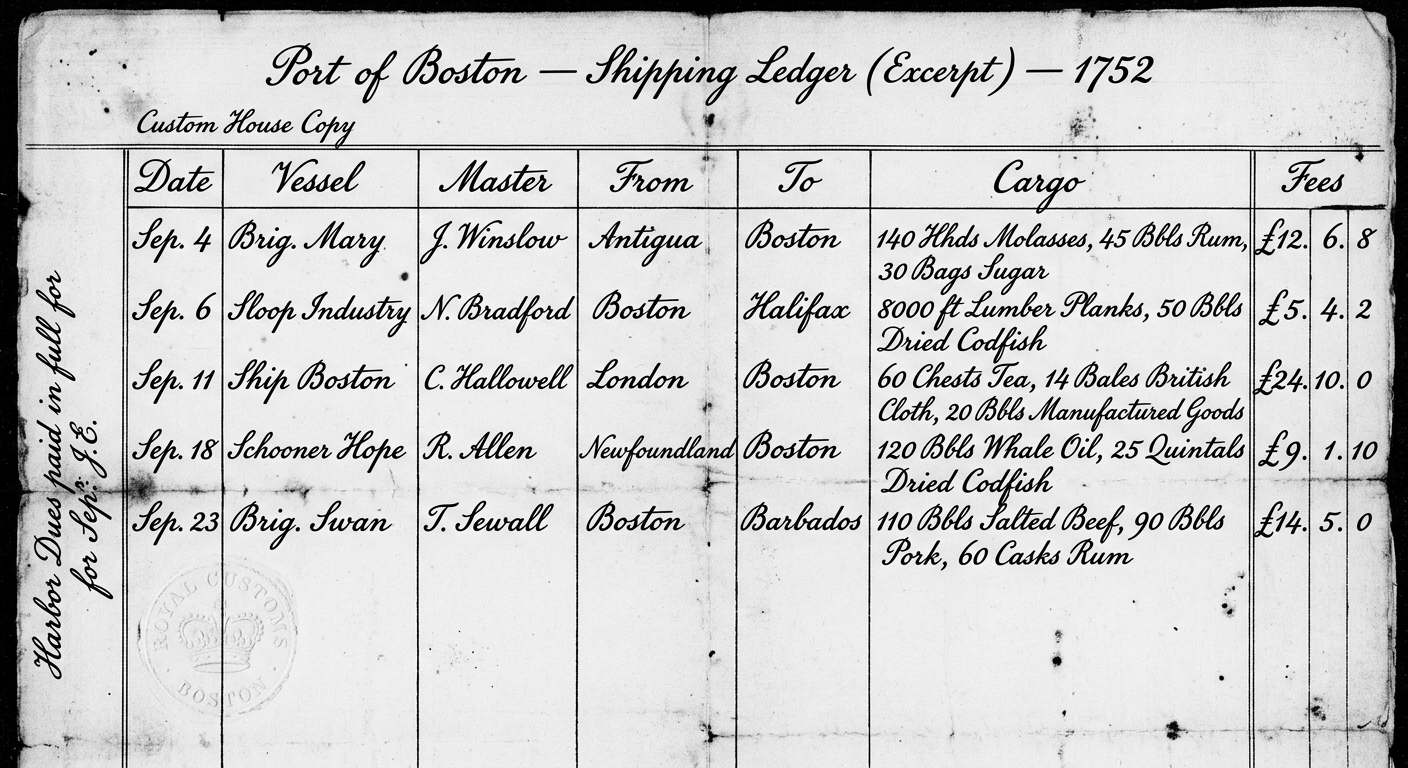
Based on the cargo listed in the ledger, which conclusion is BEST supported about the region’s economy?
Which product would you MOST expect to appear in a similar shipping record from the Southern Colonies, based on regional geography and labor systems?
The ledger includes harbor dues/fees and lists multiple vessels and destinations.
Which geographic factor is MOST directly connected to this evidence?
Explain how geography and climate helped shape the economy shown in the ledger.
Use at least two specific pieces of evidence from the document (for example, a cargo item, a destination, or a fee/port reference).
Imagine this document was instead a shipping ledger from a Southern port (such as Charleston) in the same time period.
What differences in cargo would you expect, and why?
Use evidence from this ledger AND your knowledge of regional labor and physical geography.
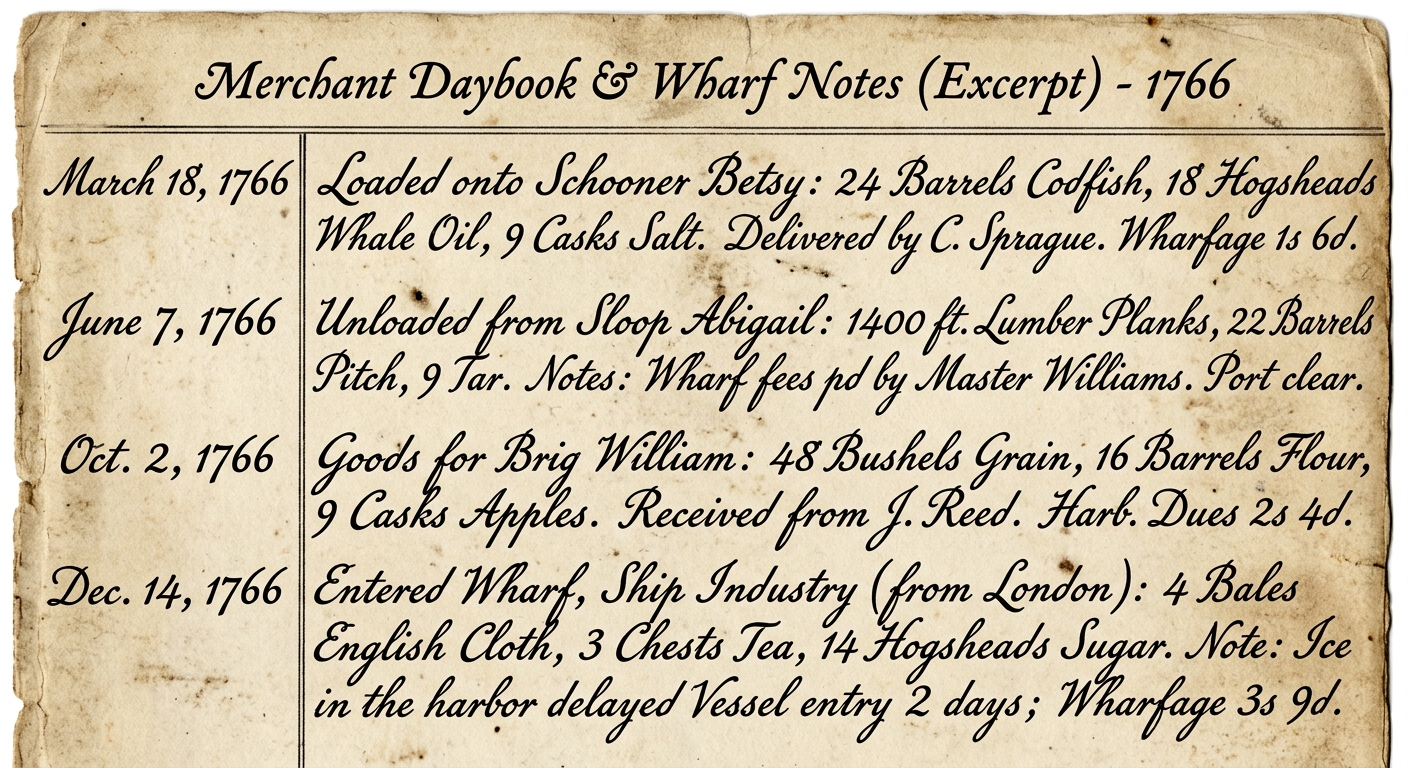
Study this 1766 merchant daybook excerpt. Use the dates and notes to place events in order and identify seasonal patterns in trade. Cite specific dated entries (goods, fees, or delays) to support your answers about how geography and climate shaped colonial regional economies.

Which sequence correctly places the daybook entries in chronological order?
Which conclusion is BEST supported by the timing of the goods listed across the entries?
The December entry mentions a delay due to ice in the harbor. Which explanation BEST connects this evidence to geography and the regional economy?
Explain how the dates in the daybook show a pattern in the region’s economic activity over time.
Use at least two specific dated entries as evidence.
If a merchant in the Southern Colonies kept the same kind of daybook across these months, what differences in the timing and types of goods would you expect, and why?
Use evidence from this daybook and your knowledge of regional geography and labor systems.
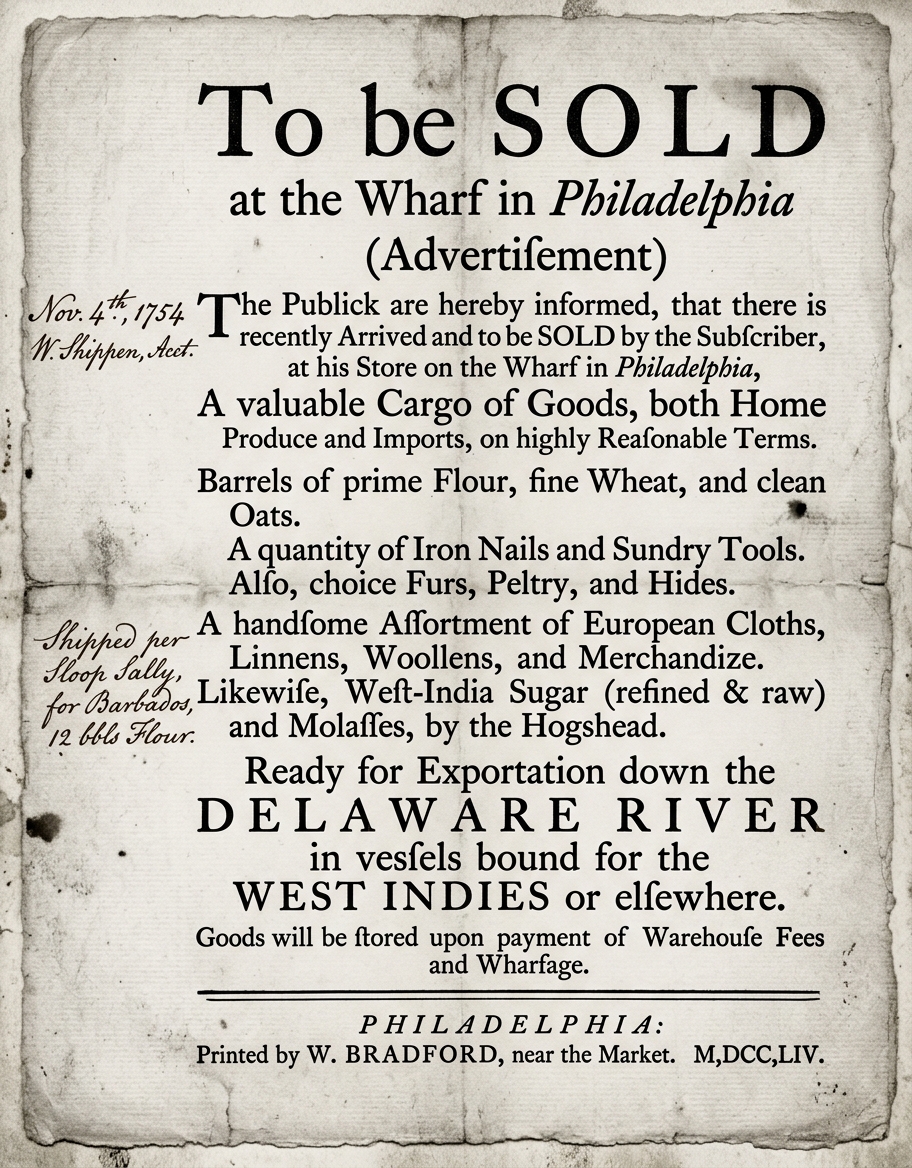
Read this 1754 Philadelphia wharf advertisement. Use the goods listed and place clues to identify the colonial region. Then compare it to New England and the Southern Colonies by explaining how geography, trade routes, and labor systems shaped different regional economies.

Which colonial region is MOST consistent with the goods and setting described in this advertisement?
Which comparison between this region and the Southern Colonies is BEST supported by the evidence in the advertisement?
Which detail from the advertisement BEST supports the idea that this colony’s economy was connected to both inland farms and overseas markets?
Use evidence from the advertisement to explain how this region’s economy was different from New England’s economy.
Explain how geography (waterways/ports) and labor systems could lead to the mix of goods listed.
Use at least two specific details from the document as evidence.
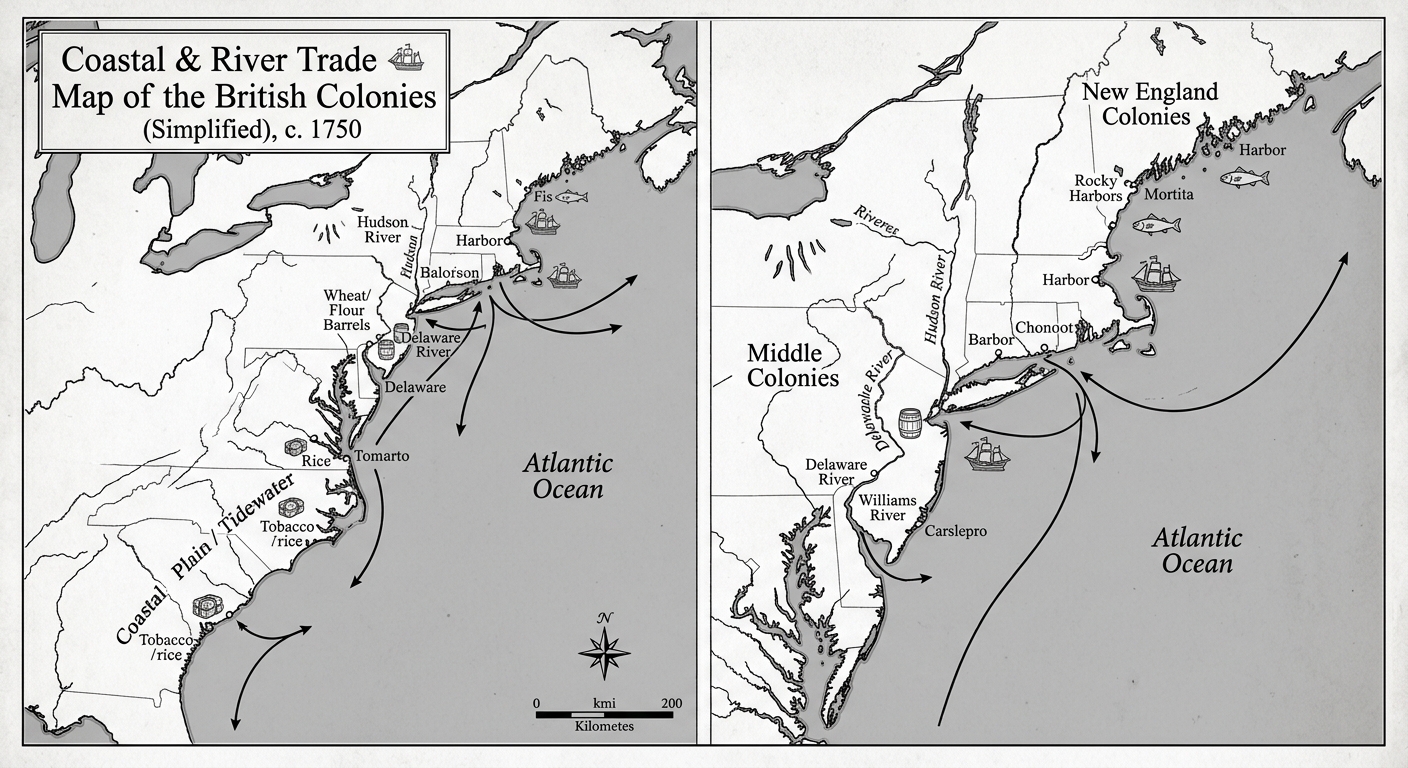
Study this simplified colonial trade map (c. 1750). Use the physical features (rivers, harbors, coastal plain) and trade arrows to infer how geography shaped each region’s economy. Cite specific map evidence (labels or icons) to support your answers about New England, Middle, and Southern colonies.

Based on the map’s coastline and harbor features, which region is MOST likely to develop an economy centered on shipbuilding and Atlantic shipping?
Which geographic feature shown on the map MOST directly supports the Middle Colonies’ ability to ship farm products to markets?
Which inference about the Southern Colonies’ economy is BEST supported by the map’s coastal plain/tidewater features and crop icons?
Use the map to explain how access to waterways affected what colonists could export or import.
Cite at least two specific map features (for example, a river label, port/harbor area, or trade arrow).
Compare two colonial regions shown on the map. Explain how differences in physical geography helped create different regional economies.
Use at least two pieces of map evidence in your comparison.
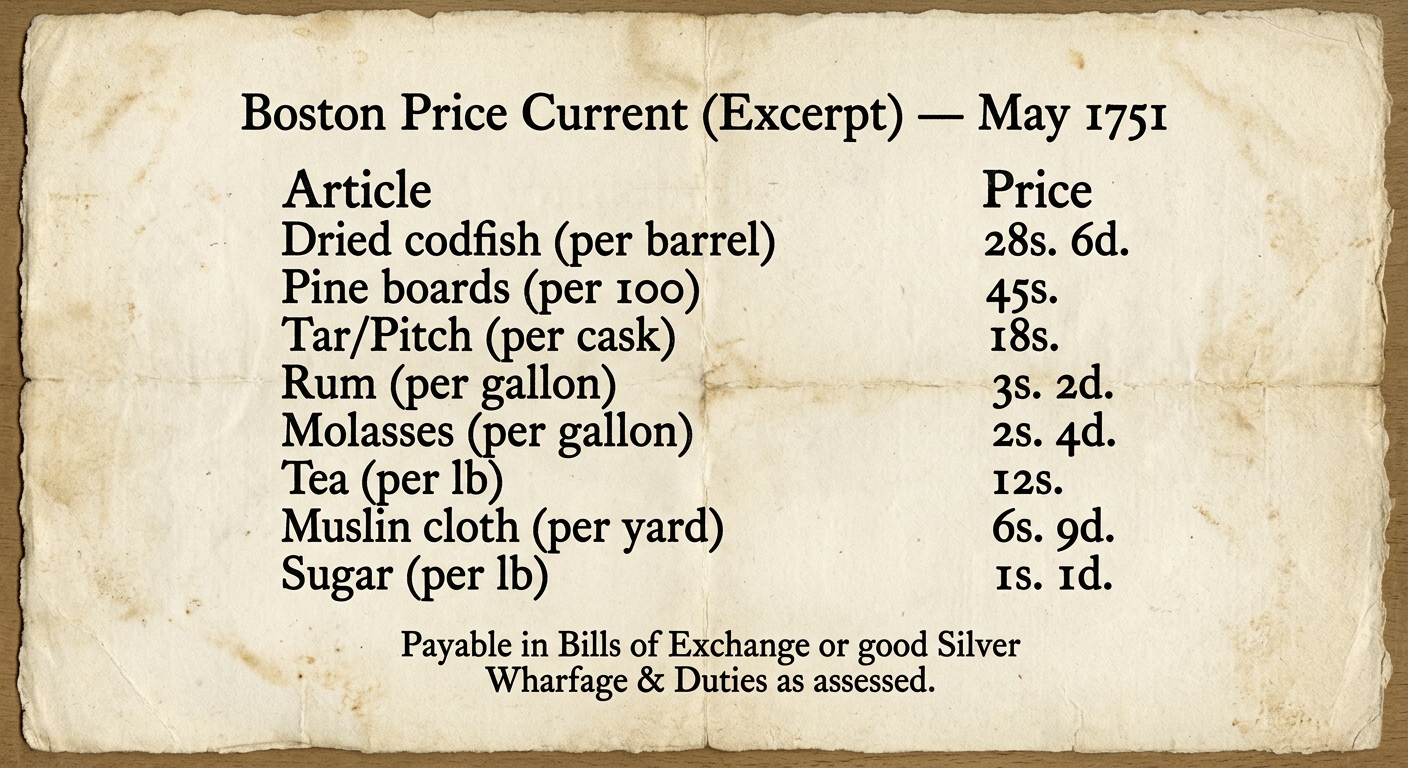
Study this 1751 “Boston Price Current” excerpt. Use the listed prices, imported items, and payment/fee notes to infer how colonial merchants bought and sold goods. Compare what seems locally produced versus imported, and explain what this shows about trade networks and specialization.

Which description BEST matches the economic activity shown in the “Price Current”?
Which item listed is MOST likely an imported good for a New England port in the 1750s?
Which inference about regional specialization is BEST supported by this document?
Use evidence from the “Price Current” to explain how this port economy was connected to wider trade networks.
Cite at least two specific details (a priced item, a payment note, or a fee/duty reference).
Imagine a similar “Price Current” from a Southern port (such as Charleston) in the same time period.
What differences in goods and prices would you expect, and why?
Use evidence from this document and your knowledge of regional climate, geography, and labor systems.