Twa kɔ nsɛm atitiriw so
Log in
Sign up for FREE
arrow_back
Laabri

7.2d - Colonial Developments: - Practices A through E

star
star
star
star
star
Last updated about 1 month ago
25 Nsɛmmisa
Hyɛ no nsow a efi ɔkyerɛwfo no hɔ:

Use the historical document(s) and the short readings in the left panel to answer the associated questions.

Use the historical document(s) and the short readings in the left panel to answer the associated questions.

7.2.d
DOK.SS.2
7.2.d
DOK.SS.2
7.2.d
DOK.SS.2
7.2.d
DOK.SS.2
7.2.d
DOK.SS.2
Ɛhia
1
7.2.d
DOK.SS.2
Ɛhia
1
7.2.d
DOK.SS.2
Ɛhia
1
7.2.d
DOK.SS.2
Ɛhia
1
7.2.d
DOK.SS.2
Ɛhia
1
7.2.d
DOK.SS.2
Ɛhia
1
7.2.d
DOK.SS.2
Ɛhia
1
7.2.d
DOK.SS.2
Ɛhia
1
7.2.d
DOK.SS.2
Ɛhia
1
7.2.d
DOK.SS.2
Ɛhia
1
7.2.d
DOK.SS.2
Ɛhia
1
7.2.d
DOK.SS.2
Ɛhia
1
7.2.d
DOK.SS.2
Ɛhia
1
7.2.d
DOK.SS.2
Ɛhia
1
7.2.d
DOK.SS.2
Ɛhia
1
7.2.d
DOK.SS.2
Ɛhia
1
7.2.d
DOK.SS.2
Ɛhia
1
7.2.d
DOK.SS.2
Ɛhia
1
7.2.d
DOK.SS.2
Ɛhia
1
7.2.d
DOK.SS.2
Ɛhia
1
7.2.d
DOK.SS.2
Ɛhia
1
7.2.d
DOK.SS.2
Ɛhia
1
7.2.d
DOK.SS.2
Ɛhia
1
7.2.d
DOK.SS.2
Ɛhia
1
7.2.d
DOK.SS.2
Ɛhia
1
7.2.d
DOK.SS.2

Read the historical document below. It is a translated excerpt from a petition written in New Netherland (along today’s Hudson River). Use details from the document to identify Dutch political and social practices, and to make evidence-based inferences about why those practices could have long-lasting effects in New York.
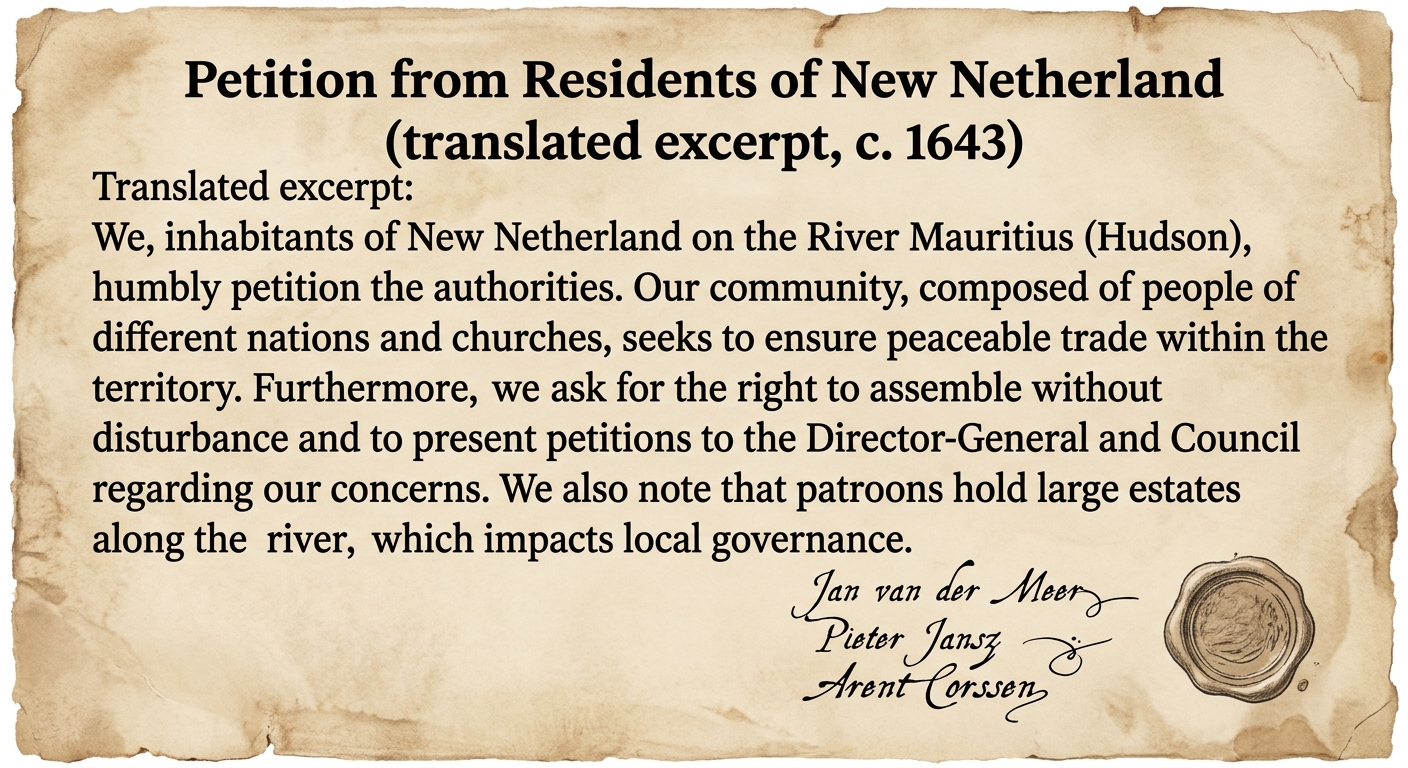
A parchment-style document titled “Petition from Residents of New Netherland (translated excerpt, c. 1643)” with a readable translated passage about Hudson River settlements, religious toleration, petitioning leaders, trade, and patroons holding large estates, plus a wax seal and several generic signatures.

Asemmisa {{asɛmmisaAhyɛnsode}}
1.

Which phrase from the document is the BEST evidence that New Netherland included a diverse population?

Asemmisa {{asɛmmisaAhyɛnsode}}
2.

Which Dutch contribution to American society is MOST directly supported by the petition excerpt?

Asemmisa {{asɛmmisaAhyɛnsode}}
3.

Based on the standard, which comparison is MOST accurate?

Asemmisa {{asɛmmisaAhyɛnsode}}
4.

Using evidence from the petition AND your knowledge of colonial New York, explain one way Dutch political or social practices could have long-lasting effects after the English took control.

Include one piece of evidence from the document and one relevant outside fact.

Asemmisa {{asɛmmisaAhyɛnsode}}
5.

How does the petition show that some colonists believed they could influence government decisions?

Use at least two details from the document as evidence, and explain what those details suggest.

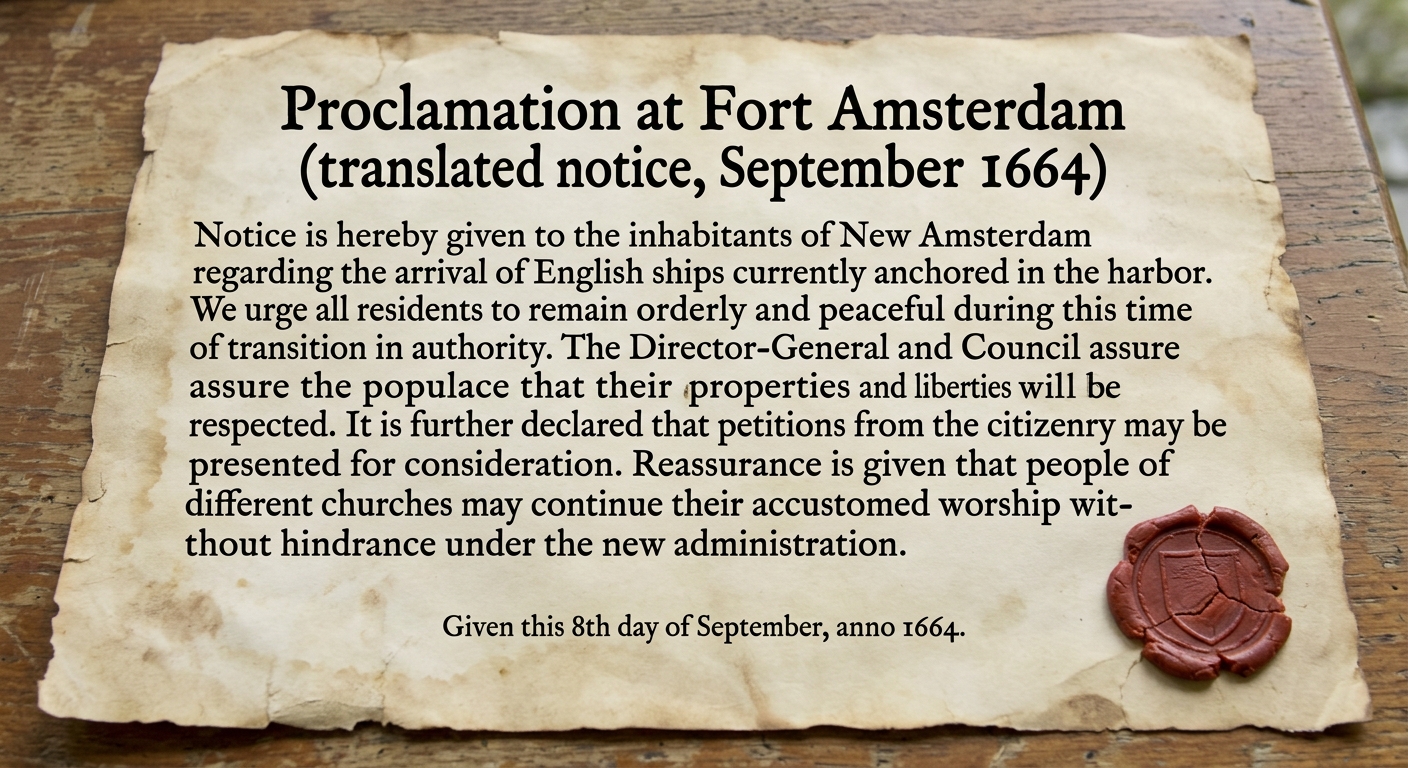
Read the translated notice below from Fort Amsterdam (New Netherland) in 1664. Use the document to identify clues about what was changing and what might stay the same. Then use evidence to place events in order and explain how Dutch practices could continue after English control.

A one-page aged-paper document titled “Proclamation at Fort Amsterdam (translated notice, September 1664)” describing English ships arriving, a change in authority, permission to present petitions, and reassurance that people of different churches may continue worship, with a date and wax seal.

Asemmisa {{asɛmmisaAhyɛnsode}}
6.

Which conclusion about continuity and change is MOST supported by the notice?

Asemmisa {{asɛmmisaAhyɛnsode}}
7.

Which detail from the notice BEST supports the idea that some Dutch political practices could continue even after a change in authority?

Asemmisa {{asɛmmisaAhyɛnsode}}
8.

Which event most likely happened FIRST in the sequence described or implied by the notice?

Asemmisa {{asɛmmisaAhyɛnsode}}
9.

Place these events in a logical chronological order: Dutch settlements along the Hudson River, the 1664 change to English control, and later long-lasting Dutch contributions in New York.

Then explain (using one detail from the notice) why a Dutch contribution could still be seen after 1664.

Asemmisa {{asɛmmisaAhyɛnsode}}
10.

Using evidence from the notice, explain what was changing in 1664 and what might have stayed the same.

Include two pieces of evidence and describe what each one suggests about chronology or continuity.

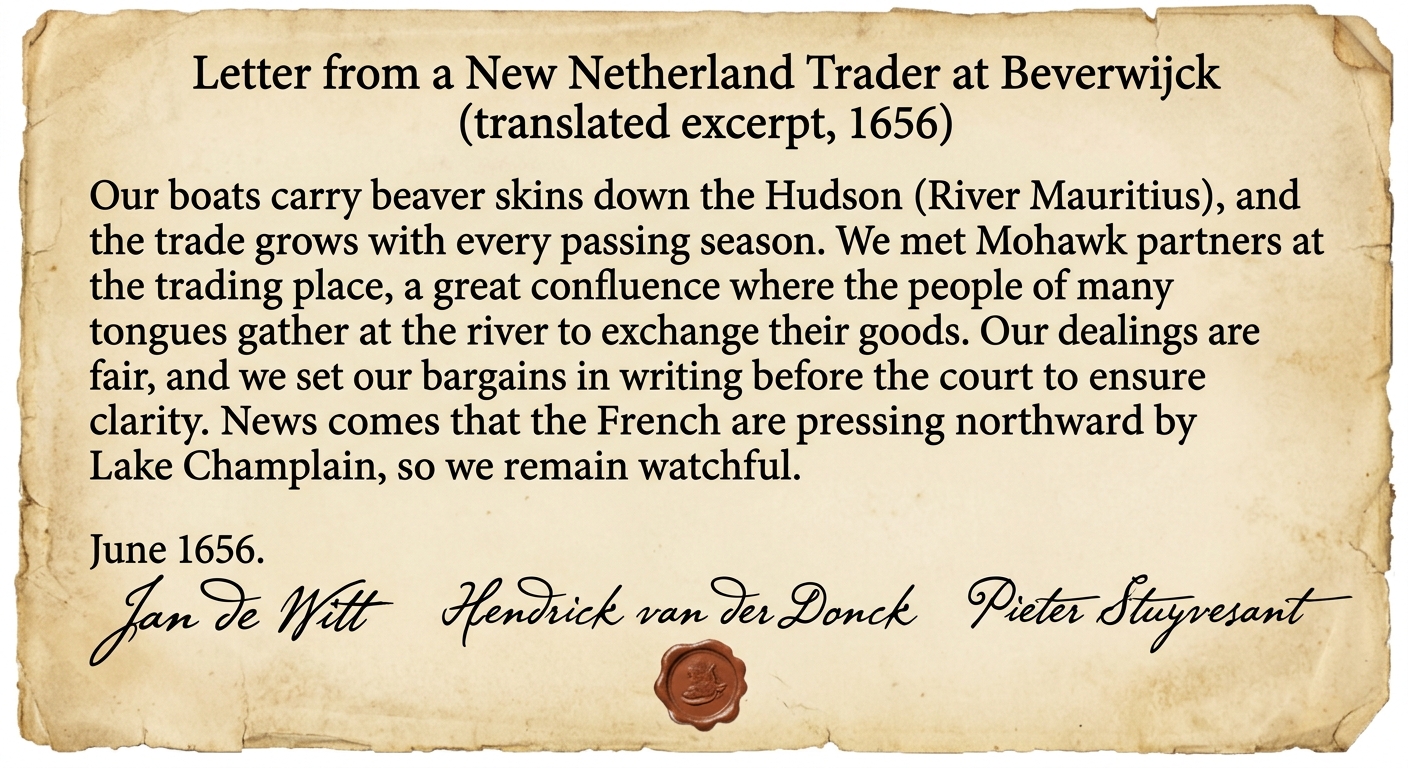
Read the translated letter excerpt below from Beverwijck (near today’s Albany) in 1656. Use it to compare Dutch settlement goals with French settlement patterns in the region, and to place the document in the context of European competition, trade, and diplomacy in colonial New York.

An aged-paper letter titled “Letter from a New Netherland Trader at Beverwijck (translated excerpt, 1656)” describing Hudson River fur trade, meetings with Mohawk partners, diverse languages at the trading place, written bargains before a court, and news of French activity northward by Lake Champlain, with a date and signatures.

Asemmisa {{asɛmmisaAhyɛnsode}}
11.

Which detail from the letter is the BEST evidence of an economic focus that shaped Dutch settlements along the Hudson River?

Asemmisa {{asɛmmisaAhyɛnsode}}
12.

Which statement BEST contextualizes the letter within European competition in the New York region?

Asemmisa {{asɛmmisaAhyɛnsode}}
13.

Compare what the letter suggests about Dutch relations with Native Americans to one likely feature of French relations in the region.

Use one piece of evidence from the letter and one relevant outside fact for context.

Asemmisa {{asɛmmisaAhyɛnsode}}
14.

Based on the letter AND the standard, which comparison is MOST accurate?

Asemmisa {{asɛmmisaAhyɛnsode}}
15.

Using evidence from the letter, explain one way Dutch political, legal, or social practices could have long-lasting effects in New York after English control.

Include one piece of evidence from the letter and one relevant outside fact to contextualize your claim.

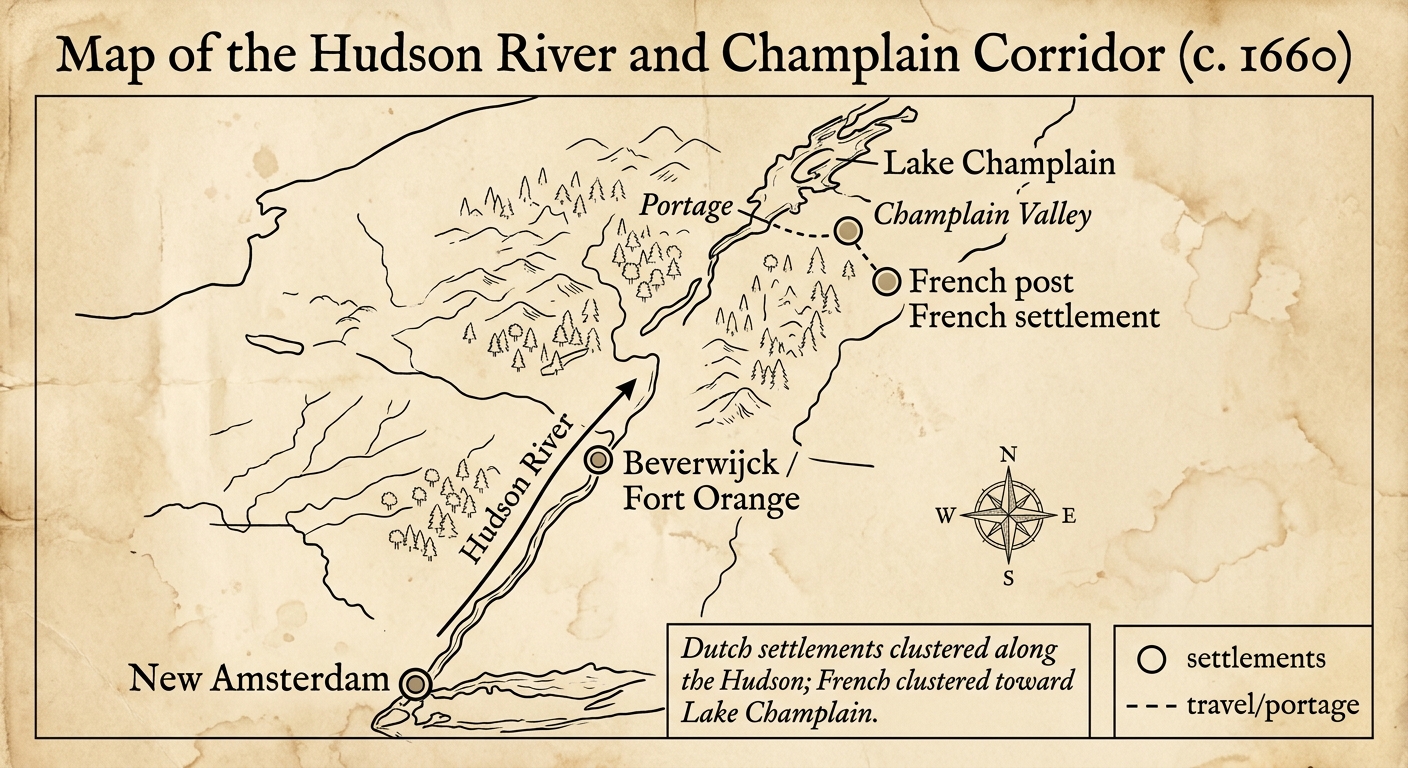
Study the historical map below (c. 1660). Use the labeled places, waterways, and travel routes as evidence to explain why the Dutch developed settlements along the Hudson River while the French developed settlements in the Champlain Valley. Support each answer with map evidence.

An aged parchment-style map titled “Map of the Hudson River and Champlain Corridor (c. 1660)” showing New Amsterdam and Beverwijck along the Hudson River, a portage route to Lake Champlain, and a labeled French post in the Champlain Valley, with a compass rose and legend.

Asemmisa {{asɛmmisaAhyɛnsode}}
16.

Based on the map, which conclusion about Dutch-French competition in the region is MOST supported?

Asemmisa {{asɛmmisaAhyɛnsode}}
17.

Which statement BEST matches the settlement pattern shown on the map?

Asemmisa {{asɛmmisaAhyɛnsode}}
18.

Using the map as evidence, explain how waterways and travel routes could shape economic activity and relationships with Native Americans in the region.

Use at least two specific map details.

Asemmisa {{asɛmmisaAhyɛnsode}}
19.

Use evidence from the map to compare Dutch and French settlement locations.

Then contextualize how geography could help explain one long-lasting Dutch contribution in New York.

Include one map detail and one relevant outside fact.

Asemmisa {{asɛmmisaAhyɛnsode}}
20.

Which geographic feature shown on the map BEST helps explain why Dutch settlements developed along the Hudson River?

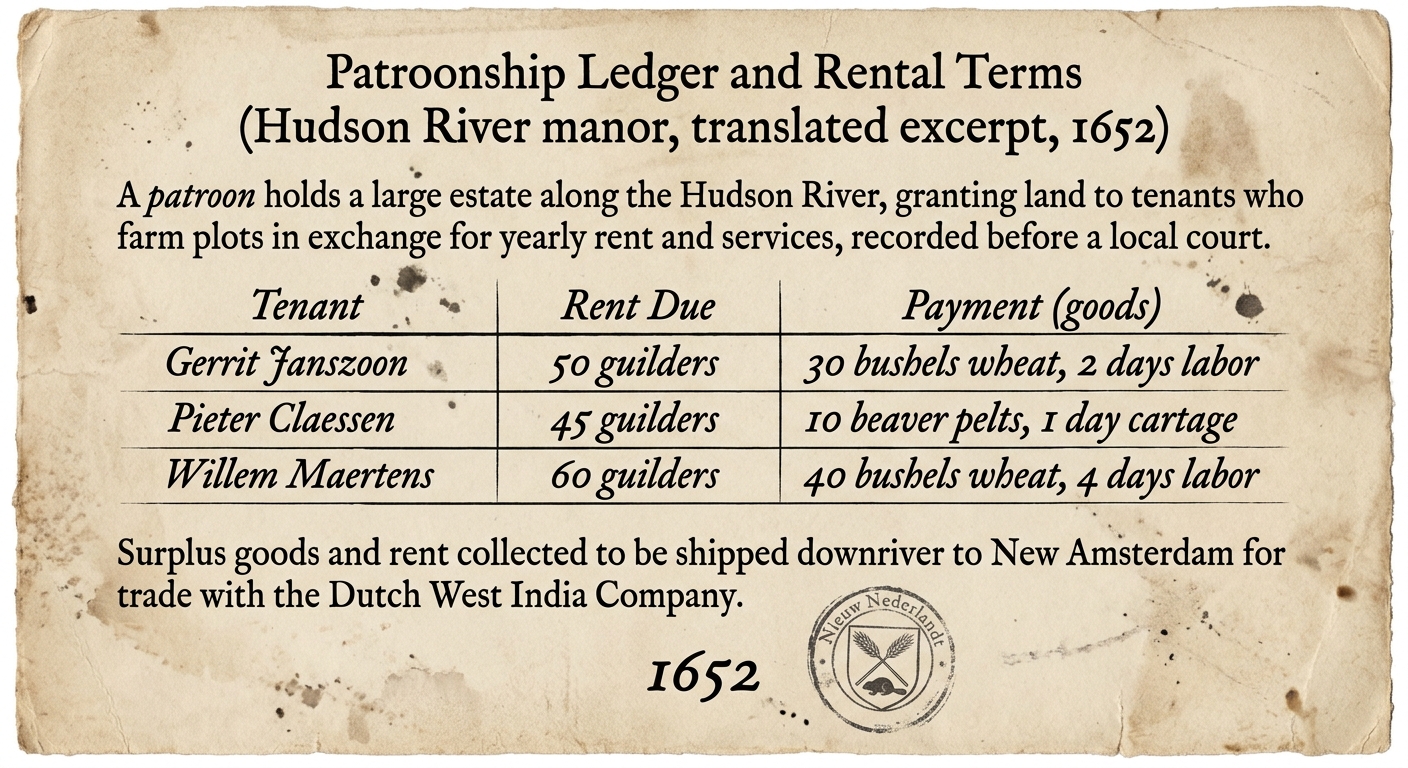
Read the translated economic record below from a Dutch patroonship along the Hudson River (c. 1652). Use details from the ledger to identify how land and labor were organized and how goods moved through trade networks. Then explain how these economic practices could influence later development in New York.

An aged-paper document titled “Patroonship Ledger and Rental Terms (Hudson River manor, translated excerpt, 1652)” describing a patroon’s large Hudson River estate and tenants paying rent in goods like wheat or beaver pelts, with a small table of rent entries and a note about shipping goods to New Amsterdam for trade.

Asemmisa {{asɛmmisaAhyɛnsode}}
21.

Which detail from the record is the BEST evidence that Dutch settlements along the Hudson River were connected to trade networks?

Asemmisa {{asɛmmisaAhyɛnsode}}
22.

Which Dutch economic system is MOST directly illustrated by the record?

Asemmisa {{asɛmmisaAhyɛnsode}}
23.

Compare one economic feature suggested by this Dutch record to one likely economic feature of French settlements in the Champlain Valley.

Use one piece of evidence from the document and one relevant outside fact for context.

Asemmisa {{asɛmmisaAhyɛnsode}}
24.

Based on the record, which inference BEST explains why Dutch economic practices could have long-lasting effects in New York after English control?

Asemmisa {{asɛmmisaAhyɛnsode}}
25.

Using evidence from the record, explain how land and labor were organized in this part of New Netherland.

Use at least two details from the document, and explain what each detail suggests about the local economy.