Twa kɔ nsɛm atitiriw so
Log in
Sign up for FREE
arrow_back
Laabri

7.2e - Colonial Developments: - Practices A through E

star
star
star
star
star
Last updated about 1 month ago
25 Nsɛmmisa
Hyɛ no nsow a efi ɔkyerɛwfo no hɔ:

Use the historical document(s) and the short readings in the left panel to answer the associated questions.

Use the historical document(s) and the short readings in the left panel to answer the associated questions.

7.2.e
DOK.SS.2
7.2.e
DOK.SS.2
7.2.e
DOK.SS.2
7.2.e
DOK.SS.2
7.2.e
DOK.SS.2
Ɛhia
1
7.2.e
DOK.SS.2
Ɛhia
1
7.2.e
DOK.SS.2
Ɛhia
1
7.2.e
DOK.SS.2
Ɛhia
2
7.2.e
DOK.SS.2
Ɛhia
2
7.2.e
DOK.SS.2
Ɛhia
1
7.2.e
DOK.SS.2
Ɛhia
2
7.2.e
DOK.SS.2
Ɛhia
1
7.2.e
DOK.SS.2
Ɛhia
2
7.2.e
DOK.SS.2
Ɛhia
1
7.2.e
DOK.SS.2
Ɛhia
1
7.2.e
DOK.SS.2
Ɛhia
1
7.2.e
DOK.SS.2
Ɛhia
2
7.2.e
DOK.SS.2
Ɛhia
1
7.2.e
DOK.SS.2
Ɛhia
2
7.2.e
DOK.SS.2
Ɛhia
1
7.2.e
DOK.SS.2
Ɛhia
1
7.2.e
DOK.SS.2
Ɛhia
1
7.2.e
DOK.SS.2
Ɛhia
2
7.2.e
DOK.SS.2
Ɛhia
2
7.2.e
DOK.SS.2
Ɛhia
1
7.2.e
DOK.SS.2
Ɛhia
1
7.2.e
DOK.SS.2
Ɛhia
1
7.2.e
DOK.SS.2
Ɛhia
2
7.2.e
DOK.SS.2
Ɛhia
2
7.2.e
DOK.SS.2

Historical Document:
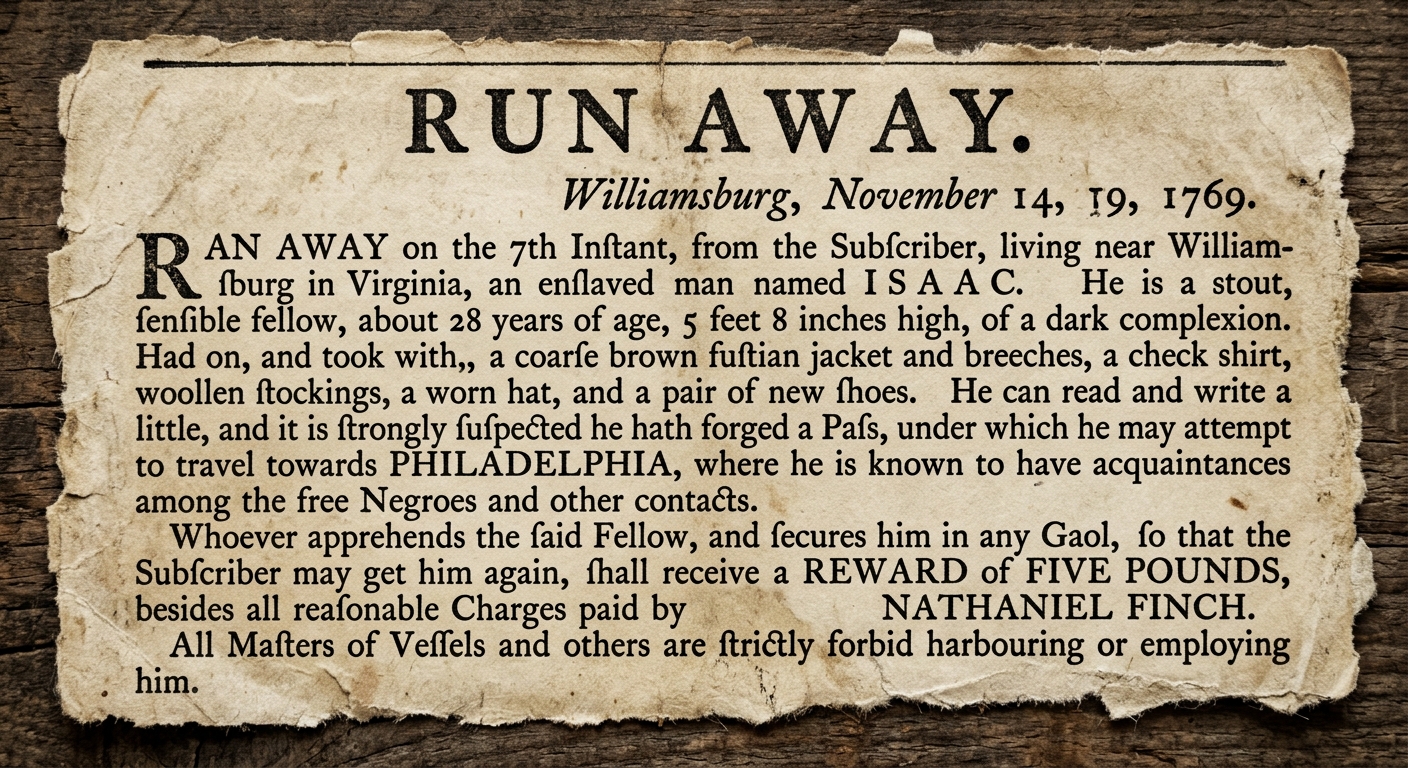
Sepia-toned colonial newspaper clipping with a bold headline "RUN AWAY" and a dated advertisement offering a reward for the capture of an enslaved man named Isaac who escaped in 1769.

This document is a colonial newspaper advertisement (1769). As you read, notice the author’s purpose and the specific details used to identify the person. Some language reflects the time period. Use evidence from the document to answer the questions.
Asemmisa {{asɛmmisaAhyɛnsode}}
1.

Which detail from the document is the BEST evidence that the person who escaped may have used a strategy of resistance rather than only trying to survive day-to-day?

Asemmisa {{asɛmmisaAhyɛnsode}}
2.

Based on the document, which inference about how the person planned to maintain freedom is MOST supported?

Asemmisa {{asɛmmisaAhyɛnsode}}
3.

Which conclusion about slavery in the colonies is BEST supported by this document?

Asemmisa {{asɛmmisaAhyɛnsode}}
4.

How might the author’s purpose affect what information is included or left out in this document?

Name one limitation of using this document alone and describe one additional source a historian could use to corroborate or challenge its claims.

Asemmisa {{asɛmmisaAhyɛnsode}}
5.

Identify two specific pieces of evidence from the document and explain how each one suggests a strategy of survival or a strategy of resistance used by enslaved Africans in the colonies.

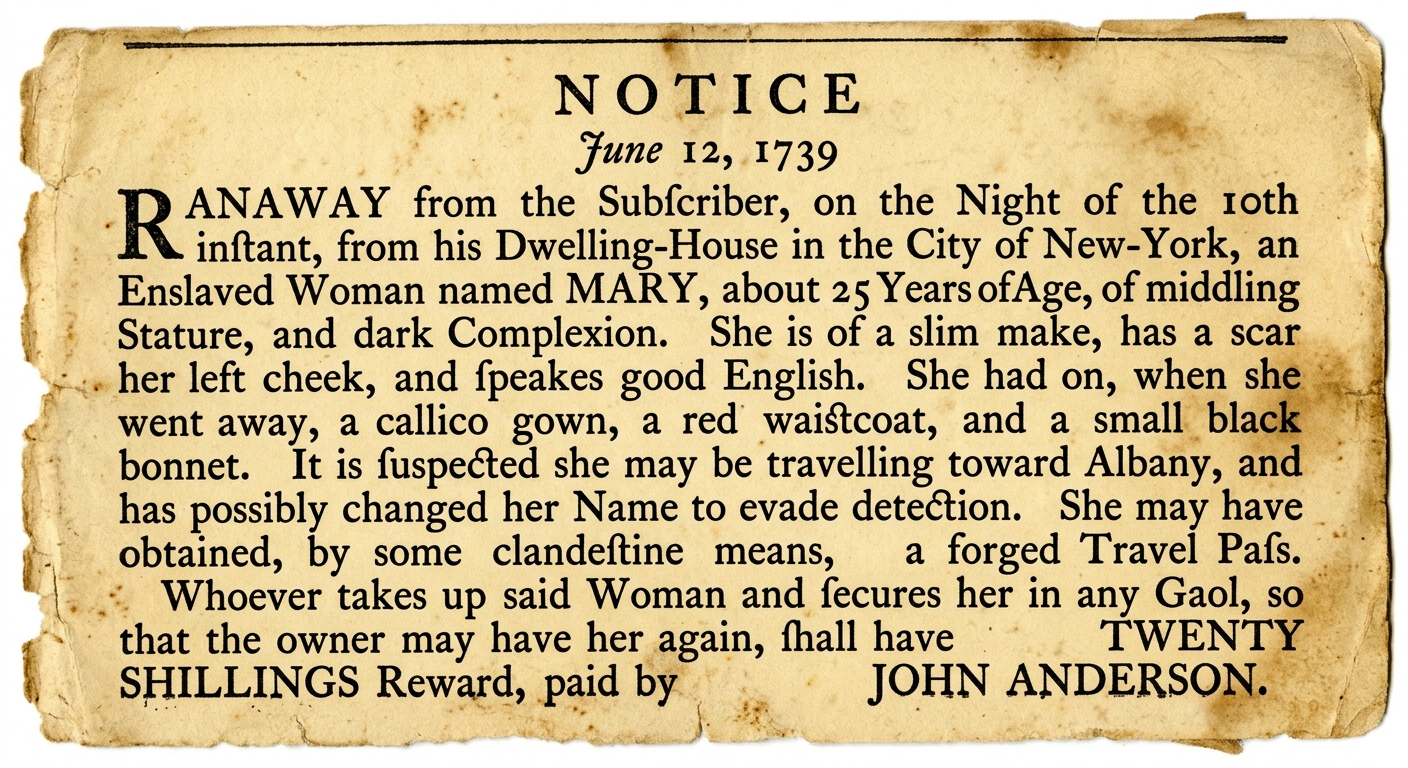
Historical Document:

Aged colonial newspaper notice dated June 12, 1739, describing the escape of an enslaved woman named Mary and offering a reward for her capture.

This colonial newspaper notice is dated June 12, 1739. As you read, track the dates and time phrases to build a timeline. The notice was written to capture an enslaved person, so it highlights timing, travel routes, and identification details. Use evidence to answer the questions.

Asemmisa {{asɛmmisaAhyɛnsode}}
6.

Which piece of evidence is MOST useful for estimating how long Mary had been traveling before the notice appeared?

Asemmisa {{asɛmmisaAhyɛnsode}}
7.

How does the author’s purpose shape the way time and sequence are presented in this notice?

Name one limitation of using this document alone to understand Mary’s choices, and describe one additional source that could help confirm the sequence of events.

Asemmisa {{asɛmmisaAhyɛnsode}}
8.

Which statement BEST places the escape on a timeline using evidence from the document?

Asemmisa {{asɛmmisaAhyɛnsode}}
9.

Create a brief timeline (at least 3 steps) using dated or time-related evidence from the document.

Then explain how the timeline supports one conclusion about how enslaved Africans tried to survive or resist in the colonies.

Asemmisa {{asɛmmisaAhyɛnsode}}
10.

Which inference about Mary’s strategy is MOST supported when you combine the timing clues with the travel destination mentioned in the notice?

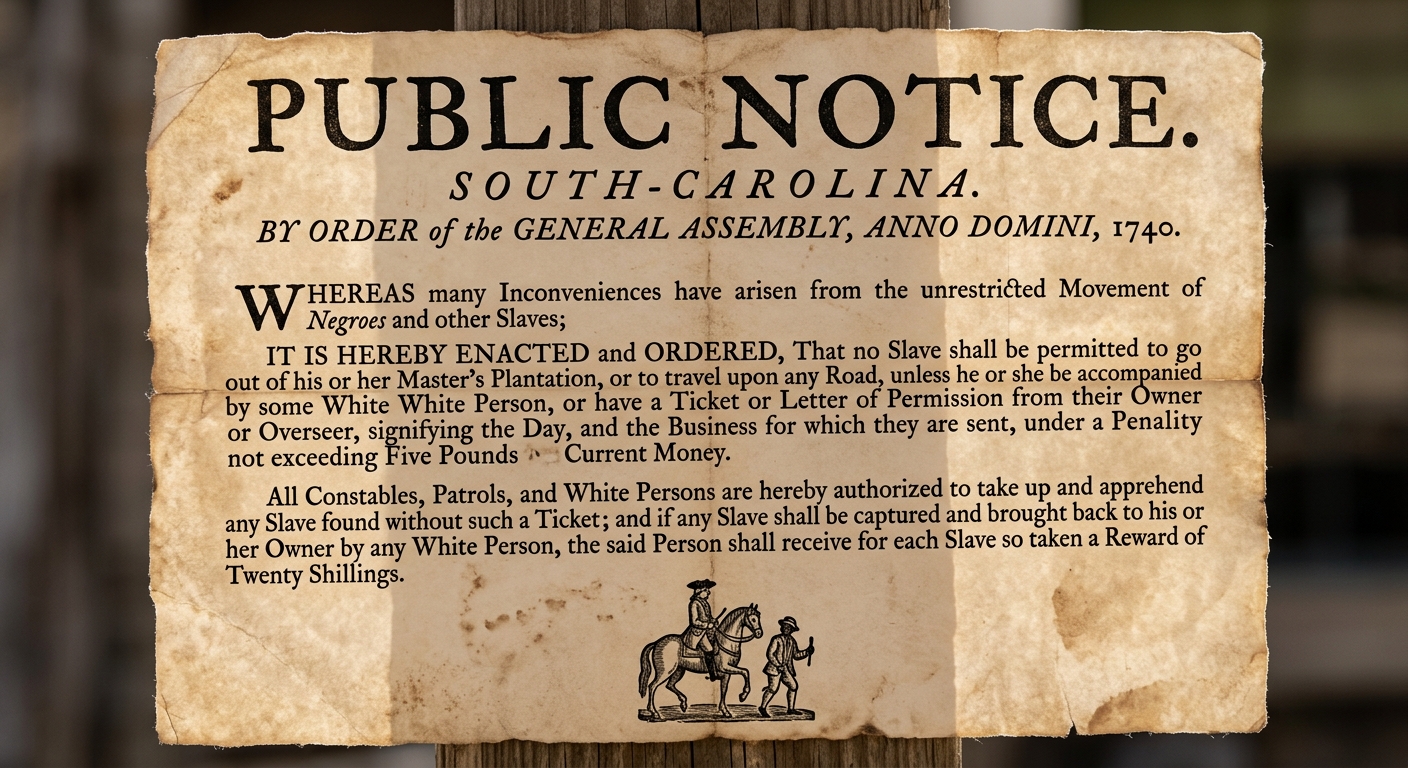
Historical Document:

Aged colonial public notice dated 1740 describing rules requiring written passes for enslaved people traveling and authorizing patrols to detain those without passes.

This document is a public notice from the colonies dated 1740. As you read, focus on what it says about movement, passes, and enforcement. Compare its message to what you learned from runaway advertisements about escape. Use evidence from the document to answer the questions.
Asemmisa {{asɛmmisaAhyɛnsode}}
11.

Which detail from this document BEST shows how colonial governments tried to limit enslaved people’s movement?

Asemmisa {{asɛmmisaAhyɛnsode}}
12.

Which conclusion is BEST supported when you place this document in the broader context of the growth of slavery in the 1700s?

Asemmisa {{asɛmmisaAhyɛnsode}}
13.

Using evidence from this document, explain one way colonial authorities tried to prevent escape.

Then explain one strategy enslaved Africans might have used to survive or resist in response to that policy.

Asemmisa {{asɛmmisaAhyɛnsode}}
14.

Compared to a runaway advertisement, what type of evidence does this public notice MOST directly provide about slavery in the colonies?

Asemmisa {{asɛmmisaAhyɛnsode}}
15.

Compare this public notice to runaway advertisements as historical sources.

Describe one strength and one limitation of each type of document for understanding enslaved people’s choices and conditions in the colonies.

Historical Document:

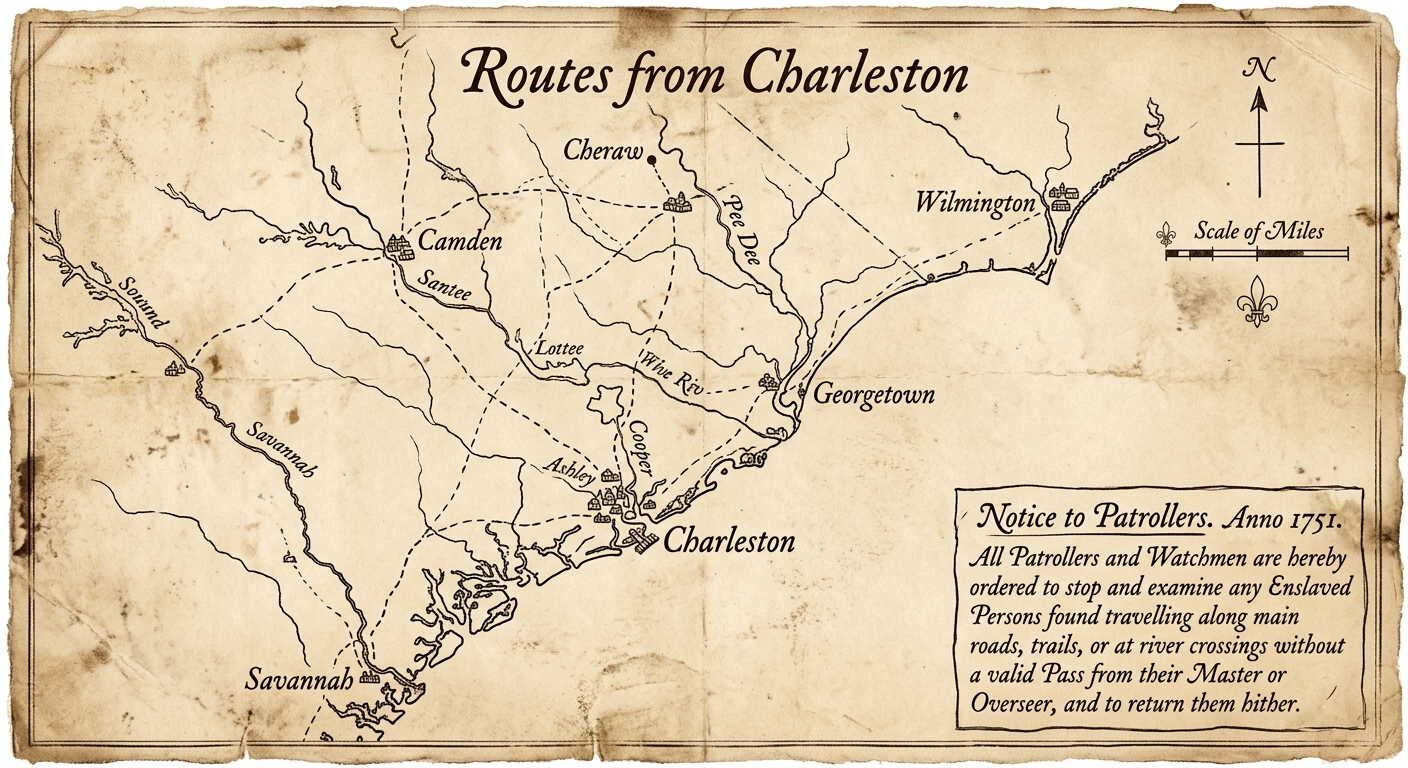
Sepia-toned colonial-era map showing roads and rivers between Charleston and nearby towns, with a note dated 1751 about patrols stopping travelers without passes.

This document is a hand-drawn colonial map (1751) showing roads, rivers, and nearby towns. As you examine it, consider how geography shaped movement and control. Use the map’s evidence to reason about where patrols might watch for escape attempts and how enslaved people could plan routes.

Asemmisa {{asɛmmisaAhyɛnsode}}
16.

Which piece of map evidence BEST supports the idea that enslaved people could use geography to increase their chances of avoiding capture while traveling?

Asemmisa {{asɛmmisaAhyɛnsode}}
17.

Based on the map, which location would MOST likely be closely watched by patrols trying to control movement?

Asemmisa {{asɛmmisaAhyɛnsode}}
18.

If an enslaved person tried to reach a distant town, which conclusion about colonial slavery is BEST supported when you combine the map with what you know about passes and patrols?

Asemmisa {{asɛmmisaAhyɛnsode}}
19.

Use evidence from the map to describe one geographic obstacle and one geographic opportunity that could affect an enslaved person’s attempt to travel without being captured.

Explain how each could shape a strategy of survival or resistance.

Asemmisa {{asɛmmisaAhyɛnsode}}
20.

Explain one way geography could help colonial authorities enforce slavery, and one way geography could help enslaved Africans resist or survive.

Use at least two specific details from the map in your answer.

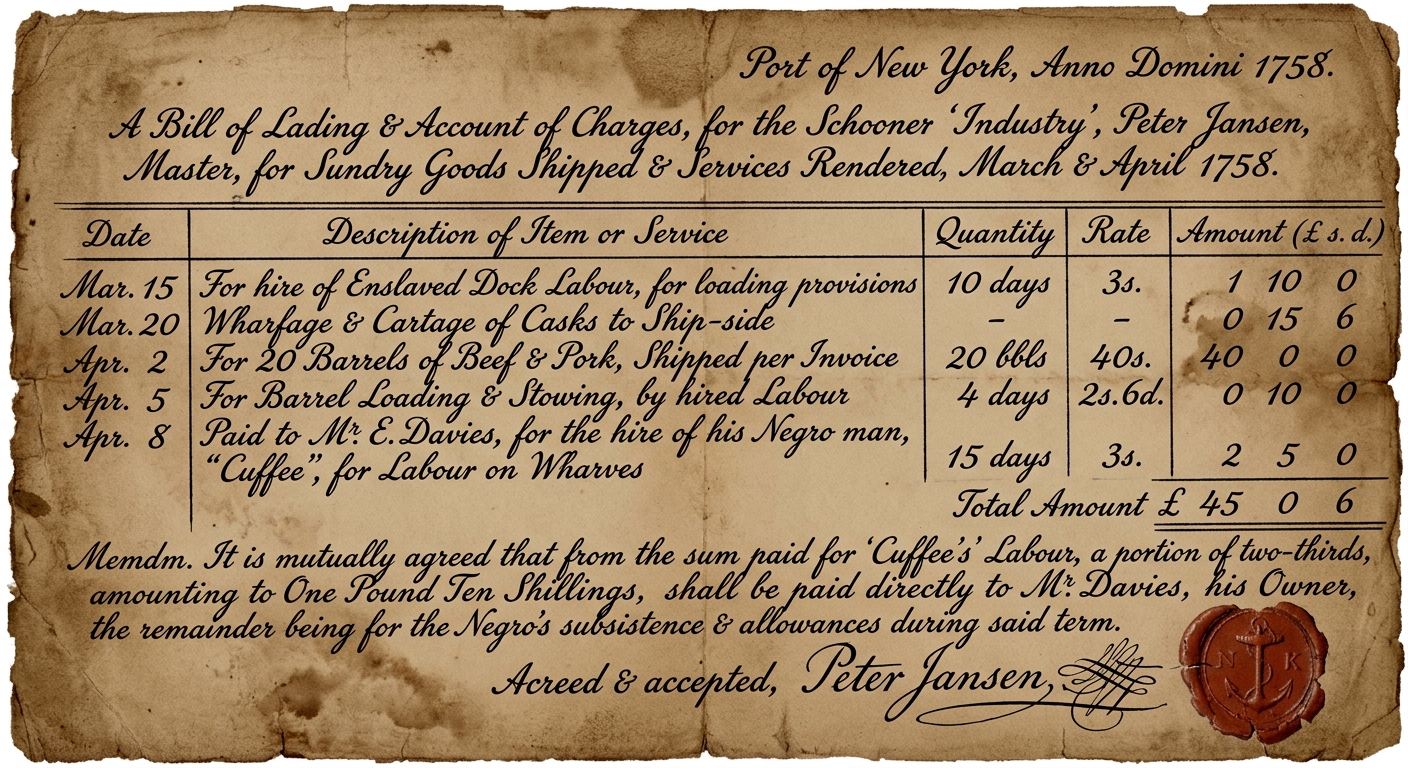
Historical Document:

Aged colonial ledger dated 1758 listing costs for hiring enslaved dock labor and other port services, with totals and a signature.

This document is a colonial port ledger (1758) listing charges for labor and services. As you read, focus on what the prices and payment terms reveal about slavery as an economic system. Use evidence from the document to explain how enslaved labor connected to profit, trade, and control.

Asemmisa {{asɛmmisaAhyɛnsode}}
21.

Based on the document, which inference BEST explains why slavery expanded in some colonial regions?

Asemmisa {{asɛmmisaAhyɛnsode}}
22.

Which detail from the ledger MOST directly shows that enslaved labor was treated as a source of profit for slaveholders?

Asemmisa {{asɛmmisaAhyɛnsode}}
23.

Which conclusion about economic relationships in the colonies is BEST supported by this ledger?

Asemmisa {{asɛmmisaAhyɛnsode}}
24.

Explain one limitation of using this document alone to understand enslaved people’s conditions, and describe one additional source that could provide evidence about the human impact behind these economic transactions.

Asemmisa {{asɛmmisaAhyɛnsode}}
25.

Use two pieces of evidence from the ledger to explain how slavery functioned as an economic system.

In your explanation, connect the evidence to profit, labor, or trade.