Twa kɔ nsɛm atitiriw so
Log in
Sign up for FREE
arrow_back
Laabri

7.3a - American Independence: - Practices A through E

star
star
star
star
star
Last updated about 1 month ago
25 Nsɛmmisa
Hyɛ no nsow a efi ɔkyerɛwfo no hɔ:

Use the historical document(s) and the short readings in the left panel to answer the associated questions.

Use the historical document(s) and the short readings in the left panel to answer the associated questions.

7.3.a
DOK.SS.2
7.3.a
DOK.SS.2
7.3.a
DOK.SS.2
7.3.a
DOK.SS.2
7.3.a
DOK.SS.2
Ɛhia
1
7.3.a
DOK.SS.2
Ɛhia
1
7.3.a
DOK.SS.2
Ɛhia
1
7.3.a
DOK.SS.2
Ɛhia
1
7.3.a
DOK.SS.2
Ɛhia
1
7.3.a
DOK.SS.2
Ɛhia
1
7.3.a
DOK.SS.2
Ɛhia
1
7.3.a
DOK.SS.2
Ɛhia
1
7.3.a
DOK.SS.2
Ɛhia
1
7.3.a
DOK.SS.2
Ɛhia
1
7.3.a
DOK.SS.2
Ɛhia
1
7.3.a
DOK.SS.2
Ɛhia
1
7.3.a
DOK.SS.2
Ɛhia
1
7.3.a
DOK.SS.2
Ɛhia
1
7.3.a
DOK.SS.2
Ɛhia
1
7.3.a
DOK.SS.2
Ɛhia
1
7.3.a
DOK.SS.2
Ɛhia
1
7.3.a
DOK.SS.2
Ɛhia
1
7.3.a
DOK.SS.2
Ɛhia
1
7.3.a
DOK.SS.2
Ɛhia
1
7.3.a
DOK.SS.2
Ɛhia
1
7.3.a
DOK.SS.2
Ɛhia
1
7.3.a
DOK.SS.2
Ɛhia
1
7.3.a
DOK.SS.2
Ɛhia
1
7.3.a
DOK.SS.2
Ɛhia
1
7.3.a
DOK.SS.2

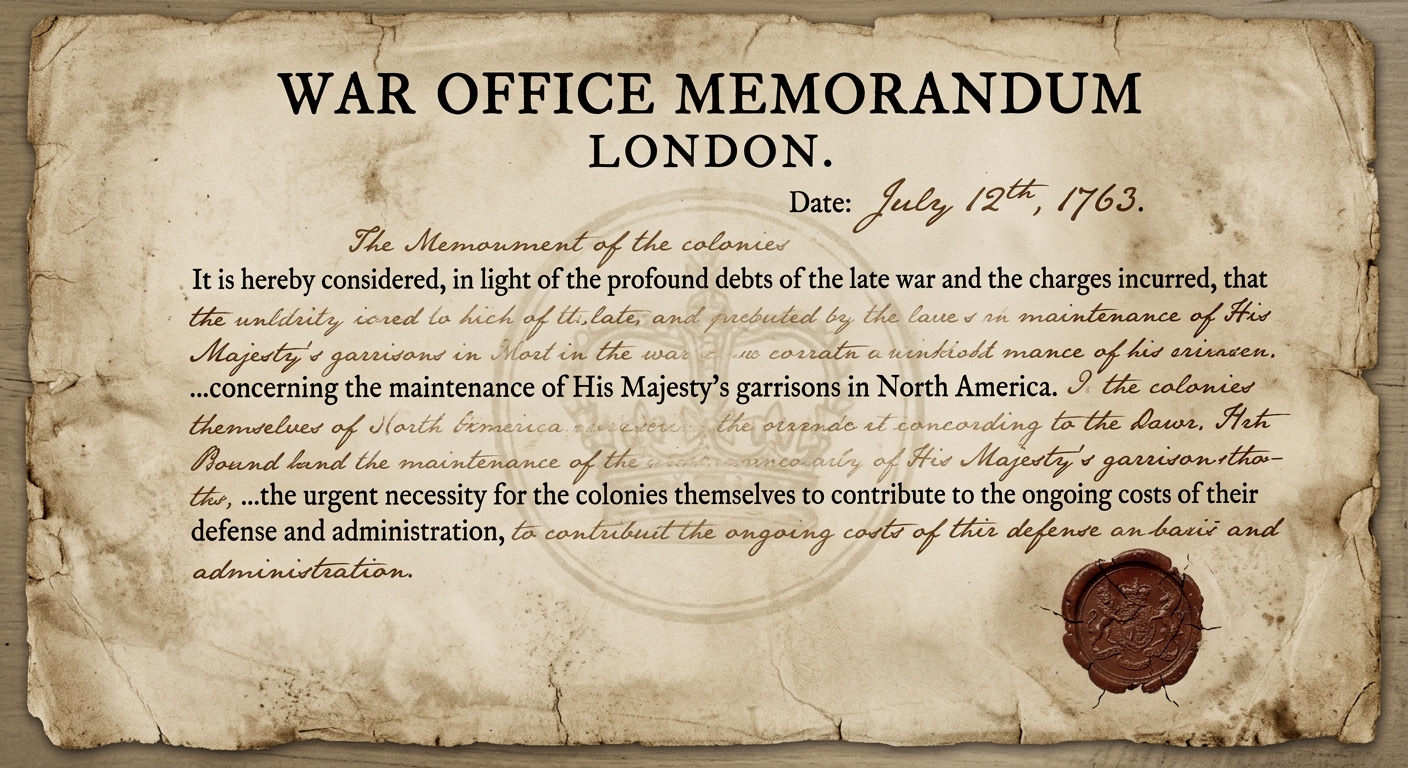
Fictional 1763 British War Office memorandum on aged parchment mentioning war debts, North American garrisons, and colonial contributions, with cursive writing and a wax seal.

This fictional memorandum (dated 1763) reflects concerns British officials expressed after wars with France in North America. It argues that keeping troops in the colonies costs money and that colonists should help pay for defense and administration.
Asemmisa {{asɛmmisaAhyɛnsode}}
1.

Which phrase from the document is the BEST evidence that conflicts with France changed Britain’s relationship with the colonies?

Asemmisa {{asɛmmisaAhyɛnsode}}
2.

Based on the document and the reading, what is the MOST likely purpose of the memorandum?

Asemmisa {{asɛmmisaAhyɛnsode}}
3.

Which inference about colonial reactions is BEST supported by the memorandum’s emphasis on costs and troops?

Asemmisa {{asɛmmisaAhyɛnsode}}
4.

Explain how conflicts between France and Great Britain in North America could alter the relationship between Great Britain and the colonies.

Use at least TWO pieces of evidence from the document or the reading.

Asemmisa {{asɛmmisaAhyɛnsode}}
5.

Using evidence, describe one cause-and-effect chain that connects French–British conflict to increased British troop presence and then to changes in colonial attitudes toward Great Britain.

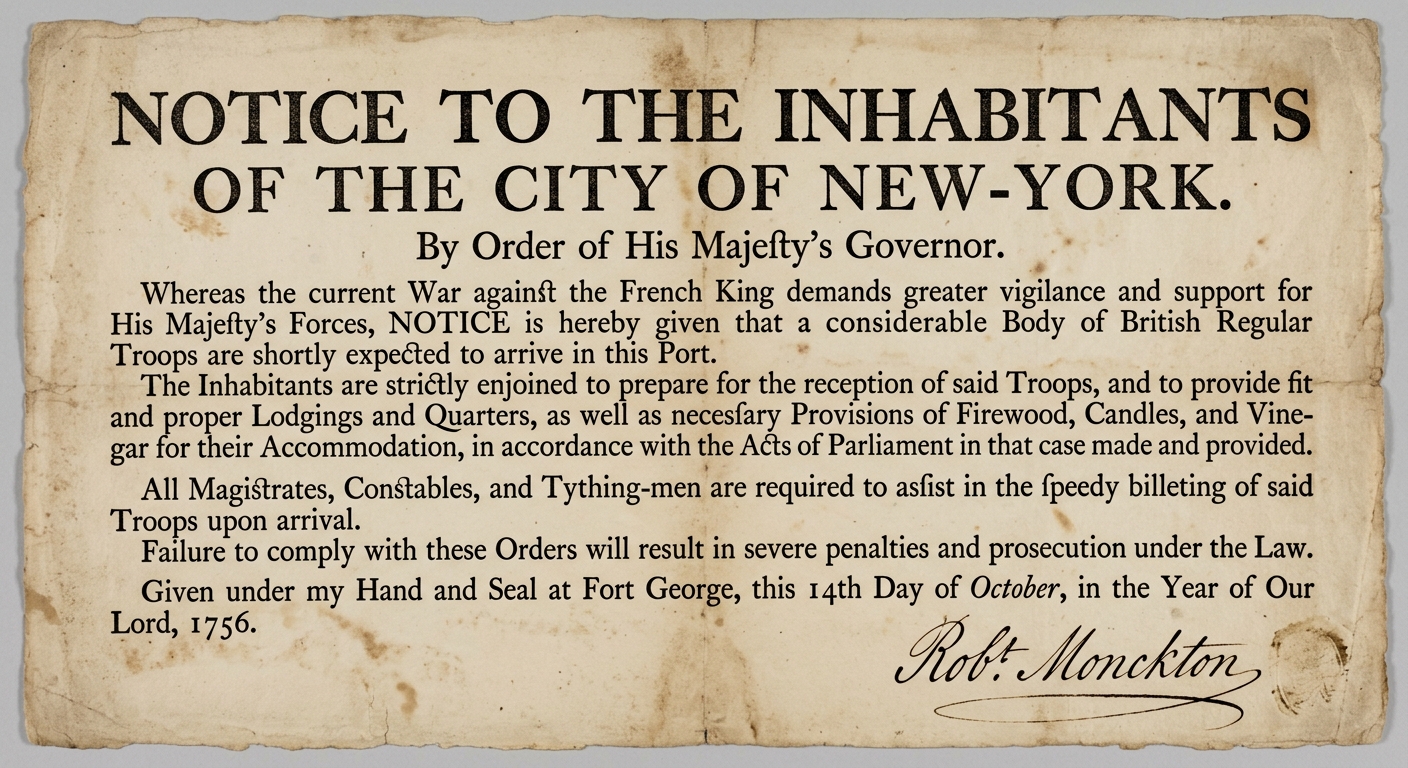
Fictional 1756 New York City official notice about the war with France and arrangements for quartering British troops, on aged parchment with a signature.

This fictional notice (dated 1756) comes from New York during a war between Britain and France. It announces the arrival of British troops and asks colonists to provide lodging and supplies. Later, British officials used similar wartime demands to justify tighter control.

Asemmisa {{asɛmmisaAhyɛnsode}}
6.

Which detail from the notice is BEST evidence that the war created new expectations for colonists at that time?

Asemmisa {{asɛmmisaAhyɛnsode}}
7.

Use the date and TWO pieces of evidence from the document/reading to explain how a wartime demand in 1756 could contribute to a changed relationship between Great Britain and the colonies later in the 1700s.

Asemmisa {{asɛmmisaAhyɛnsode}}
8.

Describe one chronological cause-and-effect chain that starts with the war context in 1756 and ends with a likely colonial attitude toward Great Britain.

Use evidence from the document/reading.

Asemmisa {{asɛmmisaAhyɛnsode}}
9.

Based on the document’s date (1756), which later development is MOST consistent with the reading’s claim that wartime demands led to tighter control?

Asemmisa {{asɛmmisaAhyɛnsode}}
10.

Which sequence best matches the timeline suggested by the date and the notice’s message?

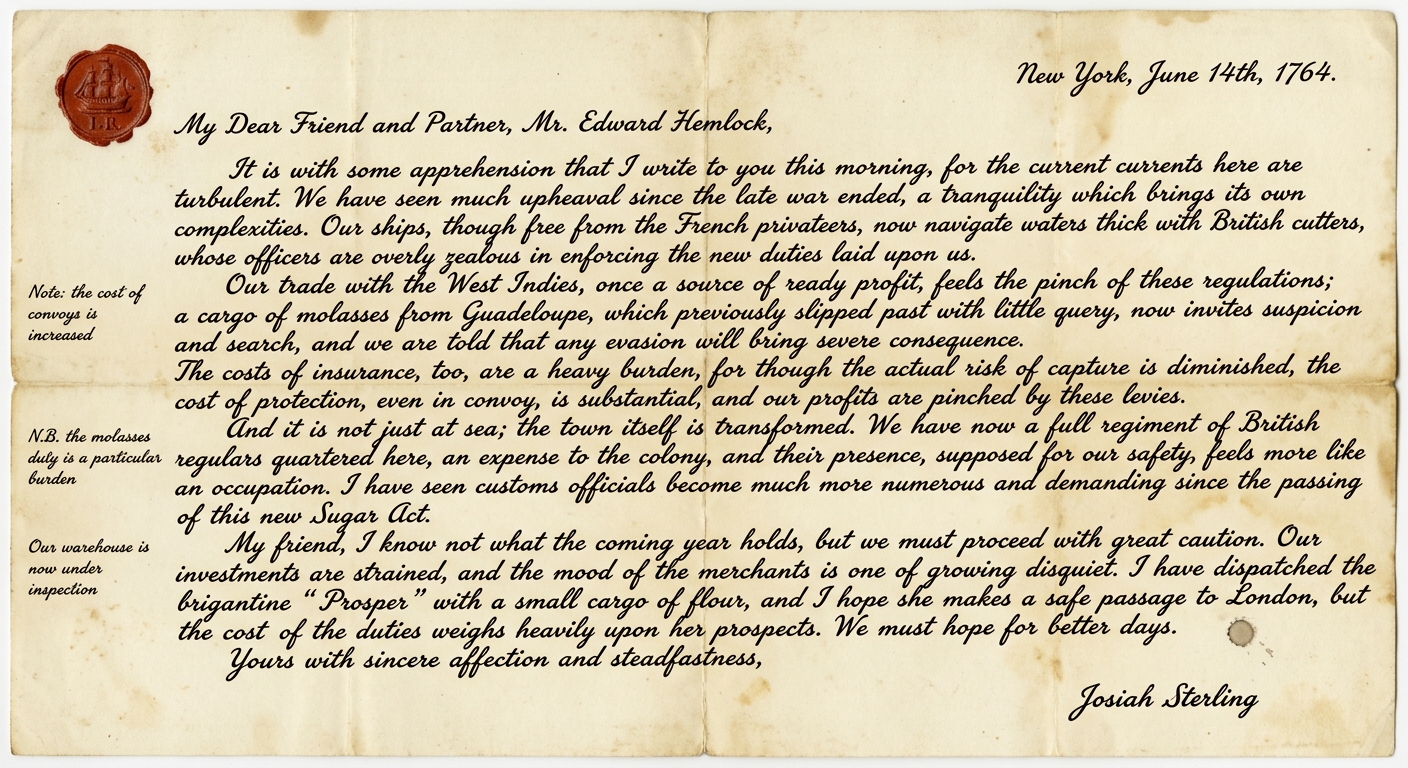
Fictional 1764 letter from a New York merchant describing postwar trade changes, new duties, and increased British officials after conflict with France.

This fictional letter (dated 1764) is from a New York merchant writing after a war between Great Britain and France in North America. The writer notes changes in trade and higher costs, and mentions more British troops and customs officials in port towns.

Asemmisa {{asɛmmisaAhyɛnsode}}
11.

Which detail from the document BEST supports the idea that imperial conflict changed daily life in the colonies?

Asemmisa {{asɛmmisaAhyɛnsode}}
12.

Explain how conflicts between France and Great Britain in North America could lead Britain to increase control in colonial ports like New York.

Use at least TWO pieces of evidence from the document/reading.

Asemmisa {{asɛmmisaAhyɛnsode}}
13.

Placing this 1764 letter in context, which broader situation is it MOST directly describing?

Asemmisa {{asɛmmisaAhyɛnsode}}
14.

Which comparison is MOST supported by the document and reading?

Asemmisa {{asɛmmisaAhyɛnsode}}
15.

Compare TWO ways the letter suggests the relationship between Great Britain and the colonies changed after conflict with France.

Use evidence from the document/reading.

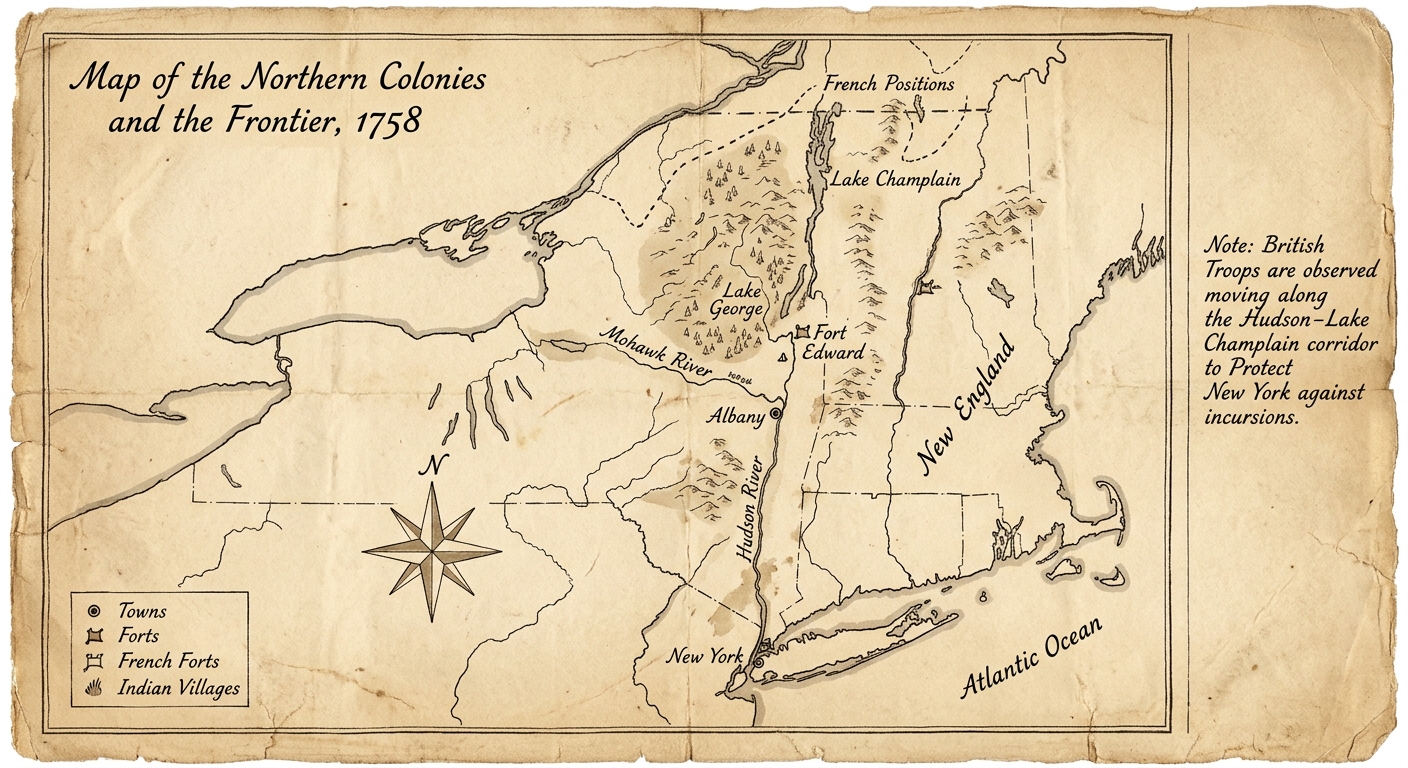
Fictional 1758 hand-drawn map showing New York, Albany, Hudson River, Lake George and Lake Champlain, and French positions to the north.

This fictional map (dated 1758) highlights routes and forts tied to fighting between Britain and France near New York’s northern frontier. It emphasizes waterways used to move troops and supplies. British officials argued that defending these routes required more soldiers and stronger administration.

Asemmisa {{asɛmmisaAhyɛnsode}}
16.

Based on the map and reading, which geographic feature MOST directly explains why New York was strategically important during French–British conflicts?

Asemmisa {{asɛmmisaAhyɛnsode}}
17.

Which statement BEST compares the locations labeled on the map to support a conclusion about where conflict was most likely?

Asemmisa {{asɛmmisaAhyɛnsode}}
18.

Which broader British concern is MOST consistent with the map’s focus on forts and transport routes?

Asemmisa {{asɛmmisaAhyɛnsode}}
19.

Explain how the geography shown on the map could help explain why conflicts with France altered Britain’s relationship with the colonies.

Use at least TWO pieces of evidence from the map/reading.

Asemmisa {{asɛmmisaAhyɛnsode}}
20.

Compare TWO locations or features on the map and describe one cause-and-effect relationship they suggest about troop movement and colonial demands.

Use evidence from the map/reading.

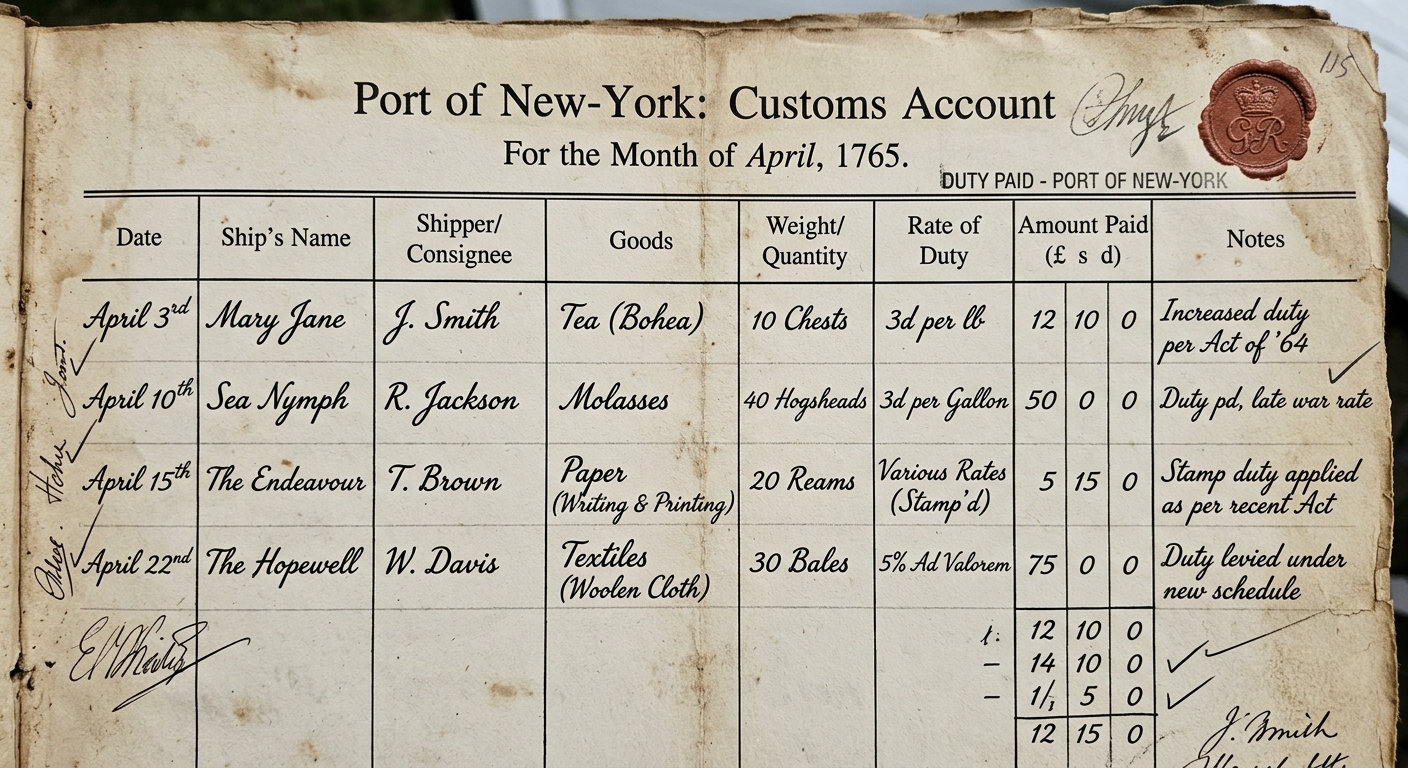
This fictional customs ledger page (dated 1765) records duties collected at the Port of New York after wars with France. It lists imported goods, the duty charged, and notes about enforcement. British officials argued that higher duties helped pay war debts and fund troops in North America.

Fictional 1765 Port of New York customs ledger showing duties on goods like tea and molasses, with handwritten notes and totals.

Asemmisa {{asɛmmisaAhyɛnsode}}
21.

Explain how conflicts between France and Great Britain could lead Britain to change colonial trade costs and enforcement.

Use at least TWO pieces of evidence from the ledger/reading.

Asemmisa {{asɛmmisaAhyɛnsode}}
22.

Which inference about the colonial economy is BEST supported by the ledger’s list of taxed imports?

Asemmisa {{asɛmmisaAhyɛnsode}}
23.

Which comparison is MOST consistent with the reading’s context about postwar policy?

Asemmisa {{asɛmmisaAhyɛnsode}}
24.

Describe one cause-and-effect chain linking French–British conflict to a change in colonial economic attitudes toward Great Britain.

Use evidence from the document/reading.

Asemmisa {{asɛmmisaAhyɛnsode}}
25.

Based on the ledger and reading, which economic goal is MOST directly suggested by the duties listed?