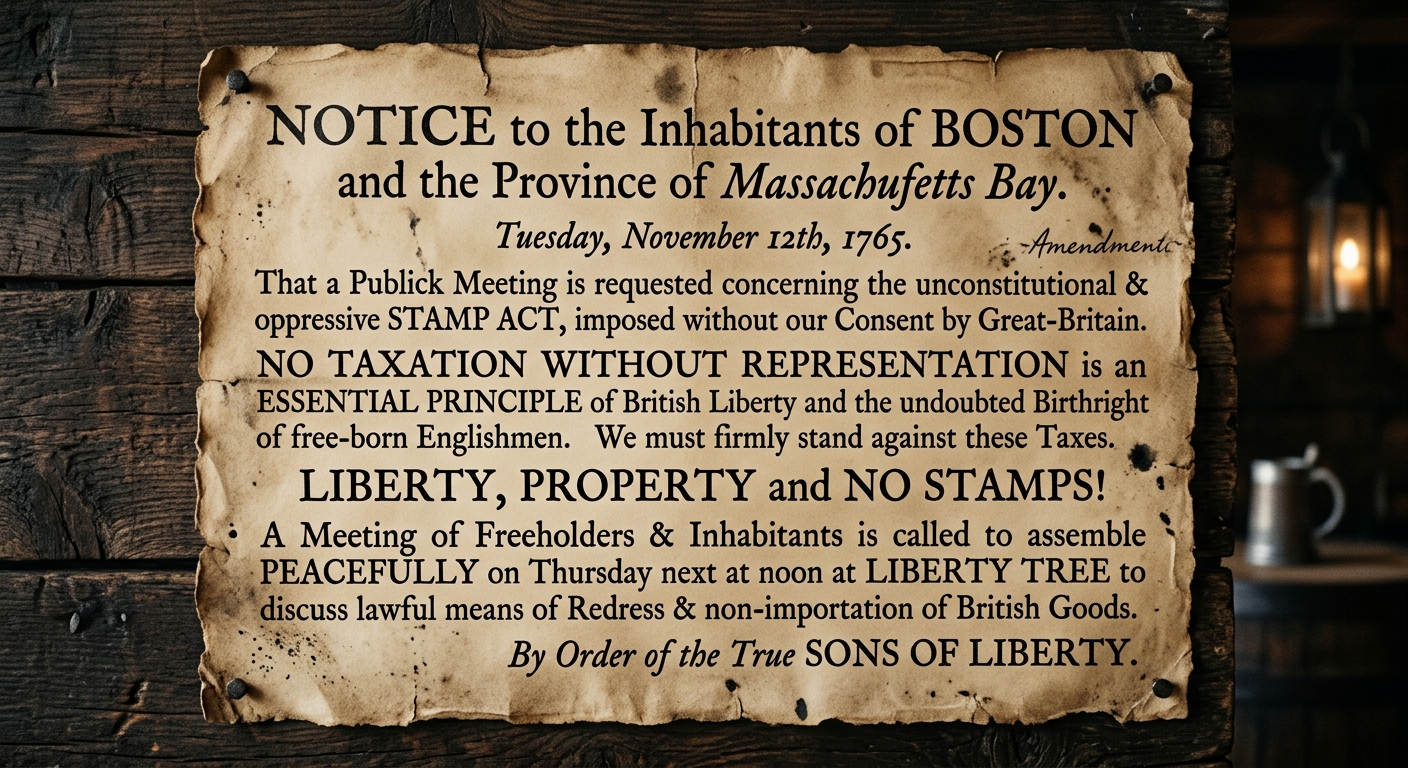
After the French and Indian War, Parliament raised money by passing new taxes in the colonies. In 1765 the Sons of Liberty circulated many flyers about the Stamp Act. Look for the complaint being made and the action being encouraged.
Use the historical document(s) and the short readings in the left panel to answer the associated questions.
Use the historical document(s) and the short readings in the left panel to answer the associated questions.
After the French and Indian War, Parliament raised money by passing new taxes in the colonies. In 1765 the Sons of Liberty circulated many flyers about the Stamp Act. Look for the complaint being made and the action being encouraged.
What is the main purpose of this document?
Which phrase from the document best supports the claim that colonists believed British policy was unfair?
Which colonial response to British policies is most clearly reflected in the broadside?
Using evidence from the broadside, explain one complaint colonists had about British policy and one action the broadside encourages colonists to take.
Use at least two specific details from the document.
How does this document help you understand why British leaders might have viewed some colonial responses as a challenge to their authority?
Support your answer with evidence from the document.
In 1774, Parliament passed laws to punish Boston after the Boston Tea Party. Study this notice about the Boston Port Act. Pay attention to the date and what action is ordered. Use those details to reason about what happened first and what happened next.
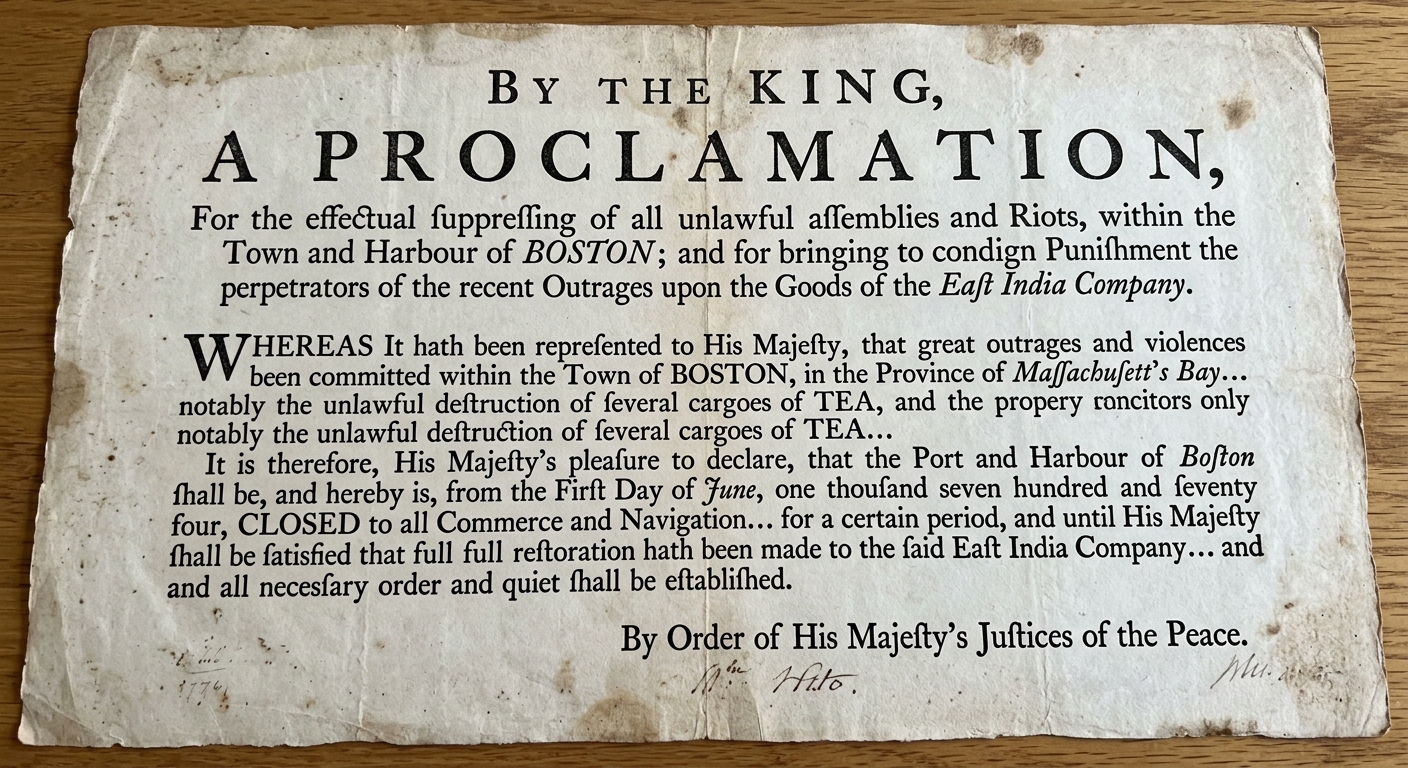
Which event most likely happened immediately before the action ordered in this notice?
Which detail from the document is most useful for placing this policy on a timeline?
If this notice is dated 1774, which colonial action is the best example of what many colonists did next in response to these kinds of laws?
Use the date and the policy described in the notice to explain the sequence of events: what happened before this law, what the law required, and one likely colonial response afterward.
Use at least two specific details from the document.
Why might British officials have expected the order in this notice to change colonial behavior over time?
Use evidence from the document to support your reasoning about cause and effect.
After the French and Indian War, Britain issued the Proclamation of 1763 to manage tensions on the frontier. Study the notice and identify what is being restricted and why. Then connect this policy to other British actions colonists later criticized. Use evidence from the document.
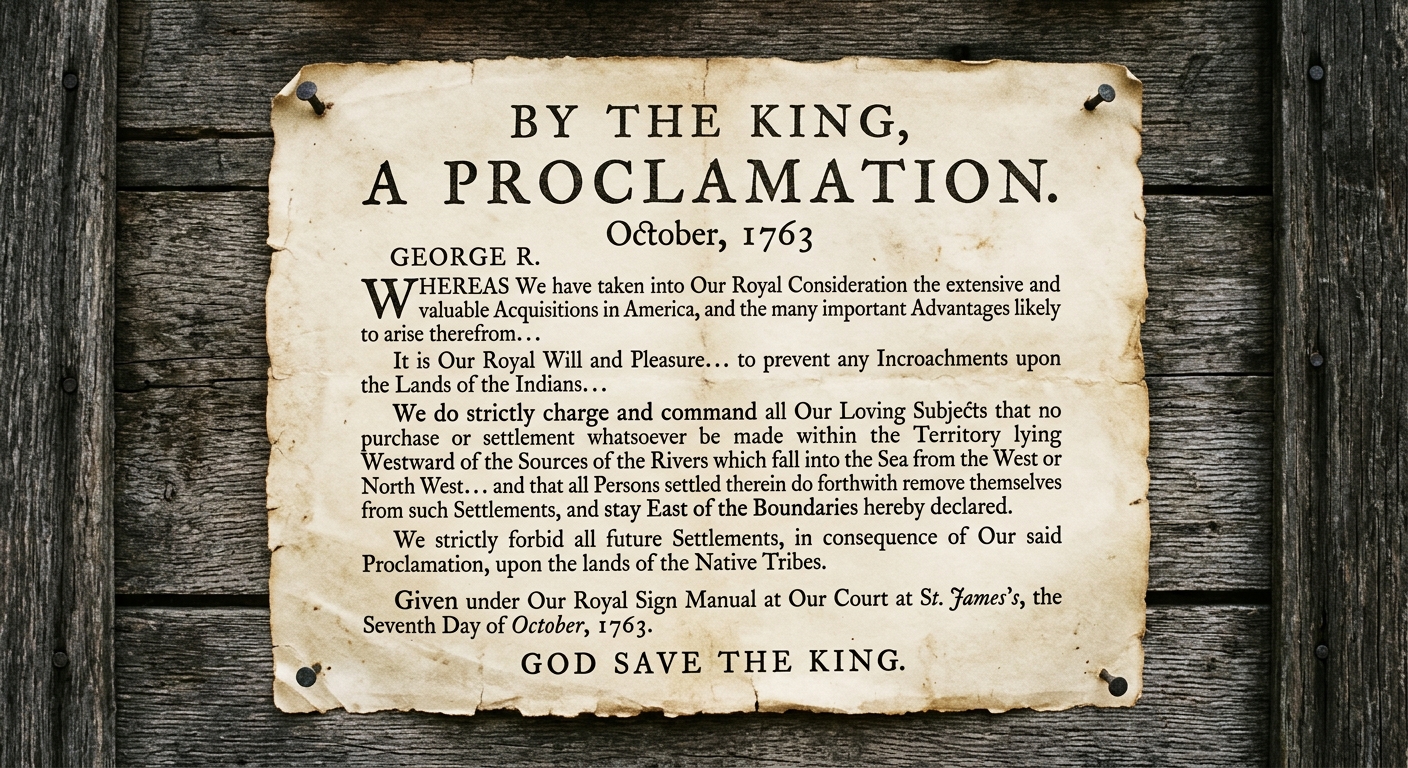
Which detail from the proclamation notice best supports the idea that Britain was trying to control where colonists could live?
Which later British action is MOST similar to the proclamation because it also attempted to enforce imperial control over the colonies?
Which statement best contextualizes why Britain issued this proclamation soon after the French and Indian War?
Compare this proclamation to later British policies colonists protested (like the Stamp Act or Tea Act).
Describe one similarity and one difference, using at least two specific details from this document as evidence.
Using evidence from the proclamation notice, explain how a colonist living in 1763 might interpret this policy differently than a British official would.
Include at least two specific details from the document.
After the French and Indian War, Britain issued the Proclamation of 1763 and marked a boundary along the Appalachian Mountains. Study this map-style notice and identify what areas were restricted. Use the map’s labels and boundary line as evidence in your answers.
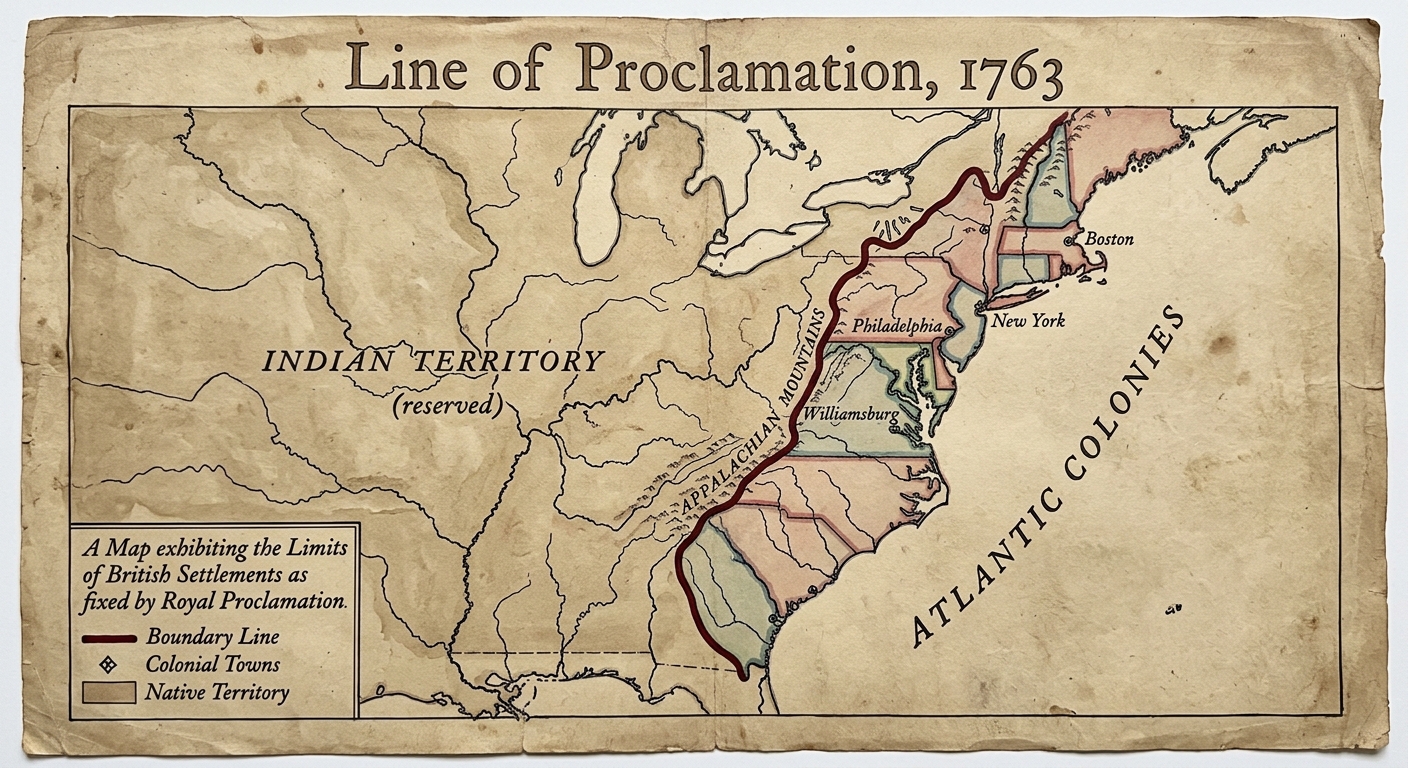
Based on the map, which area was MOST clearly meant to be limited for colonial settlement by the 1763 boundary?
Which feature on the map provides the BEST evidence that the proclamation used geography to enforce policy?
Which conclusion is BEST supported by the map about why this boundary could have caused colonial protests?
Using evidence from the map, explain how the boundary shaped where colonists could settle.
Include at least two specific map details (labels, boundary line, or legend).
Explain one way geographic limits like this could connect to later protests about British control.
Use at least one map detail as evidence.
After the French and Indian War, Parliament used taxes and trade rules to raise revenue from the colonies. Study this non-importation agreement. Identify which goods are targeted and why. Then explain how boycotts used economic pressure to protest British policy. Use evidence from the document.
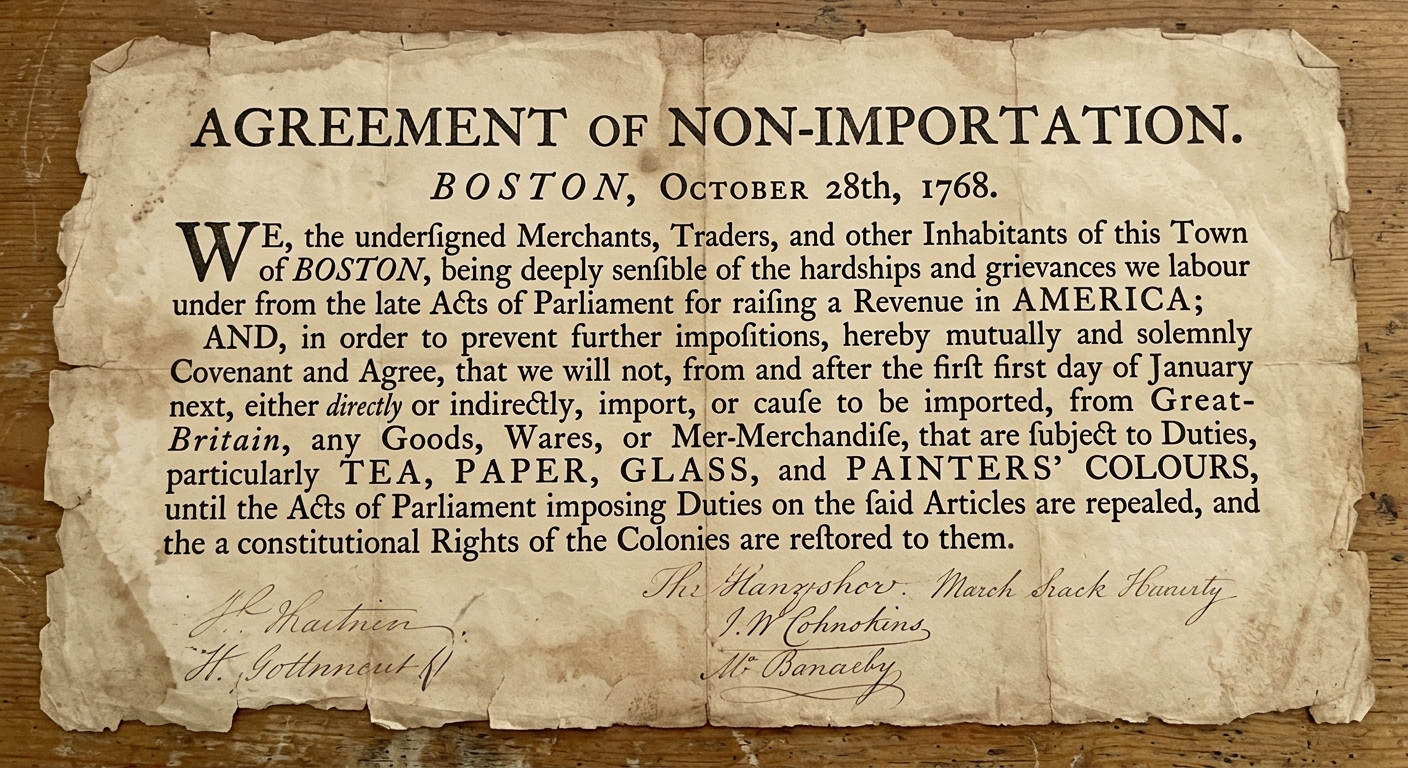
Based on the non-importation agreement, what economic action are colonists being encouraged to take?
Which detail from the agreement provides the strongest evidence that colonists were using economics as a form of protest?
How would a widespread boycott like the one in this document most likely affect British merchants over time?
Using evidence from the agreement, explain why colonists believed non-importation could influence British decisions.
Include at least two specific details from the document.
Compare this economic protest to another type of colonial response to British policies (such as petitions, public meetings, or protests).
Explain one similarity and one difference, using evidence from this document for at least one part of your comparison.