Twa kɔ nsɛm atitiriw so
Log in
Sign up for FREE
arrow_back
Laabri

7.3c - American Independence: - Practices A through E

star
star
star
star
star
Last updated about 1 month ago
25 Nsɛmmisa
Hyɛ no nsow a efi ɔkyerɛwfo no hɔ:

Use the historical document(s) and the short readings in the left panel to answer the associated questions.

Use the historical document(s) and the short readings in the left panel to answer the associated questions.

7.3.c
DOK.SS.2
7.3.c
DOK.SS.2
7.3.c
DOK.SS.2
7.3.c
DOK.SS.2
7.3.c
DOK.SS.2
Ɛhia
1
7.3.c
DOK.SS.2
Ɛhia
2
7.3.c
DOK.SS.2
Ɛhia
2
7.3.c
DOK.SS.2
Ɛhia
1
7.3.c
DOK.SS.2
Ɛhia
1
7.3.c
DOK.SS.2
Ɛhia
1
7.3.c
DOK.SS.2
Ɛhia
2
7.3.c
DOK.SS.2
Ɛhia
1
7.3.c
DOK.SS.2
Ɛhia
1
7.3.c
DOK.SS.2
Ɛhia
2
7.3.c
DOK.SS.2
Ɛhia
1
7.3.c
DOK.SS.2
Ɛhia
2
7.3.c
DOK.SS.2
Ɛhia
1
7.3.c
DOK.SS.2
Ɛhia
2
7.3.c
DOK.SS.2
Ɛhia
1
7.3.c
DOK.SS.2
Ɛhia
1
7.3.c
DOK.SS.2
Ɛhia
1
7.3.c
DOK.SS.2
Ɛhia
2
7.3.c
DOK.SS.2
Ɛhia
1
7.3.c
DOK.SS.2
Ɛhia
2
7.3.c
DOK.SS.2
Ɛhia
2
7.3.c
DOK.SS.2
Ɛhia
1
7.3.c
DOK.SS.2
Ɛhia
1
7.3.c
DOK.SS.2
Ɛhia
1
7.3.c
DOK.SS.2
Ɛhia
2
7.3.c
DOK.SS.2

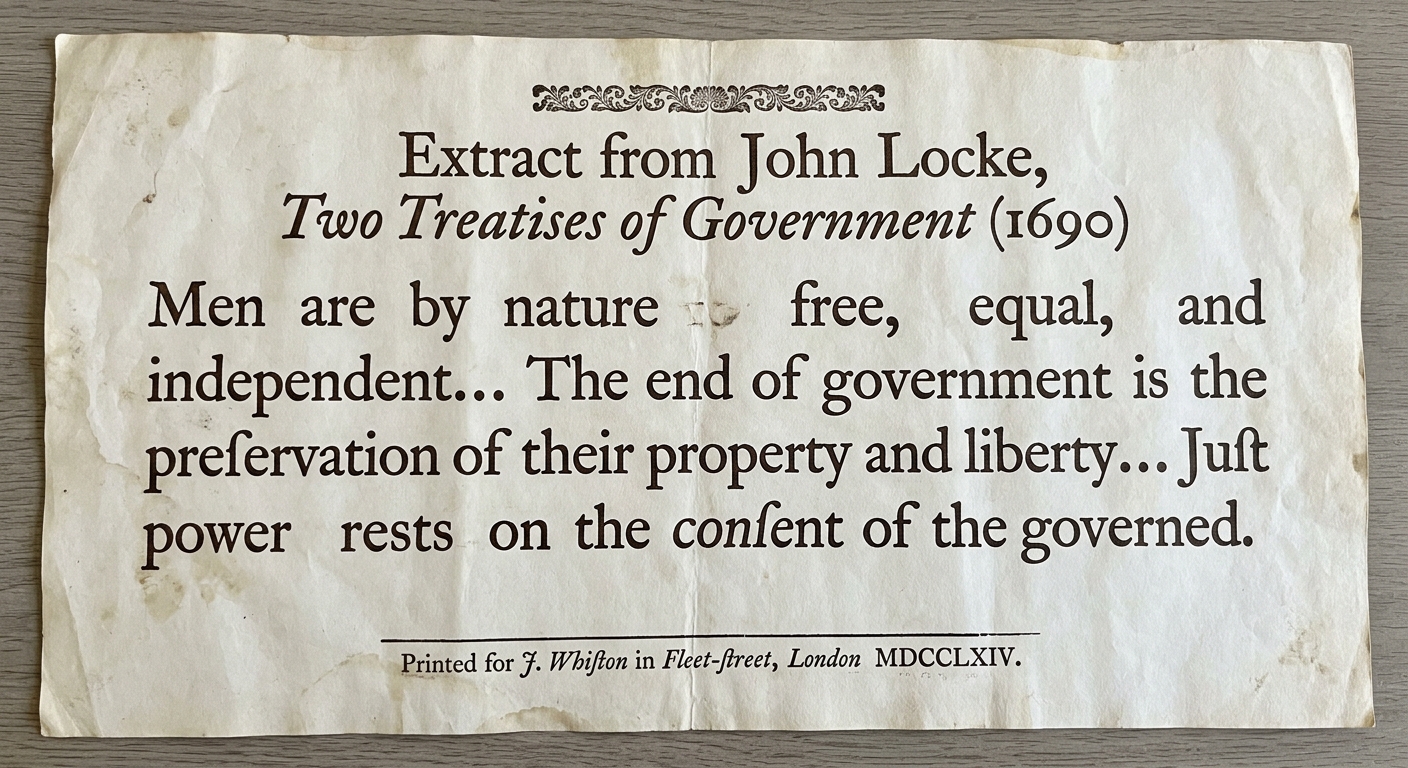
Facsimile of an aged parchment document titled “Extract from John Locke, Two Treatises of Government (1690)” with a short printed excerpt about natural rights and consent of the governed.

This excerpt summarizes an Enlightenment argument about government. It claims people are naturally free and equal and that government exists to protect rights (especially liberty and property). It also says a government’s power is legitimate only when it rests on the consent of the governed.
Asemmisa {{asɛmmisaAhyɛnsode}}
1.

Which statement from the excerpt would be the strongest evidence for the claim that a government can lose its legitimacy?

Asemmisa {{asɛmmisaAhyɛnsode}}
2.

Use evidence from the excerpt to explain how colonial leaders could use Enlightenment ideas to justify listing grievances against British policies in the Declaration of Independence.

Include at least two specific details from the excerpt.

Asemmisa {{asɛmmisaAhyɛnsode}}
3.

Choose one British policy or action from the pre-war period (for example, a tax law or enforcement action).

Explain how the excerpt’s ideas could lead colonial leaders to view that policy or action as unjust.

Use evidence from the excerpt.

Asemmisa {{asɛmmisaAhyɛnsode}}
4.

Which grievance in the Declaration of Independence is most directly supported by the idea that government power must come from the people’s consent?

Asemmisa {{asɛmmisaAhyɛnsode}}
5.

Based on the excerpt, which Enlightenment idea is most clearly expressed?

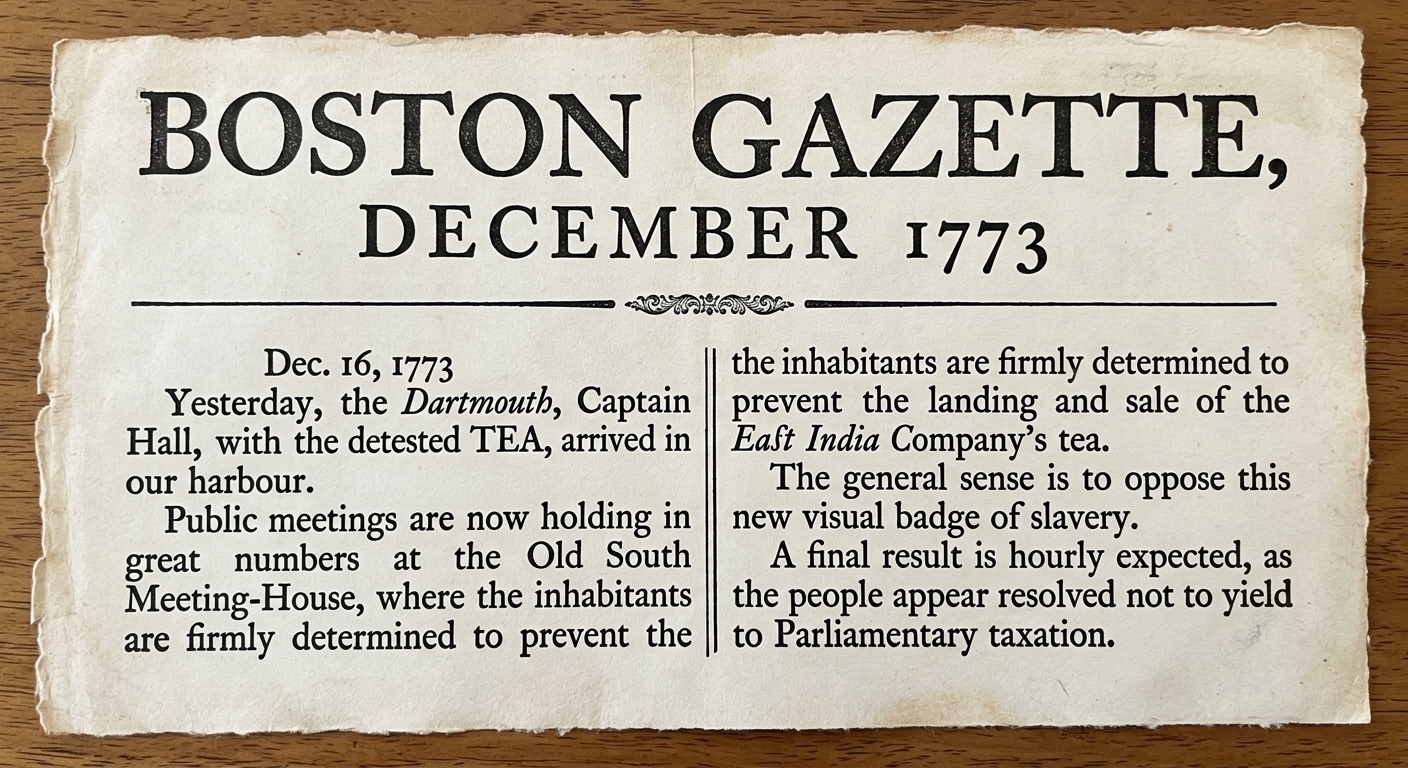
Facsimile of an aged newspaper-style document labeled “Boston Gazette — December 1773,” with dated lines about tea ships and public meetings.

This newspaper-style notice is dated December 1773, just before independence. It describes tea ships arriving in Boston and colonists holding meetings about the tea tax. The dated lines help place events in order: protests grew first, and a dramatic action against the tea happened later.

Asemmisa {{asɛmmisaAhyɛnsode}}
6.

Which event is most likely to happen next in the sequence suggested by the dated notice (December 1773) and the growing protests?

Asemmisa {{asɛmmisaAhyɛnsode}}
7.

Using evidence from the document (including its date), explain how events like the tea protests could build toward the Declaration of Independence.

In your response, describe the order of at least two steps in the sequence.

Asemmisa {{asɛmmisaAhyɛnsode}}
8.

Which statement is the best chronological inference supported by the document’s dated lines and description of meetings about the tea tax?

Asemmisa {{asɛmmisaAhyɛnsode}}
9.

Which timeline placement best fits the document’s date (December 1773) in relation to the Declaration of Independence (July 1776)?

Asemmisa {{asɛmmisaAhyɛnsode}}
10.

Choose one grievance from the Declaration of Independence that fits the same pattern of escalation suggested by the December 1773 document (complaint → protest → stronger response).

Explain the chronological connection using evidence from the date and description.

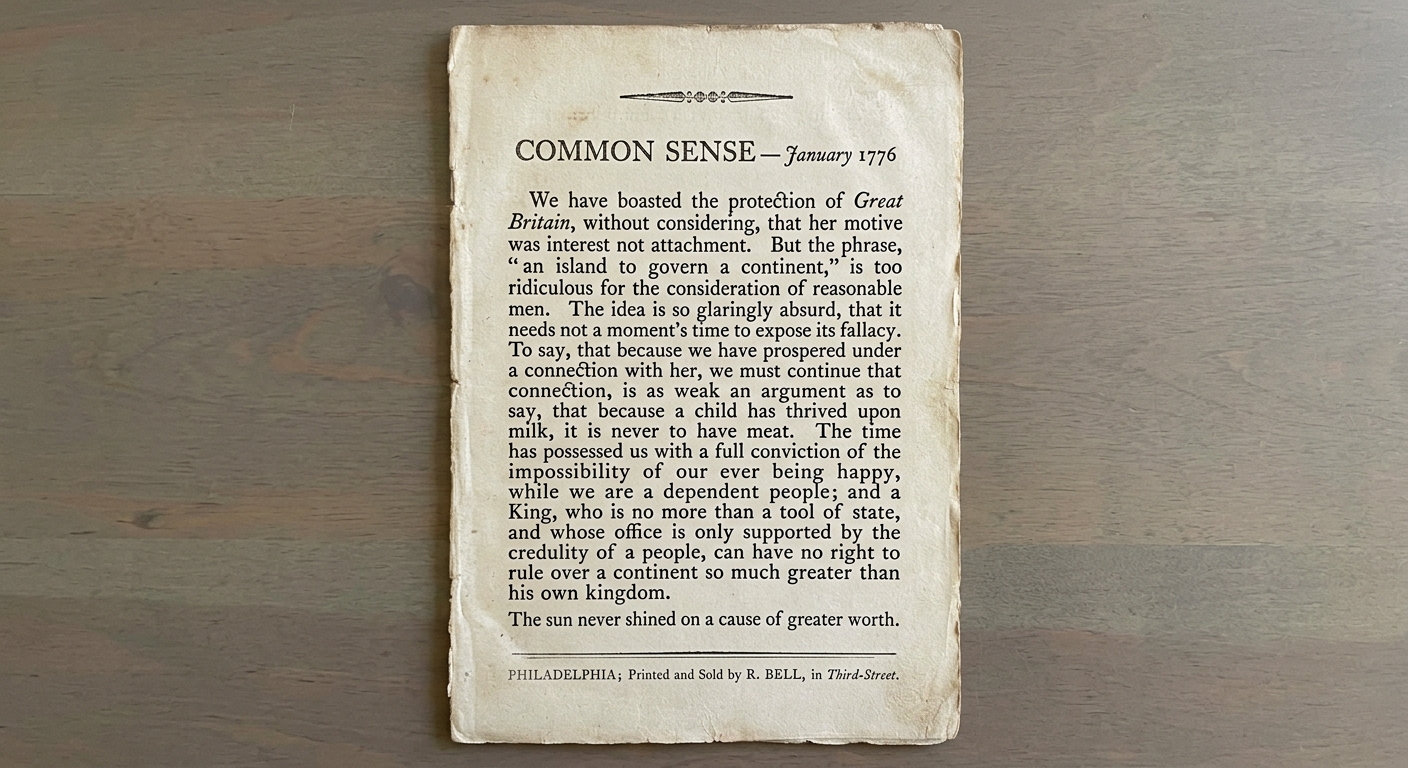
Facsimile of an aged pamphlet page titled “Common Sense — January 1776” with a short printed excerpt criticizing monarchy and arguing for independence.

This excerpt is presented as a January 1776 pamphlet argument for independence. It challenges British monarchical authority and uses plain-language reasoning to persuade readers. When compared with the Declaration of Independence (July 1776), it helps contextualize how public persuasion and formal grievances worked together.

Asemmisa {{asɛmmisaAhyɛnsode}}
11.

Which comparison between this pamphlet excerpt and the Declaration of Independence is most accurate?

Asemmisa {{asɛmmisaAhyɛnsode}}
12.

In 4–6 sentences, explain how colonists could move from public persuasion (like this pamphlet) to formally listing grievances in the Declaration of Independence.

Asemmisa {{asɛmmisaAhyɛnsode}}
13.

Which detail from the reading best helps contextualize why colonists might support independence by mid-1776?

Asemmisa {{asɛmmisaAhyɛnsode}}
14.

Compare the purpose and audience of this January 1776 pamphlet excerpt with the Declaration of Independence (July 1776).

Use at least one piece of evidence from the reading stimulus and one general feature of the Declaration (for example, listing grievances or stating a right to separate).

Asemmisa {{asɛmmisaAhyɛnsode}}
15.

Which statement best explains how ideas like those in the pamphlet could relate to grievances in the Declaration of Independence?

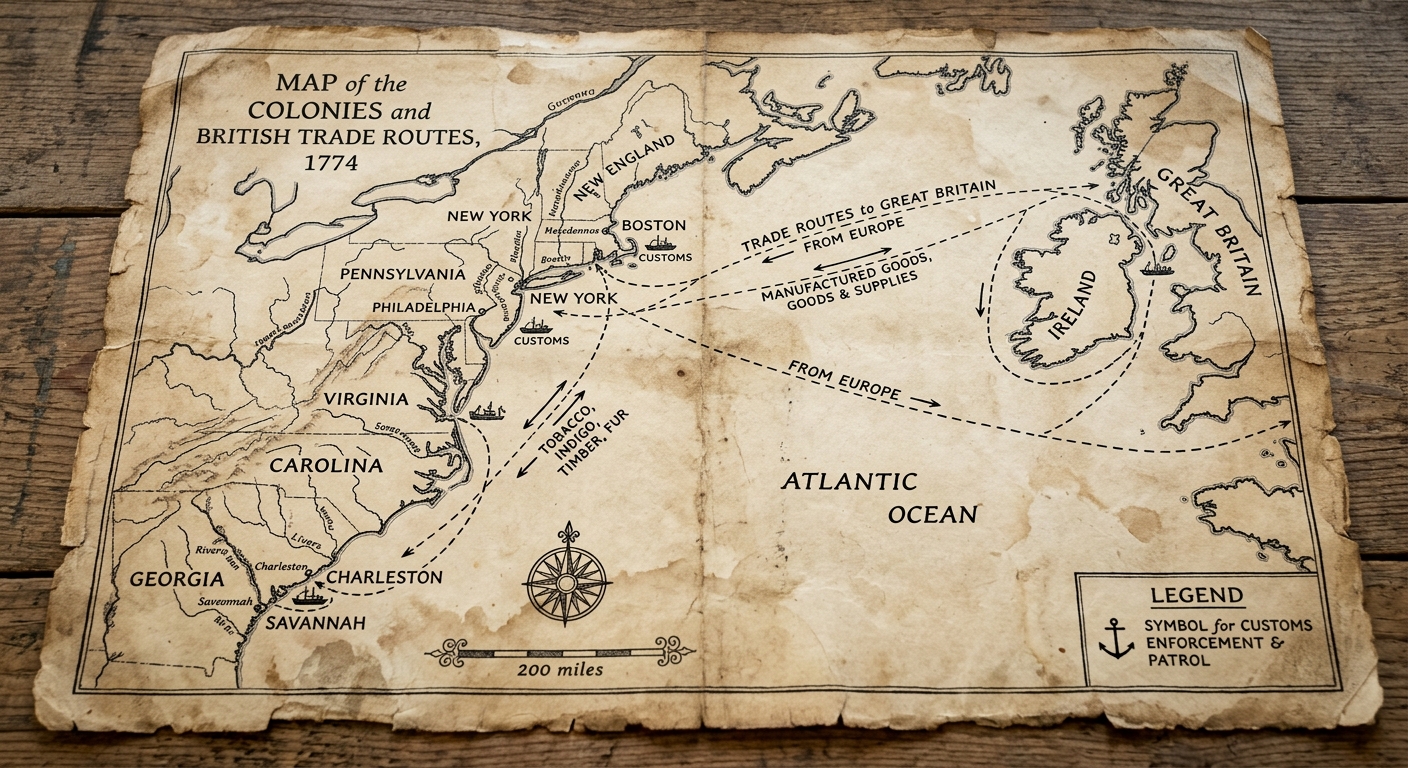
Facsimile of an aged 1774-style map showing the Atlantic coast colonies with labeled ports and dashed trade routes to Great Britain.

This 1774 map highlights major colonial port cities and shipping routes connecting the colonies to Great Britain. It suggests where customs enforcement could be concentrated and helps explain why colonists often focused protests on trade limits and taxes. Use the map’s geography to interpret possible grievances.

Asemmisa {{asɛmmisaAhyɛnsode}}
16.

Which grievance in the Declaration of Independence is most directly connected to the map’s emphasis on ports, shipping, and trade routes?

Asemmisa {{asɛmmisaAhyɛnsode}}
17.

Based on the map, which location would British customs officials most likely target to collect taxes on imported goods?

Asemmisa {{asɛmmisaAhyɛnsode}}
18.

Use evidence from the map to explain how geography could shape colonial grievances about British economic policies.

In 4–6 sentences, connect at least two map details (ports, routes, or locations) to one or more grievances in the Declaration of Independence.

Asemmisa {{asɛmmisaAhyɛnsode}}
19.

Which inference about colonial protests is best supported by the geography shown on the map?

Asemmisa {{asɛmmisaAhyɛnsode}}
20.

Explain how the geography of ports and trade routes could influence both British enforcement actions and colonial responses (meetings, boycotts, protests).

Use at least two pieces of geographic evidence from the map.

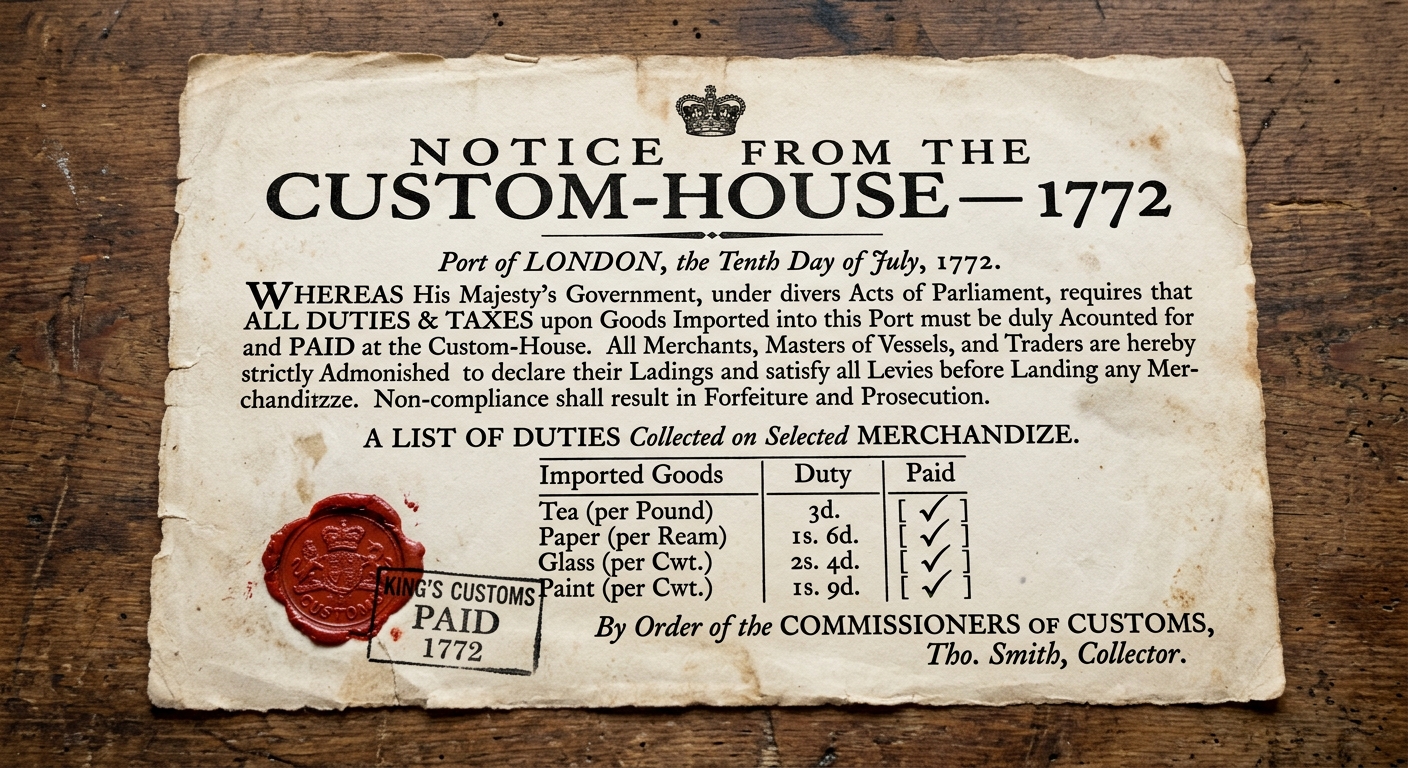
Facsimile of an aged customs-house notice from 1772 listing imported goods and duties collected at colonial ports.

This 1772 customs notice lists imported goods and duties collected at colonial ports under Parliamentary trade laws. It shows how imperial economic policies raised revenue and shaped colonial reactions. Use evidence from the notice to connect taxes, trade control, and grievances later listed in the Declaration of Independence.

Asemmisa {{asɛmmisaAhyɛnsode}}
21.

Use evidence from the customs notice to explain how British economic policies could create colonial grievances.

In 4–6 sentences, connect at least two details from the notice (goods, duties, or port collection) to one or more grievances in the Declaration of Independence.

Asemmisa {{asɛmmisaAhyɛnsode}}
22.

Which grievance in the Declaration of Independence is most directly connected to the economic system suggested by duties collected at ports?

Asemmisa {{asɛmmisaAhyɛnsode}}
23.

Based on the customs notice, what is one likely economic purpose of the duties listed?

Asemmisa {{asɛmmisaAhyɛnsode}}
24.

Which inference about colonial economic life is best supported by the variety of imported goods listed on the notice?

Asemmisa {{asɛmmisaAhyɛnsode}}
25.

Explain how a system that regulates trade and collects duties could affect both British goals and colonial responses (boycotts, protests, or calls for representation).

Use evidence from the notice in your explanation.