Use the historical document(s) and the short readings in the left panel to answer the associated questions.
Document A (Historical Document)
Document A is a simplified excerpt based on the Treaty of Paris (1783). It states that Britain recognized the United States as free and independent, set the western boundary at the Mississippi River, and notes that French and Spanish aid helped pressure Britain to accept peace.
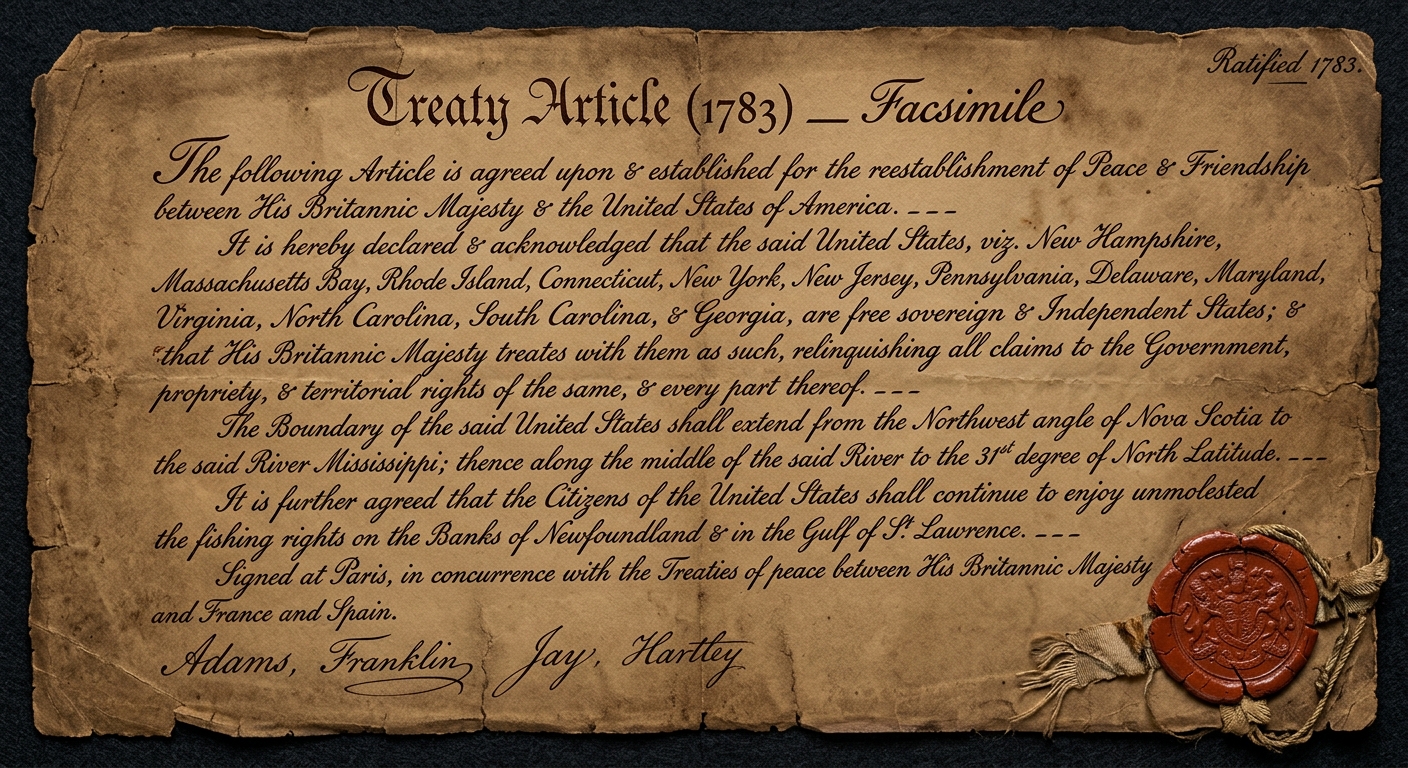
Using Document A, which detail best supports the idea that aid from other nations influenced the outcome of the American Revolution?
According to Document A, which geographic feature was used to set the western boundary of the United States after the war?
Which conclusion is best supported by Document A about why Britain accepted peace terms in 1783?
Using evidence from Document A, explain how geographic considerations influenced the outcome of the American Revolution.
In your paragraph, identify one geographic term from the document and explain why it mattered for peace terms.
Using evidence from Document A, explain how aid from other nations influenced the outcome of the American Revolution.
In your paragraph, quote or paraphrase the specific evidence from the document and explain how that aid could change Britain’s decision to make peace.
Document B (Historical Document)
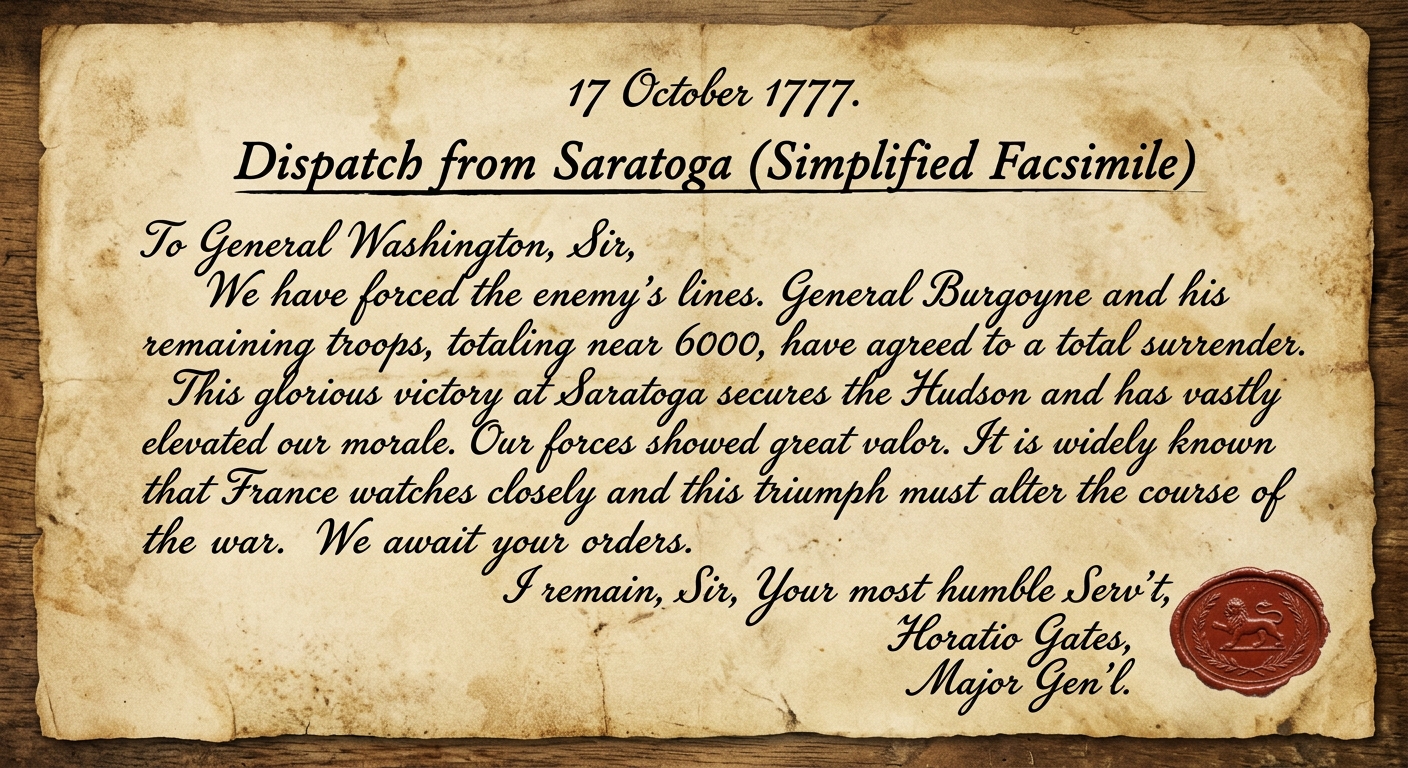
Document B is a simplified military dispatch dated October 17, 1777. It reports that British General Burgoyne surrendered after the Battle of Saratoga. The dispatch suggests the surrender raised American morale and made France more likely to believe the Patriots could win the war.

Based on Document B, which event happened first in time?
Document B suggests that the surrender at Saratoga helped cause a later event.
Which later event is most directly supported by the document’s wording?
Which statement best shows chronological reasoning using evidence from Document B?
Using Document B, explain how the event described could have influenced later developments in the Revolution.
In your paragraph, identify the date in the document and explain what it suggests about the sequence from Saratoga to foreign aid.
Using Document B, explain one way the Battle of Saratoga could connect to the peace settlement later in the war (Treaty of Paris, 1783).
Your paragraph should describe a cause-and-effect sequence and use at least two details from the document as evidence.
Document C (Historical Document)
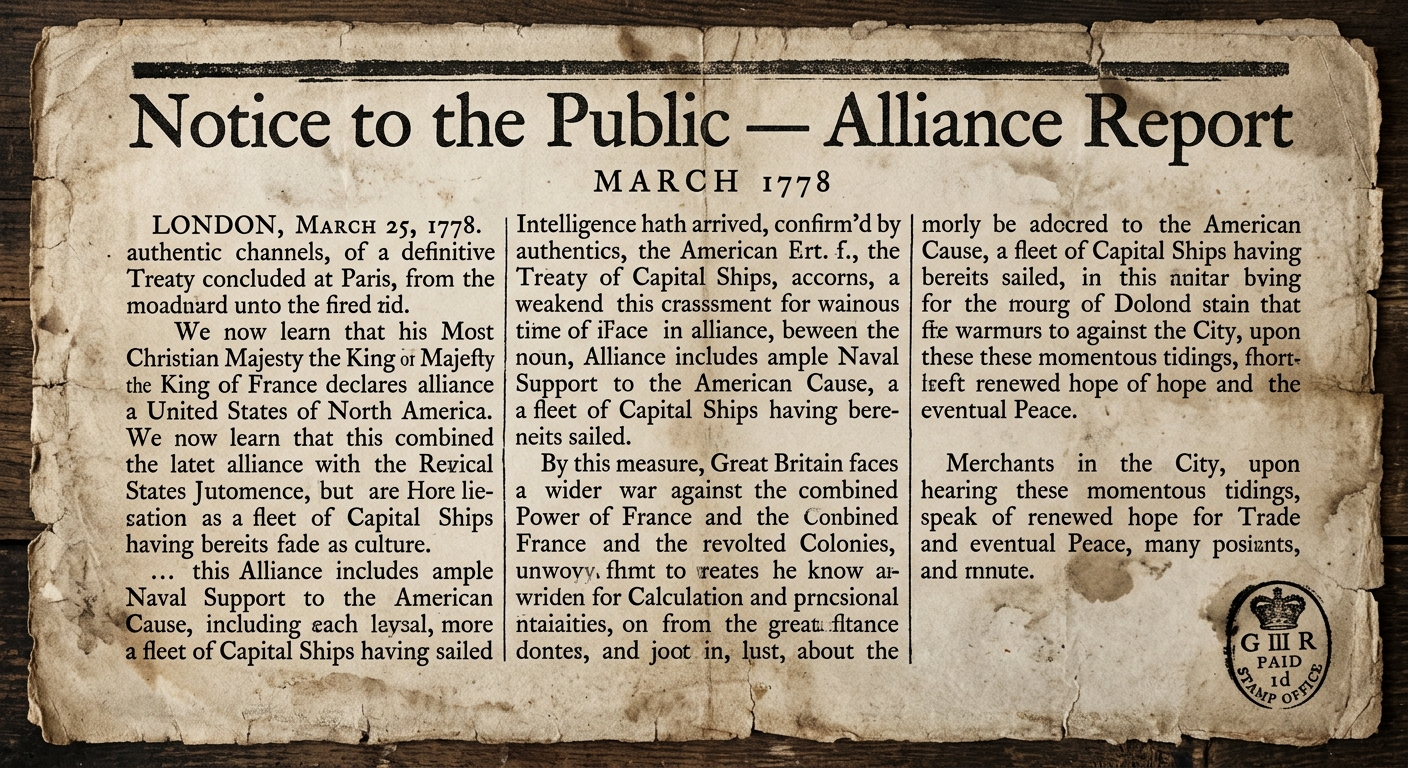
Document C is a simplified 1778 public notice reporting that France formed an alliance with the United States and offered naval support. It suggests this broadened the conflict against Britain and increased Patriot confidence. Use the date and the author’s purpose to place the document in the wider context of the Revolution.

Which comparison between Document C and earlier events in the Revolution is best supported by the document’s purpose and date?
Which statement best contextualizes Document C within the American Revolution?
Based on Document C, which inference is most reasonable about how French involvement could affect Britain’s strategy?
Using evidence from Document C, explain how the document can be used to compare Patriot confidence before and after major foreign involvement.
In your paragraph, cite (quote or paraphrase) two details from Document C and explain what each suggests.
Using evidence from Document C, explain how this source helps contextualize why the Revolution’s outcome depended on more than events inside the colonies.
In your paragraph, connect the document to at least one broader factor (alliances, geography, or military strategy) mentioned in standard 7.3.d.
Document D (Historical Document)
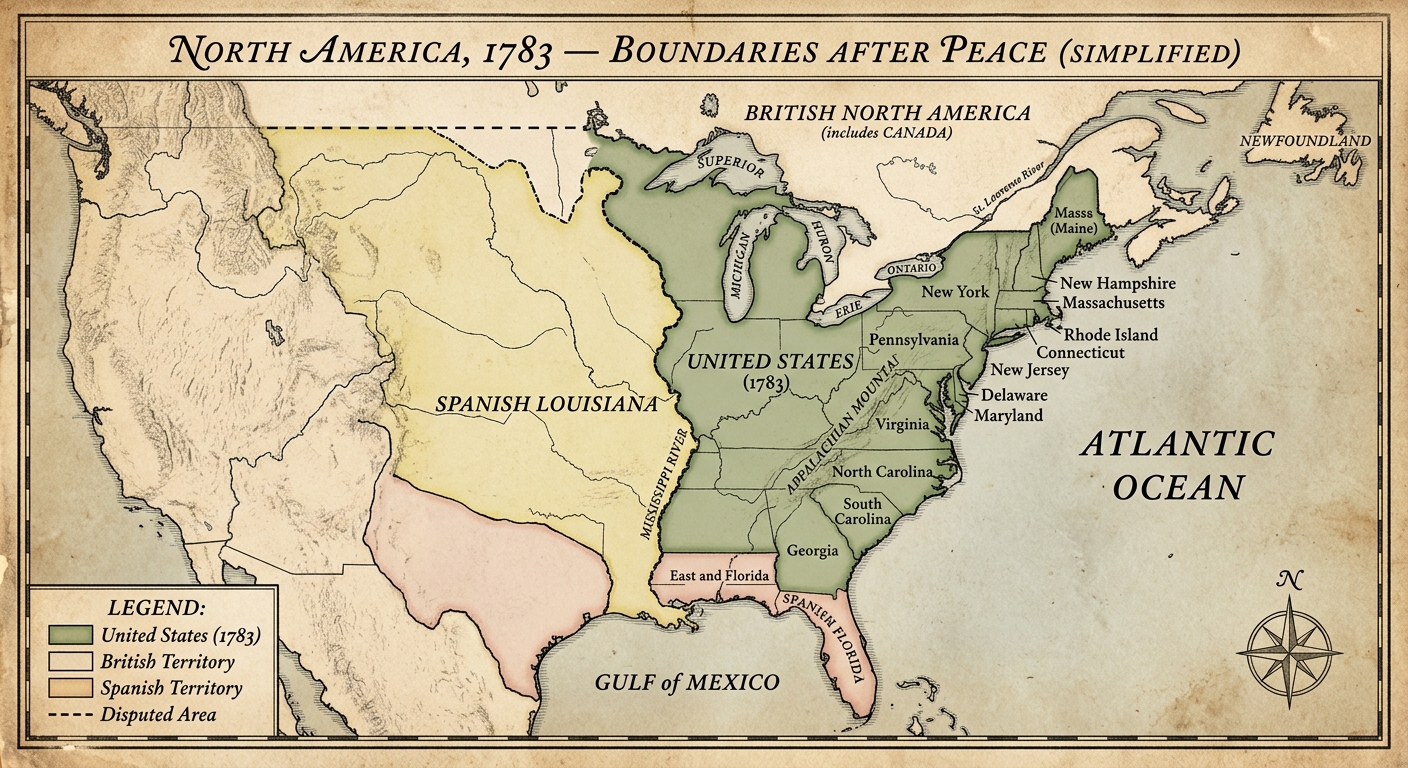
Document D is a simplified map showing boundaries connected to the Treaty of Paris (1783). It labels the Mississippi River as the new western boundary for the United States and shows the Appalachian Mountains to the east. Use the map’s labels and legend as evidence.

Using Document D, which geographic feature marks the western boundary of the United States after the Treaty of Paris (1783)?
Which statement best uses evidence from Document D to explain why the Mississippi River could be used as a boundary?
Based on Document D, which conclusion about the strategic importance of the New York region is most consistent with the map’s geographic evidence?
Using evidence from Document D, explain how two geographic features shown on the map could influence the outcome of the American Revolution or its peace terms.
Name the features and explain how each could matter.
Using Document D, explain how the map provides evidence that geography affected both military decisions and the Treaty of Paris (1783).
Use at least two map details (labels, legend/shading, or boundary line) as evidence.
Document E (Historical Document)
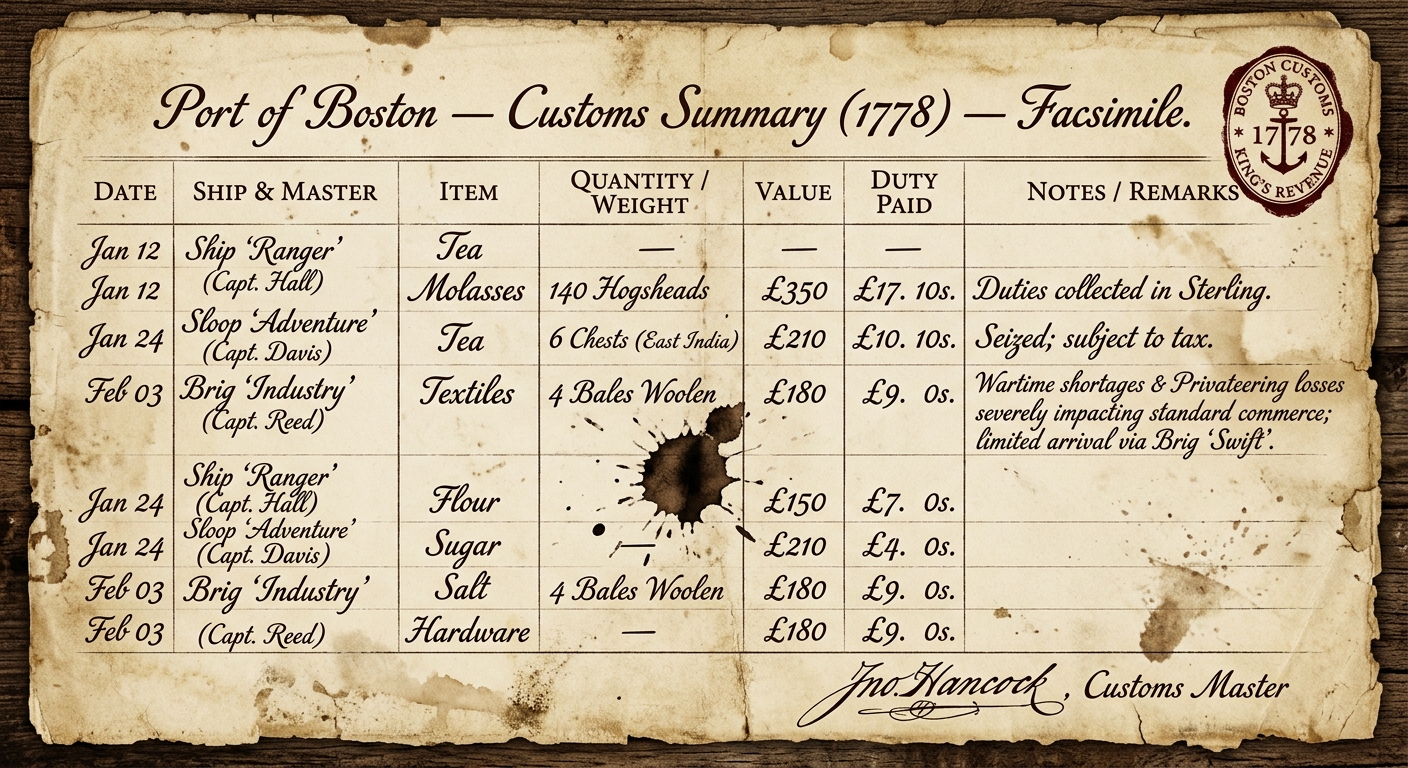
Document E is a simplified 1778 customs ledger from a colonial port. It lists imported goods, duties (taxes) collected, and notes that wartime disruptions and enemy blockades reduced trade. Use the record to explain how economic pressures could influence decisions about alliances and the war’s outcome.

Based on Document E, which statement best explains how wartime trade disruptions could affect the Revolution’s outcome?
Which piece of evidence from Document E most directly shows an economic cost of the war?
Which conclusion best connects Document E to the focus on aid from other nations?
Using evidence from Document E, explain how an economic system that relies on trade can shape wartime decision-making.
In your paragraph, use two pieces of evidence from the record (goods, duties/taxes, or notes) and explain what each suggests.
Using Document E, explain one way economic pressure could influence the timing or terms of peace in 1783.
Connect the record’s evidence to at least one factor (alliances, geography, or military strategy).