Twa kɔ nsɛm atitiriw so
Log in
Sign up for FREE
arrow_back
Laabri

7.4a - Historical Development of the Constitution: - Practices A through E

star
star
star
star
star
Last updated about 1 month ago
25 Nsɛmmisa
Hyɛ no nsow a efi ɔkyerɛwfo no hɔ:

Use the historical document(s) and the short readings in the left panel to answer the associated questions.

Use the historical document(s) and the short readings in the left panel to answer the associated questions.

Ɛhia
1
7.4.a
DOK.SS.2
Ɛhia
1
7.4.a
DOK.SS.2
Ɛhia
1
7.4.a
DOK.SS.2
Ɛhia
1
7.4.a
DOK.SS.2
Ɛhia
1
7.4.a
DOK.SS.2
Ɛhia
1
7.4.a
DOK.SS.2
Ɛhia
1
7.4.a
DOK.SS.2
Ɛhia
1
7.4.a
DOK.SS.2
Ɛhia
1
7.4.a
DOK.SS.2
Ɛhia
1
7.4.a
DOK.SS.2
Ɛhia
1
7.4.a
DOK.SS.2
Ɛhia
1
7.4.a
DOK.SS.2
Ɛhia
1
7.4.a
DOK.SS.2
Ɛhia
1
7.4.a
DOK.SS.2
Ɛhia
1
7.4.a
DOK.SS.2
Ɛhia
1
7.4.a
DOK.SS.2
Ɛhia
1
7.4.a
DOK.SS.2
Ɛhia
1
7.4.a
DOK.SS.2
Ɛhia
1
7.4.a
DOK.SS.2
Ɛhia
1
7.4.a
DOK.SS.2
Ɛhia
1
7.4.a
DOK.SS.2
Ɛhia
1
7.4.a
DOK.SS.2
Ɛhia
1
7.4.a
DOK.SS.2
Ɛhia
1
7.4.a
DOK.SS.2
Ɛhia
1
7.4.a
DOK.SS.2

Read the document image - it is a paraphrased set of provisions from the Articles of Confederation (1781). It highlights how the states kept most political and economic power, while the national Congress had limited authority and depended on cooperation among states.
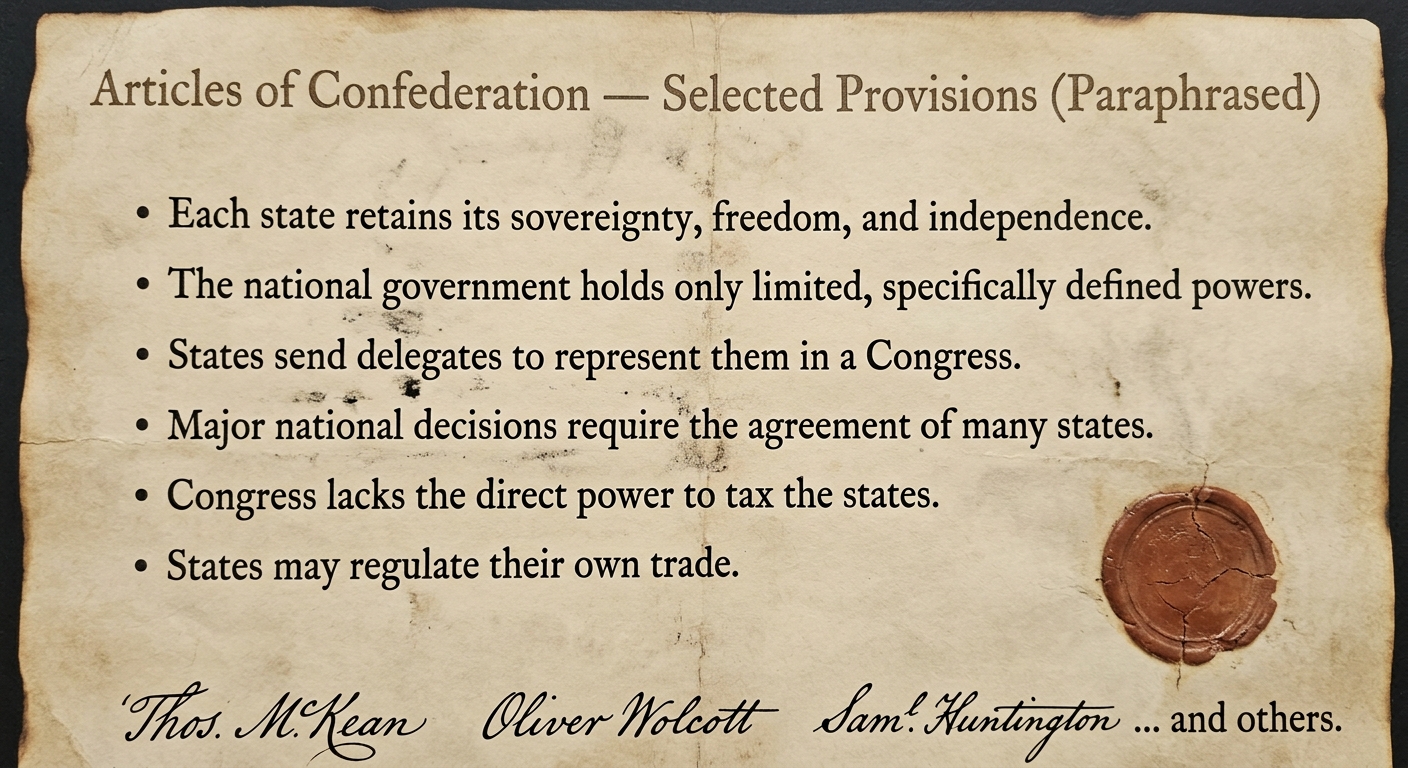
Parchment-style image of a paraphrased excerpt titled “Articles of Confederation — Selected Provisions,” with short bullet points about state sovereignty and limited national power, plus faint signatures and a seal.

Asemmisa {{asɛmmisaAhyɛnsode}}
1.

Which limitation of the national government is most directly supported by the provisions shown?

Asemmisa {{asɛmmisaAhyɛnsode}}
2.

Which detail from the provisions best supports the claim that the states remained sovereign under the Articles of Confederation?

Asemmisa {{asɛmmisaAhyɛnsode}}
3.

Based on the structure described, which situation would be hardest for the Confederation Congress to address?

Asemmisa {{asɛmmisaAhyɛnsode}}
4.

Explain how the provisions show the challenge of creating unity among states with different interests.

Use at least two specific pieces of evidence from the document.

Asemmisa {{asɛmmisaAhyɛnsode}}
5.

What was the likely purpose of these provisions at the time, and who was the primary audience?

Explain your reasoning using evidence from the document.

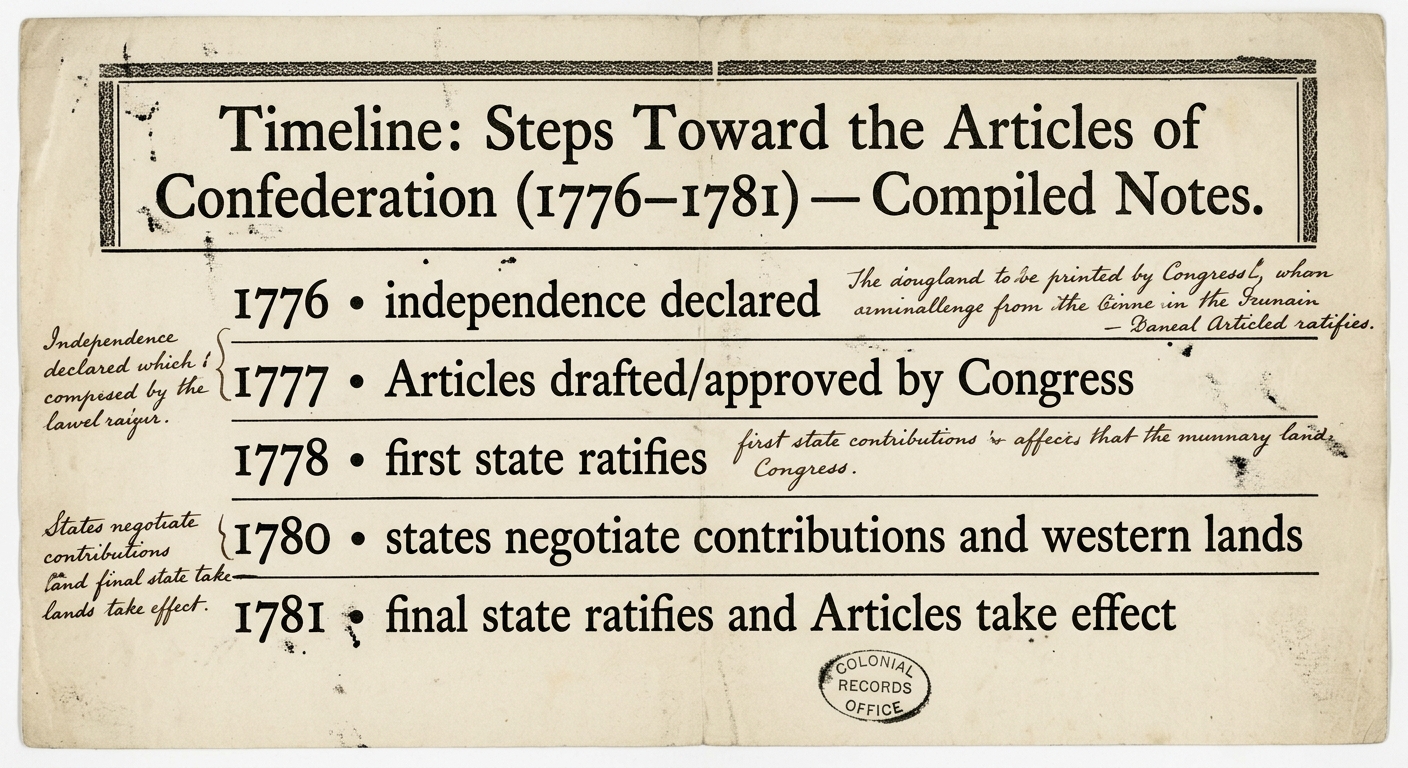
Read the document image - it is a timeline (1776–1781) showing key steps from independence to the Articles of Confederation taking effect. Use the dates and sequence of events as evidence when answering questions about how the new national government developed.

Aged-paper broadside showing a timeline titled “Steps Toward the Articles of Confederation (1776–1781),” with five dated entries from 1776 through 1781 and small handwritten notes.

Asemmisa {{asɛmmisaAhyɛnsode}}
6.

Which event happened immediately before the Articles of Confederation took effect?

Asemmisa {{asɛmmisaAhyɛnsode}}
7.

Which claim is best supported by the order of events shown?

Asemmisa {{asɛmmisaAhyɛnsode}}
8.

Which inference about unity among states is most supported by the time span from 1777 to 1781?

Asemmisa {{asɛmmisaAhyɛnsode}}
9.

Explain how the sequence of events shows both a desire for unity and limits on unity among the states.

Use at least two dated events from the timeline as evidence.

Asemmisa {{asɛmmisaAhyɛnsode}}
10.

What does the timeline suggest about why the Articles of Confederation created a government that loosely united the states?

Use the timing and any negotiation-related entries as evidence.

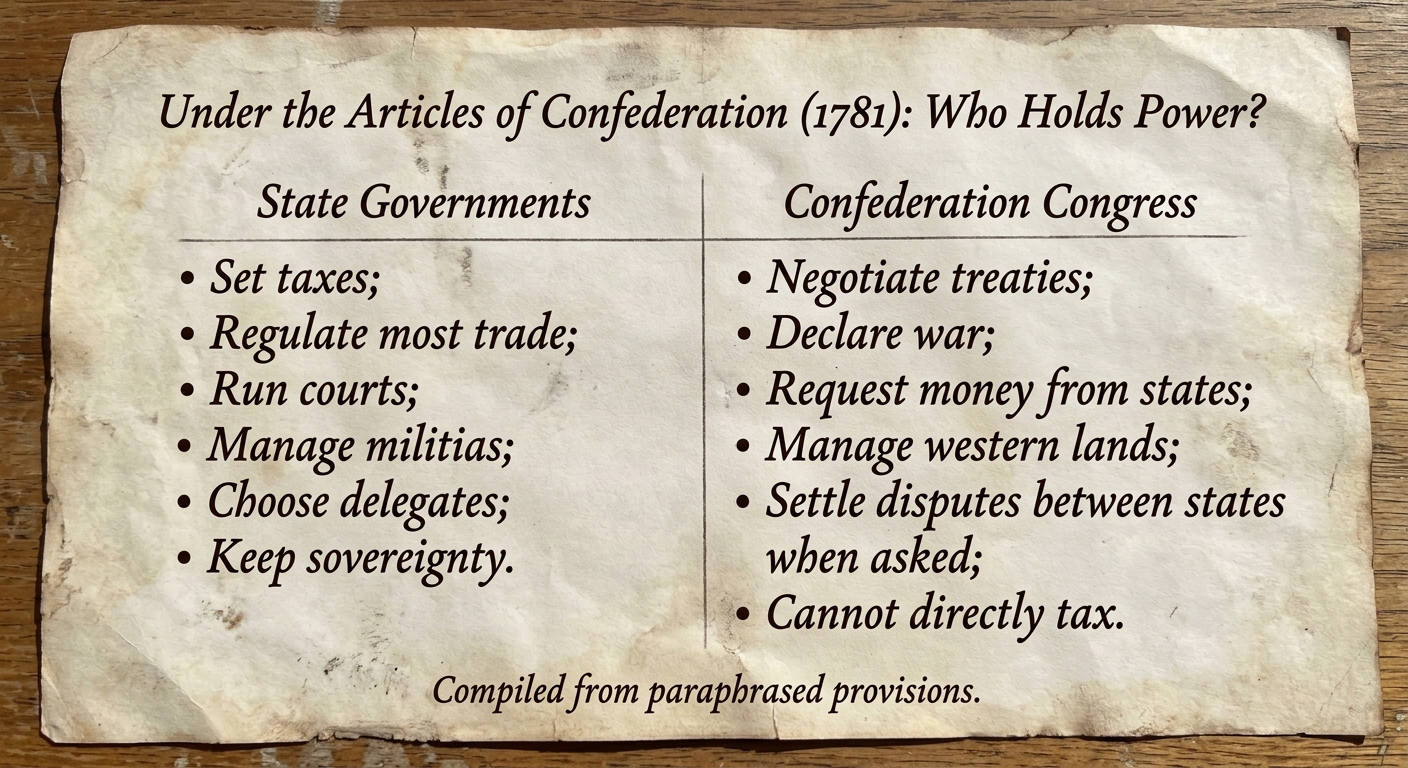
Read the document image - It is a comparison chart (1781) that summarizes how power was divided under the Articles of Confederation. Use the chart to compare roles and responsibilities, and to place the system in the context of recent independence and fear of centralized authority.

Aged-paper document titled “Under the Articles of Confederation (1781): Who Holds Power?” showing a two-column chart comparing powers of state governments and the Confederation Congress.

Asemmisa {{asɛmmisaAhyɛnsode}}
11.

Which comparison is best supported by the information in the two columns?

Asemmisa {{asɛmmisaAhyɛnsode}}
12.

Which historical context best explains why the document emphasizes state authority?

Asemmisa {{asɛmmisaAhyɛnsode}}
13.

Which action would require the most cooperation from state governments for Congress to succeed?

Asemmisa {{asɛmmisaAhyɛnsode}}
14.

Compare the roles of state governments and the Confederation Congress under the Articles of Confederation.

Use at least two specific pieces of evidence from the chart, and explain how this division of power could affect unity among the states.

Asemmisa {{asɛmmisaAhyɛnsode}}
15.

In the context of 1781, explain one reason some Americans might prefer this balance of power and one reason others might criticize it.

Use evidence from the chart in your explanation.

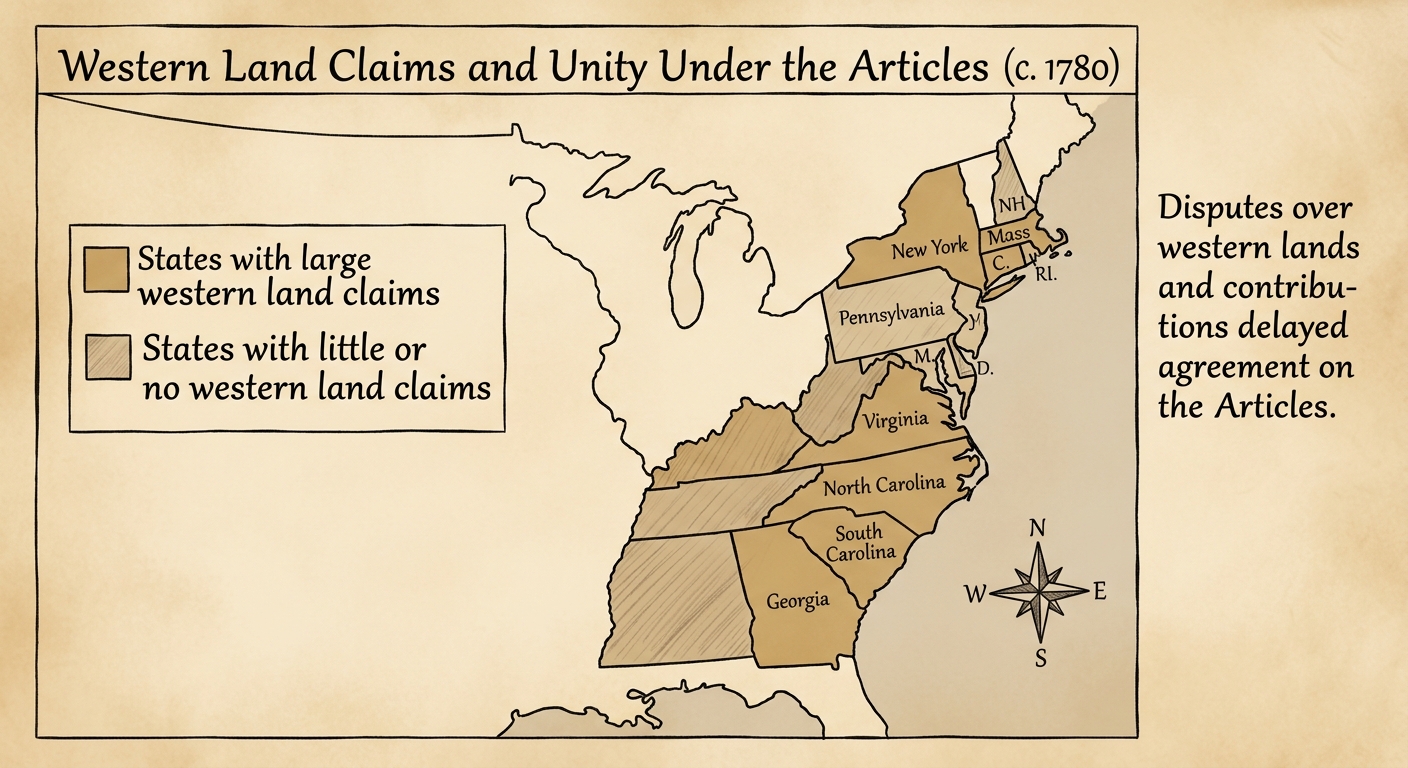
Read the document image - it is a simplified map (c. 1780) showing which states claimed western lands and which did not. Use the legend and the note to explain how geography and land claims could create disagreements that made unity harder under the Articles of Confederation.

Aged-paper map titled “Western Land Claims and Unity Under the Articles (c. 1780)” showing the 13 states with a legend distinguishing states with large western land claims from states with little or no western land claims, plus a note about disputes delaying agreement.

Asemmisa {{asɛmmisaAhyɛnsode}}
16.

Which geographic pattern is best supported by the shading and legend?

Asemmisa {{asɛmmisaAhyɛnsode}}
17.

Which issue would this geography most likely cause states to debate under the Articles of Confederation?

Asemmisa {{asɛmmisaAhyɛnsode}}
18.

Which inference about unity among the states is most supported by the differences in western land claims?

Asemmisa {{asɛmmisaAhyɛnsode}}
19.

Explain how the geography shown could affect cooperation among the states under the Articles of Confederation.

Use at least two specific pieces of evidence from the map or the margin note.

Asemmisa {{asɛmmisaAhyɛnsode}}
20.

In the context of the 1780s, explain one reason a state without a western land claim might push for changes to the system and one reason a state with a large claim might resist.

Use evidence from the map and/or note.

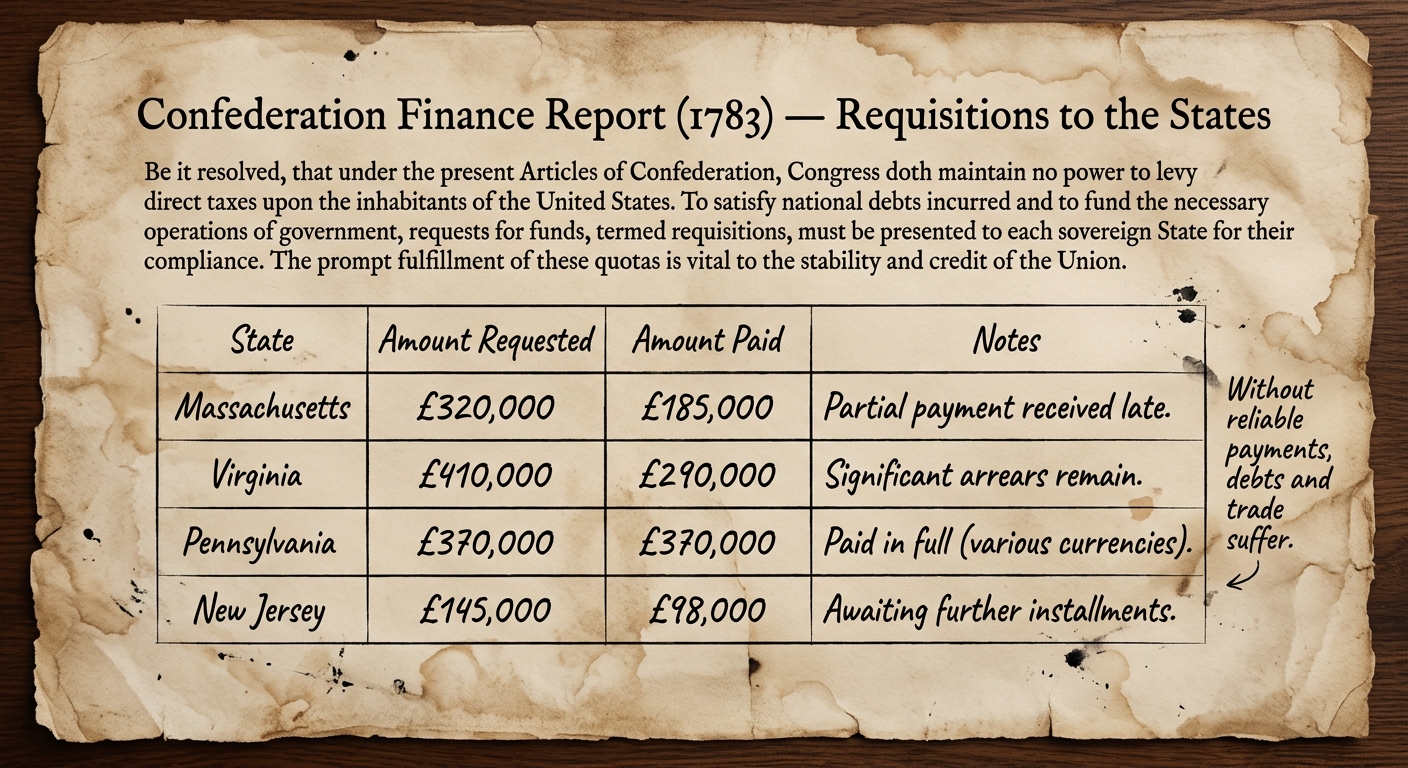
Read the document image - it is a finance report (1783) showing how Congress requested money from states to pay national debts, but received uneven payments. Use the note and the table to explain how this economic system under the Articles of Confederation affected unity and national stability.

Aged-paper document titled “Confederation Finance Report (1783) — Requisitions to the States,” with a short note that Congress must request money from states and a table comparing amounts requested and paid by several states.

Asemmisa {{asɛmmisaAhyɛnsode}}
21.

Which conclusion about the national government’s ability to raise revenue is best supported by the table and note?

Asemmisa {{asɛmmisaAhyɛnsode}}
22.

Which evidence from the document best supports the claim that state sovereignty affected national economic policy under the Articles of Confederation?

Asemmisa {{asɛmmisaAhyɛnsode}}
23.

Based on the system described, which economic problem would be hardest for Congress to address?

Asemmisa {{asɛmmisaAhyɛnsode}}
24.

Explain how the document shows a weakness of the Articles of Confederation related to national finances.

Use at least two specific pieces of evidence from the table and/or note.

Asemmisa {{asɛmmisaAhyɛnsode}}
25.

In the context of the 1780s, explain one economic reason a state government might resist paying requisitions and one reason another state might support strengthening national financial power.

Use evidence from the document in your answer.