Twa kɔ nsɛm atitiriw so
Log in
Sign up for FREE
arrow_back
Laabri

7.5b - The Constitution in Practice: - Practices A through E

star
star
star
star
star
Last updated about 1 month ago
25 Nsɛmmisa
Hyɛ no nsow a efi ɔkyerɛwfo no hɔ:

Use the historical document(s) and the short readings in the left panel to answer the associated questions.

Use the historical document(s) and the short readings in the left panel to answer the associated questions.

7.5.b
DOK.SS.2
7.5.b
DOK.SS.2
7.5.b
DOK.SS.2
7.5.b
DOK.SS.2
7.5.b
DOK.SS.2
Ɛhia
1
7.5.b
DOK.SS.2
Ɛhia
1
7.5.b
DOK.SS.2
Ɛhia
1
7.5.b
DOK.SS.2
Ɛhia
1
7.5.b
DOK.SS.2
Ɛhia
1
7.5.b
DOK.SS.2
Ɛhia
1
7.5.b
DOK.SS.2
Ɛhia
1
7.5.b
DOK.SS.2
Ɛhia
1
7.5.b
DOK.SS.2
Ɛhia
1
7.5.b
DOK.SS.2
Ɛhia
1
7.5.b
DOK.SS.2
Ɛhia
1
7.5.b
DOK.SS.2
Ɛhia
1
7.5.b
DOK.SS.2
Ɛhia
1
7.5.b
DOK.SS.2
Ɛhia
1
7.5.b
DOK.SS.2
Ɛhia
1
7.5.b
DOK.SS.2
Ɛhia
1
7.5.b
DOK.SS.2
Ɛhia
1
7.5.b
DOK.SS.2
Ɛhia
1
7.5.b
DOK.SS.2
Ɛhia
1
7.5.b
DOK.SS.2
Ɛhia
1
7.5.b
DOK.SS.2
Ɛhia
1
7.5.b
DOK.SS.2
Ɛhia
1
7.5.b
DOK.SS.2
Ɛhia
1
7.5.b
DOK.SS.2
Ɛhia
1
7.5.b
DOK.SS.2
Ɛhia
1
7.5.b
DOK.SS.2

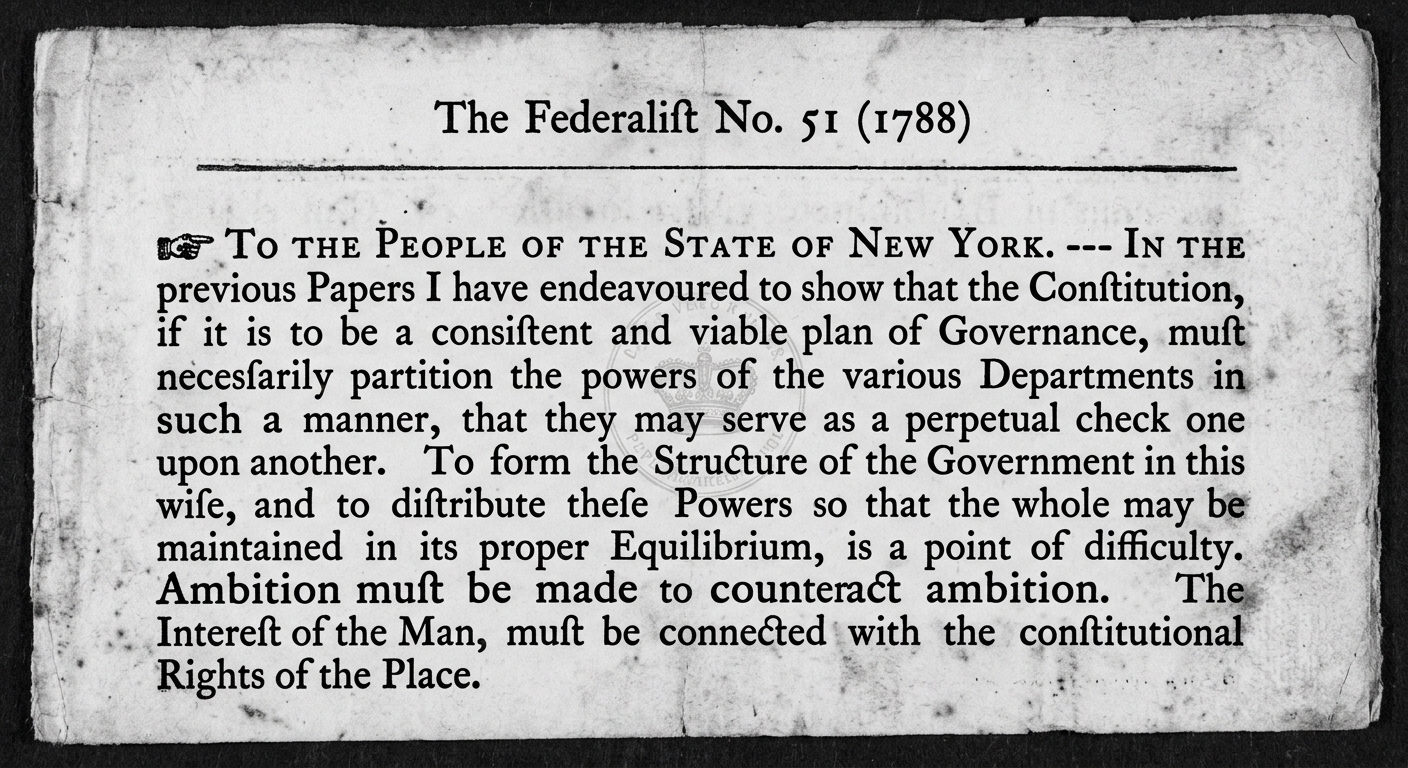
Historical Document

Black-and-white facsimile of an 18th-century pamphlet excerpt from Federalist No. 51 about checks and balances.

Excerpt (Federalist No. 51, 1788):

From Federalist No. 51 (1788), James Madison argued that the Constitution must prevent any one branch from dominating: “Ambition must be made to counteract ambition.” He explained that dividing power among branches and giving each tools to resist the others helps protect people’s rights.
Asemmisa {{asɛmmisaAhyɛnsode}}
1.

Based on the excerpt, which constitutional principle is being described most directly?

Asemmisa {{asɛmmisaAhyɛnsode}}
2.

Which situation BEST illustrates the idea that “ambition must be made to counteract ambition”?

Asemmisa {{asɛmmisaAhyɛnsode}}
3.

Using evidence from the excerpt, explain how ONE check between branches could help protect an individual right listed in the Bill of Rights.

Write one well-formed paragraph.

Asemmisa {{asɛmmisaAhyɛnsode}}
4.

What was Madison’s likely purpose for writing this argument, and who was the intended audience?

Use at least ONE detail from the excerpt as evidence. Write one well-formed paragraph.

Asemmisa {{asɛmmisaAhyɛnsode}}
5.

A student claims: “The framers worried that one part of government could become too powerful.” Which evidence from the excerpt BEST supports this claim?

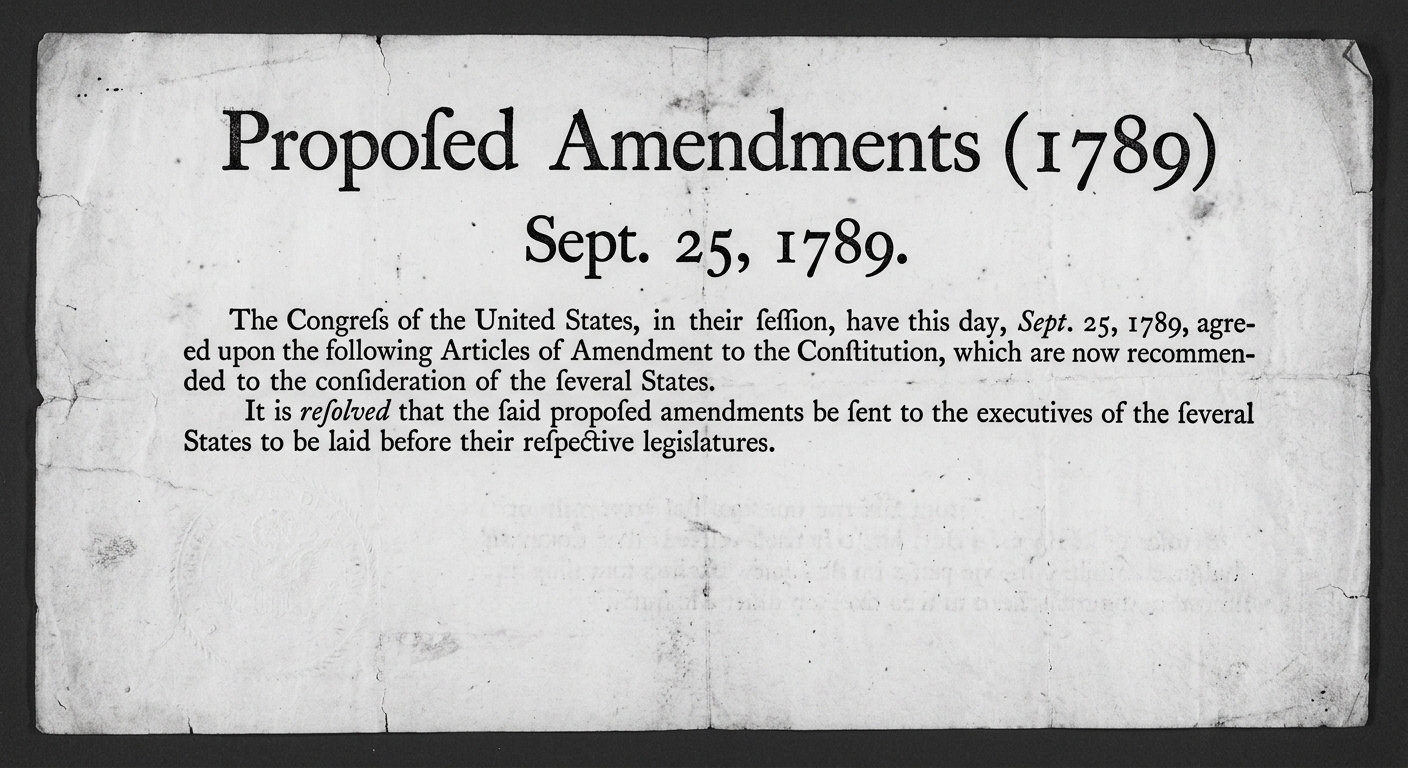
Historical Document

Black-and-white facsimile of a 1789 document titled “Proposed Amendments (1789)” with a visible date.

After the Constitution was written, some Americans wanted clearer protections for individual rights. On September 25, 1789, Congress proposed amendments and sent them to the states. By 1791, enough states approved them, creating the Bill of Rights.

Asemmisa {{asɛmmisaAhyɛnsode}}
6.

Based on the reading and document date, which event happened first?

Asemmisa {{asɛmmisaAhyɛnsode}}
7.

Which conclusion is BEST supported by the timeline in the reading?

Asemmisa {{asɛmmisaAhyɛnsode}}
8.

Using chronological evidence from the reading, explain how the order of events (creating branches first, adding rights later) supports the idea of checks and balances and individual rights working together.

Use at least ONE detail from the reading as evidence. Write one well-formed paragraph.

Asemmisa {{asɛmmisaAhyɛnsode}}
9.

Which statement BEST describes change over time from the Constitution being written to the Bill of Rights being ratified?

Asemmisa {{asɛmmisaAhyɛnsode}}
10.

Explain how adding the Bill of Rights after the Constitution (1789–1791) could have affected public support for the new government.

Use at least ONE date or time reference from the reading as evidence.

Write one well-formed paragraph.

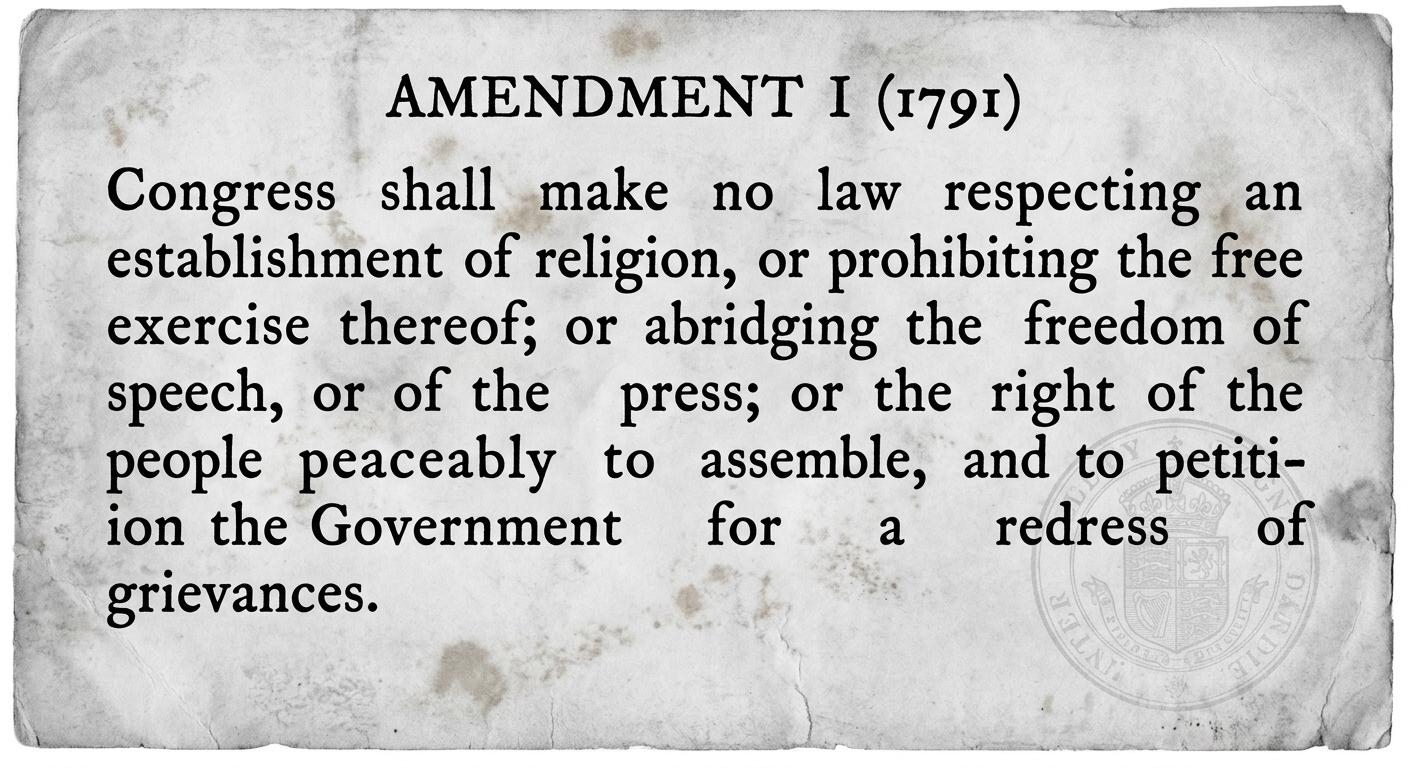
Historical Document

Black-and-white facsimile of a 1791 document excerpt describing First Amendment freedoms.

In 1791, the First Amendment listed freedoms like religion, speech, press, assembly, and petition. It was added soon after the Constitution to respond to fears that the new national government could overreach. Compare this rights-based limit with structural limits like checks and balances.

Asemmisa {{asɛmmisaAhyɛnsode}}
11.

Which comparison BEST explains how checks and balances and the First Amendment BOTH limit government power?

Asemmisa {{asɛmmisaAhyɛnsode}}
12.

Which context BEST helps explain why the First Amendment was added soon after the Constitution was created?

Asemmisa {{asɛmmisaAhyɛnsode}}
13.

Using evidence from the document and the reading, compare how the First Amendment and ONE check-and-balance (for example, veto/override or judicial review) could protect citizens from government abuse.

Write one well-formed paragraph.

Asemmisa {{asɛmmisaAhyɛnsode}}
14.

Explain how concerns during the ratification period help explain why these freedoms were written down soon after the Constitution.

Use at least ONE detail from the reading or document as evidence.

Write one well-formed paragraph.

Asemmisa {{asɛmmisaAhyɛnsode}}
15.

Which statement BEST contrasts the type of protection provided by the First Amendment with the protection provided by checks and balances?

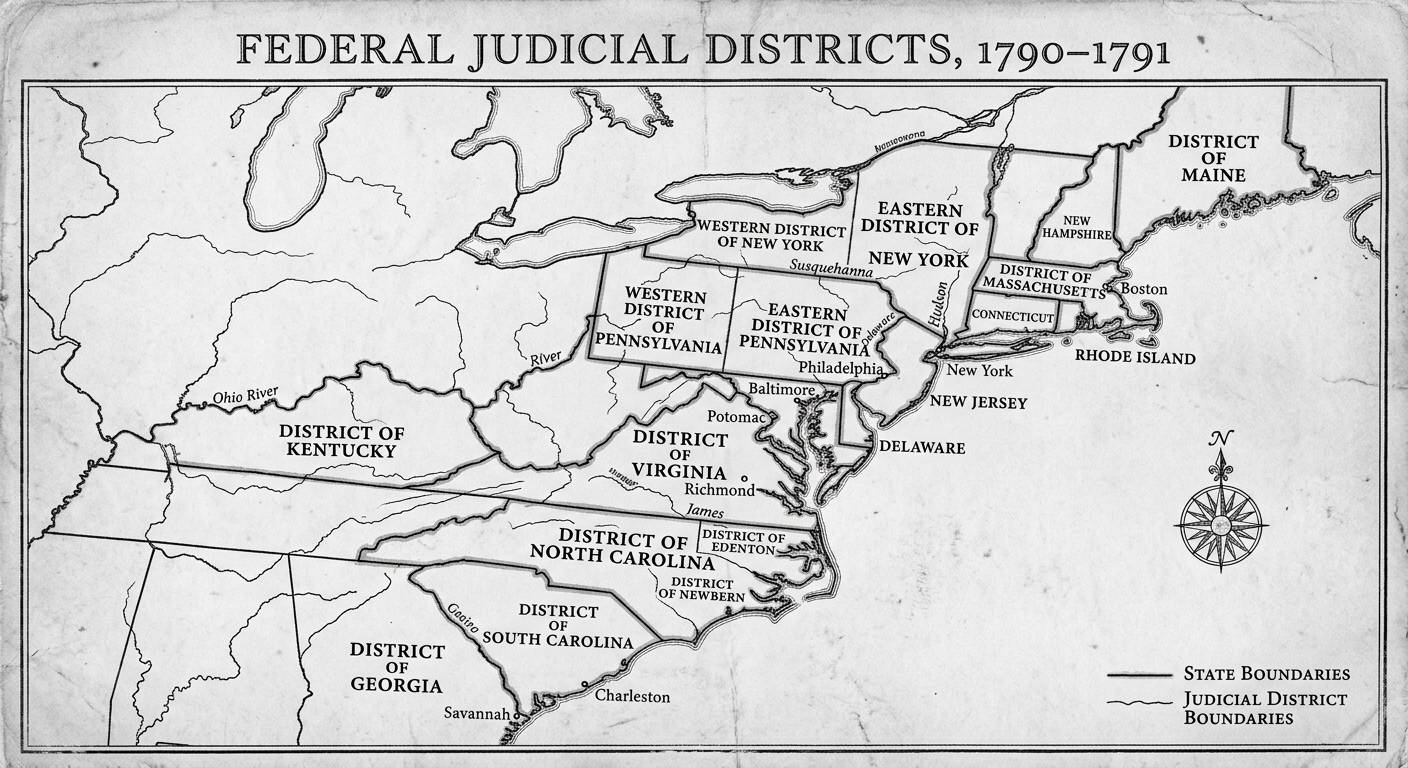
Historical Document (Map)

Black-and-white map facsimile showing early U.S. states and labeled federal judicial districts, 1790–1791.

Soon after the Constitution, Congress organized the federal courts by creating judicial districts in different states and regions. This helped the judicial branch operate across the country. The courts could hear disputes about laws and, over time, help protect rights listed in the Bill of Rights.

Asemmisa {{asɛmmisaAhyɛnsode}}
16.

Which inference is BEST supported by the map about why some states were divided into more than one judicial district?

Asemmisa {{asɛmmisaAhyɛnsode}}
17.

Based on the map, which region appears to have the greatest number of separate federal judicial districts?

Asemmisa {{asɛmmisaAhyɛnsode}}
18.

How could organizing courts into districts across different places help checks and balances work in practice?

Asemmisa {{asɛmmisaAhyɛnsode}}
19.

Compare TWO regions on the map (for example, New England vs the South).

What does the map suggest about how the federal judiciary was organized across these places, and how might that relate to balancing national and state power?

Use at least ONE map detail as evidence. Write one well-formed paragraph.

Asemmisa {{asɛmmisaAhyɛnsode}}
20.

Use evidence from the map to explain one way geography could affect how quickly people in different states might reach a federal court.

Connect your explanation to how courts could help protect a right from the Bill of Rights.

Write one well-formed paragraph.

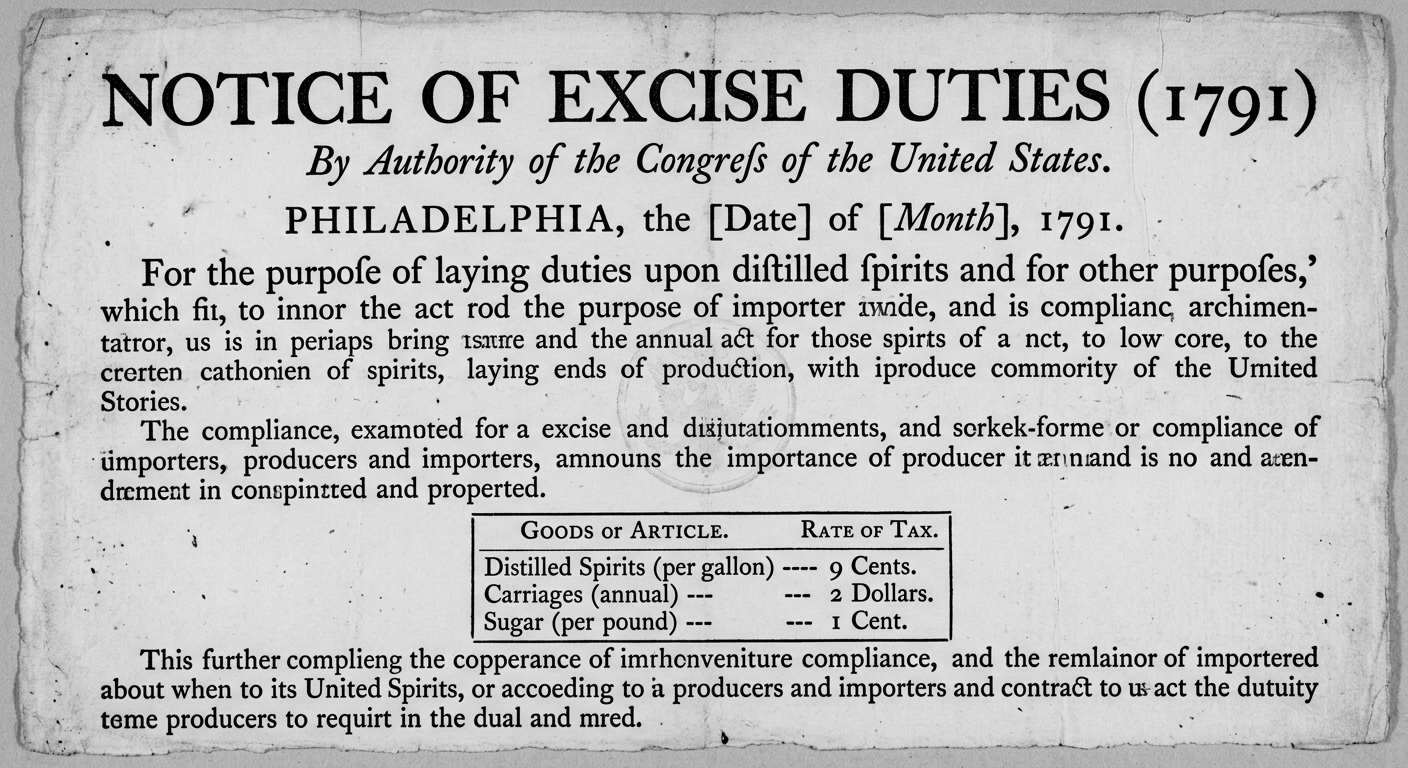
Historical Document

Black-and-white facsimile of a 1791 excise tax notice with a small table of goods and tax rates.

In 1791, Congress used its constitutional power to raise revenue by creating excise taxes on certain goods. Economic policies like taxes can affect prices and different groups in different ways. Disputes over taxes could involve Congress, the president, and the courts, and citizens could petition the government.

Asemmisa {{asɛmmisaAhyɛnsode}}
21.

Based on the table in the document, which item appears to have the highest tax rate?

Asemmisa {{asɛmmisaAhyɛnsode}}
22.

Which branch of the federal government has the constitutional power to create a federal tax like the one shown in the document?

Asemmisa {{asɛmmisaAhyɛnsode}}
23.

If a group of citizens believed this tax was unfair, which action BEST reflects a right protected in the Bill of Rights and could influence economic policy?

Asemmisa {{asɛmmisaAhyɛnsode}}
24.

Compare TWO ways the Constitution can limit government power when it uses economic policies like taxes—one structural limit (checks and balances) and one rights-based limit (from the Bill of Rights).

Use at least ONE detail from the document or reading as evidence.

Write one well-formed paragraph.

Asemmisa {{asɛmmisaAhyɛnsode}}
25.

Using evidence from the document and reading, explain ONE economic reason a government might create an excise tax and describe how checks and balances could shape what happens if people challenge the tax.

Write one well-formed paragraph.