Twa kɔ nsɛm atitiriw so
Log in
Sign up for FREE
arrow_back
Laabri

7.5c - The Constitution in Practice: - Practices A through E

star
star
star
star
star
Last updated about 1 month ago
25 Nsɛmmisa
Hyɛ no nsow a efi ɔkyerɛwfo no hɔ:

Use the historical document(s) and the short readings in the left panel to answer the associated questions.

Use the historical document(s) and the short readings in the left panel to answer the associated questions.

Ɛhia
1
7.5.c
DOK.SS.2
Ɛhia
1
7.5.c
DOK.SS.2
Ɛhia
1
7.5.c
DOK.SS.2
Ɛhia
2
7.5.c
DOK.SS.2
Ɛhia
2
7.5.c
DOK.SS.2
Ɛhia
1
7.5.c
DOK.SS.2
Ɛhia
1
7.5.c
DOK.SS.2
Ɛhia
1
7.5.c
DOK.SS.2
Ɛhia
2
7.5.c
DOK.SS.2
Ɛhia
2
7.5.c
DOK.SS.2
Ɛhia
1
7.5.c
DOK.SS.2
Ɛhia
1
7.5.c
DOK.SS.2
Ɛhia
1
7.5.c
DOK.SS.2
Ɛhia
2
7.5.c
DOK.SS.2
Ɛhia
2
7.5.c
DOK.SS.2
Ɛhia
1
7.5.c
DOK.SS.2
Ɛhia
1
7.5.c
DOK.SS.2
Ɛhia
1
7.5.c
DOK.SS.2
Ɛhia
2
7.5.c
DOK.SS.2
Ɛhia
2
7.5.c
DOK.SS.2
Ɛhia
1
7.5.c
DOK.SS.2
Ɛhia
1
7.5.c
DOK.SS.2
Ɛhia
1
7.5.c
DOK.SS.2
Ɛhia
2
7.5.c
DOK.SS.2
Ɛhia
2
7.5.c
DOK.SS.2

Document A shows an unwritten change in how the executive branch operates. In a well-formed paragraph, compare this type of change to the formal amendment process. Explain one strength and one limitation of relying on unwritten practices, using evidence from the document/description.
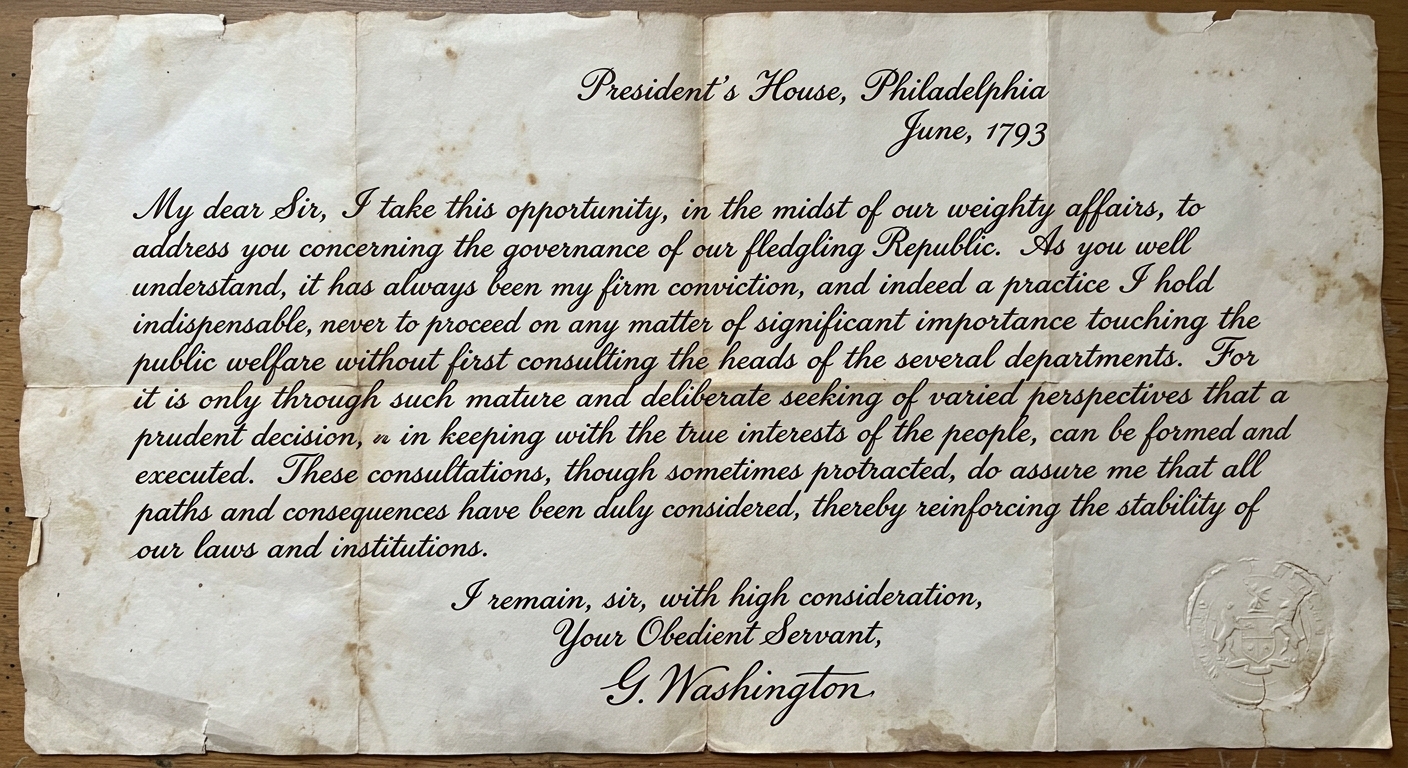
Facsimile-style 1793 memorandum from the President’s House in Philadelphia about consulting department heads for advice, written in cursive on aged parchment with a faint seal.

Asemmisa {{asɛmmisaAhyɛnsode}}
1.

Based on Document A and its description, which statement best explains how the Constitution can respond to change without being amended?

Asemmisa {{asɛmmisaAhyɛnsode}}
2.

Which piece of evidence from Document A most directly supports the idea that early presidents created new governing practices?

Asemmisa {{asɛmmisaAhyɛnsode}}
3.

Which conclusion is best supported by Document A about the relationship between the written Constitution and the way government actually operates?

Asemmisa {{asɛmmisaAhyɛnsode}}
4.

Using evidence from Document A and the reading stimulus, explain how this document illustrates a change in U.S. government that did not require a constitutional amendment.

Include at least two specific details from the document or description as evidence.

Asemmisa {{asɛmmisaAhyɛnsode}}
5.

Document A shows an unwritten change in how the executive branch operates.

In a well-formed paragraph, compare this type of change to the formal amendment process.

Explain one strength and one limitation of relying on unwritten practices, using evidence from the document/description.
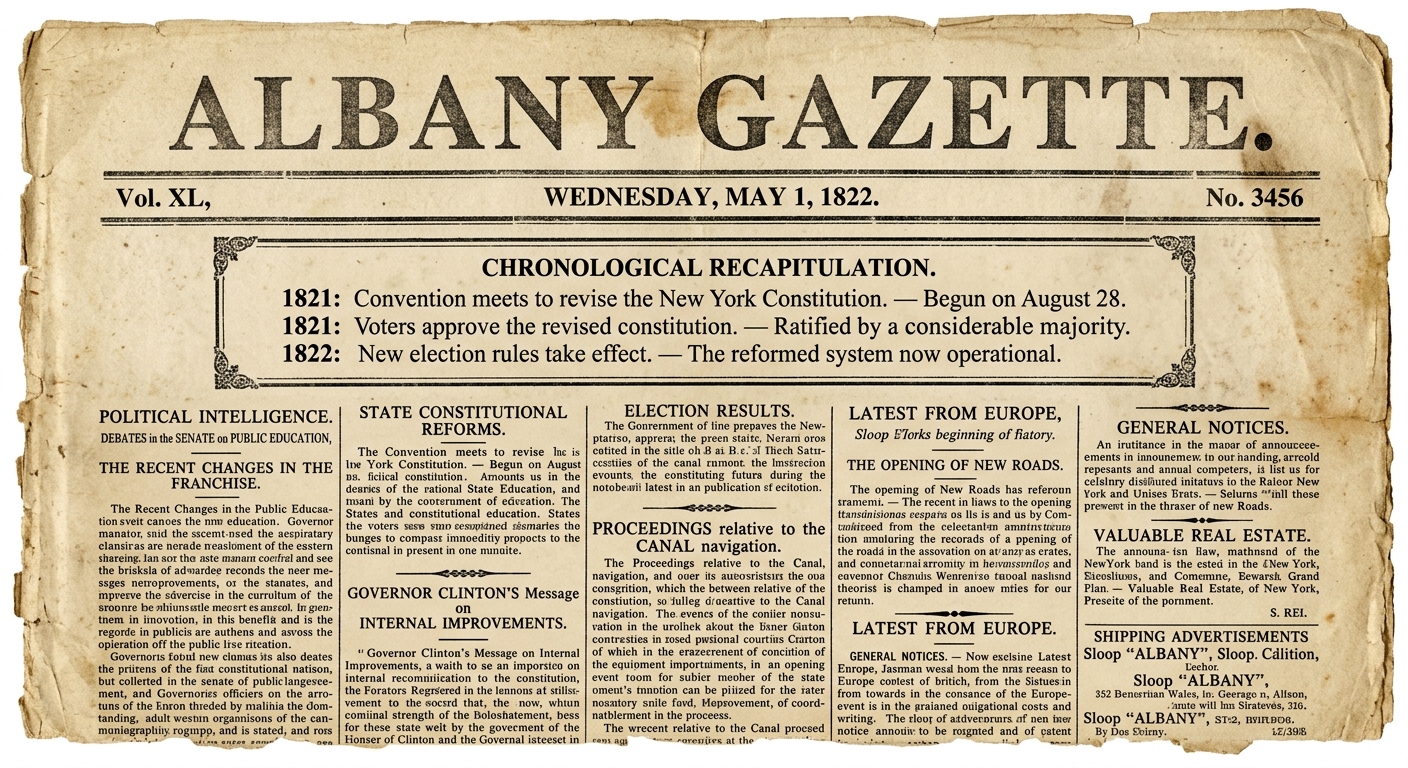
Document B summarizes steps in changing the New York State Constitution. In a well-formed paragraph, explain one strength and one limitation of making constitutional change through this multi-step timeline (convention → approval → taking effect). Use at least two dated details as evidence.

Aged newspaper-style broadside titled “Albany Gazette” with a small timeline showing 1821 convention, 1821 voter approval, and 1822 election rules taking effect.

Asemmisa {{asɛmmisaAhyɛnsode}}
6.

According to Document B’s timeline, which event happened last?

Asemmisa {{asɛmmisaAhyɛnsode}}
7.

Which sequence best matches the order of events shown in Document B?

Asemmisa {{asɛmmisaAhyɛnsode}}
8.

What is the best chronological inference you can make from Document B about how constitutional change happened in New York?

Asemmisa {{asɛmmisaAhyɛnsode}}
9.

Using Document B and the reading stimulus, explain how the timeline shows constitutional change happening over time.

In your paragraph, use the dates to describe what happened first, next, and last, and explain why that sequence matters.

Asemmisa {{asɛmmisaAhyɛnsode}}
10.

Document B summarizes steps in changing the New York State Constitution.

In a well-formed paragraph, explain one strength and one limitation of making constitutional change through this multi-step timeline (convention → approval → taking effect).

Use at least two dated details as evidence.

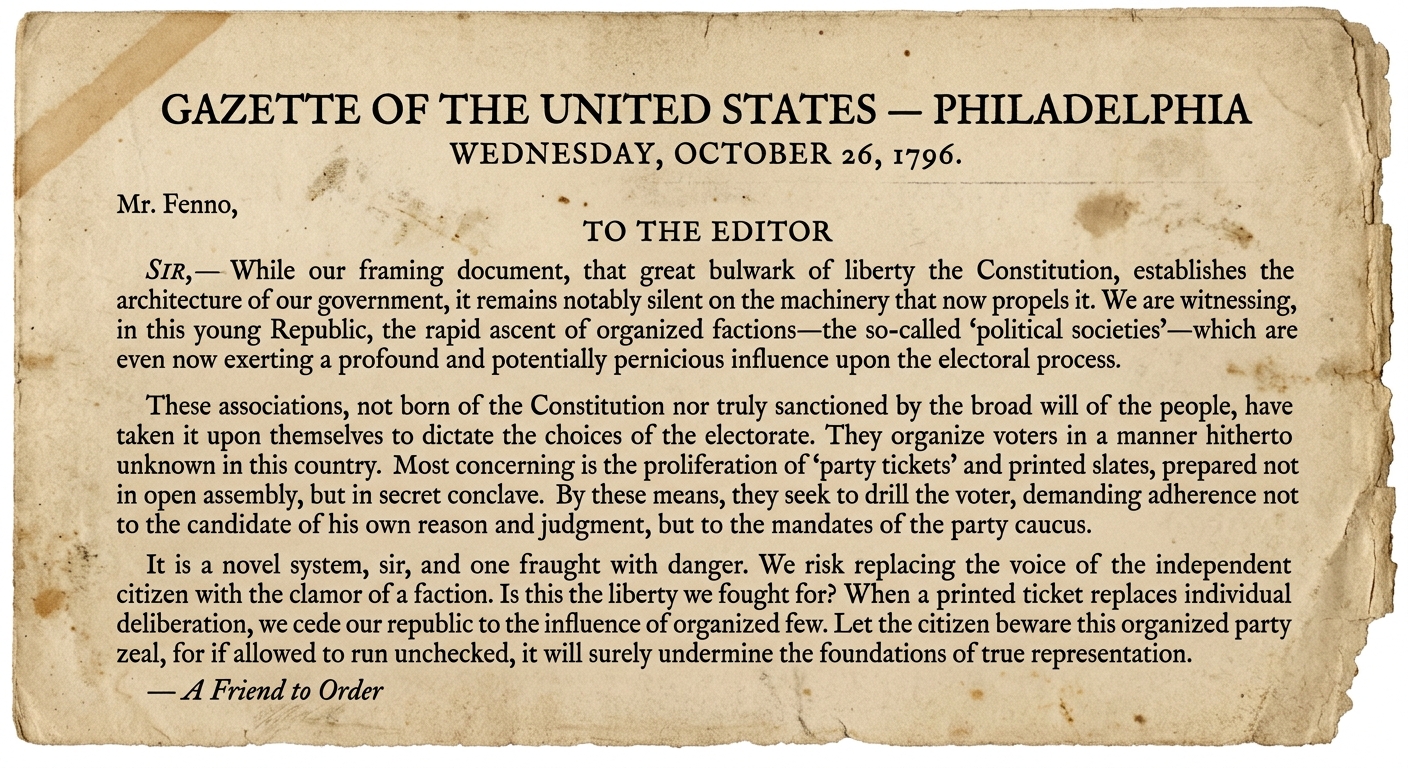
Document C (1796): The Constitution does not describe political parties. This newspaper letter suggests that organized “political societies” and shared party “tickets” were already influencing elections. Like the cabinet, parties became part of the unwritten constitution—informal practices that shaped government without a formal amendment.

Aged 1796 Philadelphia newspaper clipping with a letter to the editor describing political parties organizing voters, showing an unwritten change in politics.

Asemmisa {{asɛmmisaAhyɛnsode}}
11.

Which feature described in Document C is most similar to the cabinet practice shown in Document A?

Asemmisa {{asɛmmisaAhyɛnsode}}
12.

Which context best helps explain why the development described in Document C became important in the 1790s?

Asemmisa {{asɛmmisaAhyɛnsode}}
13.

Which statement best compares constitutional change through unwritten practices (like parties) with change through the formal amendment process?

Asemmisa {{asɛmmisaAhyɛnsode}}
14.

In a well-formed paragraph, compare the change suggested by Document C to the formal amendment process.

Identify one similarity and one difference, and use at least two details from Document C or its description as evidence.

Asemmisa {{asɛmmisaAhyɛnsode}}
15.

Contextualize Document C by explaining why the early United States (1790s) was a time when political parties were likely to form.

Use evidence from Document C and one piece of relevant historical context (for example, debates over federal power or economic plans).

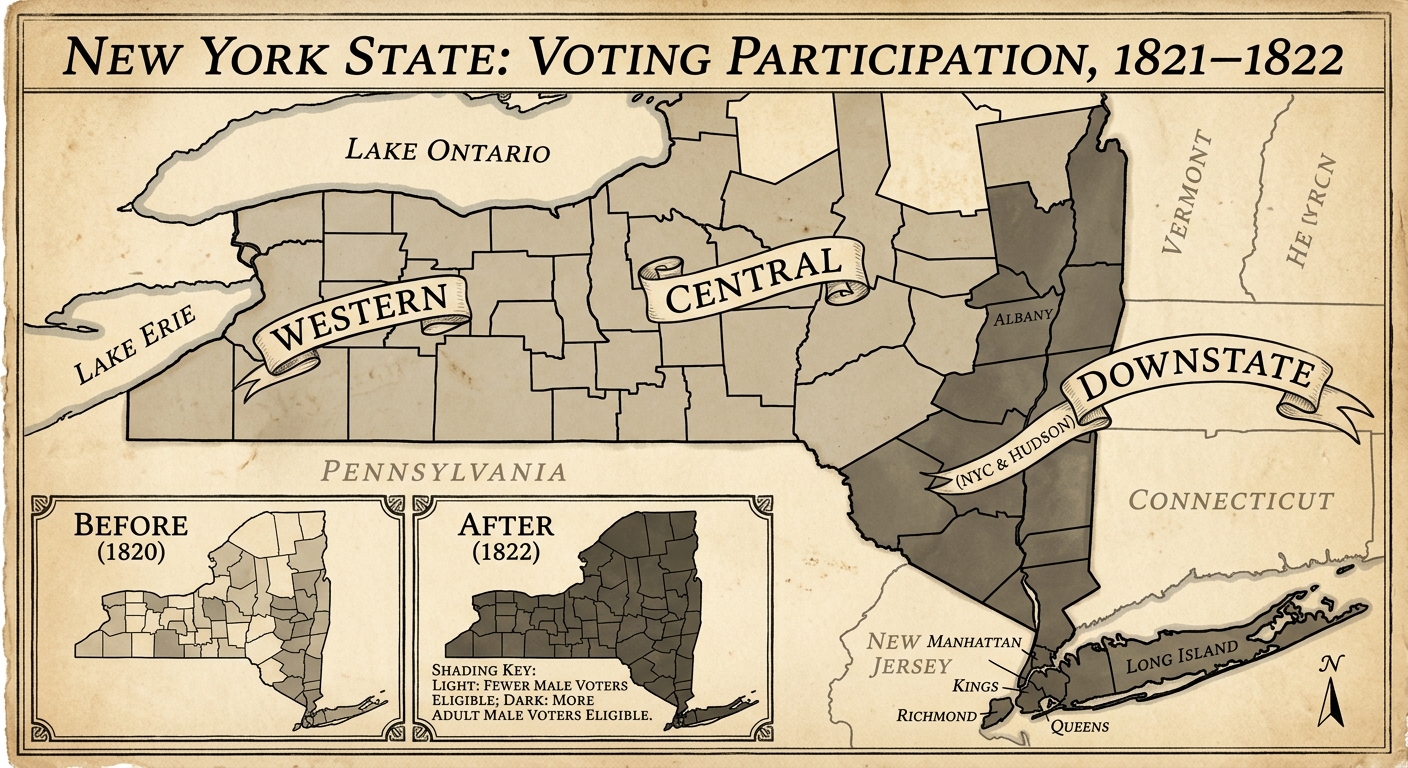
Document D (1821–1822): This map summarizes how New York’s constitutional changes expanded voting participation across different regions. Compare the “Before (1820)” and “After (1822)” insets using the legend. Use spatial patterns in the shading to infer how the reforms made government more democratic statewide.

Historical-style map of New York State with two insets comparing before 1820 and after 1822 shading to show expanded voting eligibility across regions.

Asemmisa {{asɛmmisaAhyɛnsode}}
16.

Based on Document D’s map, which region shows the greatest expansion in areas shaded as having more eligible voters from “Before (1820)” to “After (1822)”?

Asemmisa {{asɛmmisaAhyɛnsode}}
17.

Which statement best describes a spatial pattern shown in Document D after the 1821–1822 changes?

Asemmisa {{asɛmmisaAhyɛnsode}}
18.

Which inference about constitutional change is best supported by Document D and its description?

Asemmisa {{asɛmmisaAhyɛnsode}}
19.

Using evidence from Document D, compare how the 1821–1822 changes affected two different regions of New York State.

In your paragraph, describe what the shading suggests about participation in each region and explain how this supports the idea of a more democratic constitution.

Asemmisa {{asɛmmisaAhyɛnsode}}
20.

Contextualize Document D by explaining why expanded participation in Central and Western New York might matter in the early 1800s.

Use one geographic/historical context clue (for example, growing settlement patterns or distance from Albany/NYC) and evidence from the map’s pattern to support your explanation.

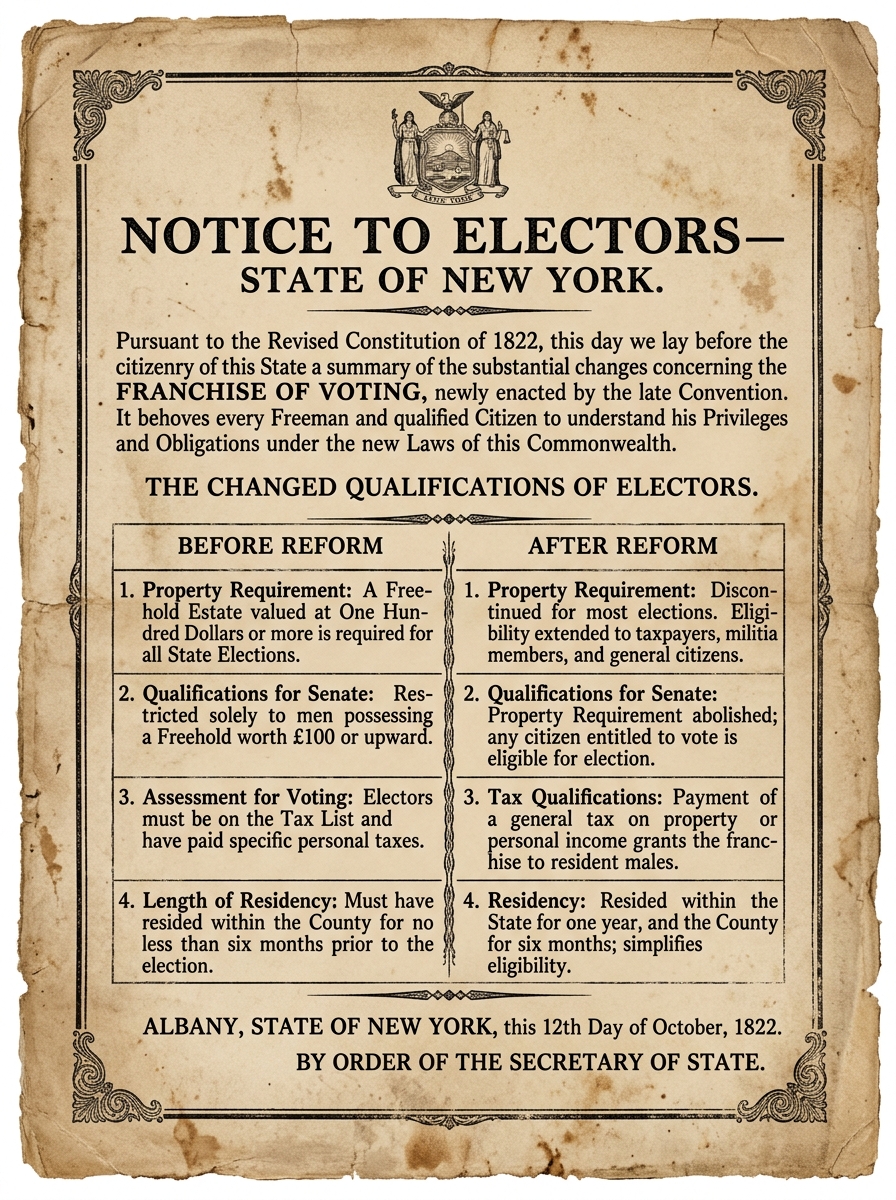
Document E (1822): This notice compares voting qualifications before and after New York’s 1821–1822 constitutional changes. Earlier rules tied political participation to economic status through property requirements. The revised rules reduced some property barriers, increasing access to voting. Use the table to infer how economic systems shaped citizenship.

Asemmisa {{asɛmmisaAhyɛnsode}}
21.

Based on Document E, which economic factor most limited who could vote under the earlier rules?

Asemmisa {{asɛmmisaAhyɛnsode}}
22.

Which group would most likely gain political influence if property requirements were reduced, as suggested in Document E?

Asemmisa {{asɛmmisaAhyɛnsode}}
23.

Which conclusion is best supported by Document E about how constitutional change can affect an economic system and political rights?

Asemmisa {{asɛmmisaAhyɛnsode}}
24.

Using evidence from Document E, explain how economic requirements can shape political participation.

In your paragraph, describe one effect of property requirements and one effect of reducing those requirements.

Use at least two specific details from the document or reading stimulus as evidence.

Asemmisa {{asɛmmisaAhyɛnsode}}
25.

Contextualize Document E by explaining why debates about property requirements might increase during the early 1800s in New York.

Use one piece of economic/historical context (for example, changing work patterns or expanding settlement) and evidence from Document E to support your explanation.