Twa kɔ nsɛm atitiriw so
Log in
Sign up for FREE
arrow_back
Laabri

7.5d - The Constitution in Practice: - Practices A through E

star
star
star
star
star
Last updated about 1 month ago
25 Nsɛmmisa
Hyɛ no nsow a efi ɔkyerɛwfo no hɔ:

Use the historical document(s) and the short readings in the left panel to answer the associated questions.

Use the historical document(s) and the short readings in the left panel to answer the associated questions.

7.5.d
DOK.SS.2
7.5.d
DOK.SS.2
7.5.d
DOK.SS.2
7.5.d
DOK.SS.2
7.5.d
DOK.SS.2
Ɛhia
1
7.5.d
DOK.SS.2
Ɛhia
1
7.5.d
DOK.SS.2
Ɛhia
2
7.5.d
DOK.SS.2
Ɛhia
2
7.5.d
DOK.SS.2
Ɛhia
1
7.5.d
DOK.SS.2
Ɛhia
1
7.5.d
DOK.SS.2
Ɛhia
2
7.5.d
DOK.SS.2
Ɛhia
1
7.5.d
DOK.SS.2
Ɛhia
1
7.5.d
DOK.SS.2
Ɛhia
2
7.5.d
DOK.SS.2
Ɛhia
2
7.5.d
DOK.SS.2
Ɛhia
1
7.5.d
DOK.SS.2
Ɛhia
1
7.5.d
DOK.SS.2
Ɛhia
1
7.5.d
DOK.SS.2
Ɛhia
2
7.5.d
DOK.SS.2
Ɛhia
1
7.5.d
DOK.SS.2
Ɛhia
1
7.5.d
DOK.SS.2
Ɛhia
2
7.5.d
DOK.SS.2
Ɛhia
1
7.5.d
DOK.SS.2
Ɛhia
2
7.5.d
DOK.SS.2
Ɛhia
1
7.5.d
DOK.SS.2
Ɛhia
1
7.5.d
DOK.SS.2
Ɛhia
2
7.5.d
DOK.SS.2
Ɛhia
2
7.5.d
DOK.SS.2
Ɛhia
1
7.5.d
DOK.SS.2

Historical Document:
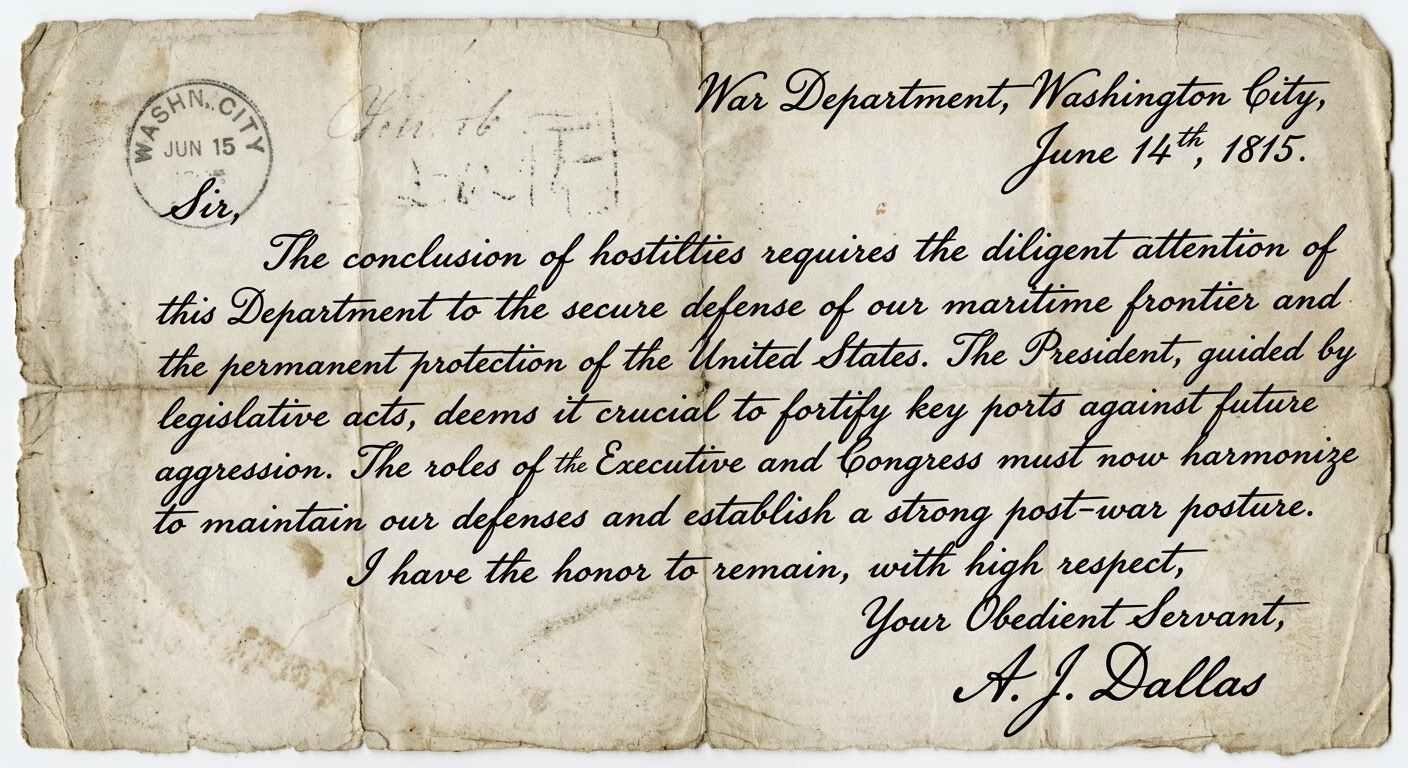
A black-and-white scan of a handwritten 1815 letter from Washington City about defending U.S. ports, with cursive writing, a date line, and an ink signature.

Study this 1815 War Department letter about protecting U.S. ports after the War of 1812. Use evidence from the document to infer how national security decisions could involve more than one branch of government and raise debates about federal power versus state responsibilities.
Asemmisa {{asɛmmisaAhyɛnsode}}
1.

Based on the document, which conclusion is BEST supported about how the Constitution was tested by national defense decisions in the early nation?

Asemmisa {{asɛmmisaAhyɛnsode}}
2.

Which type of information from the letter would be MOST useful as evidence that the author’s purpose was to influence government policy (not just report events)?

Asemmisa {{asɛmmisaAhyɛnsode}}
3.

Identify two details you can gather from the document (for example, the author, audience, date, or topic) and explain what each detail suggests about the historical context.

Use evidence from what you see in the document.

Asemmisa {{asɛmmisaAhyɛnsode}}
4.

Using evidence from the document and your knowledge of the Constitution, explain one way a policy about port defense could involve checks and balances.

Your answer should connect a specific branch action to another branch’s role.

Asemmisa {{asɛmmisaAhyɛnsode}}
5.

Suppose a state governor disagreed with the plan described in the letter and claimed the state should control port defenses.

Which constitutional issue would this disagreement MOST directly involve?

Historical Document:

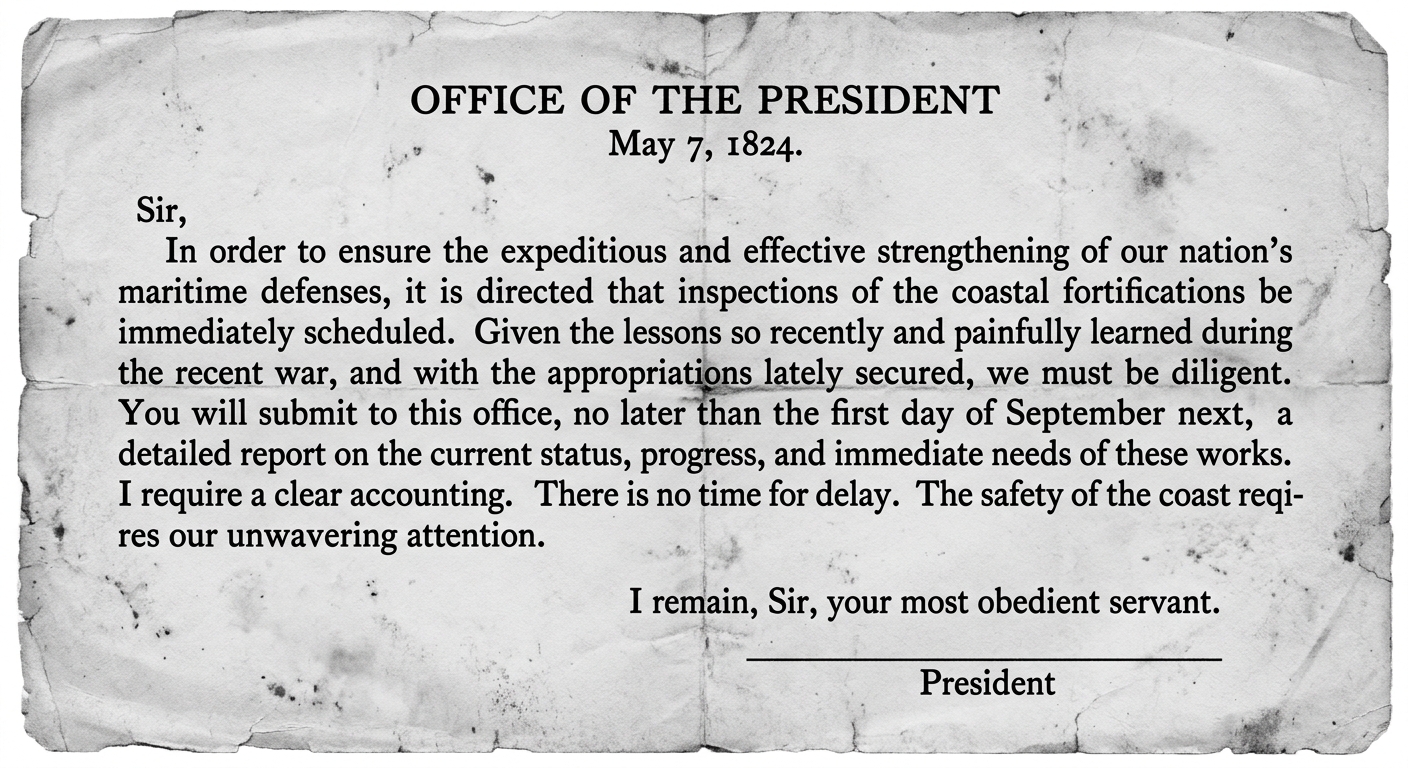
A black-and-white facsimile of an 1824 presidential office directive about coastal fortification inspections, with date and signature on aged paper.

Study this 1824 directive about inspecting coastal fortifications and reporting results. Use dates, references to earlier events, and the order of requested actions to place the document in time and infer how postwar defense planning could involve both federal decisions and coordination with states.

Asemmisa {{asɛmmisaAhyɛnsode}}
6.

Which piece of evidence from the document would be MOST useful for building a simple timeline of actions?

Asemmisa {{asɛmmisaAhyɛnsode}}
7.

Use evidence from the document to identify two chronological clues (for example, a date, a reference to an earlier event, or the sequence of actions).

For each clue, explain what it suggests about when the document was created and what was happening at the time.

Asemmisa {{asɛmmisaAhyɛnsode}}
8.

Which event MOST likely happened shortly BEFORE this 1824 directive was written, based on the document’s references to “recent war” and coastal defense planning?

Asemmisa {{asɛmmisaAhyɛnsode}}
9.

If a historian argued that coastal defense planning became more organized after earlier conflicts, which detail from this document would BEST support that claim?

Asemmisa {{asɛmmisaAhyɛnsode}}
10.

Based on the timing suggested by the document, explain one way postwar defense planning could test the Constitution’s system of checks and balances or federalism.

Use at least one detail from the document and connect it to the role of more than one level or branch of government.

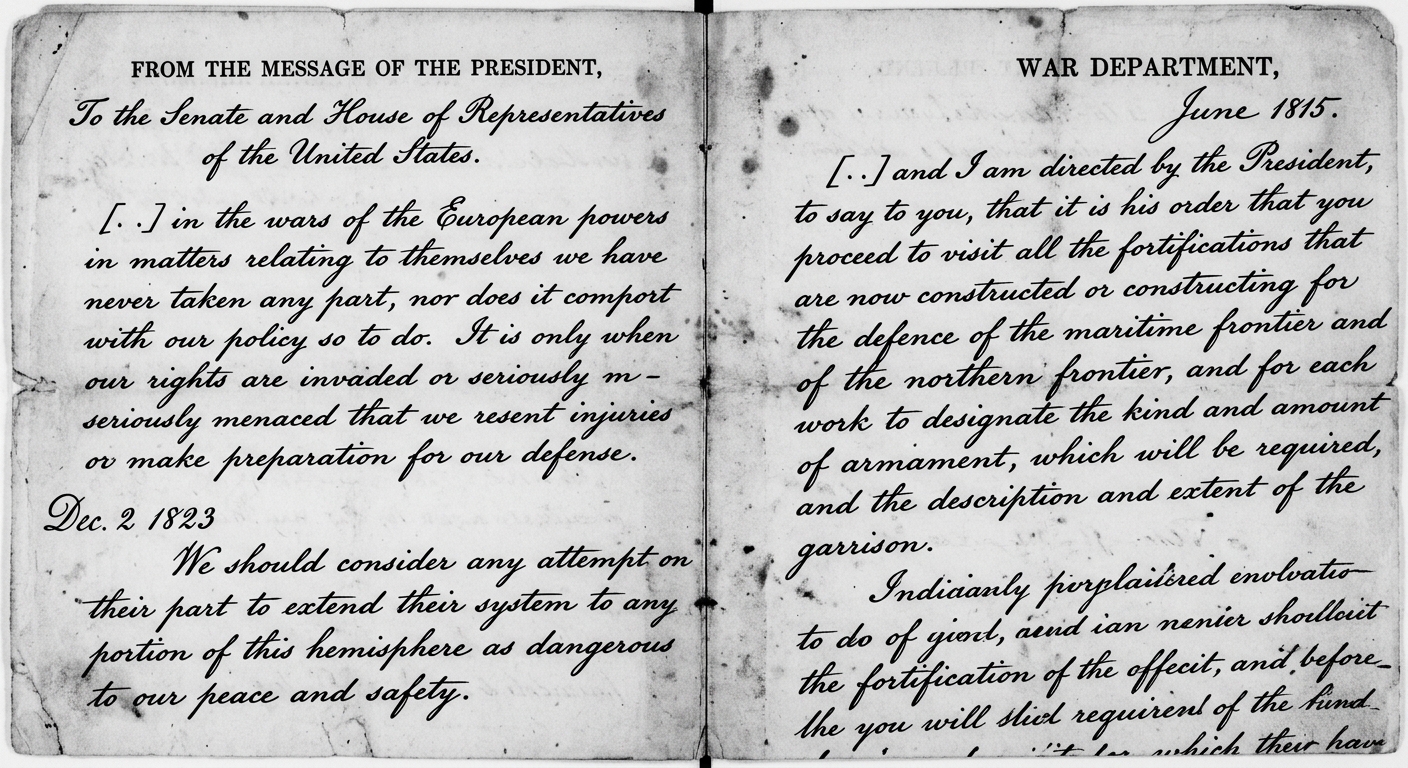
Historical Document:

A black-and-white split-page facsimile showing two dated excerpts: an 1815 War Department letter about port defense and an 1823 message to Congress about European interference in the Americas.

Study the two excerpts: a War Department letter from 1815 and a message to Congress from 1823. Compare what each source suggests about U.S. priorities after the War of 1812 and during growing concerns about European influence in the Americas. Use evidence from both excerpts.

Asemmisa {{asɛmmisaAhyɛnsode}}
11.

Contextualize the two excerpts by explaining how the War of 1812 and later concerns about European influence could test the Constitution in practice (checks and balances or federalism).

Use at least one piece of evidence from each excerpt.

Asemmisa {{asɛmmisaAhyɛnsode}}
12.

Which comparison is BEST supported by evidence from BOTH excerpts?

Asemmisa {{asɛmmisaAhyɛnsode}}
13.

Which detail would be MOST useful for contextualizing why the 1823 excerpt was written when it was?

Asemmisa {{asɛmmisaAhyɛnsode}}
14.

Which inference about change over time from 1815 to 1823 is BEST supported by the excerpts?

Asemmisa {{asɛmmisaAhyɛnsode}}
15.

Use evidence from BOTH excerpts to explain one similarity and one difference in how U.S. leaders described threats to the nation.

Your response must include at least one specific detail from each excerpt.

Historical Document:

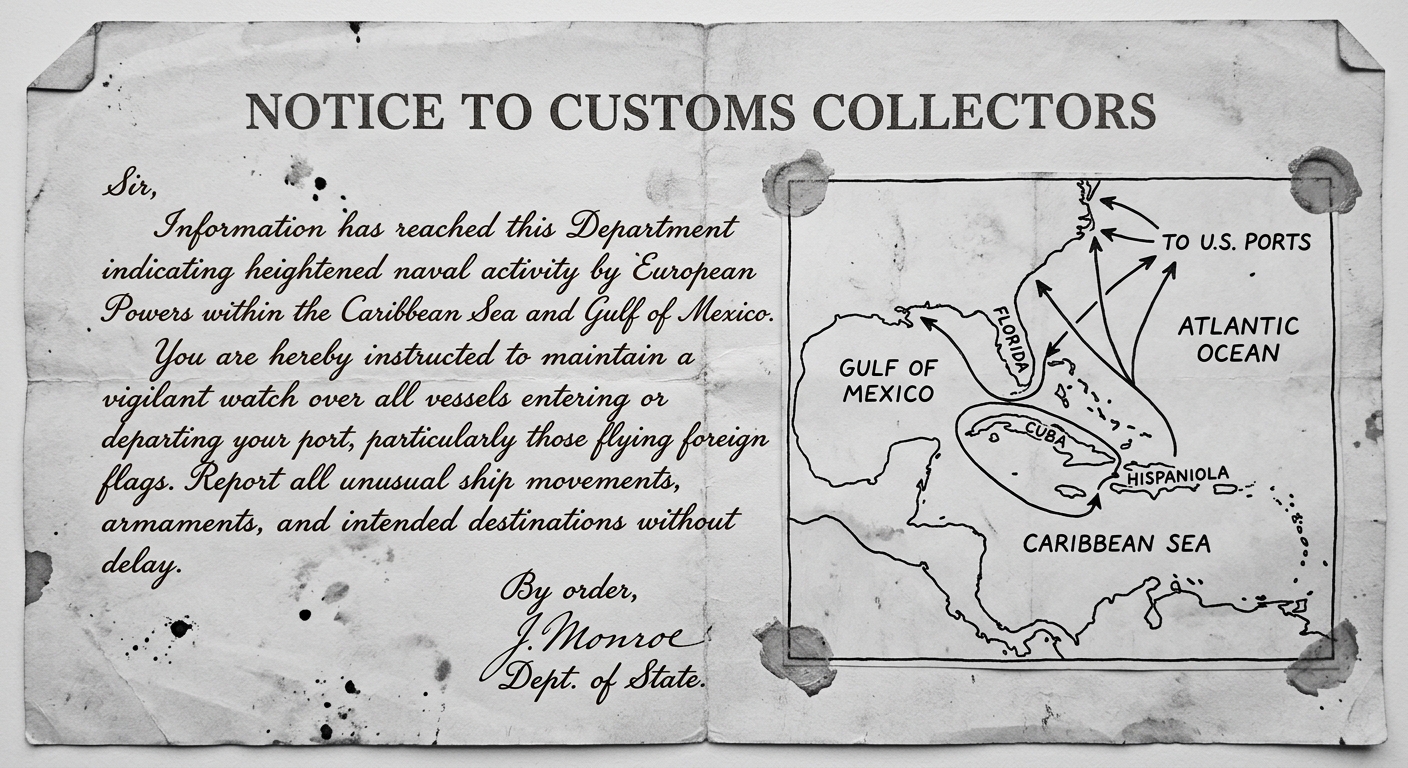
A black-and-white facsimile of an 1823 customs circular with a simple map of the Caribbean and Gulf of Mexico labeling Florida, Cuba, Hispaniola, and sea routes to U.S. ports.

Study this 1823 customs notice and sketch map showing sea routes near Florida, Cuba, and Hispaniola. Use the map labels and directions to infer why U.S. leaders watched European activity in nearby waters and how protecting the Western Hemisphere depended on geography.

Asemmisa {{asɛmmisaAhyɛnsode}}
16.

Based on the map, which location is MOST strategically important for monitoring ships entering the Gulf of Mexico and approaching U.S. ports?

Asemmisa {{asɛmmisaAhyɛnsode}}
17.

Which inference is BEST supported by combining the notice’s warning about European naval activity with the map’s locations?

Asemmisa {{asɛmmisaAhyɛnsode}}
18.

Using evidence from the map, explain how geography helps contextualize why U.S. leaders wanted to limit European interference in the Western Hemisphere.

Include at least two specific map details (place names or directions).

Asemmisa {{asɛmmisaAhyɛnsode}}
19.

Which piece of map evidence would BEST support the claim that Caribbean sea routes could affect U.S. national security in the early 1800s?

Asemmisa {{asɛmmisaAhyɛnsode}}
20.

Explain one way protecting U.S. ports and nearby sea routes could involve more than one branch of the federal government or raise a federalism issue.

Use evidence from the notice/map plus your knowledge of the Constitution.

Historical Document:

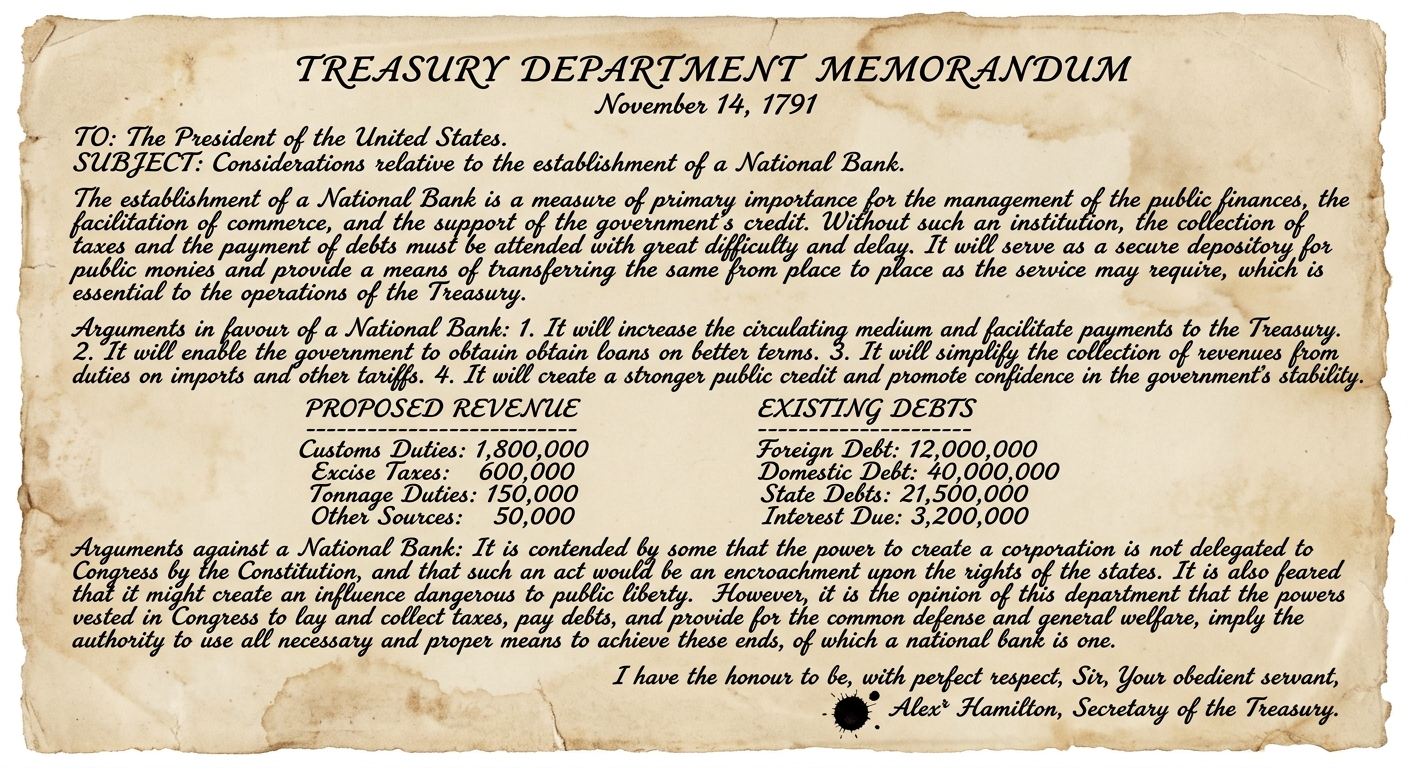
A black-and-white facsimile of a 1791 Treasury Department memorandum about creating a national bank, with a small table of revenue and debts on aged paper.

Study this 1791 Treasury memorandum about strengthening national credit through a proposed bank and federal revenue. Use details from the memo and table to interpret how economic policy debates could test the Constitution through disagreements about federal power, states’ roles, and decisions that required actions by more than one branch.

Asemmisa {{asɛmmisaAhyɛnsode}}
21.

Which conclusion about early U.S. economic policy is BEST supported by the memorandum’s focus on credit, revenue, and debts?

Asemmisa {{asɛmmisaAhyɛnsode}}
22.

Which detail from the document would be MOST useful evidence for the claim that the author wanted the federal government to play an active role in the economy?

Asemmisa {{asɛmmisaAhyɛnsode}}
23.

Explain one way a policy like this could involve checks and balances.

Use a specific piece of evidence from the document (credit, tariffs, debts, or the bank) and connect it to roles of at least two branches.

Asemmisa {{asɛmmisaAhyɛnsode}}
24.

Using evidence from the memorandum and table, explain one economic problem the authors were trying to solve and how their proposed solution reflects an economic system choice (for example, stronger national control versus more state control).

Asemmisa {{asɛmmisaAhyɛnsode}}
25.

If a critic argued the plan in the memorandum violated states’ rights, which constitutional issue would that disagreement MOST directly involve?