Twa kɔ nsɛm atitiriw so
Log in
Sign up for FREE
arrow_back
Laabri

7.6a - Westward Expansion: - Practices A through E

star
star
star
star
star
Last updated about 1 month ago
25 Nsɛmmisa
Hyɛ no nsow a efi ɔkyerɛwfo no hɔ:

Use the historical document(s) and the short readings in the left panel to answer the associated questions.

Use the historical document(s) and the short readings in the left panel to answer the associated questions.

Ɛhia
1
7.6.a
DOK.SS.2
Ɛhia
1
7.6.a
DOK.SS.2
Ɛhia
1
7.6.a
DOK.SS.2
Ɛhia
1
7.6.a
DOK.SS.2
Ɛhia
1
7.6.a
DOK.SS.2
Ɛhia
1
7.6.a
DOK.SS.2
Ɛhia
1
7.6.a
DOK.SS.2
Ɛhia
1
7.6.a
DOK.SS.2
Ɛhia
1
7.6.a
DOK.SS.2
Ɛhia
1
7.6.a
DOK.SS.2
Ɛhia
1
7.6.a
DOK.SS.2
Ɛhia
1
7.6.a
DOK.SS.2
Ɛhia
1
7.6.a
DOK.SS.2
Ɛhia
1
7.6.a
DOK.SS.2
Ɛhia
1
7.6.a
DOK.SS.2
Ɛhia
1
7.6.a
DOK.SS.2
Ɛhia
1
7.6.a
DOK.SS.2
Ɛhia
1
7.6.a
DOK.SS.2
Ɛhia
1
7.6.a
DOK.SS.2
Ɛhia
1
7.6.a
DOK.SS.2
Ɛhia
1
7.6.a
DOK.SS.2
Ɛhia
1
7.6.a
DOK.SS.2
Ɛhia
1
7.6.a
DOK.SS.2
Ɛhia
1
7.6.a
DOK.SS.2
Ɛhia
1
7.6.a
DOK.SS.2

Historical Document: Petition to New York Officials, October 1784

This facsimile shows a Native community’s petition to New York leaders after the American Revolution. The writer explains that their wartime alliance with Britain was followed by pressure to cede land and to move away. Read closely to gather evidence about land loss and forced movement.
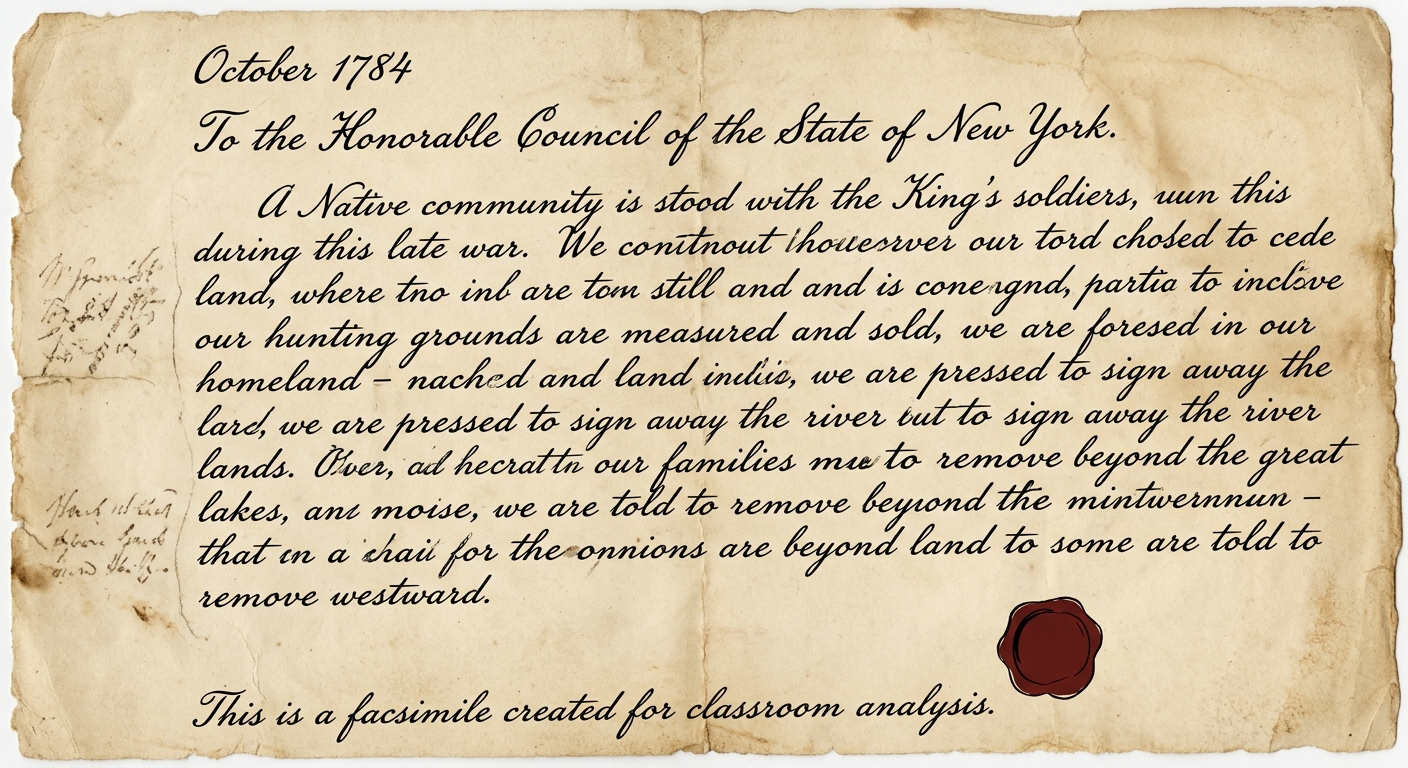
Facsimile handwritten petition dated October 1784 to New York officials describing a Native community’s alliance with Britain and the resulting pressure to give up land and move west.

Asemmisa {{asɛmmisaAhyɛnsode}}
1.

Based on the document, what is the most likely purpose of the petition?

Asemmisa {{asɛmmisaAhyɛnsode}}
2.

Which detail from the document best supports the idea that Native people who allied with Britain faced loss of land after the American Revolution?

Asemmisa {{asɛmmisaAhyɛnsode}}
3.

How might a New York state official describe the same events differently than the petition writer?

Use one piece of evidence from the document and explain how the official’s point of view could change the description in one paragraph.

Asemmisa {{asɛmmisaAhyɛnsode}}
4.

Using evidence from the document, explain how the petition shows:

(1) land loss and

(2) pressure to move.

Use at least two specific details from the text in one paragraph.

Asemmisa {{asɛmmisaAhyɛnsode}}
5.

Which conclusion about cause and effect is best supported by the document?

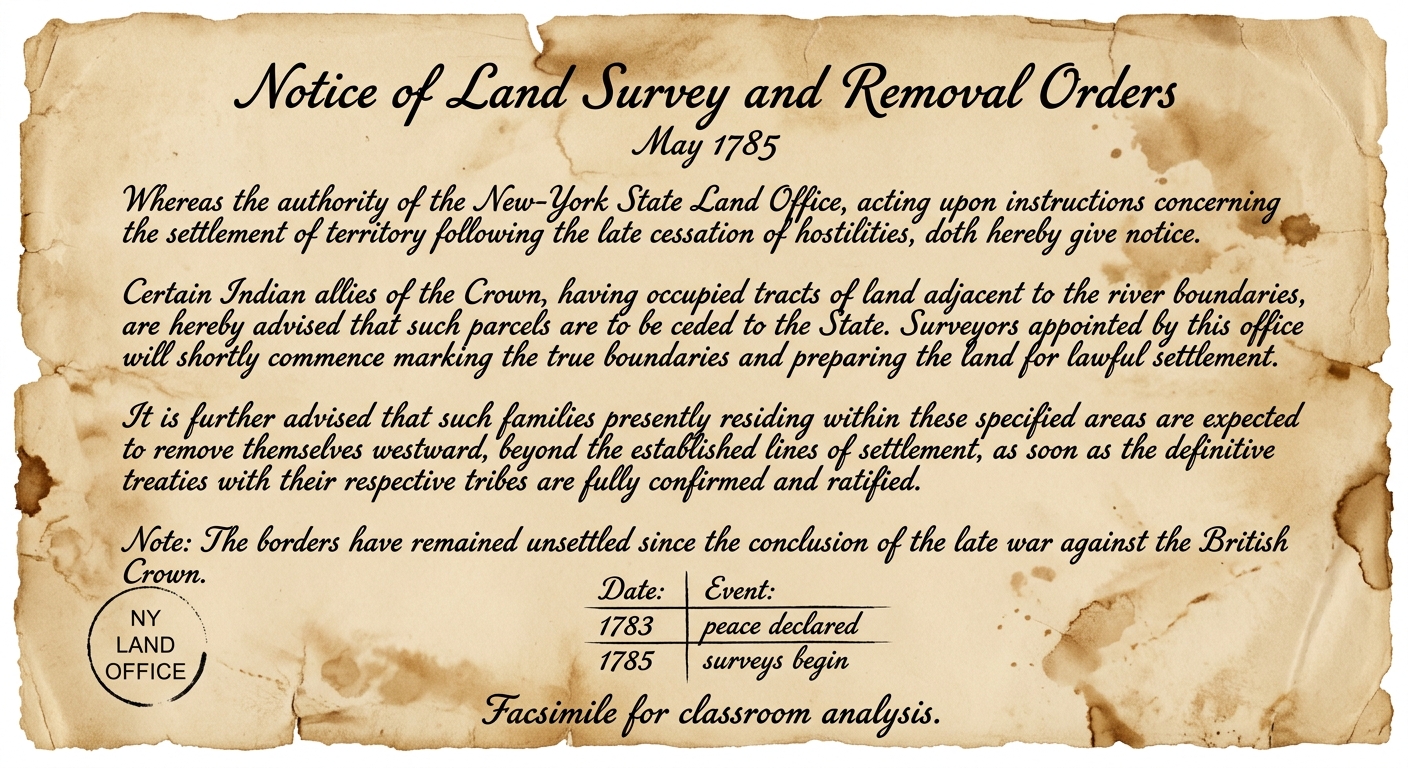
Historical Document: Notice of Land Survey and Removal Orders, May 1785

This facsimile shows a New York land office notice issued after the American Revolution. It refers to peace in 1783 and surveys beginning in 1785. Read for chronological clues about what happened first, next, and later, and how time order relates to land loss and forced movement.

Facsimile handwritten notice dated May 1785 about land surveys and removal expectations for Native allies of Britain after the American Revolution.

Asemmisa {{asɛmmisaAhyɛnsode}}
6.

How could a Native community affected by this notice describe the sequence of events differently from the land office clerk?

Use one specific time clue from the document and explain how it could support a different interpretation in one paragraph.

Asemmisa {{asɛmmisaAhyɛnsode}}
7.

Which event happened first, based on the dates and time references in the document?

Asemmisa {{asɛmmisaAhyɛnsode}}
8.

Which timeline is most consistent with the document?

Asemmisa {{asɛmmisaAhyɛnsode}}
9.

Using evidence from the document, explain how the timing of events helps show why land loss and pressure to move happened after the American Revolution.

Use at least two time clues (dates or phrases) in one paragraph.

Asemmisa {{asɛmmisaAhyɛnsode}}
10.

Which statement best explains why the document includes both 1783 and 1785?

Historical Document: Proclamation from the New York Land Office, February 1786

This facsimile shows a land office proclamation written after the peace of 1783. It explains why the state wanted surveys and new settlement on former Native lands, and it describes removal in official language. Read to contextualize postwar decisions and compare the state’s framing with Native petitions about land loss and forced movement.
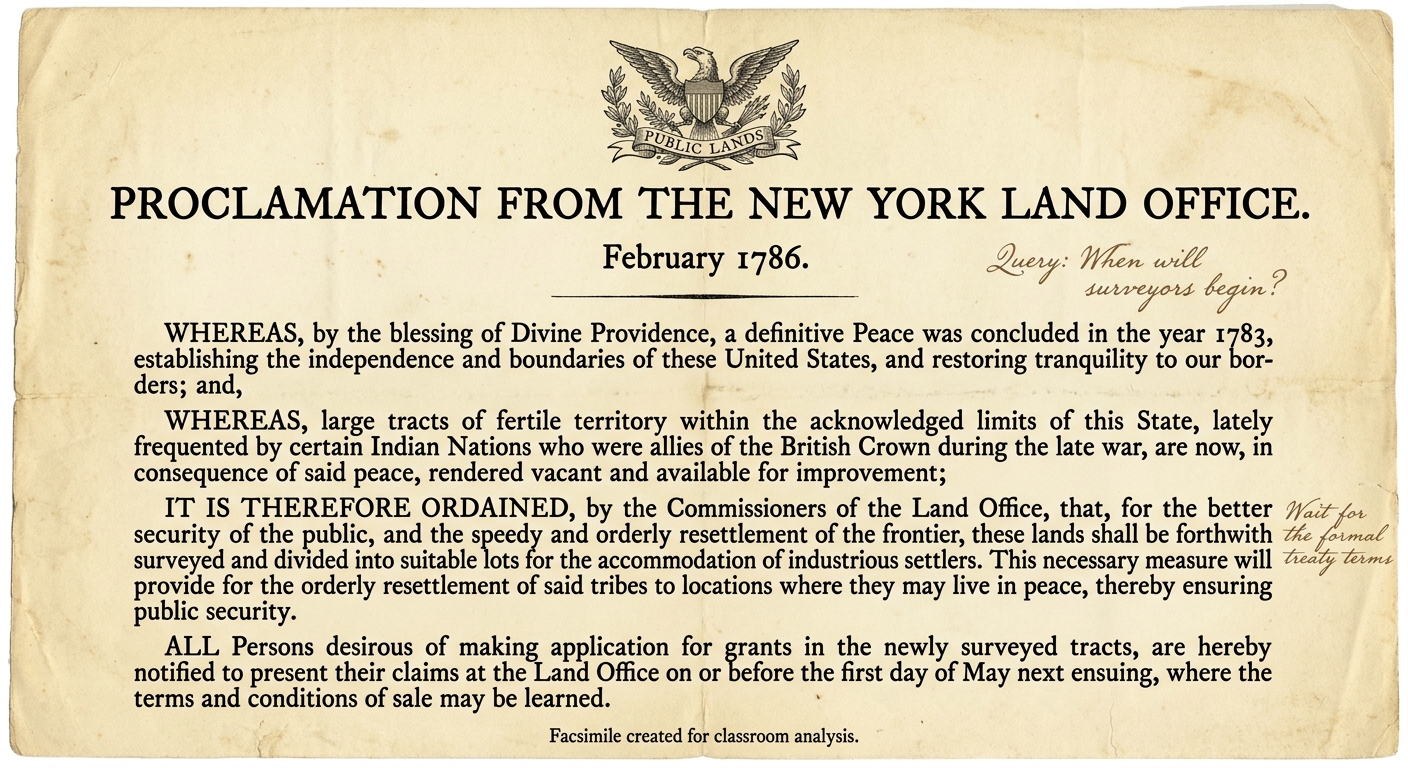
Facsimile printed proclamation dated February 1786 from a New York land office describing postwar land surveys and removal as orderly resettlement.

Asemmisa {{asɛmmisaAhyɛnsode}}
11.

Which detail from the proclamation best helps place the document in the context of the period after the American Revolution?

Asemmisa {{asɛmmisaAhyɛnsode}}
12.

Which comparison is most supported by the document when you contrast it with a Native petition from the same era?

Asemmisa {{asɛmmisaAhyɛnsode}}
13.

Which statement is the strongest evidence-based inference about the land office’s point of view in this proclamation?

Asemmisa {{asɛmmisaAhyɛnsode}}
14.

Compare how this proclamation and a Native petition about land loss would likely describe removal.

Use one piece of evidence from the proclamation and explain how it would contrast with a petition writer’s language in one paragraph.

Asemmisa {{asɛmmisaAhyɛnsode}}
15.

Using evidence from the proclamation, explain how the document helps a historian contextualize why land loss and forced movement occurred for some Native allies of Britain after the Revolution.

Use at least two details from the proclamation in one paragraph.

Historical Document: Sketch Map of River Lands and Proposed Removal Route, 1784

This facsimile map shows river lands in New York and a proposed westward removal route after the American Revolution. Study the rivers, boundary marks, and arrows pointing toward the Great Lakes. Use the map’s locations and legend to gather evidence about land loss and forced movement.
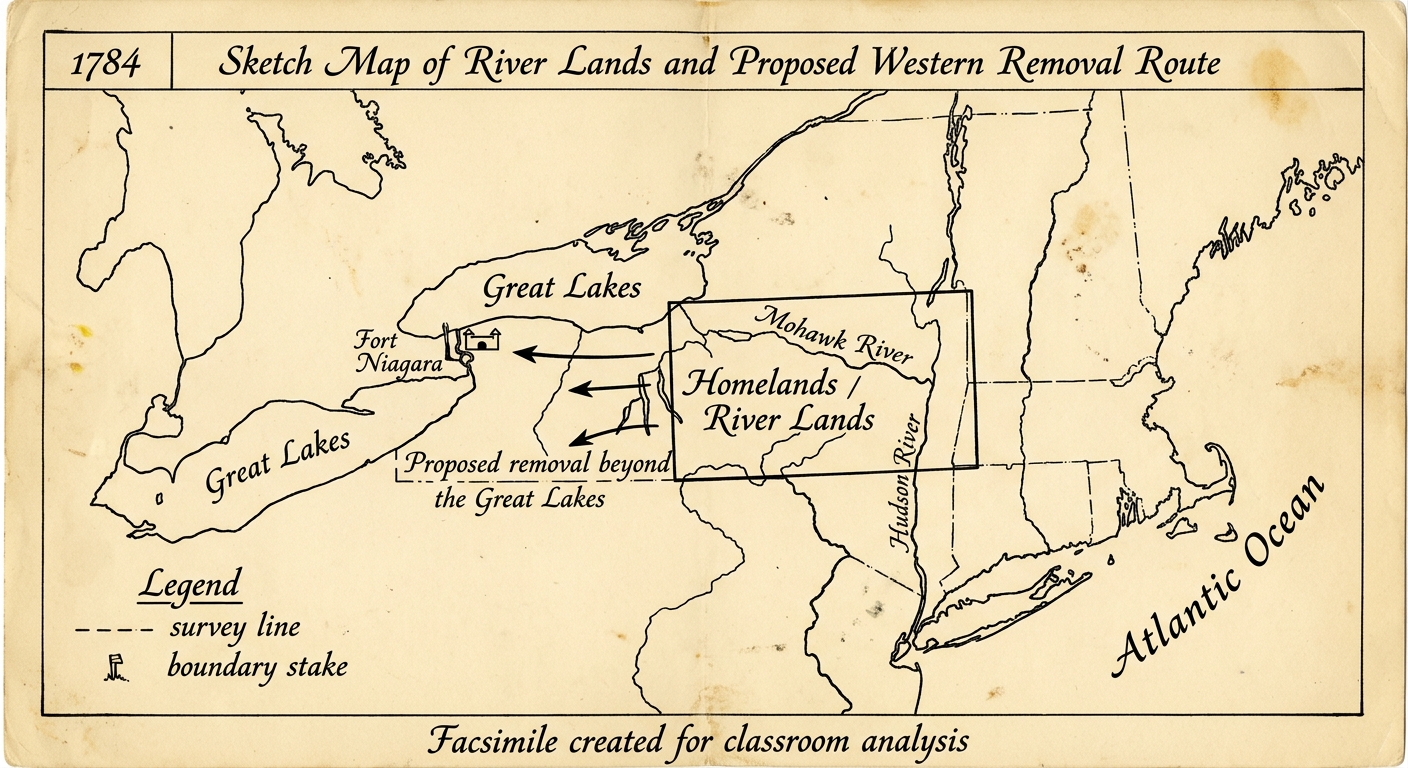
Facsimile hand-drawn 1784 sketch map showing river lands in New York and a proposed westward removal route toward the Great Lakes.

Asemmisa {{asɛmmisaAhyɛnsode}}
16.

Which comparison is most supported by the map when contrasted with a Native petition about land loss from the same period?

Asemmisa {{asɛmmisaAhyɛnsode}}
17.

Using evidence from the map, explain how the document supports the idea of:

(1) land loss and

(2) forced movement after the American Revolution.

Use at least two specific map details in one paragraph.

Asemmisa {{asɛmmisaAhyɛnsode}}
18.

Explain how the locations shown (rivers and the Great Lakes) help a historian understand the challenges Native families might have faced if they were forced to move.

Use one specific place label from the map in one paragraph.

Asemmisa {{asɛmmisaAhyɛnsode}}
19.

Which map feature best supports the idea that people were expected to move away from their river lands?

Asemmisa {{asɛmmisaAhyɛnsode}}
20.

Based on the map, which inference is most reasonable about why survey lines and boundary stakes are shown?

This facsimile shows a post-Revolution land office notice advertising surveyed river parcels for public sale. It links land sales to paying state debts and encouraging settlement after peace. It also references relocation beyond the Great Lakes. Read for economic clues about land loss and forced movement.
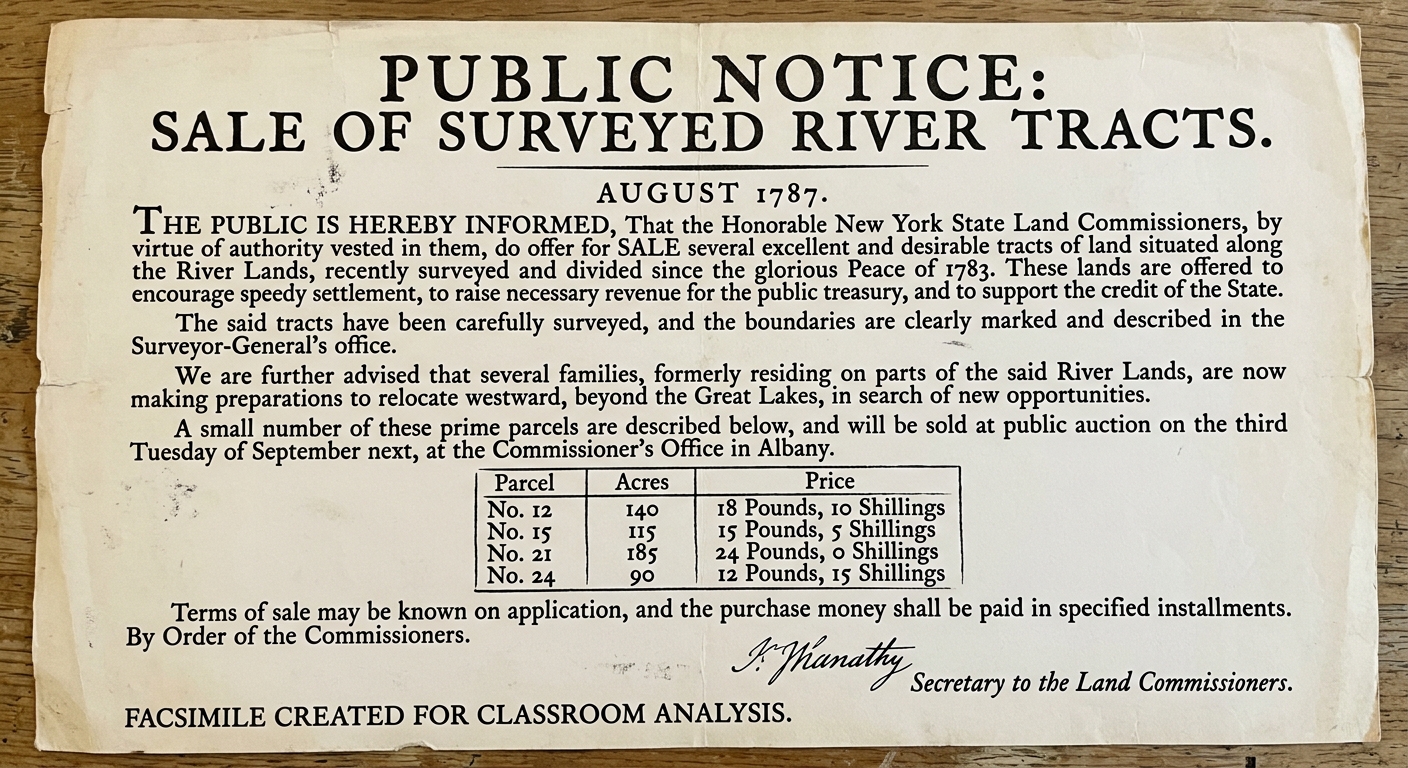
Facsimile printed 1787 land sale notice listing surveyed river parcels, prices, and a note about relocation of Native families west.

Asemmisa {{asɛmmisaAhyɛnsode}}
21.

Which detail from the notice is the strongest evidence that the state treated the land as an economic resource after the war?

Asemmisa {{asɛmmisaAhyɛnsode}}
22.

Which comparison is most supported when you contrast this notice with a Native petition about land loss from the same period?

Asemmisa {{asɛmmisaAhyɛnsode}}
23.

Explain how postwar economic pressures (such as funding government and encouraging settlement) could shape the language and priorities of the commissioners’ notice.

Use one detail from the document as evidence in one paragraph.

Asemmisa {{asɛmmisaAhyɛnsode}}
24.

Based on the notice, which economic goal is most likely driving the land sales?

Asemmisa {{asɛmmisaAhyɛnsode}}
25.

Using evidence from the notice, explain how economic decisions after the war could contribute to:

(1) land loss and

(2) pressure to move.

Use at least two specific details (such as the price/parcel list and the relocation reference) in one paragraph.