Twa kɔ nsɛm atitiriw so
Log in
Sign up for FREE
arrow_back
Laabri

7.6c - Westward Expansion: - Practices A through E

star
star
star
star
star
Last updated about 1 month ago
25 Nsɛmmisa
Hyɛ no nsow a efi ɔkyerɛwfo no hɔ:

Use the historical document(s) and the short readings in the left panel to answer the associated questions.

Use the historical document(s) and the short readings in the left panel to answer the associated questions.

Ɛhia
1
7.6.c
DOK.SS.2
Ɛhia
1
7.6.c
DOK.SS.2
Ɛhia
1
7.6.c
DOK.SS.2
Ɛhia
2
7.6.c
DOK.SS.2
Ɛhia
2
7.6.c
DOK.SS.2
Ɛhia
1
7.6.c
DOK.SS.2
Ɛhia
1
7.6.c
DOK.SS.2
Ɛhia
1
7.6.c
DOK.SS.2
Ɛhia
2
7.6.c
DOK.SS.2
Ɛhia
2
7.6.c
DOK.SS.2
Ɛhia
1
7.6.c
DOK.SS.2
Ɛhia
1
7.6.c
DOK.SS.2
Ɛhia
1
7.6.c
DOK.SS.2
Ɛhia
2
7.6.c
DOK.SS.2
Ɛhia
2
7.6.c
DOK.SS.2
Ɛhia
1
7.6.c
DOK.SS.2
Ɛhia
1
7.6.c
DOK.SS.2
Ɛhia
1
7.6.c
DOK.SS.2
Ɛhia
2
7.6.c
DOK.SS.2
Ɛhia
2
7.6.c
DOK.SS.2
Ɛhia
1
7.6.c
DOK.SS.2
Ɛhia
1
7.6.c
DOK.SS.2
Ɛhia
1
7.6.c
DOK.SS.2
Ɛhia
2
7.6.c
DOK.SS.2
Ɛhia
2
7.6.c
DOK.SS.2

Read the broadside below. Some Americans promoted moving west as a chance for land and new markets. At the same time, westward settlement often led to treaty violations, forced removal of Native peoples, and violent conflict. Use evidence from the document and reading to answer the questions.
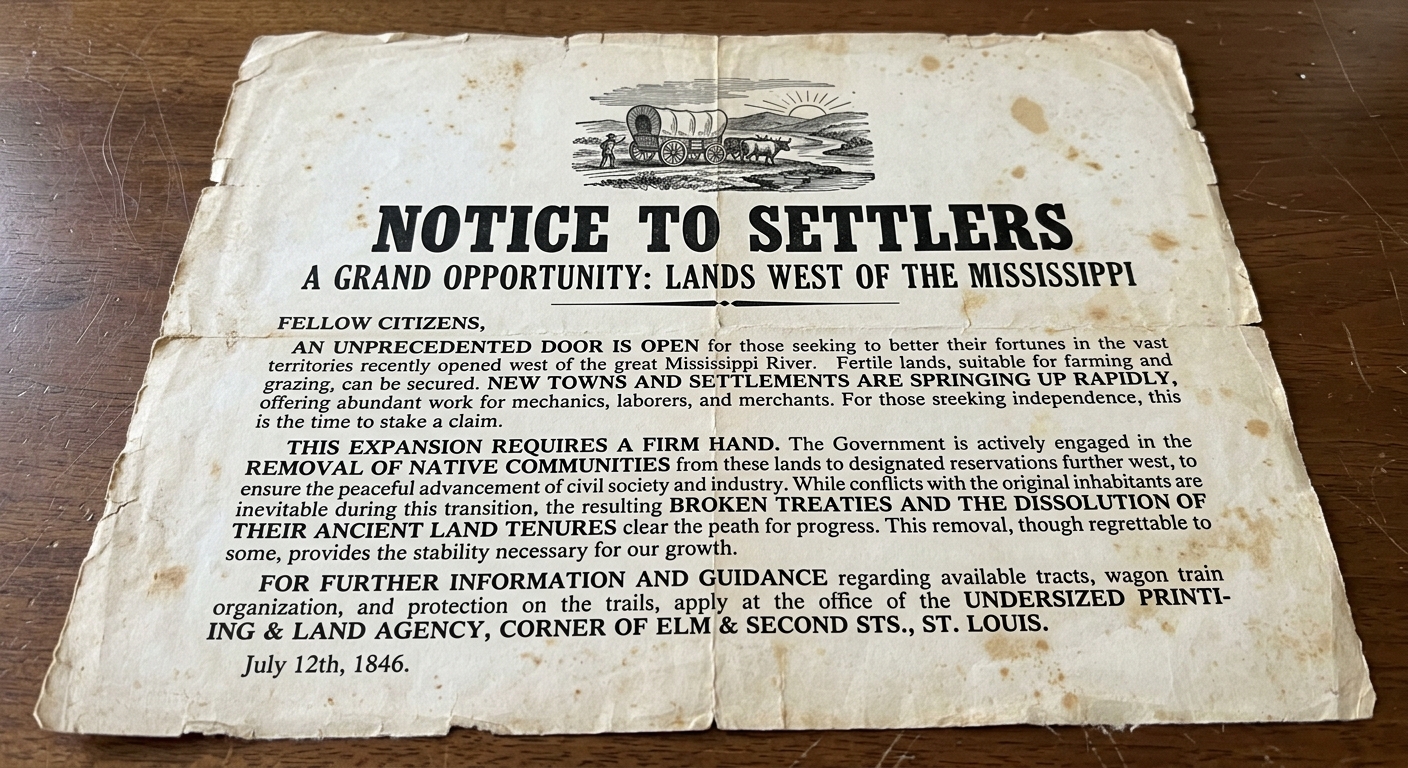
Aged 1840s-style printed broadside titled "NOTICE TO SETTLERS" about moving west, with a small illustration of a covered wagon and text describing opportunities and conflicts.

Asemmisa {{asɛmmisaAhyɛnsode}}
1.

Based on the broadside, which statement best describes the main purpose of the document?

Asemmisa {{asɛmmisaAhyɛnsode}}
2.

Which detail from the broadside is the strongest evidence that westward expansion offered economic opportunity to some Americans?

Asemmisa {{asɛmmisaAhyɛnsode}}
3.

Which statement is best supported by using BOTH the reading and the broadside as evidence?

Asemmisa {{asɛmmisaAhyɛnsode}}
4.

Using evidence from the broadside AND the reading, explain one way westward expansion created opportunity for some groups and one way it harmed others.

Write one well-formed paragraph.

Asemmisa {{asɛmmisaAhyɛnsode}}
5.

How might the author’s perspective or purpose in the broadside affect what information is emphasized or left out?

Use one specific example of what is emphasized and one example of what might be missing.

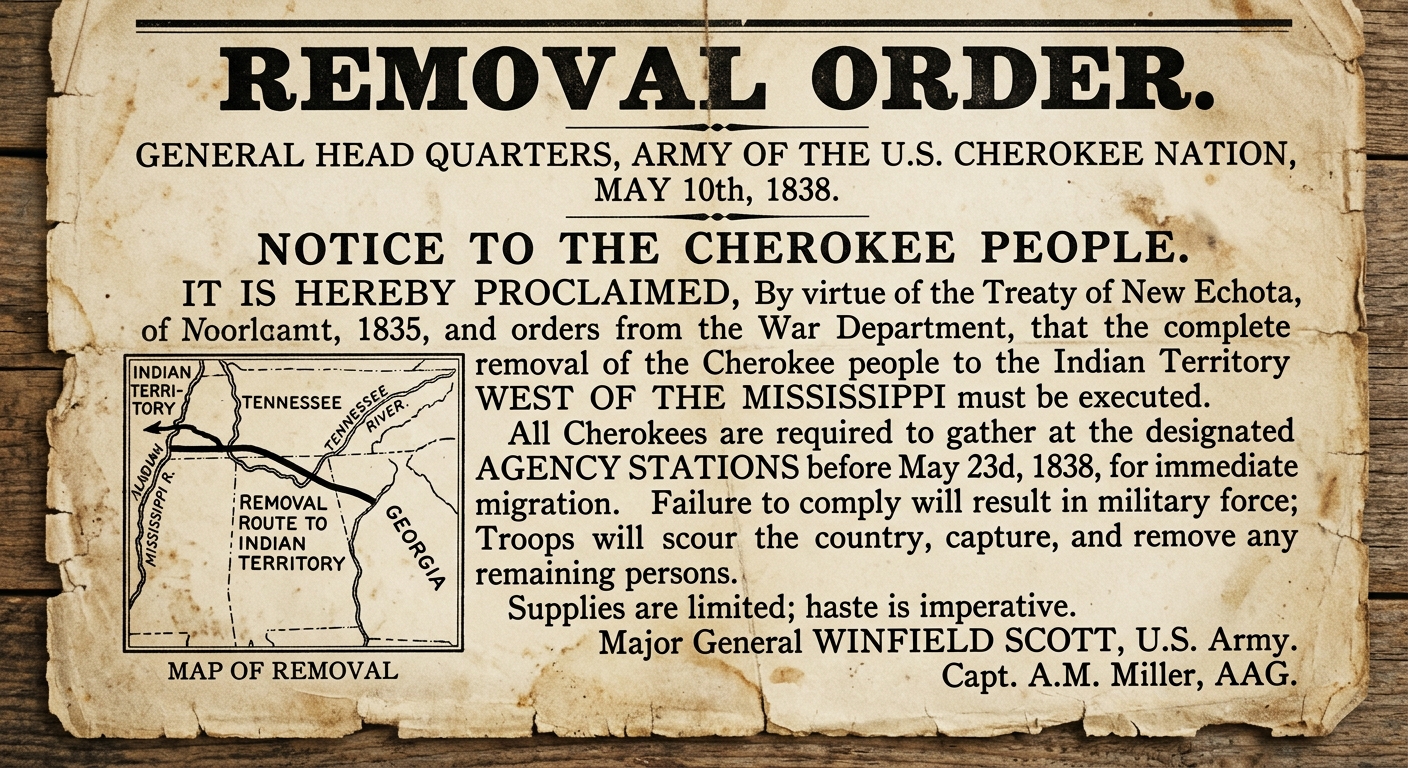
Use the dated notice below to track cause-and-effect over time. During the 1830s, federal Indian removal policies forced Native communities to relocate west. Westward settlement expanded farmland and new towns for some Americans, while removal and enforcement brought displacement and loss for others.

Aged 1830s-style newspaper notice about removal with a printed date near the top and a small map labeled "Removal Route."

Asemmisa {{asɛmmisaAhyɛnsode}}
6.

Which claim is best supported by the date and language of the notice?

Asemmisa {{asɛmmisaAhyɛnsode}}
7.

Which sequence best explains how westward expansion could create opportunity for some groups while harming others?

Asemmisa {{asɛmmisaAhyɛnsode}}
8.

Which additional source would BEST help a historian confirm what happened AFTER the dated notice was issued?

Asemmisa {{asɛmmisaAhyɛnsode}}
9.

Using evidence from the dated notice and the reading, explain how a government action in the 1830s could lead to both:

(1) greater opportunity for settlers later and

(2) harm to Native communities over time.

Write one well-formed paragraph.

Asemmisa {{asɛmmisaAhyɛnsode}}
10.

Use evidence from the date line and one other detail in the document to explain what you can infer about where this event fits in the broader timeline of westward expansion.

Write one well-formed paragraph.

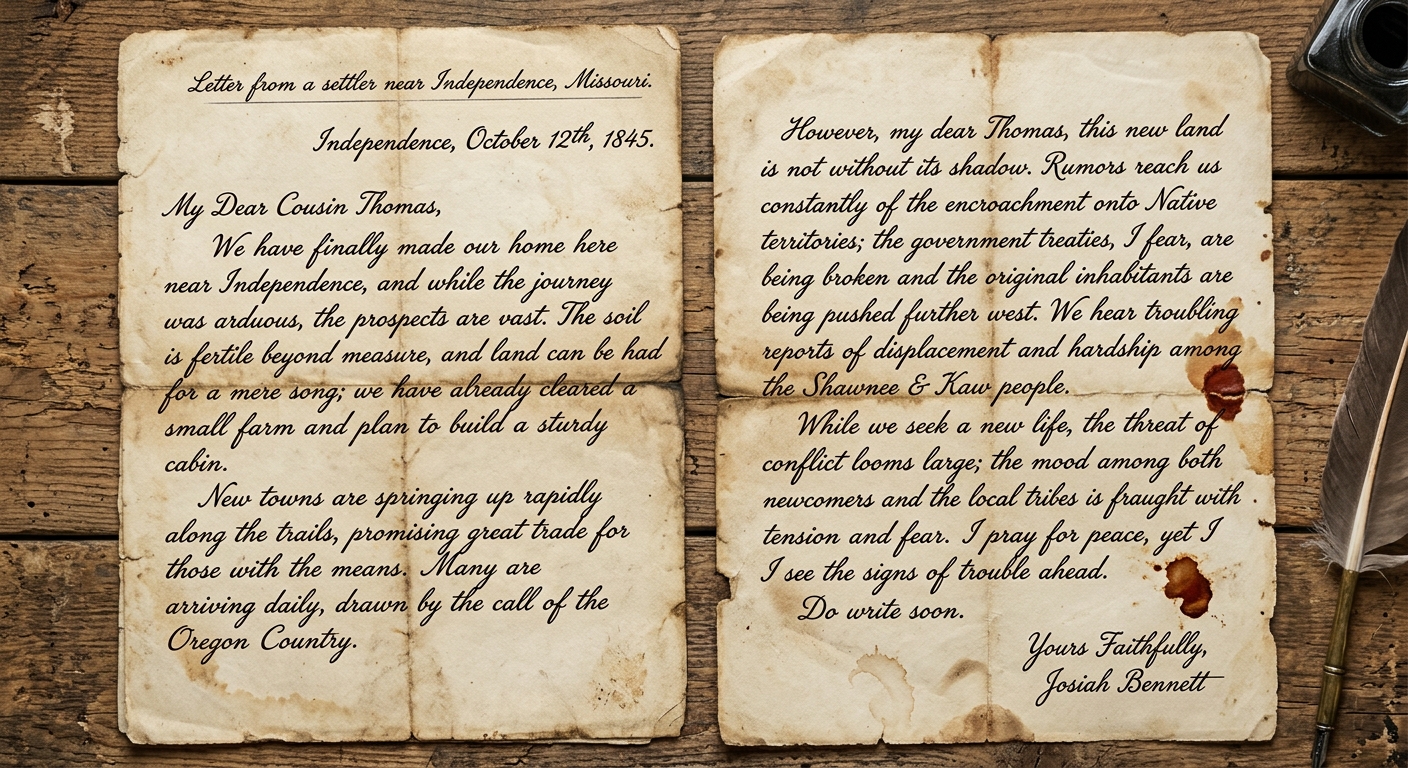
Read the 1845 settler letter below and use it as evidence. Compare what the writer highlights to what you know about U.S. policies toward Native nations in the 1830s–1840s. Contextualize the letter by connecting it to westward migration, economic goals, and conflict.

Two-page 1845-style handwritten settler letter with a visible date line and cursive text describing opportunities and conflicts of moving west.

Asemmisa {{asɛmmisaAhyɛnsode}}
11.

Which comparison is BEST supported when you connect the settler’s letter to the broader historical context of westward expansion?

Asemmisa {{asɛmmisaAhyɛnsode}}
12.

Which piece of background information provides the MOST important context for interpreting why the letter’s author describes moving west as an “opportunity”?

Asemmisa {{asɛmmisaAhyɛnsode}}
13.

Which inference BEST shows contextualization by linking the letter’s date (1845) to events in the decades around it?

Asemmisa {{asɛmmisaAhyɛnsode}}
14.

Using evidence from the letter AND your historical context knowledge, write one paragraph comparing how westward expansion could be seen as an opportunity for some Americans but harmful for Native communities.

Asemmisa {{asɛmmisaAhyɛnsode}}
15.

Contextualize the letter by explaining one event or policy from the 1830s–1840s that helps explain what the author might not mention directly.

Use one detail from the letter as evidence.

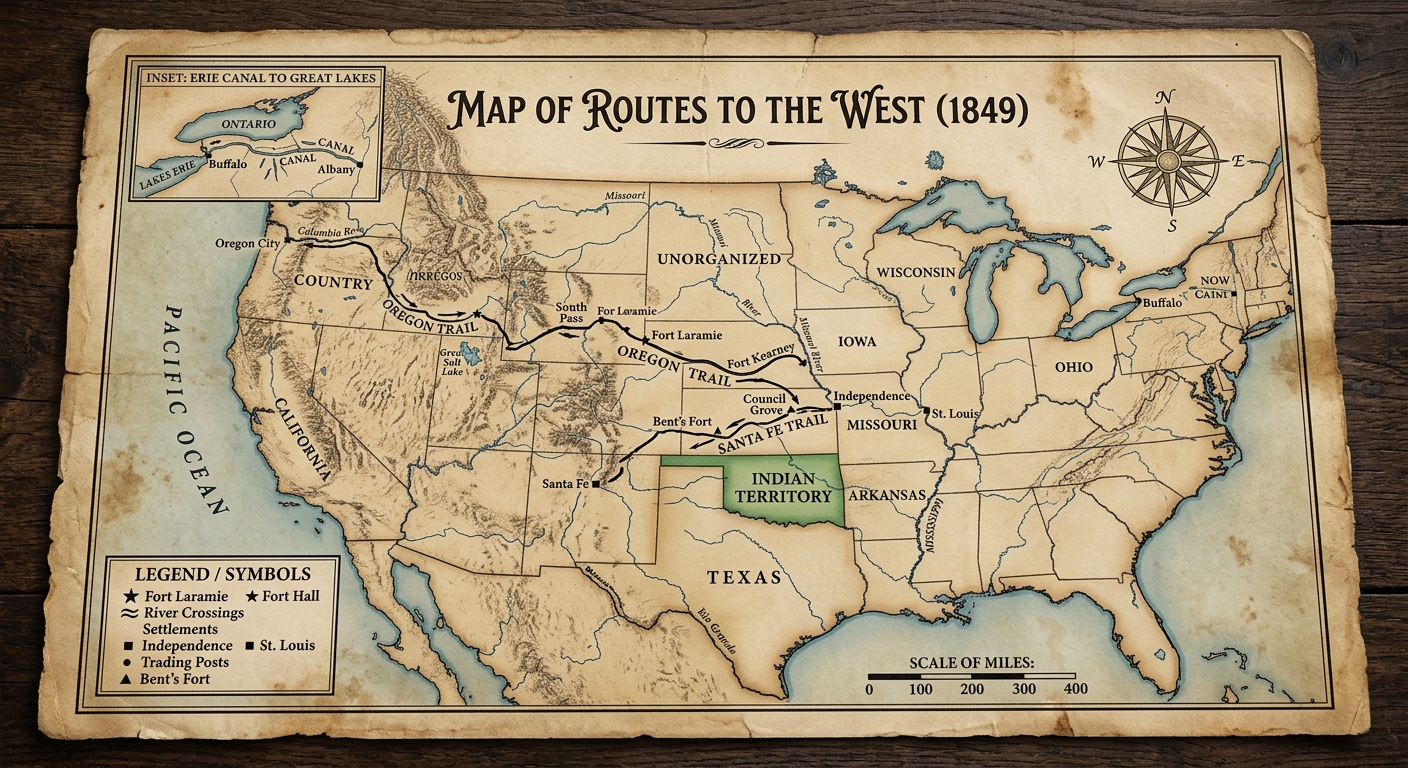
Study the map below. Routes, rivers, and forts shaped where settlers traveled and where new towns formed. At the same time, expansion pushed into Native homelands and changed borders and land use. Use geographic evidence from the map to answer the questions.

An aged 1849-style map labeled "Routes to the West" showing trails, rivers, forts, and a shaded area labeled "Indian Territory."

Asemmisa {{asɛmmisaAhyɛnsode}}
16.

Which map feature provides the strongest geographic evidence for why certain routes were used for westward travel?

Asemmisa {{asɛmmisaAhyɛnsode}}
17.

Based on the map, which inference best explains how geography could create opportunity for settlers?

Asemmisa {{asɛmmisaAhyɛnsode}}
18.

Which conclusion is best supported by the map about how westward expansion could harm Native communities?

Asemmisa {{asɛmmisaAhyɛnsode}}
19.

Use two pieces of geographic evidence from the map (for example, a river, a trail, a fort, or a labeled region) to explain one way westward expansion created opportunity for settlers and one way it harmed Native communities. Write one well-formed paragraph.

Asemmisa {{asɛmmisaAhyɛnsode}}
20.

Contextualize the map by explaining how transportation routes and geographic barriers could shape where settlers traveled and where conflicts might occur. Use at least one specific map feature as evidence. Write one well-formed paragraph.

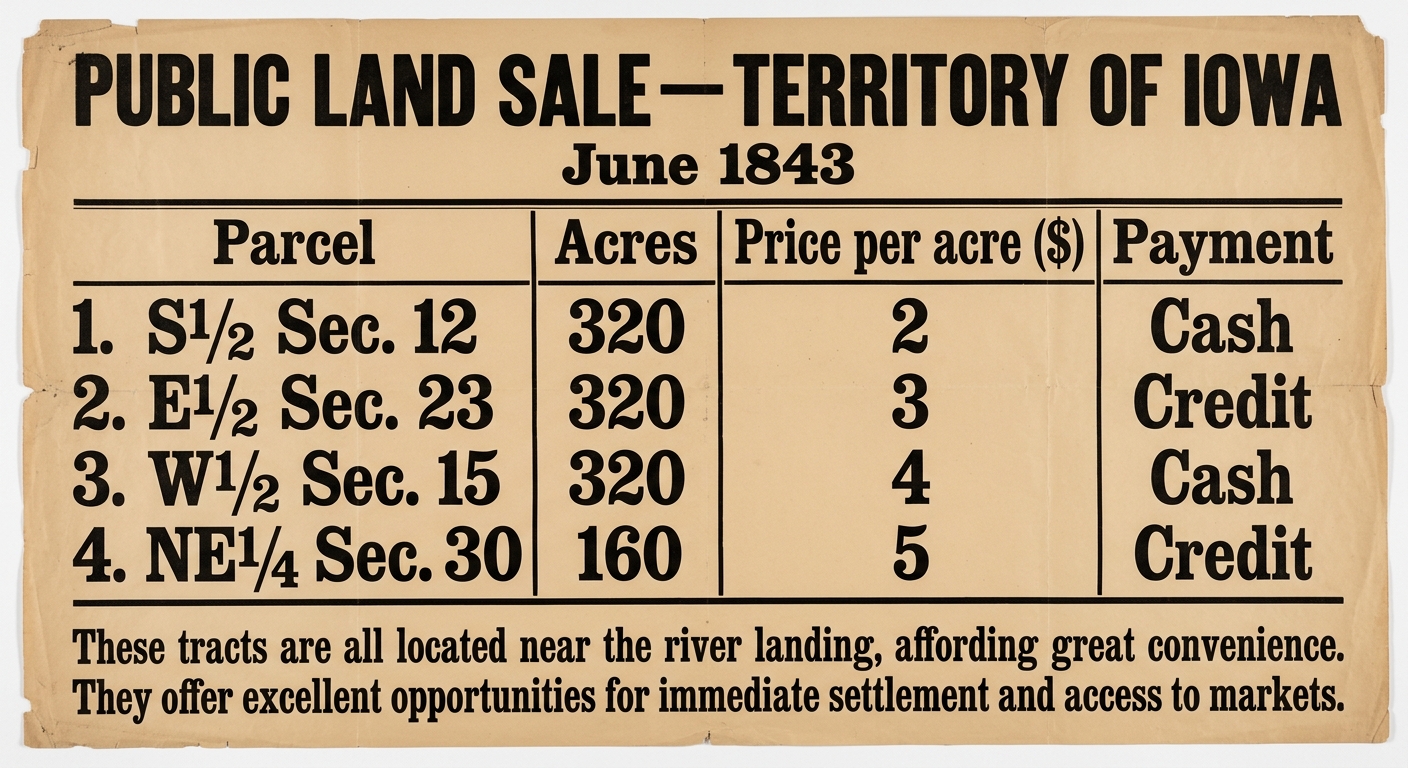
High-contrast 1843 land sale broadside with a readable price table and notes about access to markets.

Study the land-sale advertisement above. Economic decisions—prices, access to transportation, and expected profits—shaped who could move west and why. Land sales and new markets created opportunity for some settlers, while the demand for land and resources often harmed Native communities through displacement.

Asemmisa {{asɛmmisaAhyɛnsode}}
21.

Which detail from the advertisement is the strongest evidence that westward expansion was connected to a market economy?

Asemmisa {{asɛmmisaAhyɛnsode}}
22.

Based on the document, which inference best explains how transportation access could increase economic opportunity for settlers?

Asemmisa {{asɛmmisaAhyɛnsode}}
23.

Which statement best uses evidence from the reading and the advertisement to show how economic growth could harm some groups during westward expansion?

Asemmisa {{asɛmmisaAhyɛnsode}}
24.

Use two pieces of evidence from the advertisement (for example, a land price, payment terms, or a transportation reference) to explain one way westward expansion created economic opportunity for some settlers.

Write one well-formed paragraph.

Asemmisa {{asɛmmisaAhyɛnsode}}
25.

How could the economic incentives in the advertisement help explain why westward expansion created both opportunity for some groups and harm for others?

Use evidence from the advertisement and the reading. Write one well-formed paragraph.