
Use the historical document(s) and the short readings in the left panel to answer the associated questions.
Use the historical document(s) and the short readings in the left panel to answer the associated questions.
In the early 1800s, religious revivals linked personal morality to community improvement. In New York, reformers created societies to reduce alcohol use, believing it harmed families and public order. The broadside below shows how organizers used pledges and signatures to encourage change.
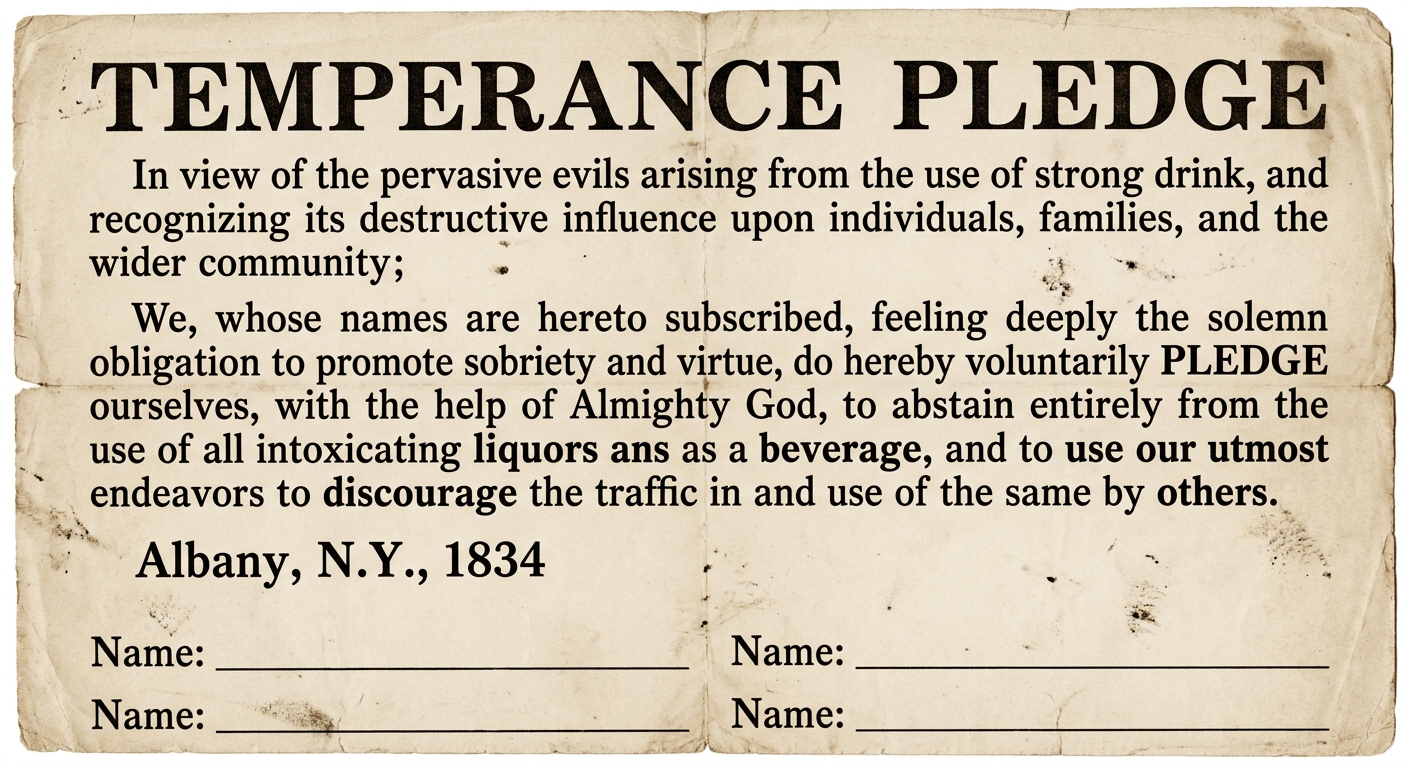
Based on the broadside’s format and wording, what is the main purpose of this document?
Which feature of the document is the BEST evidence that reformers expected ordinary community members to participate?
Use evidence from the broadside to explain how temperance reformers tried to influence behavior.
Include TWO specific pieces of evidence from the document (for example, words or features you notice) and explain what each piece of evidence suggests.
Based on the reading and the document, describe ONE likely effect a temperance pledge campaign could have on a town in New York State in the 1830s.
Support your claim with evidence from the sources.
Using the short reading AND the broadside, which inference is best supported about the Second Great Awakening’s influence on reform in New York State?
Religious revivals in New York during the early 1800s encouraged many people to improve society. By the 1830s, reformers formed groups to address problems through community action. This 1837 Rochester handbill shows residents organizing a meeting to strengthen common schools and promote moral instruction.
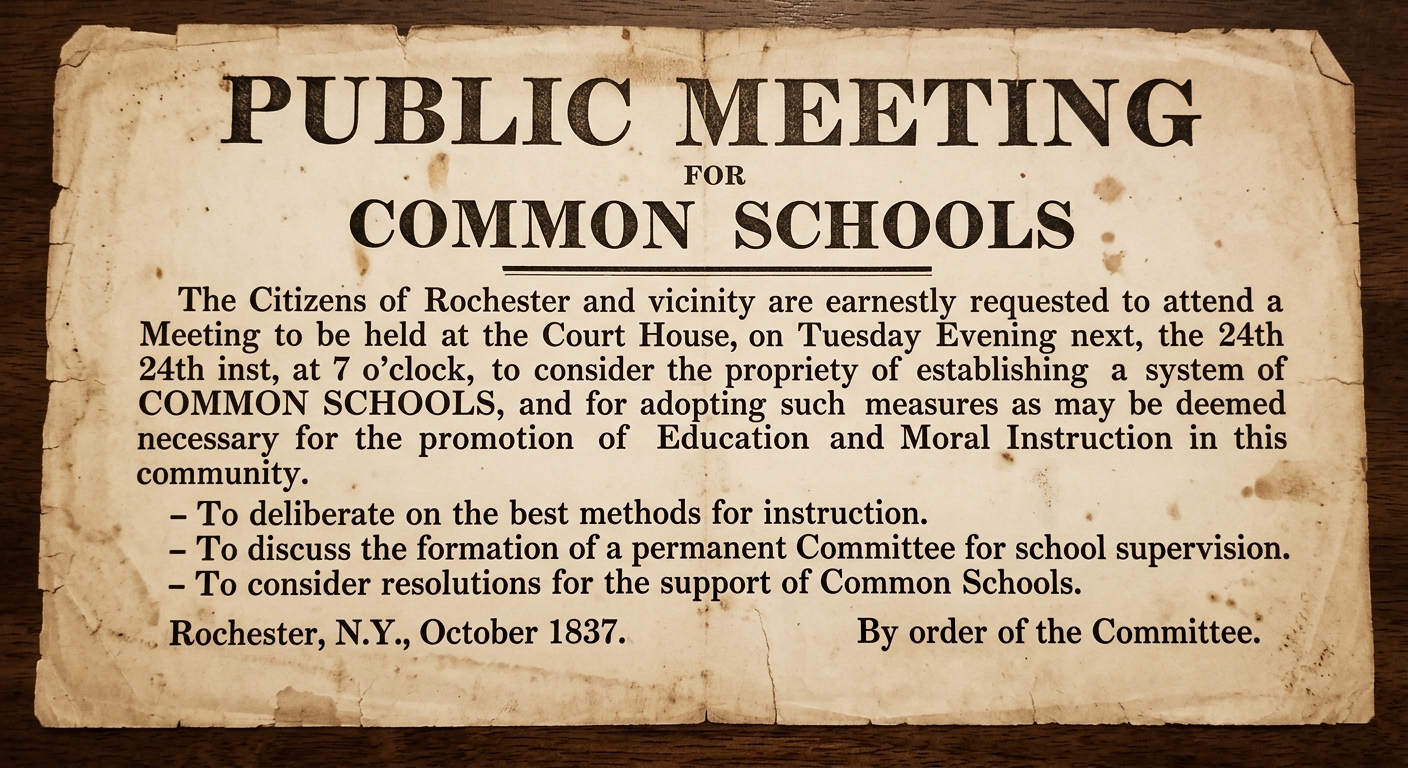
Which sequence best shows a likely chronological chain linking the Second Great Awakening to the handbill’s purpose?
The handbill is dated October 1837. Which time period best matches when this type of reform movement was most active in New York State?
Based on the handbill’s wording and format, describe ONE likely next step reformers would take AFTER this meeting.
Explain how evidence from the document supports your prediction.
Which development is most likely to have happened BEFORE the meeting described in the 1837 handbill?
Using evidence from the short reading AND the handbill, explain how this document fits into the timeline of reform movements in New York State.
Include TWO specific pieces of evidence and use chronological words (for example, “earlier,” “by the 1830s,” or “after”).
During the early 1800s, religious revivals encouraged many New Yorkers to believe society could be improved. By the 1840s, reformers also focused on mental health care. This 1843 petition from Utica asks state leaders to support humane treatment by creating and funding a public asylum.
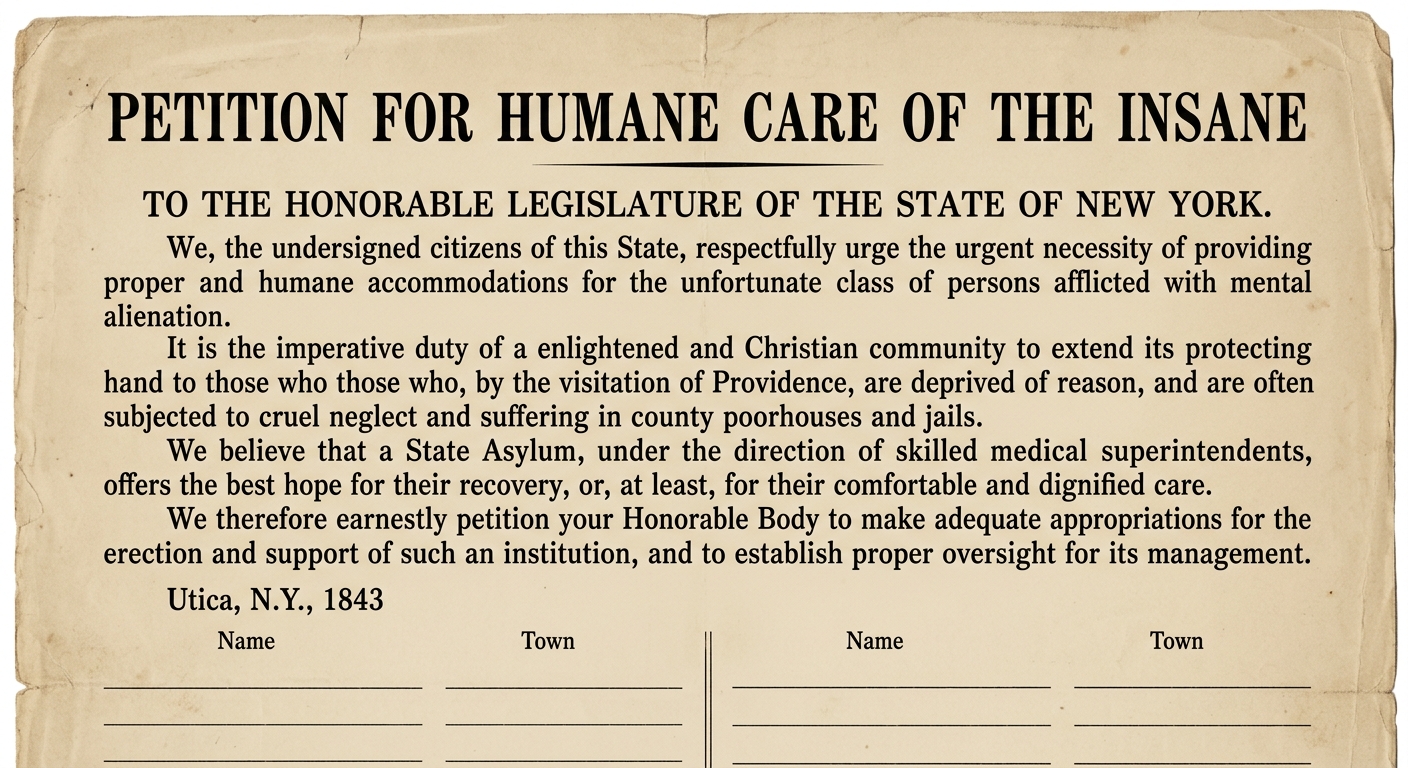
Which comparison between this petition and other local reform efforts in New York State is best supported by the reading and the document?
Which goal of this petition is MOST similar to the goals of other reform movements influenced by revival ideas in New York State?
Compare this mental health reform effort to ONE other early-19th-century reform movement (for example, temperance, education, or prison reform).
Use evidence from the reading and the petition to explain ONE similarity and ONE difference.
Which feature of the broadside is the BEST evidence that reformers wanted state government involvement, not only private action?
Why would reformers in New York State in the 1840s use a printed petition with signature lines to push for change?
Use TWO specific pieces of evidence from the sources to support your explanation.
In the early 1800s, revival preaching was especially strong in upstate New York. Reformers organized temperance and education meetings in towns where people could travel and share ideas. This map highlights the Erie Canal corridor, showing how transportation and location helped reform societies spread.
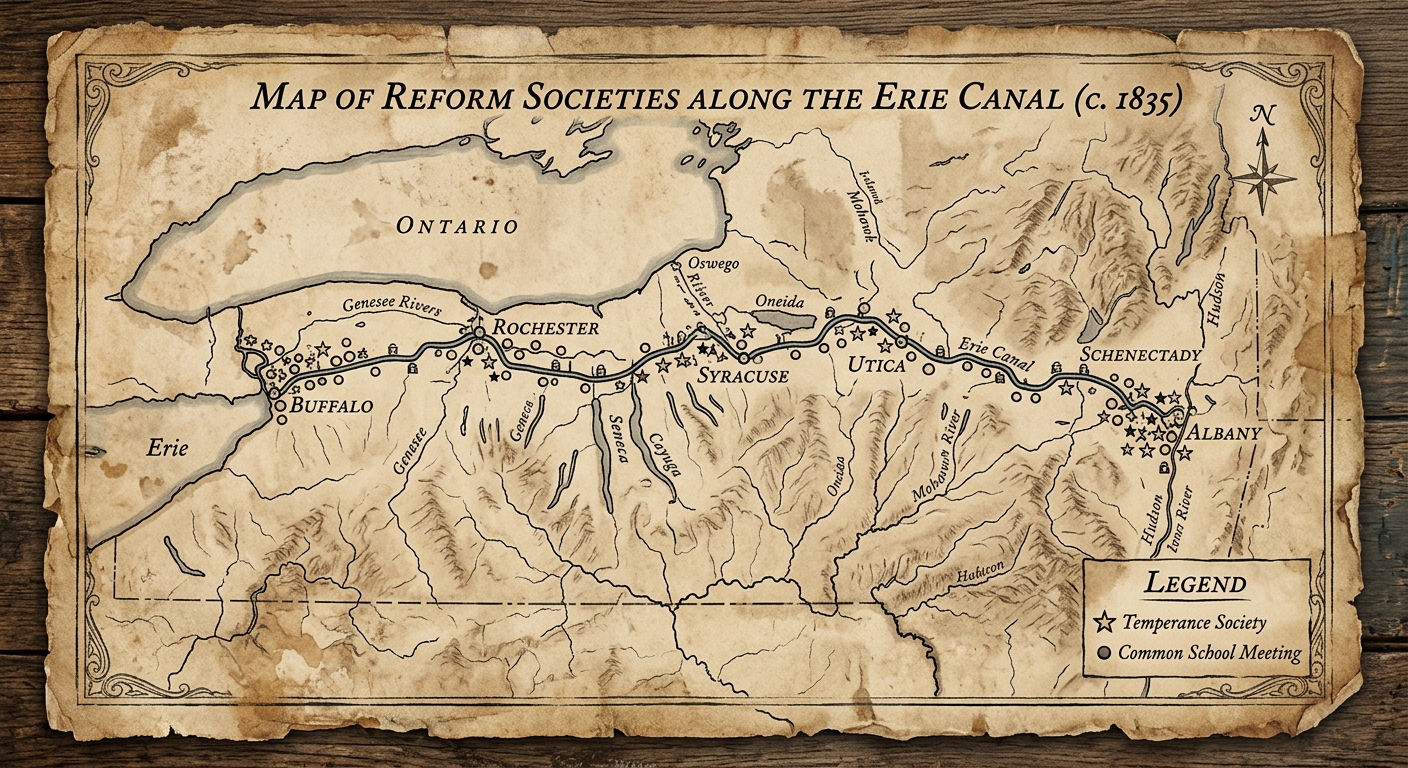
Using the reading and the map, which inference is best supported about why reform movements grew in New York State during this period?
Compare reform activity in the eastern canal region (near Albany and Utica) to the western canal region (near Rochester and Buffalo).
Describe ONE similarity or difference you observe, and support it with evidence from the map.
Use evidence from the map AND the short reading to explain how geography and transportation helped reform movements spread in New York State.
Include TWO specific pieces of evidence (for example, place names or patterns on the map).
Based on the map, which town would likely have made it easiest for reformers to travel and organize meetings using the Erie Canal?
Which pattern best describes where reform society locations are shown on the map?
Revival-inspired reformers in New York often raised money through voluntary subscriptions instead of waiting for government taxes. By pooling small pledges from many households, societies could fund public goods like school libraries and moral instruction. This 1836 subscription broadside shows how community members organized resources for reform.
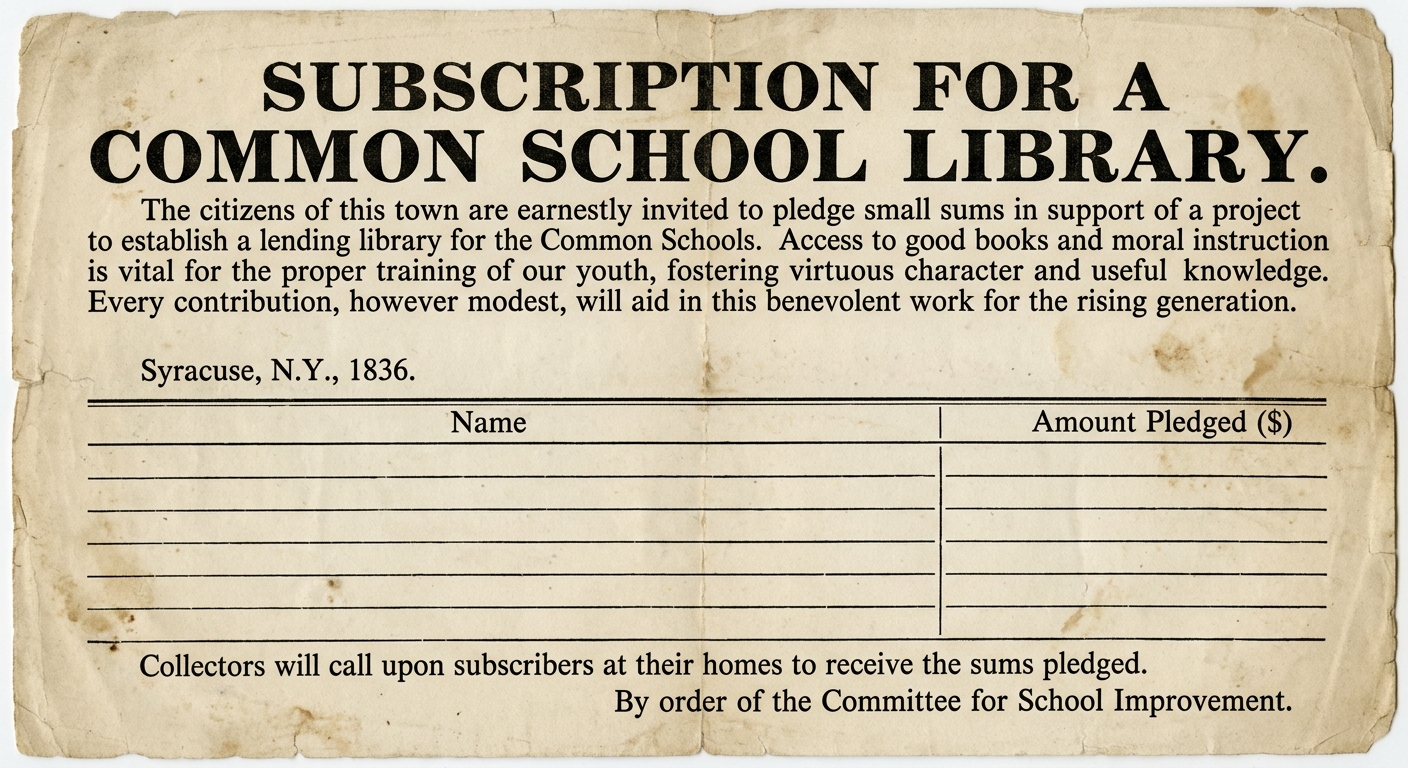
Use evidence from the reading AND the subscription broadside to explain how reformers used economic resources to support social change.
Include TWO specific pieces of evidence (for example, words or features you notice).
Based on the reading and the document, which inference is best supported about how reformers expected to fund community improvements?
Explain ONE advantage and ONE limitation of using voluntary subscriptions (like this one) instead of taxes to fund a reform project.
Support your answer with evidence from the sources.
Which economic idea is BEST illustrated by the subscription broadside?
Which feature of the document is the BEST evidence that organizers were trying to create accountability for donations?