Twa kɔ nsɛm atitiriw so
Log in
Sign up for FREE
arrow_back
Laabri

7.7b - Reform Movements: - Practices A through E

star
star
star
star
star
Last updated about 1 month ago
25 Nsɛmmisa
Hyɛ no nsow a efi ɔkyerɛwfo no hɔ:

Use the historical document(s) and the short readings in the left panel to answer the associated questions.

Use the historical document(s) and the short readings in the left panel to answer the associated questions.

7.7.b
DOK.SS.2
7.7.b
DOK.SS.2
7.7.b
DOK.SS.2
7.7.b
DOK.SS.2
7.7.b
DOK.SS.2
Ɛhia
2
7.7.b
DOK.SS.2
Ɛhia
1
7.7.b
DOK.SS.2
Ɛhia
1
7.7.b
DOK.SS.2
Ɛhia
2
7.7.b
DOK.SS.2
Ɛhia
1
7.7.b
DOK.SS.2
Ɛhia
1
7.7.b
DOK.SS.2
Ɛhia
1
7.7.b
DOK.SS.2
Ɛhia
2
7.7.b
DOK.SS.2
Ɛhia
2
7.7.b
DOK.SS.2
Ɛhia
1
7.7.b
DOK.SS.2
Ɛhia
2
7.7.b
DOK.SS.2
Ɛhia
2
7.7.b
DOK.SS.2
Ɛhia
1
7.7.b
DOK.SS.2
Ɛhia
1
7.7.b
DOK.SS.2
Ɛhia
1
7.7.b
DOK.SS.2
Ɛhia
1
7.7.b
DOK.SS.2
Ɛhia
1
7.7.b
DOK.SS.2
Ɛhia
2
7.7.b
DOK.SS.2
Ɛhia
1
7.7.b
DOK.SS.2
Ɛhia
2
7.7.b
DOK.SS.2
Ɛhia
2
7.7.b
DOK.SS.2
Ɛhia
1
7.7.b
DOK.SS.2
Ɛhia
1
7.7.b
DOK.SS.2
Ɛhia
1
7.7.b
DOK.SS.2
Ɛhia
1
7.7.b
DOK.SS.2

Historical Document: Abolitionist Handbill (1852)
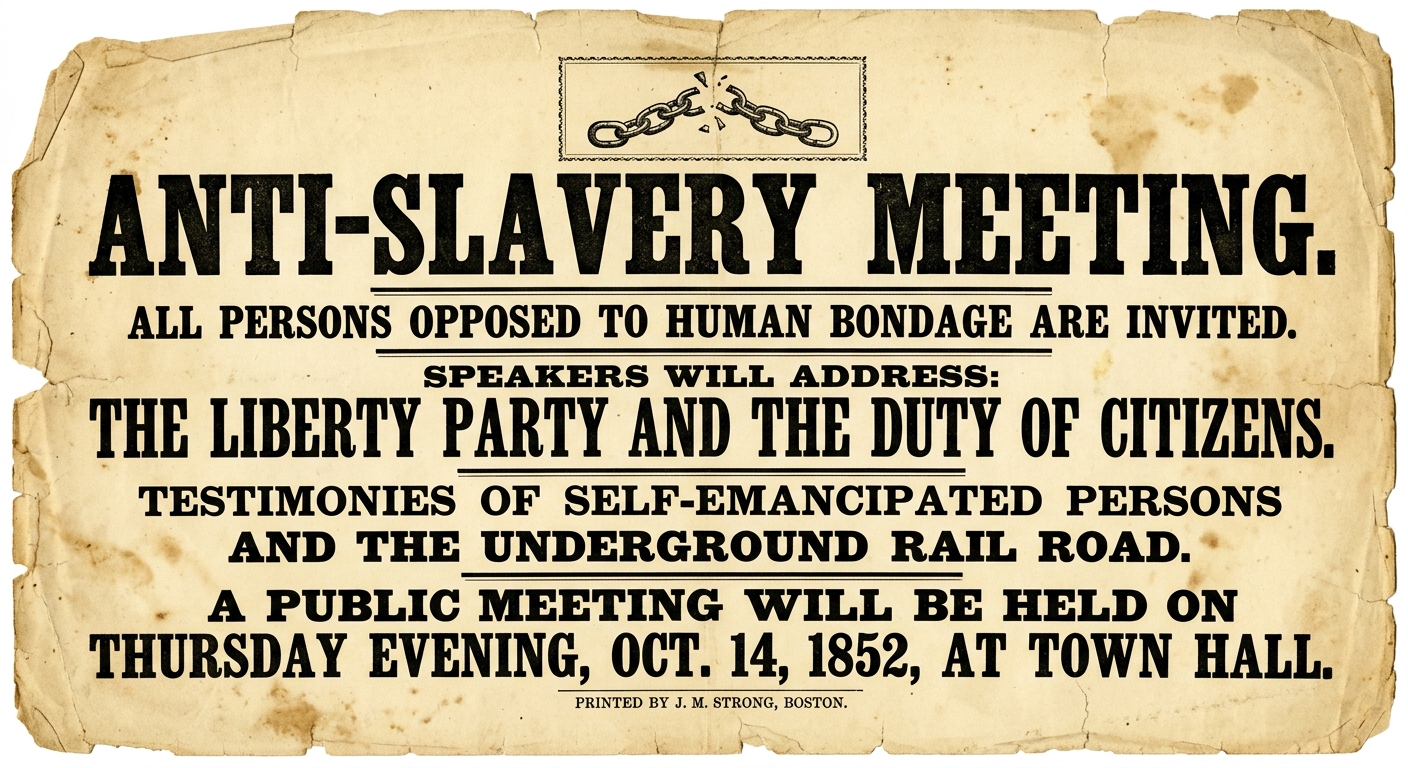
A black-and-white 1850s abolitionist handbill titled “ANTI-SLAVERY MEETING,” inviting the public to a town hall event and mentioning the Liberty Party, testimonies of self-emancipated people, and the Underground Rail Road.

Handbills like this were posted to announce anti-slavery meetings and persuade community members to act. Read the wording closely to identify who the handbill is trying to reach and what actions it supports. Use specific phrases from the document as evidence in your answers.
Asemmisa {{asɛmmisaAhyɛnsode}}
1.

The handbill mentions “testimonies of self-emancipated persons” and the “Underground Rail Road.”

Explain what these phrases suggest about enslaved people’s resistance to slavery and how abolitionists used that resistance as evidence to influence others.

Asemmisa {{asɛmmisaAhyɛnsode}}
2.

Which conclusion about resistance to slavery is best supported by the handbill?

Asemmisa {{asɛmmisaAhyɛnsode}}
3.

Which sentence from the handbill best supports the idea that abolitionists were using political action to oppose slavery?

Asemmisa {{asɛmmisaAhyɛnsode}}
4.

Identify two pieces of evidence from the handbill that show how the abolitionist movement tried to build support against slavery.

For each piece of evidence, explain what it suggests about the strategy the organizers were using.

Asemmisa {{asɛmmisaAhyɛnsode}}
5.

Based on the handbill, which audience is the meeting most directly trying to persuade to participate?

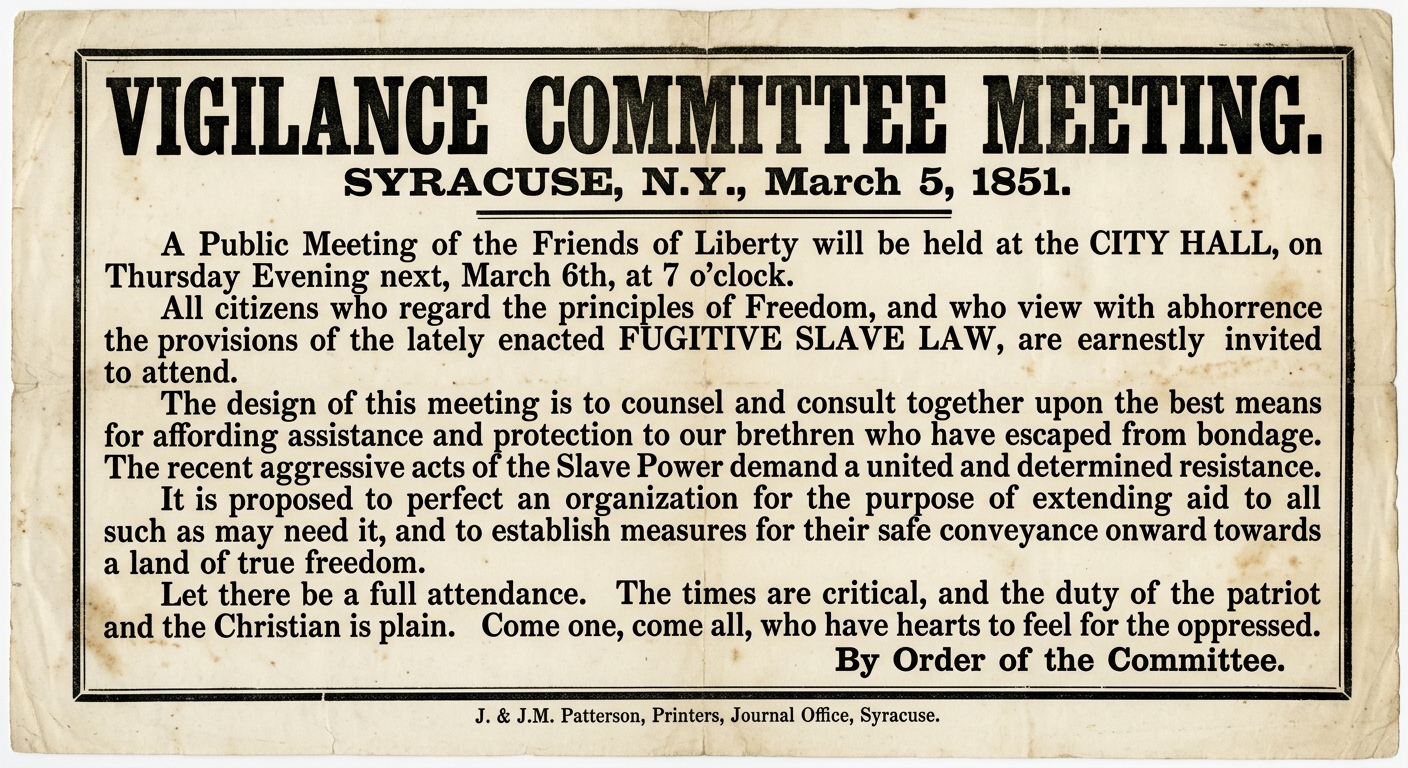
Historical Document:

Vigilance Committee Notice (1851)

A dated 1851 notice from Syracuse, New York titled “Vigilance Committee Meeting,” calling friends of liberty to meet and organize aid for fugitives from bondage in response to the Fugitive Slave Law.

This 1851 notice calls a meeting in Syracuse, New York, to organize help for people escaping slavery. Use its date, place, and key phrases to connect actions over time. Explain what events likely led to this meeting and what actions it suggests would happen next.

Asemmisa {{asɛmmisaAhyɛnsode}}
6.

Based on the notice, which action is most likely to happen after the meeting takes place?

Asemmisa {{asɛmmisaAhyɛnsode}}
7.

Which detail from the notice best supports the conclusion that organized assistance for self-emancipated people existed by 1851?

Asemmisa {{asɛmmisaAhyɛnsode}}
8.

Using the date (1851) and evidence in the notice, describe one earlier form of resistance by enslaved people and one later abolitionist effort that this meeting fits between.

Explain how the document supports your timeline.

Asemmisa {{asɛmmisaAhyɛnsode}}
9.

Use evidence from the notice to explain a cause-and-effect relationship over time:

What problem or change likely led organizers to call this meeting in 1851, and what action did they plan as a response?

Asemmisa {{asɛmmisaAhyɛnsode}}
10.

The notice is dated March 5, 1851.

Which national event most likely occurred shortly before this meeting and helps explain why the notice mentions the Fugitive Slave Law?

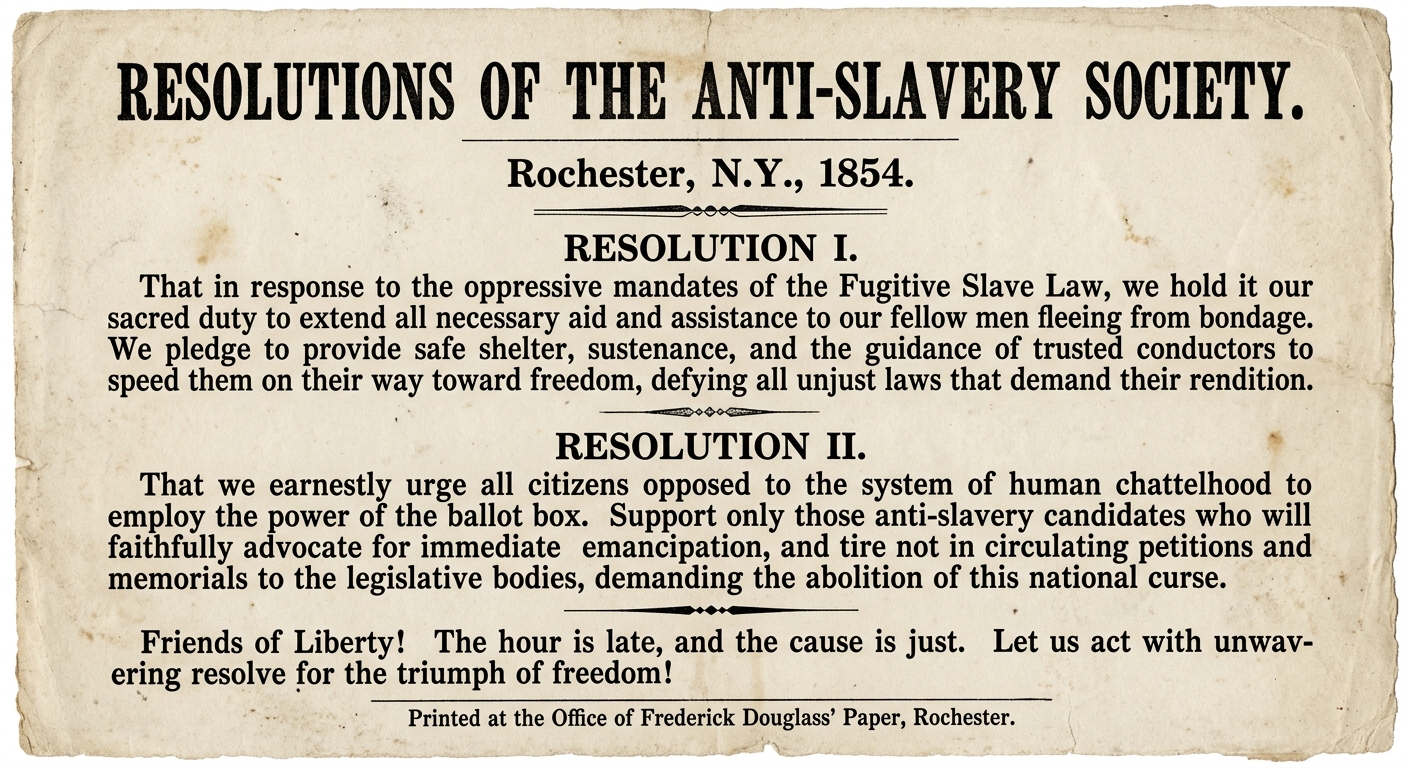
Historical Document: Anti-Slavery Society Resolutions (1854)

An 1854 abolitionist broadside titled “Resolutions of the Anti-Slavery Society,” with two resolutions: one calling for aid to fugitives from bondage and another urging political action through voting and petitions.

This 1854 broadside lists two anti-slavery resolutions—one about aiding people escaping slavery and one about using elections and petitions. Read both sections closely. Then compare how each strategy tried to weaken slavery, and explain what the date and place suggest about the national context.

Asemmisa {{asɛmmisaAhyɛnsode}}
11.

Comparison: Using evidence from BOTH Resolution I and Resolution II, explain how each reflects a different way the abolitionist movement tried to support resistance to slavery.

Include at least one specific phrase or detail from each resolution.

Asemmisa {{asɛmmisaAhyɛnsode}}
12.

The broadside is dated Rochester, N.Y., 1854.

Explain how ONE national development from the early 1850s could help explain why the broadside emphasizes both helping fugitives and political action.

Use evidence from the document to support your explanation.

Asemmisa {{asɛmmisaAhyɛnsode}}
13.

Which piece of evidence from the broadside best supports the conclusion that abolitionists were responding to federal law in the 1850s?

Asemmisa {{asɛmmisaAhyɛnsode}}
14.

Which statement best describes how Resolution I and Resolution II are different?

Asemmisa {{asɛmmisaAhyɛnsode}}
15.

Which conclusion is best supported when you consider BOTH resolutions together?

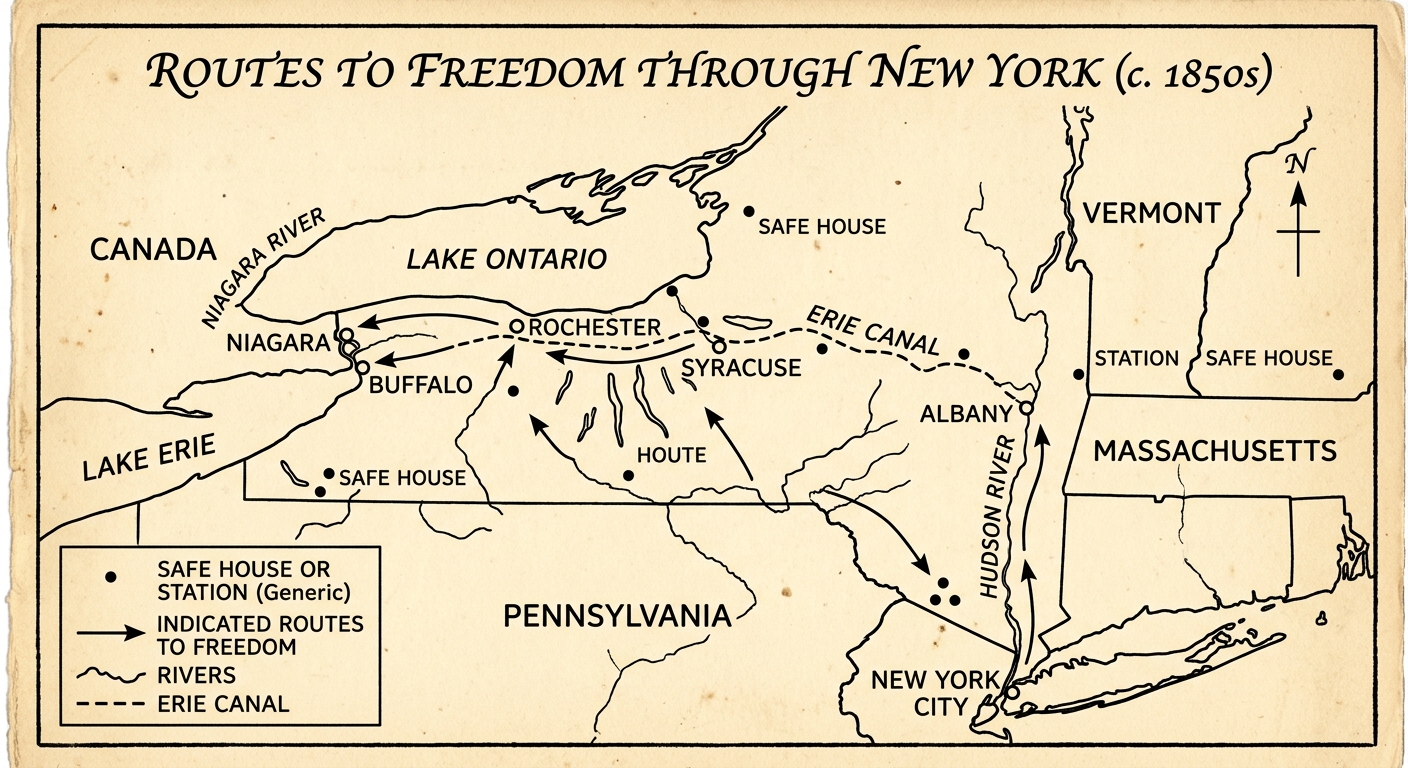
Historical Document: Map of Routes to Freedom Through New York (c. 1850s)

An aged-paper map titled “Routes to Freedom Through New York (c. 1850s)” showing New York City, Albany, Syracuse, Rochester, Buffalo, waterways like the Hudson River and Erie Canal, and arrows leading toward Canada.

This map shows possible travel routes used by people escaping slavery through New York State in the 1850s. Use the cities, waterways, and direction of travel to explain how geography shaped resistance. Support your answers with specific map evidence, such as place names and routes.

Asemmisa {{asɛmmisaAhyɛnsode}}
16.

Which statement best explains how the map suggests geography helped people escaping slavery move through New York State?

Asemmisa {{asɛmmisaAhyɛnsode}}
17.

Which pair of features on the map most directly connects Albany to western New York and helps explain why towns like Syracuse and Rochester appear along the routes?

Asemmisa {{asɛmmisaAhyɛnsode}}
18.

Choose one route shown on the map. Explain two ways specific geographic features (such as a city location, a river, a lake, or the Erie Canal) could have helped people escape slavery and receive support.

Use map evidence.

Asemmisa {{asɛmmisaAhyɛnsode}}
19.

Based on the direction arrows, which destination is the final endpoint of many routes shown on the map?

Asemmisa {{asɛmmisaAhyɛnsode}}
20.

The map shows more than one possible path across New York State.

Compare two routes by naming at least one place or feature on each route and explaining why different routes might have been used.

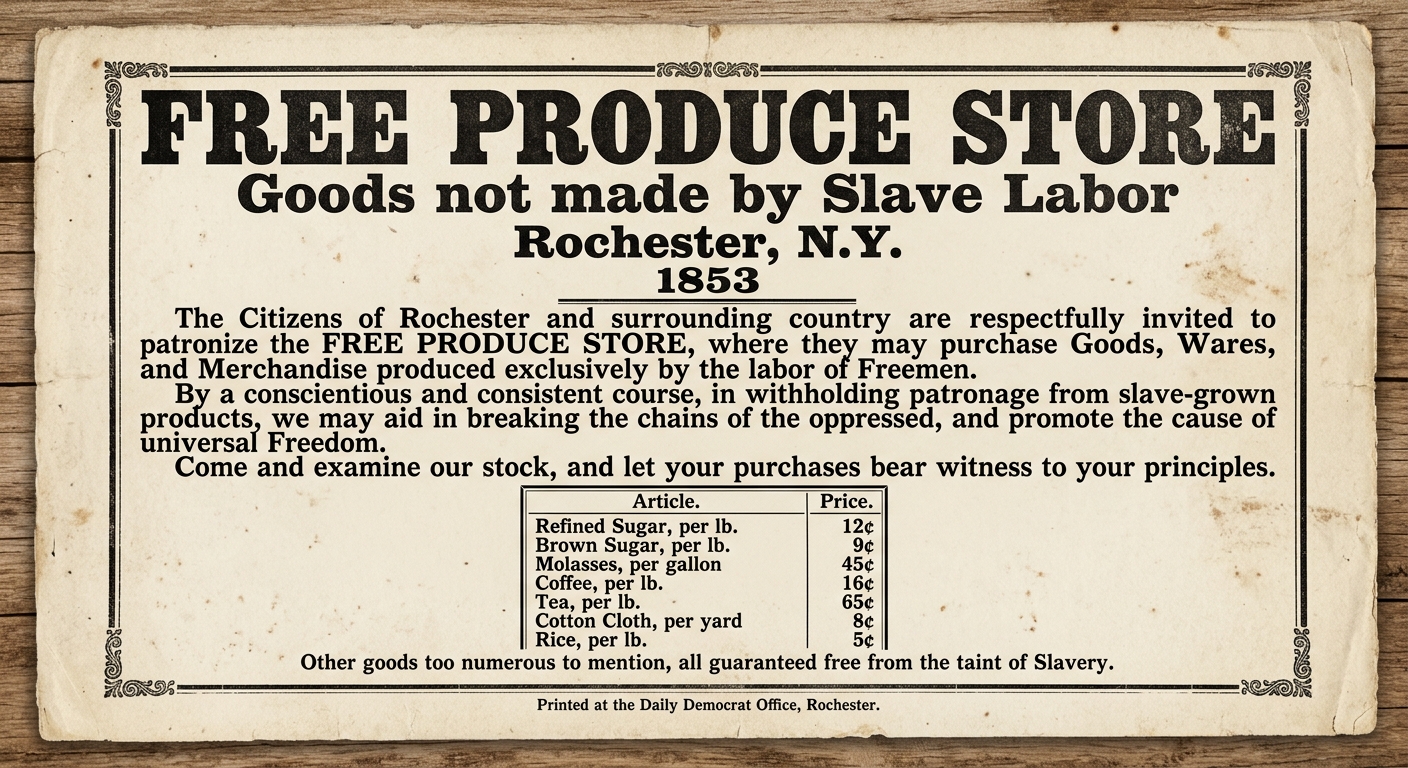
Historical Document: “Free Produce Store” Advertisement (1853)

An 1850s broadside advertisement for a “Free Produce Store” in Rochester, New York, promoting goods not made by enslaved labor and showing a small price list for items like sugar, cotton cloth, tea, and molasses.

This 1853 advertisement shows an abolitionist economic strategy: using buying and selling to resist slavery. Study the wording and the price list. Then explain how the document connects consumer choices in the North to the economic system that supported slavery in the South.

Asemmisa {{asɛmmisaAhyɛnsode}}
21.

Using evidence from the advertisement, explain how the price list and the wording work together to persuade people to take economic action against slavery.

Asemmisa {{asɛmmisaAhyɛnsode}}
22.

Which piece of evidence from the document best supports the conclusion that abolitionists were using the marketplace to influence slavery?

Asemmisa {{asɛmmisaAhyɛnsode}}
23.

Which economic action is the advertisement most directly encouraging as a way to oppose slavery?

Asemmisa {{asɛmmisaAhyɛnsode}}
24.

Which conclusion about the economic system of slavery is best supported by the advertisement’s message?

Asemmisa {{asɛmmisaAhyɛnsode}}
25.

Explain how this document helps show a connection between Northern consumers and the Southern slave economy. Use at least one detail from the advertisement as evidence.