Use the historical document(s) and the short readings in the left panel to answer the associated questions.
The handbill below advertises a mid-1800s reform meeting led by women. Reformers often linked temperance and abolition to demands for women’s legal and political rights. Read the document carefully and use its wording and details as evidence in your answers.
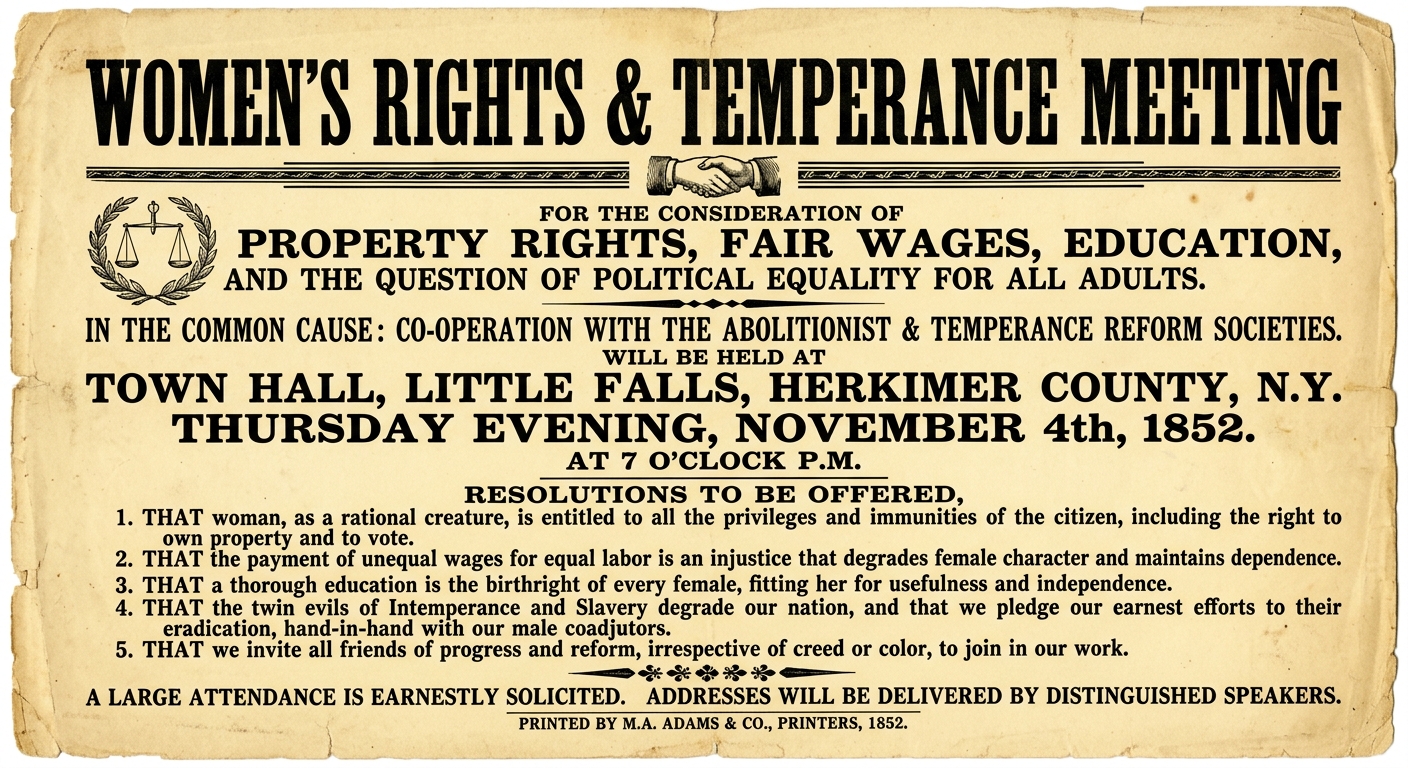
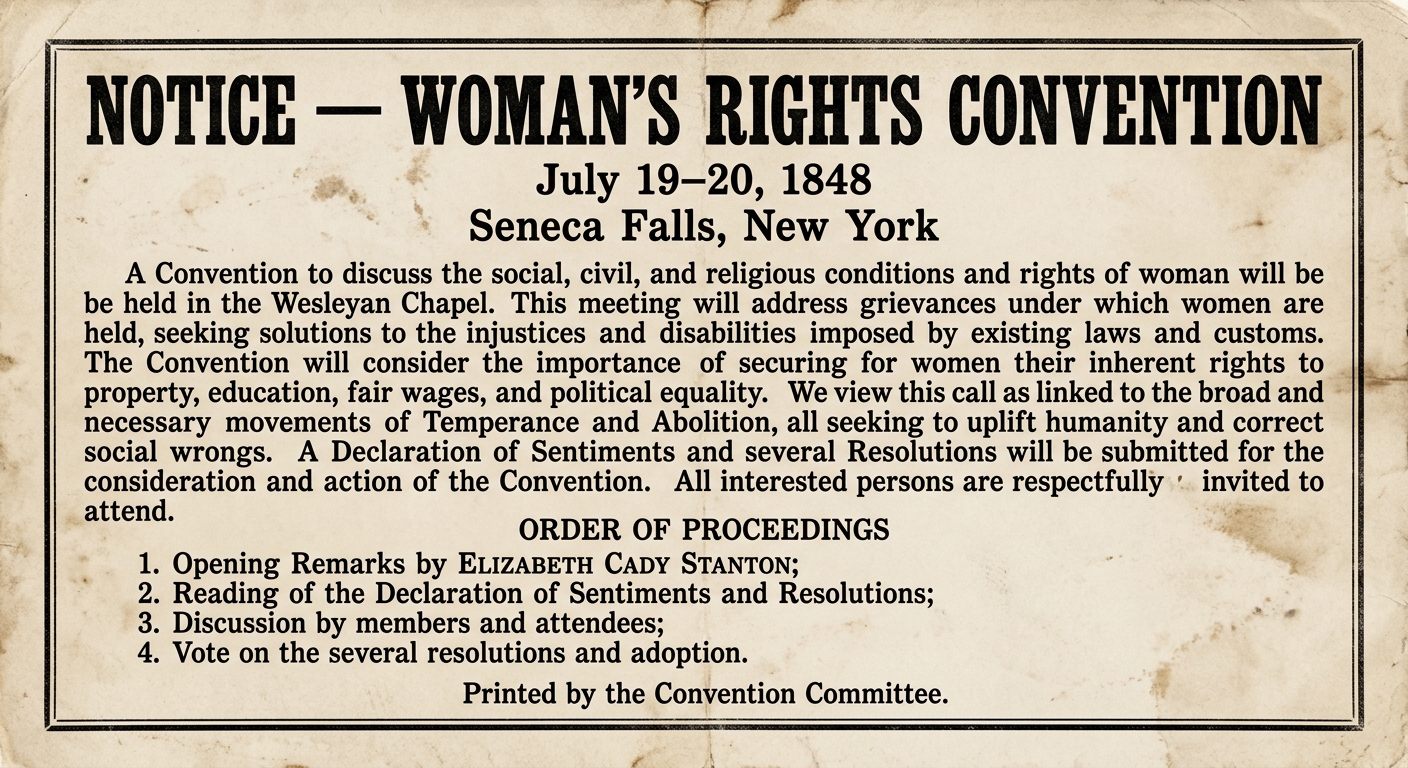
Based on evidence in the handbill, what is the most likely purpose of this document?
Which demand is MOST clearly supported by the handbill’s wording?
Which interpretation best explains why the handbill mentions both temperance and women’s rights?
Using evidence from the handbill, explain how women used reform movements to advocate for expanded rights.
Include at least two specific details from the document as evidence.
What additional source would be most useful to confirm how widely the ideas in this handbill were supported at the time?
Identify one source type and explain how it would provide evidence.
This notice announces a women’s rights convention in Seneca Falls, New York, dated July 19–20, 1848. Read the dates and “Order of Proceedings” carefully. Use the sequence of events and the stated demands (property rights, wages, education, political equality) as evidence in your answers.

Which statement best uses chronological evidence from the notice to identify when the convention takes place?
If the notice includes an “Order of Proceedings,” which step would most reasonably happen AFTER the resolutions are read?
Which option best connects the convention’s timeline (July 1848) to the reform goals listed in the notice?
Use chronological evidence from the notice to explain how the organizers planned to move from meeting to action.
Refer to the date(s) and at least two steps from the “Order of Proceedings” as evidence.
How does placing demands (property rights, fair wages, education, political equality) within a dated convention notice help a historian interpret the development of women’s reform efforts?
Use the date and at least two listed demands as evidence.
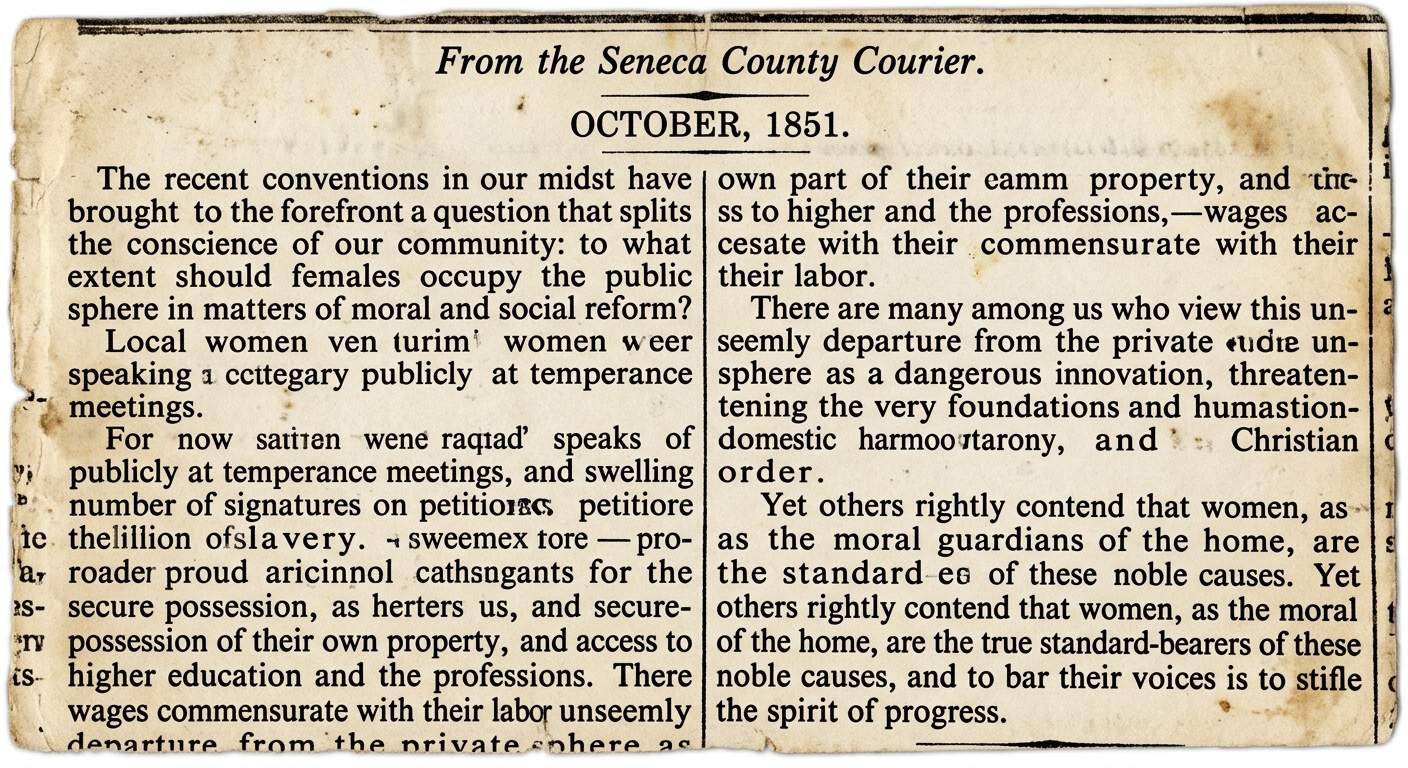
This newspaper clipping describes a local debate about women taking public roles in reform. As you read, compare statements that support women’s organizing with statements that criticize it. Use the document’s wording to place these views in the context of mid-1800s reform movements.

Which pair of ideas from the clipping are MOST clearly in contrast with each other?
Which statement best explains how this clipping helps a historian contextualize women’s reform efforts in the mid-1800s?
If you compared this clipping with a women’s convention notice, what similarity would you MOST likely find?
Compare the supportive and critical viewpoints in the clipping about women’s public role in reform.
Use at least two specific phrases or details from the document as evidence.
How could a historian use this clipping to place women’s rights demands (property rights, education, fair wages, political equality) in the broader context of abolition and temperance reform?
Use evidence from the clipping and explain the connection.
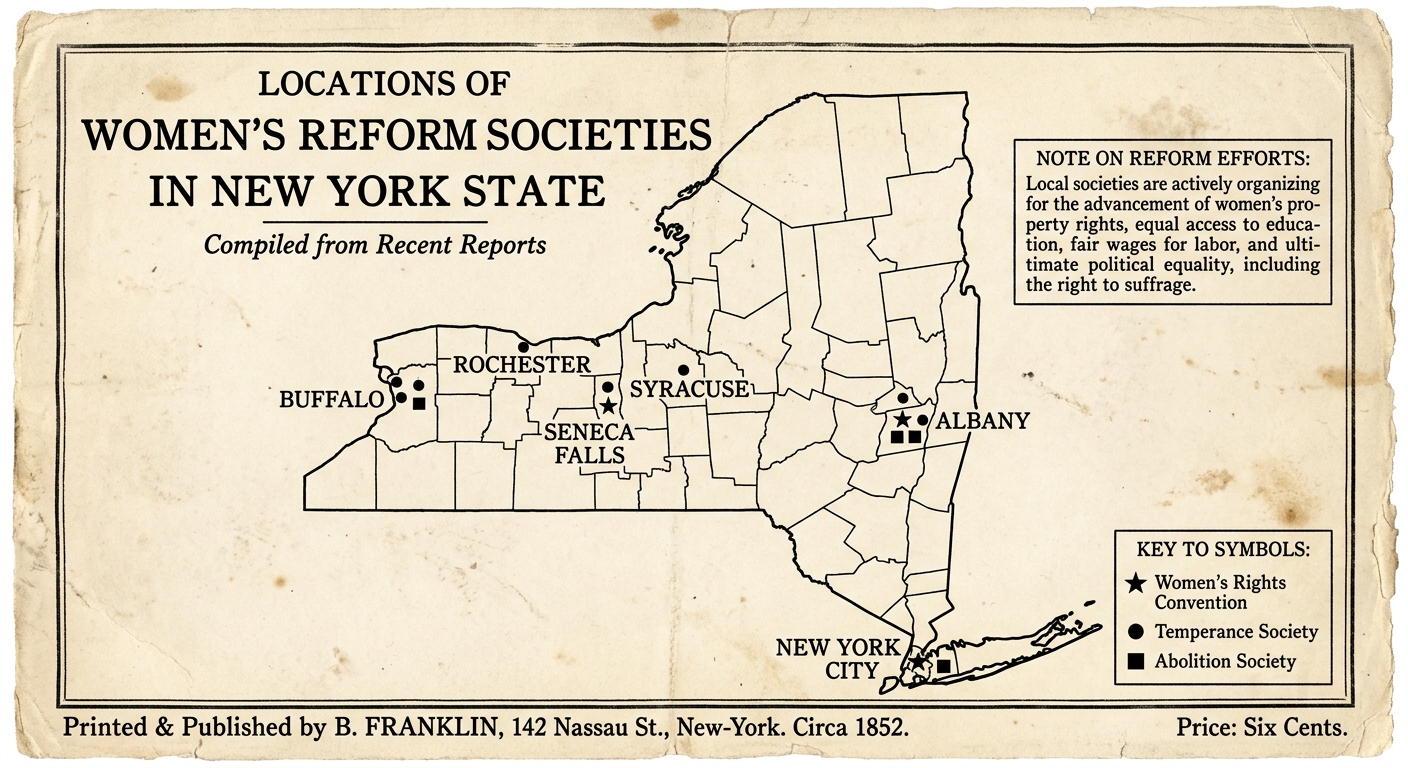
This map-style broadside shows several New York State locations connected to women’s reform organizing. Use the legend and place names as evidence. Identify patterns in where reform activity appears and explain what those patterns suggest about how women connected temperance and abolition work to demands for expanded rights.

Which statement best describes a geographic pattern shown by the map and its legend?
Based on the map, which location would be best evidence that women’s reform organizing occurred in the New York City area?
Which inference is best supported when you compare the different symbols in the legend across the map?
Use evidence from the map to explain one geographic reason why reformers may have chosen multiple locations across New York State to organize meetings.
Cite at least two place names or symbols from the map as evidence.
How does the map help a historian connect women’s demands (property rights, fair wages, education, political equality) to other reform movements in New York State?
Use the legend and at least two specific locations as evidence.
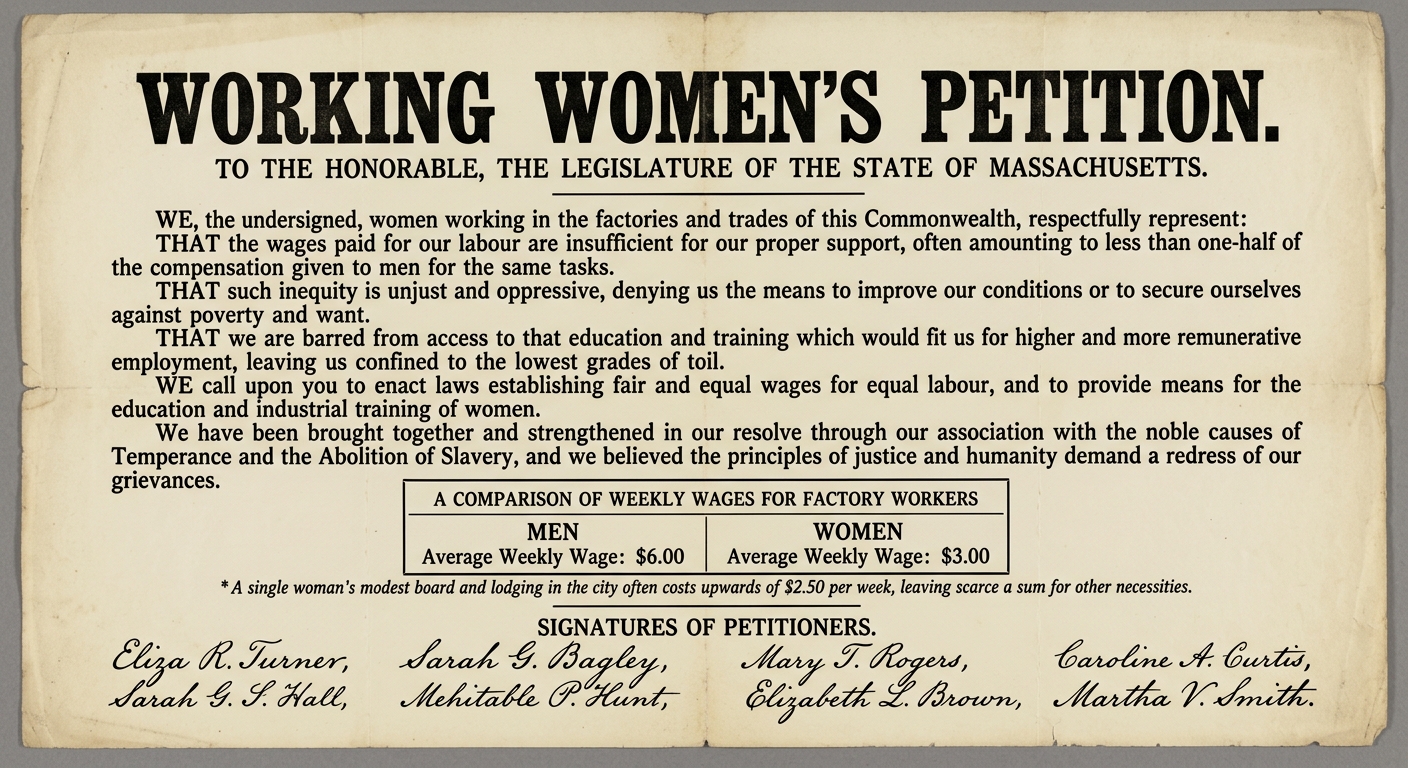
This broadside includes a petition and a short wage table about women’s work in the mid-1800s. Read the wage figures and demands carefully. Use evidence from both parts to explain how economic inequality shaped women’s organizing for fair wages and expanded rights.

Based on the wage information shown, what economic problem are the petitioners most clearly highlighting?
Which claim about the economy is best supported when you combine the wage figures with the petition’s demands?
Which additional economic evidence would most strengthen a historian’s interpretation of the wage gap shown in the broadside?
Use evidence from the wage information and the petition text to explain how women connected economic issues (fair wages and work) to demands for expanded rights.
Include at least two specific details as evidence.
How could a historian use this broadside to contextualize women’s wage demands within other reform movements (temperance and abolition) in the mid-1800s?
Use evidence from the document and explain the connection.