Twa kɔ nsɛm atitiriw so
Log in
Sign up for FREE
arrow_back
Laabri

7.7d - Reform Movements: - Practices A through E

star
star
star
star
star
Last updated about 1 month ago
25 Nsɛmmisa
Hyɛ no nsow a efi ɔkyerɛwfo no hɔ:

Use the historical document(s) and the short readings in the left panel to answer the associated questions.

Use the historical document(s) and the short readings in the left panel to answer the associated questions.

7.7.d
DOK.SS.2
7.7.d
DOK.SS.2
7.7.d
DOK.SS.2
7.7.d
DOK.SS.2
7.7.d
DOK.SS.2
Ɛhia
1
7.7.d
DOK.SS.2
Ɛhia
2
7.7.d
DOK.SS.2
Ɛhia
1
7.7.d
DOK.SS.2
Ɛhia
2
7.7.d
DOK.SS.2
Ɛhia
1
7.7.d
DOK.SS.2
Ɛhia
1
7.7.d
DOK.SS.2
Ɛhia
2
7.7.d
DOK.SS.2
Ɛhia
1
7.7.d
DOK.SS.2
Ɛhia
1
7.7.d
DOK.SS.2
Ɛhia
2
7.7.d
DOK.SS.2
Ɛhia
1
7.7.d
DOK.SS.2
Ɛhia
1
7.7.d
DOK.SS.2
Ɛhia
2
7.7.d
DOK.SS.2
Ɛhia
2
7.7.d
DOK.SS.2
Ɛhia
1
7.7.d
DOK.SS.2
Ɛhia
1
7.7.d
DOK.SS.2
Ɛhia
2
7.7.d
DOK.SS.2
Ɛhia
1
7.7.d
DOK.SS.2
Ɛhia
1
7.7.d
DOK.SS.2
Ɛhia
2
7.7.d
DOK.SS.2
Ɛhia
1
7.7.d
DOK.SS.2
Ɛhia
1
7.7.d
DOK.SS.2
Ɛhia
1
7.7.d
DOK.SS.2
Ɛhia
2
7.7.d
DOK.SS.2
Ɛhia
2
7.7.d
DOK.SS.2

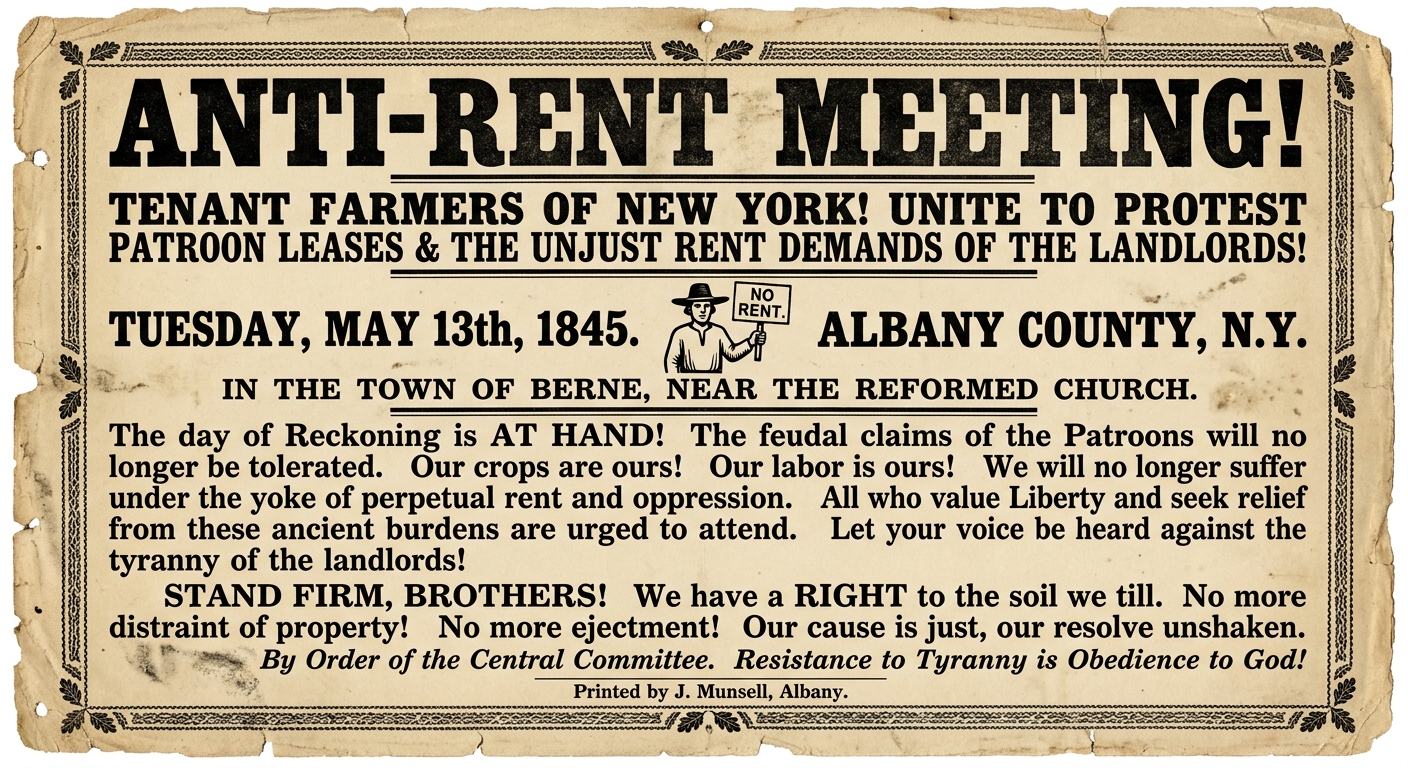
Fictional 1840s Anti-Rent movement broadside calling tenant farmers in New York to a protest meeting.

In the 1840s, some New York tenant farmers protested a land system in which wealthy landowners controlled large estates and charged long-term rents. Study the broadside below. Use details from the document to infer the goals, audience, and tactics of the Anti-Rent movement.
Asemmisa {{asɛmmisaAhyɛnsode}}
1.

Which statement best describes the most likely purpose of the broadside?

Asemmisa {{asɛmmisaAhyɛnsode}}
2.

Consider two viewpoints:

(1) a tenant farmer and

(2) a patroon landowner or local official.

Using evidence from the broadside, explain how EACH side might interpret the broadside differently.

Asemmisa {{asɛmmisaAhyɛnsode}}
3.

Which detail from the document would be the BEST evidence that the Anti-Rent movement challenged the landownership system, not just a single unfair bill?

Asemmisa {{asɛmmisaAhyɛnsode}}
4.

Using evidence from the broadside, explain how the Anti-Rent movement was an attempt by tenant farmers to protest New York’s landownership system.

Include at least TWO specific details from the document as evidence.

Asemmisa {{asɛmmisaAhyɛnsode}}
5.

Based on the format and message of the broadside, which tactic of protest is MOST strongly suggested?

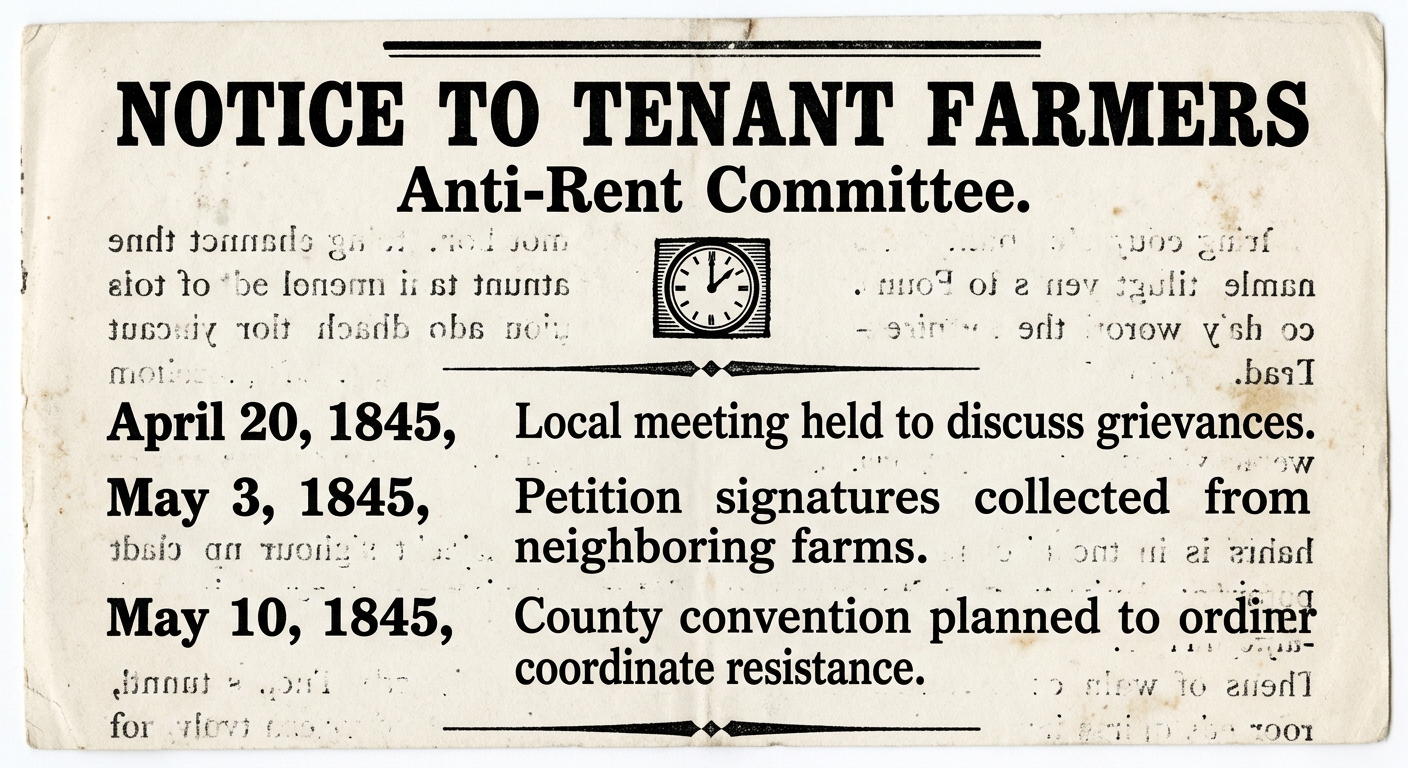
Fictional 1845 newspaper notice from an Anti-Rent committee listing dated events leading up to a tenant farmer meeting.

In the 1840s, New York tenant farmers organized to protest patroon leases and long-term rent demands. This notice summarizes several actions leading up to a county meeting. Use the dates and details in the document to place events in order and interpret what happened next.

Asemmisa {{asɛmmisaAhyɛnsode}}
6.

Which inference about the Anti-Rent movement’s strategy is BEST supported by the sequence of events in the notice?

Asemmisa {{asɛmmisaAhyɛnsode}}
7.

Using evidence from the notice, describe the sequence of actions the Anti-Rent committee reports.

Then explain how that sequence supports the idea that tenant farmers were organizing to protest New York’s landownership system.

Asemmisa {{asɛmmisaAhyɛnsode}}
8.

Which statement is the BEST example of a conclusion that could be checked using this document as evidence?

Asemmisa {{asɛmmisaAhyɛnsode}}
9.

Which event happened SECOND, based on the dates shown in the notice?

Asemmisa {{asɛmmisaAhyɛnsode}}
10.

Imagine you are a historian trying to reconstruct what happened after the final dated event in the notice.

Using evidence from the notice, predict ONE likely next step the Anti-Rent movement might take and explain why it would follow logically.

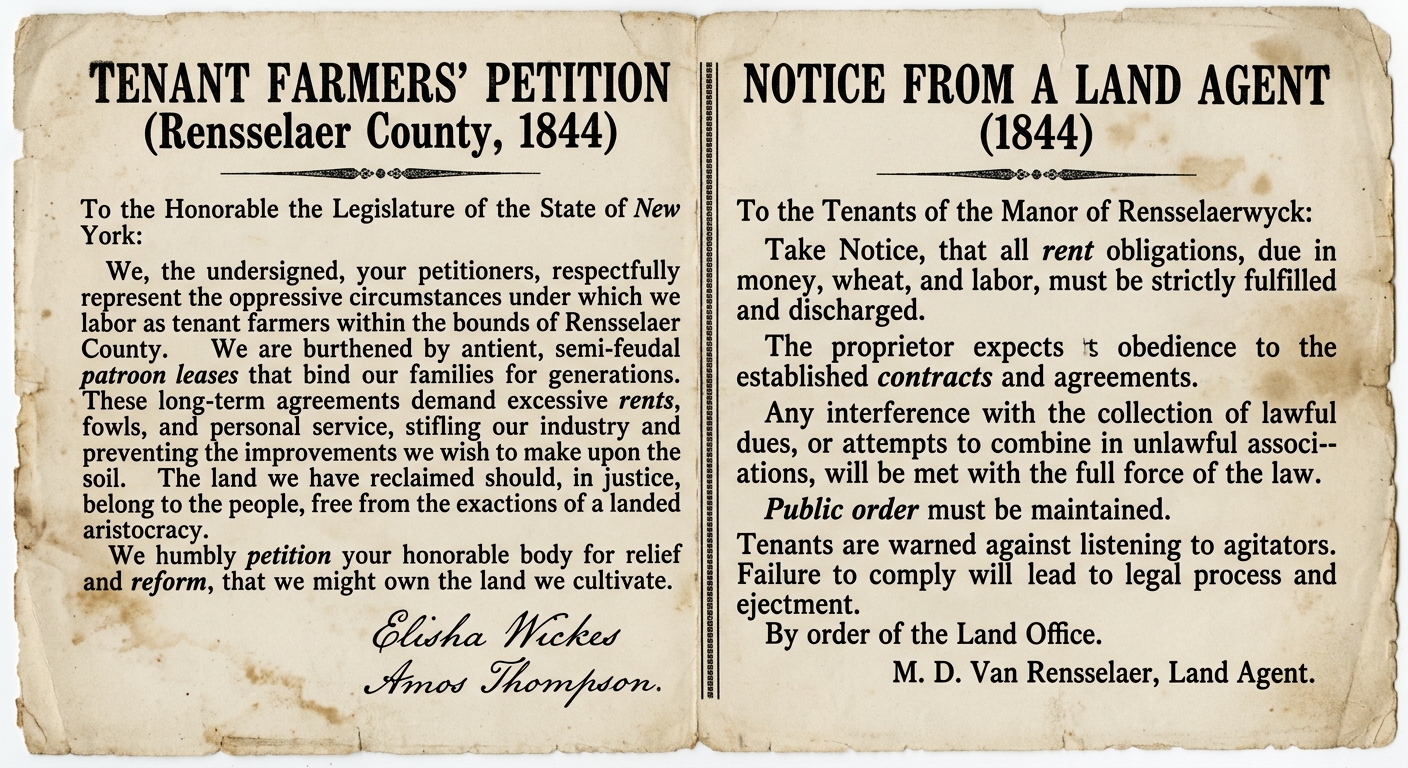
Fictional 1844 document set with a tenant farmer petition excerpt and a land agent notice excerpt about rent and patroon leases in New York.

In the 1840s, New York tenant farmers challenged patroon leases and long-term rent demands. These two excerpts show different perspectives on rent, contracts, and order. Compare the sources and use their details to explain how conflicts over land shaped the Anti-Rent movement.

Asemmisa {{asɛmmisaAhyɛnsode}}
11.

Which statement BEST describes how the two excerpts differ in point of view about the rent system?

Asemmisa {{asɛmmisaAhyɛnsode}}
12.

Which detail would be the BEST evidence that the Anti-Rent conflict involved more than one side’s interests?

Asemmisa {{asɛmmisaAhyɛnsode}}
13.

Compare the claims in the two excerpts. Then explain what each source suggests about the broader landownership system in New York.

Use at least ONE specific detail from EACH excerpt as evidence.

Asemmisa {{asɛmmisaAhyɛnsode}}
14.

Explain how these excerpts fit into the Anti-Rent movement in New York State.

In your answer, describe what was being protested and why the conflict mattered beyond a single rent payment.

Use evidence from the documents.

Asemmisa {{asɛmmisaAhyɛnsode}}
15.

Based on the context of New York in the 1840s, which situation BEST explains why these two sources might exist at the same time?

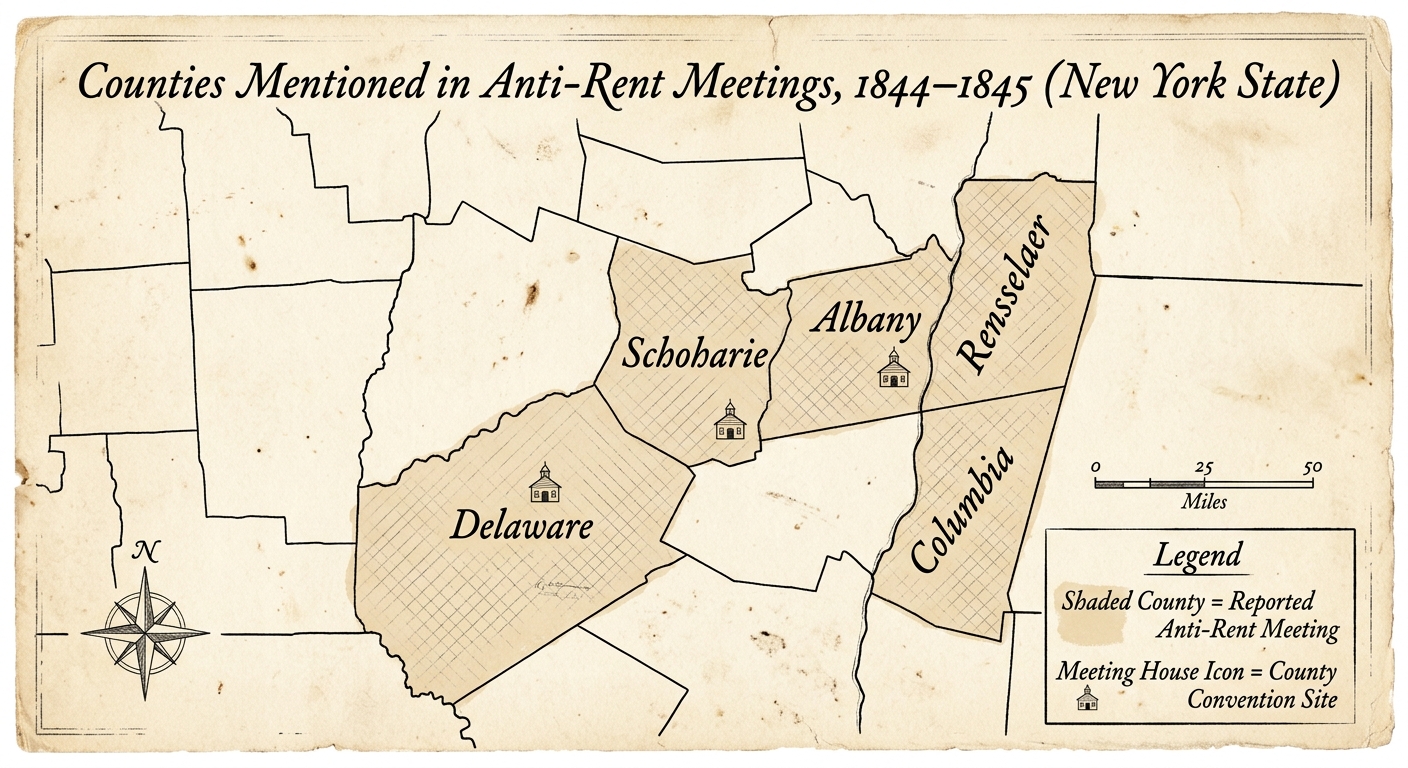
Fictional 1840s-style map of New York State showing several counties shaded for reported Anti-Rent meetings, with a legend and meeting-site symbols.

In the 1840s, New York tenant farmers protested patroon landownership and long-term rent demands. This map shows counties where Anti-Rent meetings were reported and where county conventions were planned. Use the map’s shading, symbols, and legend to interpret where organizing happened.

Asemmisa {{asɛmmisaAhyɛnsode}}
16.

According to the legend, what does the meeting-house symbol MOST likely represent on this map?

Asemmisa {{asɛmmisaAhyɛnsode}}
17.

Use evidence from the map to explain how geography could have affected the Anti-Rent movement’s ability to spread across New York State.

In your answer, cite at least TWO specific map details (counties, symbols, or legend information).

Asemmisa {{asɛmmisaAhyɛnsode}}
18.

Which inference about the Anti-Rent movement is MOST supported by the map information?

Asemmisa {{asɛmmisaAhyɛnsode}}
19.

Which statement is BEST supported by the map’s shaded counties?

Asemmisa {{asɛmmisaAhyɛnsode}}
20.

A student claims: “The Anti-Rent movement was only a local protest in one county.”

Use the map as evidence to support or challenge this claim.

Include at least TWO pieces of geographic evidence from the document.

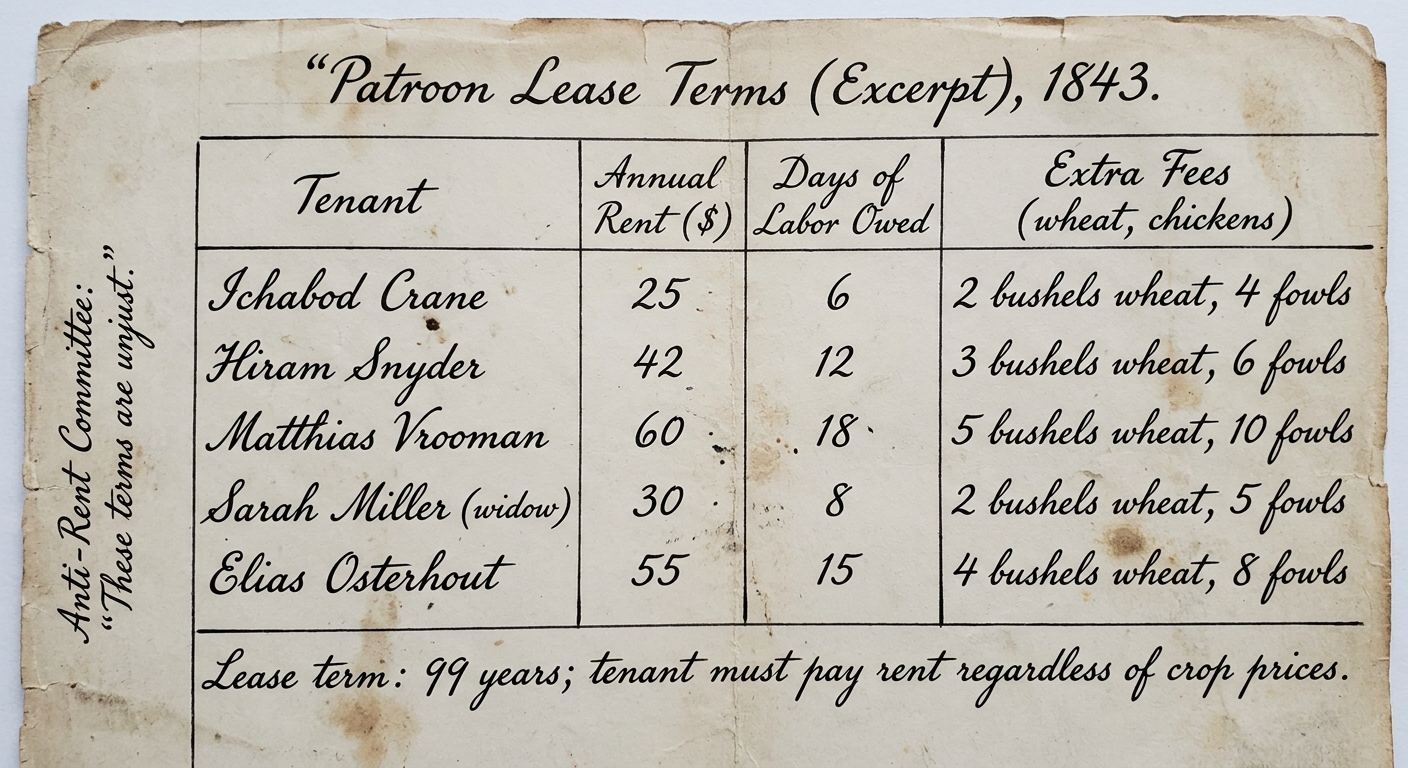
Fictional 1843 patroon lease and rent ledger excerpt showing annual rent, labor owed, and extra fees for tenant farmers.

In the 1840s, tenant farmers argued that patroon leases created an unfair economic system. This lease-and-ledger excerpt shows rent payments and other obligations tenants owed landowners. Use the table and notes to interpret incentives, costs, and why some farmers joined the Anti-Rent movement.

Asemmisa {{asɛmmisaAhyɛnsode}}
21.

Based on the table, which inference is MOST reasonable about how this rent system could affect a tenant’s economic choices?

Asemmisa {{asɛmmisaAhyɛnsode}}
22.

Which statement BEST explains why this lease system could create economic conflict between tenants and landowners?

Asemmisa {{asɛmmisaAhyɛnsode}}
23.

Which detail from the document is the BEST evidence that tenant obligations went beyond money?

Asemmisa {{asɛmmisaAhyɛnsode}}
24.

Using evidence from the document, explain how a tenant farmer and a patroon landowner might each argue that the lease terms are fair or unfair.

Include at least ONE piece of evidence for EACH viewpoint.

Asemmisa {{asɛmmisaAhyɛnsode}}
25.

Use evidence from the document to explain how patroon leases shaped the economic system for tenant farmers.

In your answer, describe at least TWO different types of costs or obligations shown and explain how they could lead to Anti-Rent protest.