Use the historical document(s) and the short readings in the left panel to answer the associated questions.
(1828): Broadside about the Tariff of 1828
This printed notice was posted in a northern port city in June 1828. It lists tariff duties (taxes on imports) on goods such as iron and textiles. Use details from the table and heading to gather evidence about who might benefit—and why the policy could create regional tensions.
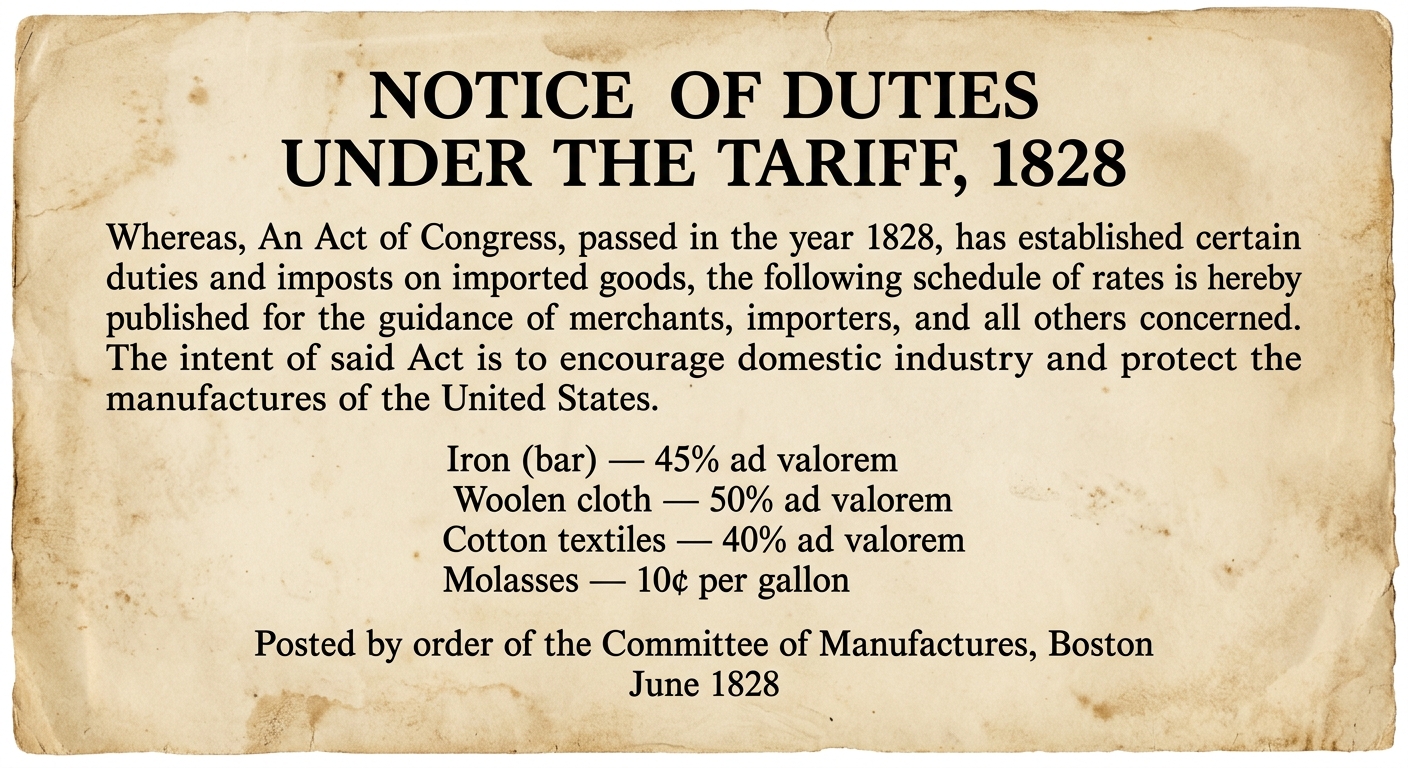
Which economic goal is most directly supported by the tariff rates listed in the broadside?
Based on the goods and duties listed, which region is most likely to support this tariff policy?
Which piece of evidence from the broadside best supports the claim that the tariff was designed to benefit manufacturers?
Explain one way the tariff described in the broadside could increase sectional tensions between regions of the United States.
In your paragraph, use at least two specific details from the document as evidence and explain how those details connect to different regional economies or values.
A states’ rights advocate might argue that the tariff is an abuse of federal power.
Write a well-formed paragraph explaining how that argument could be made.
Cite one detail from the document and explain how it could be used to support a states’ rights viewpoint about the Constitution.
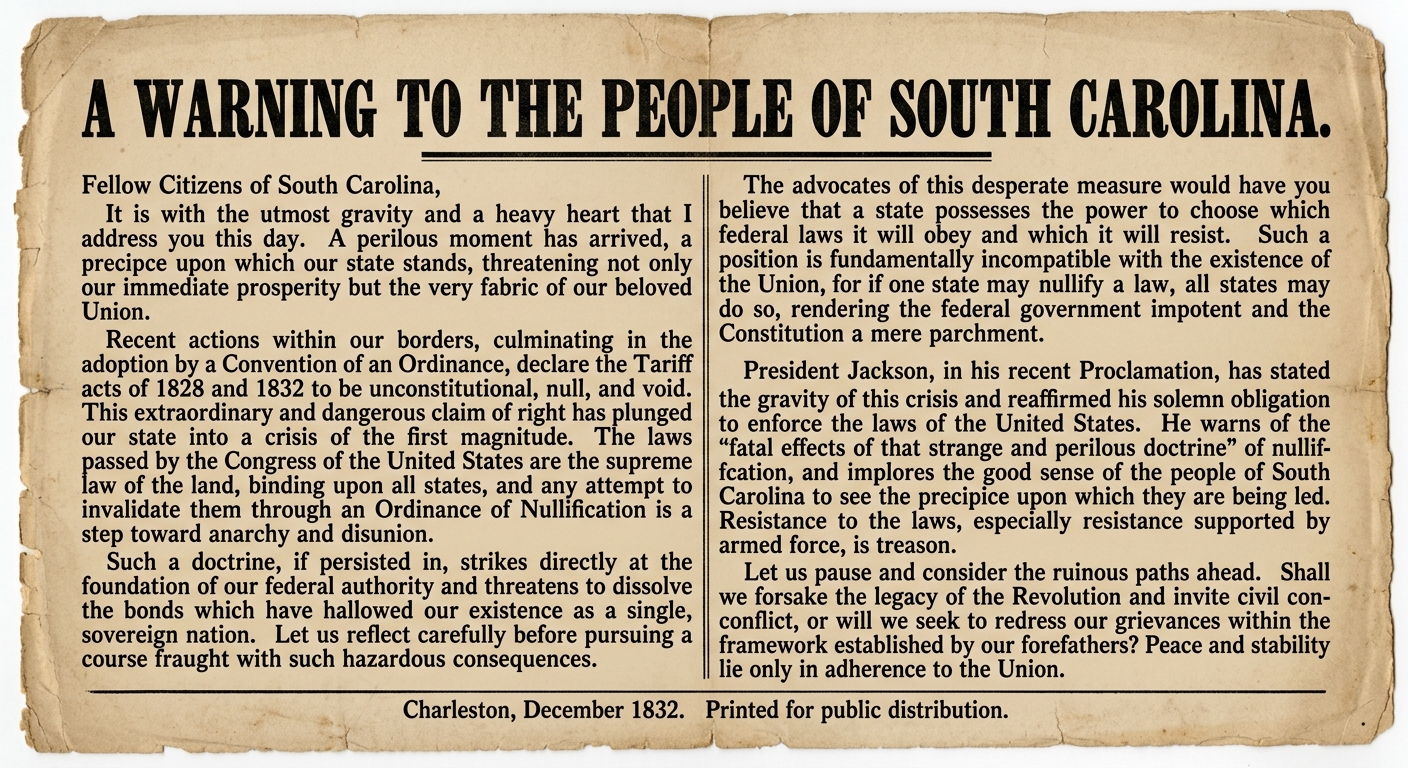
(1832): Handbill about tariffs and nullification
This handbill circulated in South Carolina in December 1832, after Congress passed tariff laws in 1828 and 1832. Read the date and references to the laws carefully. Use the document to place events in order and explain how disputes over tariffs intensified tensions over federal authority.

Based on the date and references in the handbill, which event most likely happened just before the handbill was circulated?
Which timeline best matches the sequence of events suggested by the handbill?
Which claim is best supported by the handbill’s references to the tariff laws of 1828 and 1832?
Explain how the date and references to the tariff laws in the handbill help you understand when the conflict over nullification developed.
In your paragraph, cite two details from the document and connect them to a brief timeline of events.
Describe how a reader in 1832 might use the document to argue that the conflict over tariffs was becoming more serious over time.
In your paragraph, cite one detail that signals earlier events and one detail that signals an immediate crisis.
(1830): Newspaper letter about the tariff
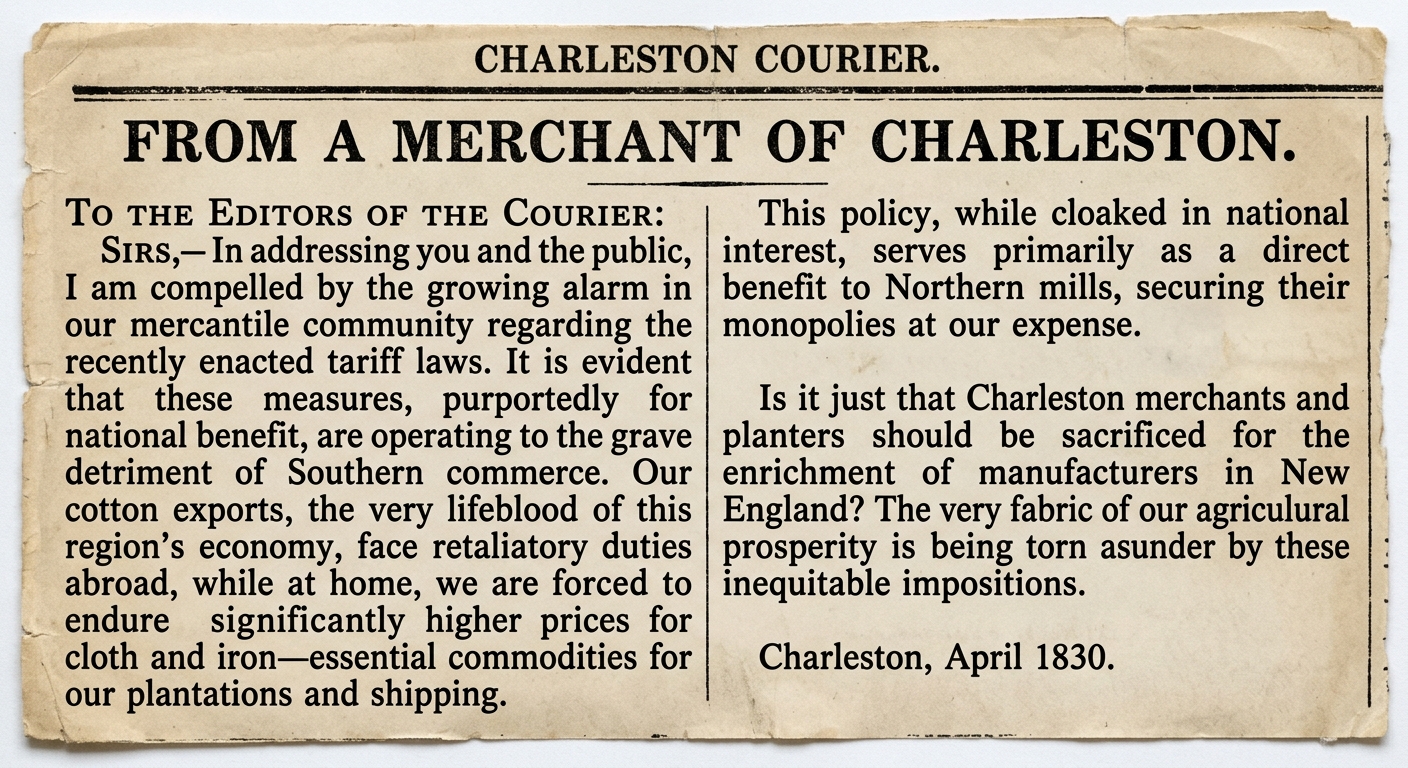
This newspaper letter was published in April 1830 by a merchant in Charleston. Read for claims and evidence about who benefits and who is harmed by tariff policy. Use the document to compare regional economic interests and to place tariff debates within growing North–South sectional tensions.

Which statement best summarizes the author’s point of view about the tariff?
Which detail from the letter best supports the idea that regional economies shaped opinions about tariffs?
Which broader historical context best helps explain why the author argues that the tariff benefits “Northern mills”?
Compare how a Northern manufacturer and the Charleston merchant in the letter would likely view the same tariff policy.
In your paragraph, cite one piece of evidence from the document and use it to explain one similarity or difference in their economic interests.
Explain how this letter fits into growing sectional tensions over federal economic policy in the decades before the Civil War.
In your paragraph, use two pieces of evidence—at least one from the document and at least one from historical context—to support your explanation.
(c. 1830): Map of transportation improvements
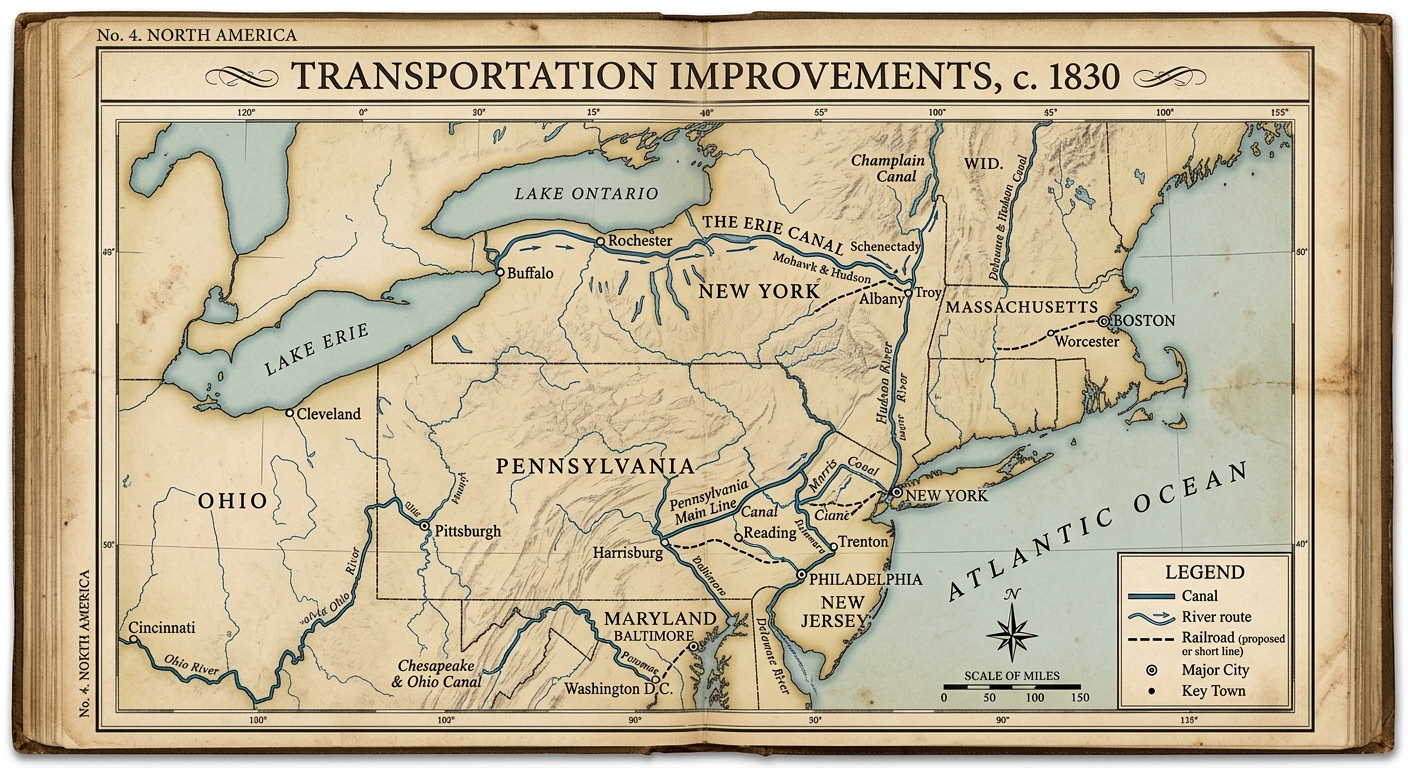
This map shows major water routes and new transportation projects in the Northeast and parts of the interior around 1830. Use the legend and locations to interpret how canals and railroads shaped regional economies. Compare which areas gained easier access to markets and consider how geography could increase sectional tensions.

Which geographic feature on the map most directly explains why New York City could become a major shipping and trade center in the early 1800s?
Which region shown on the map appears to have the greatest advantage for moving manufactured goods to markets by 1830?
Which inference is best supported by the map about how transportation improvements could contribute to sectional tensions?
Explain how the transportation routes shown on the map could affect regional economic development.
In your paragraph, cite two map-based pieces of evidence (specific places or routes) and explain how geography helped shape different regional interests.
Compare two regions shown on the map and explain how differences in transportation access could lead them to support different federal economic policies.
In your paragraph, reference one specific route for each region and connect those routes to different economic interests or values.
(1831): Commercial price circular (cotton and cloth)
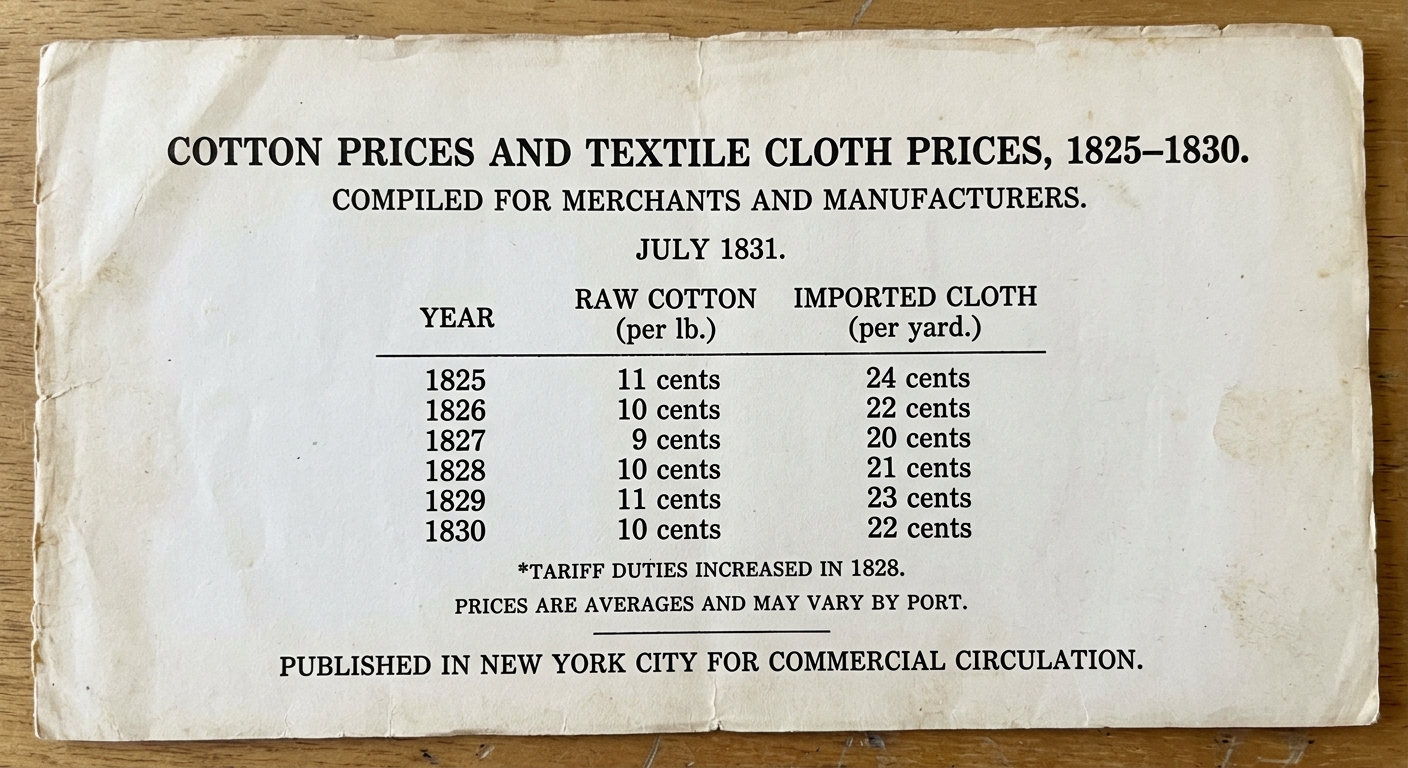
This commercial circular, printed for merchants in 1831, summarizes prices for raw cotton and imported cloth from 1825–1830 and notes a tariff increase in 1828. Use the price information to interpret how federal economic policy could affect producers, consumers, and regions differently.

Which statement best explains why a tariff increase could affect the price of imported cloth shown in the circular?
Which group would most likely view rising imported-cloth prices as a problem, based on the economic roles shown in the document?
Which inference best connects the price information to regional economic differences in the early United States?
Explain how the price information could be used as evidence in an argument about who benefited from tariff policy.
In your paragraph, cite two specific pieces of evidence from the document (two different years, two different prices, or the note about 1828) and explain what each suggests.
Compare how a Northern textile manufacturer and a Southern cotton exporter might interpret the same price trends.
In your paragraph, cite one piece of evidence from the document and connect it to each region’s economic system (manufacturing versus export agriculture).