Twa kɔ nsɛm atitiriw so
Log in
Sign up for FREE
arrow_back
Laabri

7.8d - Nation Divided: - Practices A through E

star
star
star
star
star
Last updated about 1 month ago
25 Nsɛmmisa
Hyɛ no nsow a efi ɔkyerɛwfo no hɔ:

Use the historical document(s) and the short readings in the left panel to answer the associated questions.

Use the historical document(s) and the short readings in the left panel to answer the associated questions.

Ɛhia
1
7.8.d
DOK.SS.2
Ɛhia
1
7.8.d
DOK.SS.2
Ɛhia
1
7.8.d
DOK.SS.2
Ɛhia
1
7.8.d
DOK.SS.2
Ɛhia
1
7.8.d
DOK.SS.2
Ɛhia
1
7.8.d
DOK.SS.2
Ɛhia
1
7.8.d
DOK.SS.2
Ɛhia
1
7.8.d
DOK.SS.2
Ɛhia
1
7.8.d
DOK.SS.2
Ɛhia
1
7.8.d
DOK.SS.2
Ɛhia
1
7.8.d
DOK.SS.2
Ɛhia
1
7.8.d
DOK.SS.2
Ɛhia
1
7.8.d
DOK.SS.2
Ɛhia
1
7.8.d
DOK.SS.2
Ɛhia
1
7.8.d
DOK.SS.2
Ɛhia
1
7.8.d
DOK.SS.2
Ɛhia
1
7.8.d
DOK.SS.2
Ɛhia
1
7.8.d
DOK.SS.2
Ɛhia
1
7.8.d
DOK.SS.2
Ɛhia
1
7.8.d
DOK.SS.2
Ɛhia
1
7.8.d
DOK.SS.2
Ɛhia
1
7.8.d
DOK.SS.2
Ɛhia
1
7.8.d
DOK.SS.2
Ɛhia
1
7.8.d
DOK.SS.2
Ɛhia
1
7.8.d
DOK.SS.2

Read the document image. It is a military telegraph message from 1862 about moving supplies. Notice what it says about rail transport, the condition of roads, and a river crossing. These details show how technology and geography shaped Civil War decisions.
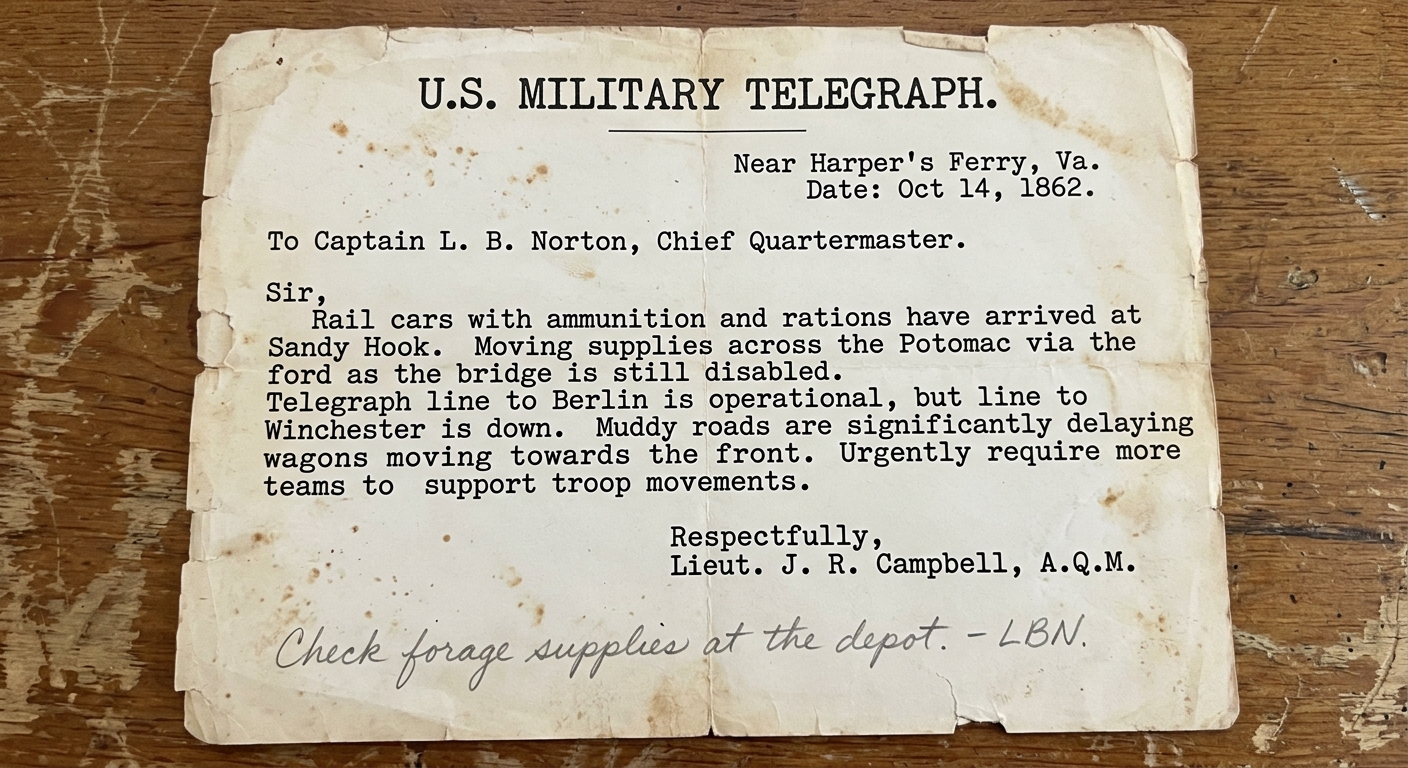
Facsimile of an 1862 Union Army telegraph dispatch on aged paper mentioning rail cars, telegraph lines, muddy roads, and a river crossing for moving supplies.

Asemmisa {{asɛmmisaAhyɛnsode}}
1.

Which detail from the document best supports the idea that new technology influenced Civil War strategy?

Asemmisa {{asɛmmisaAhyɛnsode}}
2.

Based on the document, which geographic condition most likely created a challenge for moving supplies?

Asemmisa {{asɛmmisaAhyɛnsode}}
3.

What is the most likely purpose of this document?

Asemmisa {{asɛmmisaAhyɛnsode}}
4.

Using evidence from the document, describe one advantage or disadvantage faced by the army writing this message.

Use two specific details from the document to support your answer.

Asemmisa {{asɛmmisaAhyɛnsode}}
5.

What is one reasonable inference about how commanders might adjust their strategy because of the conditions described in the document?

Support your inference with at least one piece of evidence from the document.

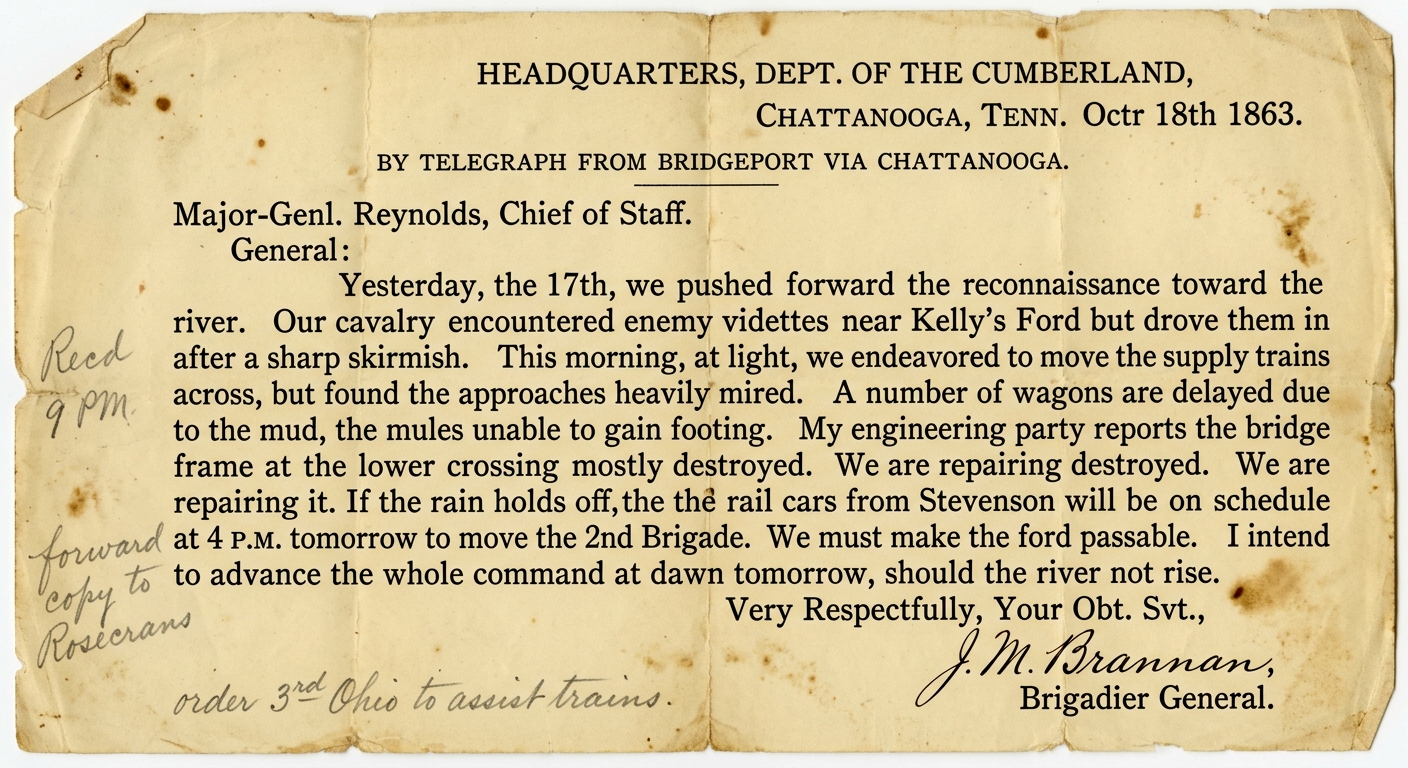
Read the document image. It is a headquarters dispatch dated 1863 describing supply movements over two days. Pay attention to words like “yesterday” and “at dawn tomorrow,” and to the rail and river details. Use these time clues to reason about the order of events.

Facsimile of an 1863 Civil War headquarters dispatch with a date and time markers like “yesterday” and “at dawn tomorrow,” describing a sequence of supply movements near a river crossing.

Asemmisa {{asɛmmisaAhyɛnsode}}
6.

Which conclusion about timing is best supported by the dispatch?

Asemmisa {{asɛmmisaAhyɛnsode}}
7.

Based on the time words in the dispatch, which event most likely happened first?

Asemmisa {{asɛmmisaAhyɛnsode}}
8.

Which detail best shows how commanders used technology to plan actions across time?

Asemmisa {{asɛmmisaAhyɛnsode}}
9.

Using evidence from the dispatch, describe the sequence of at least three events or actions mentioned.

Use the document’s time words (for example, “yesterday,” “this morning,” “at dawn tomorrow”) as evidence for your order.

Asemmisa {{asɛmmisaAhyɛnsode}}
10.

Explain how the timing described in the dispatch could affect commanders’ strategy.

Include one geographic factor mentioned in the document and use at least one specific detail as evidence.

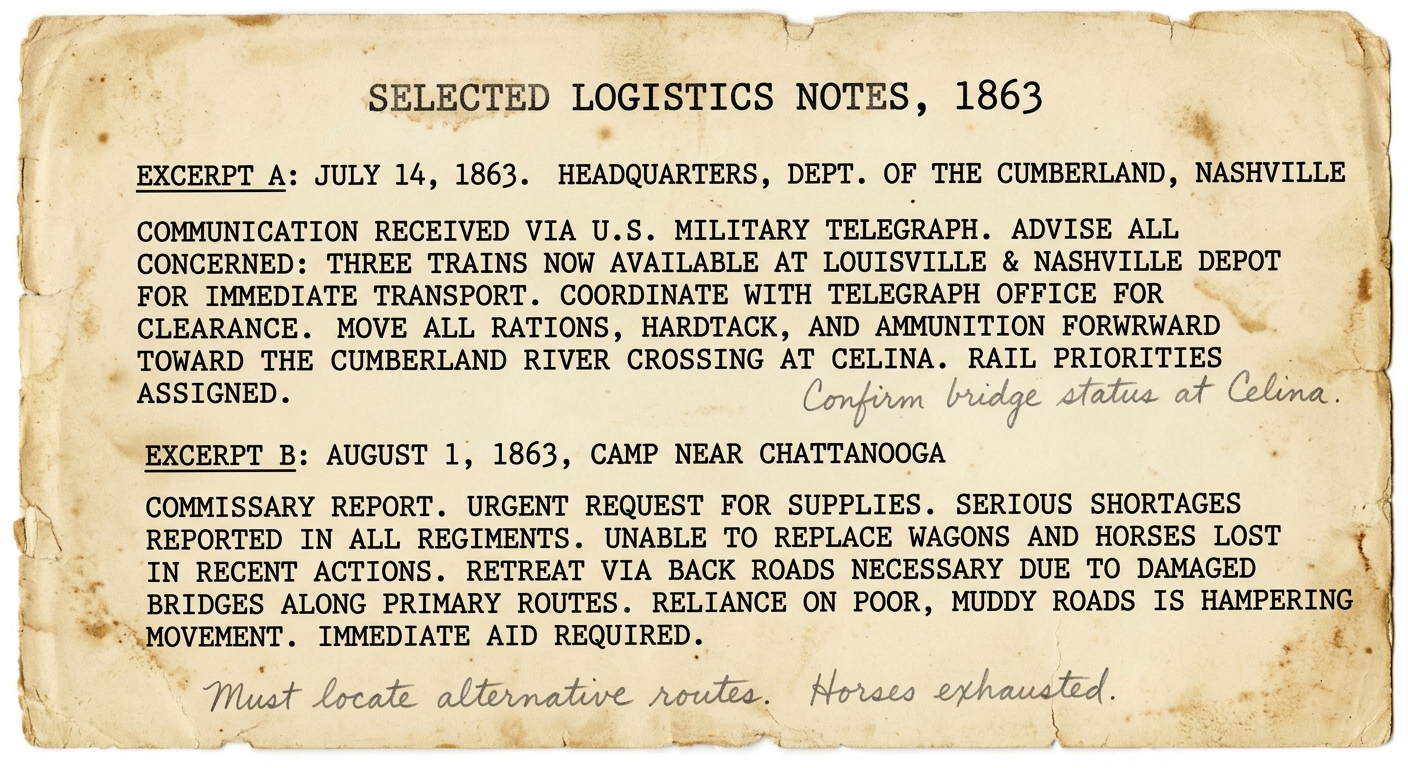
Read the document image. It contains two short logistics excerpts from 1863 (A and B). Compare what each excerpt says about transportation, supplies, and obstacles. Use evidence from both excerpts to explain how wartime context—resources, geography, and technology—shaped planning.

Aged-paper facsimile titled “Selected Logistics Notes, 1863” with two labeled excerpts (A and B) comparing Union and Confederate supply challenges using details about rail, telegraph, roads, bridges, and shortages.

Asemmisa {{asɛmmisaAhyɛnsode}}
11.

Which comparison is best supported by evidence from BOTH excerpts?

Asemmisa {{asɛmmisaAhyɛnsode}}
12.

Which broader Civil War context best helps explain the differences between Excerpt A and Excerpt B?

Asemmisa {{asɛmmisaAhyɛnsode}}
13.

Which detail from Excerpt B is the strongest evidence that geography and infrastructure created supply problems?

Asemmisa {{asɛmmisaAhyɛnsode}}
14.

Compare the situation described in Excerpt A and Excerpt B.

Identify one key difference in supply or transportation and support your comparison with one specific piece of evidence from EACH excerpt.

Asemmisa {{asɛmmisaAhyɛnsode}}
15.

Explain how differences in resources, geography, or wartime technology could help explain why the writers describe different supply situations.

Use at least one specific detail from the document as evidence.

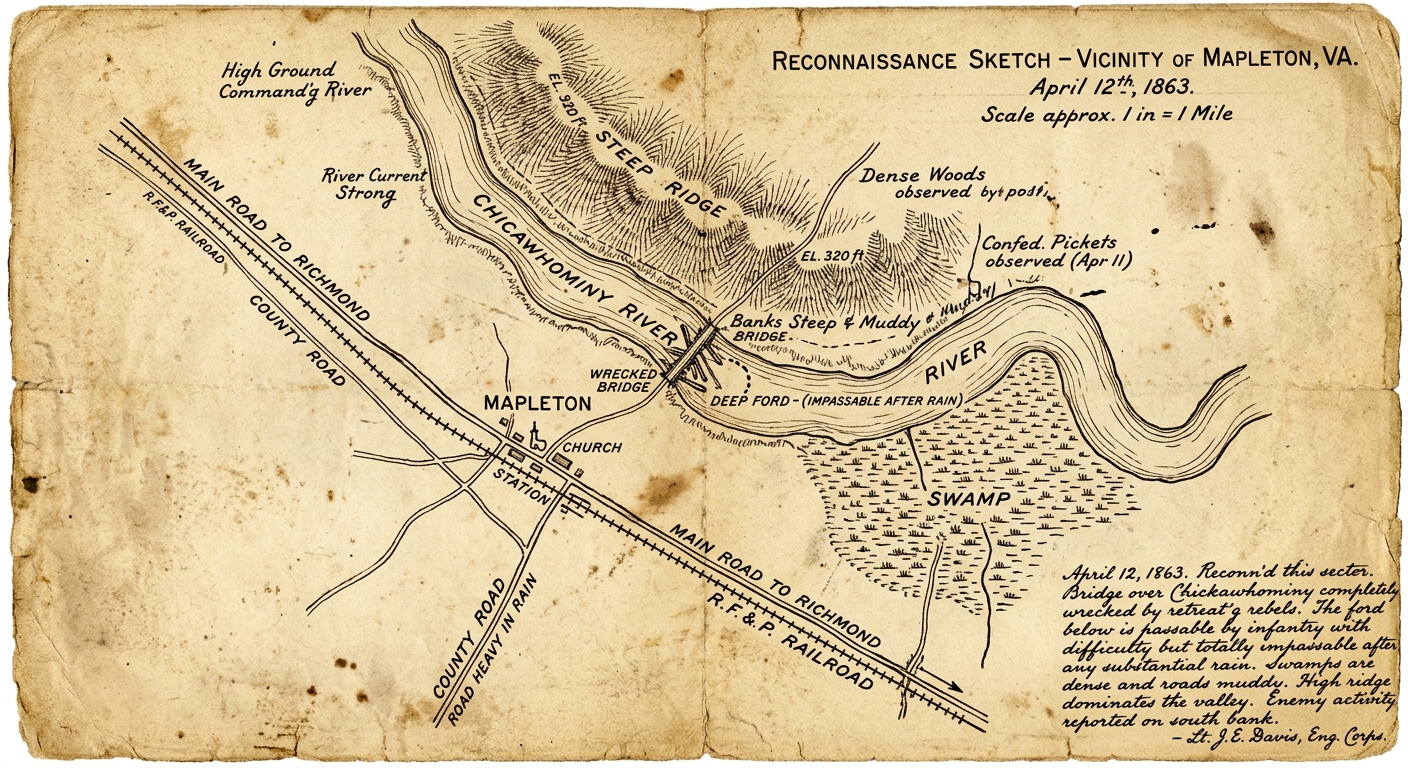
Read the document image. It is an engineer’s reconnaissance sketch (1863) showing roads, a railroad, high ground, and a river crossing. Use the map labels and terrain notes to infer how geography could shape routes, defenses, and supply movement during a Civil War operation.

Asemmisa {{asɛmmisaAhyɛnsode}}
16.

Based on the sketch map and notes, which geographic feature would most likely slow the movement of wagons and supplies?

Asemmisa {{asɛmmisaAhyɛnsode}}
17.

Which location on the map would most likely be chosen for observation or artillery placement?

Asemmisa {{asɛmmisaAhyɛnsode}}
18.

Which explanation best connects the map evidence to a likely command decision?

Asemmisa {{asɛmmisaAhyɛnsode}}
19.

Using evidence from the sketch map and the field note, explain how two geographic features could influence military strategy or supply movement.

Use two specific map or note details as evidence.

Asemmisa {{asɛmmisaAhyɛnsode}}
20.

Based on the geographic evidence in the document, recommend one route or position a commander might choose.

Justify your recommendation with at least two specific details from the map or notes.

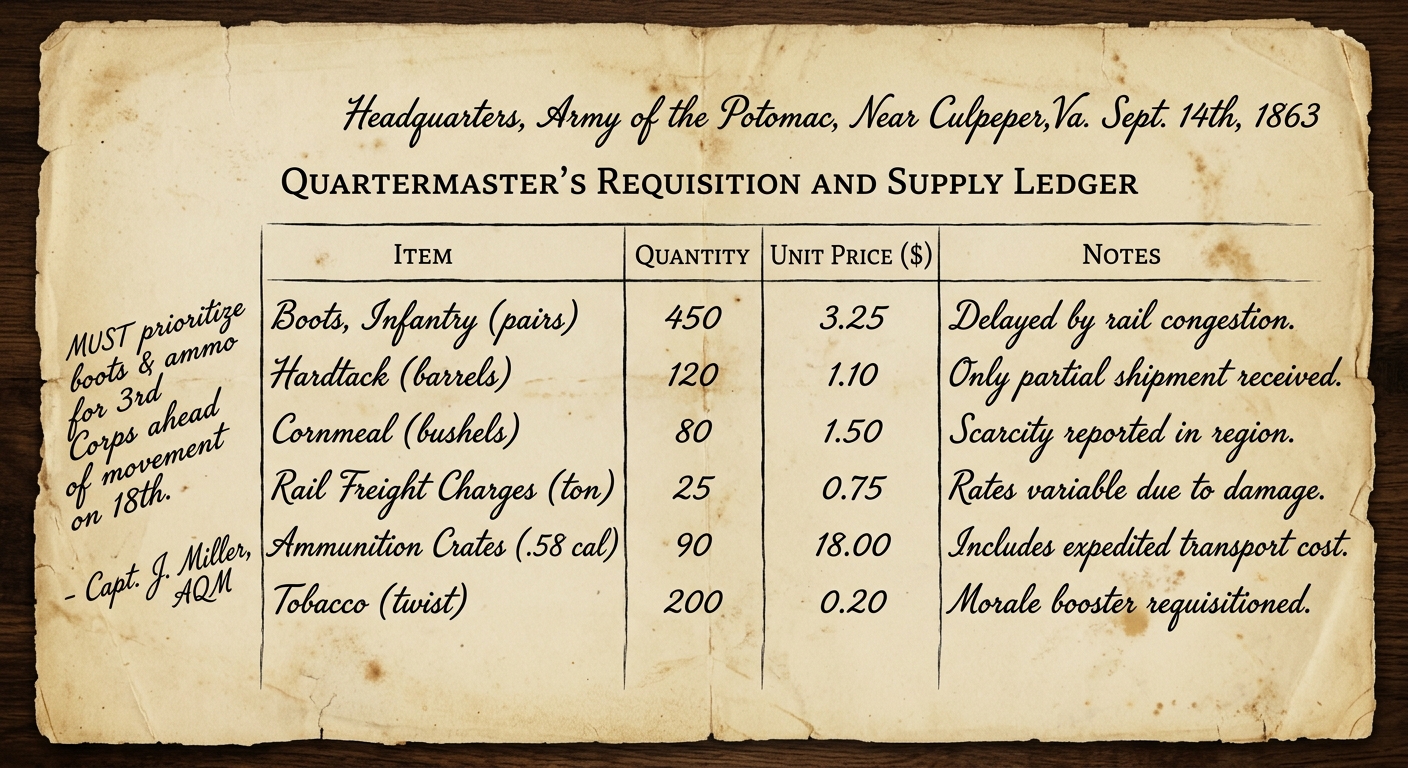
Read the document image. It is an 1863 quartermaster supply ledger listing quantities, prices, and delivery notes. Use the economic details (costs, shortages, and transportation limits) to explain how war changes markets and how supply decisions can shape Civil War strategy.

Aged-paper facsimile of an 1863 quartermaster supply ledger listing items, quantities, prices, and notes about shortages and delayed rail shipments.

Asemmisa {{asɛmmisaAhyɛnsode}}
21.

Which detail from the ledger best supports the conclusion that scarcity or high demand affected military supplies?

Asemmisa {{asɛmmisaAhyɛnsode}}
22.

Which economic concept best describes the decision to prioritize certain supplies for an upcoming movement?

Asemmisa {{asɛmmisaAhyɛnsode}}
23.

Which inference about Civil War economic systems is most consistent with the ledger’s emphasis on rail shipping and large-scale purchasing?

Asemmisa {{asɛmmisaAhyɛnsode}}
24.

Using evidence from the ledger, explain how TWO economic details (for example, prices, shortages, or transport limits) could influence commanders’ military strategy.

Use two specific details from the document as evidence.

Asemmisa {{asɛmmisaAhyɛnsode}}
25.

Explain how this type of supply record reflects wartime economic systems (government purchasing, transportation networks, and market pressures).

Then explain how these economic factors could shape the war’s course.

Use at least one specific document detail as evidence.