Use the historical document(s) and the short readings in the left panel to answer the associated questions.
Historical Document (Civil War)
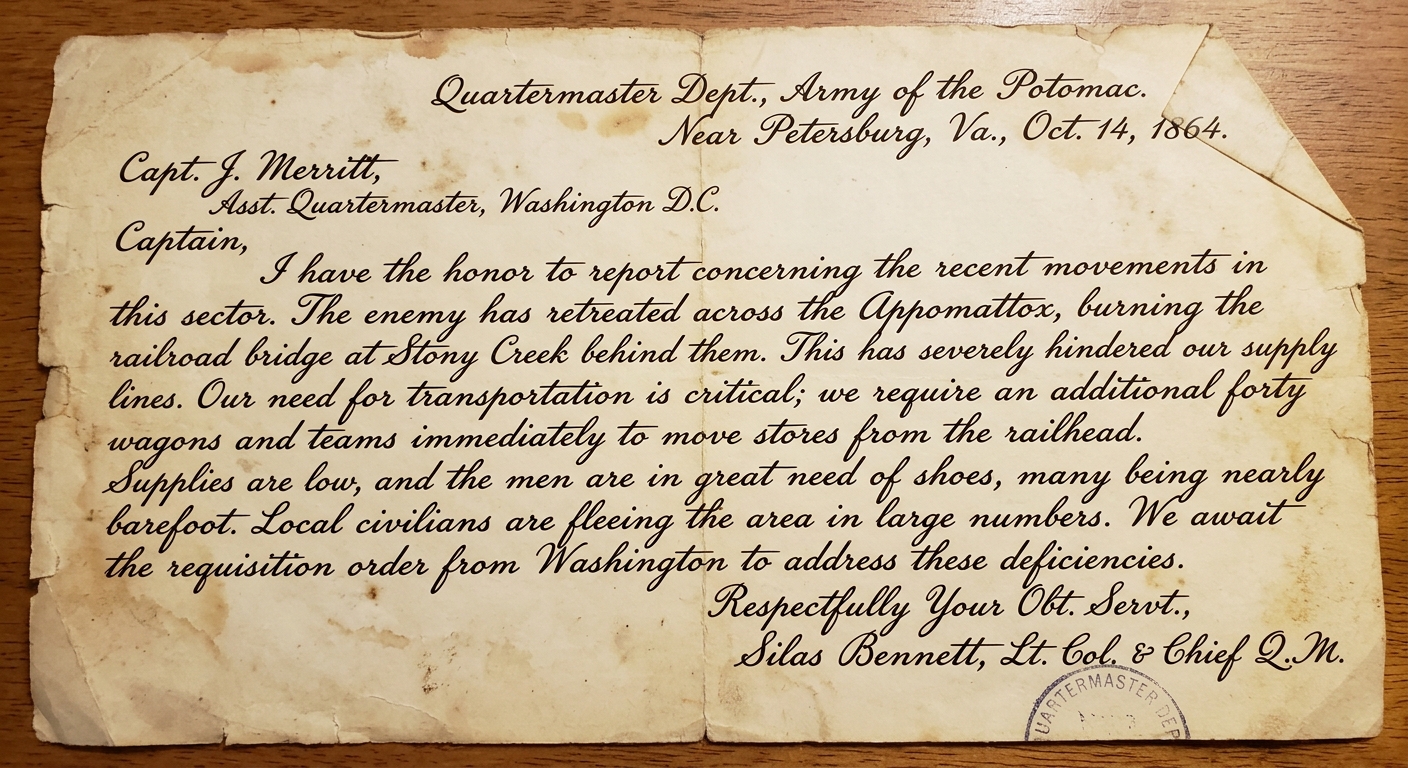
An excerpt from a Union quartermaster’s letter written near Petersburg, Virginia, October 14, 1864. The writer describes shortages, damaged transportation lines, and orders from federal officials. Read the document closely and use evidence from it to answer the questions.
Identify two different ways the Civil War affected the United States that are shown in the document (for example: human lives, physical infrastructure, economic capacity, or governance).
For each effect, cite one specific detail from the letter as evidence.
Based on the document, what is the most reasonable inference about why the quartermaster wrote this letter?
Using evidence from the document, explain one short-term problem the writer faced and one longer-term consequence that could result if those problems continued.
Support each with a detail from the letter.
According to the quartermaster’s letter, which impact of the Civil War is most directly supported by evidence in the document?
Which phrase from the document is the strongest evidence that the war reduced economic capacity by disrupting supply systems?
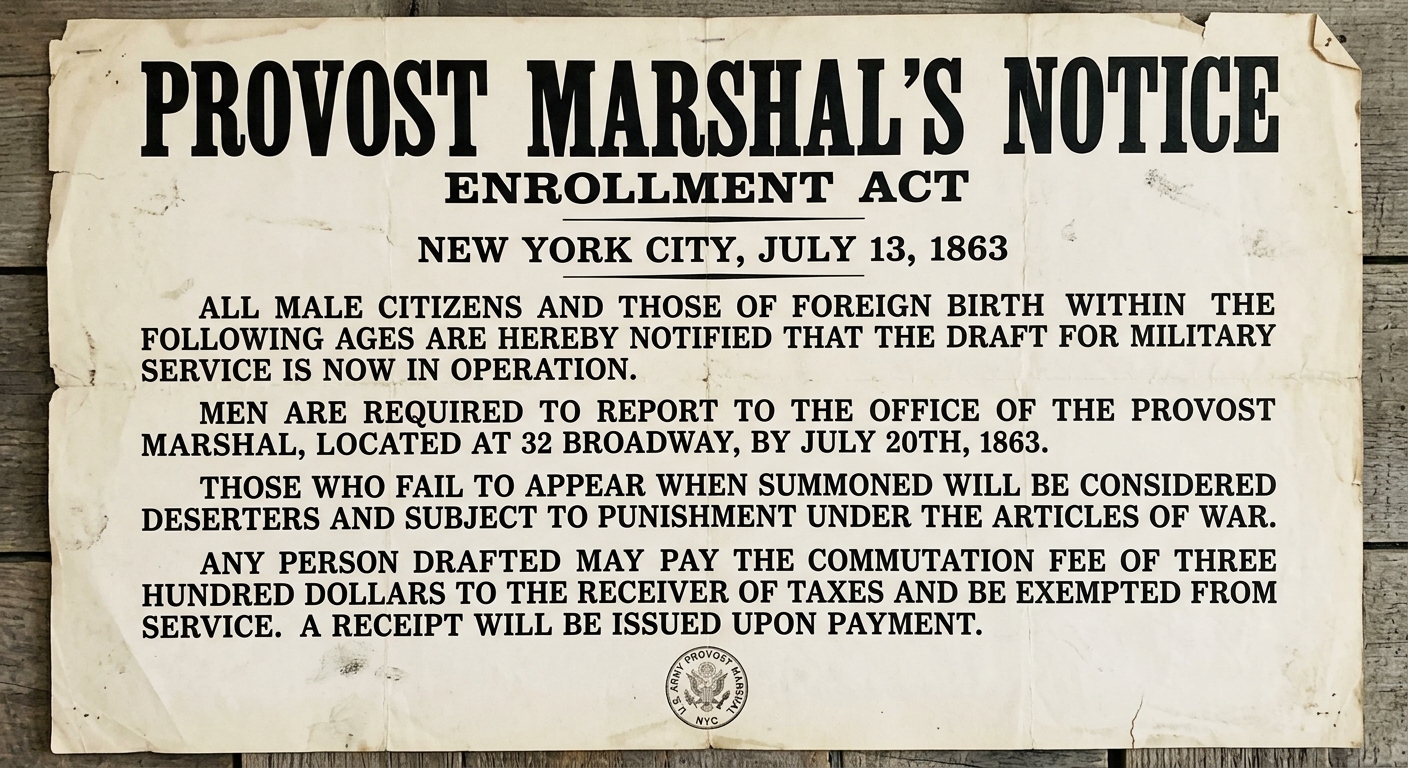
Historical Document (Civil War)

A provost marshal’s printed notice posted in New York City, dated July 13, 1863. It orders certain men to report under the Enrollment Act and warns of penalties for failing to appear. Read the dates and details closely to answer the questions.
Which timeline is most consistent with the date and purpose of this notice?
Identify one event or condition earlier in the Civil War that helps explain why a draft notice like this would be posted, and one likely short-term outcome that could happen soon after the notice.
Support both with evidence from the document (especially dates, orders, or penalties).
Which detail from the notice is most useful for placing it in chronological order within the Civil War?
Based on the document, which statement best explains why this notice would be issued at this point in the war?
Using evidence from the notice, explain how this document shows a change in how the federal government exercised power during the Civil War.
Include one quoted or paraphrased detail and explain why it matters.
Historical Document (Civil War)

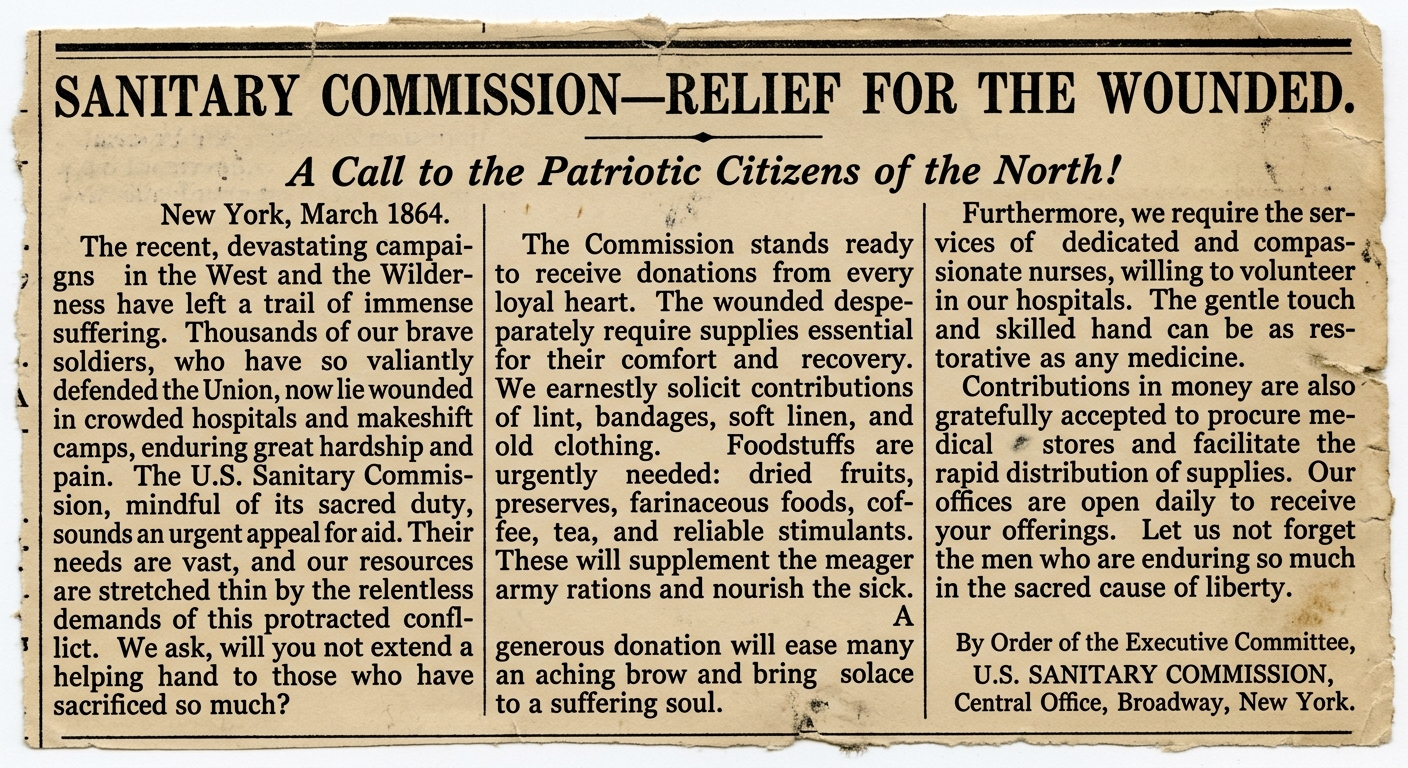
A newspaper notice published in New York, March 1864. The notice asks civilians to donate supplies to a wartime relief organization to support wounded soldiers. Read the document closely and use evidence to compare this civilian appeal to other types of Civil War sources.
Describe two ways this notice reflects the Civil War’s effects on society.
Then explain how the evidence in this document is different from evidence you might find in a government order or a military report.
Which background condition of the Civil War best explains why this notice was aimed at civilians?
Which claim is best supported if you compare this notice to a military supply report from the same year?
Which detail from this notice would be least likely to appear in a federal government order, and why?
Use evidence from the notice to explain what it suggests about civilians’ roles during the Civil War.
Then explain one limitation of using this single document to understand the overall wartime experience.
Historical Document (Civil War)

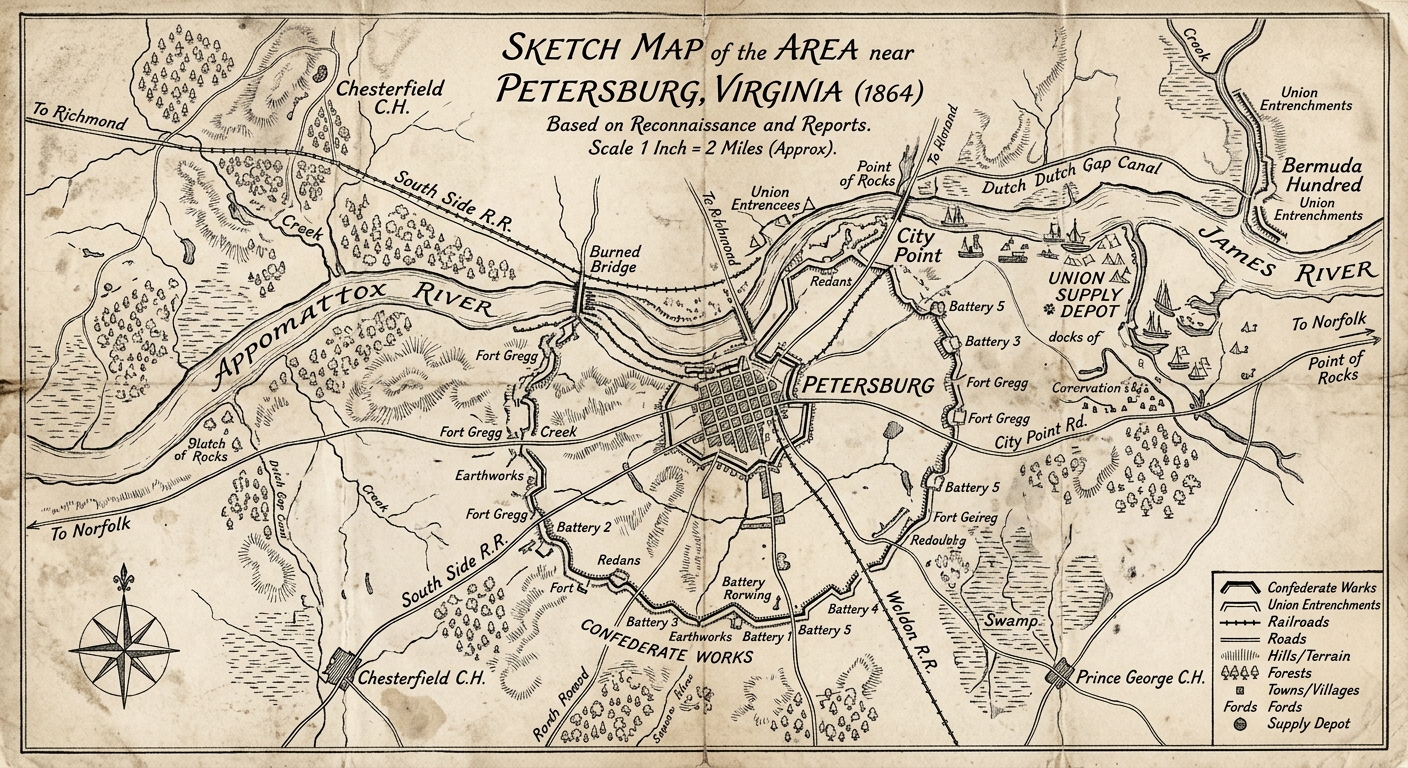
A military sketch map of the area near Petersburg, Virginia, 1864. It shows the Appomattox River, key railroad lines, and a burned bridge near a rail crossing. Use the map’s locations and features to explain how geography affected wartime supply and control.
Which inference is most reasonable if the Confederate works are located between the Union supply depot and a railroad line?
Which claim is best supported by the combination of the river and railroad lines shown on the map?
Imagine you are explaining this map to someone who has not studied the Civil War.
Using evidence from the map, explain why Petersburg’s location could matter for controlling territory and governance during the war.
Include at least two labeled places or features as evidence.
Based on the map, which geographic feature would most directly slow the movement of Union supplies to the front lines?
Use evidence from the map to explain two ways geography could affect the war’s impact on economic capacity (movement of supplies) in this area.
Cite two specific map features (for example: a river crossing, railroad line, depot, or burned bridge).
Historical Document (Civil War)

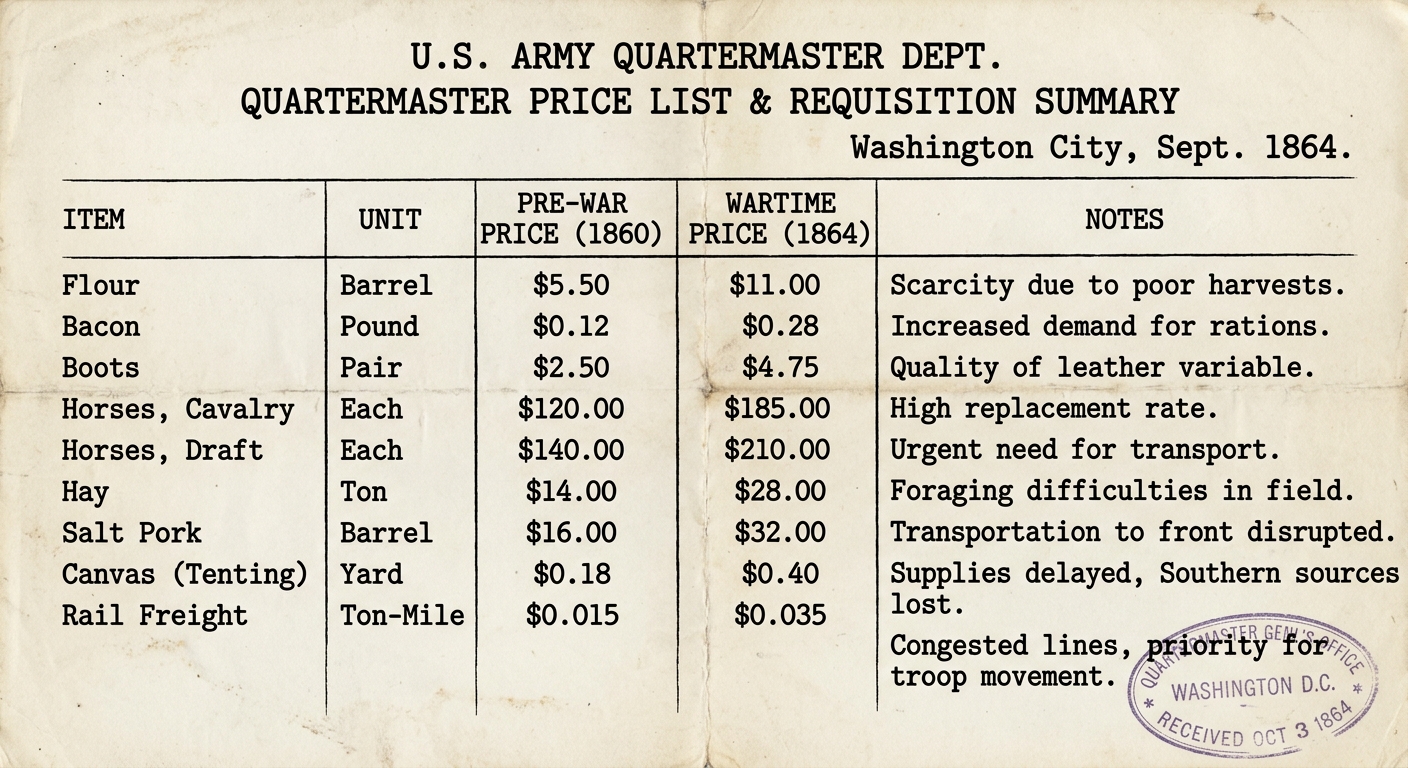
A quartermaster department price list and requisition summary from Washington City, September 1864. The document compares pre-war and wartime prices for key supplies and transportation costs and includes notes about shortages. Use the table as evidence to analyze how war affected economic capacity and markets.
If the notes mention “shortages” and “delays,” which economic concept is most directly illustrated?
Explain how the economic evidence in this quartermaster document might differ from evidence in a soldier’s diary or a battlefield map.
Then explain one strength and one limitation of using a price list to understand the war’s impact on everyday people.
Which piece of evidence from a price table would be strongest support for the claim that damaged infrastructure affected markets?
Which conclusion about the wartime economy is best supported if the table shows higher 1864 prices for food, boots, and transportation than in 1860?
Using evidence from the table, describe two ways the Civil War affected economic capacity.
For each, cite one specific table entry (an item and price change, or a note) as evidence and explain what it suggests about wartime markets.