Use the historical document(s) and the short readings in the left panel to answer the associated questions.
Historical Document:
In 1867, Congress expanded the work of the Freedmen’s Bureau across the South. Bureau officials tried to protect freedpeople from unfair labor practices, intimidation, and lack of schooling. They sent written orders to agents who worked with local communities and military authorities.
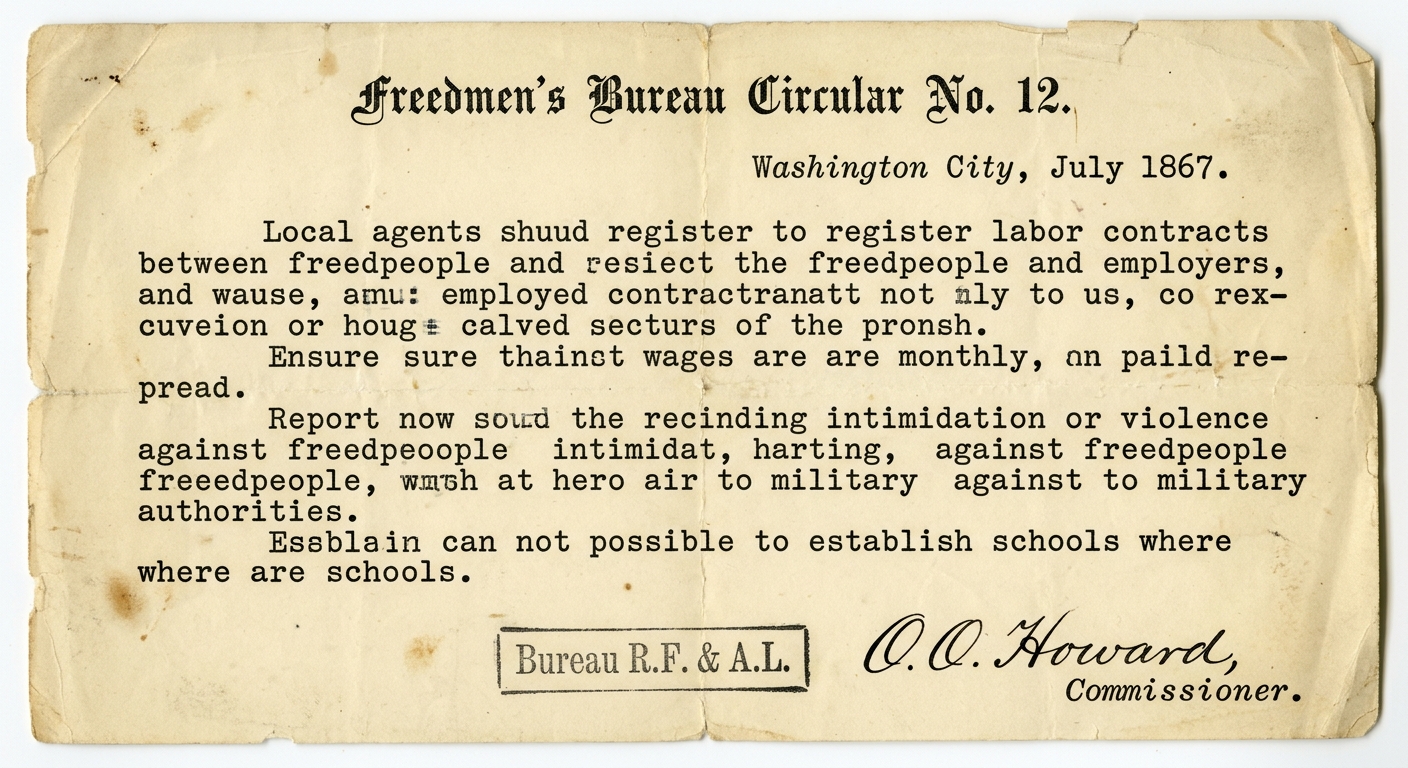
Which Reconstruction goal is the Freedmen’s Bureau MOST directly trying to achieve?
Which phrase from the document best supports the inference that the Bureau expected resistance to Reconstruction policies?
Which conclusion is best supported by BOTH the excerpt and the circular?
Use evidence from the circular to explain ONE challenge the federal government anticipated during Reconstruction and ONE action the Freedmen’s Bureau planned to take in response.
What does it help you understand about Reconstruction policies, and what is ONE limitation of using this circular alone to explain Reconstruction in the South?
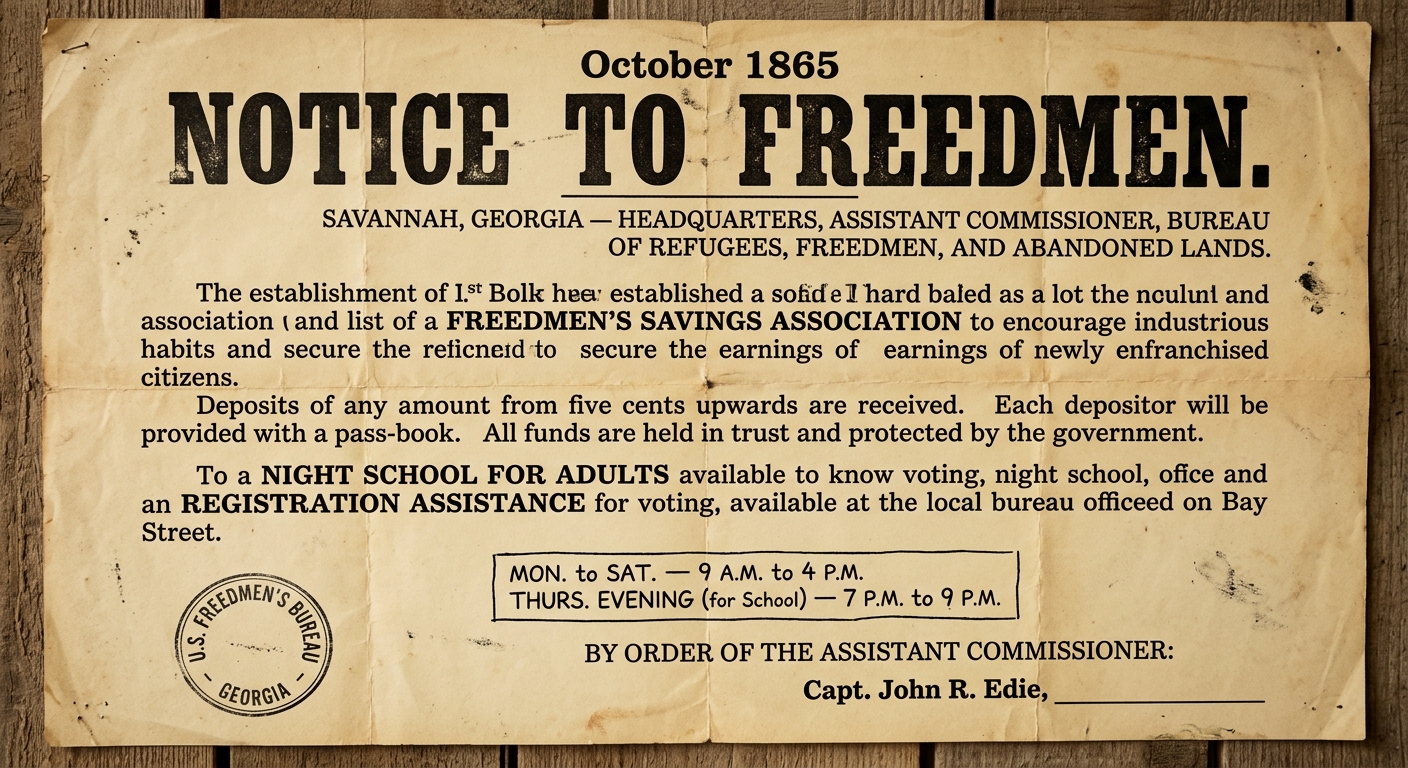
Historical Document:
After slavery ended, many freed African Americans worked to build independent lives. They sought education, legal recognition, and ways to protect earnings. Federal agencies and local aid groups sometimes offered services such as schools, labor guidance, and help completing official paperwork.

Which need of freedpeople is MOST directly being addressed?
Which detail from the poster is the BEST evidence that the services were meant to support freedpeople’s independence after slavery?
What is the BEST inference about one purpose of the organization named in the poster?
Use two pieces of evidence from the poster to explain how freedpeople were creating new lives for themselves after slavery.
What does it suggest about Reconstruction-era efforts to expand rights and opportunities for freed African Americans, and what is ONE limitation of using this poster alone?
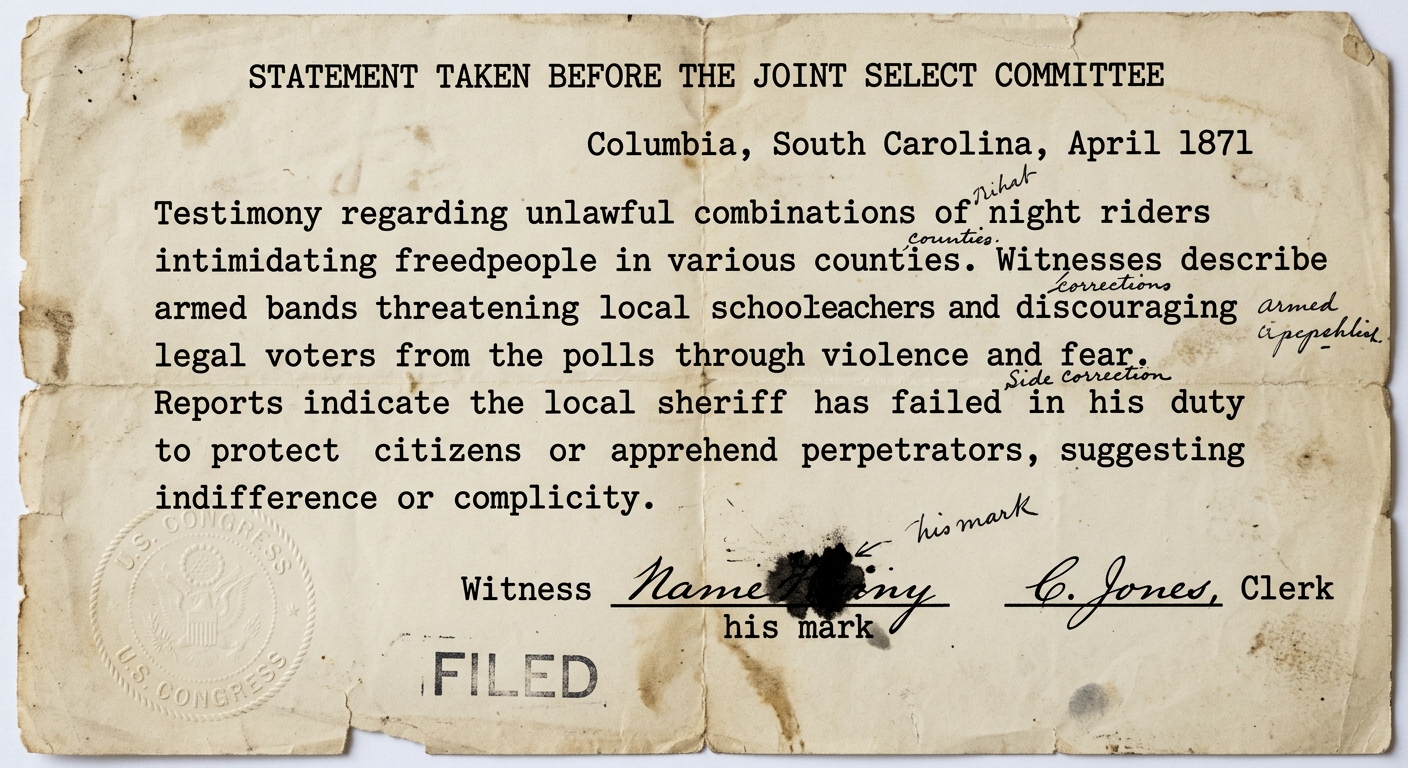
Historical Document:
In the early 1870s, federal officials investigated reports of violence used to weaken Reconstruction. Some local authorities failed to protect freedpeople, teachers, and voters. Testimony collected by Congress described intimidation and the challenges of enforcing new rights in the South.

Which challenge to Reconstruction is MOST directly described?
Which phrase from the document best supports the inference that local authorities were not enforcing Reconstruction protections?
Which conclusion is best supported by BOTH the excerpt and the testimony?
Use two pieces of evidence from the testimony to explain how resistance to Reconstruction could negatively impact freed African Americans.
What does it help you understand about why federal initiatives were challenged during Reconstruction, and what is ONE limitation of using this testimony alone?