Use the historical document(s) and the short readings in the left panel to answer the associated questions.
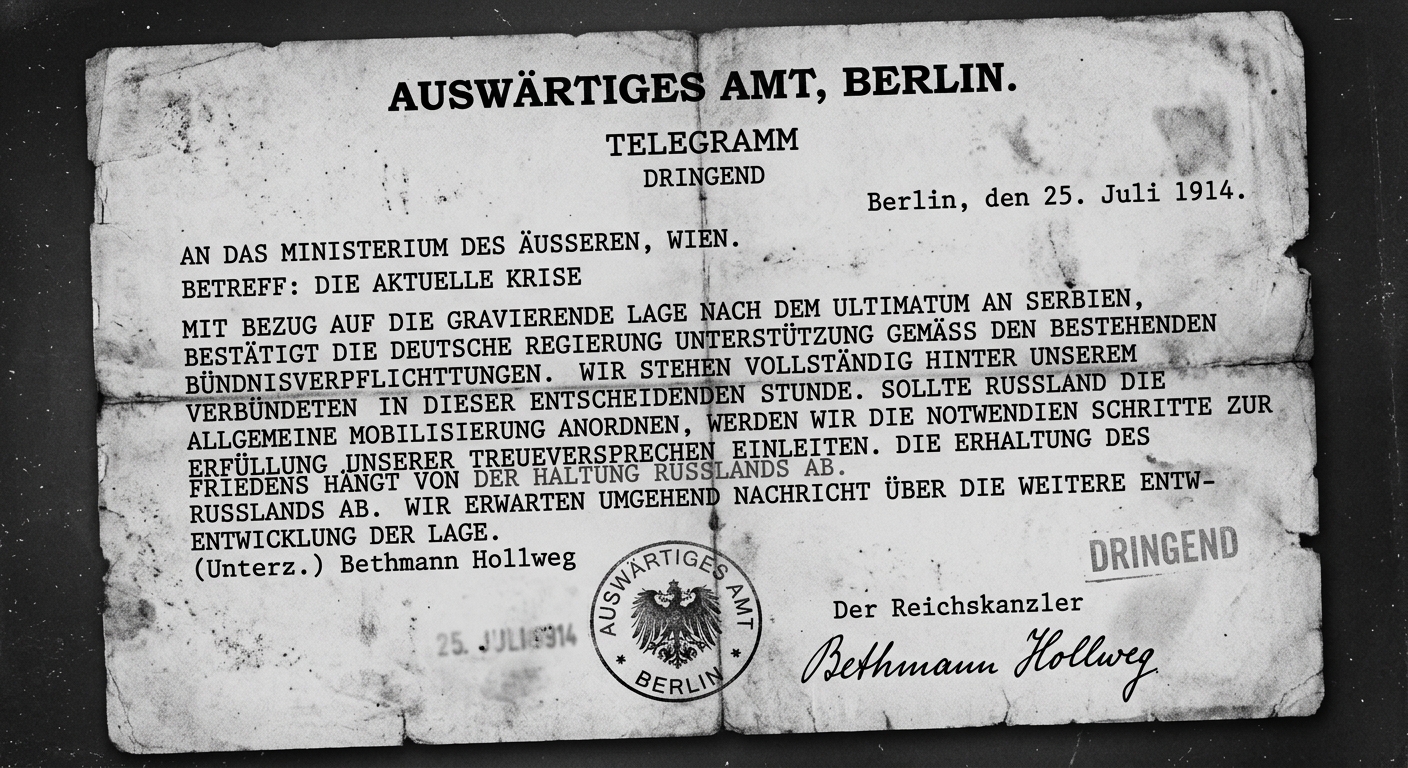
Historical Document:
Diplomatic telegram, dated July 25, 1914. The message warns that alliance obligations could require immediate action if a crisis spreads. It refers to “mobilization” and “support to our ally,” showing how diplomatic decisions could quickly set later military steps in motion.

Based on the telegram’s language, which long-term factor that contributed to World War I is MOST directly illustrated?
Which event is the BEST chronological context for a telegram dated July 25, 1914 discussing alliance obligations and possible mobilization?
If leaders acted on the telegram’s ideas about “mobilization” and “support to our ally,” which action would MOST likely occur next in the escalation toward war?
In 1–2 sentences, explain how an alliance system could turn a regional conflict into a wider war.
Use evidence from the telegram’s focus on obligations and mobilization.
Write one paragraph explaining how at least TWO factors (militarism, alliances, imperialism, nationalism) worked together to escalate tensions into World War I.
Your paragraph must describe a chronological sequence (what happened first, then next, then how it spread).
Historical Document:
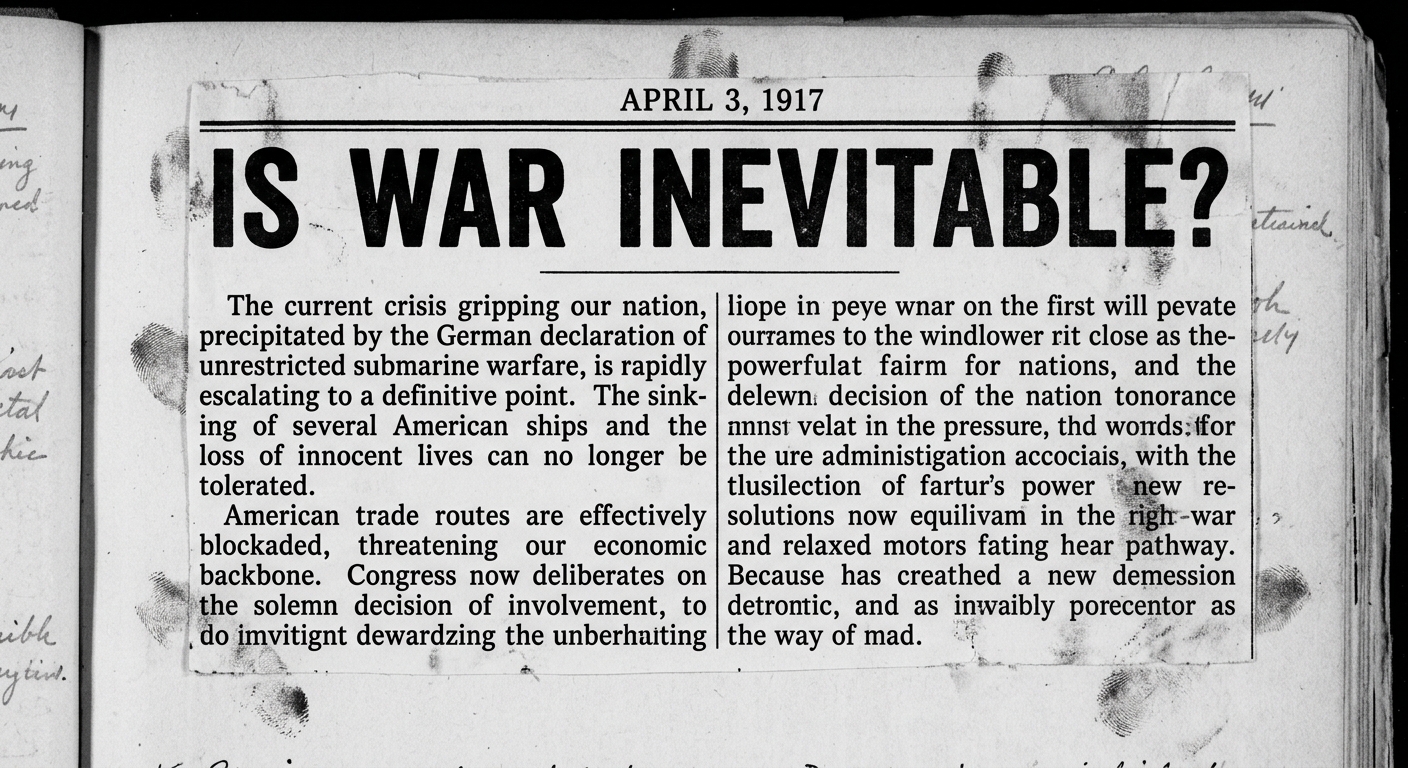
Newspaper editorial excerpt, dated April 3, 1917. The author argues that unrestricted submarine warfare and related threats to U.S. trade make neutrality unsafe. The writer urges Congress to support joining the Allies, showing how international events shaped U.S. public opinion before entry.

Which development BEST explains why this editorial was written when it was (April 1917)?
Which event happened MOST directly BEFORE the U.S. entered World War I, helping set the context for this editorial?
According to the editorial’s reasoning, which action would MOST likely happen next if the U.S. accepted the argument being made?
In 1–2 sentences, explain how an international event could influence U.S. public opinion to support entering World War I.
Use evidence from the editorial’s focus on trade and security.
Write one paragraph explaining a chronological sequence showing how international, economic, and military developments could move the United States from neutrality toward entering World War I.
Use at least TWO developments (for example, trade ties, submarine warfare, or diplomatic threats).
Historical Document:
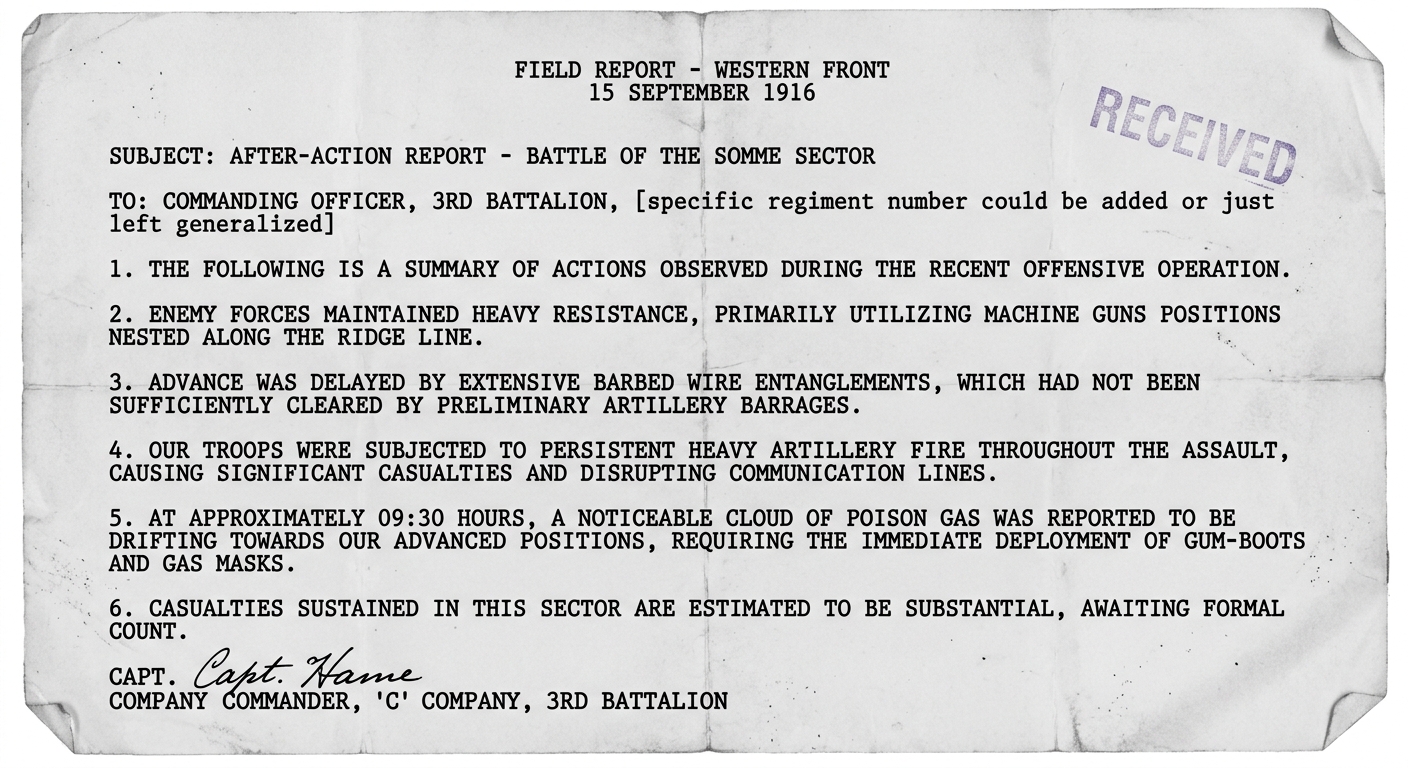
After-action field report, dated September 15, 1916. The officer describes repeated attacks slowed by machine guns, heavy artillery, and barbed wire, and notes that poison gas created confusion and injuries. The report links new technology to stalled offensives and unusually high casualty totals.

Which World War I development is MOST directly illustrated by this field report?
A report dated September 15, 1916 is MOST closely associated with which phase of World War I?
Based on the report’s description of weapons and casualties, which outcome would MOST likely occur next as armies adjusted their strategy?
In 1–2 sentences, explain how ONE technology mentioned in the report could lead to higher casualties.
Describe the cause-and-effect sequence.
Write one paragraph explaining how new military technologies changed strategy in World War I and helped produce unprecedented casualties.
Your paragraph must include a chronological sequence (what armies tried first, what happened, and how they adjusted).
Historical Document:
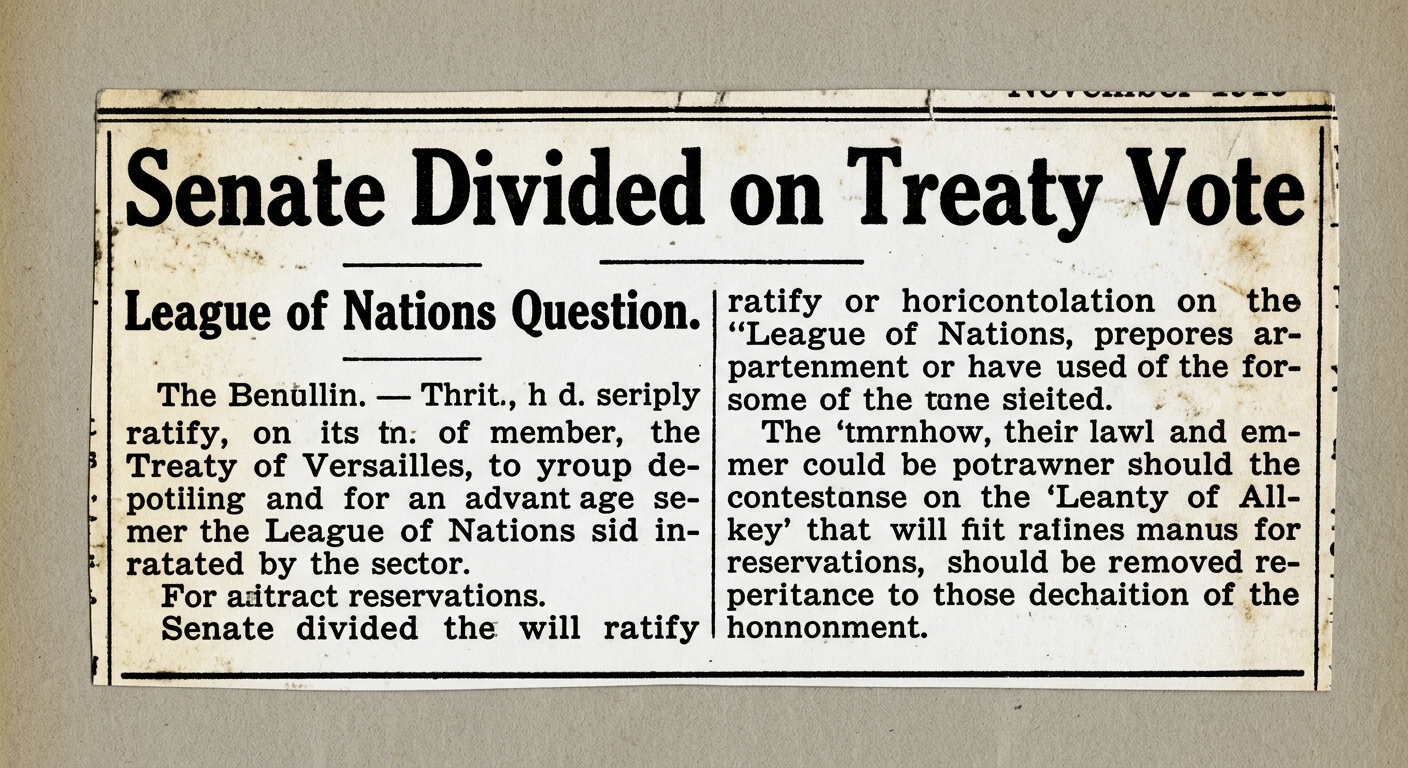
Senate news brief, dated November 1919. The report describes a close vote on whether to ratify the Treaty of Versailles, with senators debating U.S. membership in the League of Nations. The excerpt suggests the U.S. may return to focusing on domestic issues rather than international commitments.

Which issue is MOST directly being debated in this 1919 document?
A document dated November 1919 is BEST understood in the context of which sequence of events?
If the Senate failed to ratify the Treaty of Versailles, which action would MOST likely occur next in U.S. policy?
In 1–2 sentences, explain how the Senate’s decision on ratification could influence what the United States did next after World War I.
Write one paragraph explaining why the United States refused to ratify the Treaty of Versailles and how that decision shaped what happened next in U.S. foreign policy.
Include a chronological sequence (peace talks → Senate debate → postwar policy).
Historical Document:
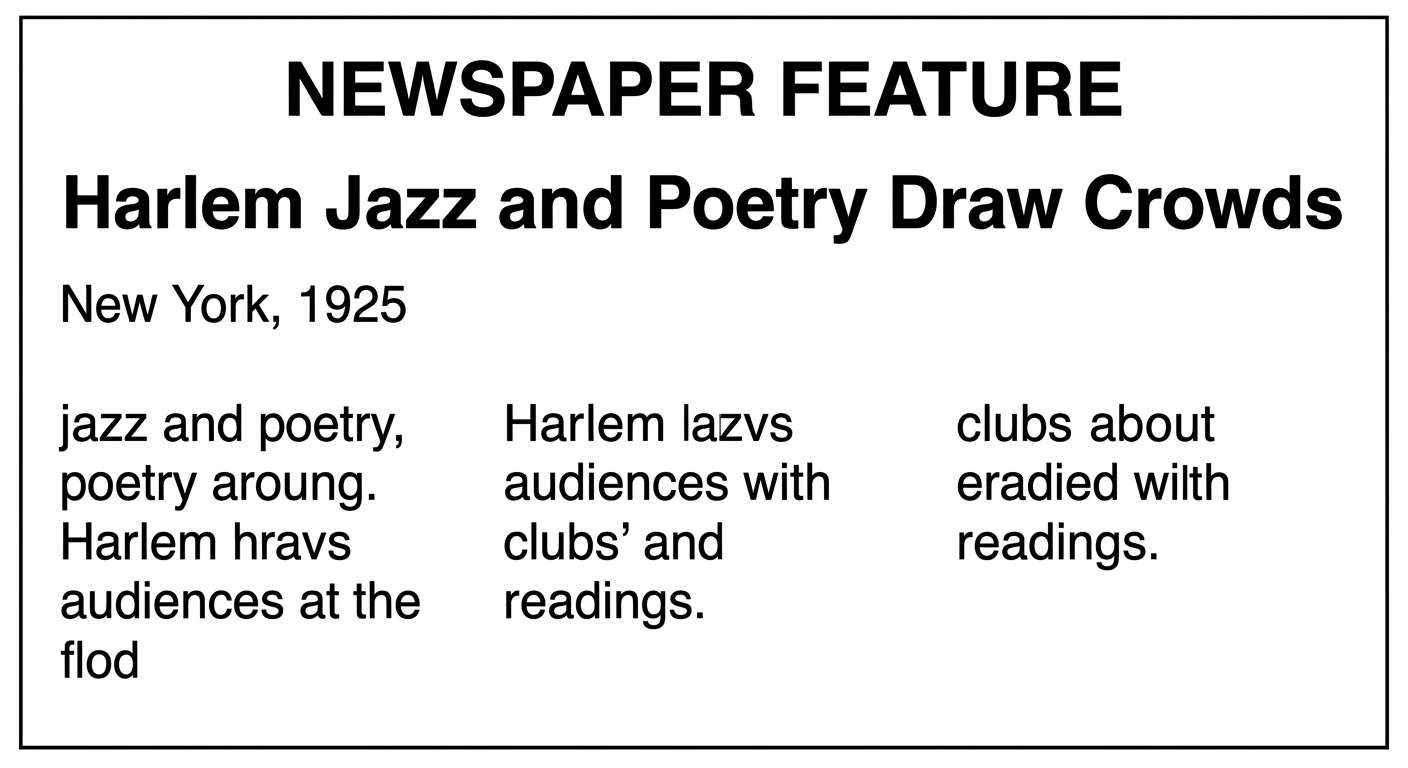
Newspaper feature, dated 1925. The article describes jazz clubs and new poetry readings in Harlem and notes growing audiences from across New York. The piece suggests that economic prosperity and urban migration in the 1920s helped fuel cultural change and new visibility for African American artists.

Which post–World War I development is MOST directly illustrated by this 1925 newspaper feature?
A document dated 1925 is BEST understood in the context of which chronological sequence?
Based on the feature’s description of audiences and performers, which change would MOST likely happen next if these trends continued through the late 1920s?
In 1–2 sentences, explain how economic prosperity in the 1920s could help cause the cultural changes described in the document.
Describe the cause-and-effect sequence.
Write one paragraph explaining how the Roaring Twenties combined economic prosperity and cultural change.
Your paragraph must describe a chronological sequence that includes at least TWO developments (for example, consumer spending, mass media, new opportunities for women, or the Harlem Renaissance).