Twa kɔ nsɛm atitiriw so
Log in
Sign up for FREE
arrow_back
Laabri

8.6 - World War II: - Practice B

star
star
star
star
star
Last updated about 1 month ago
15 Nsɛmmisa
Hyɛ no nsow a efi ɔkyerɛwfo no hɔ:

Use the historical document(s) and the short readings in the left panel to answer the associated questions.

Use the historical document(s) and the short readings in the left panel to answer the associated questions.

Ɛhia
1
8.6.a
DOK.SS.2
Ɛhia
1
8.6.a
DOK.SS.2
Ɛhia
1
8.6.a
DOK.SS.2
Ɛhia
2
8.6.a
DOK.SS.2
Ɛhia
2
8.6.a
DOK.SS.2
Ɛhia
1
8.6.b
DOK.SS.2
Ɛhia
1
8.6.b
DOK.SS.2
Ɛhia
1
8.6.b
DOK.SS.2
Ɛhia
2
8.6.b
DOK.SS.2
Ɛhia
2
8.6.b
DOK.SS.2
Ɛhia
1
8.6.c
DOK.SS.2
Ɛhia
1
8.6.c
DOK.SS.2
Ɛhia
1
8.6.c
DOK.SS.2
Ɛhia
2
8.6.c
DOK.SS.2
Ɛhia
2
8.6.c
DOK.SS.2

Read the excerpted communiqué below from the League of Nations (1935). As you study it, think about what had already happened in the world economy and politics by the mid-1930s, and how international responses to aggression could affect later events in Europe and Asia.
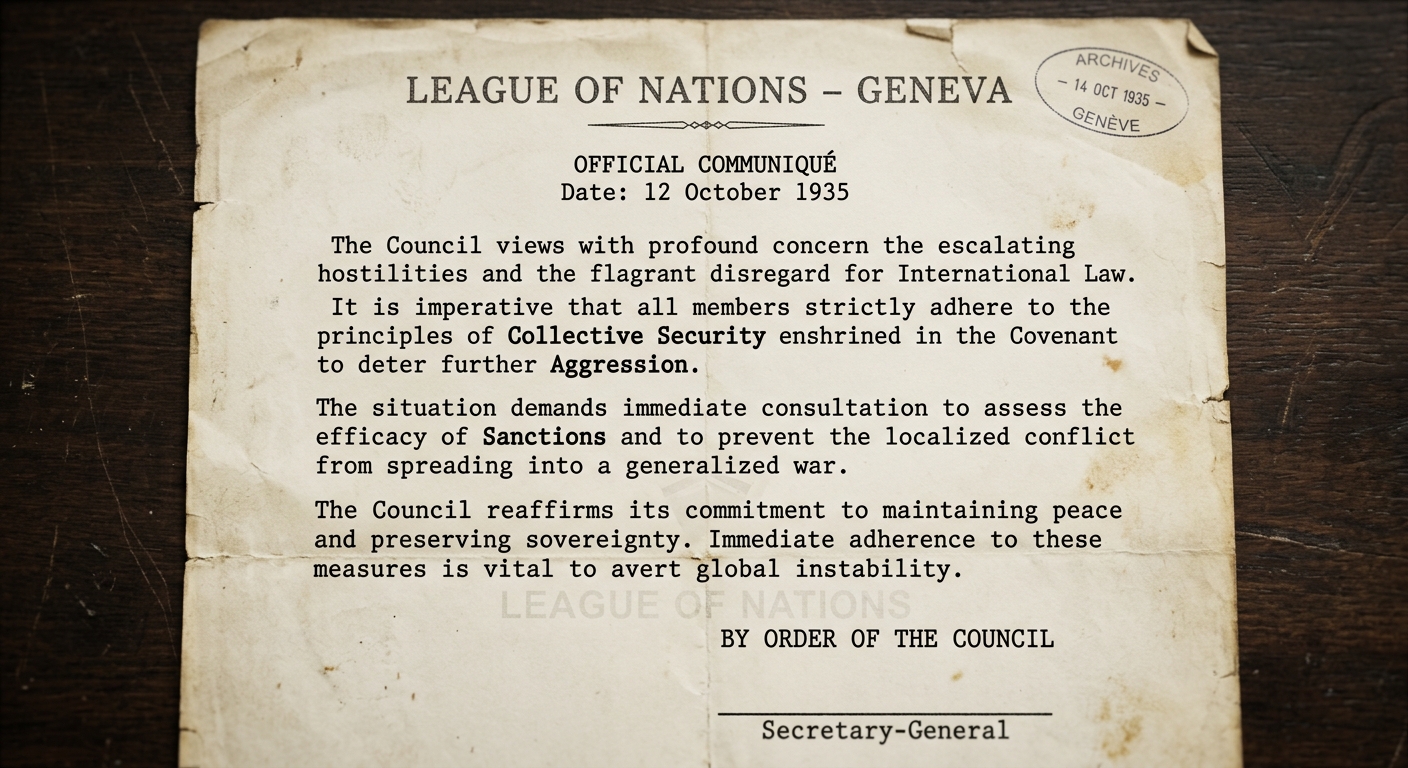
Black-and-white typewritten League of Nations communiqué dated October 12, 1935, with letterhead from Geneva, mentioning collective security, sanctions, and concern about aggression spreading conflict.

Asemmisa {{asɛmmisaAhyɛnsode}}
1.

Based on the date and context of the document, which development most likely occurred BEFORE this communiqué was written?

Asemmisa {{asɛmmisaAhyɛnsode}}
2.

Which sequence best shows how earlier developments could lead to the concerns shown in the document?

Asemmisa {{asɛmmisaAhyɛnsode}}
3.

Which phrase from the document most directly supports the idea that the League of Nations struggled to preserve peace?

Asemmisa {{asɛmmisaAhyɛnsode}}
4.

Using evidence from the document, explain how worldwide economic depression and the rise of totalitarian rule could contribute to the outbreak of war.

In your explanation, describe the cause-and-effect relationship and make clear which developments came earlier and which came later.

Asemmisa {{asɛmmisaAhyɛnsode}}
5.

Place the following developments in a logical chronological order and explain how each earlier development influenced the next:

(1) worldwide economic depression, (2) growth of militant nationalism and aggressive expansion,

(3) unsuccessful international efforts to preserve peace.

Use the document as support for at least one step in your sequence.

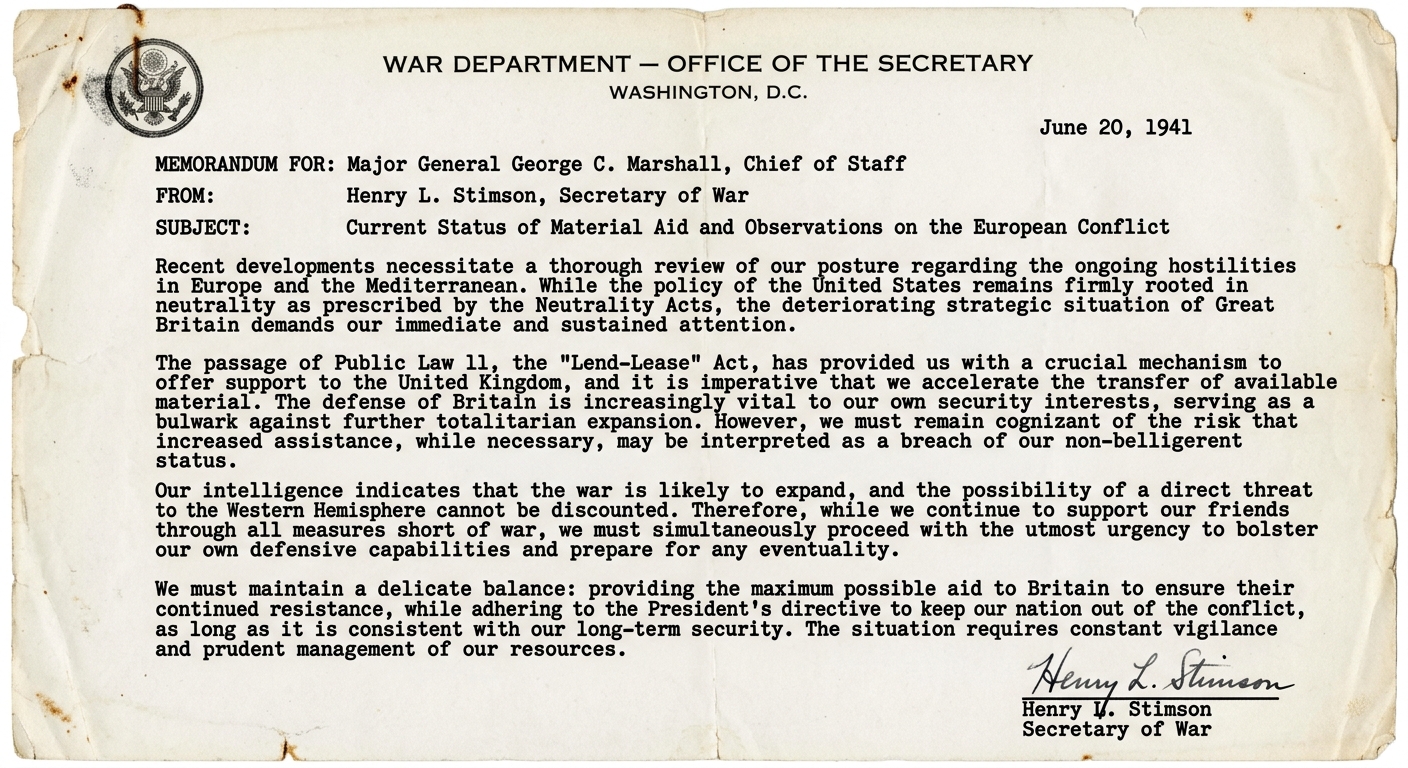
Read the excerpted U.S. War Department memorandum below (June 1941). As you study it, think about how the United States tried to remain neutral while supplying Britain, and how events in 1941 could change U.S. policy from limited aid to direct involvement in a global war.

Black-and-white typewritten U.S. War Department memorandum dated June 20, 1941, mentioning neutrality, aid to Britain through Lend-Lease, and concern about the expanding war.

Asemmisa {{asɛmmisaAhyɛnsode}}
6.

Based on the date of the memorandum, which development most likely occurred BEFORE it was written?

Asemmisa {{asɛmmisaAhyɛnsode}}
7.

Which sequence best shows a logical path from the situation described in the memorandum to full U.S. involvement in World War II?

Asemmisa {{asɛmmisaAhyɛnsode}}
8.

Which policy described or implied by the memorandum best fits the idea that the United States tried to maintain neutrality while still aiding Britain from 1939 to 1941?

Asemmisa {{asɛmmisaAhyɛnsode}}
9.

Using evidence from the memorandum, explain how the U.S. government could claim neutrality while still shaping events in the war.

In your explanation, describe what might happen next (chronologically) that would end U.S. neutrality.

Asemmisa {{asɛmmisaAhyɛnsode}}
10.

Place these developments in chronological order and explain how each earlier development influenced the next:

(1) U.S. neutrality policies early in World War II,

(2) increased aid to Britain,

(3) the attack on Pearl Harbor,

(4) conversion of the U.S. economy to war production and rationing.

Use the memorandum as support for at least one step.

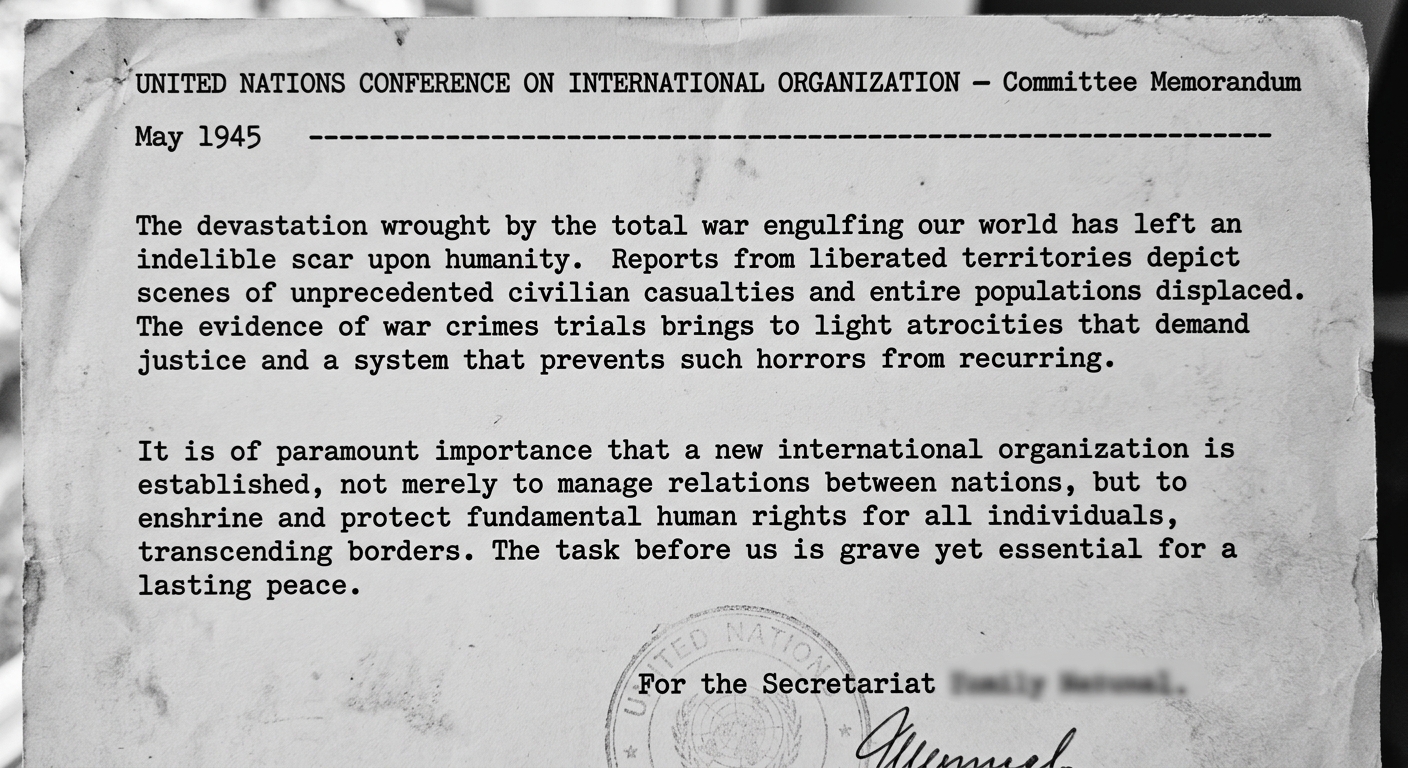
Read the excerpted committee memorandum below (May 1945). As you study it, think about how total warfare and wartime atrocities shaped postwar decisions, and why leaders argued for a new international organization and stronger protection of human rights after World War II.

Black-and-white typewritten 1945 committee memorandum from a United Nations conference, discussing the devastation of total war, displaced persons, and the need for an international organization and human rights protections.

Asemmisa {{asɛmmisaAhyɛnsode}}
11.

Based on the date and context of the document, which development most likely occurred BEFORE this memorandum was written?

Asemmisa {{asɛmmisaAhyɛnsode}}
12.

Which sequence best explains a chronological path from wartime conditions to the goal described in the document?

Asemmisa {{asɛmmisaAhyɛnsode}}
13.

Which detail from the document most directly supports the idea that the consequences of war led to calls for protecting human rights?

Asemmisa {{asɛmmisaAhyɛnsode}}
14.

Using evidence from the document, explain how the consequences of total war and human atrocities could lead to the creation of an international organization after World War II.

In your explanation, describe what developments came earlier and what decisions came later.

Asemmisa {{asɛmmisaAhyɛnsode}}
15.

Place these developments in chronological order and explain how each earlier development influenced the next:

(1) total war causes widespread destruction,

(2) evidence of human atrocities becomes widely known,

(3) leaders plan a postwar international organization,

(4) efforts expand to protect human rights.

Use the document as support for at least one step.