Twa kɔ nsɛm atitiriw so
Log in
Sign up for FREE
arrow_back
Laabri

8.8 - Demographic Change: - Practice C

star
star
star
star
star
Last updated about 1 month ago
15 Nsɛmmisa
Hyɛ no nsow a efi ɔkyerɛwfo no hɔ:

Use the historical document(s) and the short readings in the left panel to answer the associated questions.

Use the historical document(s) and the short readings in the left panel to answer the associated questions.

8.8.a
DOK.SS.2
8.8.b
DOK.SS.2
8.8.c.i
DOK.SS.2
Ɛhia
1
8.8.a
DOK.SS.2
Ɛhia
1
8.8.a
DOK.SS.2
Ɛhia
1
8.8.a
DOK.SS.2
Ɛhia
1
8.8.a
DOK.SS.2
Ɛhia
1
8.8.a
DOK.SS.2
Ɛhia
1
8.8.b
DOK.SS.2
Ɛhia
1
8.8.b
DOK.SS.2
Ɛhia
1
8.8.b
DOK.SS.2
Ɛhia
1
8.8.b
DOK.SS.2
Ɛhia
1
8.8.b
DOK.SS.2
Ɛhia
1
8.8.c.i
DOK.SS.2
Ɛhia
1
8.8.c.i
DOK.SS.2
Ɛhia
1
8.8.c.i
DOK.SS.2
Ɛhia
1
8.8.c.i
DOK.SS.2
Ɛhia
1
8.8.c.i
DOK.SS.2

Read the document below from a city planning office in 1957. As you analyze it, consider how housing, transportation, and job opportunities shaped where Americans lived after World War II. Use details from the document to compare this local example to broader U.S. demographic shifts.
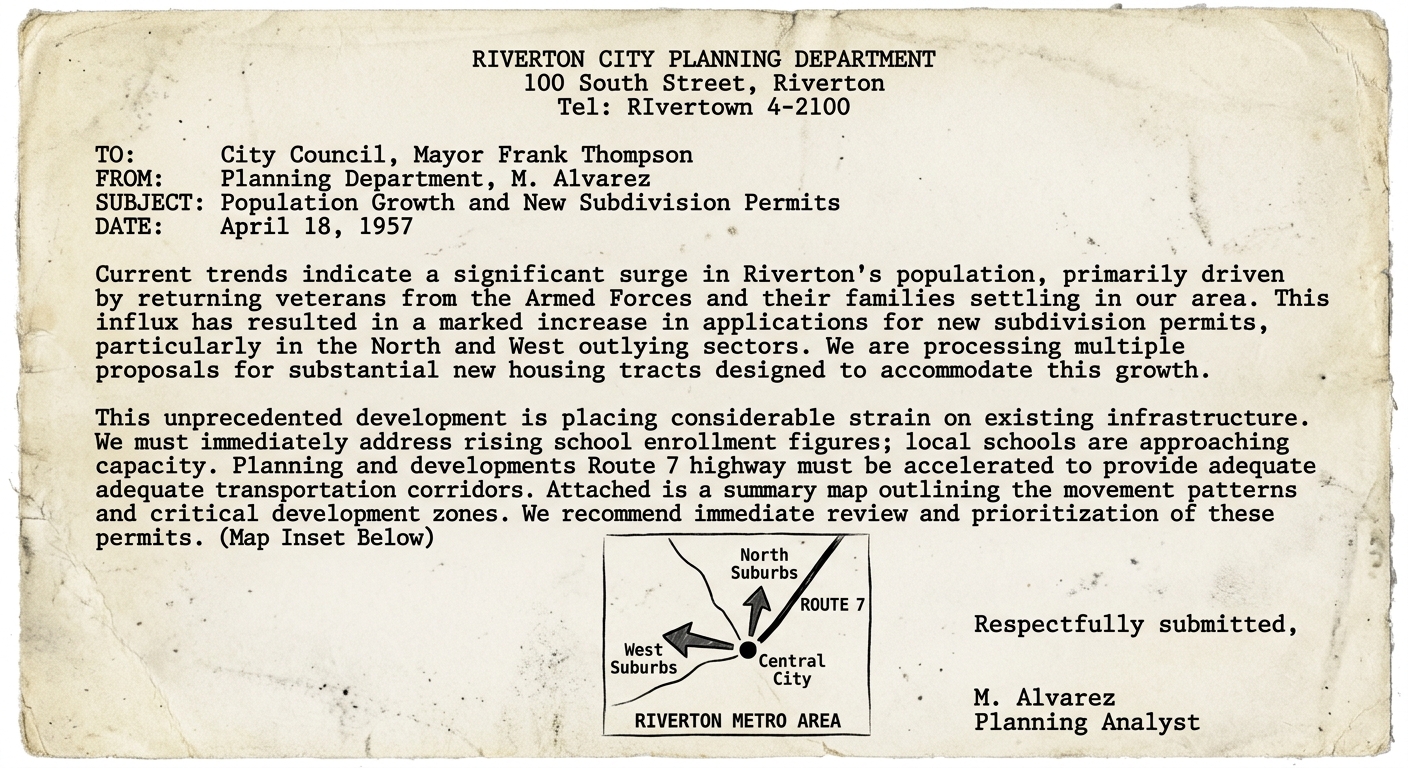
Grayscale scanned 1957 Riverton City Planning Department memo about population growth, new suburban subdivisions, and a Route 7 highway, with a small map showing movement from the central city to north and west suburbs.

Asemmisa {{asɛmmisaAhyɛnsode}}
1.

Which comparison is MOST supported when you place this local document in the national context of the 1950s and 1960s?

Asemmisa {{asɛmmisaAhyɛnsode}}
2.

Which post–World War II demographic trend is MOST directly illustrated by the memo’s description of new subdivision permits and increased school enrollment?

Asemmisa {{asɛmmisaAhyɛnsode}}
3.

Using at least one detail from the memo (for example, the map arrows, Route 7, or the reference to school enrollment), explain how this document helps you understand post–World War II population shifts.

Then compare this local example to one broader national demographic change during the same era.

Asemmisa {{asɛmmisaAhyɛnsode}}
4.

The memo links population change to returning veterans and new highway access.

Which broader historical development BEST provides context for those factors after 1945?

Asemmisa {{asɛmmisaAhyɛnsode}}
5.

What is one limitation of using this memo alone to describe demographic change in the United States after World War II?

Explain how adding one other type of source (name the type) would strengthen your understanding.

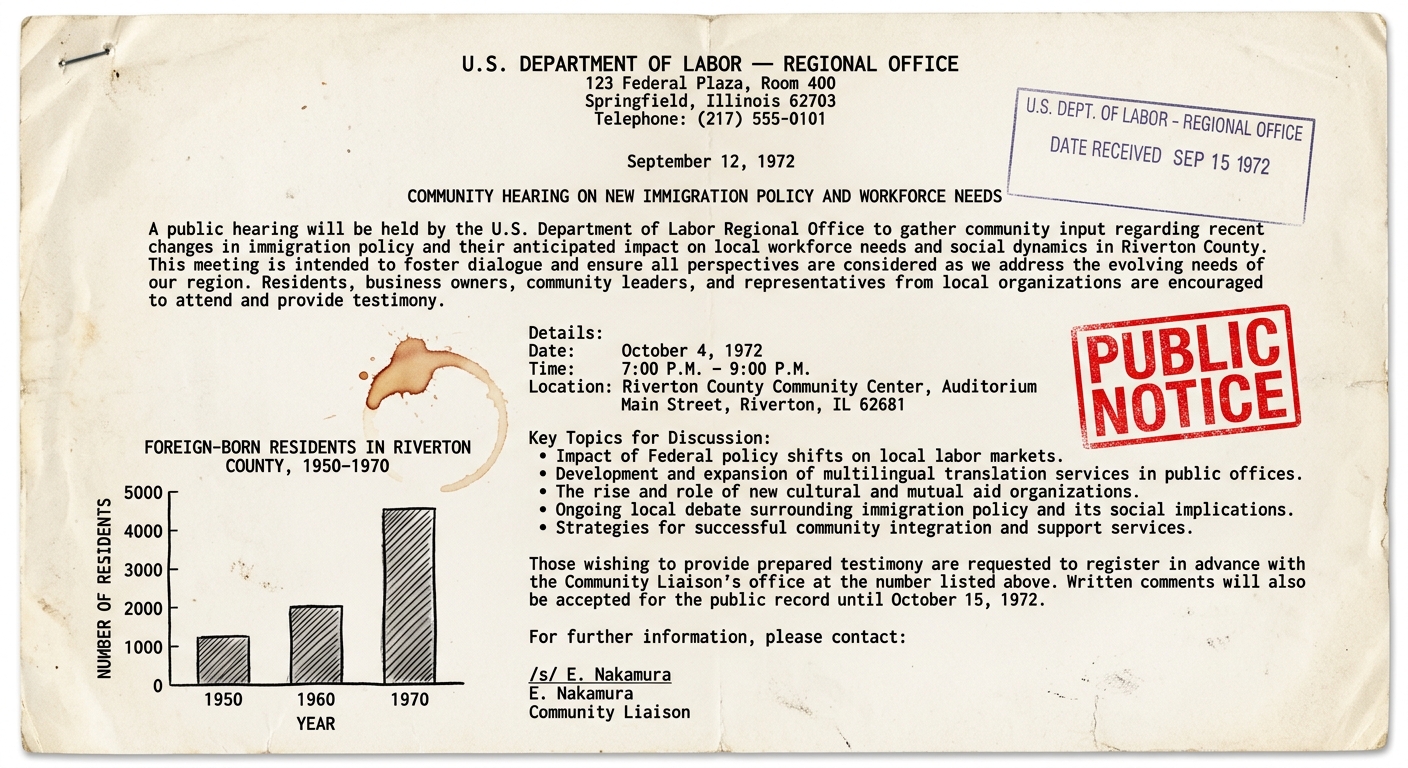
Read the public notice below from 1972. As you analyze it, consider how changes in immigration policy and the growth of immigrant communities shaped local debates and daily life after World War II. Use details from the notice and chart to compare this example to broader national patterns of immigration and cultural diversity.

Color scanned 1972 public notice about a community hearing on immigration policy and workforce needs, including a small bar chart showing foreign-born residents increasing from 1950 to 1970.

Asemmisa {{asɛmmisaAhyɛnsode}}
6.

Identify one limitation of using this notice and chart alone to understand postwar immigration.

Name one additional source type you would add, and explain how it would help you compare experiences across different U.S. regions or groups.

Asemmisa {{asɛmmisaAhyɛnsode}}
7.

Which comparison MOST strengthens the claim that this document reflects a national debate, not just a local issue?

Asemmisa {{asɛmmisaAhyɛnsode}}
8.

Which conclusion is MOST supported by the bar chart and the notice when placed in the national context of the postwar era?

Asemmisa {{asɛmmisaAhyɛnsode}}
9.

Use one detail from the notice (for example, the chart trend, the hearing topic, or multilingual services) to explain what the document suggests about immigration and community change.

Then compare this local example to one broader national immigration or cultural diversity trend after World War II.

Asemmisa {{asɛmmisaAhyɛnsode}}
10.

The notice mentions multilingual services and new cultural organizations.

Which broader demographic change after World War II does this BEST illustrate?

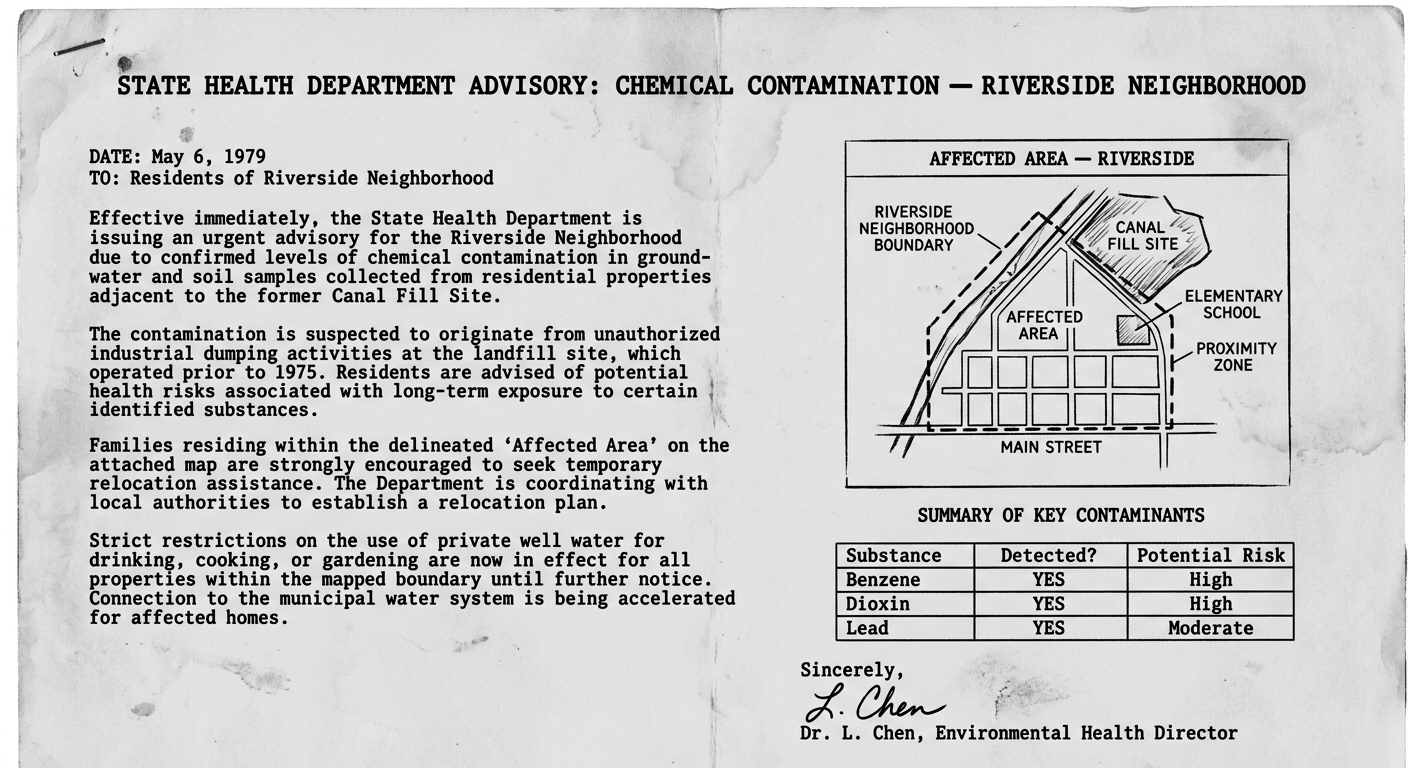
Read the state health advisory below from 1979. As you analyze it, consider how pollution, industrial waste, and population growth affected urban environments after World War II. Use details from the advisory to compare this local environmental problem to other U.S. environmental concerns of the era.

Grayscale scanned 1979 state health advisory about chemical contamination in a neighborhood near a canal fill site, with a small map and a table listing pollutants and potential risks.

Asemmisa {{asɛmmisaAhyɛnsode}}
11.

Identify one limitation of using this advisory alone to understand the causes and effects of pollution in the postwar United States.

Name one additional source type you would add (for example, photographs, environmental test data over time, newspaper reports, or government hearings) and explain how it would help you compare this case to other communities.

Asemmisa {{asɛmmisaAhyɛnsode}}
12.

Use one detail from the advisory (for example, the canal fill site, the elementary school location, the relocation note, or the pollutants listed) to explain what the document suggests about environmental risk in urban areas.

Then compare this local example to one other postwar environmental concern (such as Love Canal, air pollution, or energy-related accidents).

Asemmisa {{asɛmmisaAhyɛnsode}}
13.

Which broader post–World War II development BEST provides context for why a neighborhood advisory like this might appear in the late 1970s?

Asemmisa {{asɛmmisaAhyɛnsode}}
14.

Which comparison BEST connects this advisory to another environmental issue in postwar U.S. history?

Asemmisa {{asɛmmisaAhyɛnsode}}
15.

Based on the advisory’s map and table, which inference is MOST reasonable about the relationship between land use and environmental risk?