Use the historical document(s) and the short readings in the left panel to answer the associated questions.

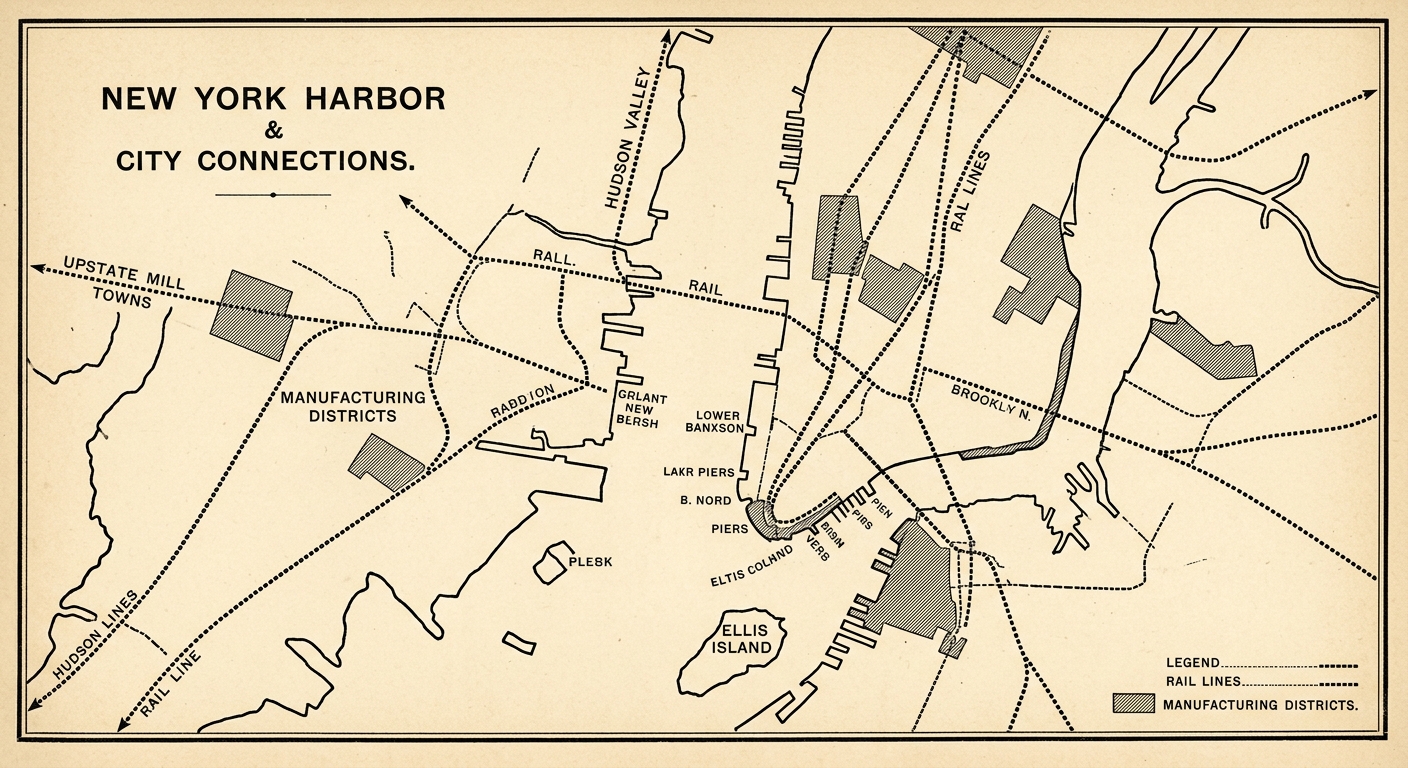
This map was printed around 1900 to show how ships, railroads, and industrial districts connected New York Harbor to jobs. The labels highlight docks, Ellis Island, and rail routes to mill towns. Reformers used such maps to explain why immigrants and migrants moved toward cities.
Describe one way the physical environment (water access or location) and one human-made feature (such as railroads or industrial districts) worked together to shape where people lived and worked.
Explain the relationship using evidence from the document.
Which conclusion about migration is best supported by the routes and labels on the document?
Explain how transportation connections between New York City and other parts of New York State supported industrial growth and migration.
Use at least two specific details from the document or reading stimulus as evidence.
Which geographic feature shown on the document best helps explain why manufacturing districts developed where they did?
Based on the document, which factor most likely made New York City a major entry point for immigrants during this period?

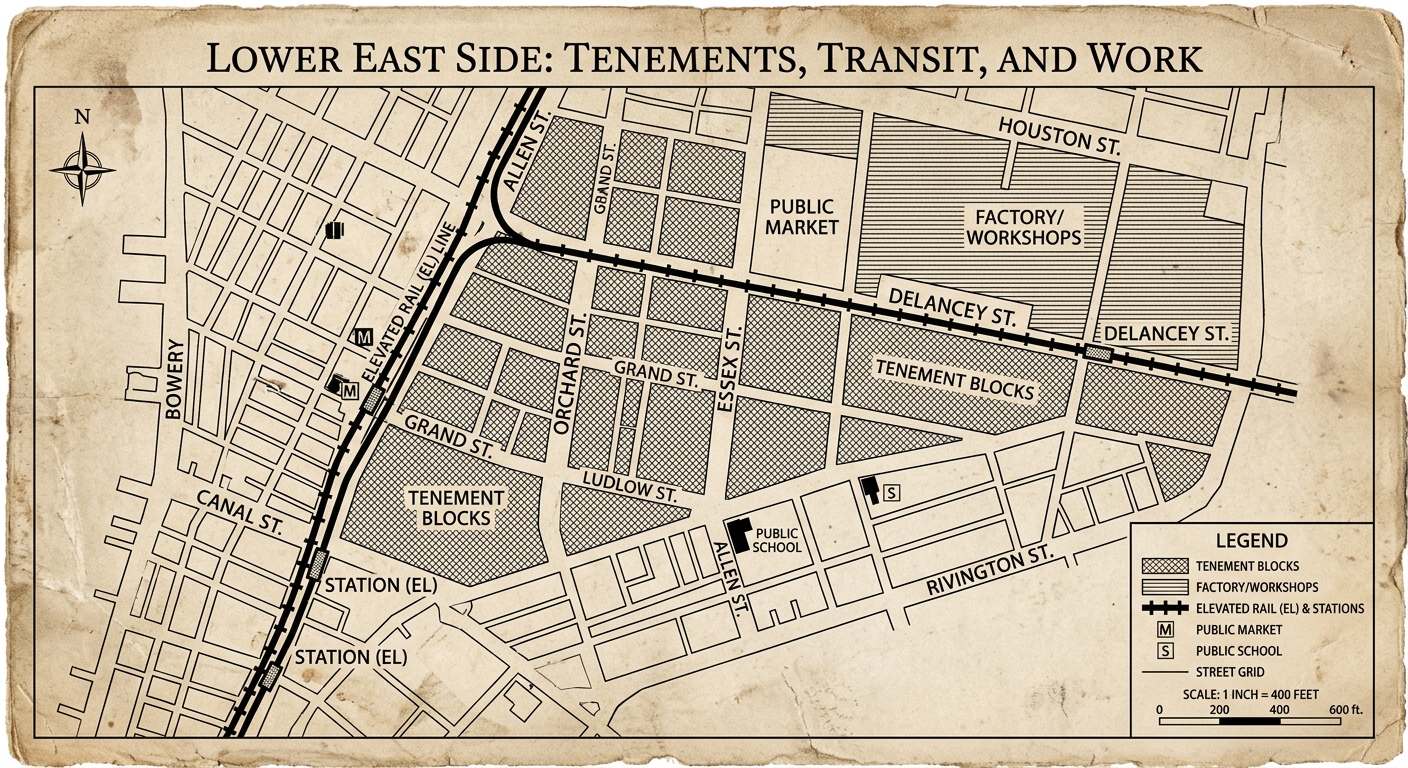
This planning map was produced around 1910 to show crowded housing blocks, workshops, markets, and transit lines in a New York City neighborhood. Reform groups used maps like this to explain how transportation and nearby jobs shaped daily life, community services, and living conditions.
Which relationship between human-made features and daily life is best supported by the map?
Which statement best explains how industry shaped social and economic life in the area shown?
Which conclusion about population density and services is most supported by the document?
Describe one economic impact and one social impact that could result from locating tenements, factories, and transit close together, as shown on the document.
Support your response with evidence from the map.
Explain how population density, transportation, and industry worked together to shape one social or cultural aspect of life in this neighborhood.
Use at least two details from the map or reading stimulus as evidence.

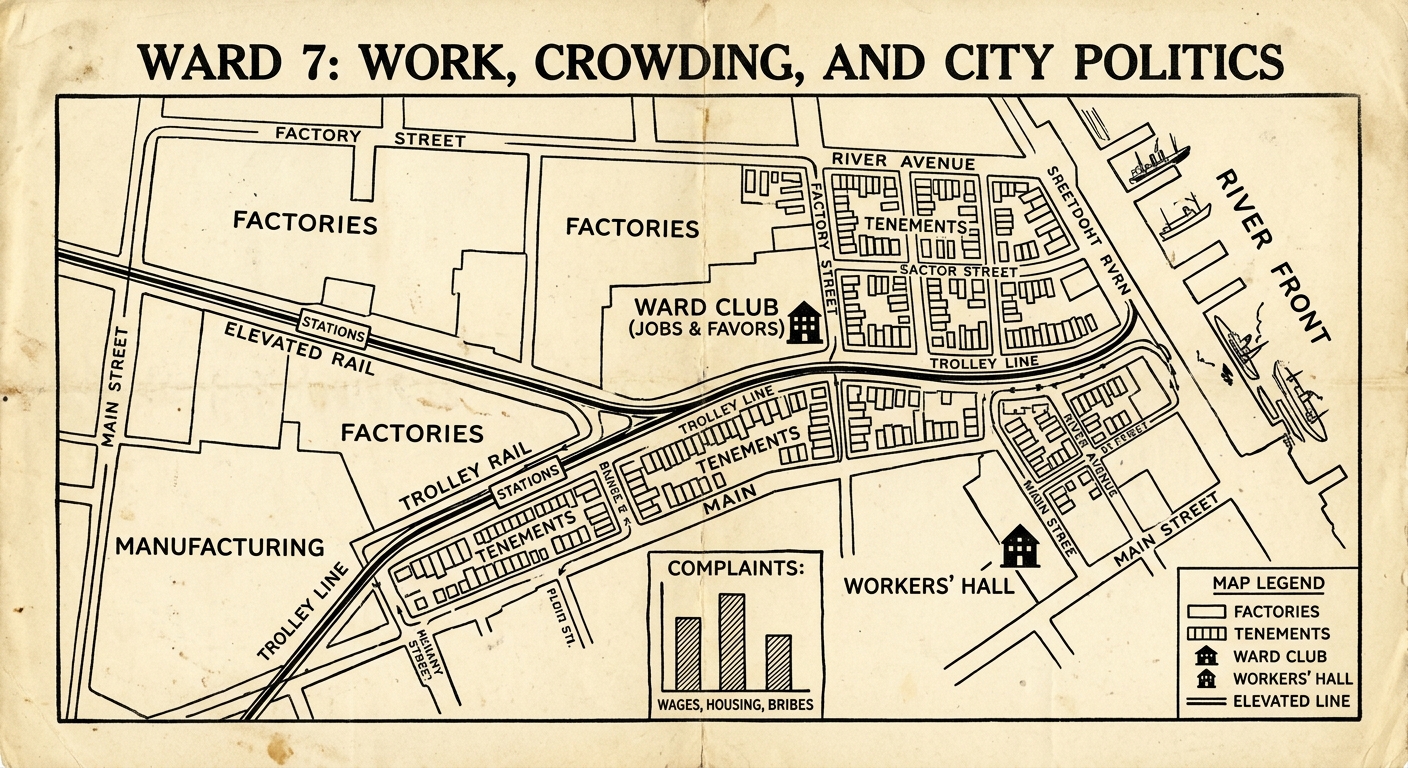
This reform pamphlet map was printed around 1905 to show a city ward where tenements sat near factories, docks, and transit stops. Reformers argued that crowded districts and job centers shaped labor disputes and debates over immigration, while local political clubs gained power by controlling access to jobs and city services.
Describe one way the ward’s geography could contribute to poor labor conditions.
Use at least two specific details from the document (locations, labels, or the complaints chart) as evidence.
Which feature on the document best supports the claim that political corruption could grow in this ward?
Which pattern on the document best helps explain why a workers’ meeting hall would be located where it is?
Explain how access to transit or the waterfront could help a political organization gain influence in this ward.
Support your response with evidence from the document.
Which conclusion about conflicts over immigration is most supported by the map and reading stimulus?
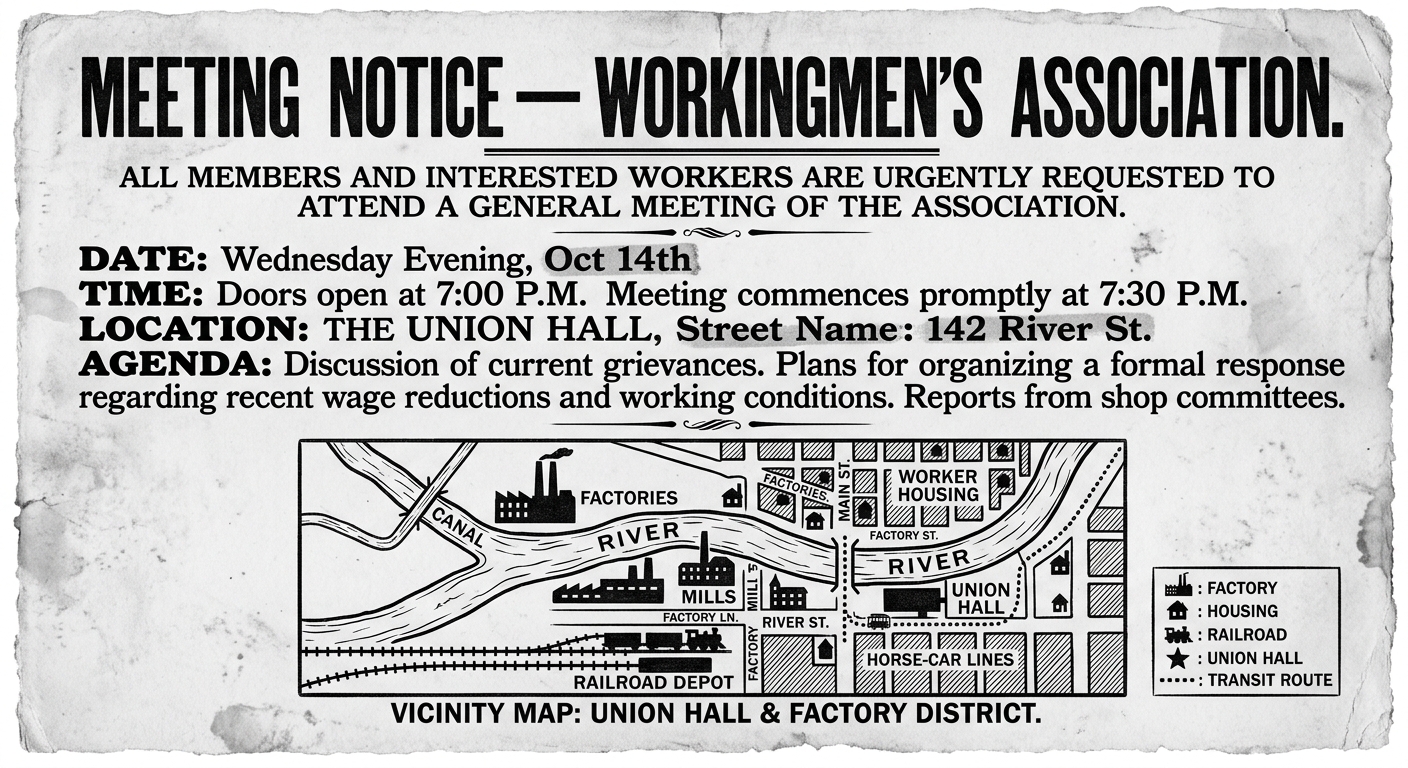
This union notice was posted around 1895 to announce a meeting at a workers’ hall near factories and transit. The small map highlights nearby housing blocks, a rail depot, and docks where many laborers worked. Organizers used such locations to gather workers and plan strategies to improve conditions.

Which location factor best explains why a union meeting hall would be placed where it is shown on the document?
Which conclusion about how geography shaped labor organizing is best supported by the map elements?
Explain how workers might use a meeting place near transportation connections to improve labor conditions.
Use evidence from the document to support your answer.
Describe one way the locations shown (housing, transit, factories, docks) could help workers organize.
Support your response with at least two details from the document.
Which strategy for improving working conditions is most supported by the document’s purpose and layout?
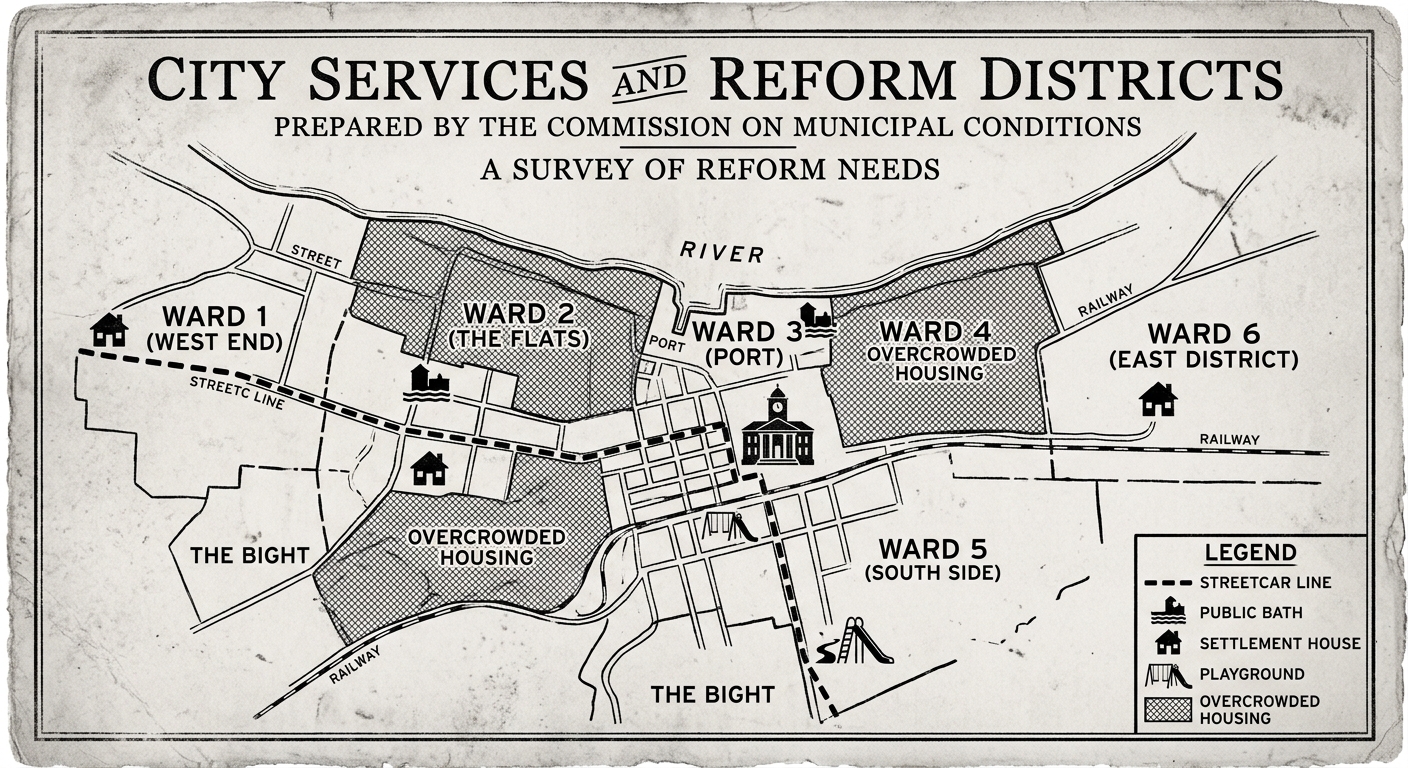
This reform commission map was printed around 1912 to show where overcrowded housing blocks, new public services, and streetcar routes overlapped in a large city. Reformers used maps like this to argue that better sanitation, safer streets, and expanded services required coordinated action by city and state governments.

Which feature on the document most supports the idea that reformers focused on local government action?
Explain how the spatial relationship between overcrowded housing, transportation routes, and public services could support a Progressive reform argument.
Use at least two details from the document or reading stimulus as evidence.
Which conclusion about transportation and reform efforts is best supported by the streetcar routes shown?
Which geographic pattern on the document best supports the reformers’ claim that public services needed to be expanded?
Describe one way a reformer could use this map to argue for a specific government policy or program.
Support your response with evidence from the document.