Use the historical document(s) and the short readings in the left panel to answer the associated questions.

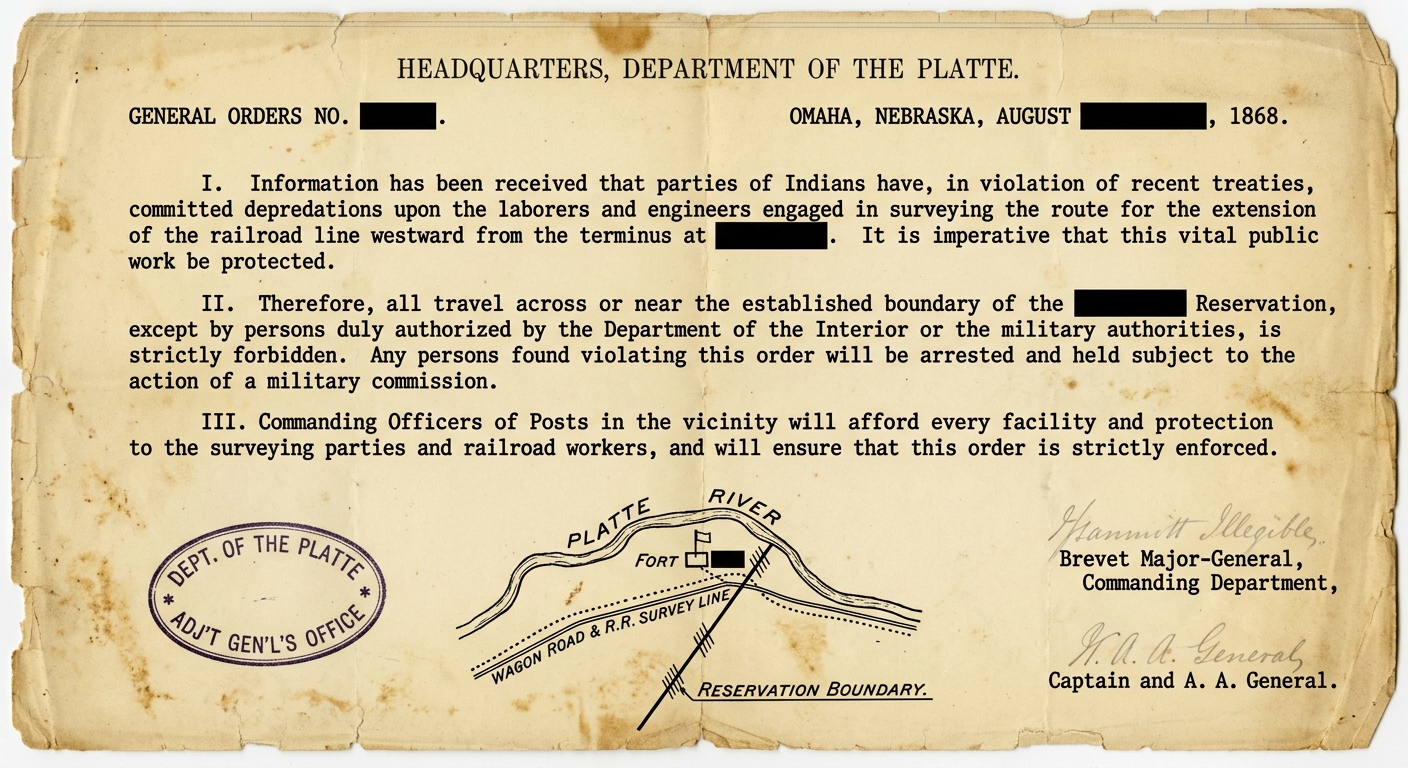
This 1868-style field order warns travelers and work crews to stay on designated routes near a reservation boundary. The attached sketch map highlights a river crossing, a nearby fort, and a developing travel corridor. These geographic features shaped movement and increased the chances of conflict.
Based on the sketch map and reading stimulus, which geographic feature would most directly control where people could cross the area and therefore where contact (and conflict) was most likely?
Explain how continued westward expansion could contribute to increased conflicts with Native Americans in the area suggested by the document.
Use at least two geographic details (for example: boundary line, river crossing, fort location, travel corridor) as evidence.
Which location choice best explains why westward expansion could increase conflict in the area shown, even if most travelers intended only to pass through?
Using the document and reading stimulus, describe one geographic-based action government officials or travelers could take to reduce conflict while still allowing travel west.
Explain why your action could lower tensions in this specific place.
The order emphasizes staying on designated routes near the reservation boundary.
What is the best geographic reason officials might give for this instruction?

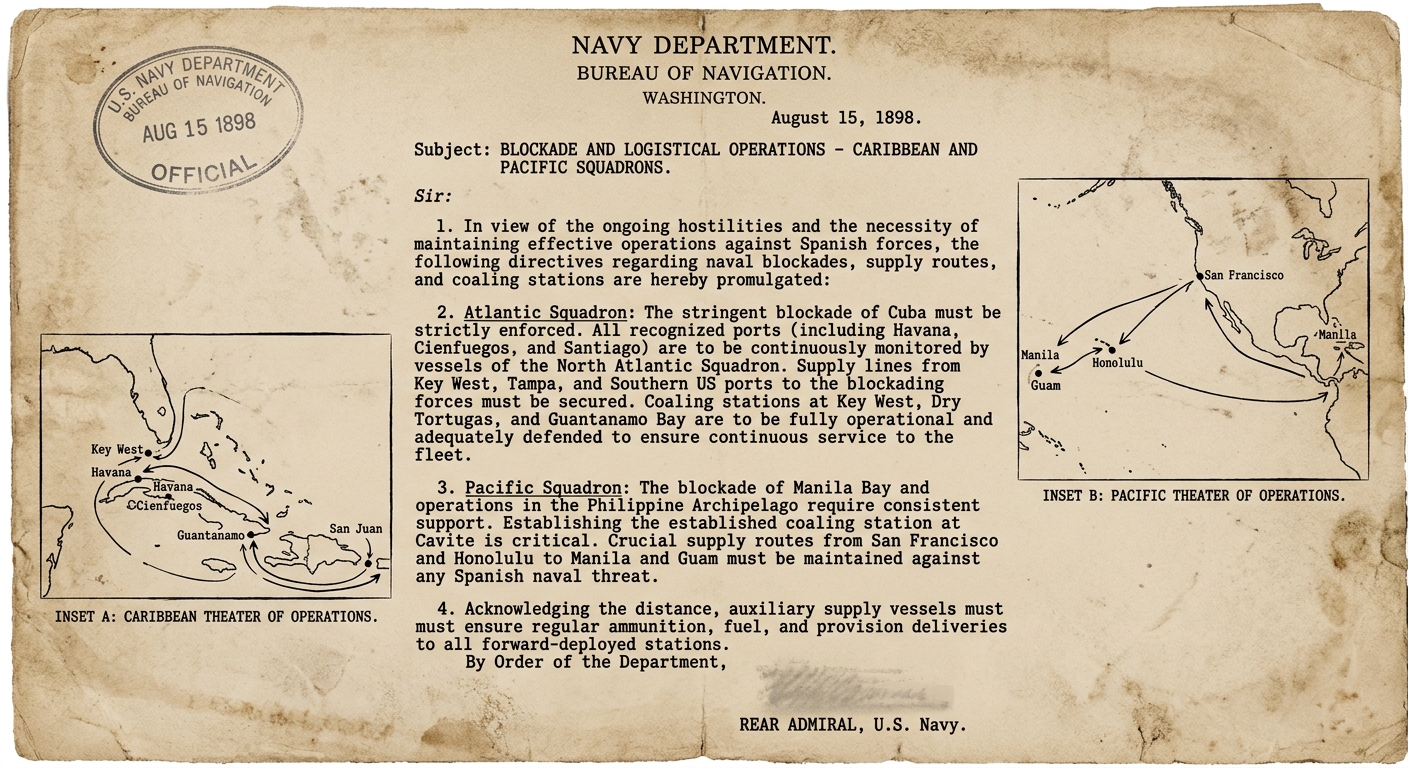
This 1898-style naval dispatch describes moving ships along key sea routes and securing reliable coaling and harbor access. The inset maps highlight islands and ports in the Caribbean and Pacific that could serve as stepping-stones for naval power. Control of these locations helped the United States project influence overseas.
Which conclusion best connects geography to the idea that the Spanish-American War helped the United States become an imperial power?
A major reason the United States sought overseas territory after the war was to support naval travel.
Which type of place shown or implied by the maps would best serve that purpose?
Explain how the geographic locations highlighted in the dispatch and maps could contribute to the rise of the United States as an imperial power after the Spanish-American War.
Use at least two geographic details (for example: ports, islands, distance across oceans, sea routes) as evidence.
Based on the dispatch and inset maps, which geographic factor most directly helps a navy control enemy shipping during the Spanish-American War?
Using the dispatch as context, describe one geographic-based decision U.S. leaders could make after the war to strengthen overseas influence.
Explain why this decision would matter based on distance and transportation routes.

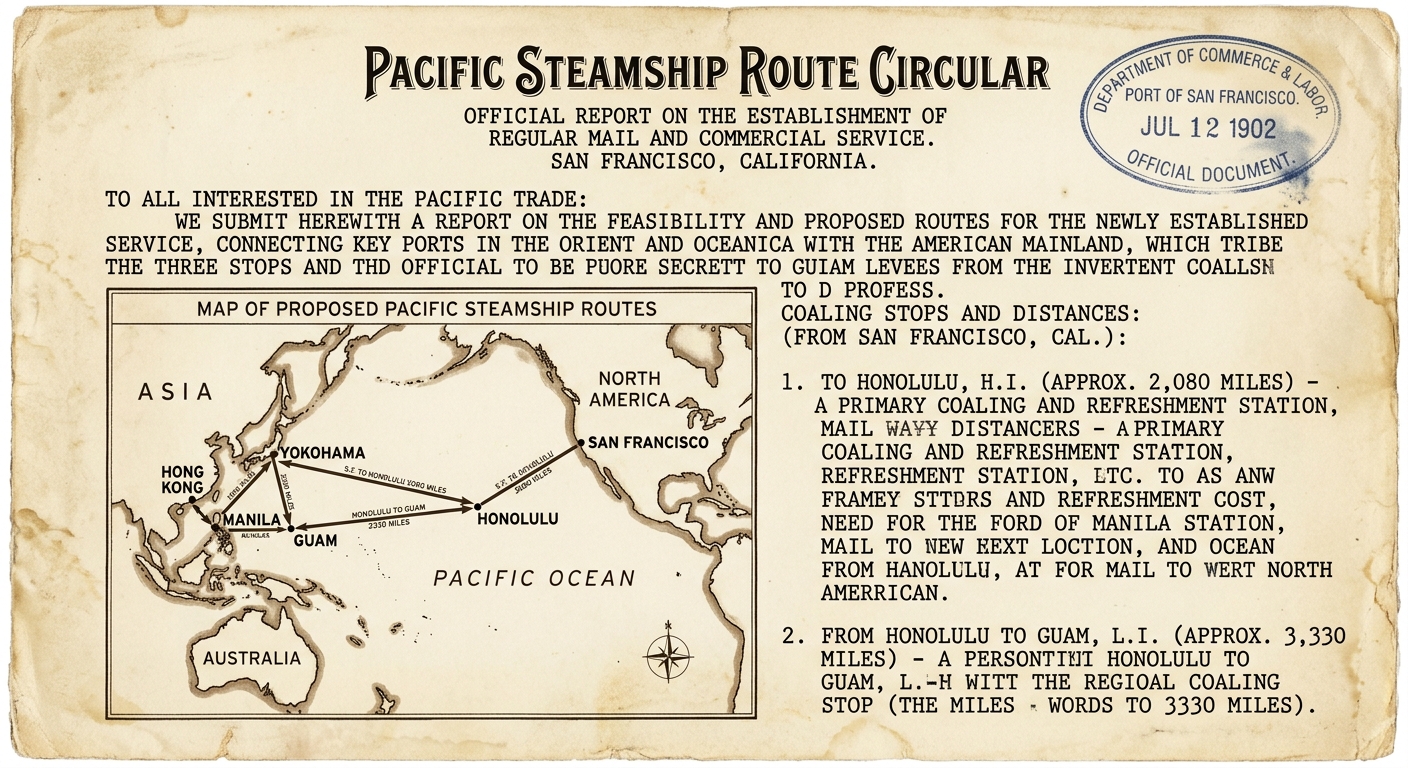
This early-1900s trade circular outlines steamship routes linking U.S. ports to islands and cities across the Pacific. The inset map highlights major stopovers and coaling points that made long-distance shipping possible. These geographic connections encouraged the United States to interact more with Pacific regions.
Why would the long distances shown on the route map make coaling stations and protected harbors strategically important?
Explain how interest in Pacific trade could contribute to an increase in United States foreign interactions.
Use at least two geographic details from the document (for example: ports, island stopovers, distances, or route connections) as evidence.
Which detail from the map best supports the idea that interest in Pacific trade increased U.S. foreign interactions?
Using the document as context, describe one geographic-based decision U.S. leaders or businesses could make to strengthen Pacific trade connections.
Explain why that decision would matter based on distance and transportation routes.
Based on the document’s route map, which geographic characteristic most explains why island ports became important to U.S. Pacific trade?

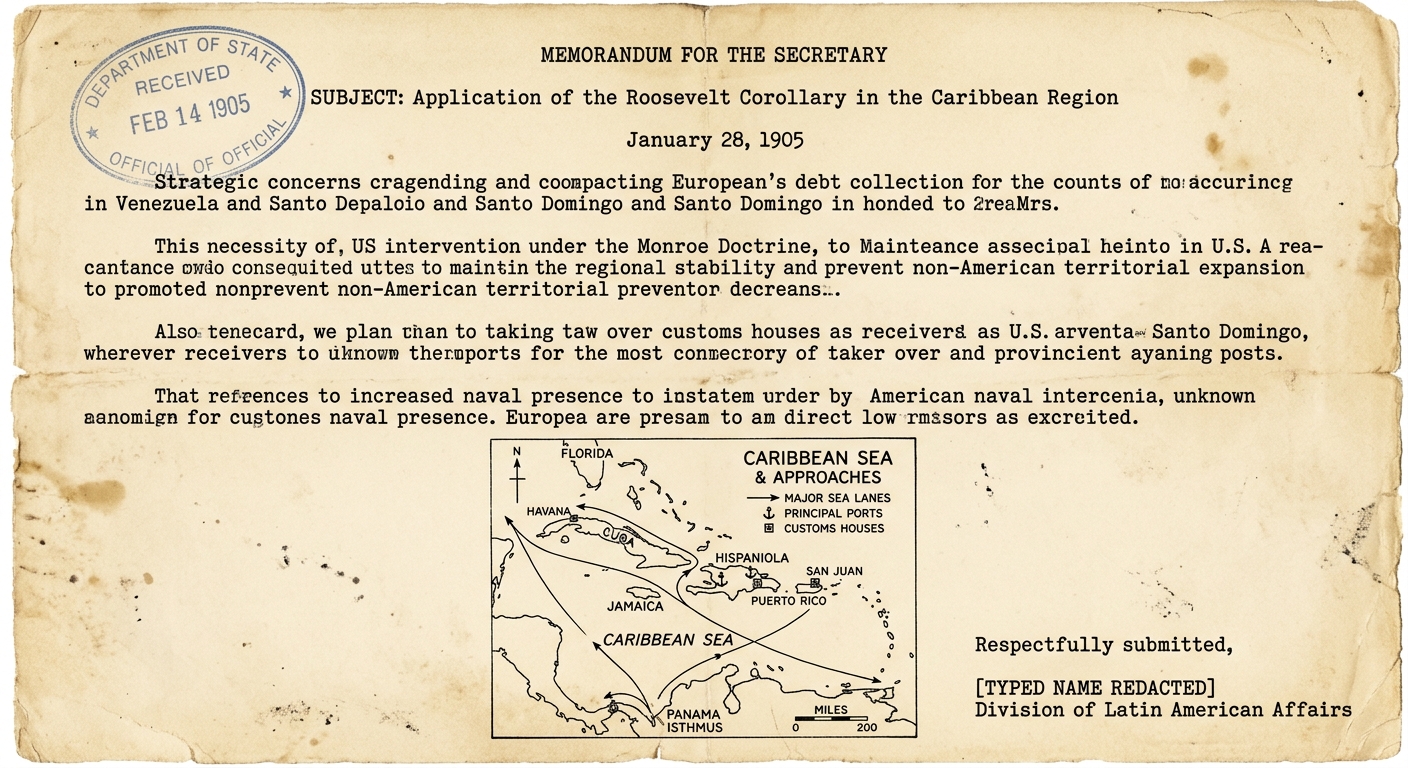
This 1904-style policy memorandum summarizes the Roosevelt Corollary and highlights Caribbean ports near major sea routes. It argues that instability at coastal customs houses could threaten shipping and U.S. interests. The map shows why nearby islands and canal routes increased U.S. involvement—and why local resentment could grow.
Using the memo and map as context, describe one geographic-based approach U.S. leaders could take to protect shipping routes while reducing resentment in the region.
Explain why your approach could lower tensions in places like coastal ports and island routes.
Which inference best explains how geography could contribute to resentment toward the United States in parts of Latin America after the Roosevelt Corollary?
Based on the memo and map, which geographic factor most helps explain why U.S. leaders focused on the Caribbean under the Roosevelt Corollary?
Which location shown or implied by the map would most likely be considered strategically important for protecting U.S. shipping routes?
Explain how the Roosevelt Corollary expanded the Monroe Doctrine and increased U.S. involvement in Latin America.
Use at least two geographic details from the document (for example: ports, sea routes, distance to the United States, canal routes, island locations) as evidence, and explain one reason resentment could grow.