Twa kɔ nsɛm atitiriw so
Log in
Sign up for FREE
arrow_back
Laabri

8.5 - Great Depression: - Practice D

star
star
star
star
star
Last updated about 1 month ago
15 Nsɛmmisa
Hyɛ no nsow a efi ɔkyerɛwfo no hɔ:

Use the historical document(s) and the short readings in the left panel to answer the associated questions.

Use the historical document(s) and the short readings in the left panel to answer the associated questions.

Ɛhia
1
8.5.a
DOK.SS.2
Ɛhia
1
8.5.a
DOK.SS.2
Ɛhia
1
8.5.a
DOK.SS.2
Ɛhia
2
8.5.a
DOK.SS.2
Ɛhia
2
8.5.a
DOK.SS.2
Ɛhia
1
8.5.b
DOK.SS.2
Ɛhia
1
8.5.b
DOK.SS.2
Ɛhia
1
8.5.b
DOK.SS.2
Ɛhia
2
8.5.b
DOK.SS.2
Ɛhia
2
8.5.b
DOK.SS.2
Ɛhia
1
8.5.c
DOK.SS.2
Ɛhia
1
8.5.c
DOK.SS.2
Ɛhia
1
8.5.c
DOK.SS.2
Ɛhia
2
8.5.c
DOK.SS.2
Ɛhia
2
8.5.c
DOK.SS.2

Study the 1931-style document map. Notice where bank suspensions cluster and how the map is divided into banking districts. Use the geographic patterns to explain how overproduction, protectionism, and risky investing could affect different U.S. regions during the Great Depression.
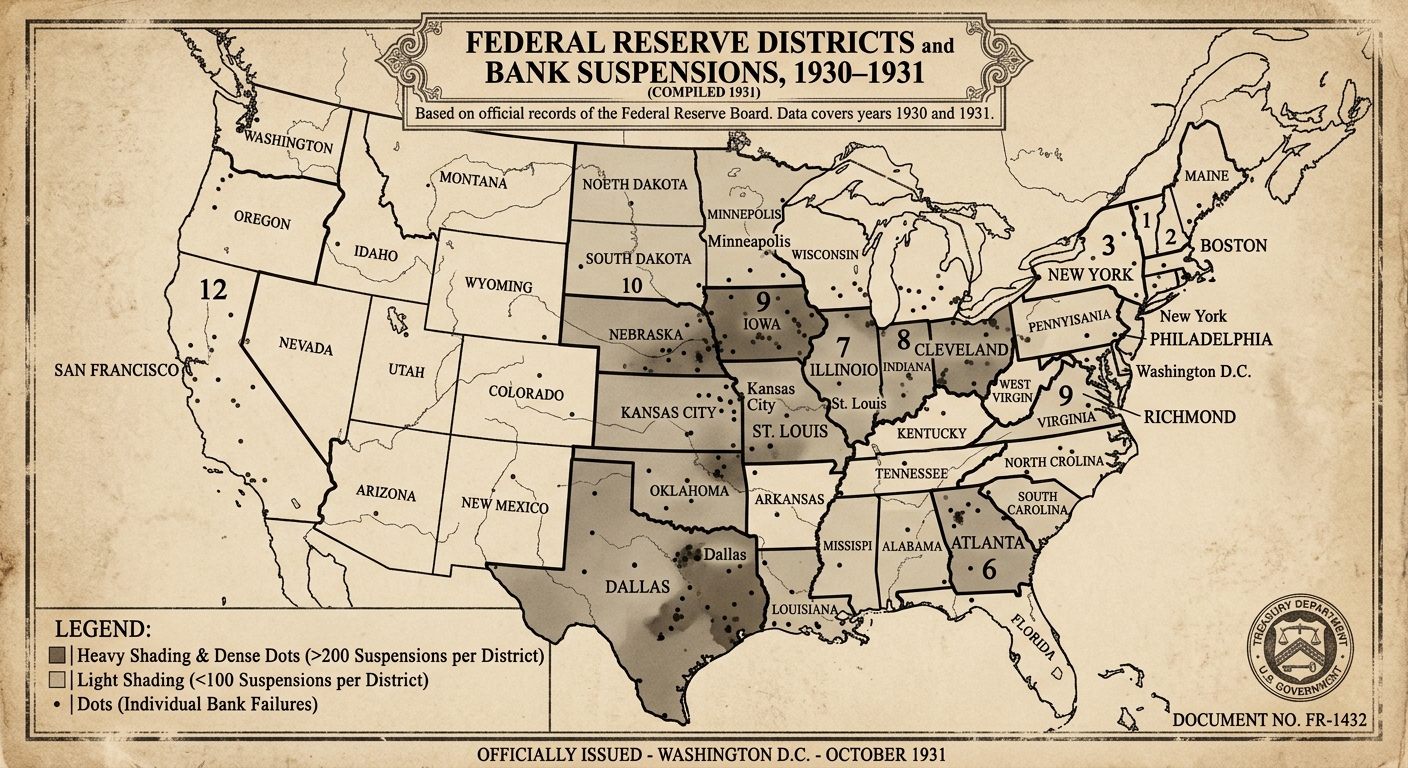
Sepia-toned 1931-style map of the United States showing Federal Reserve district boundaries and shaded areas labeled bank suspensions in 1930–1931, with heavier shading across parts of the Midwest and Great Plains and a legend titled “Federal Reserve Districts and Bank Suspensions, 1930–1931.”

Asemmisa {{asɛmmisaAhyɛnsode}}
1.

Based on the map, which region appears to have the highest concentration of bank suspensions, and which Great Depression factor best helps explain this pattern?

Asemmisa {{asɛmmisaAhyɛnsode}}
2.

Which geographic inference best connects protectionism to the regional impacts suggested by the map?

Asemmisa {{asɛmmisaAhyɛnsode}}
3.

The map is divided into banking districts. What is the BEST reason this district-based view is useful for explaining how bank failures spread during the Great Depression?

Asemmisa {{asɛmmisaAhyɛnsode}}
4.

Using evidence from the map, explain how overproduction could contribute to bank failures in one U.S. region shown.

In your paragraph, describe the geographic pattern you used as evidence and connect it to the Great Depression’s economic downturn.

Asemmisa {{asɛmmisaAhyɛnsode}}
5.

Propose one geographically targeted policy response that could reduce the regional bank failures suggested by the map.

In one paragraph, justify your proposal by connecting it to protectionism or risky investing and by citing a specific regional pattern from the document.

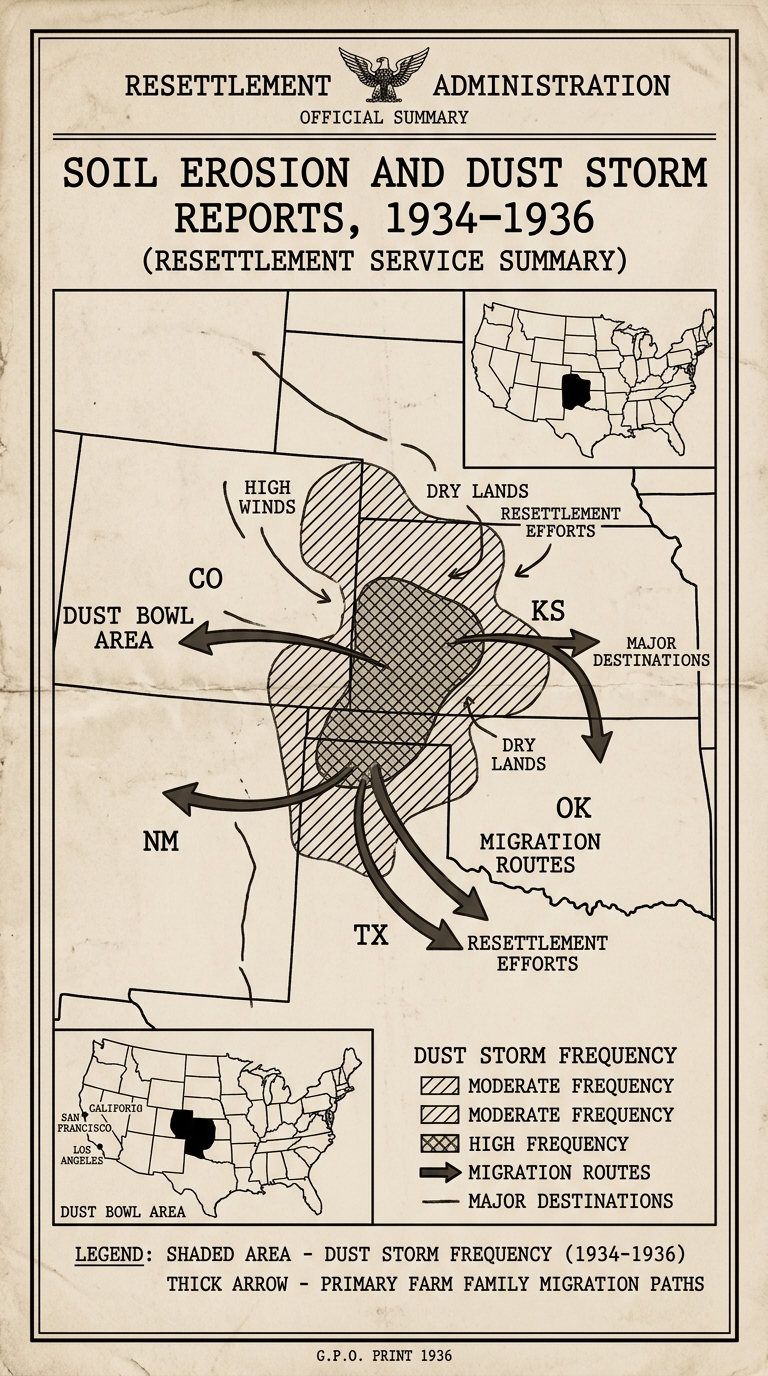
Study the 1934–1936-style document map. Notice where dust storms are most frequent and the direction of migration arrows. Use these geographic patterns to explain how the Dust Bowl intensified the Great Depression’s effects on families, work, and regional economies.

Sepia-toned 1930s-style map highlighting the Dust Bowl region on the Great Plains with shading for dust storm frequency from 1934–1936 and arrows showing migration routes toward California, plus a small U.S. inset locating the region.

Asemmisa {{asɛmmisaAhyɛnsode}}
6.

Based on the map, which statement BEST explains why families would be pushed to leave the shaded Dust Bowl region during the Great Depression?

Asemmisa {{asɛmmisaAhyɛnsode}}
7.

The arrows show many migrants heading toward California. Which geographic factor would MOST likely make California seem like a better destination than staying in the Dust Bowl region?

Asemmisa {{asɛmmisaAhyɛnsode}}
8.

Which inference BEST links the shaded area on the map to the broader Great Depression impact on American families?

Asemmisa {{asɛmmisaAhyɛnsode}}
9.

Using evidence from the map, explain how the Dust Bowl affected families in the shaded region.

In one paragraph, describe one geographic pattern (shading or arrows) and connect it to changes in work, housing, or community life during the Great Depression.

Asemmisa {{asɛmmisaAhyɛnsode}}
10.

Propose one geographically targeted response that could lessen the Dust Bowl’s impact on families shown leaving the region.

In one paragraph, justify your proposal by citing a specific map feature (shaded area or arrow direction) and explaining how it could reduce hardship.

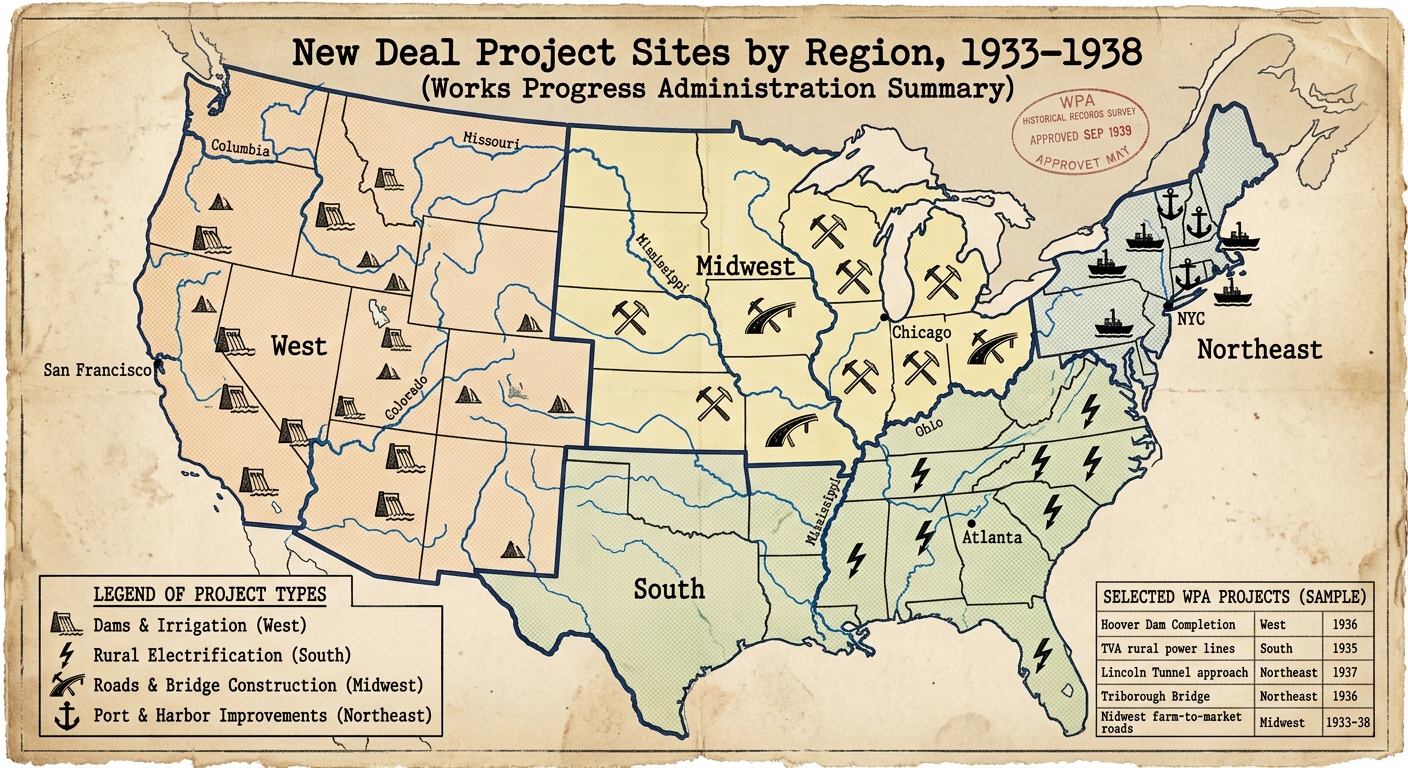
Study the 1933–1938-style document map of New Deal project sites. Notice how different types of projects cluster in different regions. Use the geographic patterns to explain how New Deal reforms attempted to reduce hardship and how they changed the federal government’s role in economic life.

Sepia-toned 1930s-style U.S. map labeled “New Deal Project Sites by Region, 1933–1938,” with symbols marking dams and irrigation projects in the West, rural electrification in the South, roads and bridges in the Midwest, and port improvements in the Northeast, plus a legend.

Asemmisa {{asɛmmisaAhyɛnsode}}
11.

Based on the map, which conclusion BEST explains why dam and irrigation projects appear concentrated in the West?

Asemmisa {{asɛmmisaAhyɛnsode}}
12.

Which geographic inference BEST explains why rural electrification projects cluster in the South on the map?

Asemmisa {{asɛmmisaAhyɛnsode}}
13.

The map shows different project types in different regions. What is the BEST reason a geographic pattern like this supports the claim that the New Deal expanded the federal government’s role?

Asemmisa {{asɛmmisaAhyɛnsode}}
14.

Using evidence from the map, explain how one New Deal project type could reduce hardship in a specific U.S. region.

In one paragraph, describe the geographic pattern you used as evidence and connect it to how the New Deal attempted to revive the economy.

Asemmisa {{asɛmmisaAhyɛnsode}}
15.

Propose one geographically targeted New Deal-style response for a region shown on the map.

In one paragraph, justify your proposal by citing a specific regional pattern from the document and explaining how it could change the government’s role in economic life.