Use the historical document(s) and the short readings in the left panel to answer the associated questions.
In late August 1939, European leaders debated how borders and transportation routes shaped security. Control of the Danzig Corridor affected Poland’s access to the Baltic Sea and major ports. Territorial claims, alliances, and fears about trade and troop movement increased tensions across Europe.
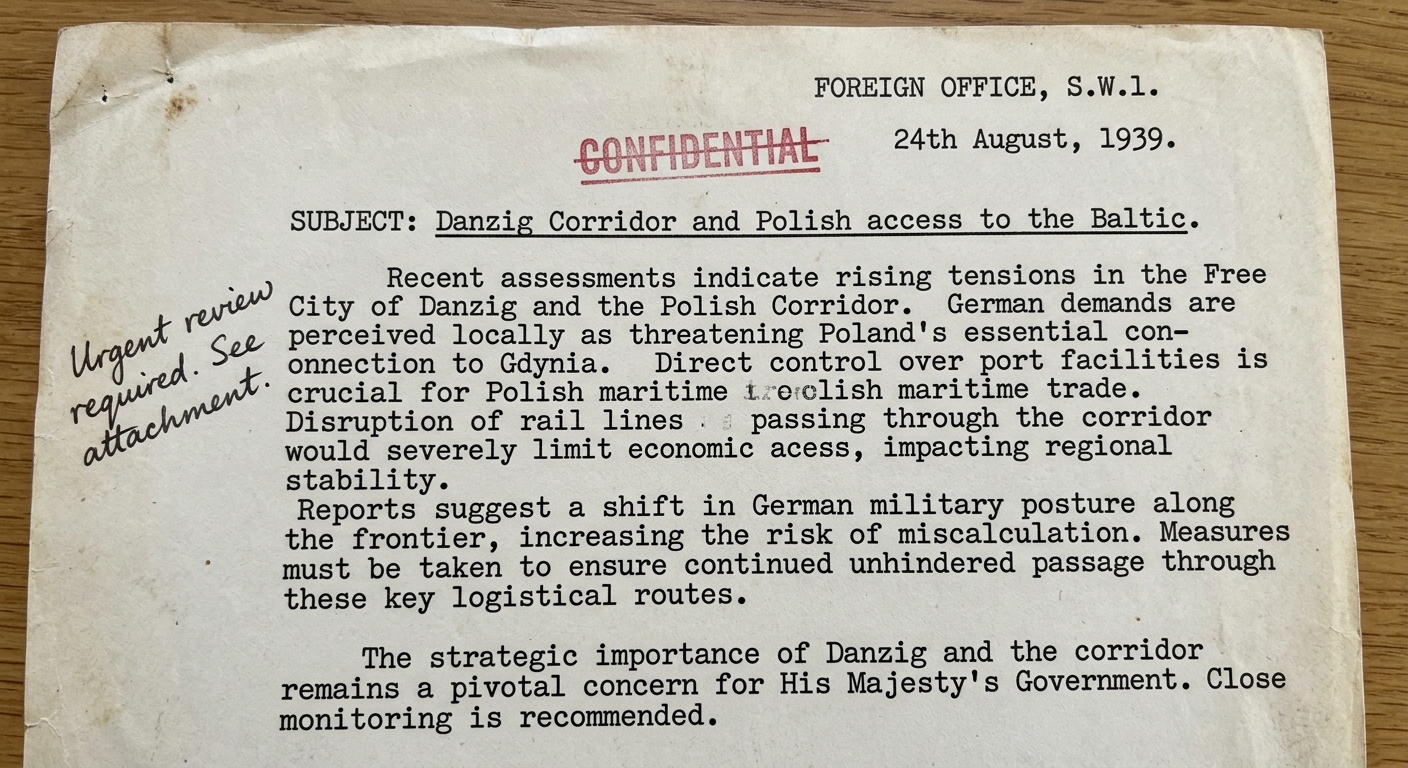
Based on the reading stimulus and the document, which geographic issue is MOST directly connected to rising tensions in 1939?
Which detail from the stimulus BEST shows how interconnections between places can affect political decisions?
How does the geographic conflict described in the stimulus connect to the outbreak of war in Europe (8.6.a)?
Using evidence from the reading stimulus and the document, explain how geography (borders, access to ports, and transportation routes) could shape national security decisions in 1939.
Write one well-formed paragraph.
Explain one way geographic factors contributed to rising tensions in Europe and one way geographic factors contributed to rising tensions in Asia before World War II.
Connect your explanation by referencing economic depression, militant nationalism, totalitarian rule, or the League of Nations.
Write one well-formed paragraph.
In December 1941, U.S. leaders reconsidered neutrality after Japan attacked Pearl Harbor. Hawaii’s central location in the Pacific made it a key base for protecting sea lanes, moving troops, and supplying allies. Decisions about routes to Asia and Australia shaped U.S. strategy on multiple fronts.

Based on the reading stimulus and the document, which geographic factor BEST explains why Pearl Harbor mattered to U.S. strategy after December 1941 (8.6.b)?
Which detail from the stimulus MOST clearly shows how interconnections between places influenced U.S. decisions after Pearl Harbor?
Which conclusion is BEST supported by the reading stimulus about why the United States fought on multiple fronts (8.6.b)?
Using evidence from the reading stimulus and the document, explain how geography (location of Hawaii, sea lanes, and distances) shaped U.S. military planning after Pearl Harbor.
Write one well-formed paragraph.
Explain one way geography affected U.S. actions in the Pacific and one way geography affected U.S. actions in Europe during World War II (8.6.b).
In your answer, refer to sea routes, distance, or access to key locations. Write one well-formed paragraph.
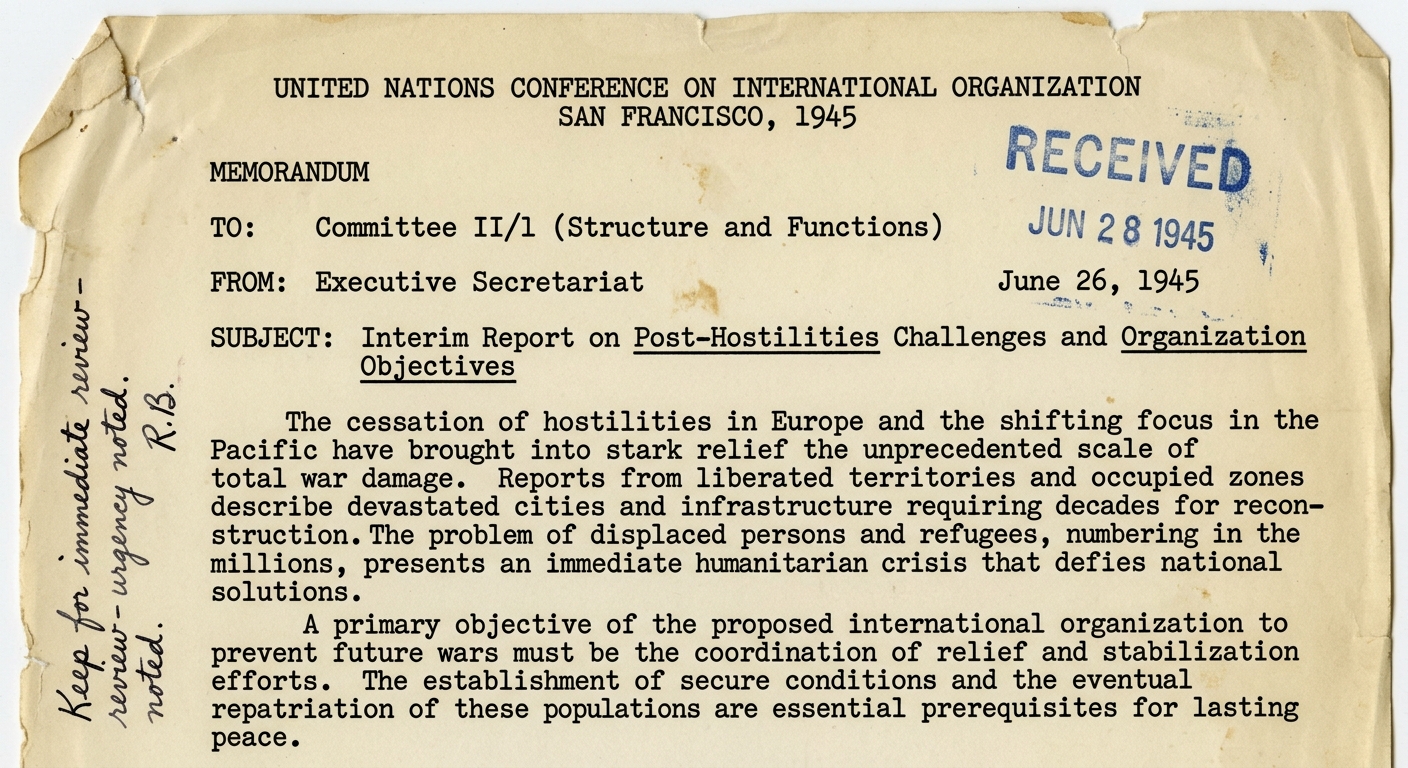
By 1945, fighting across Europe and the Pacific had destroyed cities, disrupted trade routes, and displaced millions. Leaders debated how geography—occupied zones, access to ports, and distances between regions—shaped relief efforts and security. These consequences helped spur calls for an international organization and human rights protections.

Based on the reading stimulus and the document, which geographic consequence of total war is MOST directly connected to postwar calls for international cooperation (8.6.c)?
Which detail from the reading stimulus BEST shows how interconnections between places affected relief and security decisions after World War II (8.6.c)?
How does the geographic impact described in the stimulus connect to why nations supported creating a new international organization after World War II (8.6.c)?
Using evidence from the reading stimulus and the document, explain how geography (occupied zones, access to ports, and distances) could shape postwar relief and security decisions in 1945.
Write one well-formed paragraph.
Explain how one geographic consequence of World War II helped lead to:
(1) a call for an international organization and
(2) a call for protecting human rights.
Use evidence from the reading stimulus and/or the document. Write one well-formed paragraph.