Use the historical document(s) and the short readings in the left panel to answer the associated questions.
Historical Document:
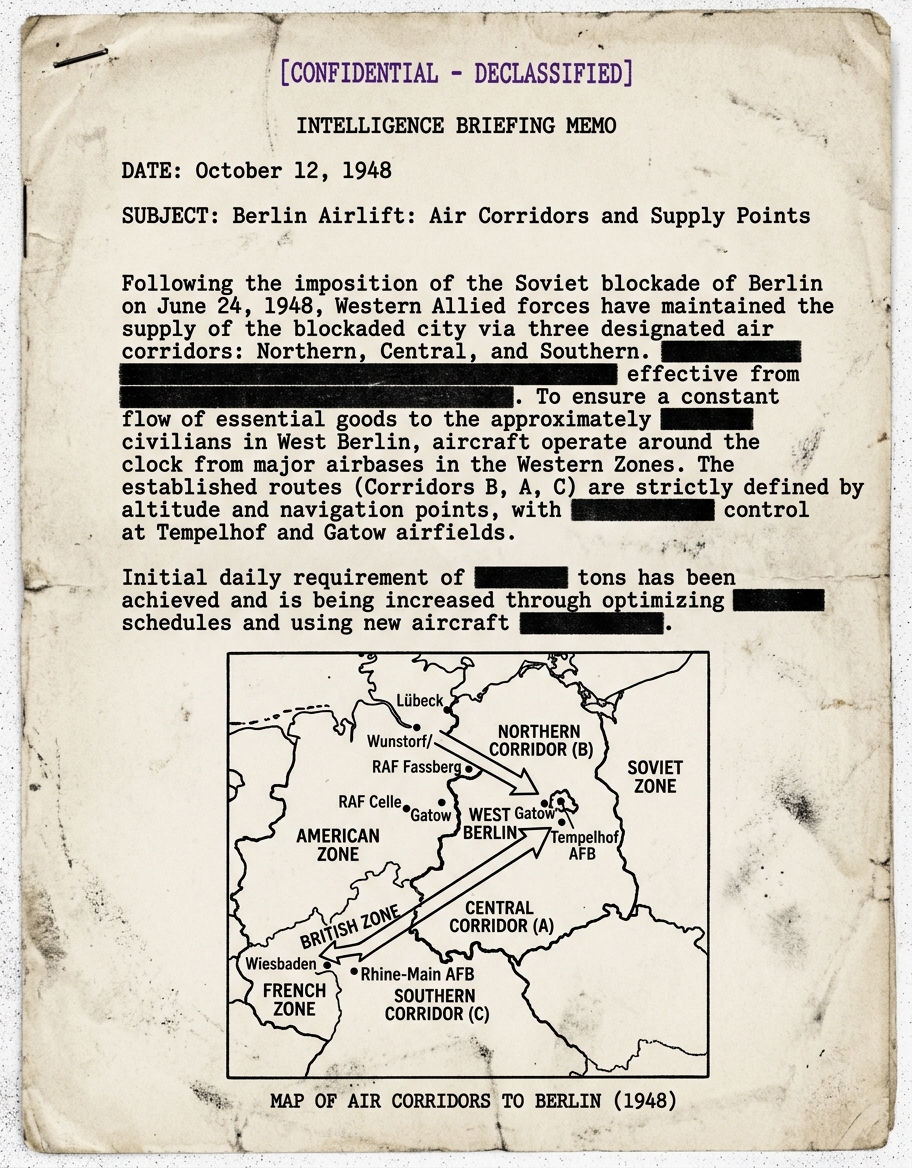
In 1948, the Soviet Union cut off many land routes into West Berlin. U.S. planners relied on air corridors from West Germany to deliver food and fuel. The memo and map show why Berlin’s location inside Soviet-controlled territory shaped Cold War alliances and tensions.
Explain how Berlin’s location affected U.S. and Soviet decisions during the early Cold War.
Use two details from the document (the memo/map) as evidence.
Why would clearly defined air corridors be important in the situation shown in the document?
Which conclusion about the Cold War is best supported by this document?
Based on the document, which geographic problem is the planners mainly addressing?
Describe one geographic advantage and one geographic constraint for the United States in supporting West Berlin, as shown or implied by the document.
Historical Document:

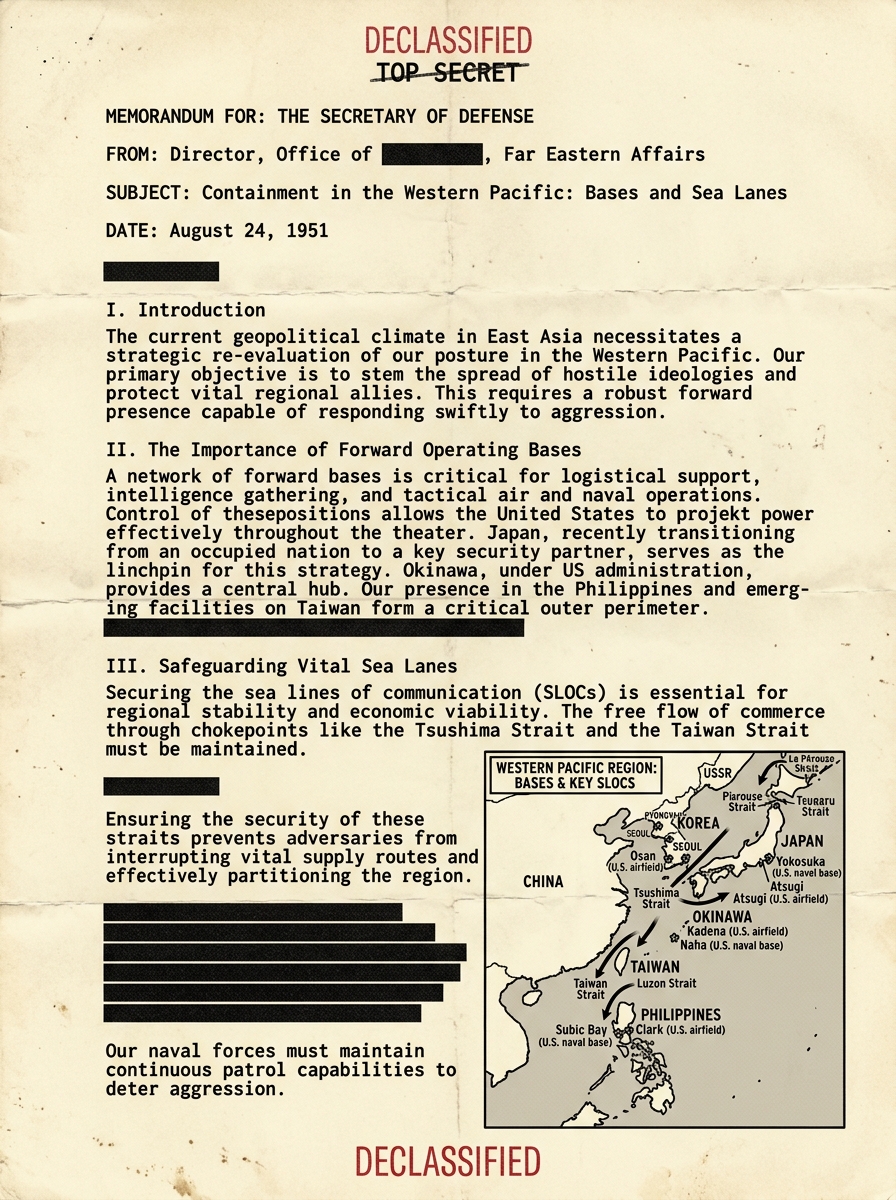
In the early Cold War, U.S. leaders pursued containment by positioning forces and allies along key coastlines and sea routes. This briefing memo and map highlight bases and chokepoints in the Western Pacific that could limit communist expansion and protect supply lines to U.S. partners.
Based on the document, what geographic goal is the memo primarily addressing?
Explain how the geography shown in the memo/map supports a U.S. policy of containment.
Use two details from the document as evidence.
Which geographic feature is most important to the containment strategy suggested by the map?
Describe one geographic advantage and one geographic constraint the United States might face when relying on overseas island bases to carry out containment.
Why would U.S. bases on islands near East Asia support a policy of containment?
Historical Document:

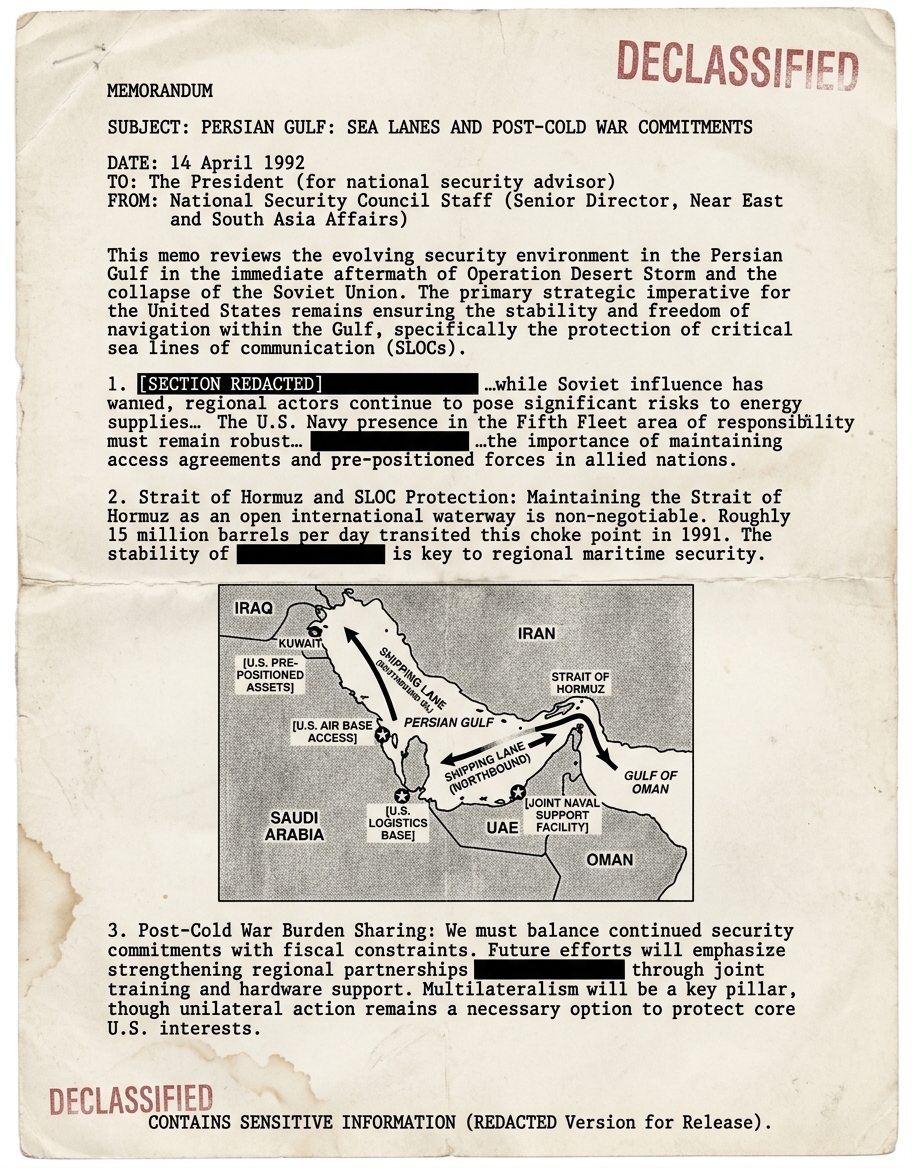
After the Cold War, U.S. leaders debated how much to stay involved overseas. This 1992 briefing note highlights Persian Gulf sea lanes and a narrow chokepoint that many ships must pass. It suggests that earlier alliances and base access continued to shape U.S. choices in the region.
Why would access to nearby bases be important in the situation described in the document?
Explain how the document suggests that Cold War legacies continued to affect U.S. foreign policy after 1991.
Use two geographic details from the memo/map as evidence.
Which conclusion about U.S. foreign policy after the Cold War is best supported by the document?
Based on the document, which geographic feature most affects movement through the region?
Describe one geographic interconnection between places or regions shown or implied by the document, and describe one geographic constraint or risk suggested by the same geography.
Historical Document:

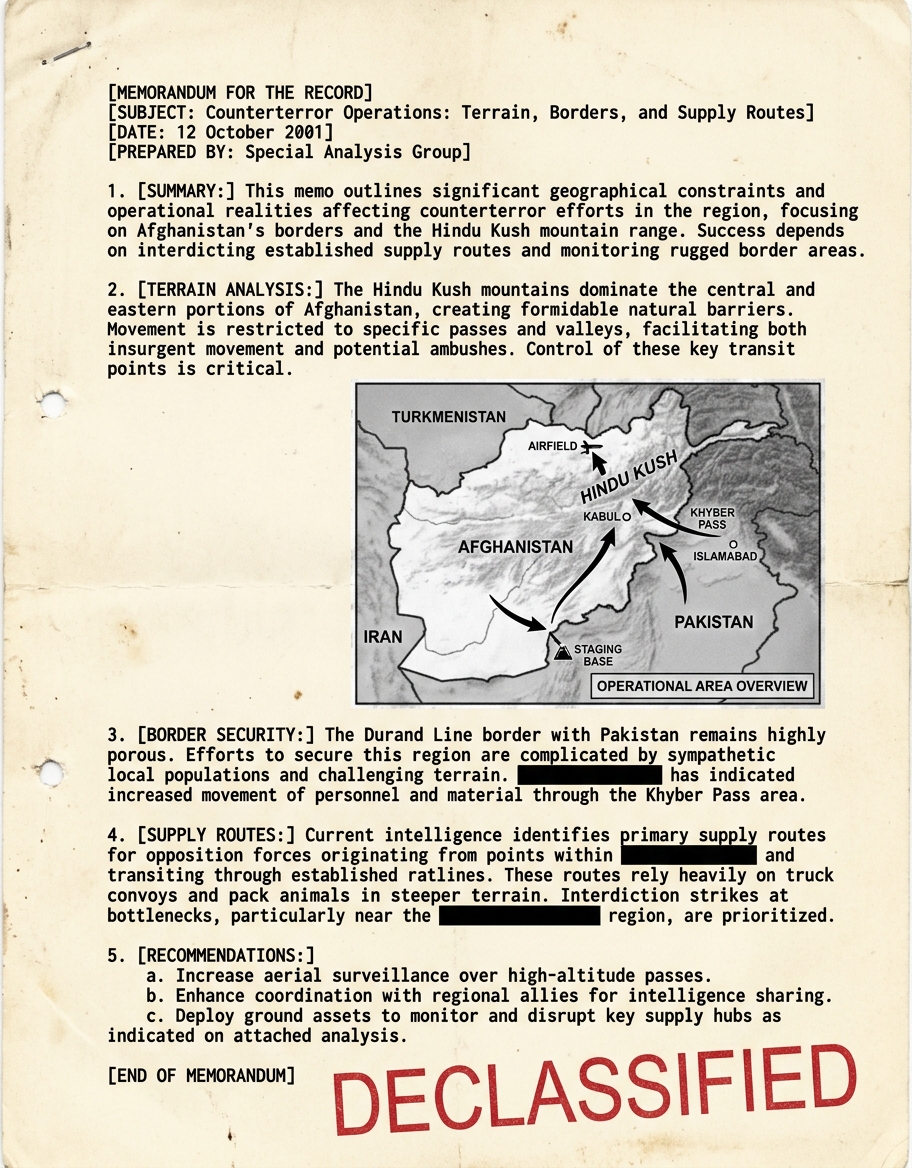
After the September 11 attacks, U.S. leaders planned military operations against terrorist networks based in Afghanistan. This briefing note and map highlight rugged mountains, limited road corridors, and the need for access through neighboring countries. The geography shaped coalition partnerships, supply lines, and strategy.
Why would access to bases in neighboring countries be important in the situation shown?
Based on the document, which geographic challenge is most emphasized for operations in the region?
Explain how the geography shown could influence U.S. and coalition decisions in responding to terrorism.
Use two geographic details from the memo/map as evidence.
Which conclusion is best supported by the memo/map?
Describe one geographic advantage and one geographic constraint for carrying out operations in the region shown, as suggested by the document.
Historical Document:

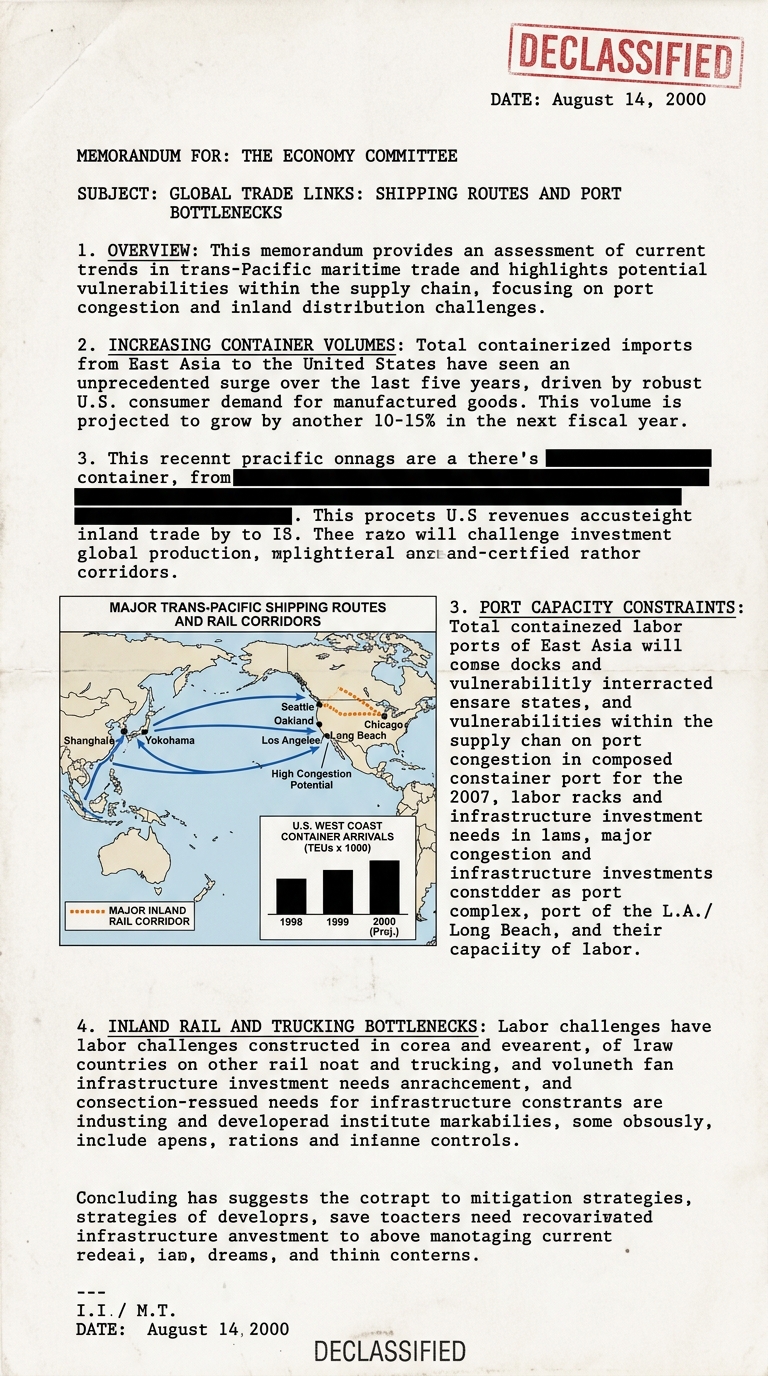
As trade expanded in the late 1900s, U.S. businesses depended on goods shipped across the Pacific. This briefing memo and map show major sea routes linking East Asian factories to U.S. ports and rail corridors. The document highlights how one port bottleneck could disrupt many regions and industries.
Describe one economic advantage and one economic constraint or risk of globalization suggested by the document.
Which idea is best supported by the map and shipping arrows in the document?
Which statement best explains the increased economic interdependence suggested by the document?
Explain how the document shows economic interconnections between places or regions. Use two details from the map/chart as evidence.
Based on the document, which geographic risk could most disrupt the trade links shown?