Twa kɔ nsɛm atitiriw so
Log in
Sign up for FREE
arrow_back
Laabri

8.2 - A Changing Society: - Practice E

star
star
star
star
star
Last updated about 1 month ago
25 Nsɛmmisa
Hyɛ no nsow a efi ɔkyerɛwfo no hɔ:

Use the historical document(s) and the short readings in the left panel to answer the associated questions.

Use the historical document(s) and the short readings in the left panel to answer the associated questions.

Ɛhia
1
8.2.a
DOK.SS.2
Ɛhia
1
8.2.a
DOK.SS.2
Ɛhia
1
8.2.a
DOK.SS.2
Ɛhia
1
8.2.a
DOK.SS.2
Ɛhia
1
8.2.a
DOK.SS.2
Ɛhia
1
8.2.b
DOK.SS.2
Ɛhia
1
8.2.b
DOK.SS.2
Ɛhia
1
8.2.b
DOK.SS.2
Ɛhia
1
8.2.b
DOK.SS.2
Ɛhia
1
8.2.b
DOK.SS.2
Ɛhia
1
8.2.c
DOK.SS.2
Ɛhia
1
8.2.c
DOK.SS.2
Ɛhia
1
8.2.c
DOK.SS.2
Ɛhia
1
8.2.c
DOK.SS.2
Ɛhia
1
8.2.c
DOK.SS.2
Ɛhia
1
8.2.d
DOK.SS.2
Ɛhia
1
8.2.d
DOK.SS.2
Ɛhia
1
8.2.d
DOK.SS.2
Ɛhia
1
8.2.d
DOK.SS.2
Ɛhia
1
8.2.d
DOK.SS.2
Ɛhia
1
8.2.e
DOK.SS.2
Ɛhia
1
8.2.e
DOK.SS.2
Ɛhia
1
8.2.e
DOK.SS.2
Ɛhia
1
8.2.e
DOK.SS.2
Ɛhia
1
8.2.e
DOK.SS.2

Examine the historical document shown. In the late 1800s, New York City factories expanded production and needed large numbers of workers. Notices like this were posted to recruit labor, including many recent immigrants. Use details from the document to answer the questions.
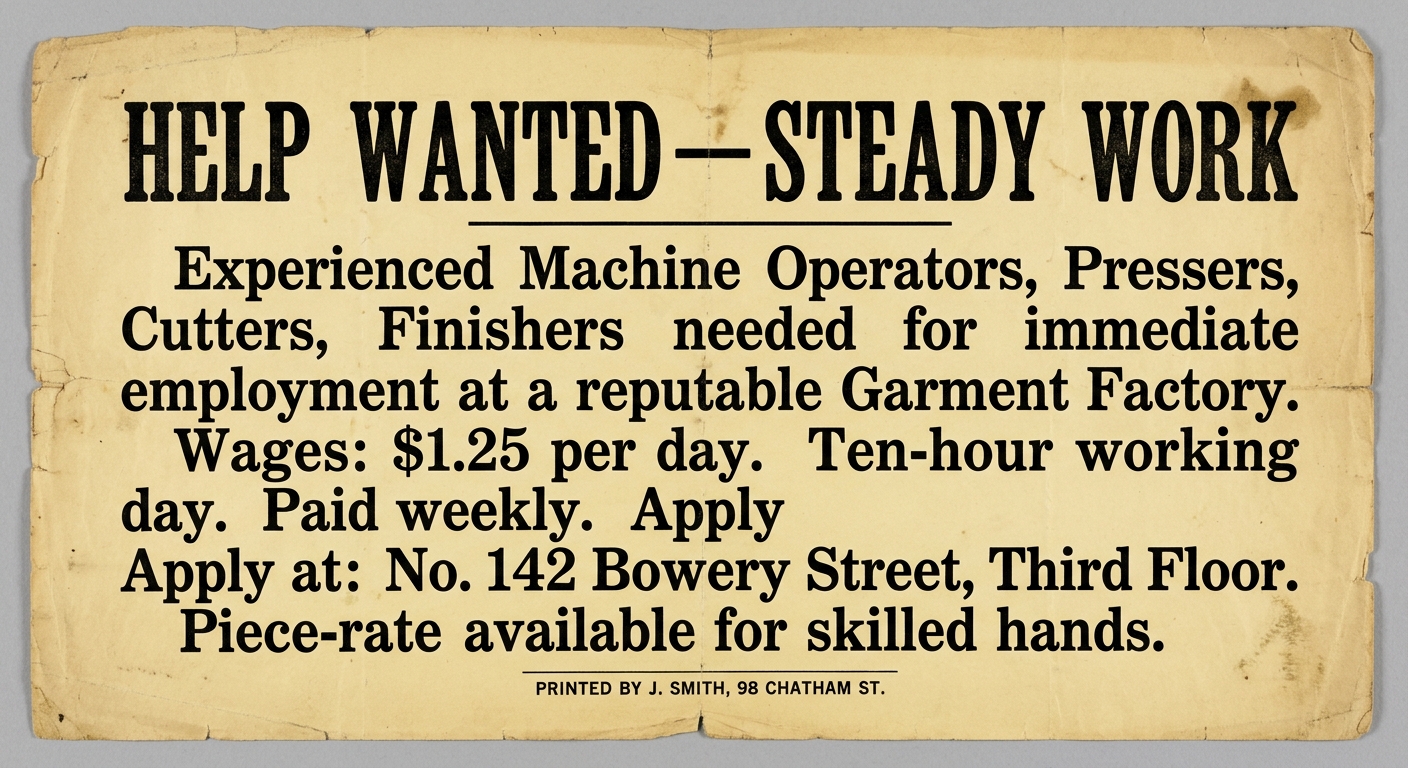
A sepia-toned 1890s-style ‘Help Wanted’ factory job notice listing wages, hours, and positions at a New York City garment factory.

Asemmisa {{asɛmmisaAhyɛnsode}}
1.

Based on the job notice, which economic factor is most likely attracting workers to New York City factories in this period?

Asemmisa {{asɛmmisaAhyɛnsode}}
2.

The notice mentions “piece-rate” pay for some work. Which outcome is most likely in a piece-rate system?

Asemmisa {{asɛmmisaAhyɛnsode}}
3.

How does the document best help explain the increase in immigration and rural-to-urban migration?

Asemmisa {{asɛmmisaAhyɛnsode}}
4.

Using evidence from the job notice and the reading stimulus, explain how industrialization changed the way goods were produced and why that increased demand for labor in urban areas like New York City.

Asemmisa {{asɛmmisaAhyɛnsode}}
5.

Based on the document, describe one way wage labor in factories differed from many agricultural work arrangements in the late 1800s.

Then explain how this difference could shape immigrants’ economic contributions to New York communities.

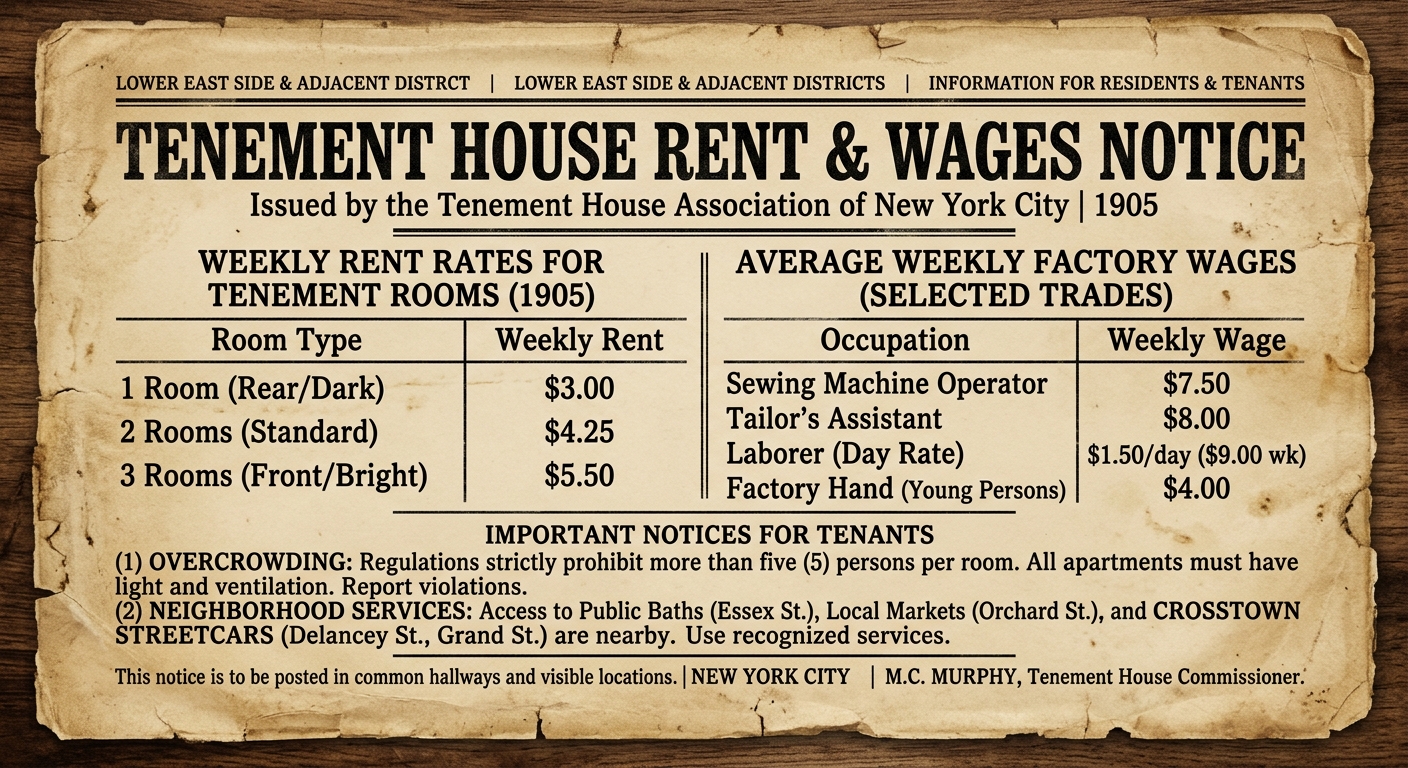
Examine the historical document shown. In the early 1900s, many New Yorkers lived in crowded tenements while working in nearby factories. The notice lists wages and housing costs that shaped daily life in dense neighborhoods. Use details from the document to answer the questions.
A sepia-toned early-1900s New York City notice comparing tenement rent costs and factory wages, with a small table of amounts.

Asemmisa {{asɛmmisaAhyɛnsode}}
6.

Based on the document, which statement best describes one economic challenge for workers in dense urban neighborhoods?

Asemmisa {{asɛmmisaAhyɛnsode}}
7.

Which conclusion is best supported by comparing the wages and rent figures in the notice?

Asemmisa {{asɛmmisaAhyɛnsode}}
8.

How do the wages-and-rent details in the notice best connect to @8.2.b?

Asemmisa {{asɛmmisaAhyɛnsode}}
9.

Using evidence from the document and the reading stimulus, explain how population density and industry in urban areas could affect the economic lives of families (for example, housing, work, or spending).

Asemmisa {{asɛmmisaAhyɛnsode}}
10.

Describe one way the document suggests urban economic life could shape social or cultural life in the neighborhood.

Use at least one specific detail (wages, rent, or services) as evidence.

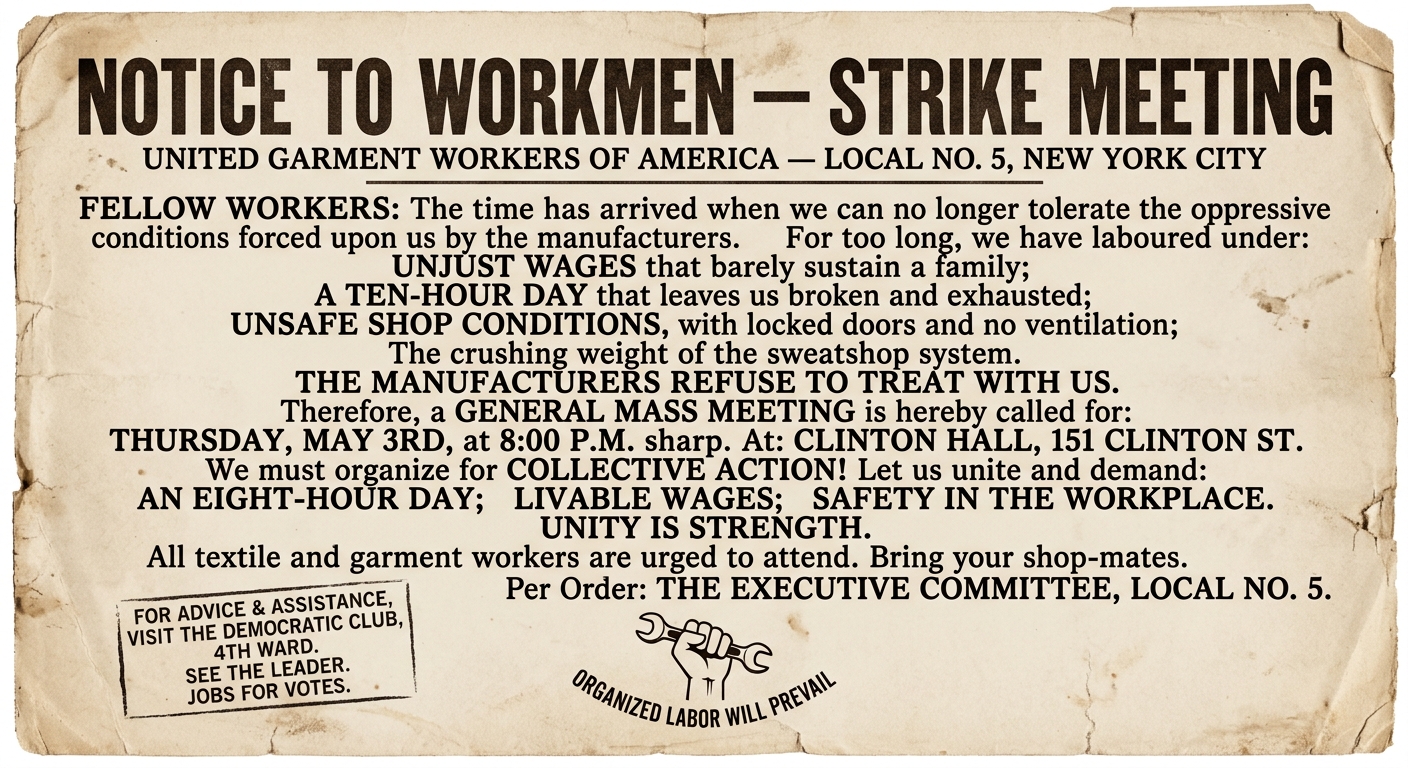
Examine the historical document shown. In the late 1800s and early 1900s, rapid industrial growth created conflicts over wages, hours, and working conditions. Some workers organized strikes, while political machines sometimes offered favors in exchange for support. Use details from the document to answer the questions.
A sepia-toned early-1900s flyer calling workers to a strike meeting, mentioning wages, hours, and a hint of political corruption.

Asemmisa {{asɛmmisaAhyɛnsode}}
11.

Based on the flyer, which problem is most directly causing conflict between workers and factory owners?

Asemmisa {{asɛmmisaAhyɛnsode}}
12.

Which statement best explains why a strike could affect factory production and profits?

Asemmisa {{asɛmmisaAhyɛnsode}}
13.

The reading stimulus mentions political machines offering favors for support. Which situation best fits that pattern in an industrial city?

Asemmisa {{asɛmmisaAhyɛnsode}}
14.

Using evidence from the flyer and the reading stimulus, explain how industrialization could lead to conflict over labor conditions.

Include at least two specific details as evidence.

Asemmisa {{asɛmmisaAhyɛnsode}}
15.

Explain one way political corruption could influence economic life for workers or business owners in an industrial city.

Use evidence from the reading stimulus and one detail you infer from the flyer.

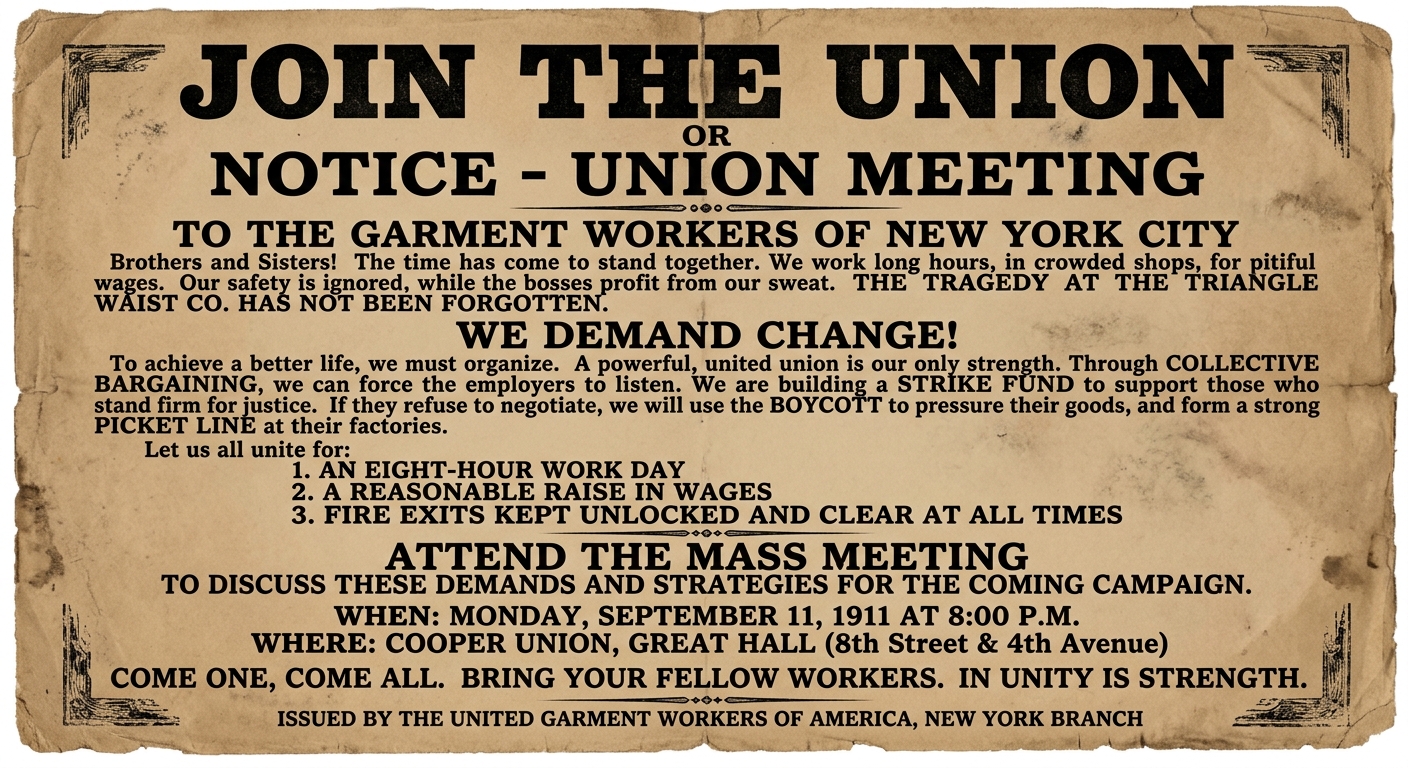
Examine the historical document shown. In the early 1900s, many industrial workers faced low pay, long hours, and unsafe conditions. Some laborers formed unions and used different strategies to pressure employers for change. Use details from the document to answer the questions.
Asemmisa {{asɛmmisaAhyɛnsode}}
16.

Based on the leaflet, what is one main economic goal of the workers’ union?

Asemmisa {{asɛmmisaAhyɛnsode}}
17.

Which strategy mentioned or implied by the document would most directly pressure employers by reducing production?

Asemmisa {{asɛmmisaAhyɛnsode}}
18.

How does the document best illustrate the statement "In response to shifts in working conditions, laborers organized and employed a variety of strategies in an attempt to improve their conditions."

Asemmisa {{asɛmmisaAhyɛnsode}}
19.

Using evidence from the leaflet and the reading stimulus, explain why workers might believe organizing a union could change wages or hours in a market economy.

Asemmisa {{asɛmmisaAhyɛnsode}}
20.

Describe one union strategy named or implied in the document and explain one possible economic cost and one possible economic benefit of that strategy for workers.

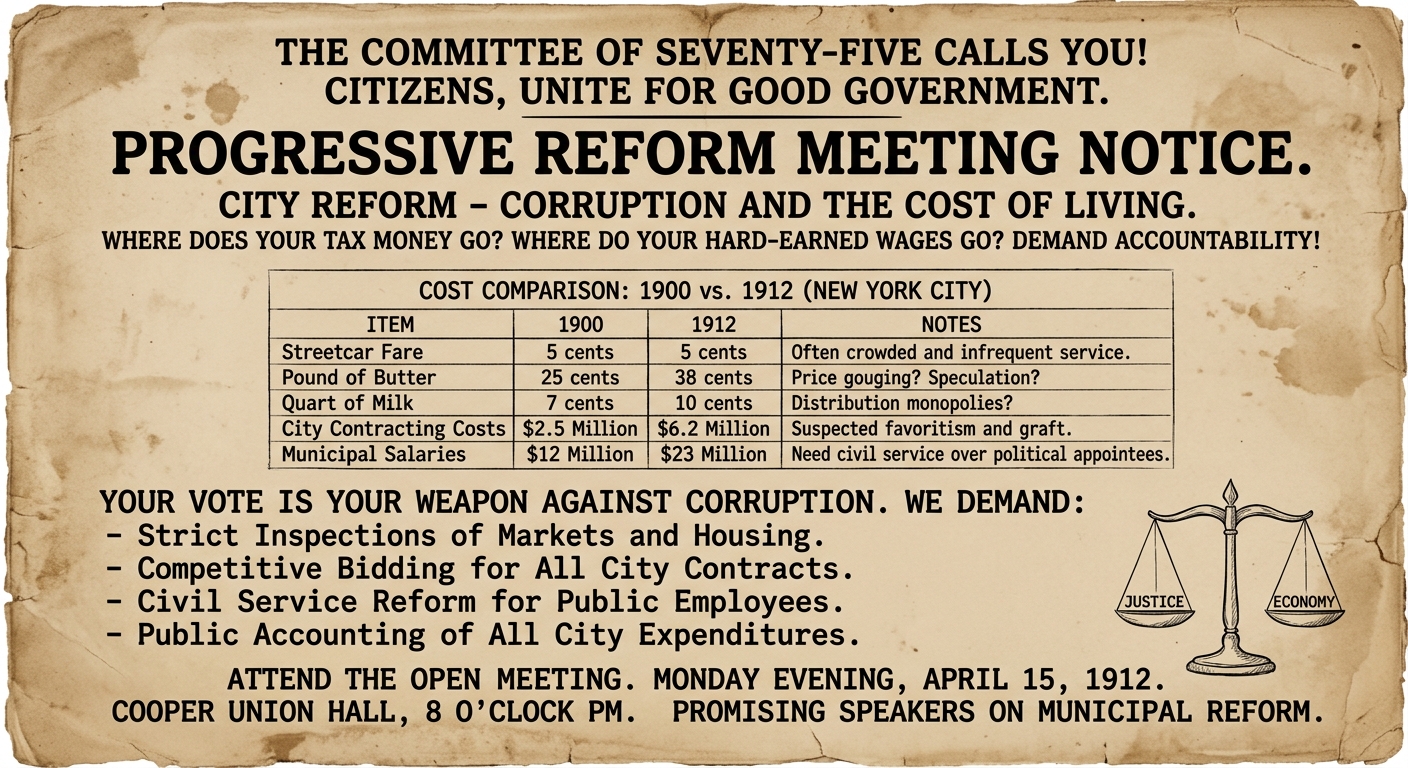
Examine the historical document shown. Between 1890 and 1920, Progressive reformers tried to reduce corruption and improve city services. Many reforms focused on how government decisions affected taxes, prices, and public spending. Use evidence from the document to answer the questions.

Asemmisa {{asɛmmisaAhyɛnsode}}
21.

Based on the pamphlet, which economic problem are Progressive reformers most likely trying to address?

Asemmisa {{asɛmmisaAhyɛnsode}}
22.

Which conclusion is best supported by the costs or prices listed in the document?

Asemmisa {{asɛmmisaAhyɛnsode}}
23.

How does the document best connect to the concept that progressive reformers sought to address political and social issues at the local, state, and federal levels of government between 1890 and 1920.

These efforts brought renewed attention to women’s rights and the suffrage movement and spurred the creation of government reform policies.

Asemmisa {{asɛmmisaAhyɛnsode}}
24.

Using evidence from the document and the reading stimulus, explain one way a Progressive reform could change economic life for city residents (for example, taxes, prices, or services).

Asemmisa {{asɛmmisaAhyɛnsode}}
25.

Choose one group mentioned or implied by the document (taxpayers, working families, or business owners). Explain one potential economic benefit and one potential economic cost of the reform efforts for that group, using evidence from the document.