Use the historical document(s) and the short readings in the left panel to answer the associated questions.
Study the historical document. Notice the economic incentives (low land prices, credit terms, and promises of markets and transportation). Then consider how attracting settlers and investment could change who controlled land in the West and why those changes sometimes led to conflict.
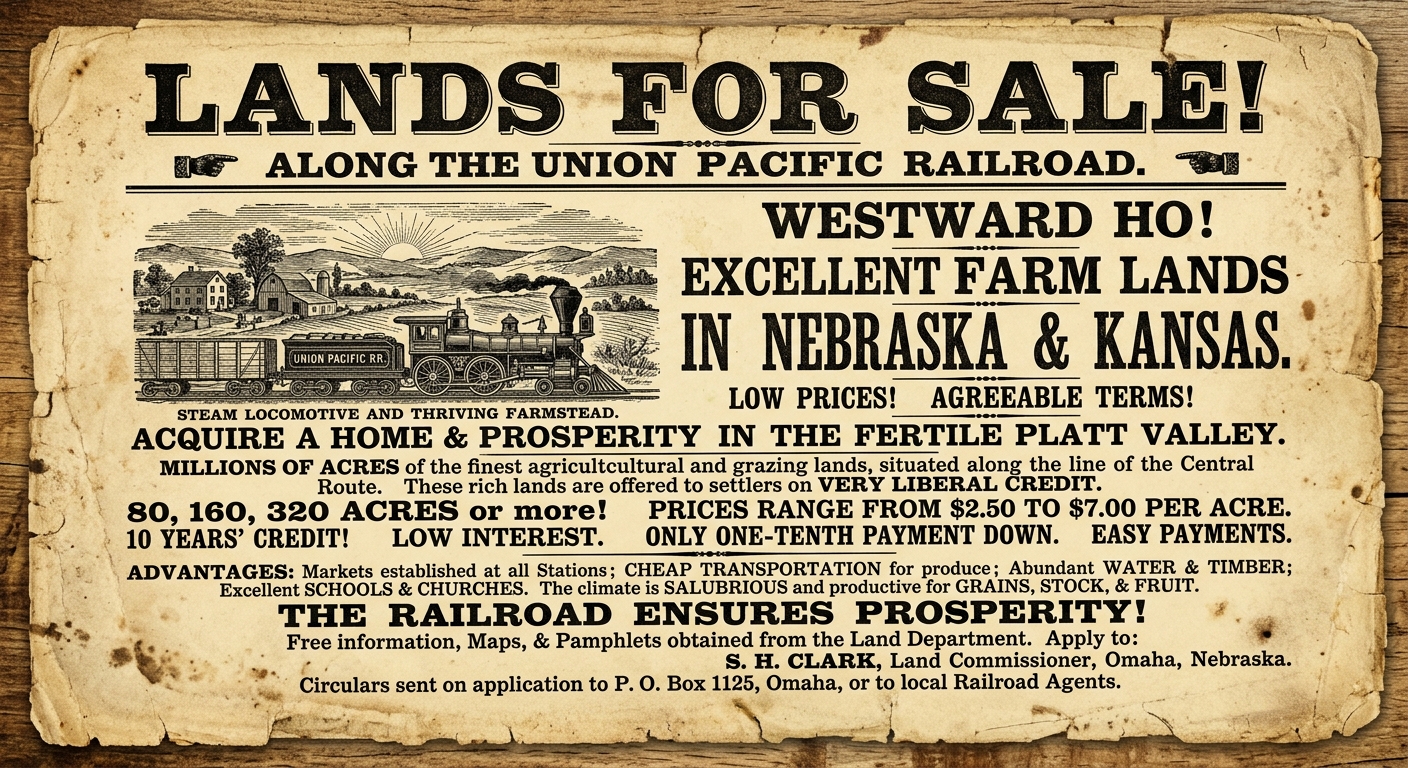
Based on the document, which economic goal is the railroad company most likely promoting?
Which outcome best connects the economic incentives in the document to increased conflict with Native Americans in the late 1800s?
Which feature of an economic system is best illustrated by the document’s promises of markets, transportation, and opportunity?
Using evidence from the document, explain in 2–3 sentences how economic incentives could encourage westward expansion and contribute to conflicts with Native Americans.
Explain one economic benefit the document suggests for settlers or companies and one economic cost that Native American communities might experience as westward expansion increased.
Use evidence from the document in your answer.
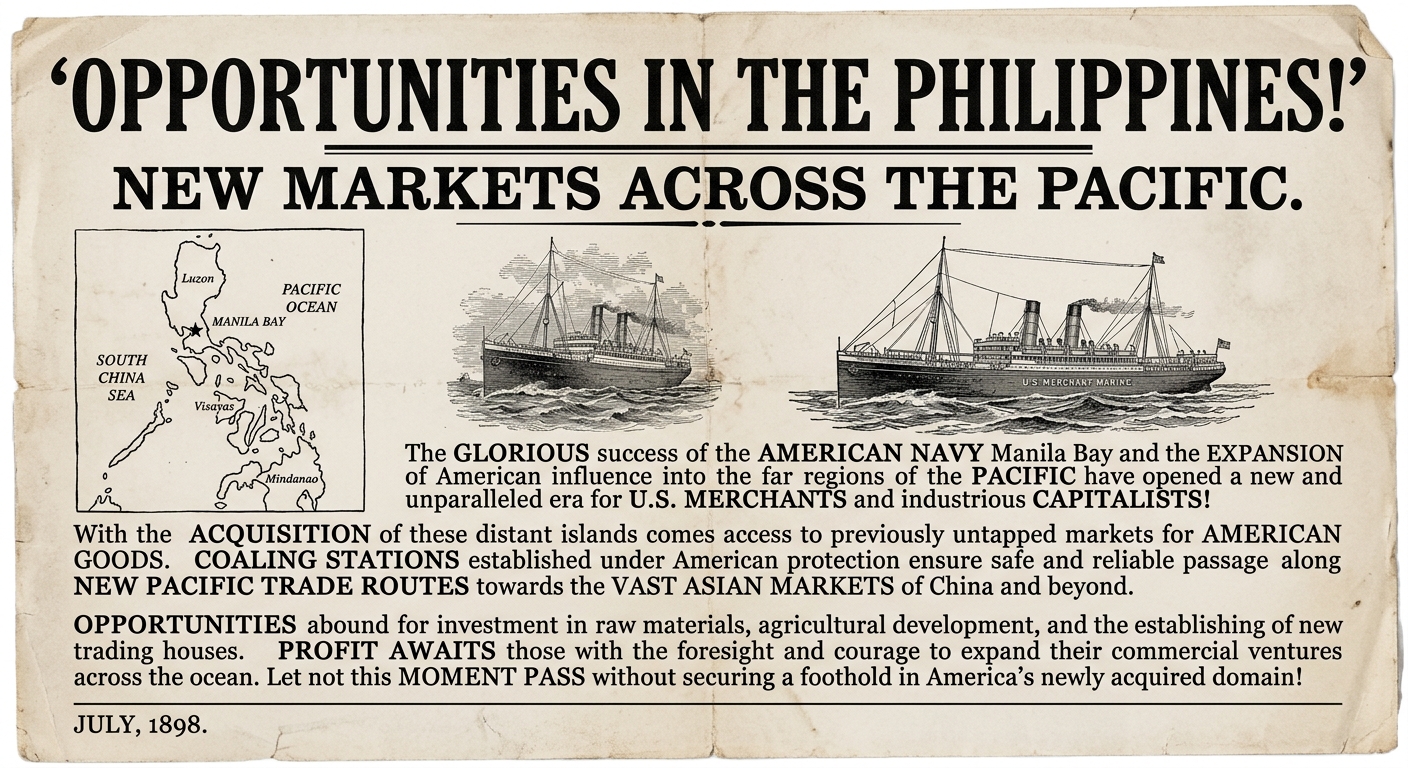
Study the historical document. Identify the economic arguments (trade routes, access to markets, and investment). Then consider how the Spanish-American War helped the United States gain influence overseas and how economic goals could shape U.S. policies in new territories.

Based on the document, which economic motivation for U.S. expansion is most clearly emphasized?
Which conclusion best connects the document’s economic claims to the United States becoming an imperial power after the Spanish-American War?
Which economic concept is best illustrated by the document’s emphasis on investment and profits in overseas territory?
Using evidence from the document, explain in 2–3 sentences how economic goals could influence U.S. foreign policy after the Spanish-American War.
Explain one economic benefit U.S. supporters of expansion might claim and one economic cost or risk this policy could create for another group.
Use evidence from the document in your answer.
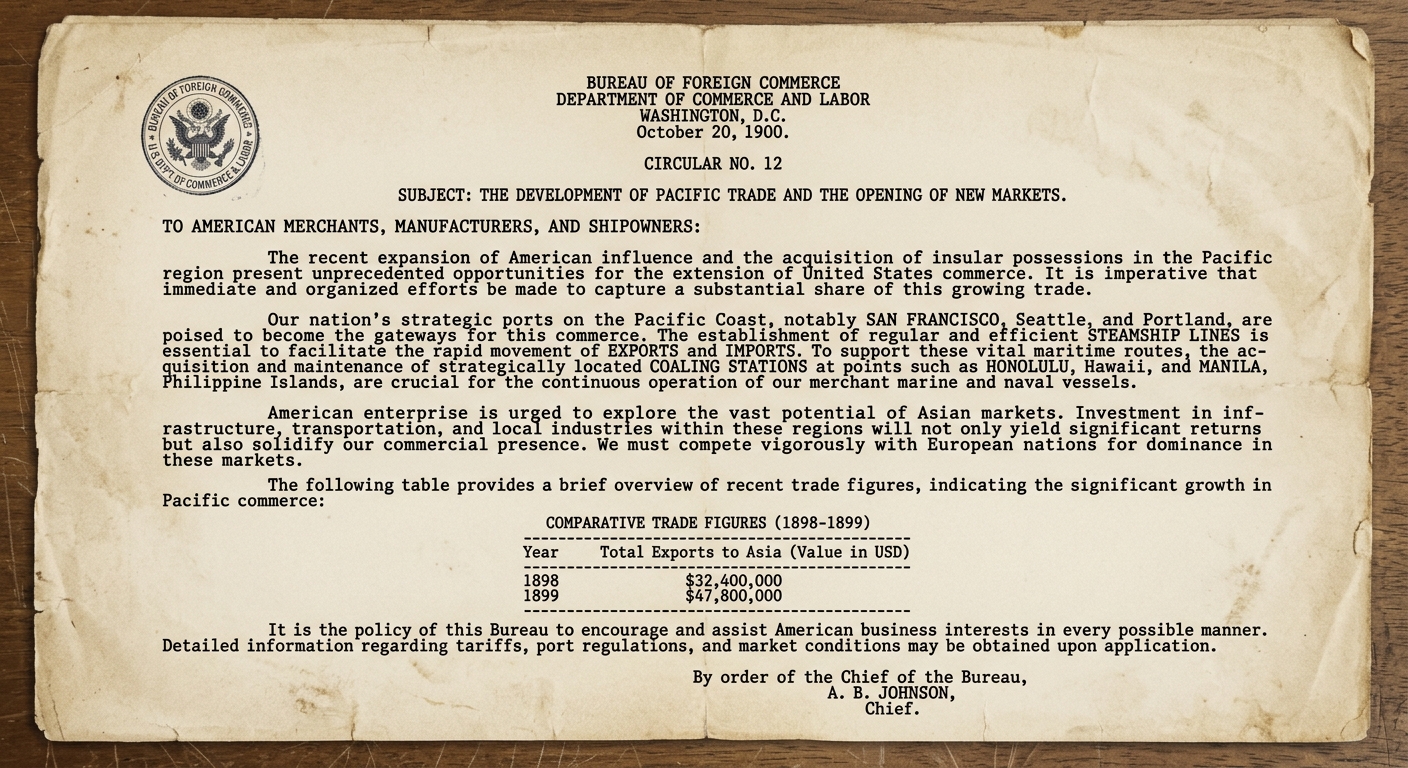
Study the historical document. Identify the economic arguments about Pacific trade (shipping routes, ports, and investment). Then consider how interest in Pacific commerce increased U.S. foreign interactions and how expanding trade networks could influence government policy and business decisions.

Based on the document, which economic goal is most clearly being promoted?
Which outcome best connects the document’s emphasis on ports and steamship lines to increased U.S. foreign interactions?
Which economic concept is best illustrated by the document’s discussion of exports, imports, and investment?
Using evidence from the document, explain in 2–3 sentences how interest in Pacific trade could increase U.S. foreign interactions.
Explain one possible economic benefit for U.S. businesses from expanded Pacific trade and one possible economic cost or risk for another group.
Use evidence from the document in your answer.
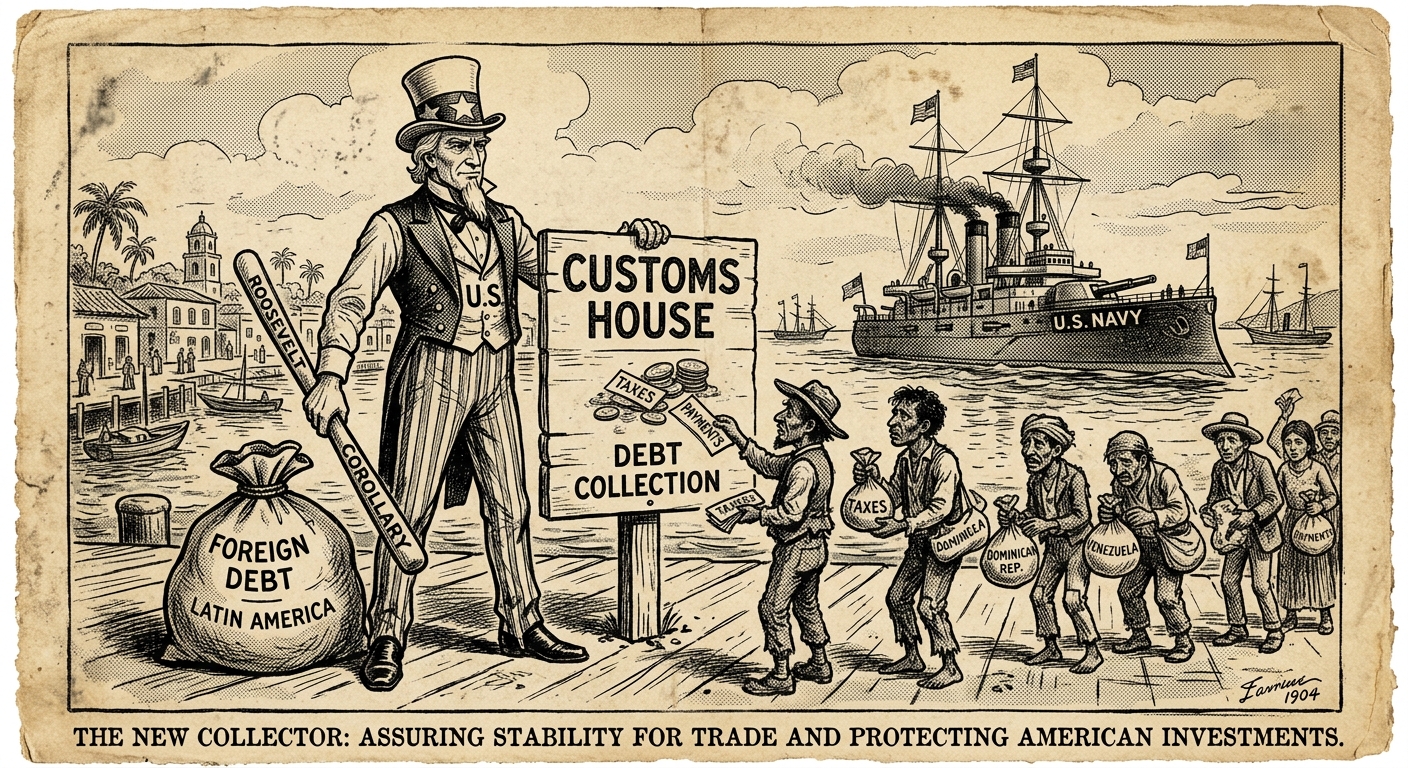
Study the historical document. Identify the economic message about debts, trade, and protecting investments. Then consider how the Roosevelt Corollary expanded U.S. involvement in Latin America and how economic goals could shape decisions about intervening in other countries’ affairs.

Based on the document, which economic purpose for U.S. involvement is most clearly emphasized?
Which outcome best connects the Roosevelt Corollary’s expansion of U.S. power to economic goals suggested by the document?
Which economic concept is best illustrated by the document’s focus on debt collection and protecting investments?
Using evidence from the document, explain in 2–3 sentences how economic goals could support U.S. involvement in Latin American affairs under the Roosevelt Corollary.
Explain one economic benefit U.S. officials might claim for intervention and one economic cost or risk this policy could create for people in Latin America.
Use evidence from the document in your answer.