Twa kɔ nsɛm atitiriw so
Log in
Sign up for FREE
arrow_back
Laabri

8.5 - Great Depression: - Practice E

star
star
star
star
star
Last updated about 1 month ago
15 Nsɛmmisa
Hyɛ no nsow a efi ɔkyerɛwfo no hɔ:

Use the historical document(s) and the short readings in the left panel to answer the associated questions.

Use the historical document(s) and the short readings in the left panel to answer the associated questions.

Ɛhia
1
8.5.a
DOK.SS.2
Ɛhia
1
8.5.a
DOK.SS.2
Ɛhia
1
8.5.a
DOK.SS.2
Ɛhia
2
8.5.a
DOK.SS.2
Ɛhia
2
8.5.a
DOK.SS.2
Ɛhia
1
8.5.b
DOK.SS.2
Ɛhia
1
8.5.b
DOK.SS.2
Ɛhia
1
8.5.b
DOK.SS.2
Ɛhia
2
8.5.b
DOK.SS.2
Ɛhia
2
8.5.b
DOK.SS.2
Ɛhia
1
8.5.c
DOK.SS.2
Ɛhia
1
8.5.c
DOK.SS.2
Ɛhia
1
8.5.c
DOK.SS.2
Ɛhia
2
8.5.c
DOK.SS.2
Ɛhia
2
8.5.c
DOK.SS.2

This 1930 newspaper excerpt describes the continuing stock market slump, a rise in bank failures, and falling consumer spending. It reflects how risky investing and widespread overproduction left businesses and banks vulnerable. It also hints at growing calls for tariffs to protect U.S. industries.
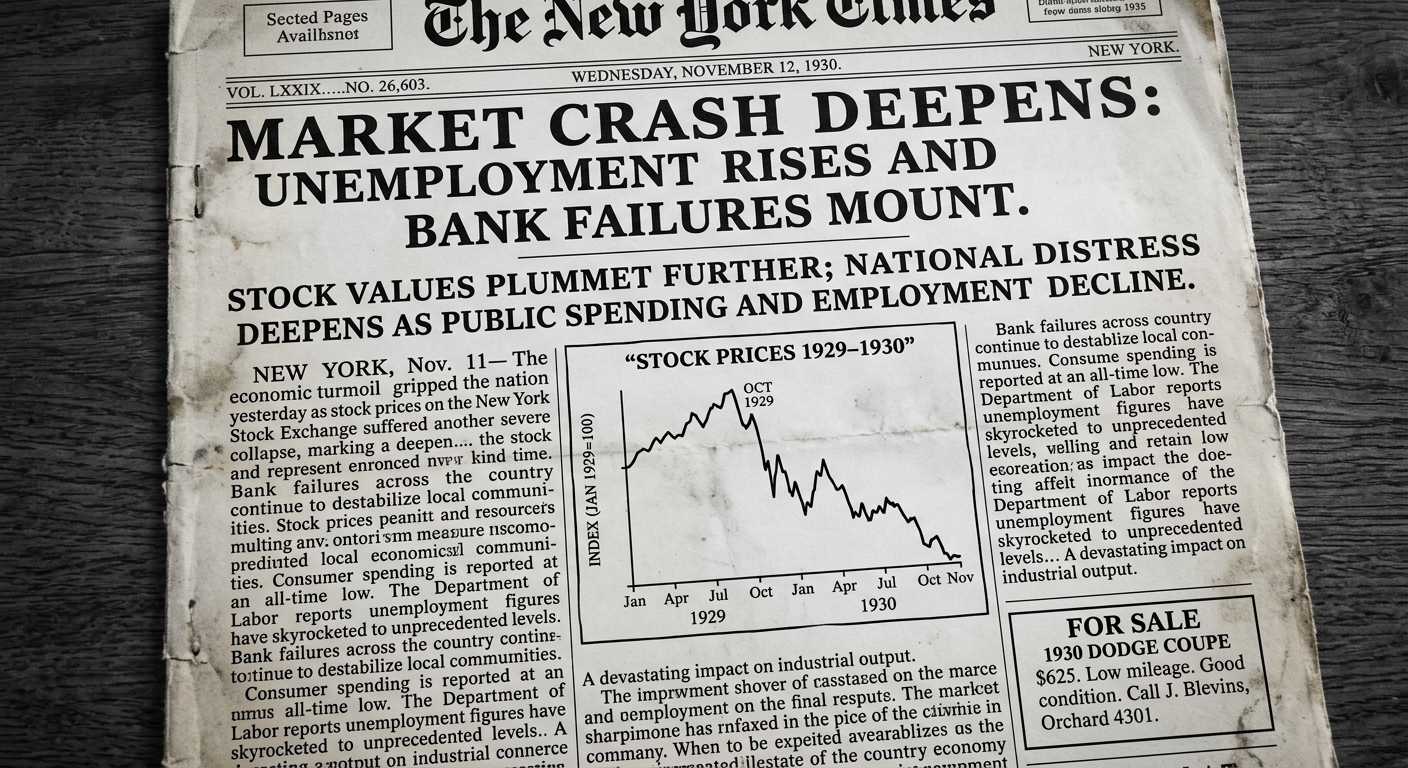
Black-and-white 1930 newspaper-style document with a headline about a market crash, a short article mentioning bank failures and unemployment, and a small line chart showing stock prices dropping from 1929 to 1930.

Asemmisa {{asɛmmisaAhyɛnsode}}
1.

Based on the newspaper document, which detail most directly shows how risky investing helped trigger the downturn?

Asemmisa {{asɛmmisaAhyɛnsode}}
2.

Which explanation BEST connects overproduction to the bank failures described in the document?

Asemmisa {{asɛmmisaAhyɛnsode}}
3.

If lawmakers responded with higher tariffs (protectionism), what would that policy MOST likely aim to do in the short run?

Asemmisa {{asɛmmisaAhyɛnsode}}
4.

Explain how at least TWO of the following interacted to deepen the Great Depression: risky investing, overproduction, protectionism.

Use evidence from the document (for example, the chart trend or the article’s descriptions).

Asemmisa {{asɛmmisaAhyɛnsode}}
5.

Describe one limitation of using a newspaper document like this to understand the Great Depression and identify one additional type of source that could corroborate or challenge it.

Explain why that source would help.

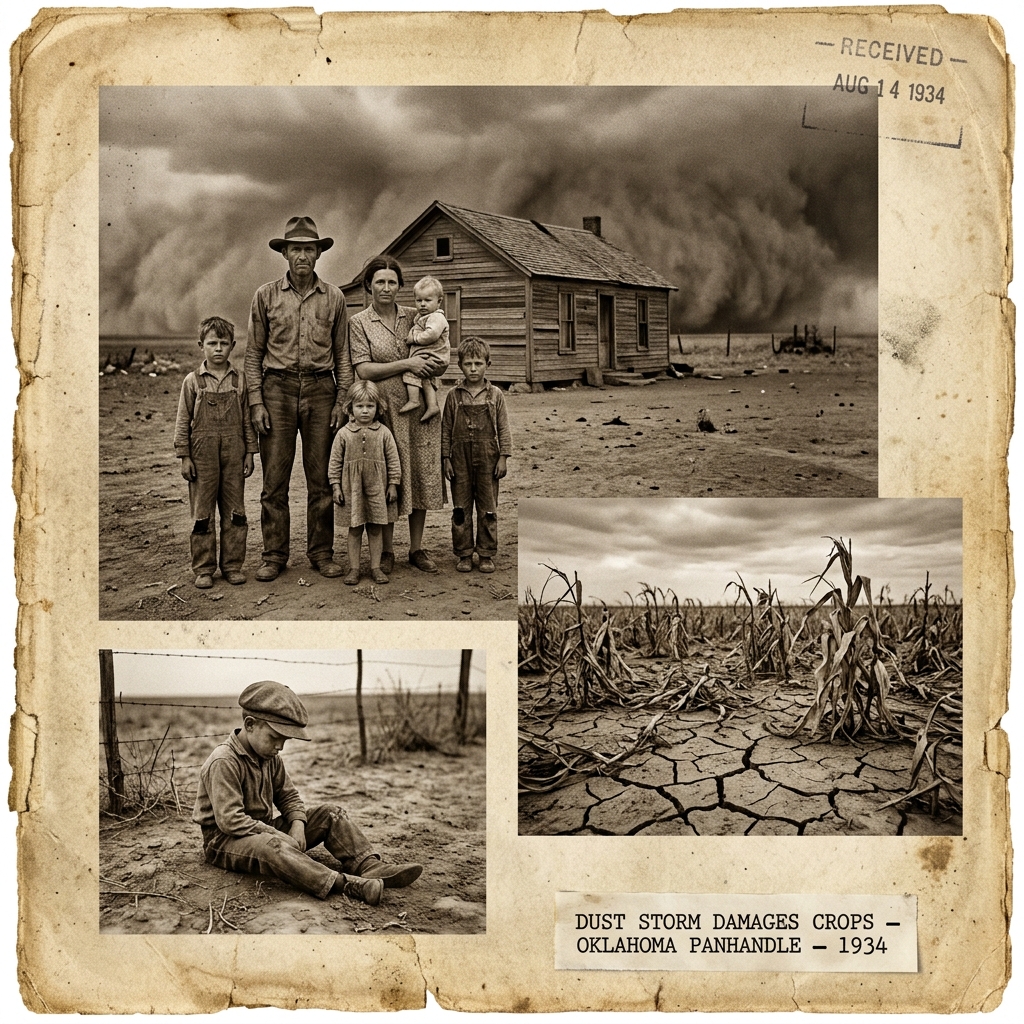
This 1934 photo document shows Dust Bowl conditions: dry, cracked soil and blowing dust near a farm home. It suggests crop failures and loss of income for farm families, with fewer jobs and less spending in nearby towns. These environmental shocks worsened hardship during the Great Depression.

Sepia-toned 1934 document-style page showing Dust Bowl scenes: a farm family near a small house, dust in the air, and cracked dry soil with damaged crops, with a caption referencing the Oklahoma Panhandle in 1934.

Asemmisa {{asɛmmisaAhyɛnsode}}
6.

Based on the Dust Bowl photo document, which effect on farm families is MOST directly supported by the evidence?

Asemmisa {{asɛmmisaAhyɛnsode}}
7.

Which explanation BEST describes how Dust Bowl conditions could affect nearby towns and businesses?

Asemmisa {{asɛmmisaAhyɛnsode}}
8.

Which action would MOST likely be a direct response to the economic problems suggested by this Dust Bowl document?

Asemmisa {{asɛmmisaAhyɛnsode}}
9.

Using evidence from the document, explain how the Dust Bowl could worsen the Great Depression for both farm families and the broader economy (such as towns, banks, or markets).

Asemmisa {{asɛmmisaAhyɛnsode}}
10.

Identify one limitation of using a photo document like this to understand the Dust Bowl’s economic impact and name one additional type of source that would strengthen the analysis.

Explain why.

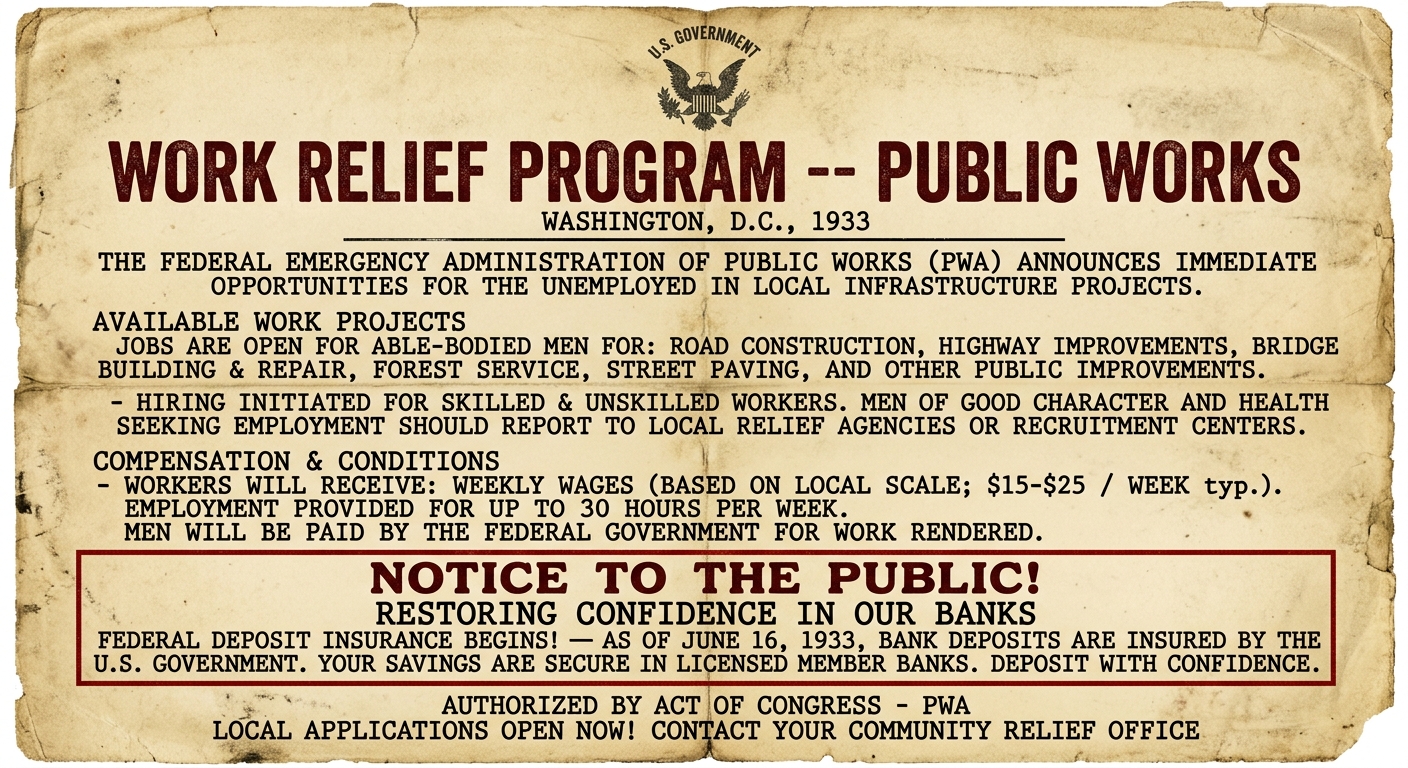
This 1933 handbill announces New Deal programs meant to stabilize the economy. It promises government-funded jobs on public works and notes new federal protection for bank deposits to restore confidence. The document shows how the federal government expanded its role during the Great Depression.

Aged 1933 New Deal-era handbill describing a work relief public works program and a notice about federal deposit insurance to restore confidence in banks.

Asemmisa {{asɛmmisaAhyɛnsode}}
11.

Based on the handbill, which New Deal goal is MOST directly supported by the public works program described?

Asemmisa {{asɛmmisaAhyɛnsode}}
12.

According to the handbill’s deposit protection notice, what would federal deposit insurance MOST likely do in the short term?

Asemmisa {{asɛmmisaAhyɛnsode}}
13.

Which statement BEST describes a long-term effect of the reforms suggested by the handbill?

Asemmisa {{asɛmmisaAhyɛnsode}}
14.

Use evidence from the handbill to explain how ONE New Deal policy described could help BOTH individuals and businesses.

Write a well-formed paragraph.

Asemmisa {{asɛmmisaAhyɛnsode}}
15.

Describe one limitation of using a government handbill like this to judge the New Deal’s success and identify one additional type of source that would help evaluate results.

Explain why.