Twa kɔ nsɛm atitiriw so
Log in
Sign up for FREE
arrow_back
Laabri

8.6 - World War II: - Practice E

star
star
star
star
star
Last updated about 1 month ago
15 Nsɛmmisa
Hyɛ no nsow a efi ɔkyerɛwfo no hɔ:

Use the historical document(s) and the short readings in the left panel to answer the associated questions.

Use the historical document(s) and the short readings in the left panel to answer the associated questions.

Ɛhia
1
8.6.a
DOK.SS.2
Ɛhia
1
8.6.a
DOK.SS.2
Ɛhia
1
8.6.a
DOK.SS.2
Ɛhia
2
8.6.a
DOK.SS.2
Ɛhia
2
8.6.a
DOK.SS.2
Ɛhia
1
8.6.b
DOK.SS.2
Ɛhia
1
8.6.b
DOK.SS.2
Ɛhia
1
8.6.b
DOK.SS.2
Ɛhia
2
8.6.b
DOK.SS.2
Ɛhia
2
8.6.b
DOK.SS.2
Ɛhia
1
8.6.c
DOK.SS.2
Ɛhia
1
8.6.c
DOK.SS.2
Ɛhia
1
8.6.c
DOK.SS.2
Ɛhia
2
8.6.c
DOK.SS.2
Ɛhia
2
8.6.c
DOK.SS.2

Historical Document: Emergency Economic Notice (Europe, early 1930s)

In the early 1930s, the worldwide economic depression caused mass unemployment and falling wages. This posted notice announces “emergency measures,” including wage reductions, limits on prices, and expanded government control over markets to restore stability. Many citizens questioned whether democratic governments could solve the crisis.
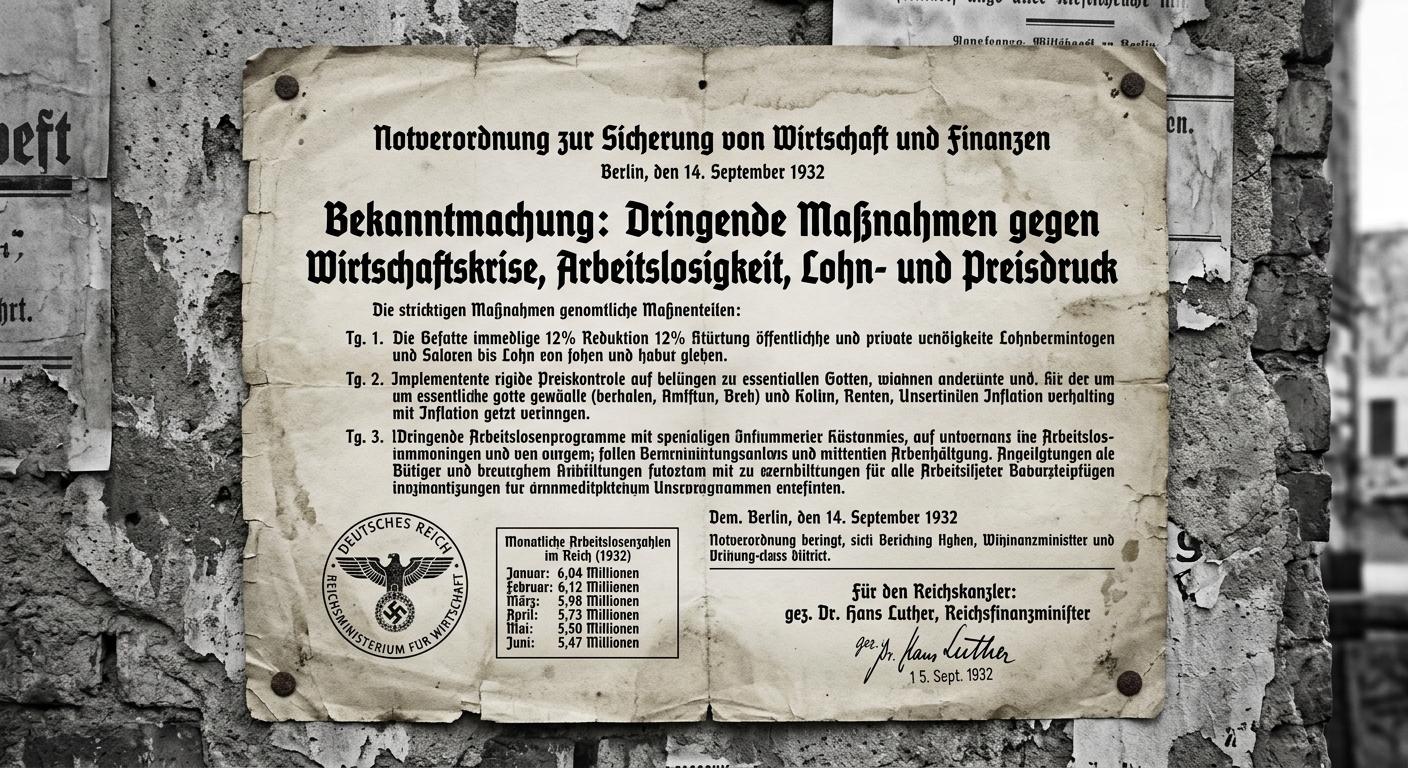
Black-and-white 1930s European government economic notice with an official stamp and a small unemployment table.

Asemmisa {{asɛmmisaAhyɛnsode}}
1.

Which economic problem is the government most directly responding to?

Asemmisa {{asɛmmisaAhyɛnsode}}
2.

Which inference best connects economic instability in the early 1930s to the rise of militant nationalism or totalitarian rule?

Asemmisa {{asɛmmisaAhyɛnsode}}
3.

Which statement best explains why policies like wage cuts and price controls could increase political tension in some countries during the 1930s?

Asemmisa {{asɛmmisaAhyɛnsode}}
4.

Using evidence from the document and reading stimulus, explain one way the economic depression could weaken support for democracy and increase support for authoritarian leaders.

Write a well-formed paragraph.

Asemmisa {{asɛmmisaAhyɛnsode}}
5.

Based on the document, describe one benefit and one cost of increased government control of markets during an economic crisis.

Write 2–4 sentences.

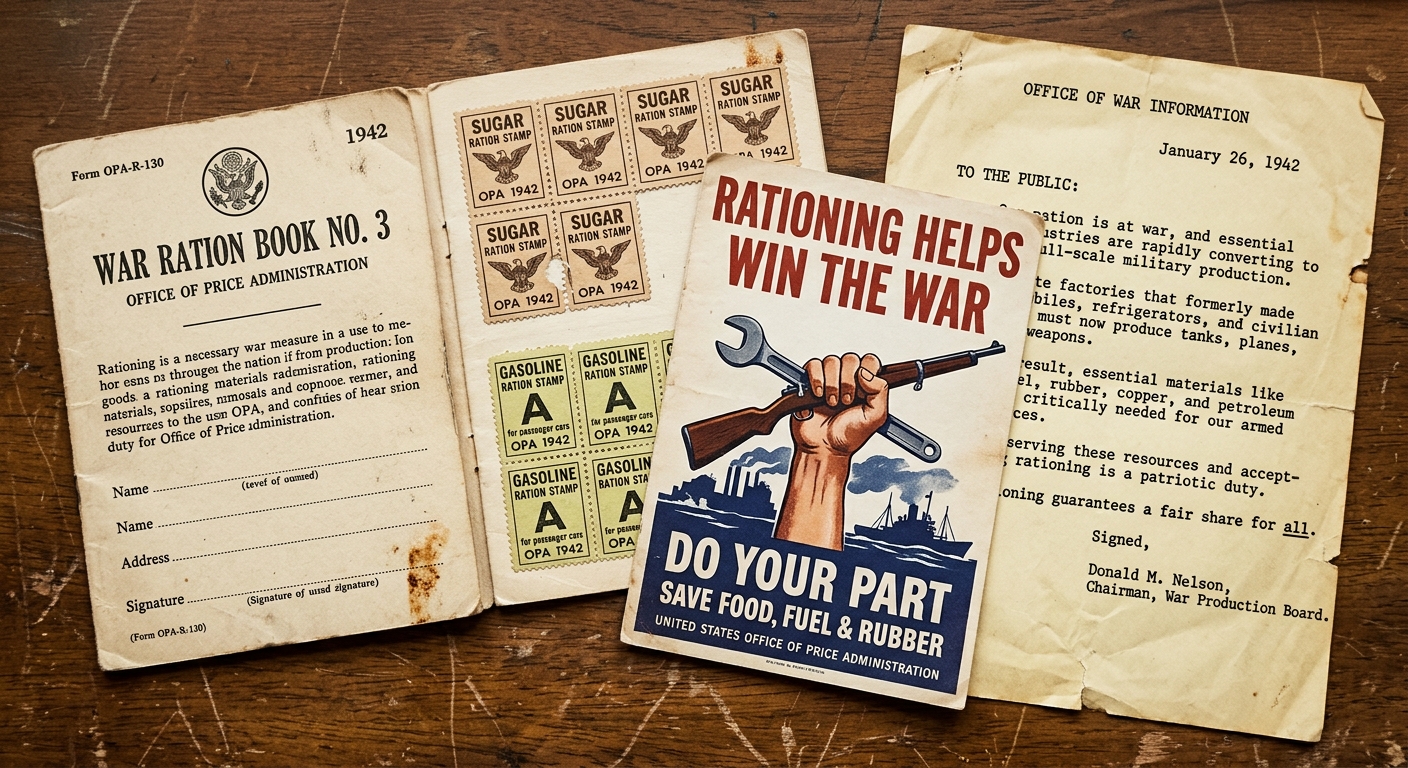
Historical Document: Wartime Rationing and Price Controls (United States, 1942)

After the U.S. entered World War II, the government redirected factories to war production and rationed scarce goods. This document set includes ration stamps for items like sugar and gasoline and a notice explaining price controls and conservation. Officials argued rationing ensured enough supplies for military use.

1942 U.S. ration book page and wartime price control notice about conserving materials and war production.

Asemmisa {{asɛmmisaAhyɛnsode}}
6.

Which wartime economic goal is the rationing system most directly designed to support?

Asemmisa {{asɛmmisaAhyɛnsode}}
7.

Which conclusion about the U.S. wartime economy is best supported by the document?

Asemmisa {{asɛmmisaAhyɛnsode}}
8.

If a community ignores ration rules and buys scarce goods on an unofficial market, which outcome is most likely?

Asemmisa {{asɛmmisaAhyɛnsode}}
9.

Using evidence from the document and reading stimulus, explain how rationing and price controls could affect two different groups:

(1) a civilian family and

(2) a factory owner.

Write one paragraph.

Asemmisa {{asɛmmisaAhyɛnsode}}
10.

Based on the document, describe one reason the government might ration consumer goods during wartime and one possible unintended consequence of rationing.

Write 2–4 sentences.

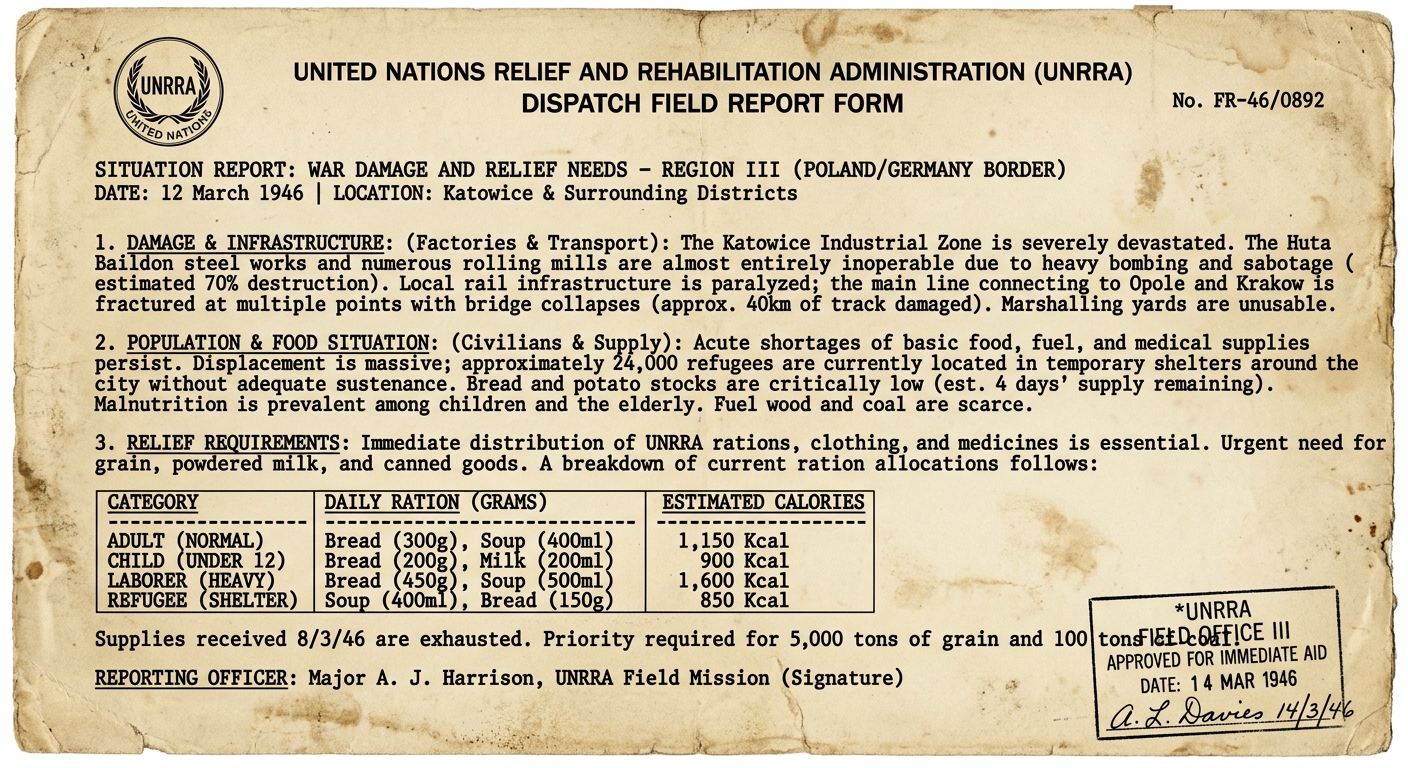
Historical Document: UN Relief & Reconstruction Field Report (Europe, 1945)

After World War II, bombed factories and rail lines disrupted jobs and trade. This UN relief report lists shortages of food and fuel, damaged infrastructure, and ration plans for displaced civilians. It reflects how total warfare reshaped economies and increased support for international cooperation and human rights.

Black-and-white UNRRA relief field report listing shortages, damaged rail lines, and ration allocations.

Asemmisa {{asɛmmisaAhyɛnsode}}
11.

Use the historical document and reading stimulus.

Which economic problem is the relief agency most directly trying to address?

Asemmisa {{asɛmmisaAhyɛnsode}}
12.

Which conclusion is best supported by the document about the consequences of total warfare for economies?

Asemmisa {{asɛmmisaAhyɛnsode}}
13.

The ration plan in the document would most likely have which effect on civilians?

Asemmisa {{asɛmmisaAhyɛnsode}}
14.

Using evidence from the document and reading stimulus, explain how damage to factories and transportation could affect both employment and prices in the postwar economy.

Write one paragraph.

Asemmisa {{asɛmmisaAhyɛnsode}}
15.

Based on the document, describe one economic reason countries supported creating international organizations after World War II and one possible challenge those organizations faced.

Write 2–4 sentences.