Use the historical document(s) and the short readings in the left panel to answer the associated questions.

After World War II, government-backed mortgages and new highways lowered the cost of buying suburban homes and commuting to jobs. Ads like this promoted credit, planned shopping, and affordable monthly payments. These economic changes helped shift population away from many cities and reshaped local economies.
Based on the document, which government-related economic factor most directly lowered the barrier to buying a home for many families in the 1950s?
Which demographic change after World War II is most consistent with the evidence in the document and reading?
Using evidence from the advertisement and the reading, explain two economic consequences that suburban growth could create for:
(1) a city and
(2) a suburb.
Include at least one specific detail from the document in your response.
The document highlights low monthly payments and new highway access.
Explain one benefit and one cost of these postwar economic changes for different groups of people (for example, homebuyers, city residents, suburban governments, or businesses).
Support your answer with evidence from the source.
Which economic change is best supported by the ad’s emphasis on being “near the new expressway”?

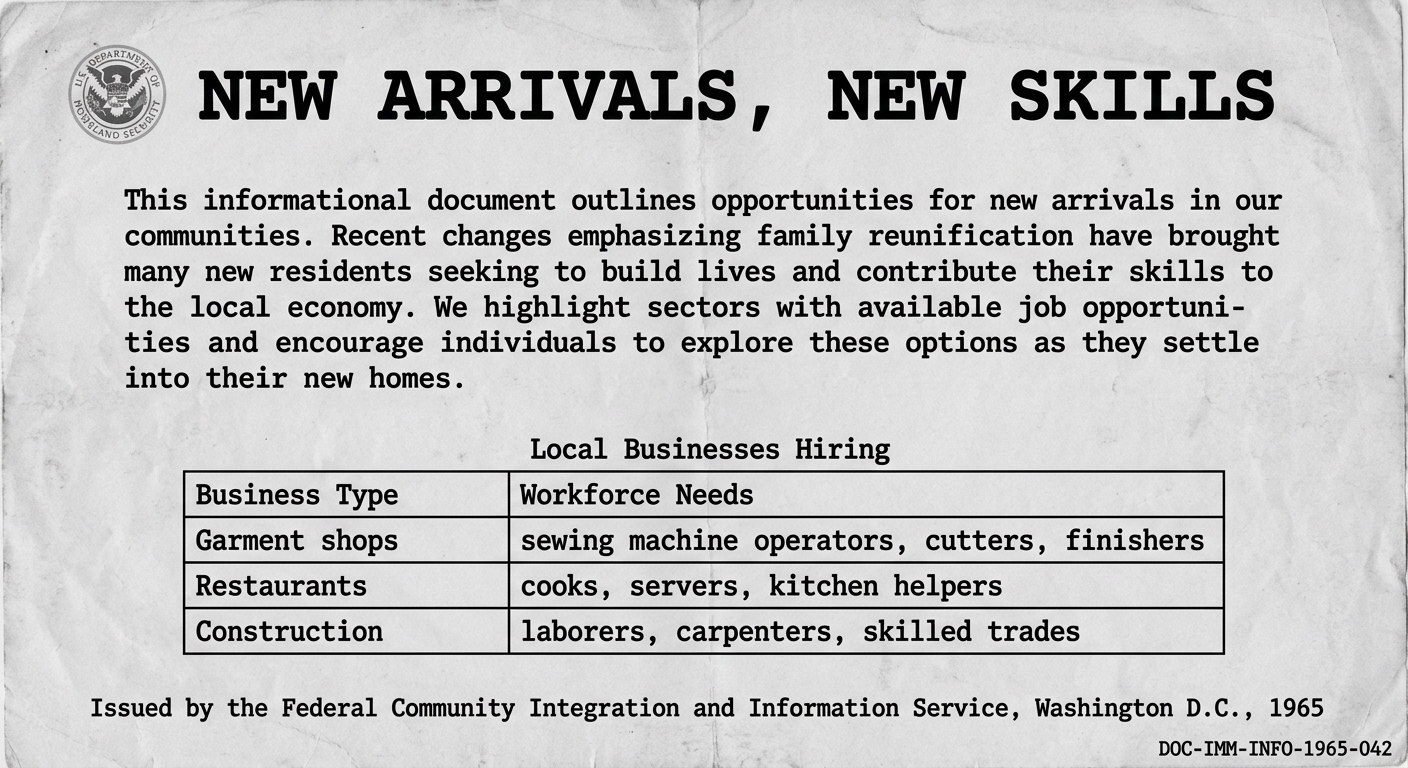
After 1965, immigration patterns shifted as U.S. policy expanded family reunification and opened new pathways for entrants. Many newcomers filled jobs in growing service and manufacturing sectors while starting small businesses. These changes increased cultural diversity and affected local labor markets, wages, and consumer demand.
Which conclusion about local economies is best supported by the reading’s description of newcomers starting small businesses?
Based on the document and reading, which economic role is most directly suggested by the phrase “Local Businesses Hiring”?
Using evidence from the document and the reading, explain two ways increased immigration could affect a community’s economy (for example, jobs, businesses, or consumer demand).
Include at least one specific detail from the document.
The reading mentions family reunification and job opportunities.
Explain one potential benefit and one potential cost of these immigration-driven economic changes for different groups in a community (for example, employers, workers, consumers, or local governments).
Support your answer with evidence from the sources.
Which statement best explains how increased immigration can affect wages in a local labor market?

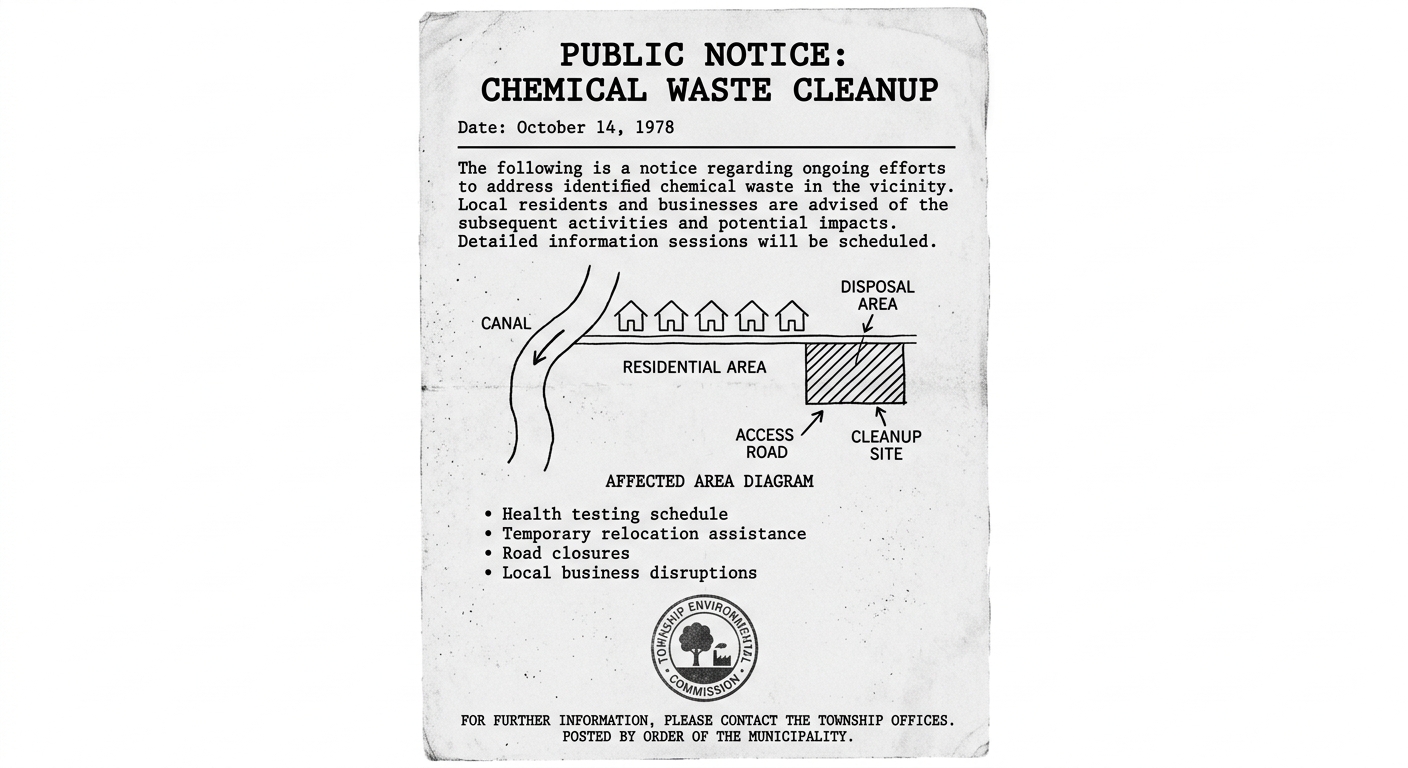
In the 1970s, industrial pollution and growing suburbs led communities to confront contamination near homes and schools. Cleanup plans often required government spending and affected local jobs, property values, and small businesses. Residents weighed public health costs against economic disruption during investigations and relocation.
Which conclusion is best supported by the document’s mention of “temporary relocation assistance”?
Based on the public notice and reading, which economic impact is most directly suggested by the phrase “local business disruptions”?
The sources describe public health testing, relocation assistance, and business disruptions.
Explain one potential economic benefit and one potential economic cost of government action during a pollution cleanup for different groups (for example, residents, taxpayers, workers, or businesses).
Support your answer with evidence from the sources.
Using evidence from the document and reading, explain two ways pollution and cleanup efforts could affect a local economy (for example, jobs, property values, or public spending).
Include at least one specific detail from the document.
Which economic concept is most useful for explaining why communities might debate whether to close roads or restrict access during a cleanup?