Use the historical document(s) and the short readings in the left panel to answer the associated questions.
Historical Document: Storefront hiring notice (United States, mid-1960s)
This photo shows a store advertising jobs and calling itself an “equal opportunity” employer. After new civil rights laws, some workplaces changed hiring rules. But pay rates, training access, and the number of openings still shaped who could get steady work and improve income.
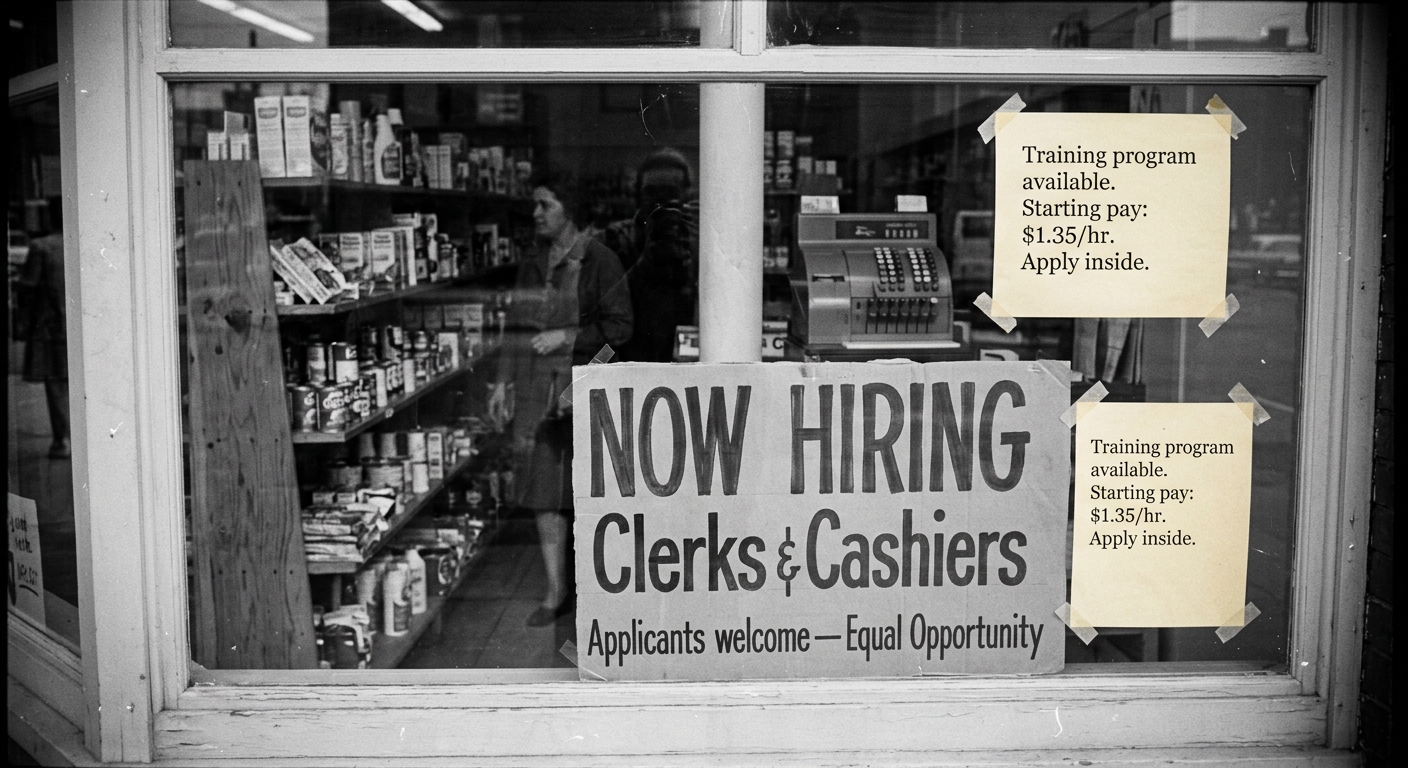
Based on the document and reading, which factor is the BEST example of why equality under the law might not immediately produce equal economic outcomes?
Which statement best connects the hiring sign to the idea that the civil rights movement achieved legal equality faster than economic improvements?
The notice lists a starting wage and mentions a training program. Which inference is MOST supported about how labor markets affect individuals’ economic well-being?
Using evidence from the document and reading, explain one way a government policy aimed at equal opportunity could affect the economy AND one reason economic outcomes could still differ among groups afterward.
Write a well-formed paragraph.
Suppose a city enforces equal opportunity hiring rules but most entry-level jobs still pay low wages.
Explain one economic policy option that could improve workers’ economic well-being and describe one potential cost or tradeoff of that option for a different group.
Use the source as context. Write a well-formed paragraph.
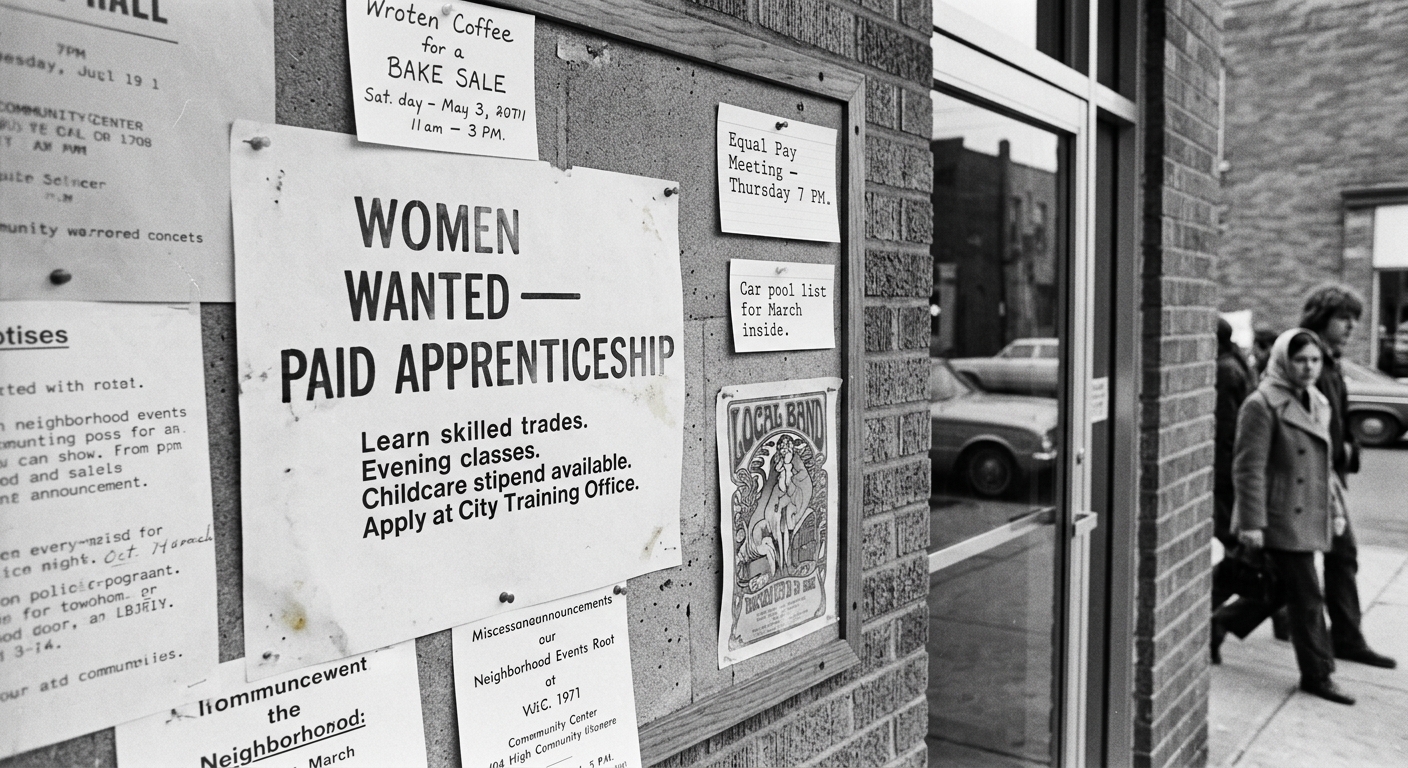
Historical Document:
Community bulletin board notices (United States, late 1960s–early 1970s)
The flyer promotes a paid apprenticeship for women and mentions supports like evening classes and childcare. During and after the civil rights era, women and other groups pushed for equal opportunity in hiring and pay. These efforts connected civil rights goals to economic mobility.

Which detail from the document BEST shows an attempt to reduce a barrier that might keep some women from joining higher-paying work?
Which statement BEST explains how efforts like the apprenticeship flyer connect the civil rights movement to economic systems?
Which outcome is the MOST reasonable economic effect if programs like this apprenticeship expanded over time?
Using evidence from the document and reading, explain one way the movement for equality by women (or another group) could influence the labor market AND describe one reason pay differences could still continue afterward.
Write a well-formed paragraph.
Suppose a local government funds programs like the apprenticeship shown in the document.
Describe one benefit for workers and one potential cost or tradeoff for a different group (such as taxpayers or businesses).
Use the source as context. Write a well-formed paragraph.
Historical Document: County social services office bulletin board (United States, mid-1960s)
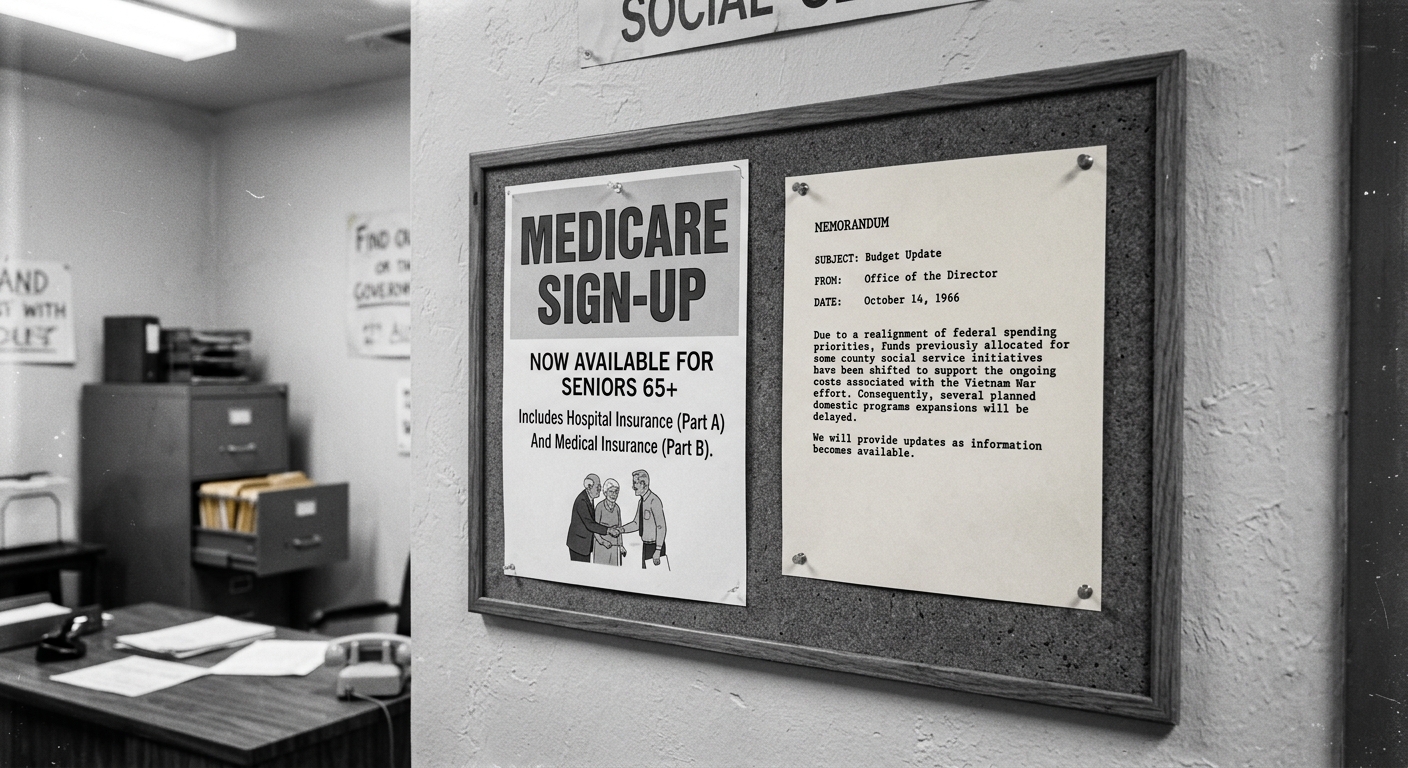
This photo shows a Medicare sign-up poster for seniors posted in a local government office. Next to it is a memo noting that some funds were shifted to cover Vietnam War costs. The document highlights how domestic programs could expand while war spending strained budgets.

Which statement BEST explains how a program like Medicare could strengthen efforts to reduce poverty or improve economic well-being for the elderly?
The memo mentions funds shifting to cover Vietnam War costs. Which tradeoff is MOST consistent with the reading?
Which inference about government policy and the economy is MOST supported by having both a Medicare sign-up poster and a budget memo in the same office?
Using evidence from the document and reading, explain one way a Great Society program could affect the economy AND describe one reason the Vietnam War could drain resources needed for that program.
Write a well-formed paragraph.
Suppose state leaders want to expand health coverage for seniors but also face rising war-related spending.
Describe one policy option to fund the expansion and explain one potential cost or tradeoff for a different group (such as taxpayers, businesses, or other programs).
Use the source as context. Write a well-formed paragraph.
Historical Document: Newspaper clipping on the economy (United States, late 1970s)
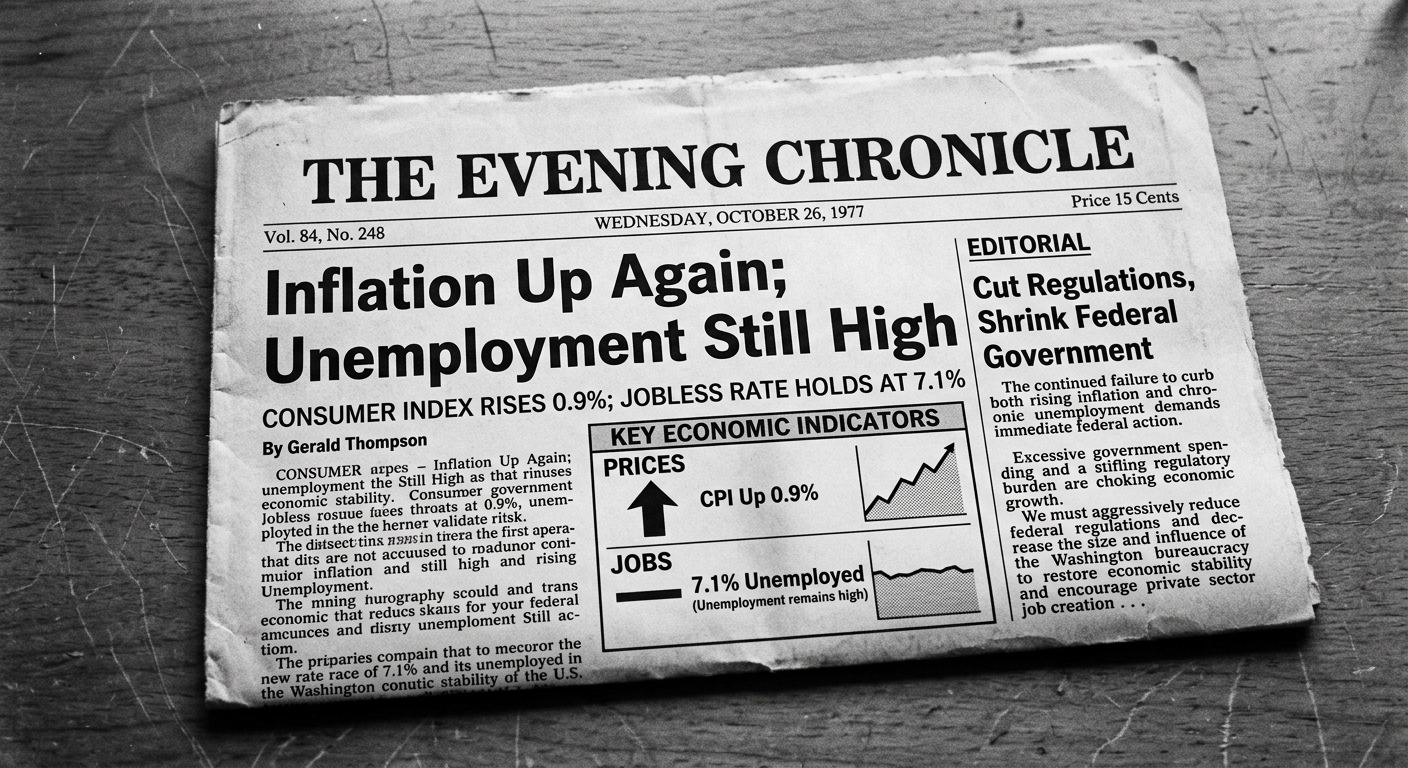
This newspaper clipping reports rising prices and continuing unemployment during the 1970s recession era. A sidebar calls for cutting regulations and reducing the size of the federal government. The document reflects how economic conditions can shape political debates over government’s role in the economy.

Based on the document and reading, which condition is MOST likely to encourage fiscal conservatives to call for changes in regulation and policy?
Which statement BEST explains why inflation is an economic issue that can affect individuals’ well-being?
The sidebar calls for cutting regulations and reducing the size of the federal government.
Which inference is MOST supported about the relationship between economic recession and public policy debates?
Using evidence from the document and reading, explain one way a 1970s recession could affect workers or businesses AND describe one reason this might lead some voters to support reducing federal regulation.
Write a well-formed paragraph.
Suppose leaders respond to inflation by cutting government spending and reducing regulations.
Describe one potential benefit for one group (such as businesses or taxpayers) and one potential cost or tradeoff for a different group (such as workers or consumers).
Use the source as context. Write a well-formed paragraph.
Historical Document: Public notice and newspaper excerpt on civil liberties (United States, early 1970s)
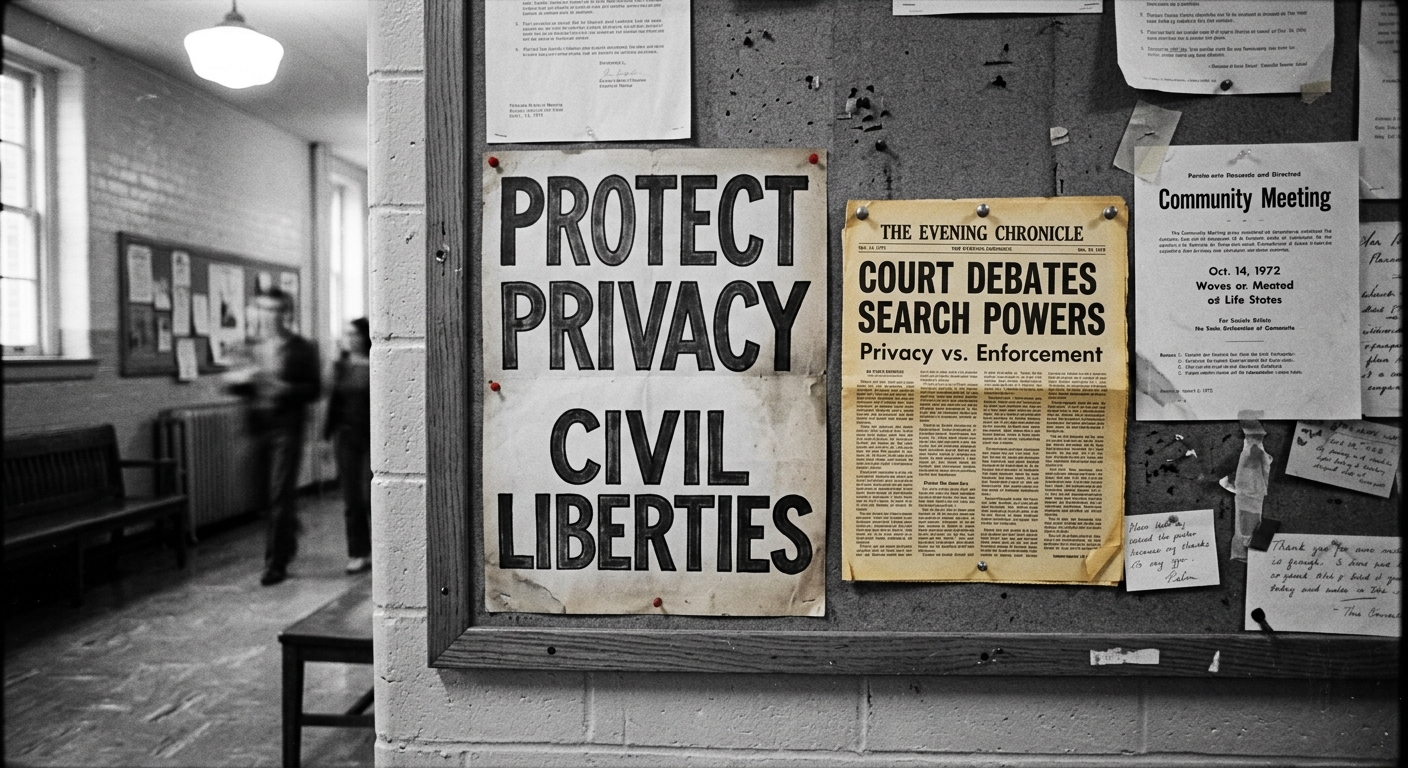
The photo shows a public notice criticizing expanded police or surveillance powers alongside a newspaper excerpt about court debates on searches and privacy. Arguments about civil liberties often involve economic tradeoffs, such as funding enforcement, impacts on businesses, and the costs of protecting rights.

Which statement BEST connects debates about civil liberties (like privacy or searches) to the role of the federal government in society?
Which is the BEST example of an economic cost that could result from expanding surveillance or enforcement programs?
Which inference is MOST supported about why debates over civil liberties can affect economic systems?
Using evidence from the document and reading, explain one way a federal policy that expands search or surveillance powers could affect the economy AND one reason some people might argue it violates civil liberties.
Write a well-formed paragraph.
Suppose Congress debates a new law that increases federal enforcement powers to address a national threat.
Describe one potential economic benefit for one group and one potential cost or tradeoff for a different group.
Use the source as context. Write a well-formed paragraph.