Use the historical document(s) and the short readings in the left panel to answer the associated questions.
Read the 1892 broadside posted in New York City. It reflects how factories and new machines increased production and created a demand for workers. Use details from the document to make inferences about why people moved to the city and how immigration shaped urban life.
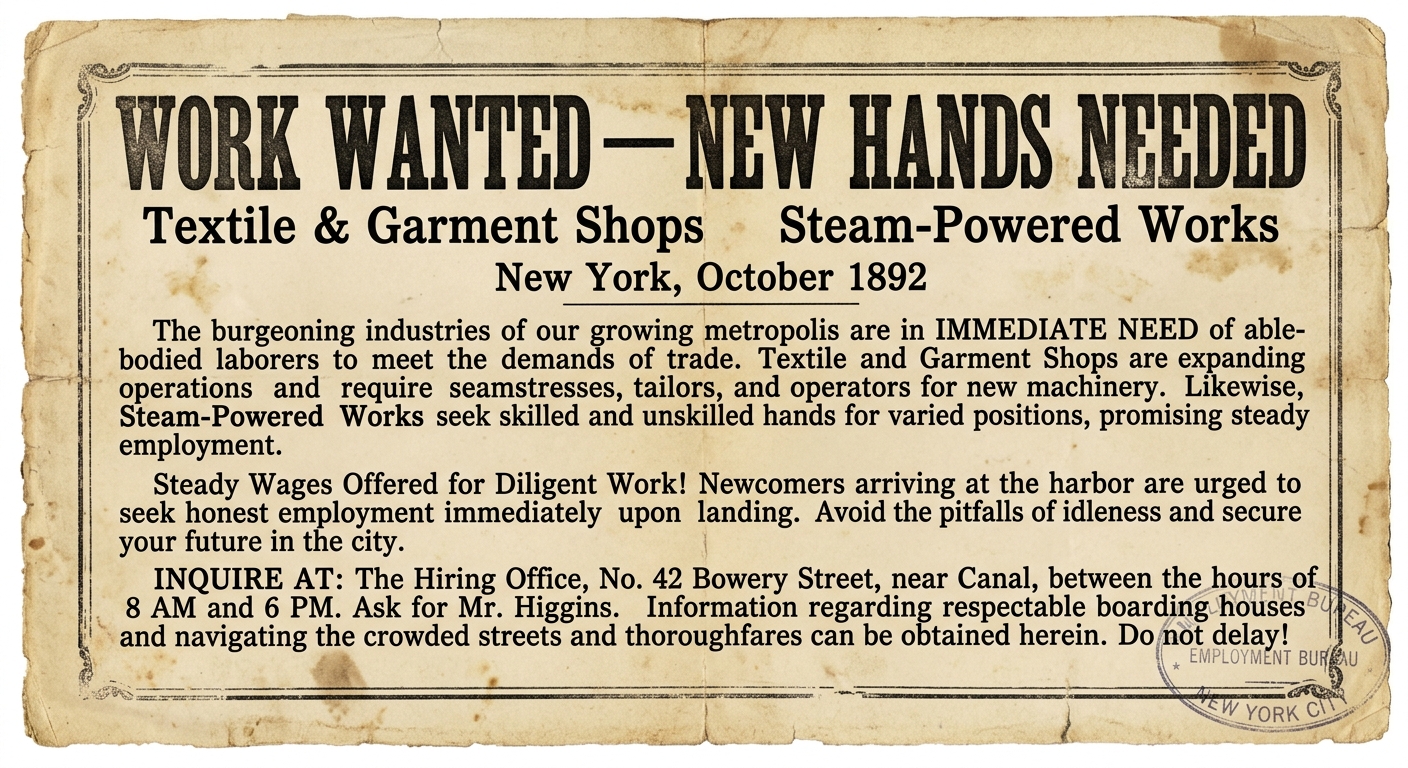
Which inference about immigration to New York City in the late 1800s is best supported by the broadside?
Which detail from the broadside would be the strongest evidence that New York City was experiencing rapid urban growth?
Based on the broadside, which statement best connects technology to changes in production during this period?
Explain how the broadside provides evidence that industrialization encouraged immigration and/or migration to New York City.
Use at least two specific details from the document as evidence.
Using evidence from the broadside, describe one way immigration could strengthen a New York City neighborhood and one way it could create challenges for the city.
Support each with a specific detail from the document.
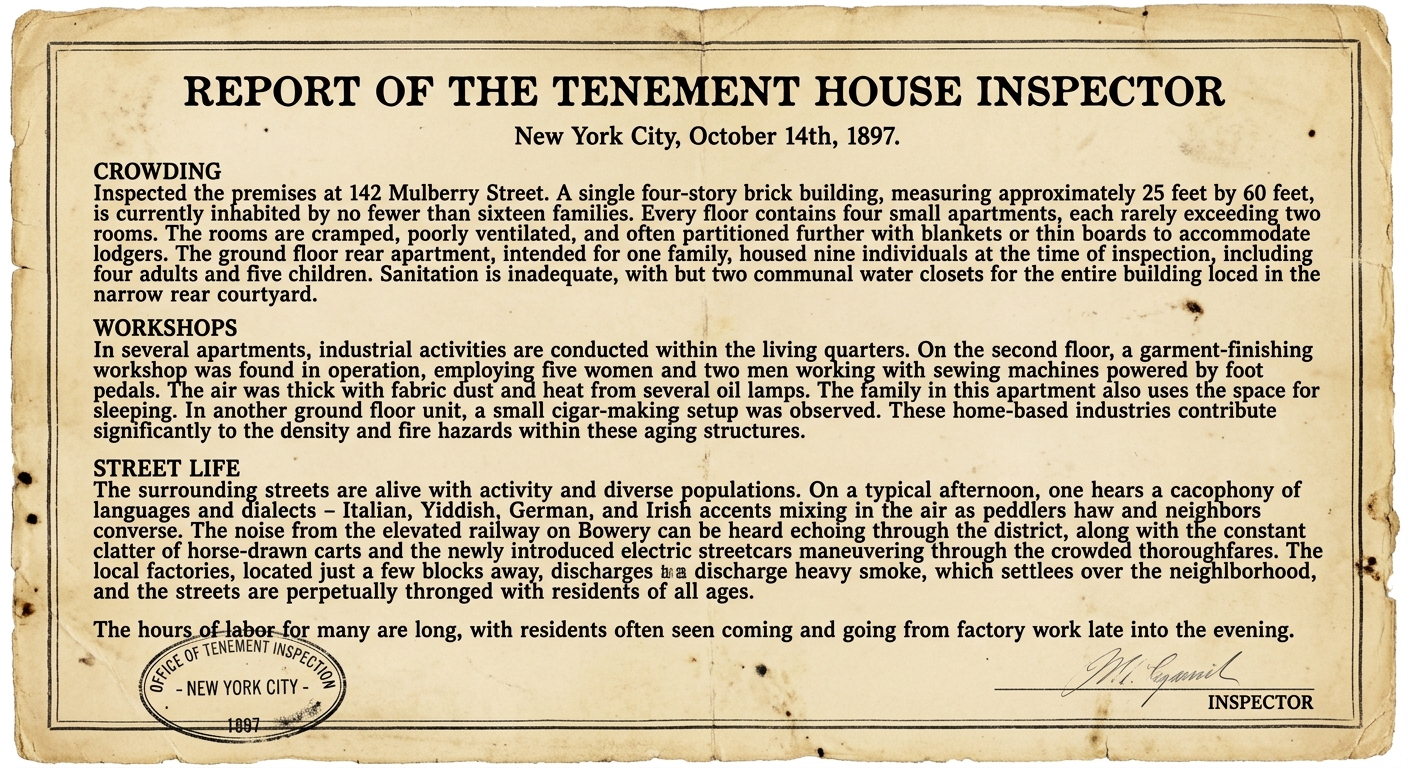
Read the 1897 inspector’s report excerpt about a New York City tenement neighborhood. Use evidence from the document to interpret how crowded housing, nearby industry, and new transportation shaped daily life. Pay attention to details about languages, work spaces, and street conditions when making inferences.

Which inference about daily life in this neighborhood is best supported by the inspector’s report?
Which detail from the report would be the strongest evidence that population density shaped living conditions?
Which conclusion about urban technology is best supported by the report?
Explain how the inspector’s report provides evidence that population density and industry shaped social and economic life in this urban area.
Use at least two specific details from the document as evidence.
Using evidence from the report, describe one way diversity could shape community life in this neighborhood and one way it could create challenges.
Support each with a specific detail from the document.
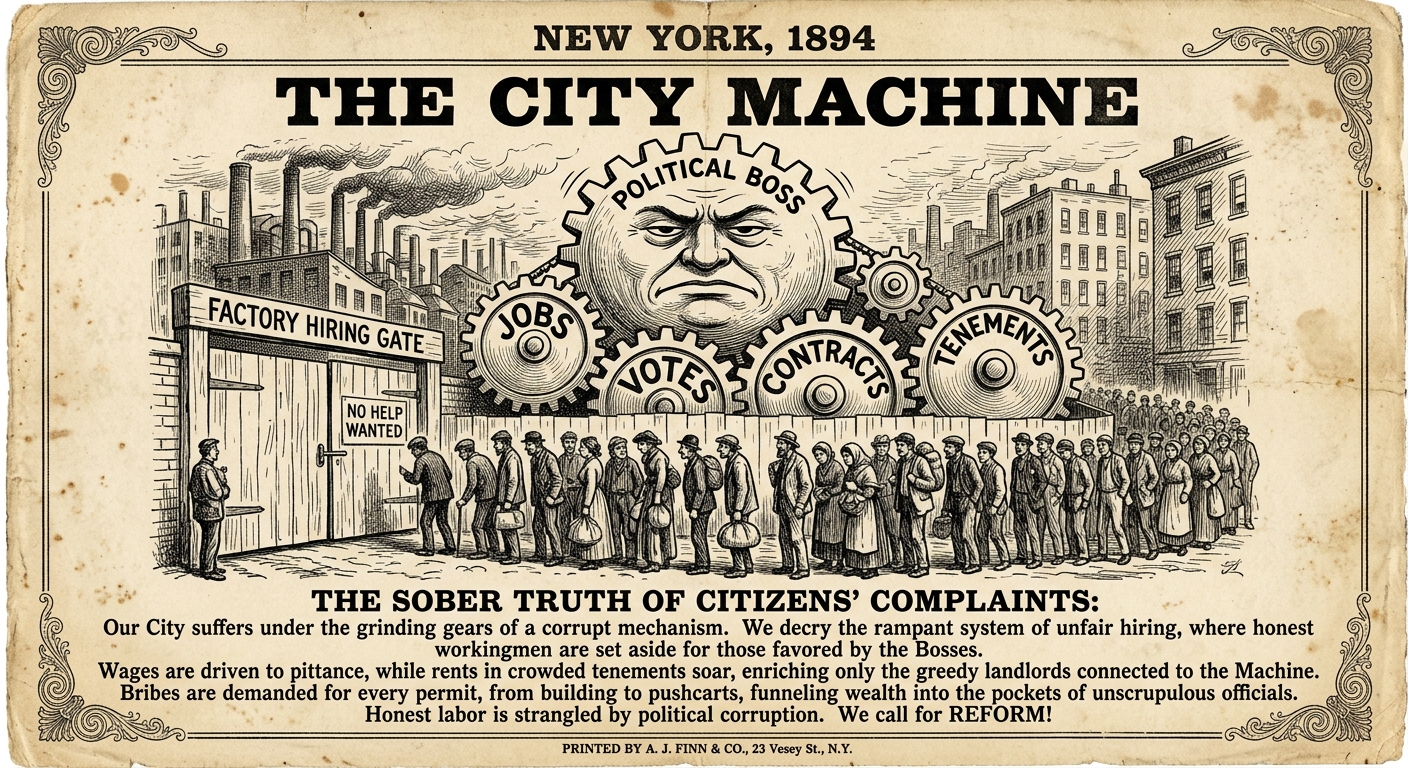
Read the 1894 political cartoon broadside about city politics and industrial work. Use the image and caption to identify how immigration, labor conditions, and political machines could create conflict in urban areas. Support your inferences with specific visual details and words from the document.

Which inference about political corruption is best supported by the cartoon’s “gear” metaphor and labels?
Which visual detail would be the strongest evidence that competition for work could increase conflicts over immigration?
Which statement best connects labor conditions to the power of political machines, based on the caption and labels?
Explain how the broadside suggests that immigration and industrial work could lead to conflict in the city.
Use at least two specific details (labels, symbols, or words) from the document as evidence.
Using evidence from the broadside, describe one way labor conditions might push workers to demand change and one way political corruption might block that change.
Support each claim with a specific detail from the document.
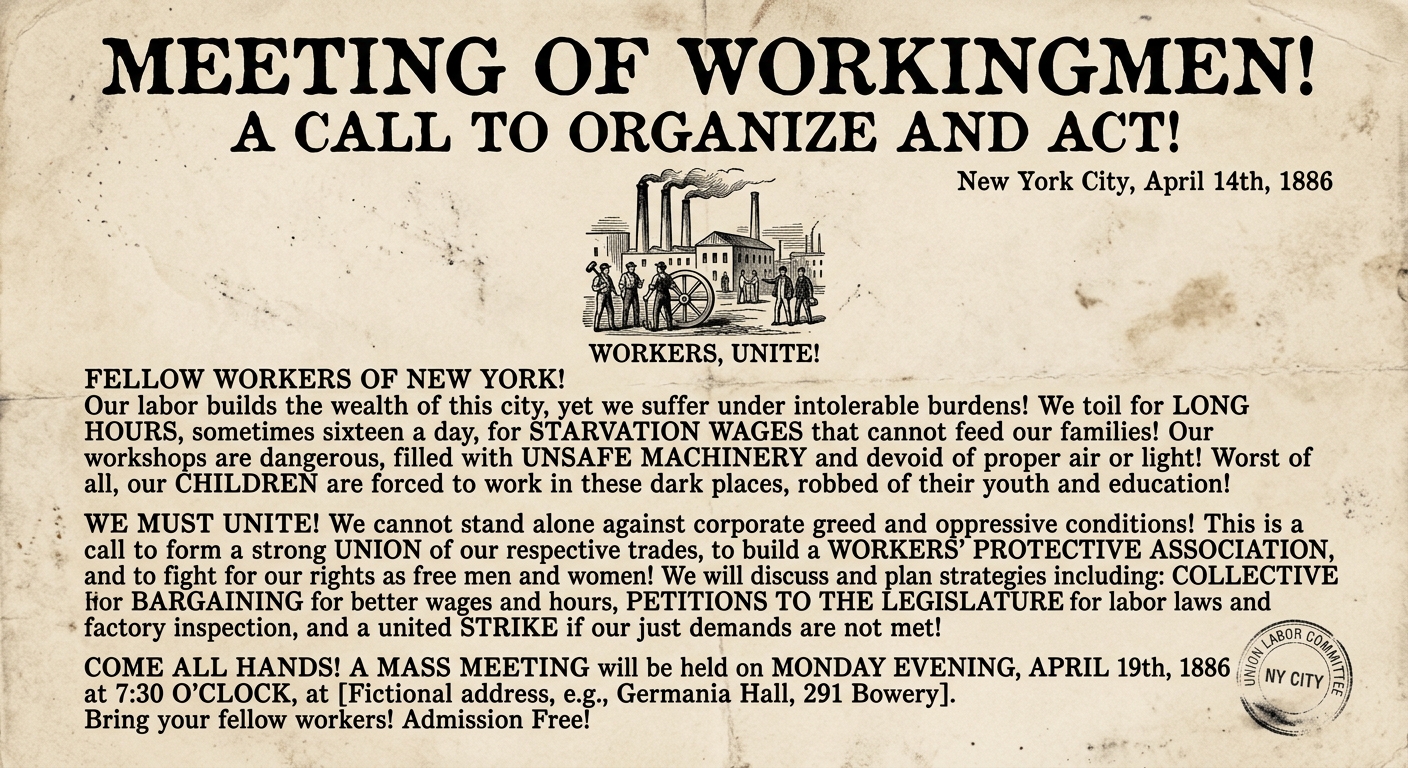
Read the 1886 labor handbill posted in New York City. It was written for factory workers responding to long hours, unsafe machinery, and low pay. Use details from the document to interpret why workers organized and what strategies they planned to use to improve working conditions.

Which inference about why workers organized is best supported by the handbill?
Which phrase or detail from the handbill would be the strongest evidence that working conditions were a problem?
Which strategy for improving conditions is most directly supported by the handbill?
Explain how the handbill shows that workers used organization to respond to working conditions.
Use at least two specific details from the document as evidence.
Using evidence from the handbill, describe one strategy workers could use to improve conditions and one reason that strategy might be risky for workers.
Support each with a detail from the document.
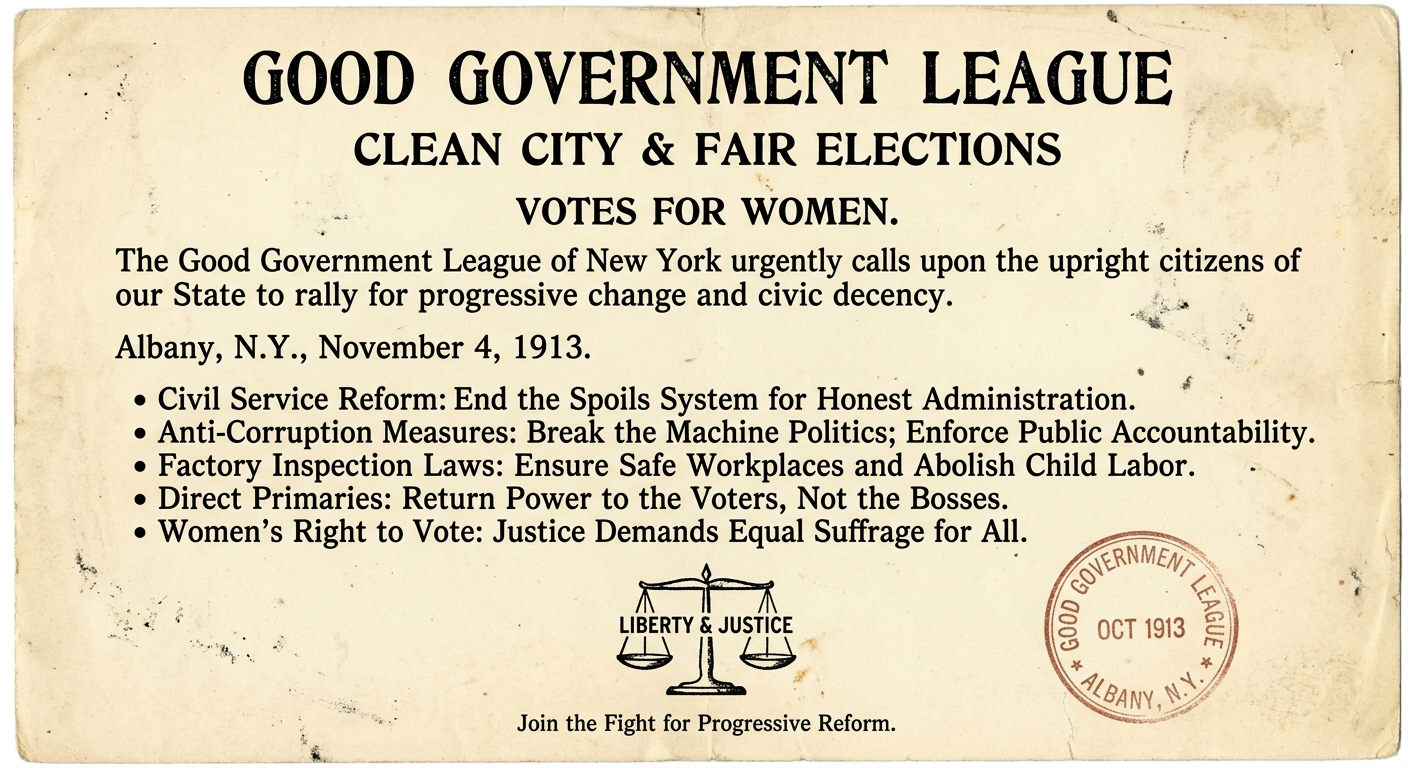
Read the 1913 reform leaflet circulated in New York State during the Progressive Era. Use evidence from the document to identify problems reformers wanted to address and the strategies they proposed. Focus on details about government reform, workplace rules, and women’s rights when making inferences.

Which inference about the reformers’ main goals is best supported by the leaflet?
Which phrase or feature from the leaflet would be the strongest evidence that Progressive reformers linked government reform with women’s rights?
Which conclusion about how reformers planned to address social problems is best supported by the leaflet?
Explain how the leaflet provides evidence that Progressive reformers tried to address political and social issues at the state or local level.
Use at least two specific details from the document as evidence.
Using evidence from the leaflet, describe one political reform it supports and one social reform it supports.
Support each with a specific phrase or feature from the document.