Twa kɔ nsɛm atitiriw so
Log in
Sign up for FREE
arrow_back
Laabri

8.3 - Expansion and Imperialism: - Practice A

star
star
star
star
star
Last updated about 1 month ago
20 Nsɛmmisa
Hyɛ no nsow a efi ɔkyerɛwfo no hɔ:

Use the historical document(s) and the short readings in the left panel to answer the associated questions.

Use the historical document(s) and the short readings in the left panel to answer the associated questions.

Ɛhia
1
8.3.a
DOK.SS.2
Ɛhia
1
8.3.a
DOK.SS.2
Ɛhia
1
8.3.a
DOK.SS.2
Ɛhia
2
8.3.a
DOK.SS.2
Ɛhia
2
8.3.a
DOK.SS.2
Ɛhia
1
8.3.b
DOK.SS.2
Ɛhia
1
8.3.b
DOK.SS.2
Ɛhia
1
8.3.b
DOK.SS.2
Ɛhia
2
8.3.b
DOK.SS.2
Ɛhia
2
8.3.b
DOK.SS.2
Ɛhia
1
8.3.c
DOK.SS.2
Ɛhia
1
8.3.c
DOK.SS.2
Ɛhia
1
8.3.c
DOK.SS.2
Ɛhia
2
8.3.c
DOK.SS.2
Ɛhia
2
8.3.c
DOK.SS.2
Ɛhia
1
8.3.d
DOK.SS.2
Ɛhia
1
8.3.d
DOK.SS.2
Ɛhia
1
8.3.d
DOK.SS.2
Ɛhia
2
8.3.d
DOK.SS.2
Ɛhia
2
8.3.d
DOK.SS.2

Read the document image. It is a reconstructed excerpt from an 1868 U.S. government notice about a reservation boundary and a railroad survey. As settlers and survey crews move west, officials describe how the area will be used and protected. Use the document’s wording as evidence in your answers.
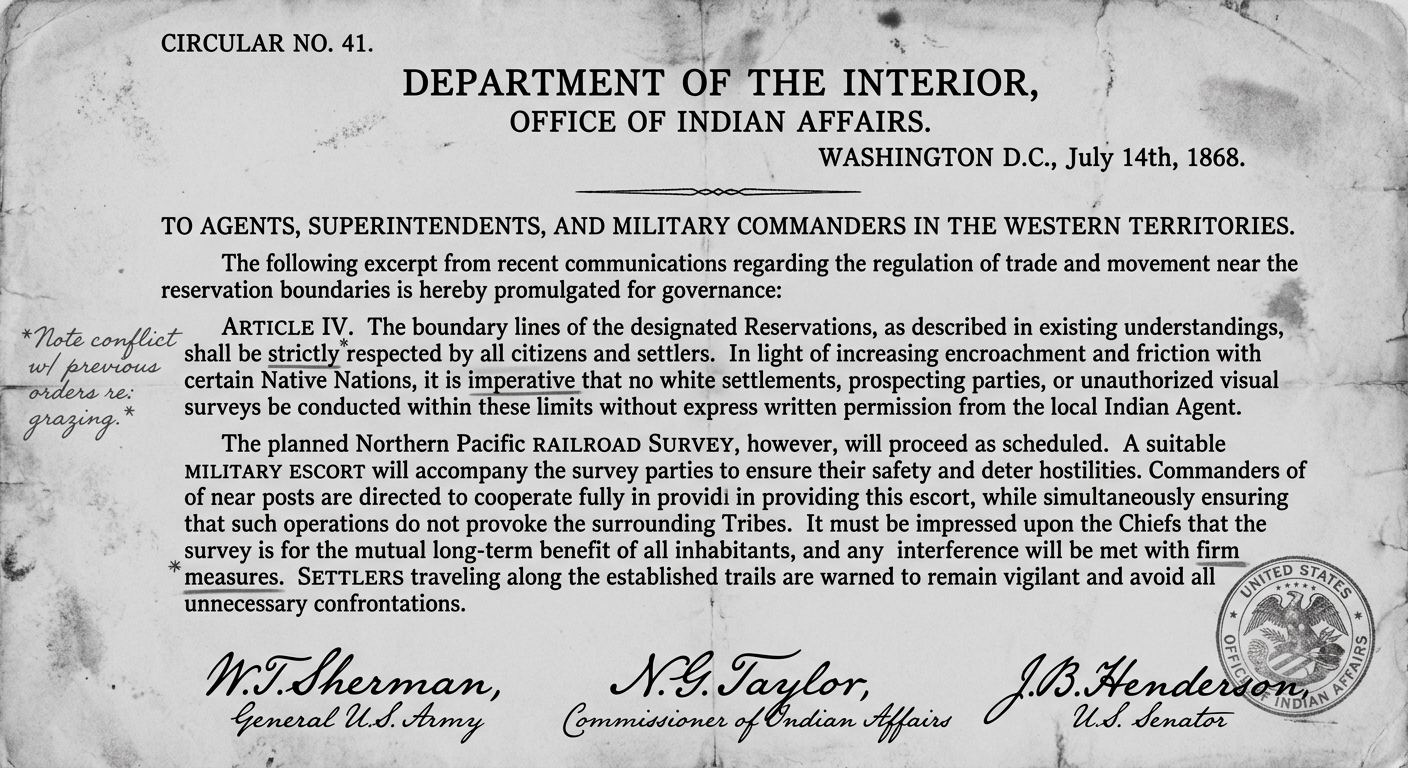
Grayscale scan of an aged 1868 U.S. government document excerpt with an ink seal and signatures discussing reservation boundaries, settlers, a railroad survey, and a military escort.

Asemmisa {{asɛmmisaAhyɛnsode}}
1.

Based on the document’s language about the “railroad survey” and “military escort,” which conclusion is best supported about why conflict could increase during westward expansion?

Asemmisa {{asɛmmisaAhyɛnsode}}
2.

Which phrase from the document would be the BEST evidence that westward expansion could pressure Native communities’ land use?

Asemmisa {{asɛmmisaAhyɛnsode}}
3.

What is the most likely purpose of this government document, based on its formal tone and references to an escort?

Asemmisa {{asɛmmisaAhyɛnsode}}
4.

Explain one way continued westward expansion could increase conflict with Native Americans.

Include at least two specific pieces of evidence (words or phrases) from the source.

Asemmisa {{asɛmmisaAhyɛnsode}}
5.

Identify one limitation of using this government document alone to understand conflicts during westward expansion.

Then name one additional type of source (and what it could show) that would help a historian corroborate the event.

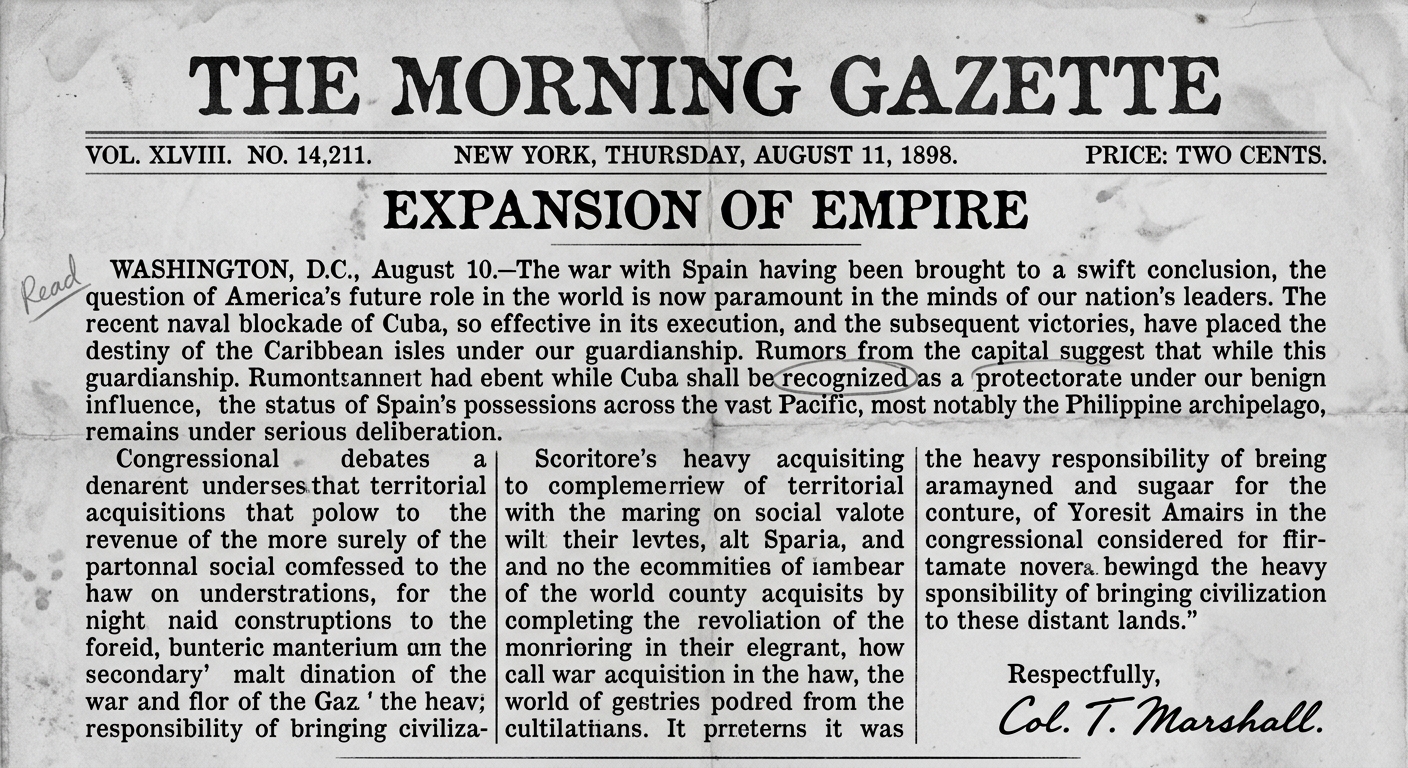
Read the document image. It is a reconstructed excerpt from an August 1898 U.S. notice summarizing actions during the Spanish-American War, including a naval blockade and plans for U.S. control in overseas territories. Use the document’s wording as evidence in your answers.
Grayscale scan of an aged 1898 document excerpt discussing the Spanish-American War, Cuba, a naval blockade, and U.S. control in the Philippines.

Asemmisa {{asɛmmisaAhyɛnsode}}
6.

Based on the document’s references to a “naval blockade” and U.S. plans for control, which conclusion is best supported about how the Spanish-American War affected U.S. power?

Asemmisa {{asɛmmisaAhyɛnsode}}
7.

Which phrase from the document would be the BEST evidence that the war involved U.S. military action beyond its own borders?

Asemmisa {{asɛmmisaAhyɛnsode}}
8.

What is the most likely purpose of this document, based on its formal tone and its focus on Cuba, Spain, and U.S. control in other places?

Asemmisa {{asɛmmisaAhyɛnsode}}
9.

Explain one way the Spanish-American War contributed to the rise of the United States as an imperial power.

Include at least two specific pieces of evidence (words or phrases) from the source.

Asemmisa {{asɛmmisaAhyɛnsode}}
10.

Identify one limitation of using this document alone to understand U.S. imperialism after the Spanish-American War.

Then name one additional type of source (and what it could show) that would help a historian corroborate the impact.

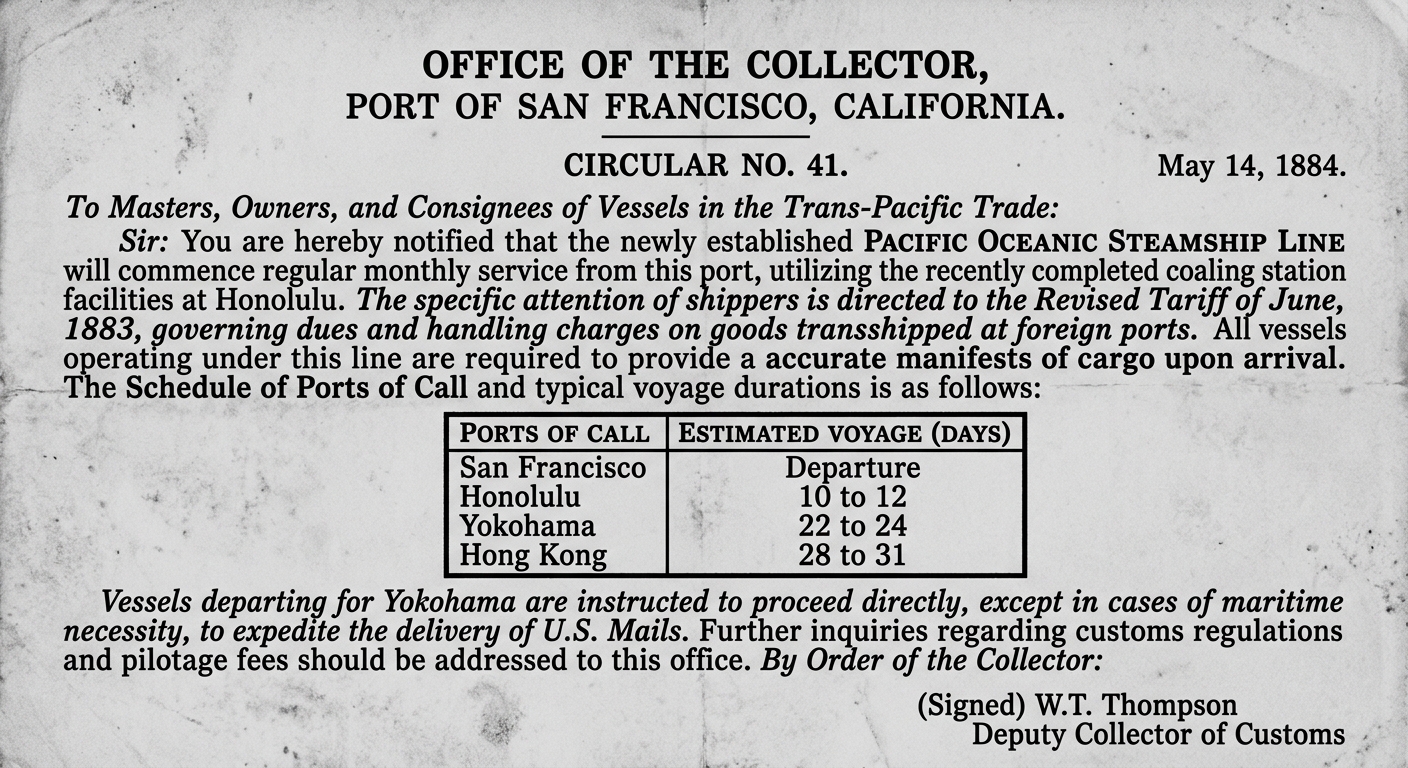
Read the document image. It is a reconstructed excerpt from an 1884 circular about Pacific trade routes, shipping costs, and U.S. interests in ports across the Pacific. As merchants and officials discuss tariffs and supply stops, the document suggests why the United States increased foreign interactions. Use the wording as evidence.

Grayscale scan of an aged 1884 circular listing Pacific ports and shipping details, referencing steamship trade, tariffs, and a coaling station.

Asemmisa {{asɛmmisaAhyɛnsode}}
11.

Based on the document’s references to Pacific ports and a “coaling station,” which conclusion is best supported about why the United States increased foreign interactions?

Asemmisa {{asɛmmisaAhyɛnsode}}
12.

Which detail from the document would be the BEST evidence that economic goals helped drive U.S. interactions in the Pacific?

Asemmisa {{asɛmmisaAhyɛnsode}}
13.

What is the most likely purpose of this circular, based on its formal tone and the trade information it includes?

Asemmisa {{asɛmmisaAhyɛnsode}}
14.

Explain one way interest in Pacific trade contributed to increased U.S. foreign interactions.

Include at least two specific words or phrases from the source.

Asemmisa {{asɛmmisaAhyɛnsode}}
15.

Identify one limitation of using this circular alone to understand U.S. foreign interactions in the Pacific.

Then name one additional type of source (and what it could show) that would help a historian corroborate the impact of Pacific trade.

Read the document image. It is a reconstructed excerpt from a 1905 U.S. diplomatic note referencing the Monroe Doctrine and the Roosevelt Corollary. The author argues that the United States may intervene to manage debt collection and customs revenue in a Caribbean nation. Use the document’s wording as evidence in your answers.
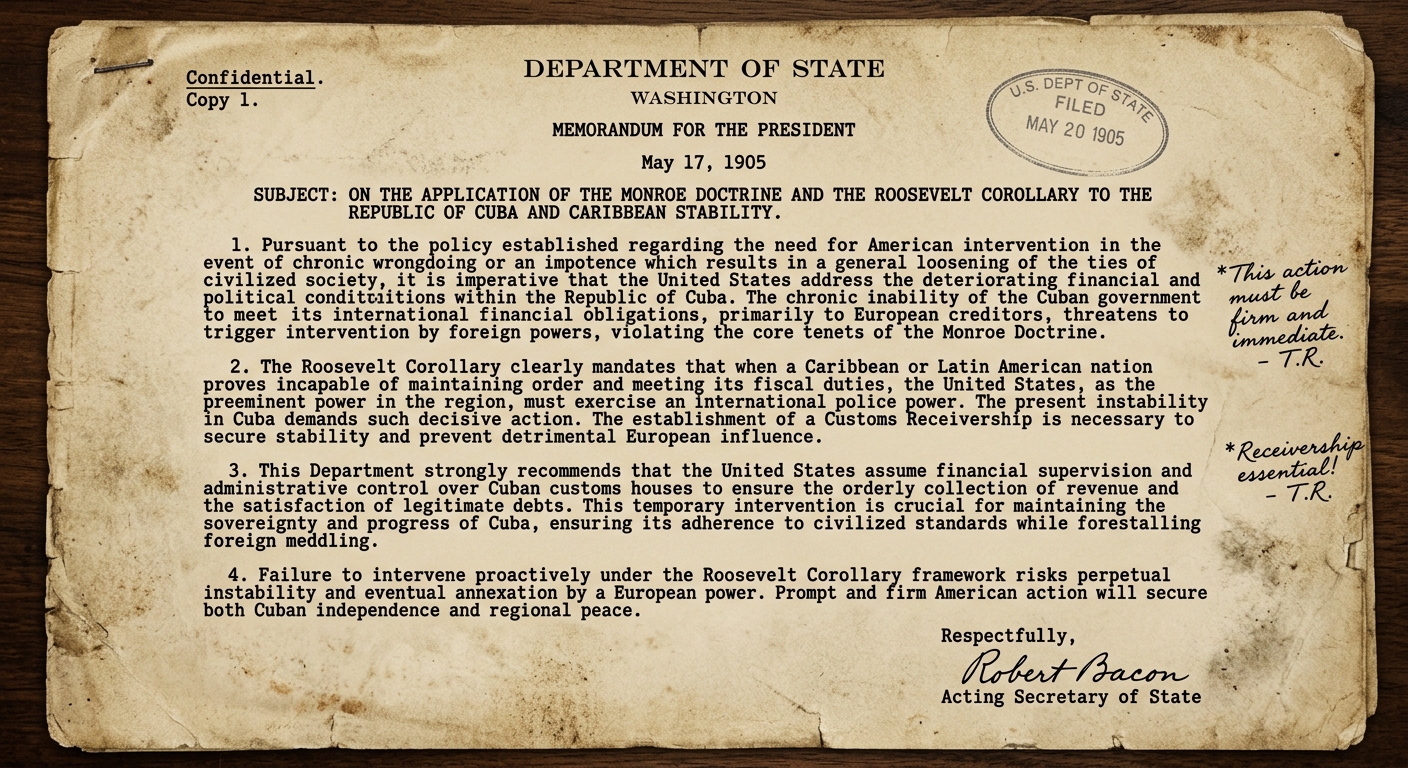
Grayscale scan of an aged 1905 U.S. Department of State note mentioning the Monroe Doctrine, the Roosevelt Corollary, and U.S. financial supervision and intervention in a Caribbean nation.

Asemmisa {{asɛmmisaAhyɛnsode}}
16.

Based on the document’s references to “financial supervision” and possible “intervention,” which conclusion is best supported about the Roosevelt Corollary?

Asemmisa {{asɛmmisaAhyɛnsode}}
17.

Which phrase from the document would be the BEST evidence that the United States expected to play a direct role in another country’s economy?

Asemmisa {{asɛmmisaAhyɛnsode}}
18.

What is the most likely purpose of this diplomatic note, based on its formal tone and its focus on debt collection and intervention?

Asemmisa {{asɛmmisaAhyɛnsode}}
19.

Explain one way the Roosevelt Corollary expanded the Monroe Doctrine and increased U.S. involvement in Latin America.

Include at least two specific words or phrases from the source.

Asemmisa {{asɛmmisaAhyɛnsode}}
20.

Identify one limitation of using this U.S. diplomatic note alone to understand resentment toward the United States in Latin America.

Then name one additional type of source (and what it could show) that would help a historian corroborate the impact.