Twa kɔ nsɛm atitiriw so
Log in
Sign up for FREE
arrow_back
Laabri

8.4 - World War I and the Roaring Twenties: - Practice A

star
star
star
star
star
Last updated about 1 month ago
25 Nsɛmmisa
Hyɛ no nsow a efi ɔkyerɛwfo no hɔ:

Use the historical document(s) and the short readings in the left panel to answer the associated questions.

Use the historical document(s) and the short readings in the left panel to answer the associated questions.

8.4.a
DOK.SS.2
8.4.b
DOK.SS.2
8.4.c
DOK.SS.2
8.4.d
DOK.SS.2
8.4.e
DOK.SS.2
Ɛhia
1
8.4.a
DOK.SS.2
Ɛhia
2
8.4.a
DOK.SS.2
Ɛhia
1
8.4.a
DOK.SS.2
Ɛhia
2
8.4.a
DOK.SS.2
Ɛhia
1
8.4.a
DOK.SS.2
Ɛhia
2
8.4.b
DOK.SS.2
Ɛhia
1
8.4.b
DOK.SS.2
Ɛhia
1
8.4.b
DOK.SS.2
Ɛhia
2
8.4.b
DOK.SS.2
Ɛhia
1
8.4.b
DOK.SS.2
Ɛhia
2
8.4.c
DOK.SS.2
Ɛhia
1
8.4.c
DOK.SS.2
Ɛhia
2
8.4.c
DOK.SS.2
Ɛhia
1
8.4.c
DOK.SS.2
Ɛhia
1
8.4.c
DOK.SS.2
Ɛhia
2
8.4.d
DOK.SS.2
Ɛhia
2
8.4.d
DOK.SS.2
Ɛhia
1
8.4.d
DOK.SS.2
Ɛhia
1
8.4.d
DOK.SS.2
Ɛhia
1
8.4.d
DOK.SS.2
Ɛhia
1
8.4.e
DOK.SS.2
Ɛhia
1
8.4.e
DOK.SS.2
Ɛhia
2
8.4.e
DOK.SS.2
Ɛhia
2
8.4.e
DOK.SS.2
Ɛhia
1
8.4.e
DOK.SS.2

Historical Document:

Newspaper Report (July 1914)
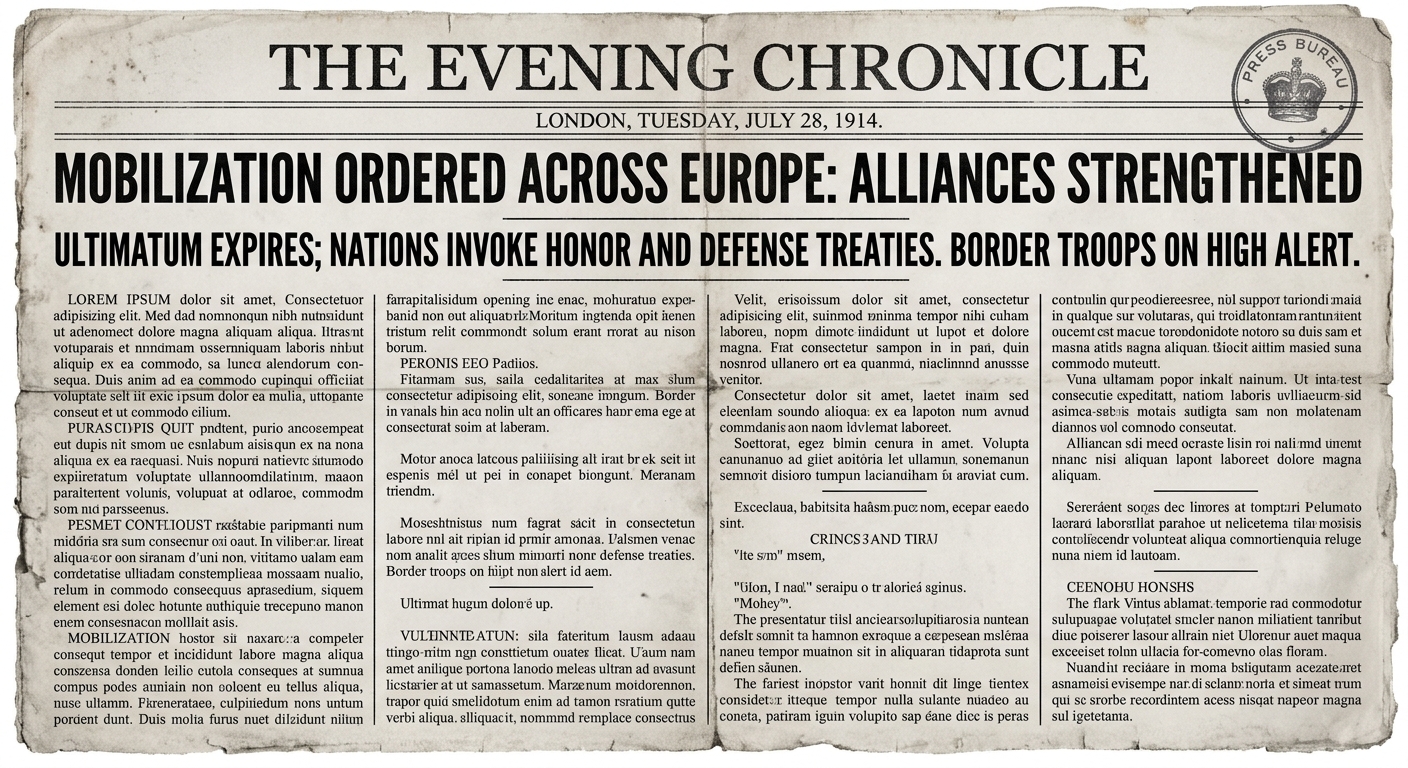
Black-and-white newspaper clipping dated July 1914 with a headline about mobilization and alliances, plus short columns of printed text.

Read the newspaper clipping. It was printed in Europe in July 1914 as governments reacted to a major crisis. Use evidence from the headline and details to infer which causes of World War I are being emphasized and how leaders justified preparing for war.
Asemmisa {{asɛmmisaAhyɛnsode}}
1.

Which piece of evidence from the document would be the strongest support for a claim that militarism increased tensions in 1914?

Asemmisa {{asɛmmisaAhyɛnsode}}
2.

What additional type of source would best help you evaluate whether the newspaper report is reliable (for example, a government order, a personal diary, or another newspaper)?

Explain why that source would help, and what you would compare to the document.

Asemmisa {{asɛmmisaAhyɛnsode}}
3.

The subheadline’s language about “honor” and “defense” best supports which interpretation of how leaders tried to persuade the public?

Asemmisa {{asɛmmisaAhyɛnsode}}
4.

Using at least two specific details from the document (for example, words from the headline/subheadline), explain how this source shows the connection between the alliance system and militarism in the months leading up to World War I.

Asemmisa {{asɛmmisaAhyɛnsode}}
5.

Which long-term factor contributing to World War I is most directly supported by the newspaper’s focus on treaties and coordinated actions?

Historical Document:

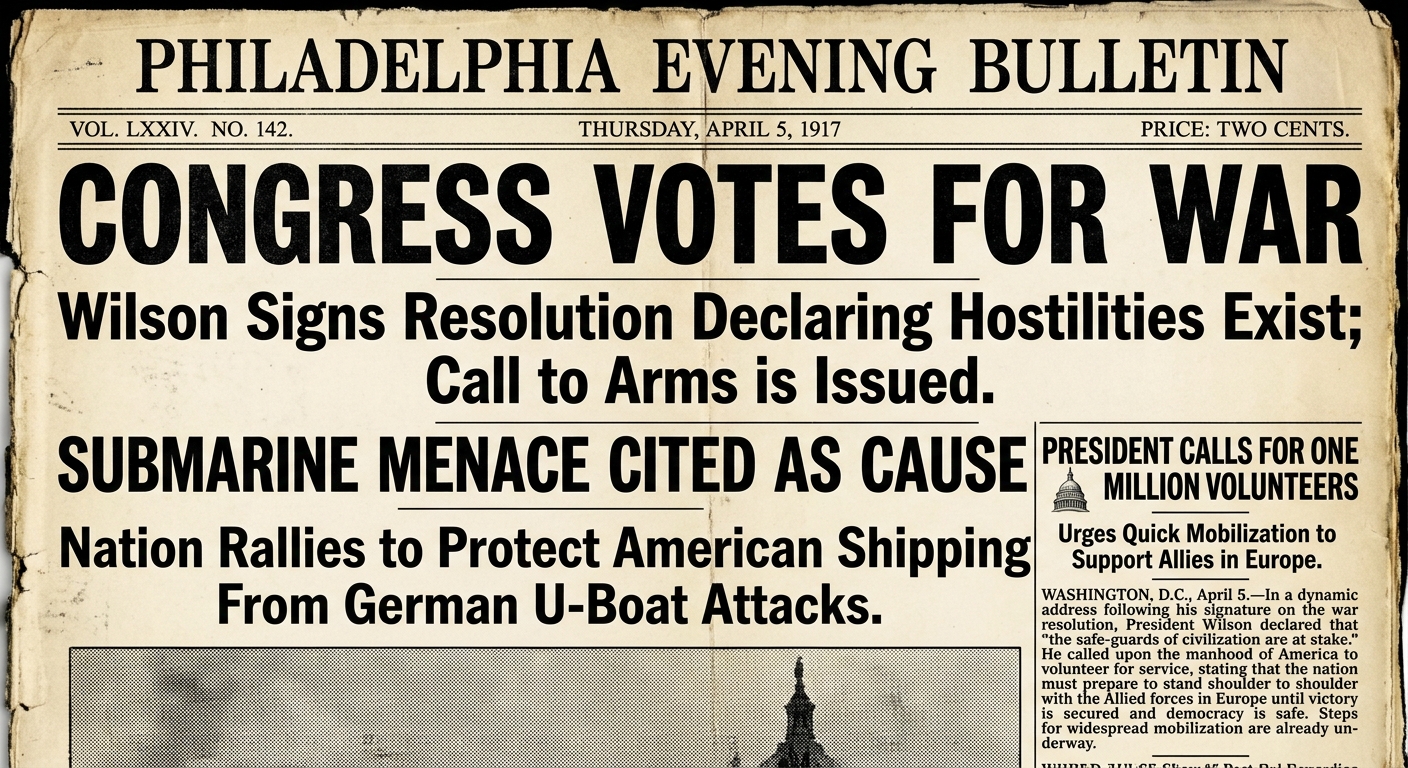
U.S. Newspaper Report (April 1917)

Black-and-white U.S. newspaper-style clipping from 1917 announcing the United States entering World War I with references to submarine warfare and supporting the Allies.

Read the newspaper clipping about U.S. actions in 1917. Use evidence from the headline and details to identify which developments pushed the United States toward entering World War I. Support your answers with specific words and phrases from the document.

Asemmisa {{asɛmmisaAhyɛnsode}}
6.

How might the purpose of a wartime newspaper affect what information it emphasizes or leaves out?

Use at least two details from the document to support your answer.

Asemmisa {{asɛmmisaAhyɛnsode}}
7.

Based on the document, which conclusion is most strongly supported about why the United States considered joining the Allies?

Asemmisa {{asɛmmisaAhyɛnsode}}
8.

Which additional source would best help you confirm the accuracy of the document’s claims about why the U.S. entered World War I?

Asemmisa {{asɛmmisaAhyɛnsode}}
9.

Identify one international development and one military development mentioned or implied in the document that could have swayed U.S. opinion toward entering World War I.

For each, cite a specific word or phrase from the document as evidence.

Asemmisa {{asɛmmisaAhyɛnsode}}
10.

Which detail from the document is the best evidence of a military development that swayed U.S. opinion toward entering World War I?

Historical Document:

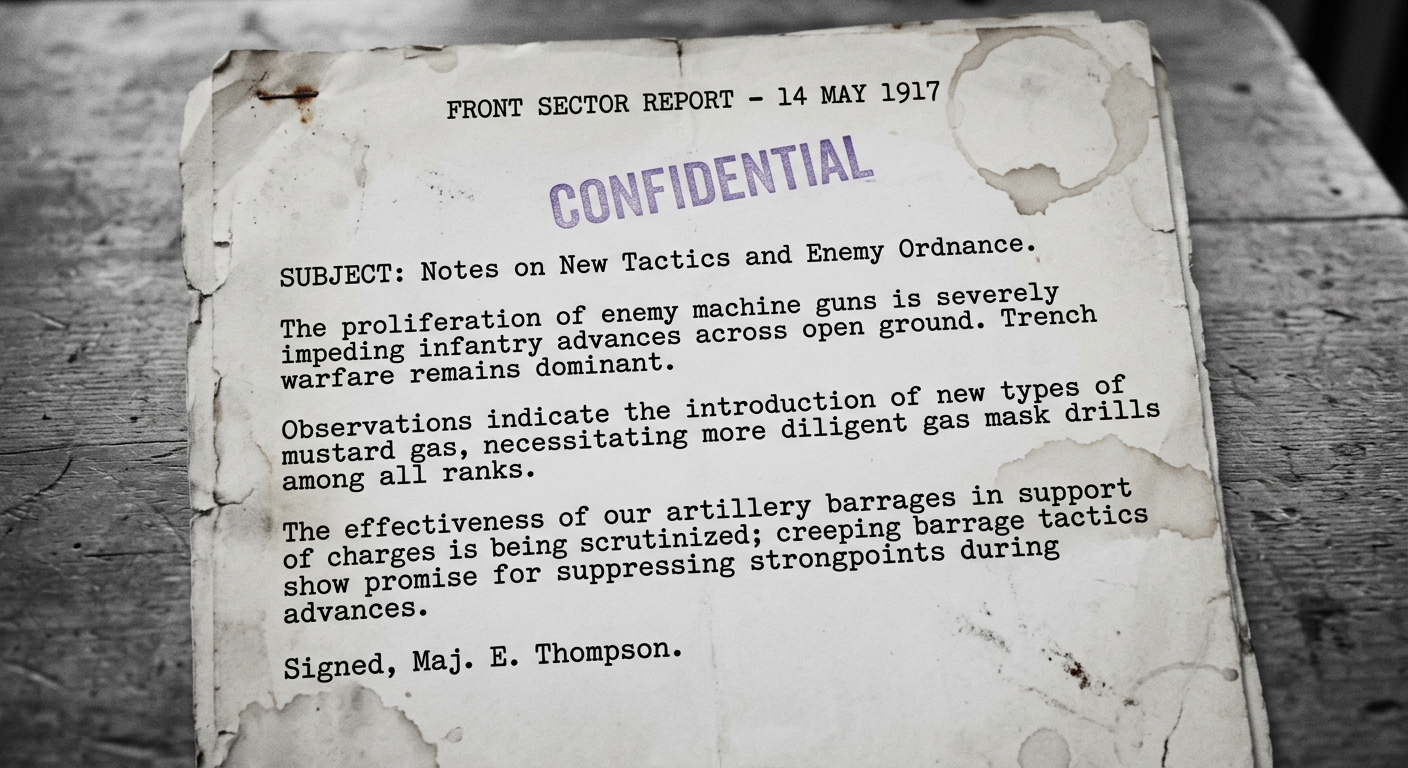
Field Report on New Weapons (1917)

Black-and-white typewritten field report dated 1917 describing machine guns, poison gas, and artillery changing World War I tactics.

Read the field report. It describes conditions on the Western Front in 1917. Use evidence from the report to explain how new military technologies changed strategy in World War I and why these changes contributed to high casualties.

Asemmisa {{asɛmmisaAhyɛnsode}}
11.

What additional primary source would best help you confirm or challenge this report’s description of casualties and battlefield conditions?

Explain why that source would help and what you would compare.

Asemmisa {{asɛmmisaAhyɛnsode}}
12.

Based on the document, which technology is most closely connected to the need for protective equipment during attacks?

Asemmisa {{asɛmmisaAhyɛnsode}}
13.

Identify two different military technologies mentioned in the document.

For each one, explain one change in strategy it caused, using a specific word or phrase from the report as evidence.

Asemmisa {{asɛmmisaAhyɛnsode}}
14.

Which detail from the field report is the strongest evidence that technology changed military strategy during World War I?

Asemmisa {{asɛmmisaAhyɛnsode}}
15.

Which claim is best supported by the field report about why World War I had unprecedented casualties?

Historical Document:

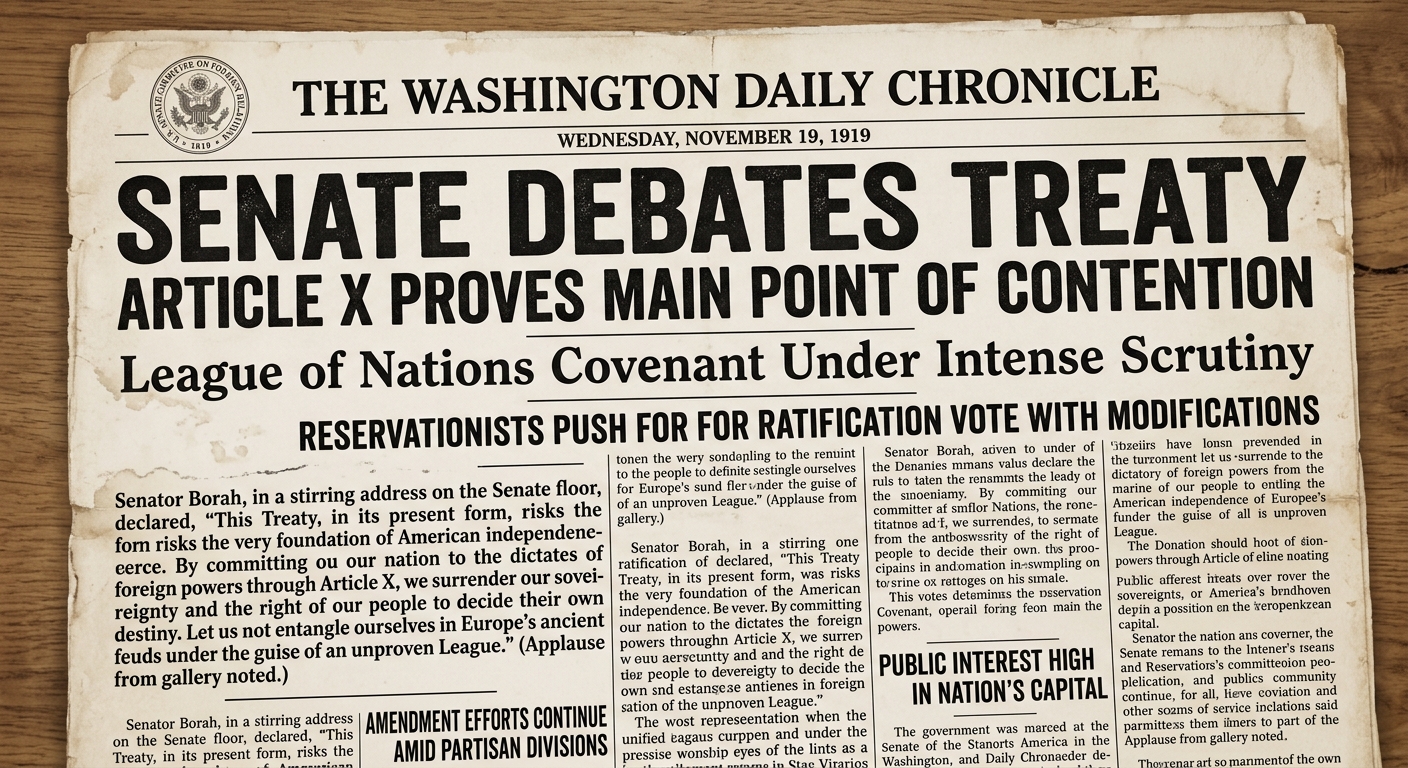
Senate Debate Report (1919)

Black-and-white 1919–1920 newspaper-style document about the U.S. Senate debate over the Treaty of Versailles and the League of Nations.

After World War I, the Senate argued over whether to approve the Treaty of Versailles. Some worried the League of Nations could force U.S. involvement in future wars. Read the headline and excerpt, then use evidence to explain why ratification failed.

Asemmisa {{asɛmmisaAhyɛnsode}}
16.

What claim does the document’s author or speaker appear to be making about the treaty?

Identify the claim and give one piece of evidence from the document that supports your identification.

Asemmisa {{asɛmmisaAhyɛnsode}}
17.

Using at least two details from the document, explain how opposition to the Treaty of Versailles could lead the United States to focus more on domestic issues rather than international commitments.

Asemmisa {{asɛmmisaAhyɛnsode}}
18.

Which detail from the document best supports the idea that some senators feared the Treaty of Versailles could limit U.S. independence?

Asemmisa {{asɛmmisaAhyɛnsode}}
19.

Based on the document, what is the most likely reason the United States refused to ratify the Treaty of Versailles?

Asemmisa {{asɛmmisaAhyɛnsode}}
20.

Which additional source would best help you evaluate whether the document gives a balanced view of the treaty debate?

Historical Document:

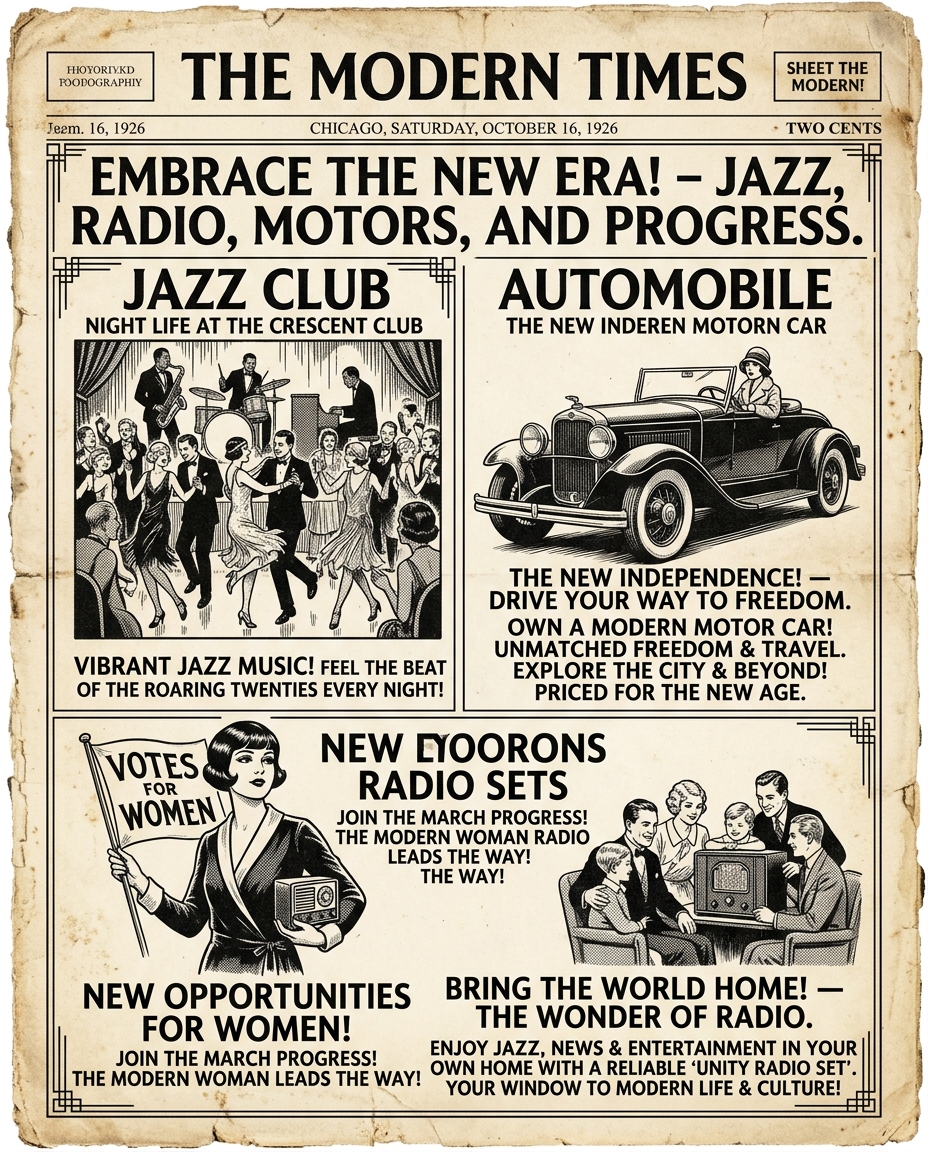
Magazine Page on “Modern Life” (1925)

1920s-style newspaper or magazine page showing jazz, radio, cars, and changing roles for women with short ad copy.

Read the illustrated magazine page from the mid-1920s. Use evidence from the images and ad copy to identify changes in culture and daily life during the Roaring Twenties. Explain how the document suggests new opportunities for some Americans and why these changes mattered.

Asemmisa {{asɛmmisaAhyɛnsode}}
21.

Which detail from the document is the strongest evidence of cultural change during the Roaring Twenties?

Asemmisa {{asɛmmisaAhyɛnsode}}
22.

Based on the document, which conclusion is most strongly supported about how technology affected everyday life in the 1920s?

Asemmisa {{asɛmmisaAhyɛnsode}}
23.

How might the purpose of an advertisement or magazine page affect what it emphasizes about the Roaring Twenties?

Use at least two details from the document to support your answer.

Asemmisa {{asɛmmisaAhyɛnsode}}
24.

Identify one way the document suggests new opportunities for women during the Roaring Twenties.

Cite a specific visual or phrase from the document as evidence, and explain how it supports your identification.

Asemmisa {{asɛmmisaAhyɛnsode}}
25.

Which additional source would best help you evaluate whether the document represents experiences of all Americans in the Roaring Twenties?