Log in
Sign up for FREE
arrow_back
Library

Southern Gothic - Summative Assessment (MC 2026)

star
star
star
star
star
Last updated 20 days ago
28 questions
Required
6
Required
4
Required
3
Required
3
Required
1
Required
1
Required
1
Required
1
Required
1
Required
1
Required
1
Required
1
Required
1
Required
1
Required
1
Required
1
Required
1
Required
1
Required
1
Required
1
Required
1
Required
1
Required
1
Required
1
Question 1
1.

Question 2
2.

Question 3
3.

Draggable itemarrow_right_altCorresponding Item
arrow_right_alt
arrow_right_alt
arrow_right_alt
arrow_right_alt
arrow_right_alt
arrow_right_alt
Question 4
4.

Draggable itemarrow_right_altCorresponding Item
arrow_right_alt
arrow_right_alt
arrow_right_alt
arrow_right_alt
arrow_right_alt
Question 5
5.

Question 6
6.

Question 7
7.

Question 8
8.

Question 9
9.

Question 10
10.

Question 11
11.

Question 12
12.

Question 13
13.

Question 14
14.

Question 15
15.

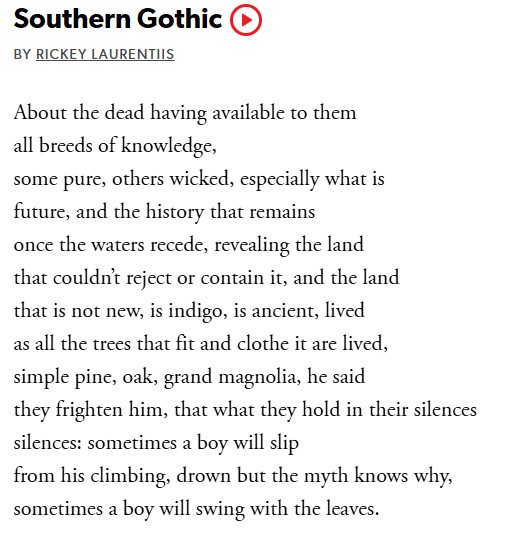
The following questions are based on the poem, "Southern Gothic," by Laurentiis.

You may use your annotations in your packet and your copy of the story to answer the following questions. Ask your teacher for a paper copy of this short story if you do not have your copy present on paper.
Required
1
Required
1
Required
1
Required
1

The following questions are based on the short story, "Désirée’s Baby," by Kate Chopin.

You may use your annotations in your packet and your copy of the story to answer the following questions. Ask your teacher for a paper copy of this short story if you do not have your copy present on paper.
Question 20
20.

Question 21
21.

Question 22
22.

Question 23
23.

Question 24
24.

Question 25
25.

Question 26
26.

Question 27
27.

Question 28
28.

Recategorize the key elements, themes, and motifs of American Gothic literature into "Northern" Gothic and Southern Gothic. (6 each, you will NOT use any more than once)
vengeful ghosts, hauntings; violent personalities; mob/community violence
dark forests and bitter cold
the grotesque; the mentally or physically disabled or disturbed; bigotry
anxieties around a judgemental society / wrathful God
themes on social issues and inequities
madness, corruption, severe guilt, horror, hopelessness
oppression, exhaustion, decay, lasting ruins; isolation, endurance
anxieties around race, inheritance, and poverty
guilt (of one's sins; shame)
themes on religion, predestination, and free will
witches, demons, vampires, and ghosts
plantations, intense heat, heavy trees, agricultural motifs
Gothic
Southern Gothic
Recategorize the paintings below of American Gothic artwork into "Northern" Gothic and Southern Gothic. (click on the images to zoom)
Still shot from the movie "The VVitch"

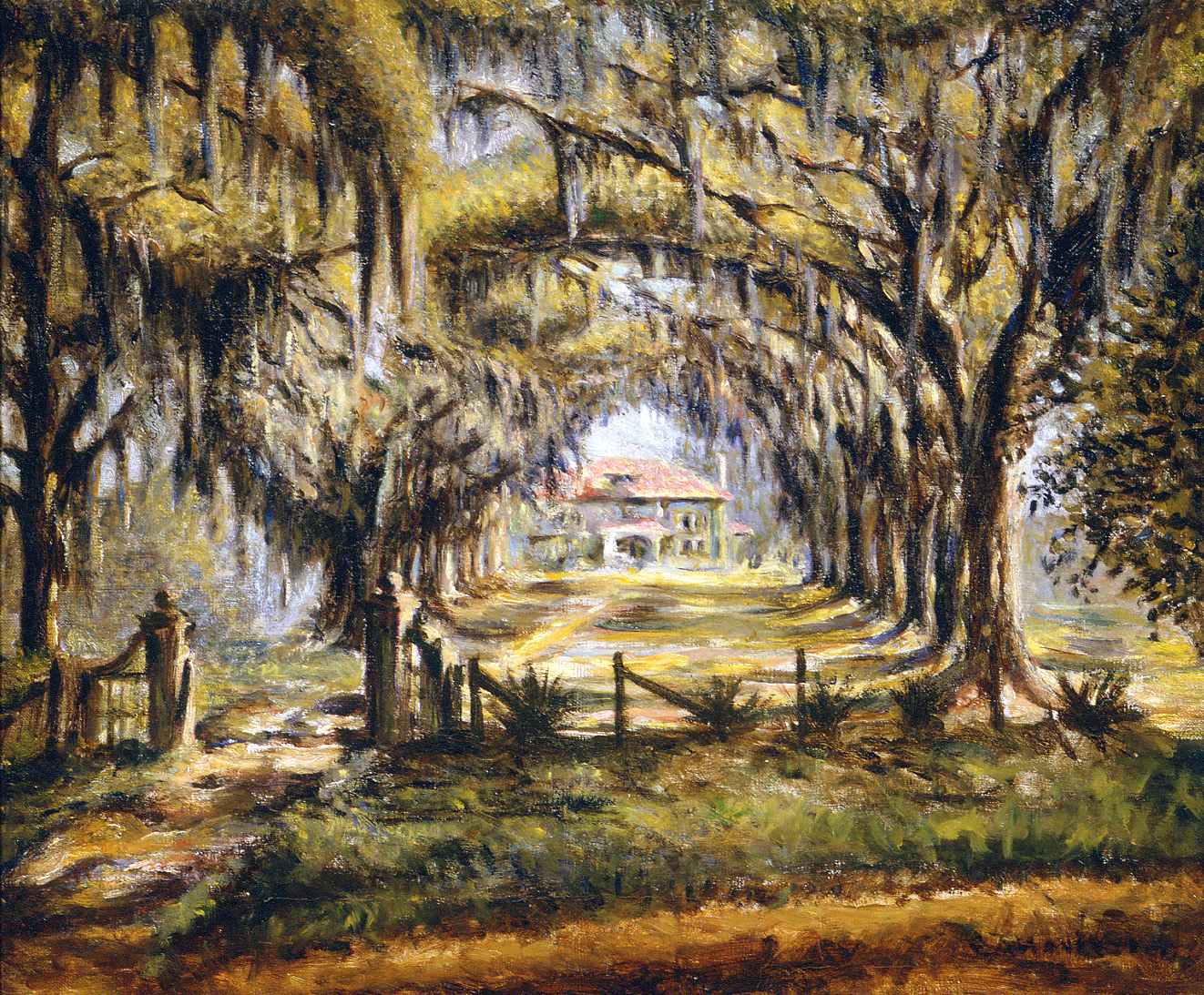
Edwin Harleston, Boone Hall Plantation (1925)
"Man and Woman Contemplating the Moon" by Caspar David Friedrich
"American Gothic" painting by Grant Wood
Gothic
Southern Gothic
Match the "nutshell" to the correct movement:
The nihilistic or lost individual, in a rapidly developing urban modernity. . . far from Nature and vitality. Out of this post-war disillusionment, seek hope in change, renewal, the new.
Romantic
Man is inherently flawed and any attempt at reform will fail. Nature is dark and mysterious and it reveals a dark truth that makes us feel disenchanted / disillusioned.
Transcendental
There are such things as monsters (but none so wicked as ourselves). In the search for yourself, you won't like what you find. . . . insanity, horror, terror of truth.
Dark Romantic
Melancholy man walks alone into Nature... through introspection, man finds enlightenment (artistic/truth about self)
Gothic
Nature is a silent witness (sometimes a safe haven for misfits) from a violent or oppressive society. A horrifying or ambiguous truth hides beneath an idyllic or decaying facade.
Modernism
Man walks alone into Nature. Man is witness to Truth and becomes enlightened. Man returns to share truth with others in society.
Southern Gothic
Match the key authors to their movements:
Fitzgerald, Stein, T.S. Eliot, Hemingway
Romantic
Faulkner, O'Connor, Toomer, Hurston
Transcendental
Wordsworth, Longfellow, Witman
Dark Romantic / Gothic
Henry David Thoreau, Ralph Waldo Emerson
Modernism
Dickinson, Melville, Hawthorne, Edgar Allen Poe
Southern Gothic
What "haunts" the south in Southern Gothic lit?
the horror of what people are capable of doing to other people
the history of the south and the "skeletons" of our past (civil war, slavery, etc.)
religious trauma and the fear of God's coming judgment
the fear of your neighbor and what they "could" be up to over there...
Both A and B
Both C and D
What is the most "iconic" symbolic imagery of Southern Gothic movement?
blood, gore, and the grotesque
towering mountains over deep fog
the dark and spooky woods; the enchanted forest
sowers, mowers, reapers, and the harvest
creepy castles, mansions, and estates
Which of the following motifs is NOT an identifiable motif of Southern Gothic?
decay and deteriorating places, "haunted" settings
a whispering or burbling brook, murmuring truth
generational trauma, family curses, and inheritance
an oppressive, heavy sun; hot sluggish days, cool violent nights
Which of the following is NOT an immediately recognizable setting for Southern Gothic.
plantations and agriculture
bayou and swamps; floods
cabins in the deep woods
huge oak trees, spanish moss
Most Southern Gothic texts center around the ruling class, or the powerful/dominant group.
True
False
Flannery O'Connor coined the term "generational trauma" to refer to the way you have to be from the South to truly understand its history, culture, and truth.
True
False
In Southern Gothic lit, you might come into Nature seeking Truth, but you're not going to find it, or, if you do, it will be by accident or grace.
True
False
Southern Gothic rarely includes the supernatural and monsters, magic, and ghosts are atypical of this movement.
True
False
Consider this excerpt from Other Voices by Truman Capote:


Which THREE phrases BEST supports the assertion that this text is Southern Gothic?
But we are alone, darling child, terribly, isolated each from the other
so fierce is the world's ridicule we cannot speak or show our tenderness
for us, death is stronger than life, it pulls like a wind through the dark
all our cries burlesqued in joyless laughter, and with the garbage of loneliness stuffed down us
until our guts burst bleeding green, we go screaming round the world
dying in our rented rooms, nightmare hotels, eternal homes of the transient heart.
Consider this excerpt from Other Voices by Truman Capote:


In this passage, what literary device really heightens the horror?
diction
repetition
metaphors
allusion
Consider this excerpt from Their Eyes Were Watching God:


What sentence here BEST supports the assertion that this text is Southern Gothic?
It is so easy to be hopeful in the daytime when you can see the things you wish on.
But it was night, it stayed night. Night was striding across nothingness with the whole round world in his hands.
They say in company with the others in other shanties, their eyes straining against the cruel walls and their souls asking if He meant to measure their puny might against His.
They seemed to be staring at the dark, but their eyes were watching God.
Question 16
16.

Question 17
17.

Question 18
18.

Question 19
19.

What is the relationship between Madame Valmonde and Désirée?
Désirée is the baby mentioned whom Madame Valonde is going to see.
Désirée is the child Madame Valonde miraculously birthed, like a gift from God.
Madame Valmonde is Désirée's biological mother, but she gave her up at an early age to have a better life.
Madame Valmonde is Désirée's adoptive mother, after Désirée had been abandoned at Valmonde.
Monsieur Valmonde was hesitant…
to let Armand marry Désirée without considering where she came from.
to allow Désirée to marry a man below her class.
to allow Désirée to marry at such a young age.
to let Armand and Désirée marry after knowing each other for such a short time.
How does Madame Valmonde react to seeing the baby?
She is worried that a servant may have switched the babies and has stolen her child from her.
She is saddened by his growth and how long she has been away, but the house frightens her.
She is overjoyed at how much the baby has grown since she last saw him.
She is surprised about the appearance of the baby and the color of his skin.
How does Désirée come to the conclusion that her baby may be bi- or multi-racial?
She starts to add up the timeline and realizes that her romantic partner before her husband might be the father.
Her grandmother reminds her that her parentage is questionable and no one knew her father.
She concludes this when she discovers the letter in the back of her desk, from Armand's mother.
She notices similarities between her baby and a child of mixed race who fans her baby.
After her conversation with Armand, Désirée…
leaves with the baby and they are both never seen again at L'Abri.
flees to Valmonde with the baby and never visits L'Abri.
abandons both Armand and the baby and never returns to L'Abri.
hides in the bayou with the baby and waits to return to L'Abri.
What else does Armand discover while directing the bonfire?
that the baby was never his in truth, but another's son.
that he misses his wife and cannot burn her things
a letter from his mother-in-law that details Désirée's true parentage
a letter from his mother that reveals he is part African-American
Which of the following statements best states what the estate, L'Abri, symbolizes?
It symbolizes a class hierarchy, particularly the white upper class, established through difference in race and wealth.
It symbolizes the heights of Southern society and foreshadows a fall from the upper class.
It represents the antebellum South, valuing tradition and maintenance of the past.
It represents the power and wealth of the upper class.
How does the narrator's description of L'Abri, from Madame Valmonde's point of view, develop the mood of the text?
The picture painted by Madame Valmonde contributes to the overall somber mood.
Madame Valmonde utilizes intimidating and gloomy imagery, heightening the tension in the story.
Madame Valmonde describes L'Abri as lacking a feminine care, contradicting the joyous mood of the newly made parents.
Madame Valmonde describes L'Abri as intimidating, glorifying the power of the South.
What is the significance of the title of this short story?
The story is about man's deepest, darkest "desires" and how we all deep down wish to burn and destroy our past, our history, our darkest secrets in fire.
The story is named for Désirée, the mother of this story, because Southern Gothic literature is all about motherhood, childhood, and our shared parentage of the American motherland.
The story is about Désirée's baby and about the children of the South. The fact that the baby goes missing is deeply symbolic and a haunting revelation that the future of the South is already lost, already sinking in the bayou.
The name "Désirée" is symbolic for the deeper subtext theme of this story, about love, desire, and children and how prejudice and racism divides what otherwise should be a story about love and family.
Why does the poet use the word indigo in line 7?
It is a natural, plant-based form of dye, used primarily to stain white fabric.
It is a dark deep blue, often compared to bruises, ink, midnight. An emotionally symbolic color.
It is related to indigenous peoples and punning off of the erroneous misnomer "Indian"
It is a color that is not found in nature, an artificial color, implying that this is not "natural"
Both A and B
Both C and D
In the last line of this poem, what has happened to the boy in this poem? (implied)
He drowns in the information he has learned and cannot surface, despite trying to swing over the dangerours waters below.
He has rewritten the myth of the south and now has become one with nature, swinging through the trees.
He swings from a branch of the tree; either he has been lynched or has hanged himself.
He falls when swinging from trees on the mountain of truth and is lost deep beneath the sea of uncertainty.
Which lines most align with the Southern Gothic concept of "the wise blood"
lines 1-4
lines 5-6
lines 7-9
lines 10-13
In this poem, Nature....
is a silent witness to horrors it cannot teach, cannot stop
is as dead as the ghosts that haunt this forest
is dark and terrifying, hiding truths
is the only safe place for the boy, offering enlightenment