Use the historical document(s) and the short readings in the left panel to answer the associated questions.
Historical Document

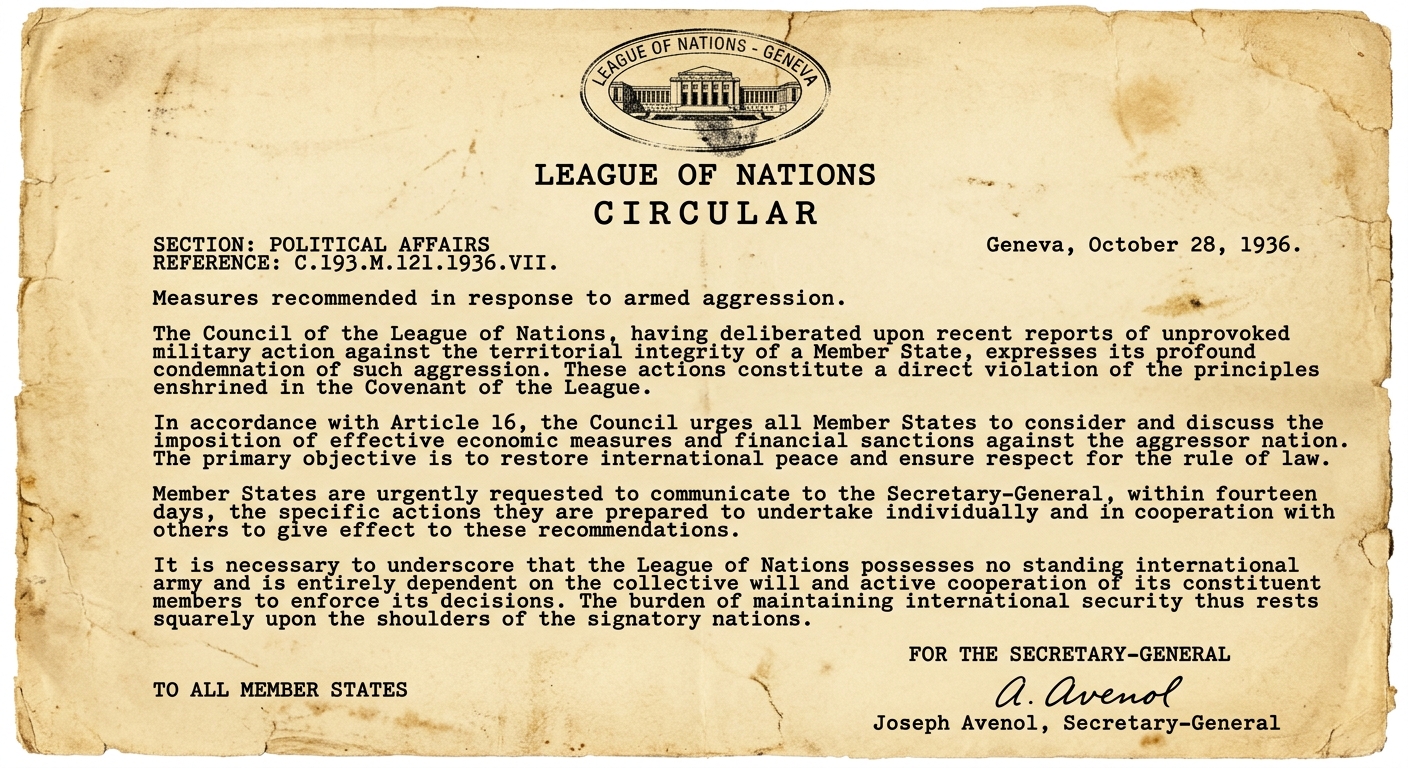
The document below is a League of Nations notice from the mid-1930s responding to a member state’s military expansion. Read the excerpt and observe the tone and recommended actions. Use evidence from the document to explain what it reveals about international efforts to stop aggression.
Based on the document, which conclusion is best supported about the League of Nations’ ability to stop aggression?
In one well-formed paragraph, identify one additional type of source a historian should use to evaluate the League’s effectiveness (for example, government records, newspaper reporting, economic data, or military reports).
Explain why that source is needed, using evidence from this document to support your reasoning.
Which factor is most directly illustrated by this document?
Which detail from the document is the strongest evidence that the League lacked direct enforcement power?
In one well-formed paragraph, explain how this document can be used as evidence that the League of Nations’ efforts to preserve peace were unsuccessful.
Use at least two specific details from the document.
Historical Document

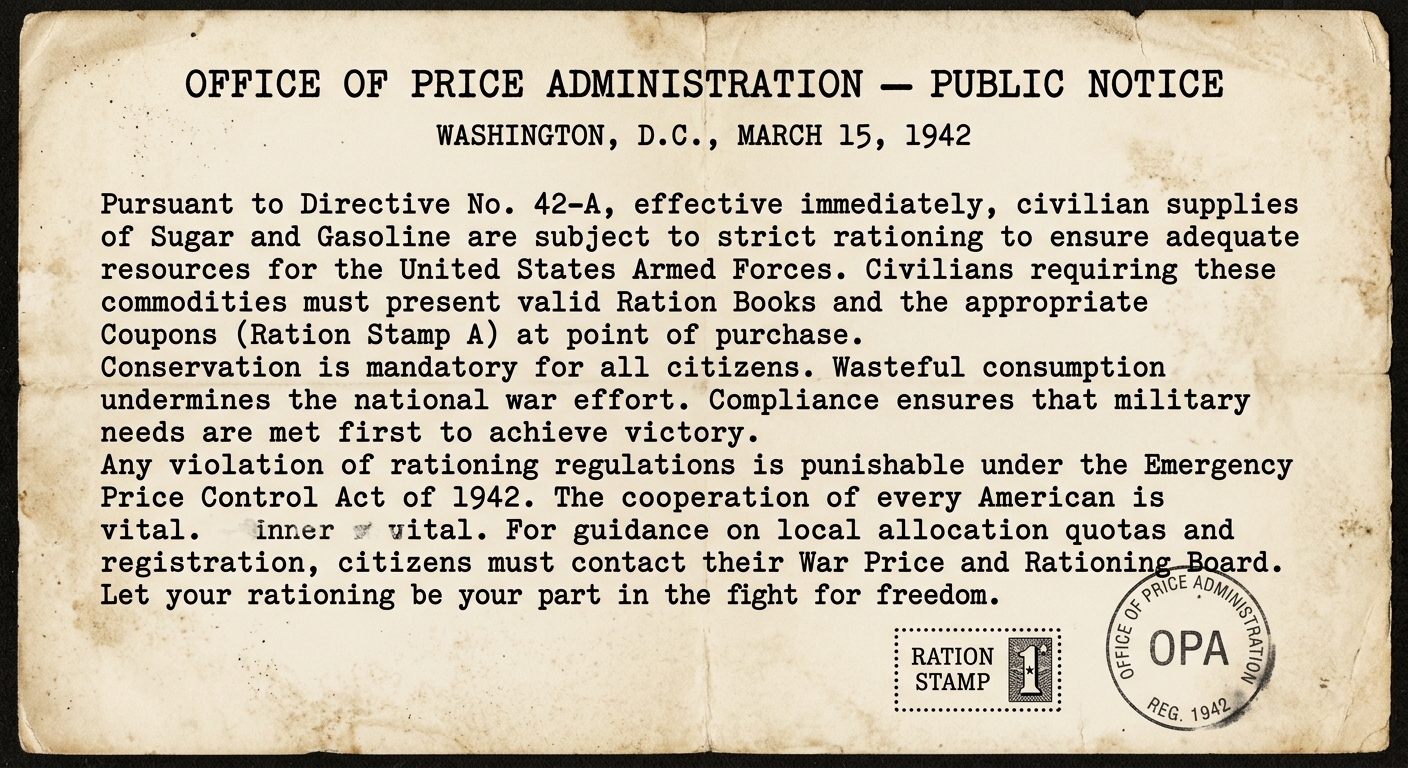
The document below is a U.S. wartime notice from 1942. Read the notice and examine its requirements. Use evidence from the document to explain how the U.S. home front changed during World War II and why the government limited civilians’ access to certain goods.
What is the main purpose of this document?
In one well-formed paragraph, explain how this document can be used as evidence of how the U.S. economy and daily life changed during World War II.
Use at least two specific details from the document.
Which World War II home-front change is best supported by this document?
In one well-formed paragraph, identify one additional type of source a historian should use to evaluate how rationing affected civilians (for example, diaries, store records, factory output data, or photographs).
Explain why that source is needed, using evidence from this document to support your reasoning.
Which detail from the document is the strongest evidence that the government was prioritizing military needs over civilian convenience?
Historical Document

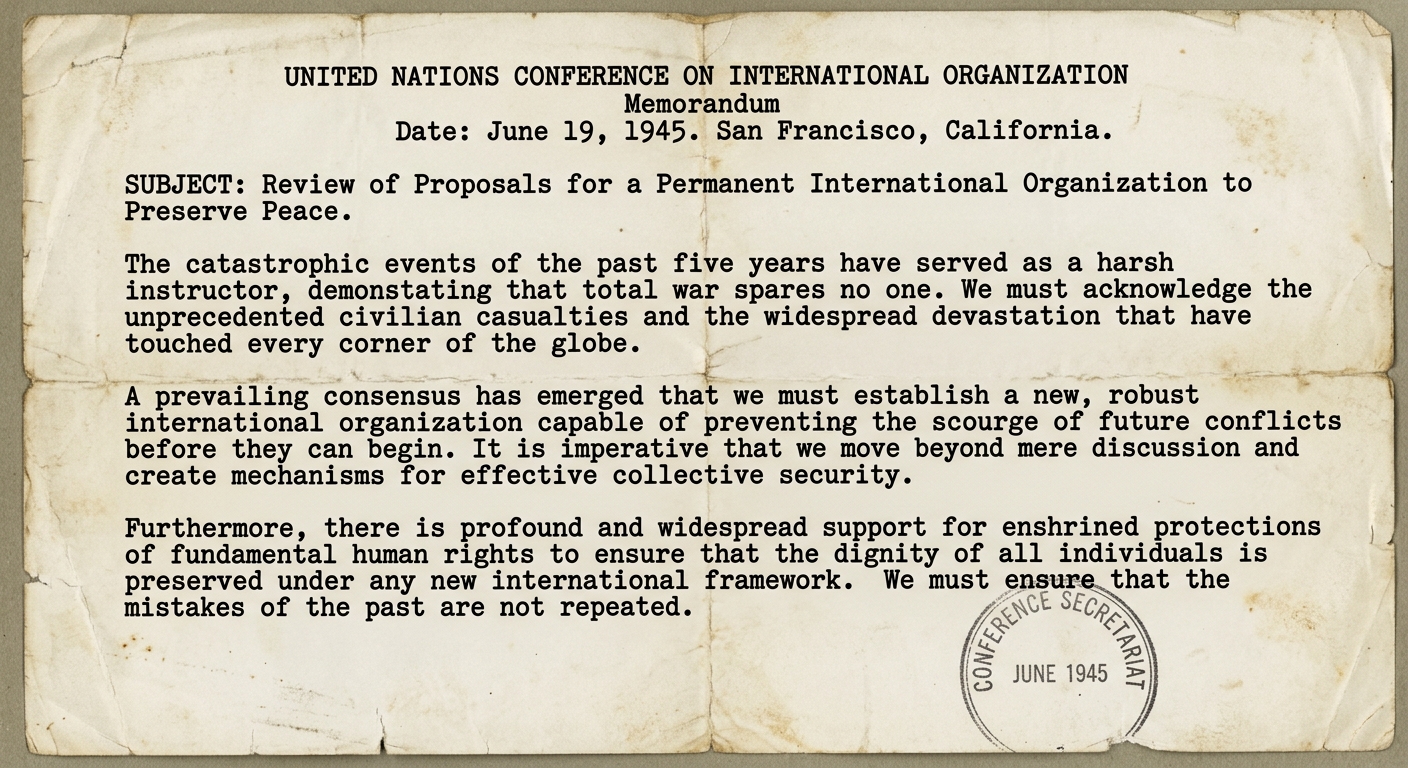
The document below is a memorandum from an international conference in 1945. Read the excerpt and identify what wartime experiences it refers to. Use evidence from the document to explain why leaders argued for a new international organization and stronger protections for human rights.
In one well-formed paragraph, explain how this memorandum can be used as evidence that the damage from total warfare and human atrocities led to calls for a new international organization.
Use at least two specific details from the document.
Which statement best describes the main purpose of this memorandum?
Which evidence from the memorandum most directly supports the idea that the nature of warfare had changed during World War II?
In one well-formed paragraph, identify one additional type of source a historian should use to evaluate how widespread support was for these ideas in 1945 (for example, newspaper coverage, speeches by delegates, public opinion polling, or survivor testimony).
Explain why that source is needed, using evidence from this memorandum to support your reasoning.
Which conclusion is best supported about why the authors link preventing war with protecting human rights?