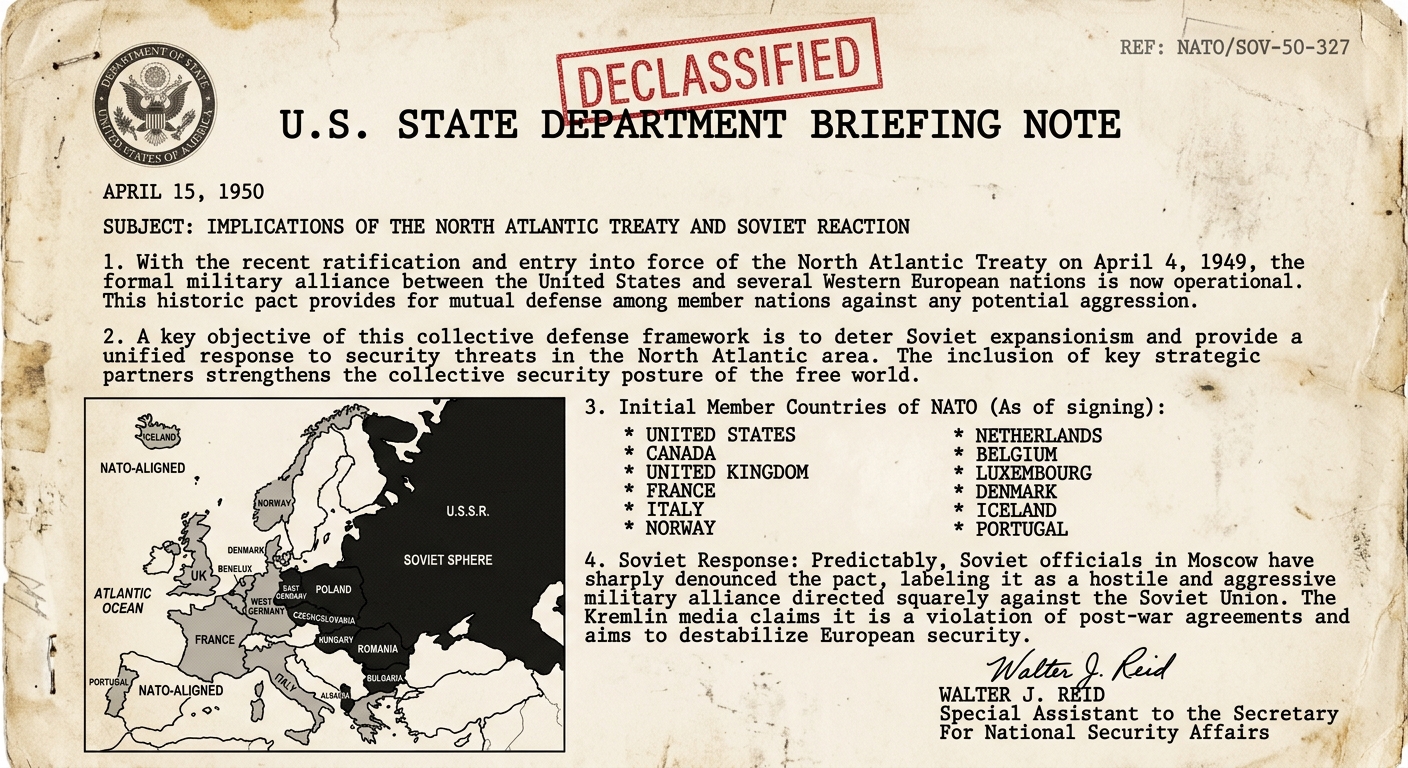
Read the declassified briefing note and examine the inset map. Use evidence from the document (words, labels, and details) to explain how Cold War rivalry shaped alliances and political divisions in Europe during the early 1950s.
Use the historical document(s) and the short readings in the left panel to answer the associated questions.
Use the historical document(s) and the short readings in the left panel to answer the associated questions.
Read the declassified briefing note and examine the inset map. Use evidence from the document (words, labels, and details) to explain how Cold War rivalry shaped alliances and political divisions in Europe during the early 1950s.
Based on the briefing note and inset map, what is the main purpose of the document?
Which conclusion is best supported by the map and the member list in the briefing note?
Which detail from the document is the BEST evidence that the Cold War involved an ongoing struggle between two superpowers?
Explain how the briefing note and inset map show that the Cold War shaped political alliances and divisions in Europe.
Use at least two specific pieces of evidence from the document (words, labels, or listed countries).
Using evidence from the document, infer one concern U.S. officials likely had about Soviet actions, and explain why the document suggests that concern.
Read the briefing summary and study the inset map of Greece and Turkey. The document describes U.S. efforts to stop communist influence from spreading. Use specific words, stamps, and map details to explain how containment shaped U.S. foreign policy choices in the early 1950s.
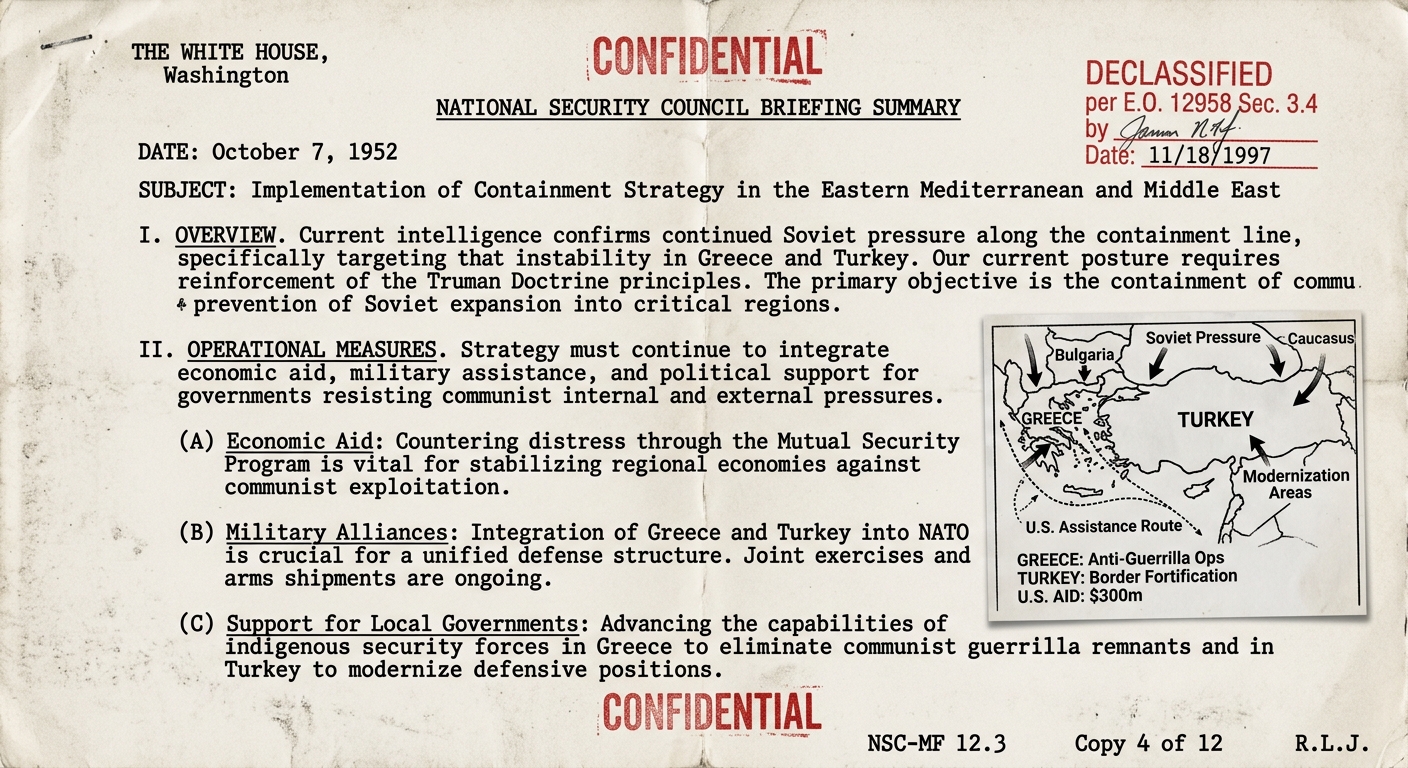
Based on the briefing summary and inset map, what is the main purpose of the document?
Which conclusion is best supported by the map labels and arrows in the document?
Which detail from the document is the BEST evidence that U.S. policy focused on containment of communism?
Explain how the briefing summary and inset map show U.S. containment policy in action.
Use at least two specific pieces of evidence from the document (words, stamps, arrows, or labeled places).
Using evidence from the document, infer one reason U.S. leaders might have chosen aid or alliances (instead of direct war) to respond to Soviet influence, and explain why the document supports your inference.
Read the post–Cold War policy brief and examine the inset map. The document discusses new borders and debates about U.S. security commitments after 1991. Use specific phrases, map labels, and document details to explain how Cold War legacies still influenced U.S. foreign policy choices.
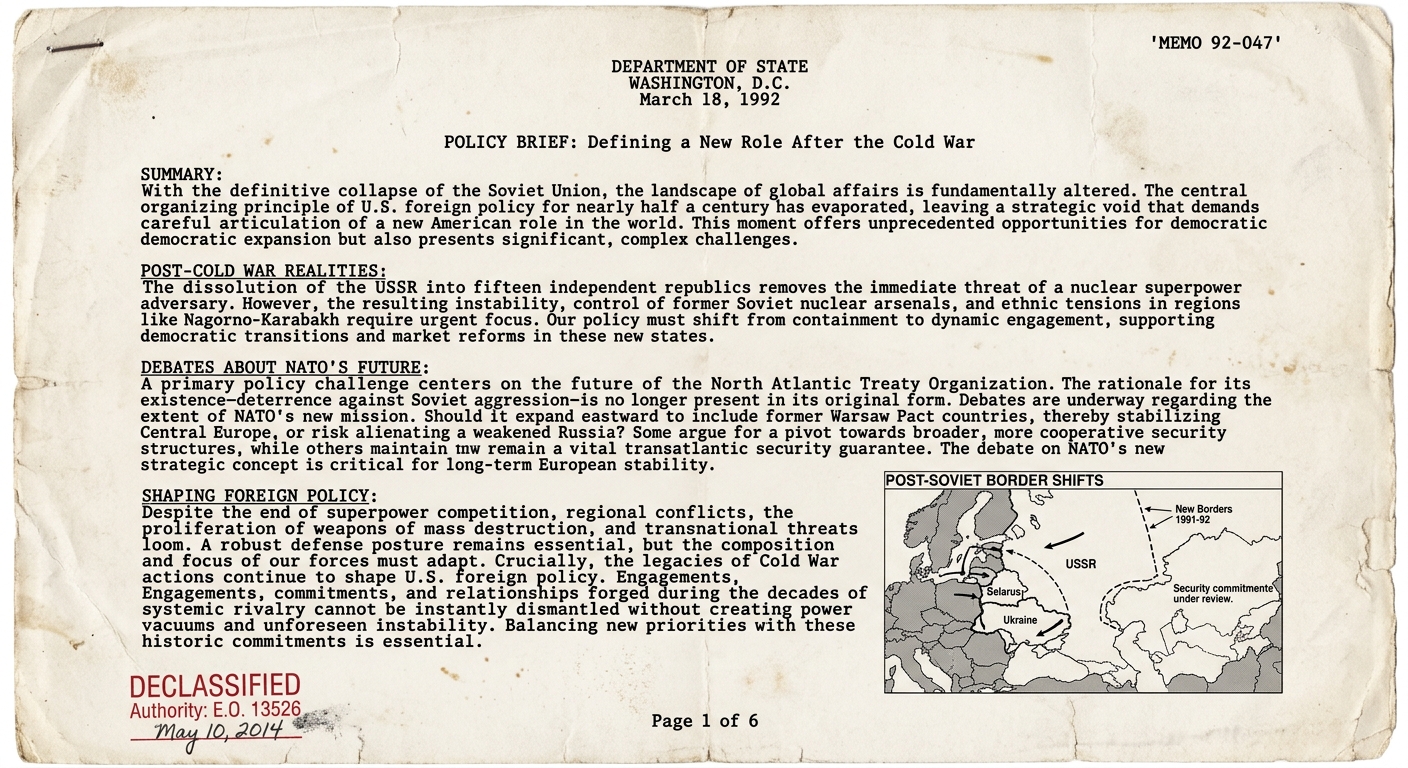
Based on the policy brief and inset map, what is the main purpose of the document?
Which conclusion is best supported by the map labels and the document’s discussion of “security commitments under review”?
Which detail from the document is the BEST evidence that Cold War legacies continued to affect U.S. foreign policy after 1991?
Explain how the policy brief and inset map show the United States trying to define a new role in global affairs after the Cold War.
Use at least two specific pieces of evidence from the document (phrases, map labels, or noted regions).
Using evidence from the document, infer one way a Cold War-era alliance or decision could still shape U.S. choices in the early 1990s, and explain why the document supports your inference.
Read the interagency briefing and examine the inset map. The document describes how terrorist groups not representing any nation reshaped U.S. security decisions. Use specific phrases, stamps, and map labels to explain how U.S. foreign and domestic policies responded to terrorism after 2001.
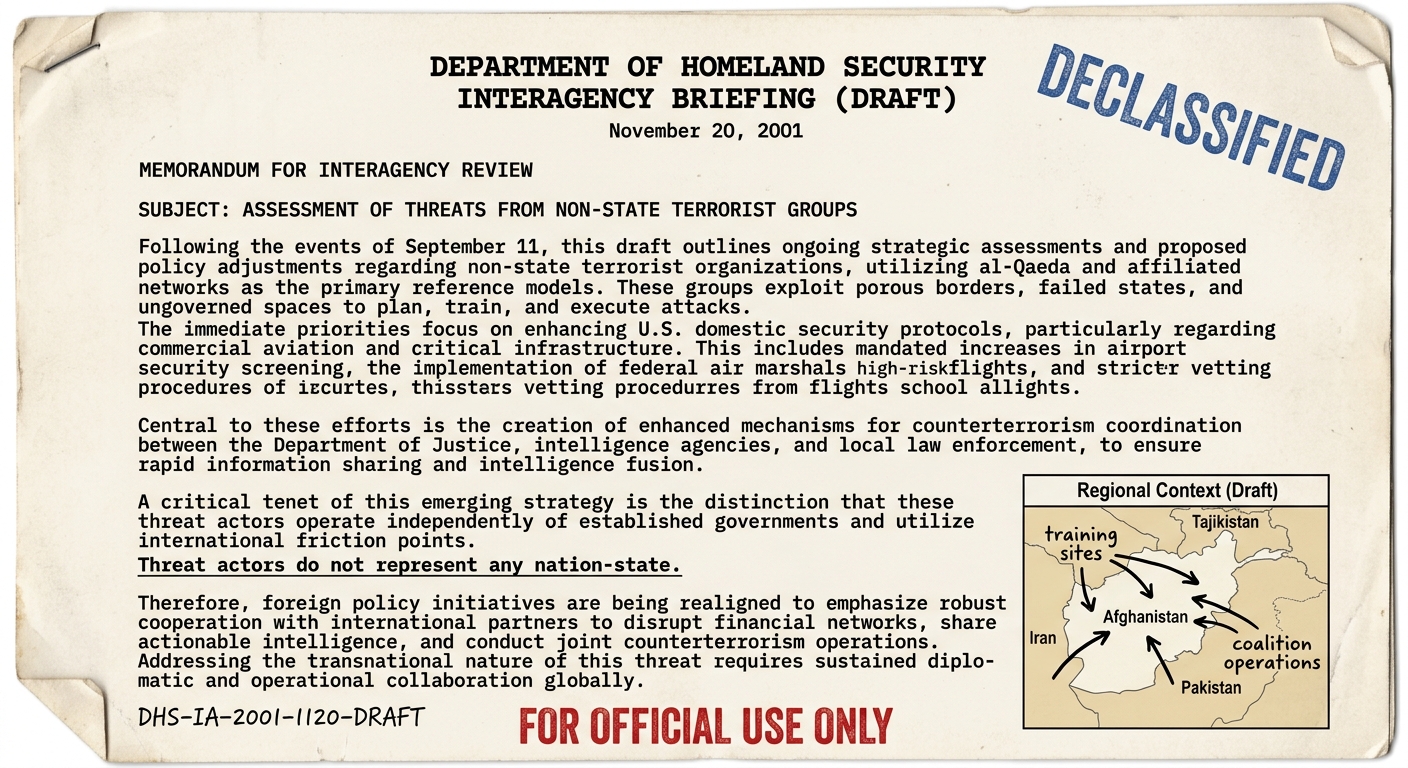
Based on the briefing and inset map, what is the main purpose of the document?
Which conclusion is best supported by the document’s statement that the threat actors “do not represent any nation-state” and the map’s references to coalition operations?
Which detail from the document is the BEST evidence that U.S. policies responded to terrorism in a variety of ways?
Explain how the briefing and inset map show that terrorist groups reshaped U.S. foreign and domestic policy after 2001.
Use at least two specific pieces of evidence from the document (phrases, stamps, or map labels).
Using evidence from the document, infer one reason U.S. leaders might have emphasized international partnerships while also changing domestic security practices, and explain why the document supports your inference.
Read the trade policy briefing note and examine the inset map and data table. The document describes how globalization increases economic interdependence and competition. Use specific phrases, numbers, and arrows to explain how trade links decisions in one country to economic effects in another.
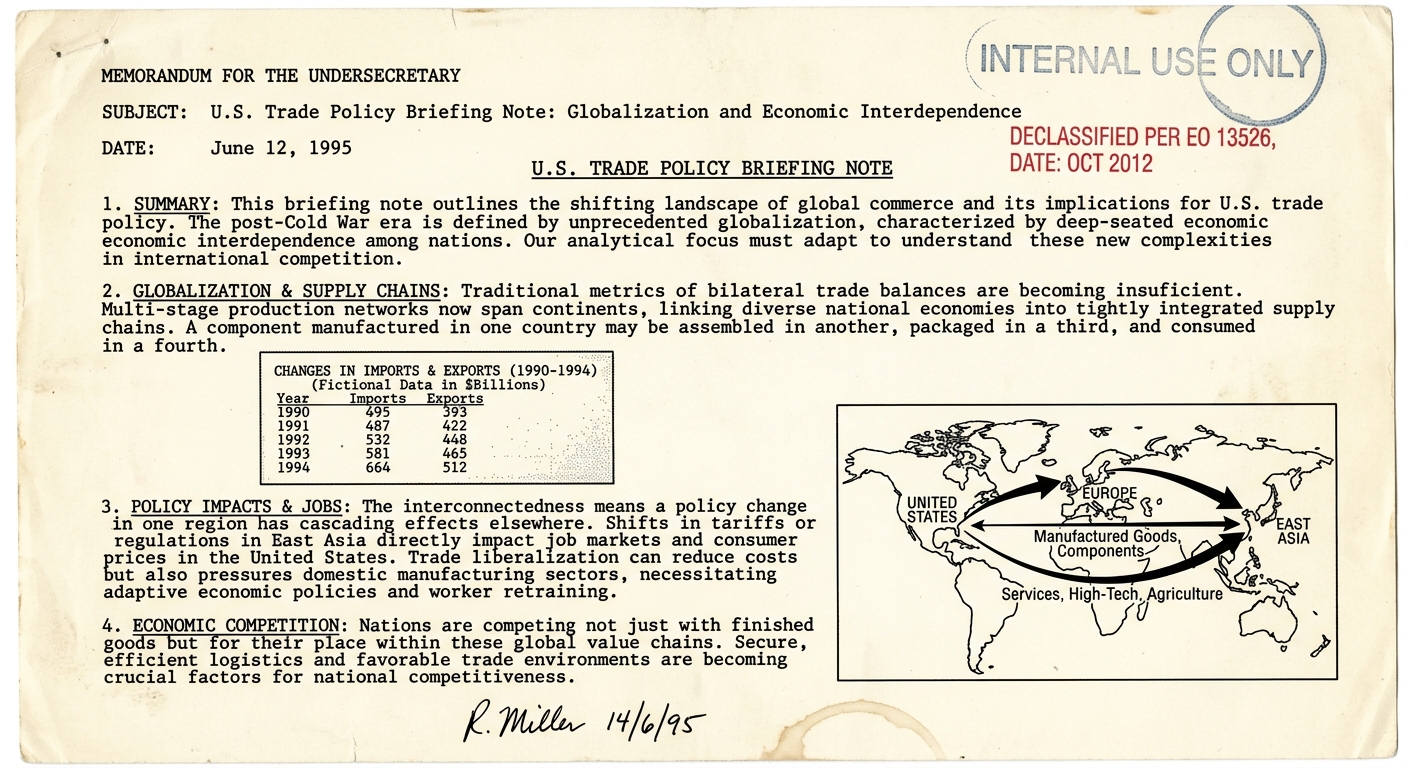
Based on the trade briefing note, what is the main purpose of the document?
Which conclusion is best supported by the arrows on the map and the imports/exports data table?
Which detail from the document is the BEST evidence of increased economic interdependence?
Explain how the document shows that globalization creates economic interdependence and competition.
Use at least two specific pieces of evidence from the briefing (numbers from the table, arrows on the map, or quoted phrases).
Using evidence from the document, infer one possible economic effect on the United States if a major trading partner changed its trade policy, and explain why the document supports your inference.