Twa kɔ nsɛm atitiriw so
Log in
Sign up for FREE
arrow_back
Laabri

8.9 - Domestic Politics and Reform: - Practice A

star
star
star
star
star
Last updated about 1 month ago
25 Nsɛmmisa
Hyɛ no nsow a efi ɔkyerɛwfo no hɔ:

Use the historical document(s) and the short readings in the left panel to answer the associated questions.

Use the historical document(s) and the short readings in the left panel to answer the associated questions.

Ɛhia
1
8.9.a
DOK.SS.2
Ɛhia
1
8.9.a
DOK.SS.2
Ɛhia
1
8.9.a
DOK.SS.2
Ɛhia
1
8.9.a
DOK.SS.2
Ɛhia
1
8.9.a
DOK.SS.2
Ɛhia
1
8.9.b
DOK.SS.2
Ɛhia
1
8.9.b
DOK.SS.2
Ɛhia
1
8.9.b
DOK.SS.2
Ɛhia
1
8.9.b
DOK.SS.2
Ɛhia
1
8.9.b
DOK.SS.2
Ɛhia
1
8.9.c
DOK.SS.2
Ɛhia
1
8.9.c
DOK.SS.2
Ɛhia
1
8.9.c
DOK.SS.2
Ɛhia
1
8.9.c
DOK.SS.2
Ɛhia
1
8.9.c
DOK.SS.2
Ɛhia
1
8.9.d
DOK.SS.2
Ɛhia
1
8.9.d
DOK.SS.2
Ɛhia
1
8.9.d
DOK.SS.2
Ɛhia
1
8.9.d
DOK.SS.2
Ɛhia
1
8.9.d
DOK.SS.2
Ɛhia
1
8.9.e
DOK.SS.2
Ɛhia
1
8.9.e
DOK.SS.2
Ɛhia
1
8.9.e
DOK.SS.2
Ɛhia
1
8.9.e
DOK.SS.2
Ɛhia
1
8.9.e
DOK.SS.2

Archivists preserved this 1963 local flyer calling residents to a mass meeting and voter registration drive. The document reflects how civil rights organizers responded to long-standing inequality by combining legal goals (voting rights) with community action, emphasizing disciplined, peaceful protest.
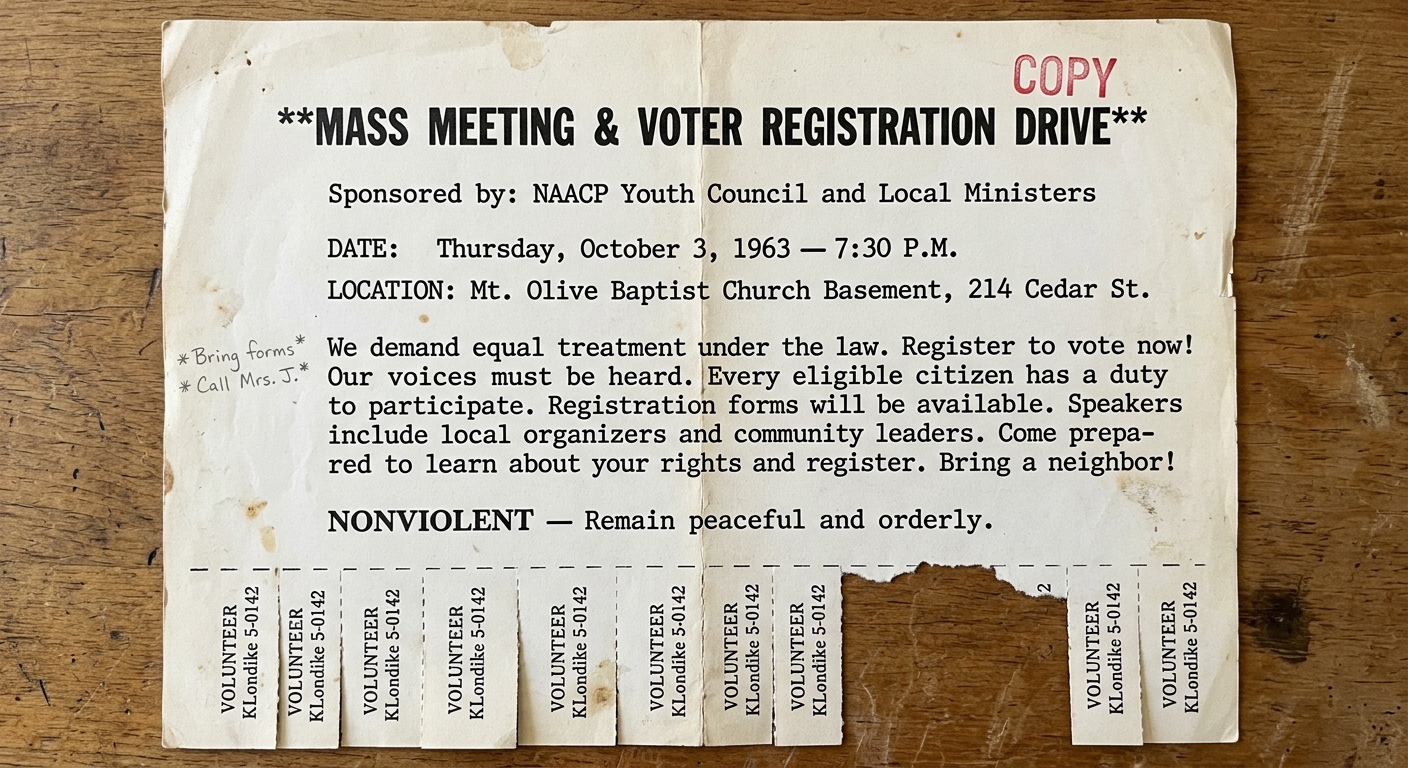
A 1963 typewritten civil rights flyer for a mass meeting and voter registration drive, stamped "COPY," with a note that the event is nonviolent.

Asemmisa {{asɛmmisaAhyɛnsode}}
1.

Which statement best describes the main purpose of the 1963 flyer?

Asemmisa {{asɛmmisaAhyɛnsode}}
2.

Which detail from the flyer is the strongest evidence that the organizers emphasized nonviolent action?

Asemmisa {{asɛmmisaAhyɛnsode}}
3.

Based on the flyer’s format and wording, who was the most likely intended audience?

Asemmisa {{asɛmmisaAhyɛnsode}}
4.

Explain how the flyer shows a response to long-standing inequalities in American society.

Use at least two specific pieces of evidence from the document to support your explanation.

Asemmisa {{asɛmmisaAhyɛnsode}}
5.

Evaluate this flyer as historical evidence: What information does it provide about civil rights activism, and what important information is missing that a historian would want before judging its impact?

In your answer, name two additional sources that could help corroborate the flyer’s significance.

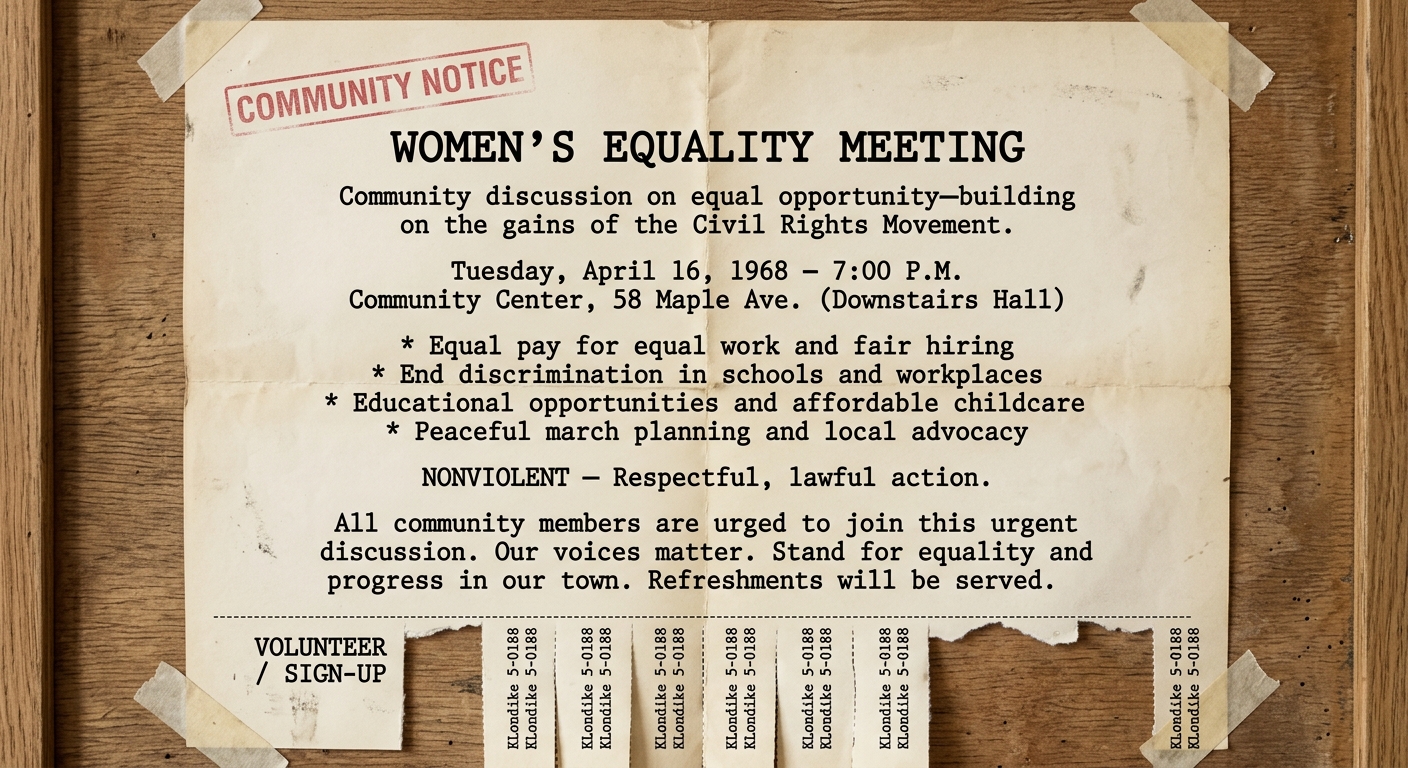
Archivists preserved this 1968 community flyer advertising a women’s equality meeting. The wording suggests organizers drew on civil rights-era strategies—public meetings, lawful protest, and demands for equal opportunity—showing how the civil rights movement encouraged other groups to renew efforts for equality.

A 1968 typewritten flyer announcing a women’s equality meeting that references civil rights gains and calls for nonviolent action and equal opportunity.

Asemmisa {{asɛmmisaAhyɛnsode}}
6.

Which statement best describes the main purpose of the 1968 flyer?

Asemmisa {{asɛmmisaAhyɛnsode}}
7.

Which detail from the flyer most strongly supports the idea that civil rights activism inspired renewed efforts for equality by women or other groups?

Asemmisa {{asɛmmisaAhyɛnsode}}
8.

Based on the issues listed in the flyer, which goal were the organizers most likely prioritizing?

Asemmisa {{asɛmmisaAhyɛnsode}}
9.

Explain how the flyer supports the idea that the civil rights movement prompted renewed efforts for equality by women or other groups.

Use at least two specific pieces of evidence from the document.

Asemmisa {{asɛmmisaAhyɛnsode}}
10.

Evaluate this flyer as historical evidence: What information does it provide about renewed equality efforts, and what important information is missing that a historian would want before judging its impact?

In your answer, name two additional sources that could help corroborate the flyer’s significance.

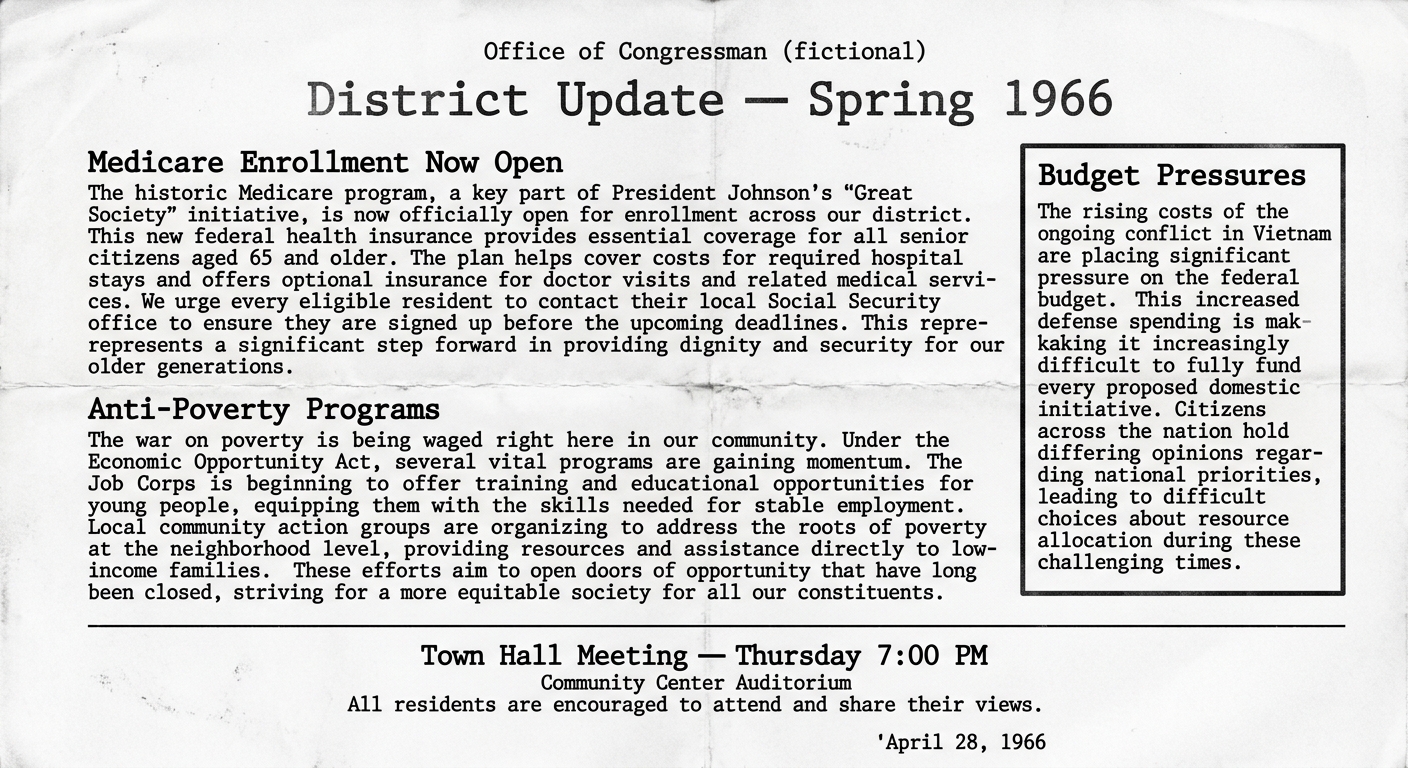
Archivists preserved this 1966 district newsletter describing Great Society programs like Medicare and anti-poverty initiatives. A sidebar notes rising costs of the Vietnam War and disagreements over priorities, showing how domestic reform goals competed with wartime spending and helped divide public opinion.

A 1966 black-and-white newsletter describing Medicare enrollment, anti-poverty programs, and budget pressures related to the Vietnam War.

Asemmisa {{asɛmmisaAhyɛnsode}}
11.

Which statement best describes the main purpose of the 1966 newsletter?

Asemmisa {{asɛmmisaAhyɛnsode}}
12.

Which detail from the newsletter is the strongest evidence that Great Society programs aimed to improve health care for the elderly or reduce poverty?

Asemmisa {{asɛmmisaAhyɛnsode}}
13.

Based on the newsletter’s “Budget Pressures” sidebar, which inference is best supported about the Vietnam War’s effect on domestic reform efforts?

Asemmisa {{asɛmmisaAhyɛnsode}}
14.

Explain how the newsletter shows both:

(1) the goals of Great Society programs and

(2) the challenges the Vietnam War created for those goals.

Use at least two specific pieces of evidence from the document.

Asemmisa {{asɛmmisaAhyɛnsode}}
15.

Explain how the newsletter connects Great Society goals to debates about federal spending.

Use evidence from the document to identify one goal of the Great Society and explain how the Vietnam War created a challenge to funding that goal.

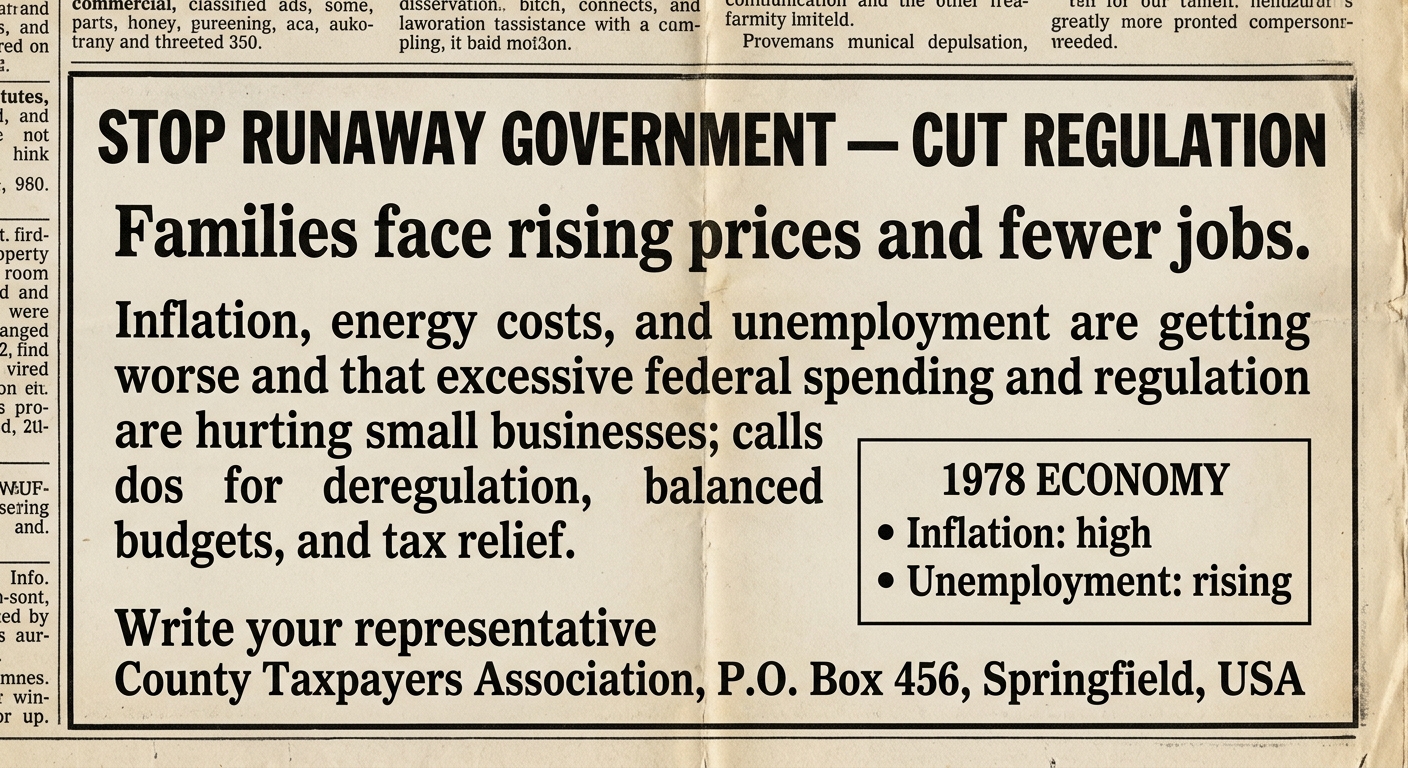
Archivists preserved this 1978 local newspaper advertisement from a taxpayer group during a period of recession and rising prices. The language connects economic stress to concerns about government growth and regulation, showing why fiscal conservatives pushed for policy changes such as deregulation and limits on spending.

A 1978 black-and-white newspaper-style ad calling for smaller government, tax relief, and deregulation during economic hardship.

Asemmisa {{asɛmmisaAhyɛnsode}}
16.

Which statement best describes the main purpose of the 1978 advertisement?

Asemmisa {{asɛmmisaAhyɛnsode}}
17.

Which detail from the advertisement is the strongest evidence that the author connects economic problems to concerns about government growth or regulation?

Asemmisa {{asɛmmisaAhyɛnsode}}
18.

Based on the document’s claims, which policy change would the author most likely support?

Asemmisa {{asɛmmisaAhyɛnsode}}
19.

Explain how the advertisement reflects economic concerns in the 1970s and why those concerns could encourage fiscal conservatives to push for changes in regulation or policy.

Use at least two specific pieces of evidence from the document.

Asemmisa {{asɛmmisaAhyɛnsode}}
20.

Evaluate this advertisement as historical evidence: What does it reveal about fiscal conservative arguments in the late 1970s, and what important information is missing that a historian would need before judging its influence?

In your answer, name two additional sources that could help corroborate its significance.

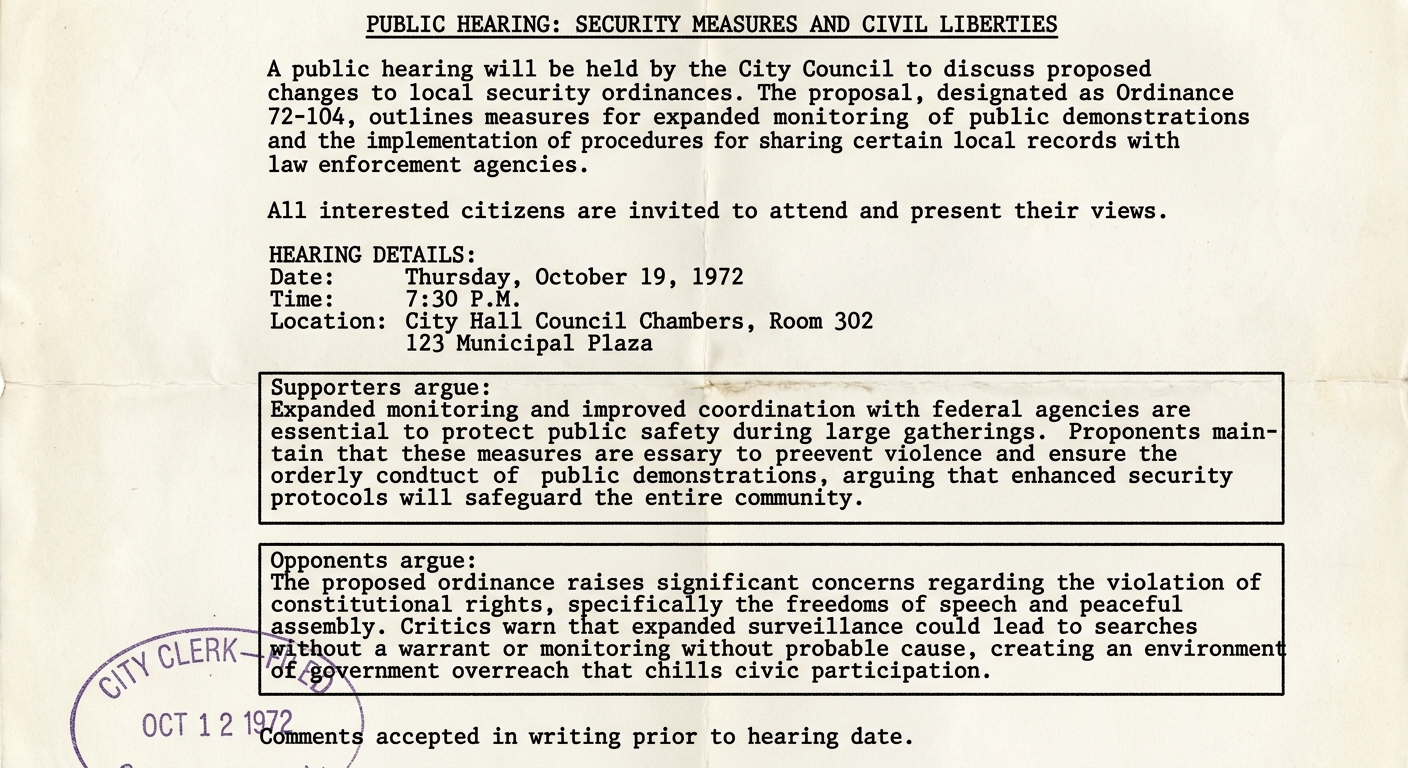
Archivists preserved this 1972 public hearing notice about proposed security measures. The document highlights debate over the federal government’s role in public safety and whether increased surveillance could violate constitutional civil liberties. The language shows how Americans disagreed about balancing rights with government power.

Asemmisa {{asɛmmisaAhyɛnsode}}
21.

Using evidence from the 1972 hearing notice, explain one argument supporting the proposed security measures and one argument opposing them.

Then explain how these arguments reflect disagreement about the role of government and constitutional civil liberties.

Asemmisa {{asɛmmisaAhyɛnsode}}
22.

Which statement best describes the main purpose of the 1972 notice?

Asemmisa {{asɛmmisaAhyɛnsode}}
23.

Which phrase from the notice would be the strongest evidence that civil liberties were a concern?

Asemmisa {{asɛmmisaAhyɛnsode}}
24.

Based on the notice, which constitutional issue is most directly connected to the debate being described?

Asemmisa {{asɛmmisaAhyɛnsode}}
25.

Explain how the notice shows a constitutional debate about civil liberties and the role of government.

Use at least two specific pieces of evidence from the document (for example, one from supporters’ arguments and one from opponents’ arguments).