Use the historical document(s) and the short readings in the left panel to answer the associated questions.
During Reconstruction (1865–1877), the Freedmen’s Bureau helped formerly enslaved people negotiate new work arrangements. This 1866 labor contract outlines wages, a one-year term, and rules for workers and employers, showing how freedom and labor were being redefined after the Civil War.
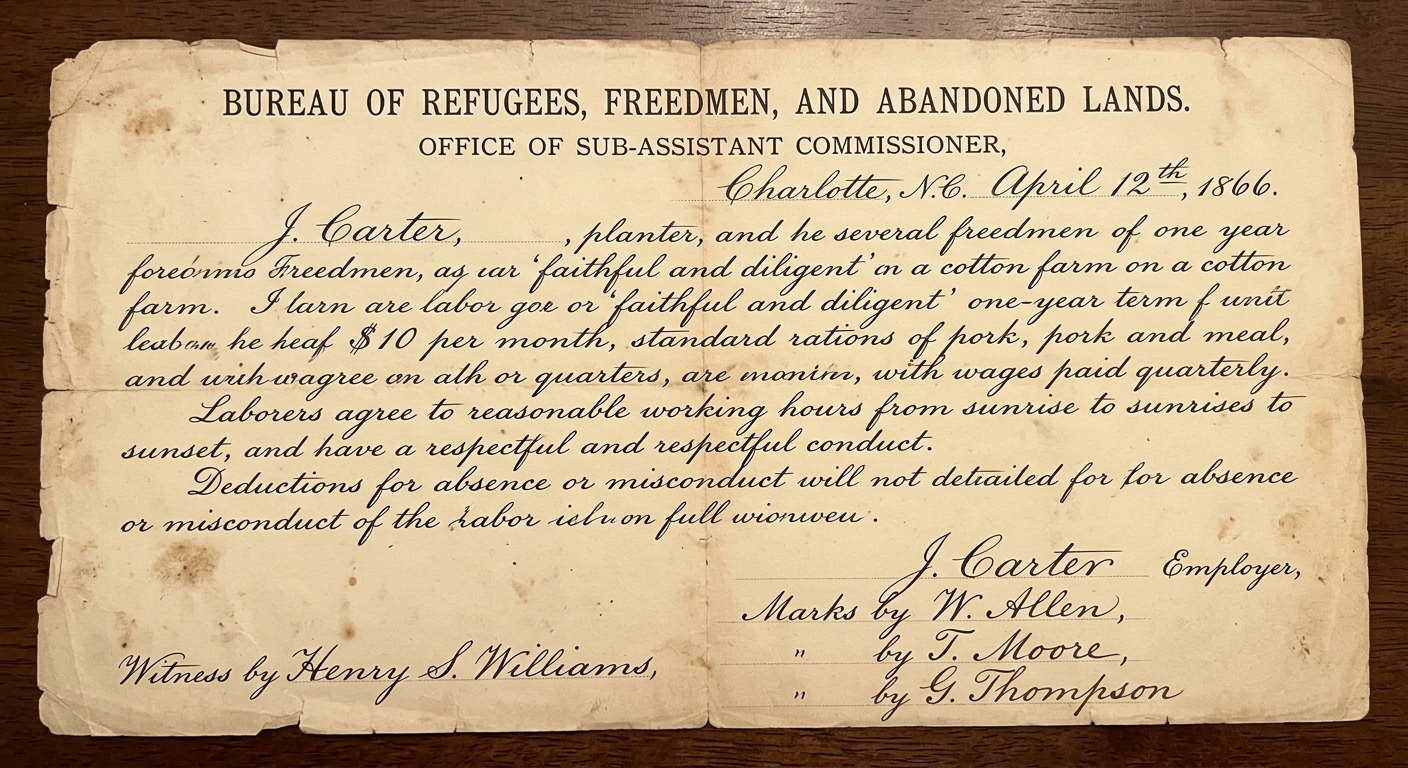
Based on the date and purpose of the document, which Reconstruction-era challenge is it MOST directly addressing?
Which event MOST likely happened shortly BEFORE this 1866 contract and helps explain why it was created?
Which later Reconstruction development is MOST closely connected to the kind of labor arrangement shown in this document?
Use evidence from the document to explain how this contract shows a Reconstruction challenge in reunifying the nation.
In your paragraph, describe one cause that happened earlier and one effect that happened later.
Cite at least two details from the document.
Write a short chronological explanation (3–4 sentences) that connects these in order: the end of slavery, the creation of labor contracts like this one, and conflicts over Reconstruction policies.
Use at least one piece of evidence from the document.
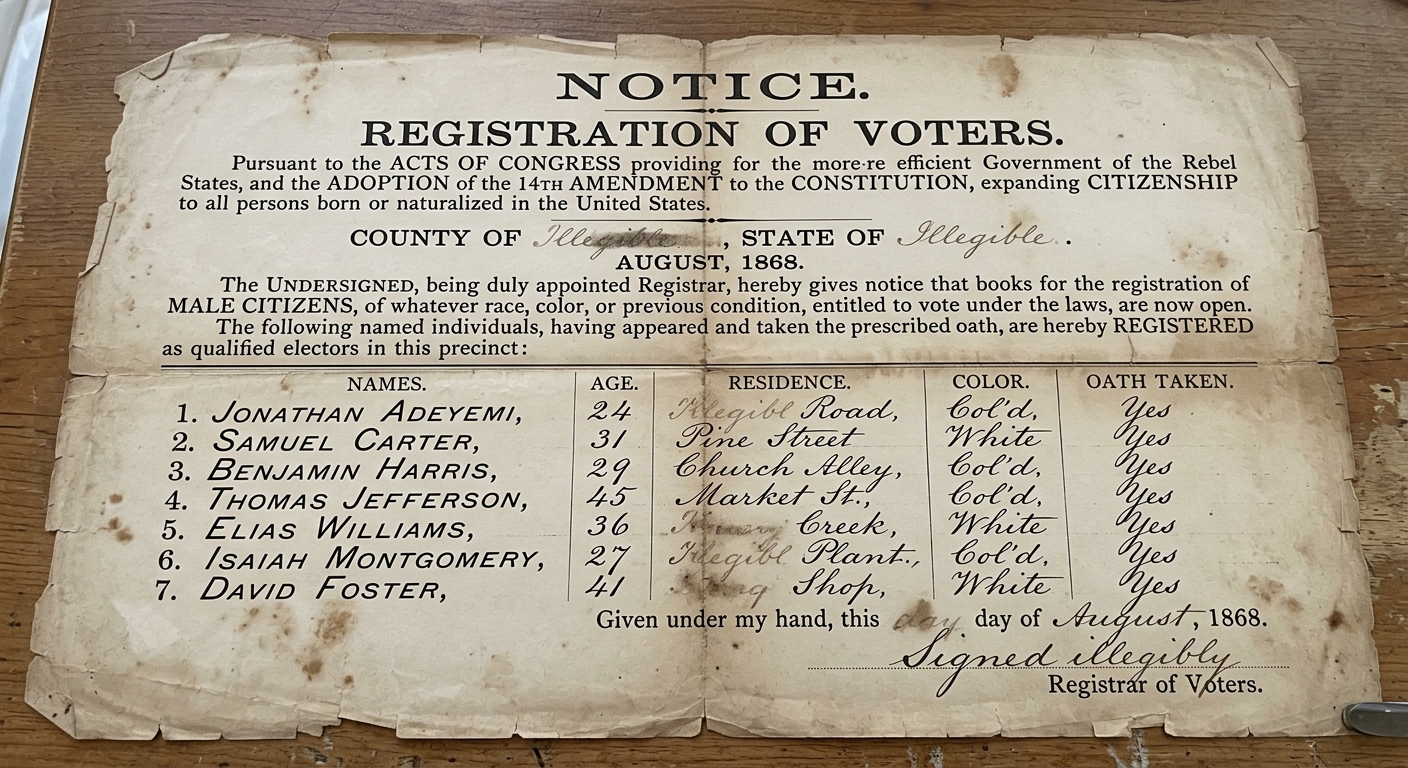
In Reconstruction (1865–1877), Congress and constitutional amendments expanded citizenship and political rights for freedpeople. This 1868 voter registration record lists newly registered voters under Reconstruction rules, showing how African American men began participating in elections while states and federal officials debated enforcement.

Based on the date and purpose of this 1868 document, which Reconstruction goal is it MOST directly connected to?
Which event MOST likely happened BEFORE this 1868 registration record and helped make it possible?
Which later development would MOST likely affect the people listed in this 1868 document?
Use evidence from the document to explain how this record shows freedpeople creating new lives after slavery.
In your paragraph, identify one earlier change that made this possible and one later challenge that could limit its impact.
Cite at least two details from the document.
Write a short chronological explanation (3–4 sentences) that connects these in order: the end of slavery, new federal protections for citizenship/rights, and a document like this 1868 registration record.
Include at least one piece of evidence from the document.
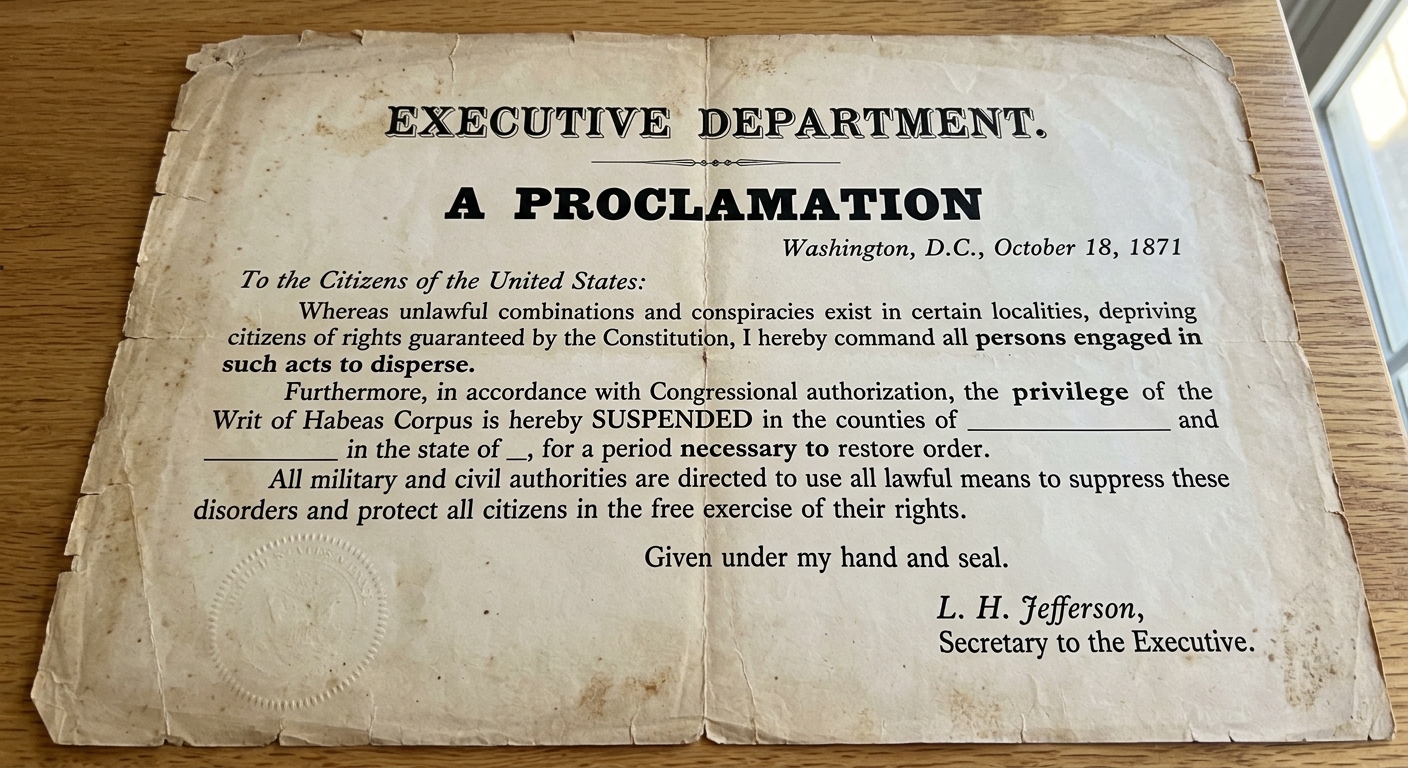
In Reconstruction (1865–1877), federal officials tried to protect freedpeople’s rights, but violence and local resistance challenged enforcement. This 1871 federal proclamation orders action against organized intimidation, showing how national initiatives were contested and why protecting citizenship and voting rights remained difficult over time.

Based on the date and purpose of this 1871 document, which Reconstruction problem is it MOST directly addressing?
Which development MOST likely happened shortly BEFORE this 1871 proclamation and helps explain why it was issued?
Which later outcome is MOST closely connected to the kind of federal action shown in this 1871 document?
Use evidence from the document to explain how this proclamation shows federal initiatives being challenged during Reconstruction.
In your paragraph, identify one earlier development that led to this federal response and one later impact on the lives of African Americans.
Cite at least two details from the document.
Write a short chronological explanation (3–4 sentences) that connects these in order: federal efforts to expand rights, resistance or violence that challenged those efforts, and a federal response like this 1871 proclamation.
Include at least one piece of evidence from the document.