Twa kɔ nsɛm atitiriw so
Log in
Sign up for FREE
arrow_back
Laabri

8.2 - A Changing Society: - Practice B

star
star
star
star
star
Last updated about 1 month ago
25 Nsɛmmisa
Hyɛ no nsow a efi ɔkyerɛwfo no hɔ:

Use the historical document(s) and the short readings in the left panel to answer the associated questions.

Use the historical document(s) and the short readings in the left panel to answer the associated questions.

Ɛhia
1
8.2.a
DOK.SS.2
Ɛhia
1
8.2.a
DOK.SS.2
Ɛhia
1
8.2.a
DOK.SS.2
Ɛhia
1
8.2.a
DOK.SS.2
Ɛhia
1
8.2.a
DOK.SS.2
Ɛhia
1
8.2.b
DOK.SS.2
Ɛhia
1
8.2.b
DOK.SS.2
Ɛhia
1
8.2.b
DOK.SS.2
Ɛhia
1
8.2.b
DOK.SS.2
Ɛhia
1
8.2.b
DOK.SS.2
Ɛhia
1
8.2.c
DOK.SS.2
Ɛhia
1
8.2.c
DOK.SS.2
Ɛhia
1
8.2.c
DOK.SS.2
Ɛhia
1
8.2.c
DOK.SS.2
Ɛhia
1
8.2.c
DOK.SS.2
Ɛhia
1
8.2.d
DOK.SS.2
Ɛhia
1
8.2.d
DOK.SS.2
Ɛhia
1
8.2.d
DOK.SS.2
Ɛhia
1
8.2.d
DOK.SS.2
Ɛhia
1
8.2.d
DOK.SS.2
Ɛhia
1
8.2.e
DOK.SS.2
Ɛhia
1
8.2.e
DOK.SS.2
Ɛhia
1
8.2.e
DOK.SS.2
Ɛhia
1
8.2.e
DOK.SS.2
Ɛhia
1
8.2.e
DOK.SS.2

Read the recruitment notice below from New York City (1892). In the late 1800s, new machines and expanded factories increased production. As jobs grew in urban areas, more people moved from farms and more immigrants arrived, helping New York City and other New York State cities expand rapidly.
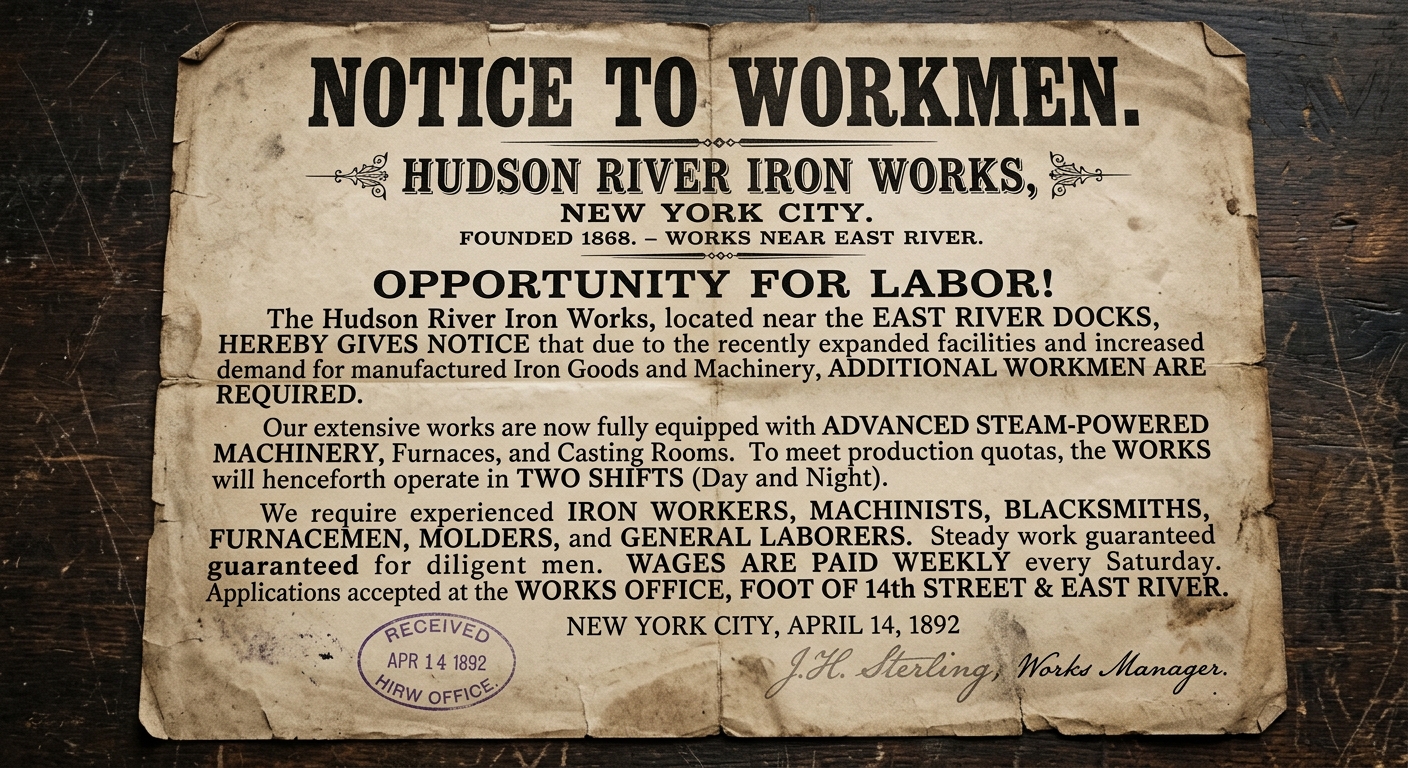
A sepia-toned 1892 New York City factory recruitment notice titled "Notice to Workmen," mentioning steam-powered machinery, expanded production, weekly wages, and a need for more workers, with an ink stamp and signature.

Asemmisa {{asɛmmisaAhyɛnsode}}
1.

Based on the document and reading stimulus, which development most directly helps explain why the factory is recruiting additional workers in 1892?

Asemmisa {{asɛmmisaAhyɛnsode}}
2.

Which statement best places this 1892 notice in the correct chronological context of U.S. history?

Asemmisa {{asɛmmisaAhyɛnsode}}
3.

Which sequence best shows a chronological cause-and-effect chain that matches the document’s situation?

Asemmisa {{asɛmmisaAhyɛnsode}}
4.

Using evidence from the notice and the reading stimulus, explain how technological developments and access to resources could lead to increased immigration and city growth in New York.

Your response should explain the events in chronological order.

Asemmisa {{asɛmmisaAhyɛnsode}}
5.

Identify one immediate effect and one long-term effect that likely followed the situation shown in the 1892 notice.

Explain which effect would happen first and why.

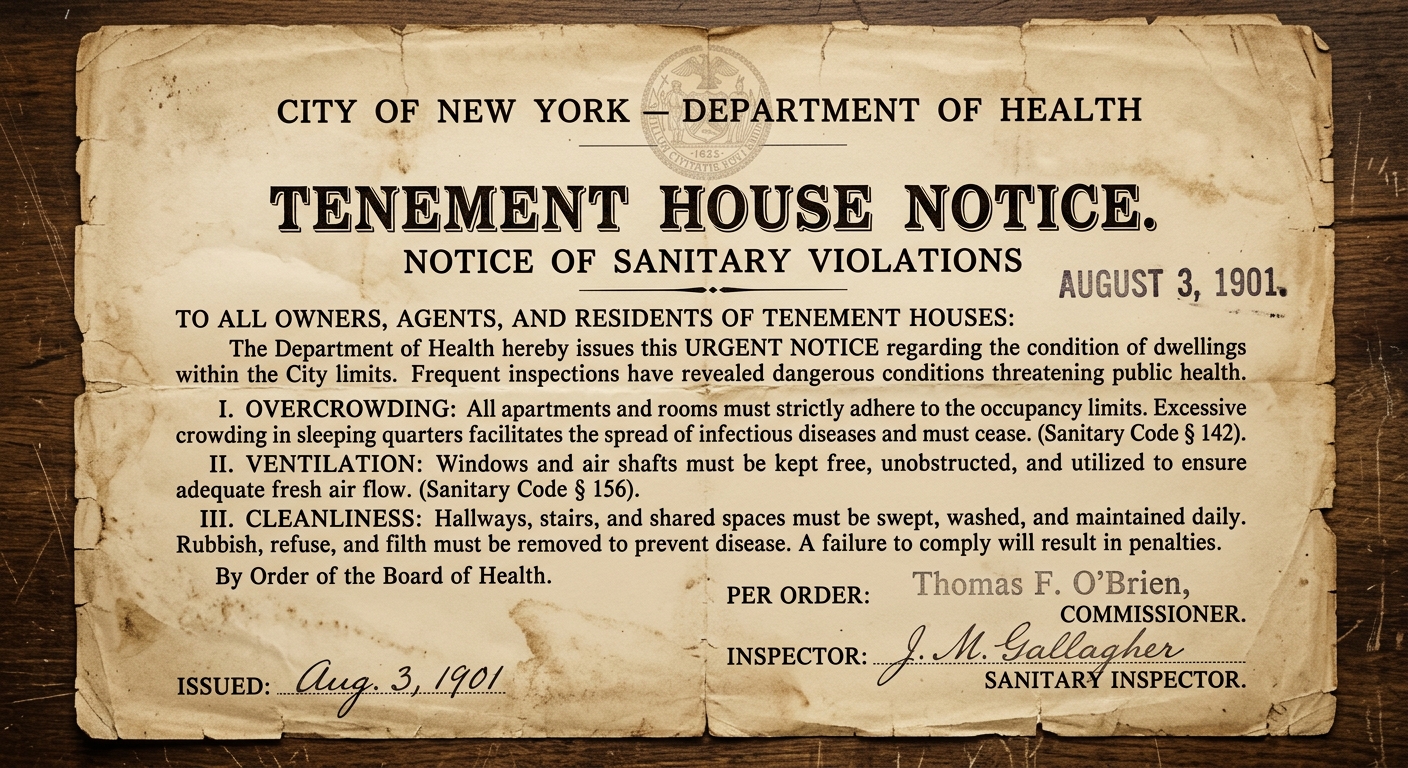
Read the New York City Department of Health notice below (1901). By the early 1900s, rapid immigration and industrial jobs increased city populations. As neighborhoods grew denser, many families lived in crowded tenements, leading to new public health rules that shaped daily life.

A sepia-toned 1901 New York City Department of Health tenement notice about overcrowding, ventilation, cleanliness, and disease prevention, with a faint city seal and an inspector signature line.

Asemmisa {{asɛmmisaAhyɛnsode}}
6.

Which earlier development most directly set the conditions that made this 1901 health notice necessary?

Asemmisa {{asɛmmisaAhyɛnsode}}
7.

Which statement best places this 1901 notice in the correct chronological context of U.S. history?

Asemmisa {{asɛmmisaAhyɛnsode}}
8.

Which sequence best shows a chronological chain that connects industrialization to the situation described in the notice?

Asemmisa {{asɛmmisaAhyɛnsode}}
9.

Using evidence from the notice and the reading stimulus, explain how population density and urban industry could change the social and economic lives of people in New York City over time.

Organize your response in chronological order.

Asemmisa {{asɛmmisaAhyɛnsode}}
10.

Identify one immediate effect and one longer-term effect that could result from enforcing the 1901 health notice.

Explain which effect would happen first and why.

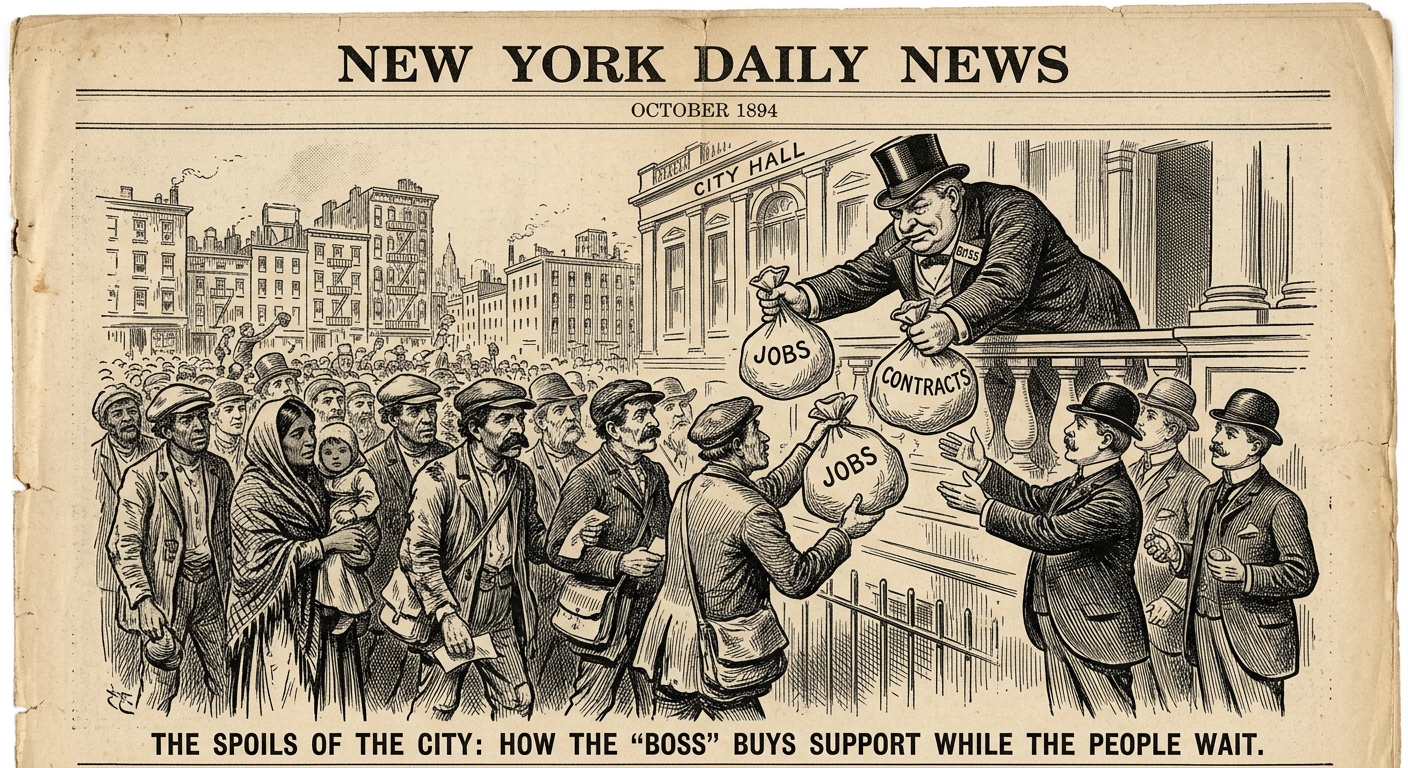
Examine the political cartoon below from New York City (1894). In the late 1800s, immigration and industrial jobs increased city populations. As cities grew, conflicts over labor conditions and immigration increased, and political machines gained power, sometimes leading to corruption.

A black-and-white 1894 New York City newspaper political cartoon showing a "Boss" at City Hall handing out bags labeled "Jobs" and "Contracts" to insiders while immigrants and workers wait in a crowded line, suggesting political corruption.

Asemmisa {{asɛmmisaAhyɛnsode}}
11.

Which earlier development most directly helped create the conditions shown in the 1894 cartoon?

Asemmisa {{asɛmmisaAhyɛnsode}}
12.

Which statement best places this 1894 cartoon in the correct chronological context of U.S. history?

Asemmisa {{asɛmmisaAhyɛnsode}}
13.

Which sequence best shows a chronological chain that connects immigration and industrialization to the corruption suggested in the cartoon?

Asemmisa {{asɛmmisaAhyɛnsode}}
14.

Using evidence from the cartoon and the reading stimulus, explain how rapid city growth could increase political corruption over time.

Organize your response in chronological order.

Asemmisa {{asɛmmisaAhyɛnsode}}
15.

Identify one immediate effect and one longer-term effect that could result from the type of political corruption suggested in the cartoon.

Explain which effect would happen first and why.

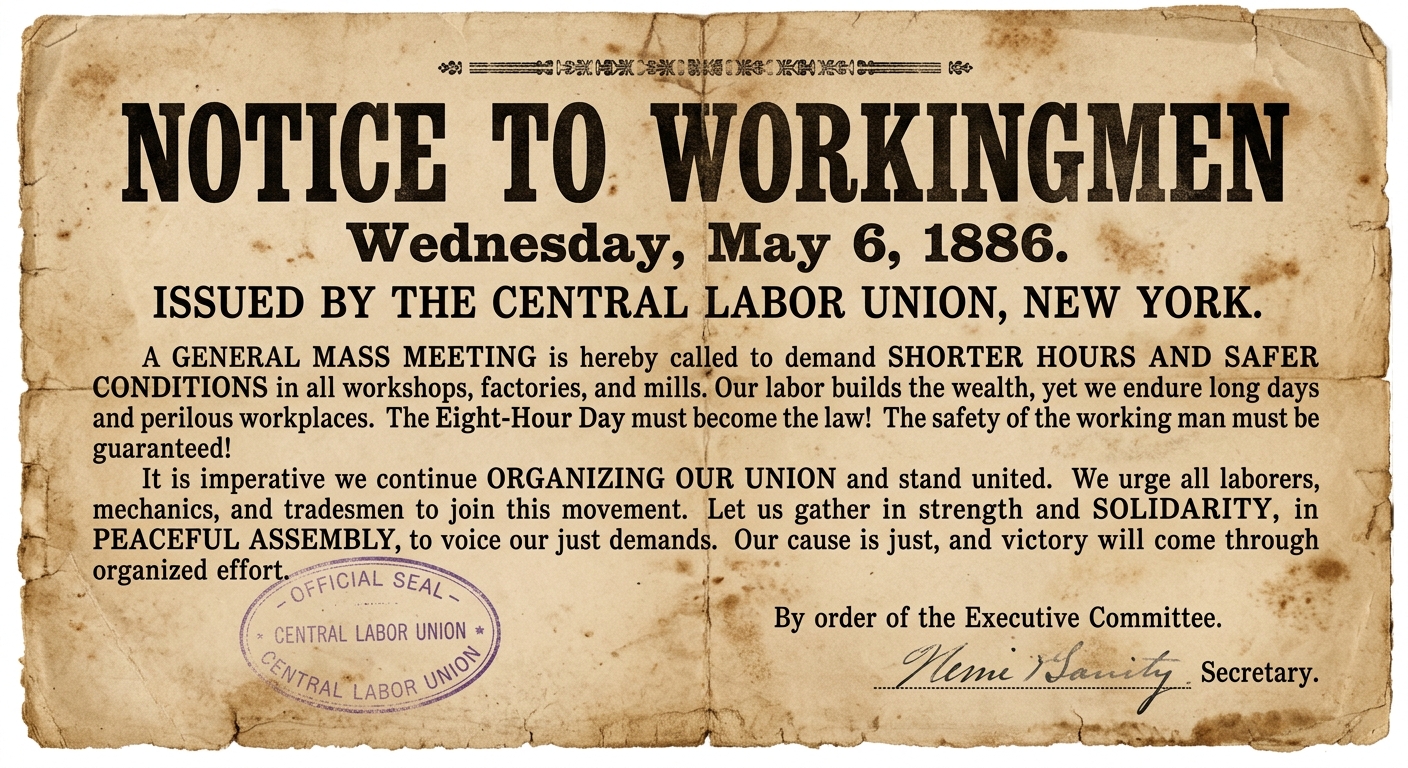
Read the labor leaflet below from New York (1886). As factories expanded in the late 1800s, workers often faced long hours and unsafe conditions. In response, laborers began organizing unions and using strategies like meetings, strikes, and petitions to push for change over time.

A sepia-toned 1886 New York labor leaflet titled "Notice to Workingmen" calling for an organized meeting to demand shorter hours and safer factory conditions, mentioning union organizing and peaceful assembly, with a stamp and signature line.

Asemmisa {{asɛmmisaAhyɛnsode}}
16.

Which earlier development most directly helped create the working conditions that led to leaflets like this in the late 1800s?

Asemmisa {{asɛmmisaAhyɛnsode}}
17.

Which statement best places this 1886 leaflet in the correct chronological context of U.S. history?

Asemmisa {{asɛmmisaAhyɛnsode}}
18.

Which sequence best shows a chronological chain that connects industrial growth to the strategy shown in the leaflet?

Asemmisa {{asɛmmisaAhyɛnsode}}
19.

Using evidence from the leaflet and the reading stimulus, explain how changing working conditions could lead laborers to organize and use strategies to improve conditions over time.

Organize your response in chronological order.

Asemmisa {{asɛmmisaAhyɛnsode}}
20.

Identify one immediate effect and one longer-term effect that could result from the organizing strategy described in the leaflet.

Explain which effect would happen first and why.

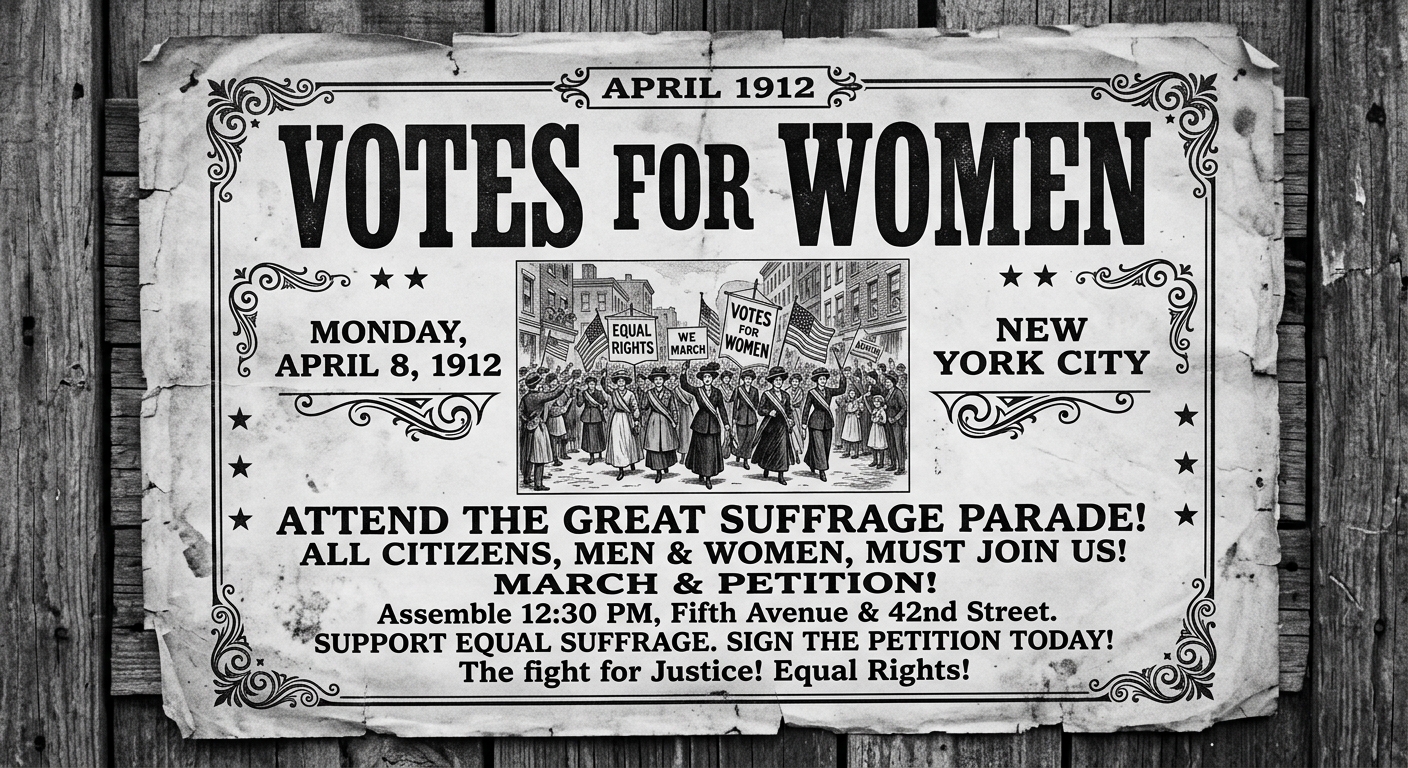
Examine the suffrage poster below from New York (April 1912). During the Progressive Era (1890–1920), reformers pushed governments to address social and political problems. Women’s rights activists used petitions, parades, and lobbying to build support for voting rights, leading to major policy changes over time.

Black-and-white 1912-style poster reading "Votes for Women" announcing a New York suffrage parade and petition drive, with decorative border and small illustration of marchers.

Asemmisa {{asɛmmisaAhyɛnsode}}
21.

Which statement best places this April 1912 poster in the correct chronological context of U.S. history?

Asemmisa {{asɛmmisaAhyɛnsode}}
22.

Which earlier development most directly helped create the conditions that led to a 1912 suffrage poster like this?

Asemmisa {{asɛmmisaAhyɛnsode}}
23.

Which sequence best shows a chronological chain that connects a 1912 suffrage campaign to later national voting rights change?

Asemmisa {{asɛmmisaAhyɛnsode}}
24.

Using evidence from the 1912 poster and the reading stimulus, explain how Progressive Era reform efforts could bring renewed attention to women’s rights and lead to government policy changes between 1890 and 1920.

Organize your response in chronological order.

Asemmisa {{asɛmmisaAhyɛnsode}}
25.

Identify one immediate effect and one longer-term effect that could result from the 1912 suffrage campaign suggested by the poster.

Explain which effect would happen first and why.