Use the historical document(s) and the short readings in the left panel to answer the associated questions.
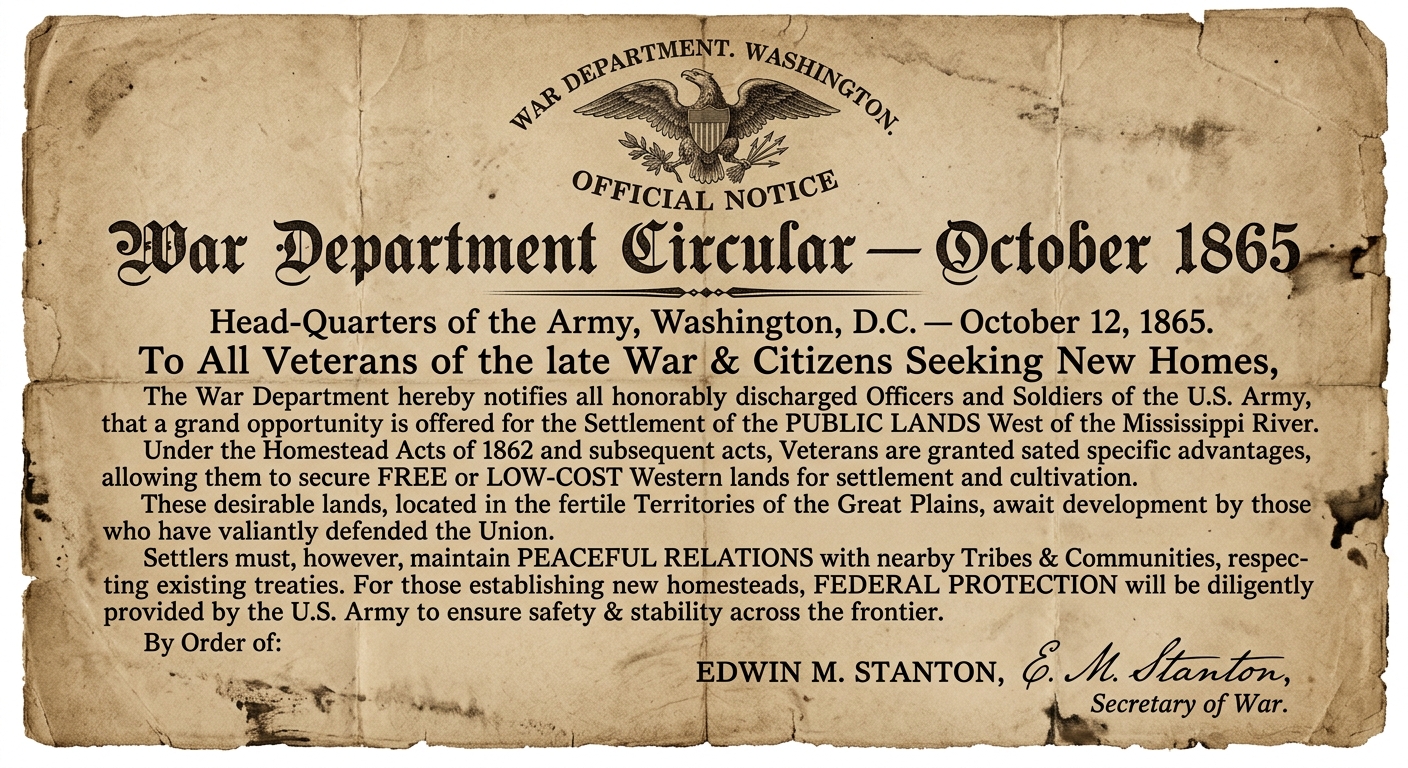
War Department Circular (October 1865)
After the Civil War, the U.S. government encouraged veterans to move west. Notices like this promised land on the Great Plains and claimed settlement would bring “order” and growth. But new towns and farms often increased conflict with Native nations already living there.
Based on the 1865 document and the reading, which event most directly came next in the same historical pattern described?
Which statement best explains how the 1865 document connects to the conflicts described in standard 8.3.a?
Which timeline best matches the chronological relationship implied by the reading?
Using evidence from BOTH the document and the reading, explain how a government policy encouraging settlement could lead to increased conflicts with Native Americans.
Include at least one cause-and-effect step and keep your response to one paragraph.
The reading says the notices promised “order” and growth.
Explain why the U.S. government might describe settlement that way, and describe one likely effect this policy could have over time on Native communities in the region.
Keep your response to one paragraph.
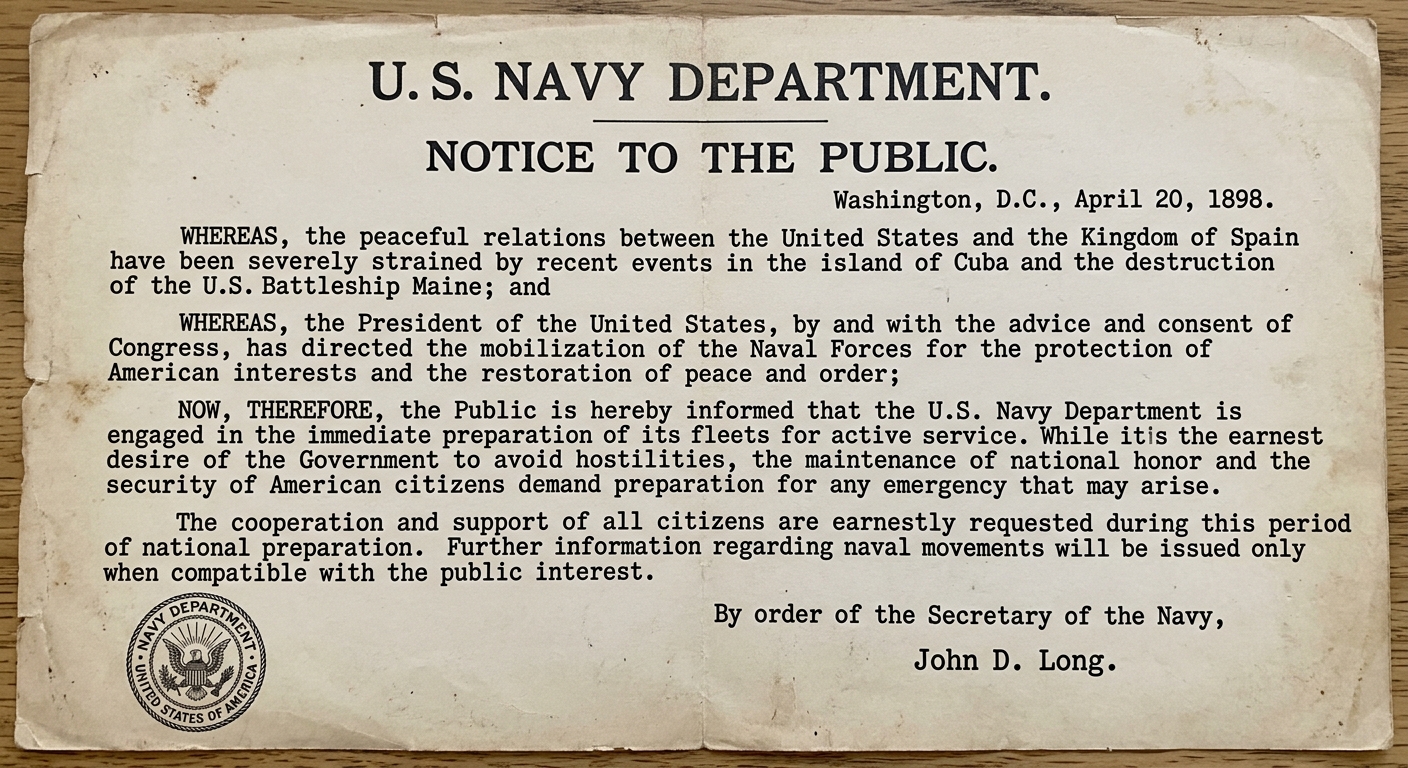
U.S. Navy Department Notice (April 1898)
In 1898, rising tensions between the United States and Spain over Cuba led to calls for military action. Supporters argued the U.S. should protect American interests and help end violence. The Spanish-American War soon followed, and the United States gained new overseas territories.

Based on the 1898 document and the reading, which event most directly came next in the chronological sequence described?
Which statement best explains how the situation described in the April 1898 notice contributed to the United States becoming an imperial power (standard 8.3.b)?
Which timeline best matches the cause-and-effect order implied by the document and reading?
Using evidence from BOTH the April 1898 notice and the reading, explain how the events described could lead to the United States gaining overseas territories.
Include at least one chronological (before/after) step and keep your response to one paragraph.
The document uses formal language to build support for U.S. action.
Explain one reason a government might frame events this way in 1898, and describe one longer-term effect this could have on U.S. foreign policy after the war.
Keep your response to one paragraph.
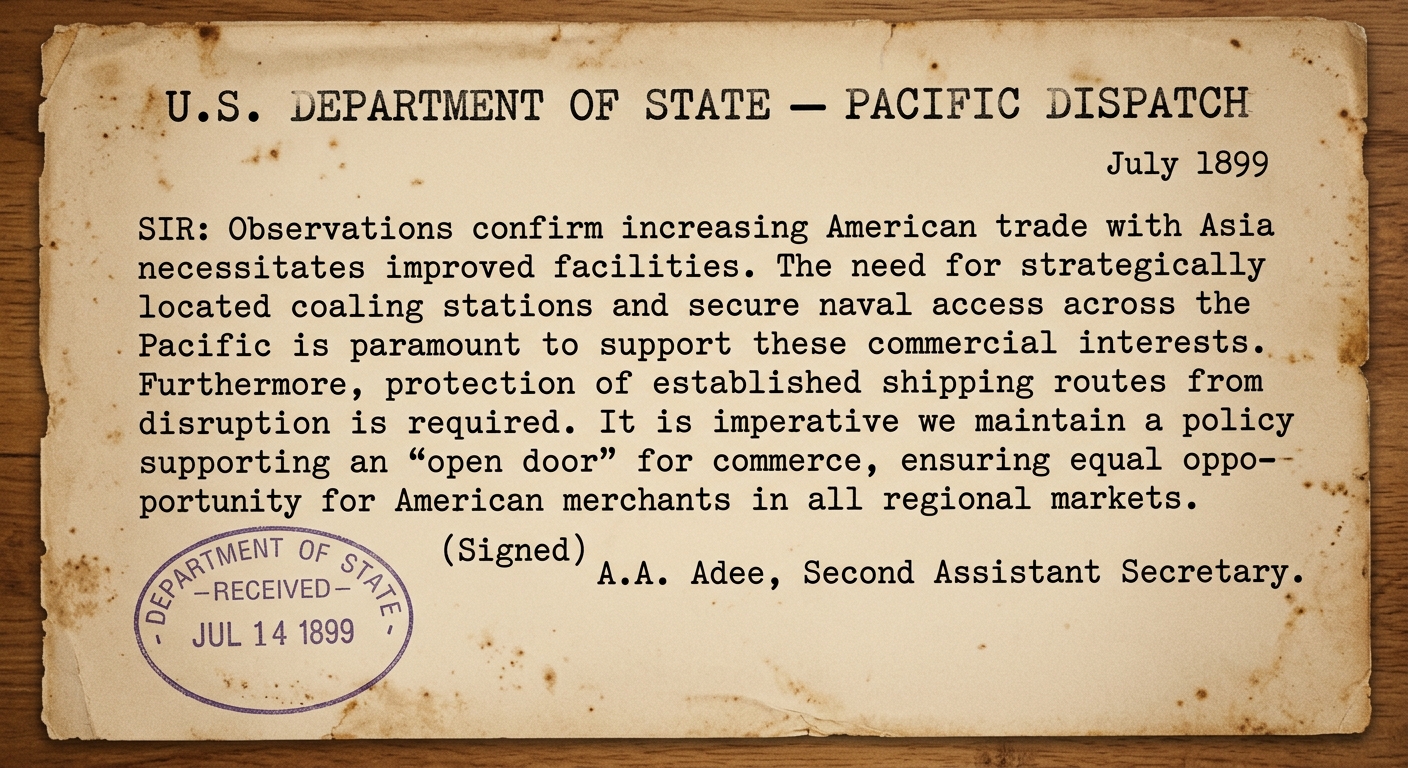
State Department Pacific Dispatch (July 1899)
As U.S. trade with Asia expanded, officials argued American ships needed reliable Pacific ports for refueling and repair. The dispatch links commerce to naval access and coaling stations, claiming these steps would protect shipping routes. These ideas encouraged more U.S. involvement in Pacific islands and Asian markets.

Based on the 1899 dispatch and the reading, which development most directly came next in the same historical sequence?
Which statement best explains how the dispatch supports interest in Pacific trade increased U.S. foreign interactions?
Which timeline best matches the cause-and-effect order implied by the dispatch and reading?
Using evidence from BOTH the dispatch and the reading, explain how economic goals could lead to increased U.S. foreign interactions in the Pacific.
Include at least one chronological (before/after) step and keep your response to one paragraph.
The dispatch argues that protecting shipping routes is necessary for trade.
Explain one reason a government might link trade to naval power, and describe one likely longer-term effect this could have on U.S. foreign policy in the Pacific.
Keep your response to one paragraph.
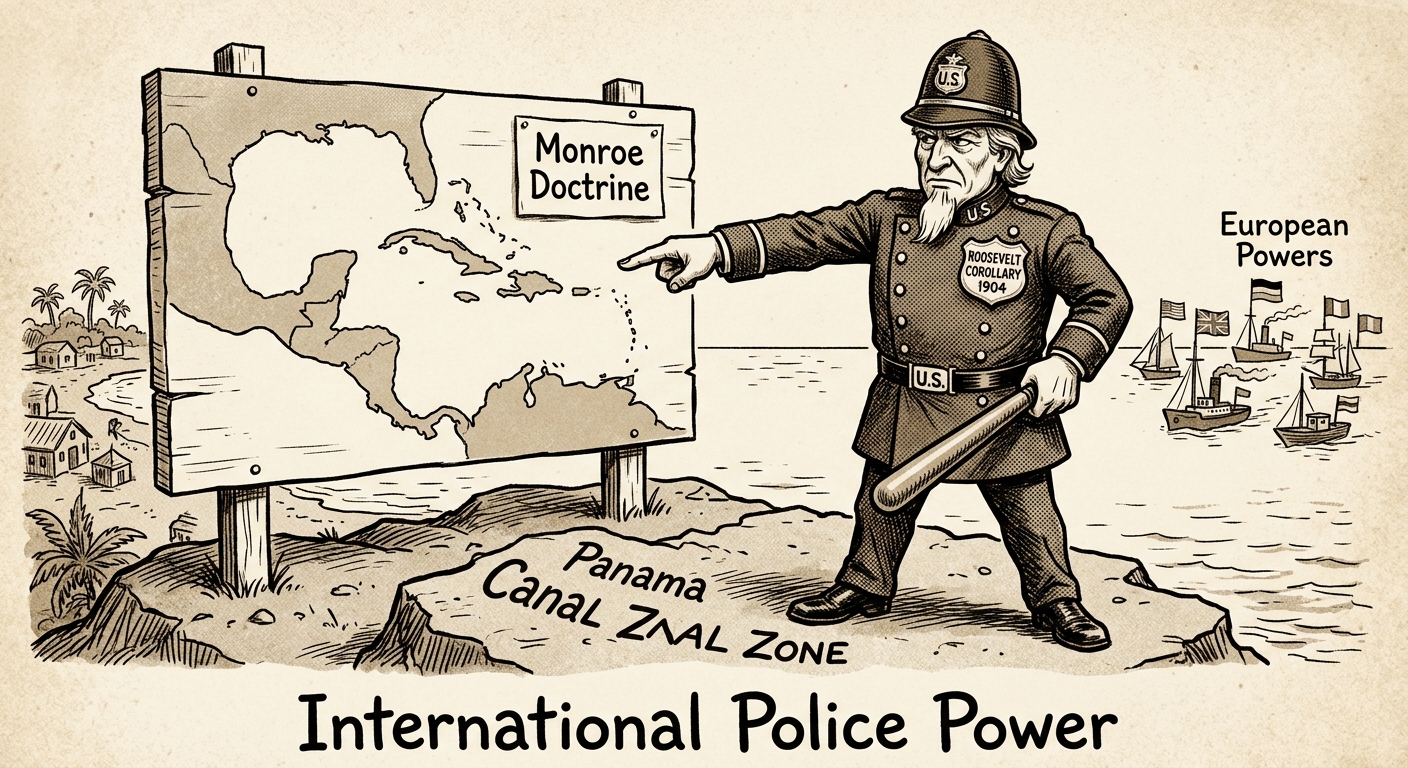
Political Cartoon: “International Police Power” (1904)
In 1904, President Theodore Roosevelt stated that the United States could intervene in Latin American countries if instability might invite European involvement. This policy, called the Roosevelt Corollary, expanded the Monroe Doctrine. U.S. actions in the Caribbean and Central America later increased resentment in the region.

Based on the cartoon and the reading, which development most directly came next in the historical sequence described?
Which statement best explains how the cartoon illustrates the Roosevelt Corollary expanded the Monroe Doctrine and increased U.S. involvement in Latin America?
Which timeline best matches the cause-and-effect order implied by the reading?
Using evidence from BOTH the cartoon and the reading, explain how the Roosevelt Corollary could increase U.S. involvement in Latin America.
Include at least one chronological (before/after) step and keep your response to one paragraph.
The reading mentions that U.S. actions increased resentment in the region.
Explain one reason people in Latin America might resent this policy, and describe one likely longer-term effect on U.S.–Latin American relations.
Keep your response to one paragraph.