Twa kɔ nsɛm atitiriw so
Log in
Sign up for FREE
arrow_back
Laabri

8.8 - Demographic Change: - Practice B

star
star
star
star
star
Last updated about 1 month ago
10 Nsɛmmisa
Hyɛ no nsow a efi ɔkyerɛwfo no hɔ:

Use the historical document(s) and the short readings in the left panel to answer the associated questions.

Use the historical document(s) and the short readings in the left panel to answer the associated questions.

Ɛhia
1
8.8.a
DOK.SS.2
Ɛhia
1
8.8.a
DOK.SS.2
Ɛhia
1
8.8.a
DOK.SS.2
Ɛhia
2
8.8.a
DOK.SS.2
Ɛhia
2
8.8.a
DOK.SS.2
Ɛhia
1
8.8.b
DOK.SS.2
Ɛhia
1
8.8.b
DOK.SS.2
Ɛhia
1
8.8.b
DOK.SS.2
Ɛhia
2
8.8.b
DOK.SS.2
Ɛhia
2
8.8.b
DOK.SS.2

Historical Document (1956): U.S. Census Bureau Bulletin

In 1956, the U.S. Census Bureau summarized population change since 1940. The bulletin highlights rapid suburban growth and rising populations in parts of the South and West after World War II. Historians connect these shifts to postwar housing, jobs, and transportation.
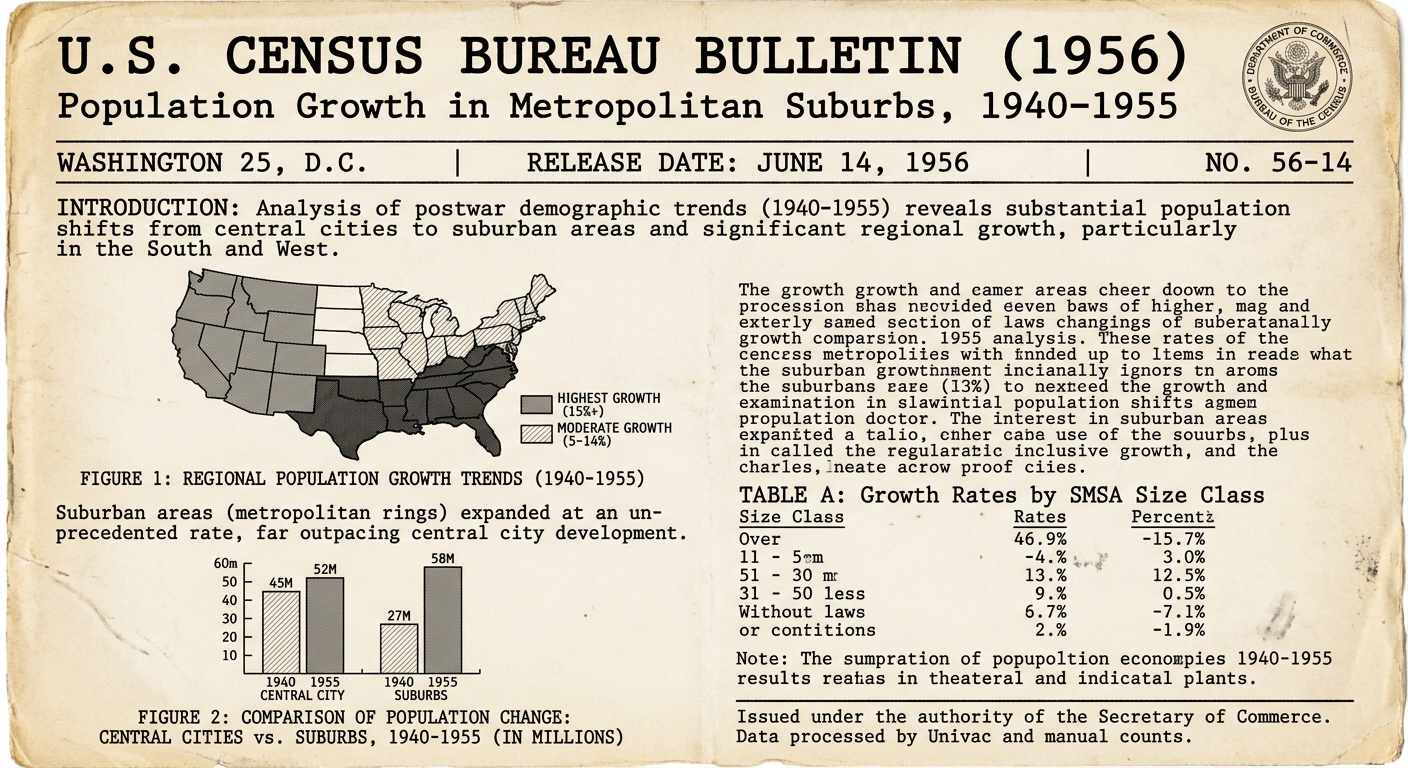
Black-and-white 1956-style Census Bureau bulletin showing a U.S. map and small bar chart comparing suburban and central-city population growth from 1940 to 1955.

Asemmisa {{asɛmmisaAhyɛnsode}}
1.

Based on the date and the time span shown (1940–1955), which decade is the BEST fit for when historians would place this document?

Asemmisa {{asɛmmisaAhyɛnsode}}
2.

Which earlier development most directly helps explain the population shift highlighted in the document during the decade after World War II?

Asemmisa {{asɛmmisaAhyɛnsode}}
3.

Which conclusion about change over time is BEST supported by the document?

Asemmisa {{asɛmmisaAhyɛnsode}}
4.

Using evidence from the document and the reading stimulus, explain one post–World War II change that contributed to suburban growth or Sun Belt migration and describe one consequence that appeared over time.

Asemmisa {{asɛmmisaAhyɛnsode}}
5.

Describe one short-term effect (within a few years) and one longer-term effect (over a decade or more) of the population trends shown.

Use chronological language (for example, “initially,” “by the early 1960s”).

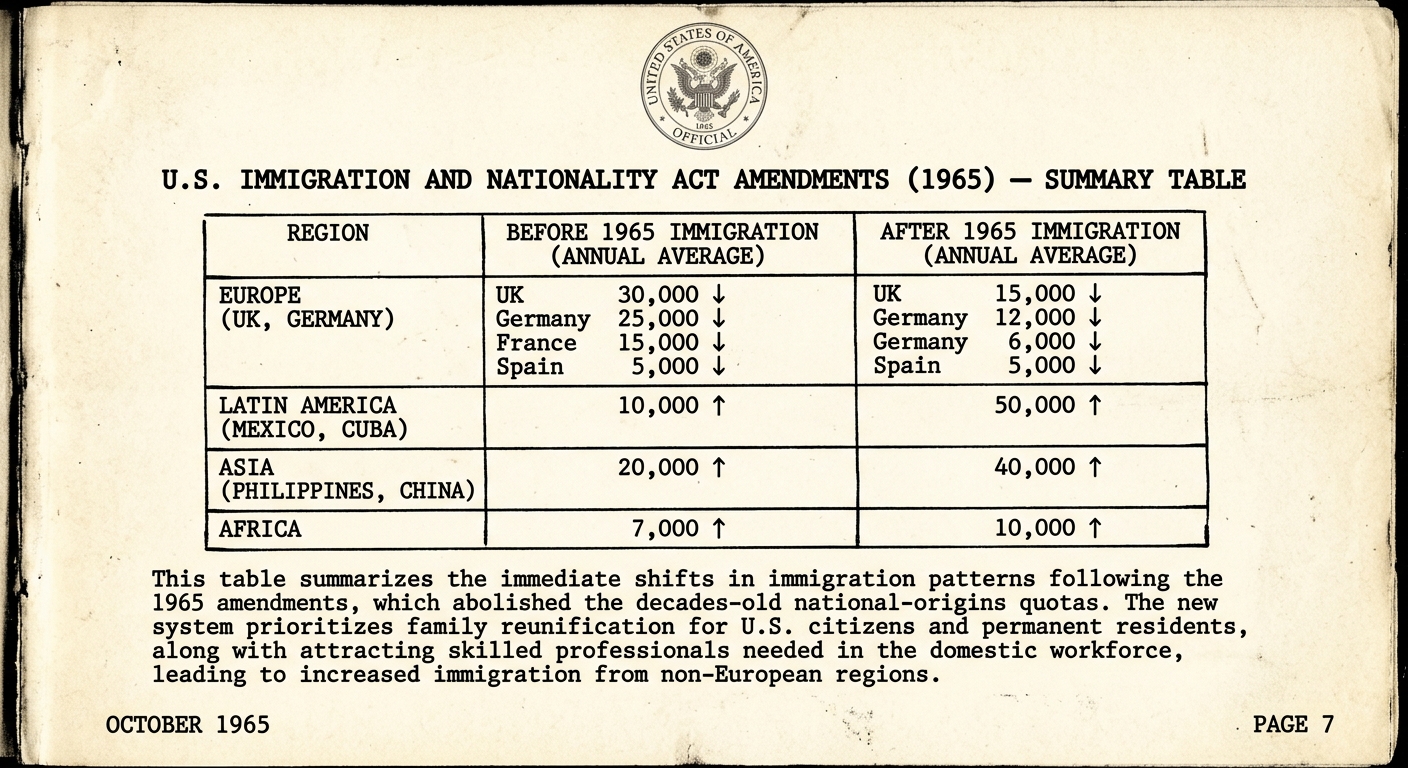
Historical Document (1965): U.S. Immigration Policy Summary

In 1965, Congress changed U.S. immigration law by ending national-origins quotas and expanding pathways tied to family reunification and job skills. Over the following decades, immigration increased and became more diverse, shaping new cultural communities and debates about immigration policy.

Asemmisa {{asɛmmisaAhyɛnsode}}
6.

The document is dated 1965 and summarizes policy changes that shaped immigration in later decades.

Which decade is the BEST fit for when historians would place this document?

Asemmisa {{asɛmmisaAhyɛnsode}}
7.

Which earlier immigration policy is MOST directly connected to the change described in the 1965 document?

Asemmisa {{asɛmmisaAhyɛnsode}}
8.

Which conclusion about change over time is BEST supported by the reading stimulus and the document?

Asemmisa {{asɛmmisaAhyɛnsode}}
9.

Using evidence from the document and the reading stimulus, explain how the 1965 policy change contributed to increasing cultural diversity over time and describe one policy debate that developed in later decades.

Asemmisa {{asɛmmisaAhyɛnsode}}
10.

Describe one short-term effect (within a few years) and one longer-term effect (over a decade or more) that communities might experience as immigration increases and becomes more diverse.

Use chronological language (for example, “initially,” “by the 1980s”).