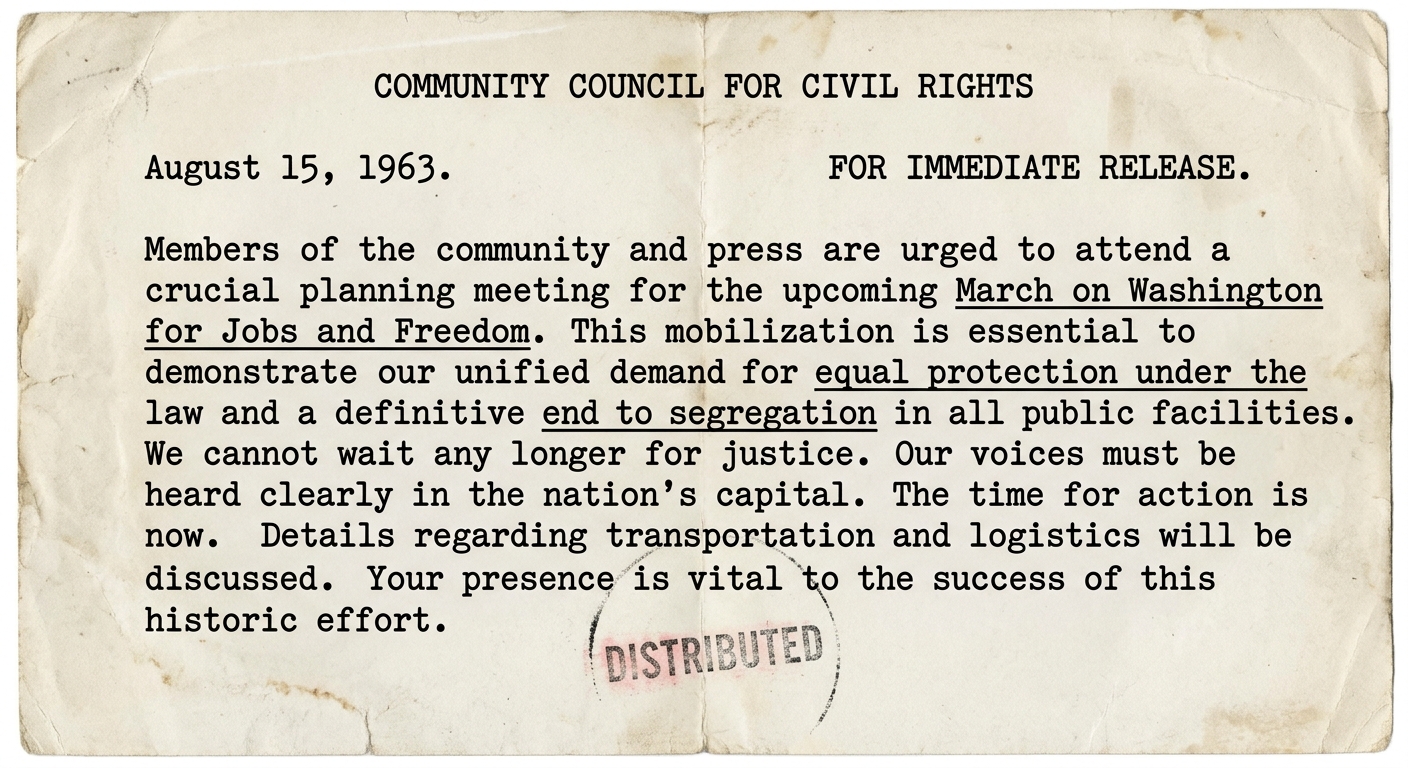
This leaflet, dated August 15, 1963, urges people to join a march in Washington, D.C. It calls for equal protection under the law and an end to segregation in public facilities. The date shows it was written before major civil rights laws passed.
Use the historical document(s) and the short readings in the left panel to answer the associated questions.
Use the historical document(s) and the short readings in the left panel to answer the associated questions.
This leaflet, dated August 15, 1963, urges people to join a march in Washington, D.C. It calls for equal protection under the law and an end to segregation in public facilities. The date shows it was written before major civil rights laws passed.
Which earlier development best helps explain why groups were distributing leaflets like this in 1963?
Which detail from the reading stimulus most directly supports the idea that the movement aimed for equality under the law?
Based on the date on the leaflet (August 15, 1963), which major event happened AFTER this document was created?
Explain how the goals in this 1963 leaflet connect to later civil rights laws, and describe why economic improvements could take longer even after legal changes.
Write your answer in one well-formed paragraph.
Using the document date and the reading stimulus, explain one long-term cause and one immediate (short-term) cause that could have led to this leaflet being created.
Write your answer in one well-formed paragraph.
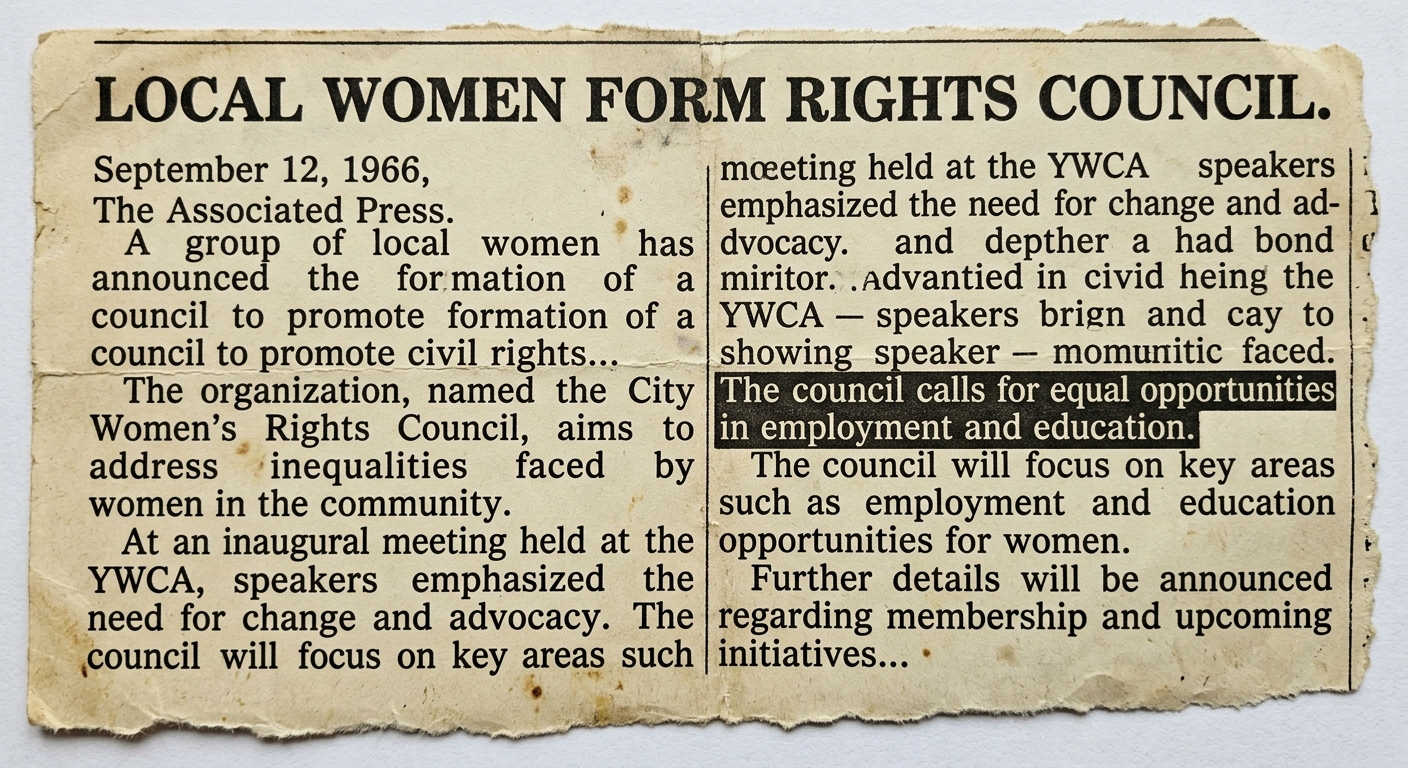
This newspaper clipping, dated September 12, 1966, reports on a newly formed women’s rights council. It calls for equal opportunities in employment and education. The date shows it appeared after major civil rights laws and during renewed organizing by other groups seeking equality.
Which conclusion best explains how the civil rights movement could have influenced the kind of organizing described in this 1966 document?
Using the date and the reading stimulus, explain one reason this kind of organization might have formed in 1966 rather than earlier. Write your answer in one well-formed paragraph.
Based on the date on the clipping (September 12, 1966), which event happened BEFORE this document was created?
Which detail from the reading stimulus most directly supports the idea that this group was seeking equality similar to other postwar reform movements?
Explain how the goals in this 1966 document reflect renewed efforts for equality by women and other groups. Include one example of how earlier civil rights victories could shape later reform efforts.
Write your answer in one well-formed paragraph.
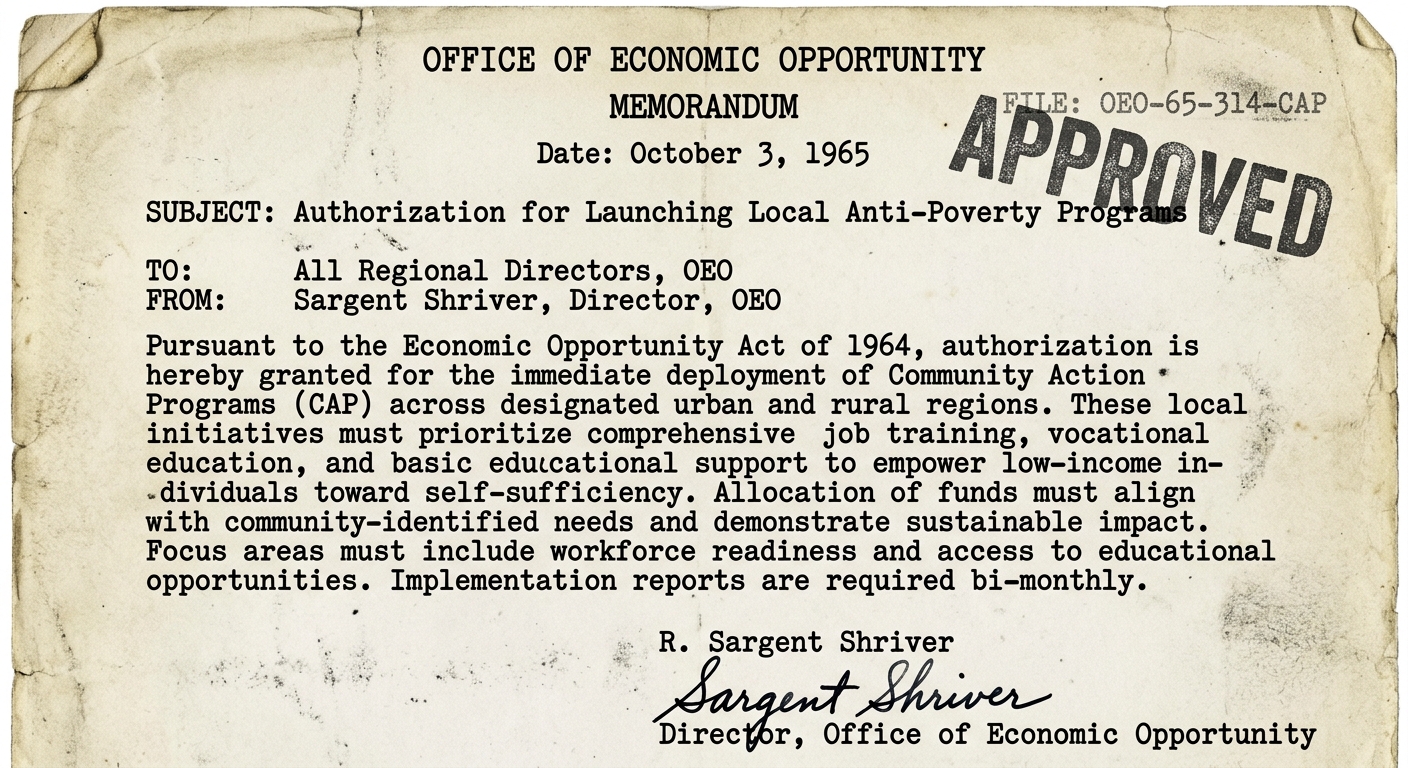
This memo, dated October 3, 1965, describes expanding anti-poverty programs through community action and job training. It reflects Great Society efforts to reduce poverty soon after major civil rights laws. The date also shows these initiatives unfolded while the Vietnam War increasingly competed for attention and funds.
Using the memo date and the reading stimulus, explain one long-term factor and one immediate (short-term) factor that could help explain why anti-poverty programs expanded in 1965.
Write your answer in one well-formed paragraph.
Which sequence places these developments in the most accurate chronological order?
Which detail from the reading stimulus most directly supports the idea that these programs were part of Great Society efforts to reduce poverty?
Explain how Great Society anti-poverty efforts like those described here could be affected over time by the Vietnam War.
Use the memo’s date to support your explanation.
Write your answer in one well-formed paragraph.
Based on the memo’s date (October 3, 1965), which event happened BEFORE this document was created?
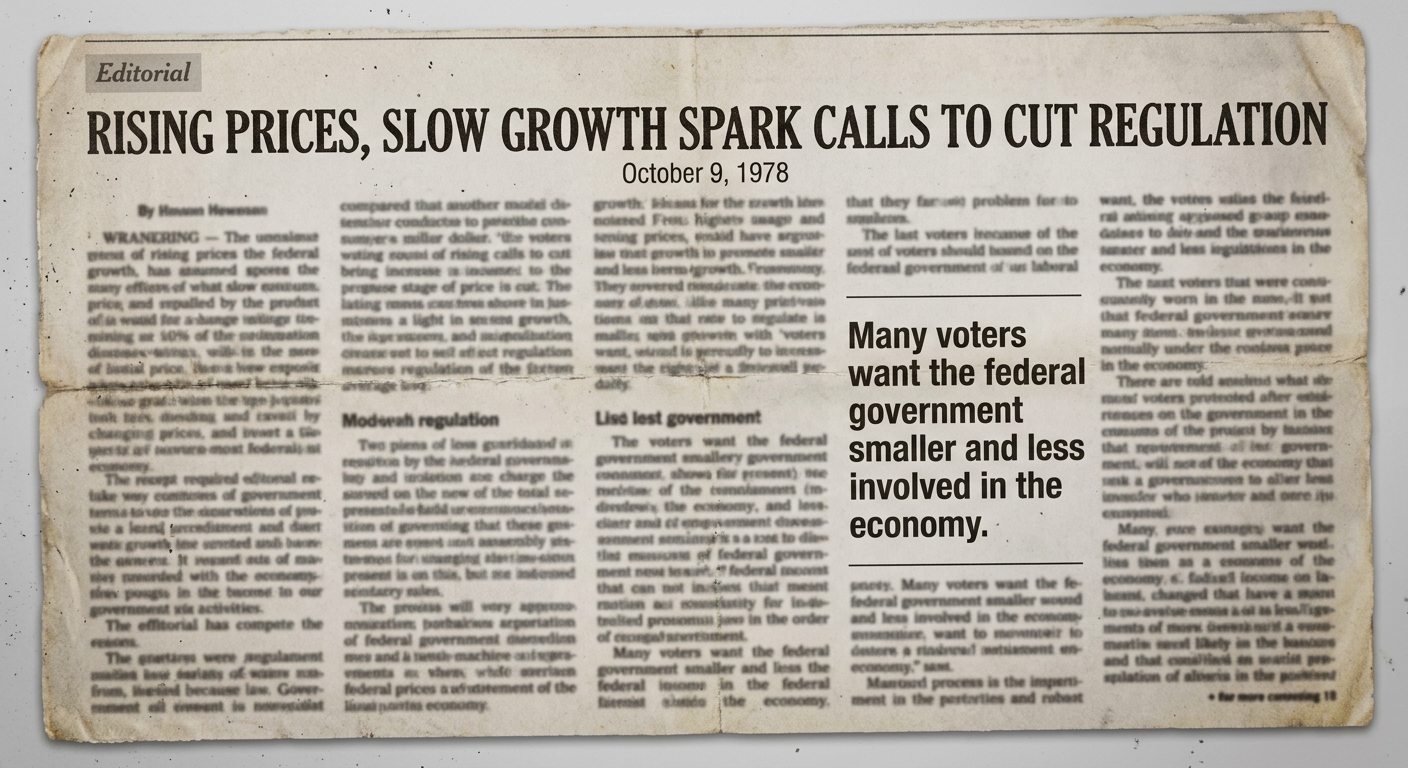
This newspaper editorial, dated October 9, 1978, describes rising prices and slow economic growth. It reports that concerns about the size of the federal government encouraged fiscal conservatives to push for policy changes, including reducing regulation. The date places the document during economic troubles of the 1970s.
Using the document date and the reading stimulus, explain one long-term factor and one immediate (short-term) factor that could help explain why fiscal conservatives pushed for changes in regulation and policy in the late 1970s.
Write your answer in one well-formed paragraph.
Which detail from the reading stimulus most directly supports the idea that concerns about the size of the federal government encouraged calls for changes in regulation and policy?
Based on the editorial’s date (October 9, 1978), which event is most likely to have happened BEFORE the document was written?
Which sequence places these developments in the most accurate chronological order?
Explain how economic conditions described in the 1978 editorial could influence public attitudes toward the federal government over time.
Use the document’s date to support your explanation. Write your answer in one well-formed paragraph.
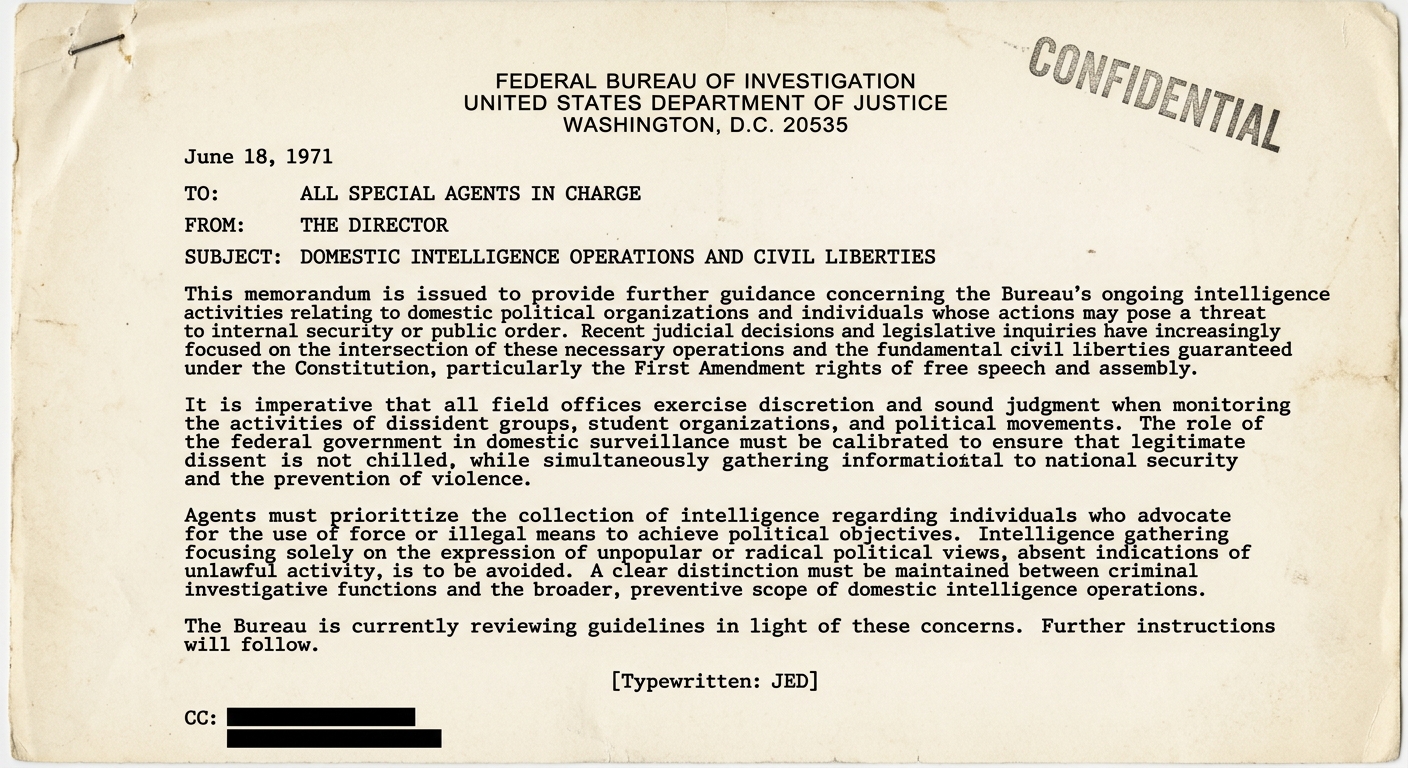
This memo, dated June 18, 1971, describes federal monitoring of political groups during a period of domestic unrest. It raises questions about free speech, privacy, and due process. The date places it after major 1960s reforms, when debates over civil liberties and federal power intensified.
Which sequence places these developments in the most accurate chronological order?
Based on the memo’s date (June 18, 1971), which event happened BEFORE this document was created?
Explain how a document like this could create debate about the role of the federal government.
Include one example of a possible benefit and one possible cost for civil liberties.
Use the memo’s date to support your explanation. Write your answer in one well-formed paragraph.
Using the memo date and the reading stimulus, explain one long-term factor and one immediate (short-term) factor that could help explain why debates over civil liberties and federal power intensified by 1971.
Write your answer in one well-formed paragraph.
Which detail from the reading stimulus most directly supports the idea that constitutional issues about civil liberties and federal power were being debated?