Use the historical document(s) and the short readings in the left panel to answer the associated questions.
Historical Document:
Freedmen’s Bureau Labor Agreement
(June 1867)
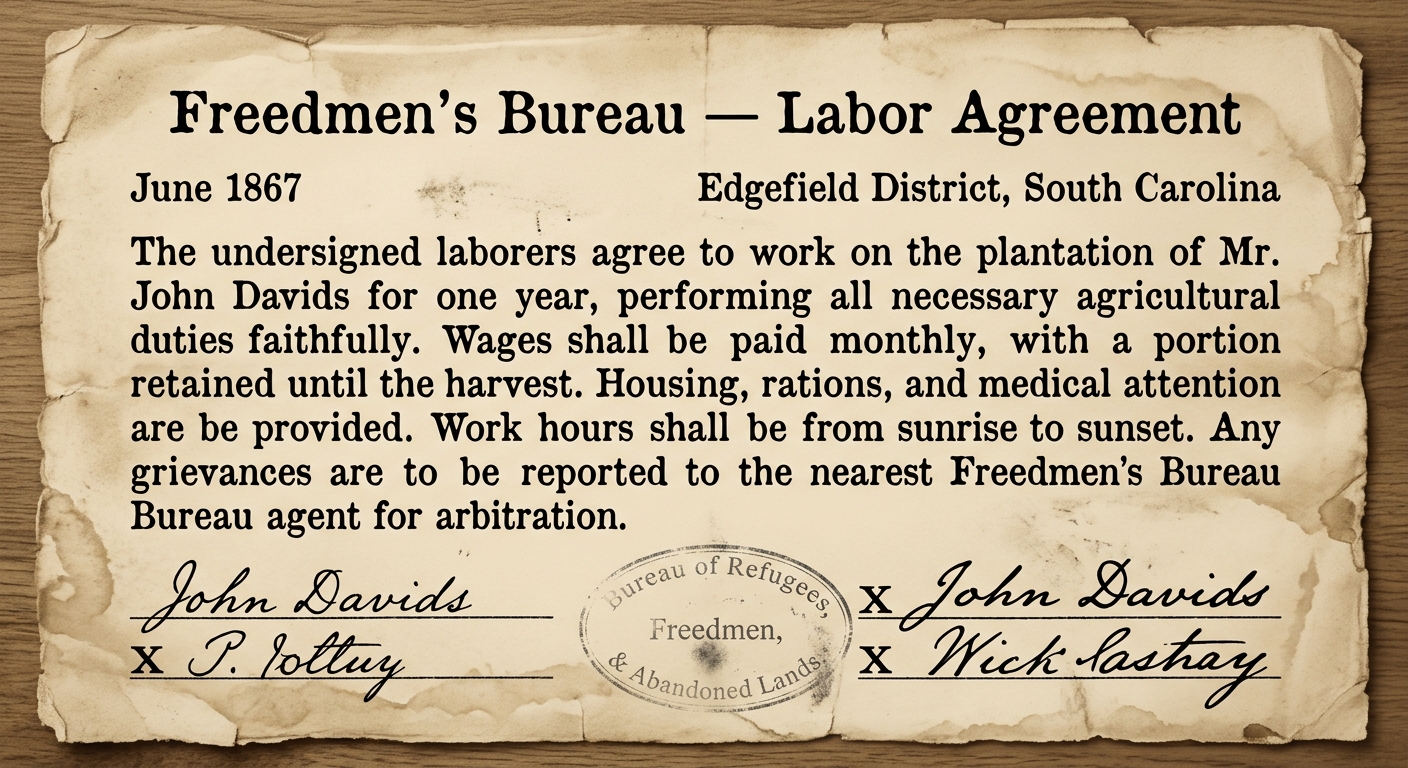
During Reconstruction, federal officials sometimes supervised labor contracts between formerly enslaved workers and Southern landowners. Supporters argued this protected basic rights and created order. Critics said it interfered with state authority and local customs. Read the document excerpt and answer the questions.
Which Reconstruction approach is most directly reflected by a federal agency supervising labor agreements like the one shown?
Contextualize this labor agreement within Reconstruction by explaining one challenge it illustrates about reunifying the nation. In your answer, connect the document to debates over federal power and the rights of formerly enslaved people.
Which comparison BEST explains how this type of labor contract differed from many Black Codes passed in the early Reconstruction era?
Using evidence from the document, compare two approaches toward Reconstruction (for example, federal oversight through the Freedmen’s Bureau vs. policies that emphasized state control).
Explain how each approach tried to address reunifying the nation and rebuilding the Southern economy.
Based on the document’s purpose, which group would MOST likely view this agreement as helpful, and why?
Historical Document:
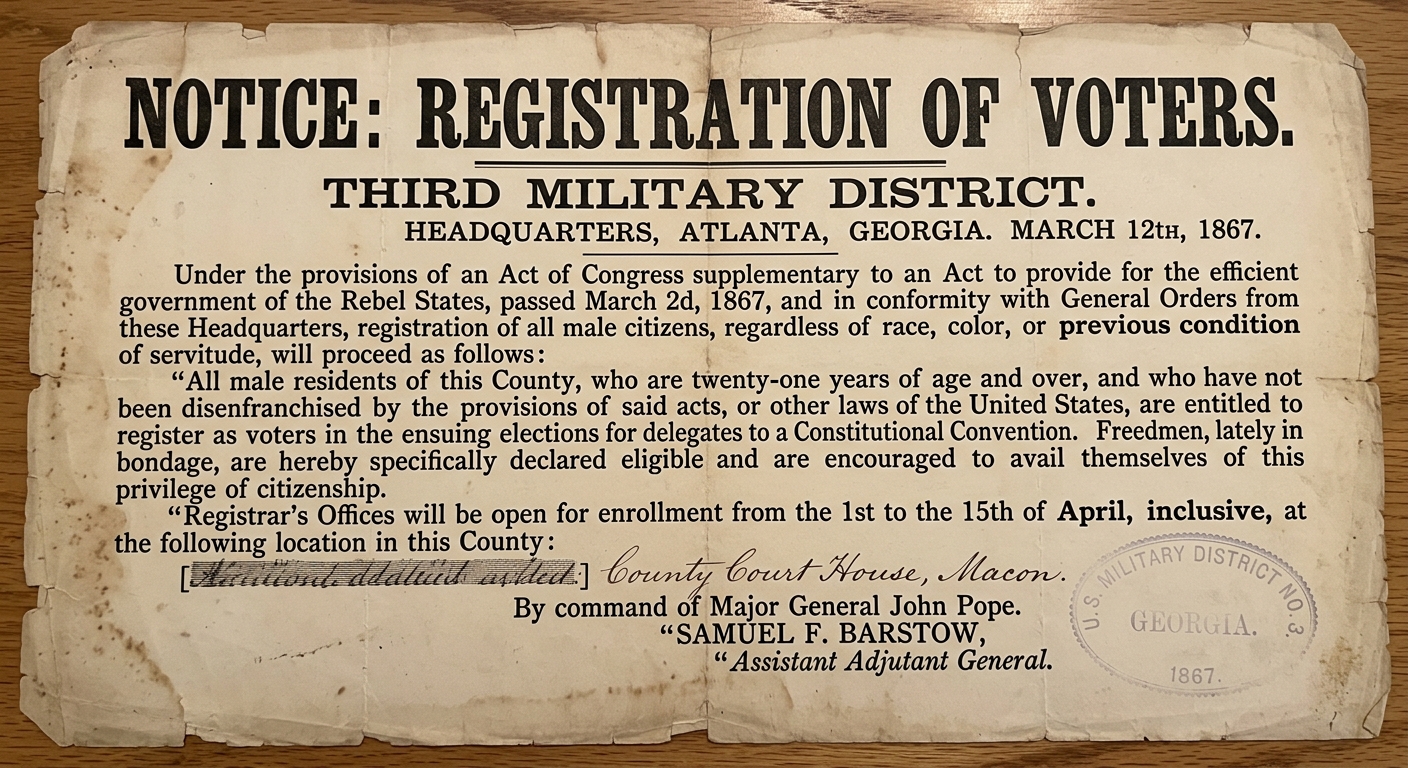
Voter Registration Notice (1867)

After the Civil War, federal Reconstruction measures expanded political participation for freed African American men. Notices like this helped organize voter registration and elections under new rules. Many white Southerners resisted these changes, while freedpeople viewed them as steps toward full citizenship.
Which Reconstruction goal is MOST directly reflected by a voter registration notice like the one shown?
Which comparison BEST explains how this notice would have been viewed differently by two groups during Reconstruction?
Which comparison BEST connects this document to another Reconstruction change for freed African Americans?
Contextualize this notice within Reconstruction by explaining how changes in voting rights affected the creation of “new lives” for freed African Americans.
In your answer, connect political participation to at least one other area of life (work, education, community, or safety).
Using evidence from the document and the reading, compare how federal Reconstruction policies and local resistance could shape political participation for freed African Americans.
Explain one way each side tried to influence voting and citizenship.
Historical Document:
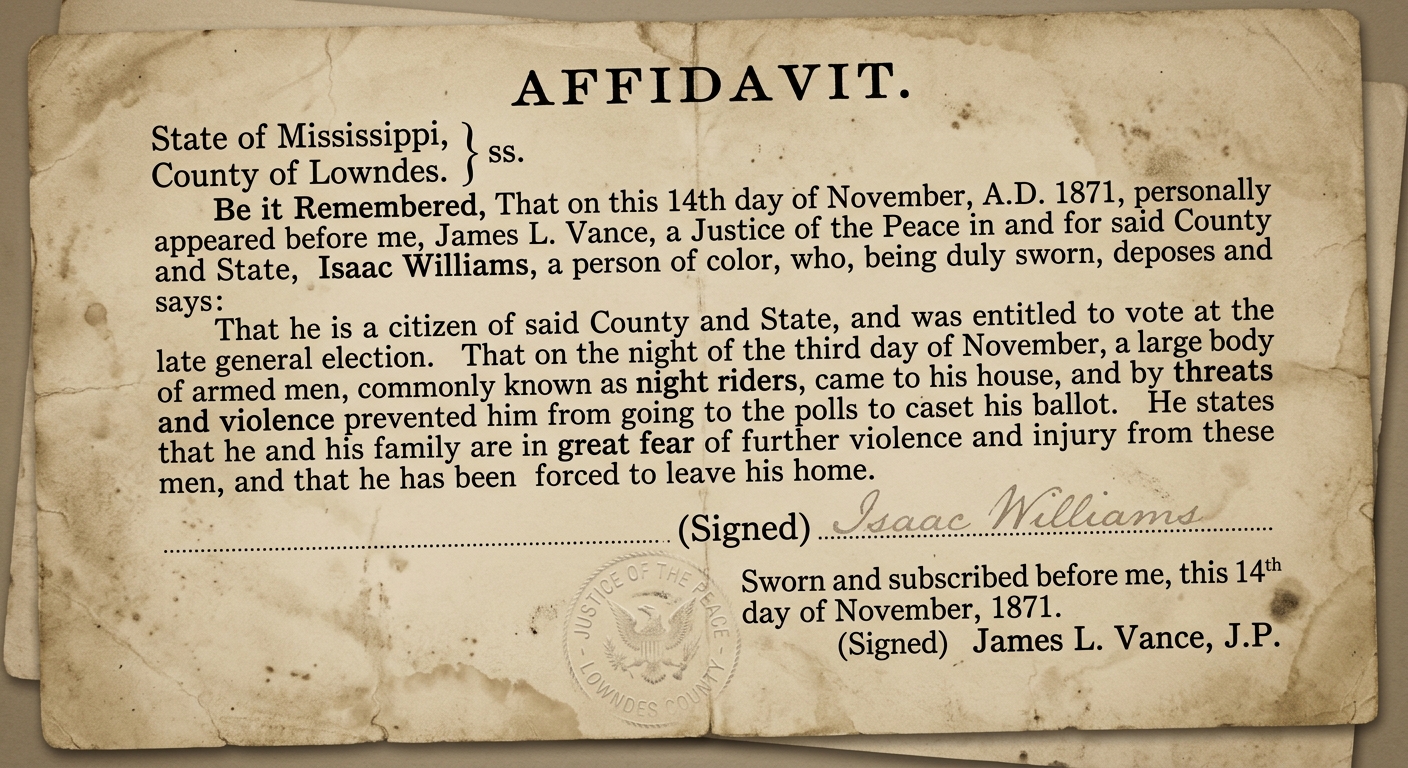
Affidavit on Intimidation and Voting (1871)

After new rights expanded during Reconstruction, opponents used threats and violence to weaken federal initiatives. Statements like this described intimidation that kept freedpeople from voting or seeking protection. Such resistance reduced the impact of Reconstruction and created long-term harm for African Americans’ safety and citizenship.
Contextualize this affidavit within Reconstruction by explaining how challenges to federal initiatives could have negative impacts on the lives of African Americans.
In your answer, connect political participation to safety, work, or community life.
Using evidence from the affidavit and the reading, compare two different obstacles that could limit freed African Americans’ rights during Reconstruction (for example, intimidation vs. legal limits).
Explain how each obstacle could weaken federal initiatives.
Which comparison BEST explains how federal actions and local resistance affected freed African Americans differently during Reconstruction?
Which comparison BEST connects this affidavit to a longer-term impact of Reconstruction being challenged?
Which challenge to federal Reconstruction initiatives is MOST directly illustrated by the affidavit?