Use the historical document(s) and the short readings in the left panel to answer the associated questions.
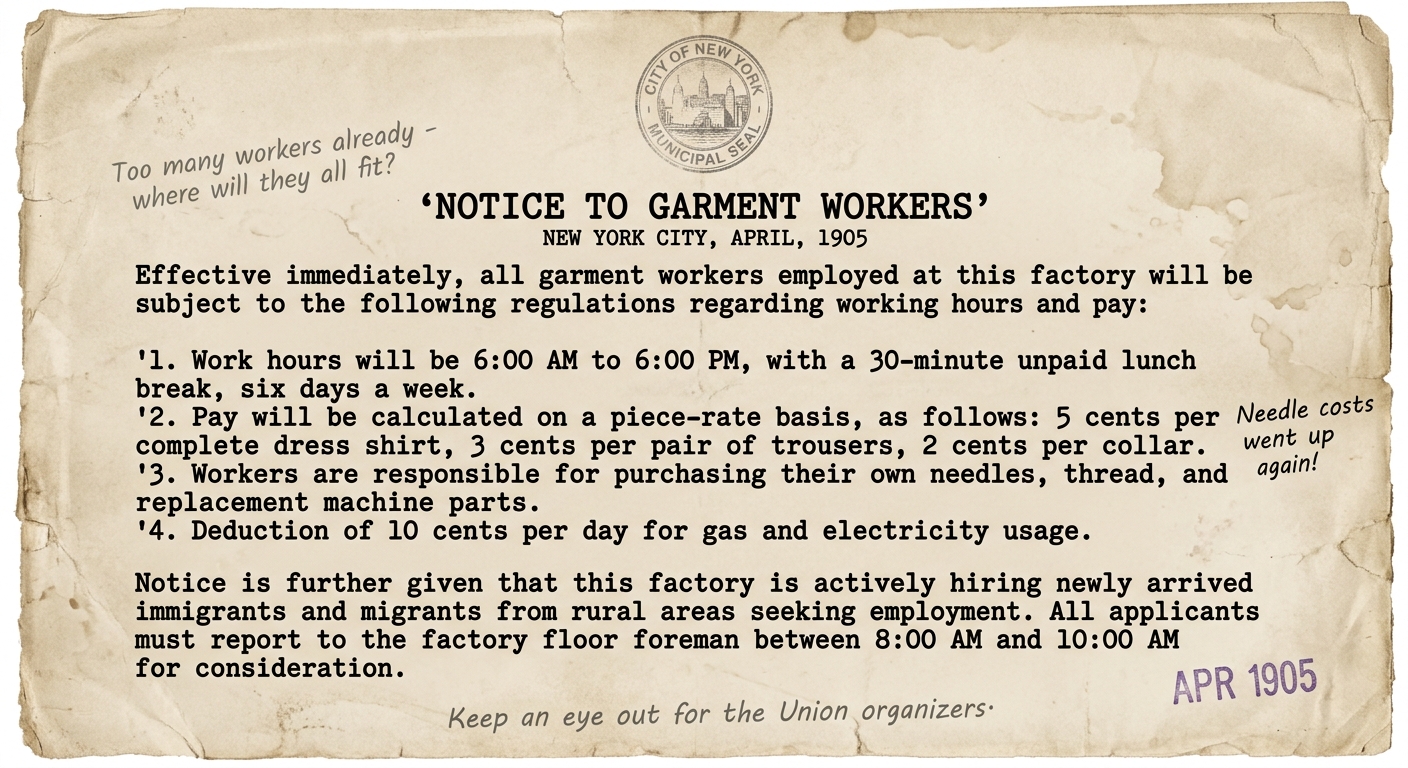
Industrial growth in New York City created a steady demand for workers in urban factories. As new machines increased production, employers recruited both immigrants arriving through New York Harbor and people moving from rural areas. This document reflects how jobs drew people into crowded industrial neighborhoods.
Compare people who migrated from rural areas to New York’s industrial cities with immigrants arriving from other countries.
Describe one similarity and one difference in why they moved.
Explain how technological developments and access to resources helped New York City industrialize and grow.
Use at least two specific details from the reading and/or document to support your answer.
Which change in New York City life is most likely connected to the trends suggested by the document and reading?
Compared with people who moved from rural areas to New York City, which factor most directly pulled many immigrants to NYC’s industrial neighborhoods in this period?
Which broader historical development best explains why a New York City garment factory would post a notice like this in 1905?
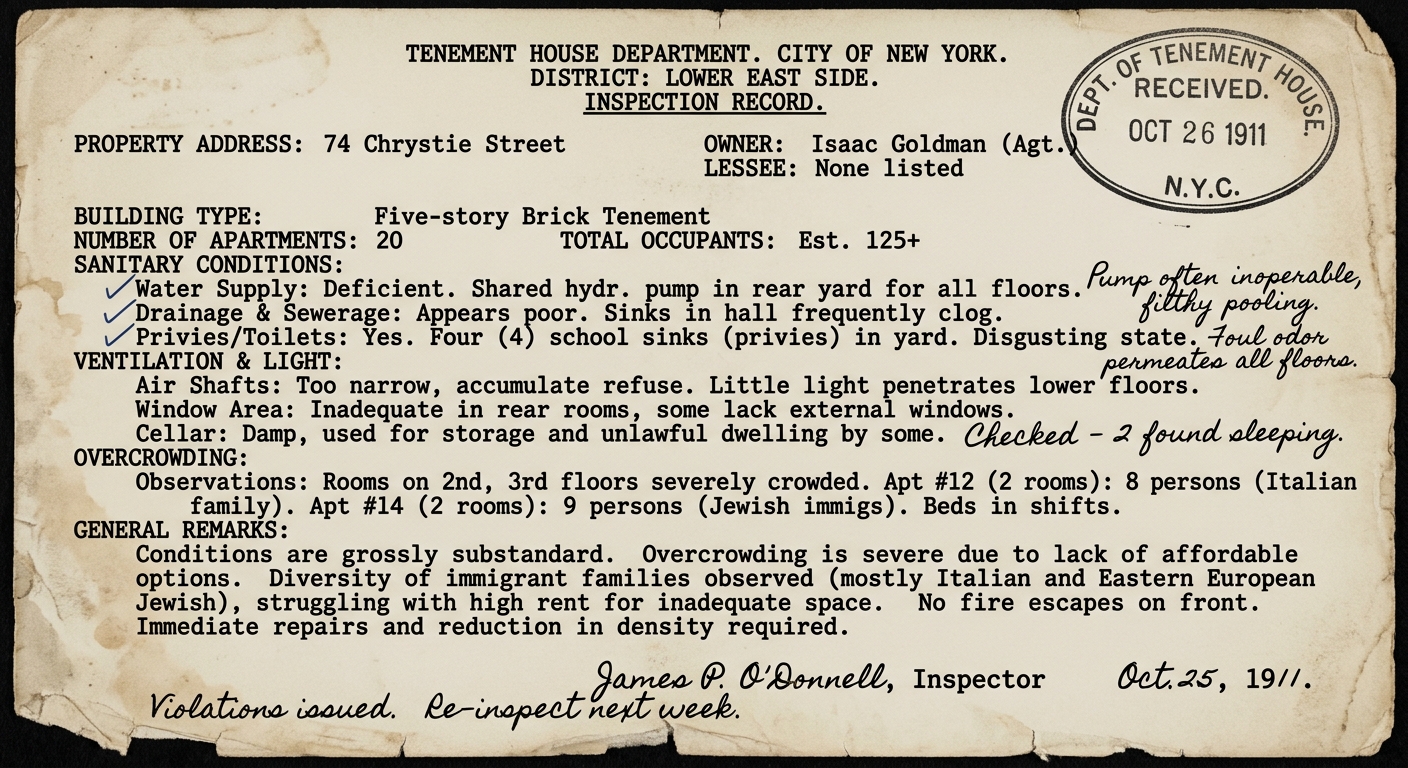
As New York City’s population grew, many working families lived in crowded tenements near factories. City inspectors recorded housing conditions like ventilation, water access, and number of occupants. This document shows how population density and diversity shaped daily life in urban neighborhoods during industrial growth.

Based on the inspection record and reading, which urban problem is most directly suggested by rapid population growth in New York City?
Using evidence from the reading and document, compare two ways urban life could be different for a family living in a crowded tenement versus a family living in a less dense town.
Include one similarity and one difference.
Which inference about cultural life in New York City is best supported by the document’s references to diverse immigrant families?
Which statement best compares how population density and new technologies could both shape daily life in NYC tenements during this period?
Explain how population density, diversity, and at least one technology or industry could interact to shape social and economic life in NYC neighborhoods.
Use two specific details from the reading and/or document.
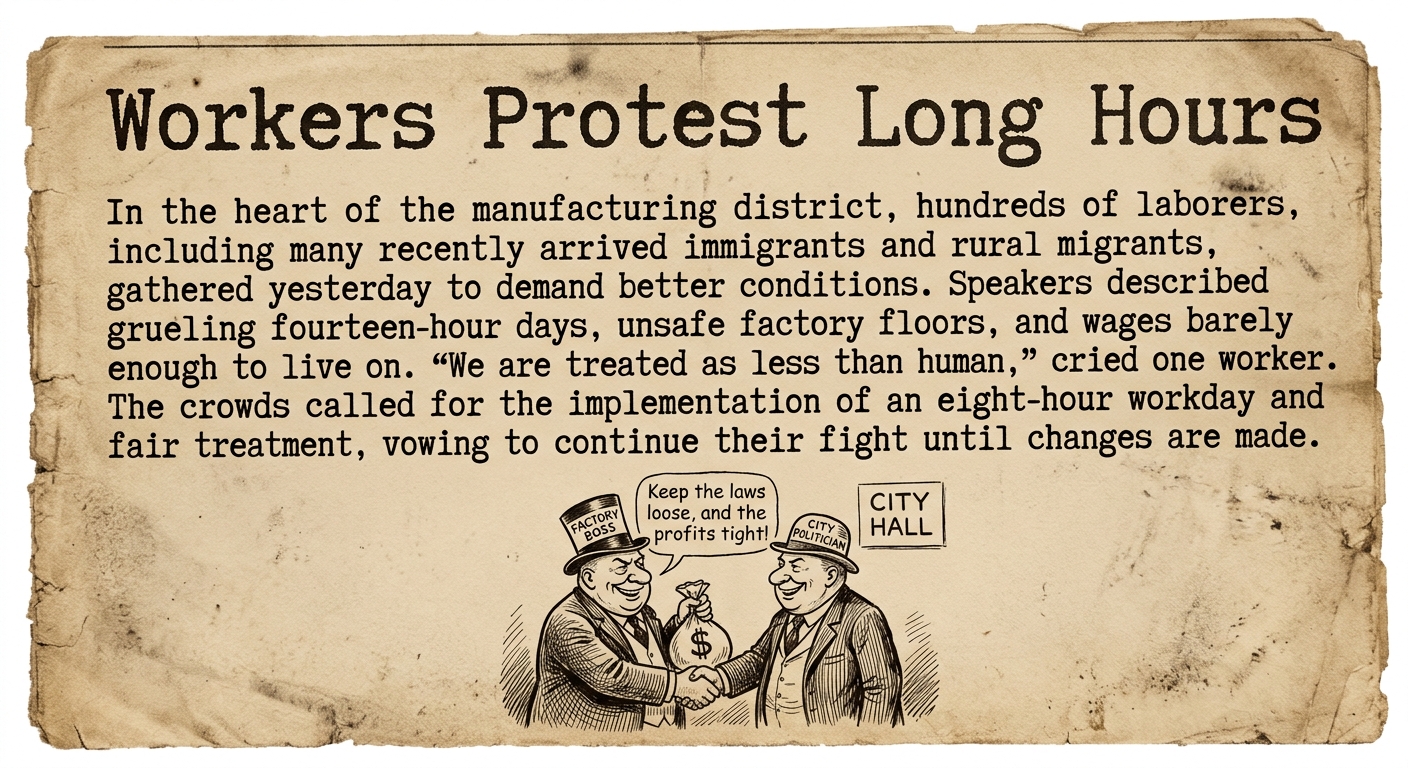
As factories expanded in New York City, crowded neighborhoods grew around workplaces. Long hours, low pay, and unsafe conditions led many workers to organize and protest. At the same time, some city officials protected business interests through political machines, increasing conflict over immigration and labor reforms.

Which issue is most directly suggested by the newspaper article’s focus on long hours and unsafe conditions?
Using evidence from the reading and document, compare how an immigrant worker and a rural-to-urban migrant worker might experience industrial city life.
Include one similarity and one difference related to labor conditions or opportunities.
How does the political cartoon at the bottom of the clipping best connect to conflicts that increased with urbanization and industrialization in New York City?
Explain how increased urbanization and industrialization could lead to both demands for labor reform and concerns about political corruption.
Use two specific details from the reading and/or document to support your answer.
Which statement best compares how immigration debates and labor protests could both be connected to industrial growth in New York City?
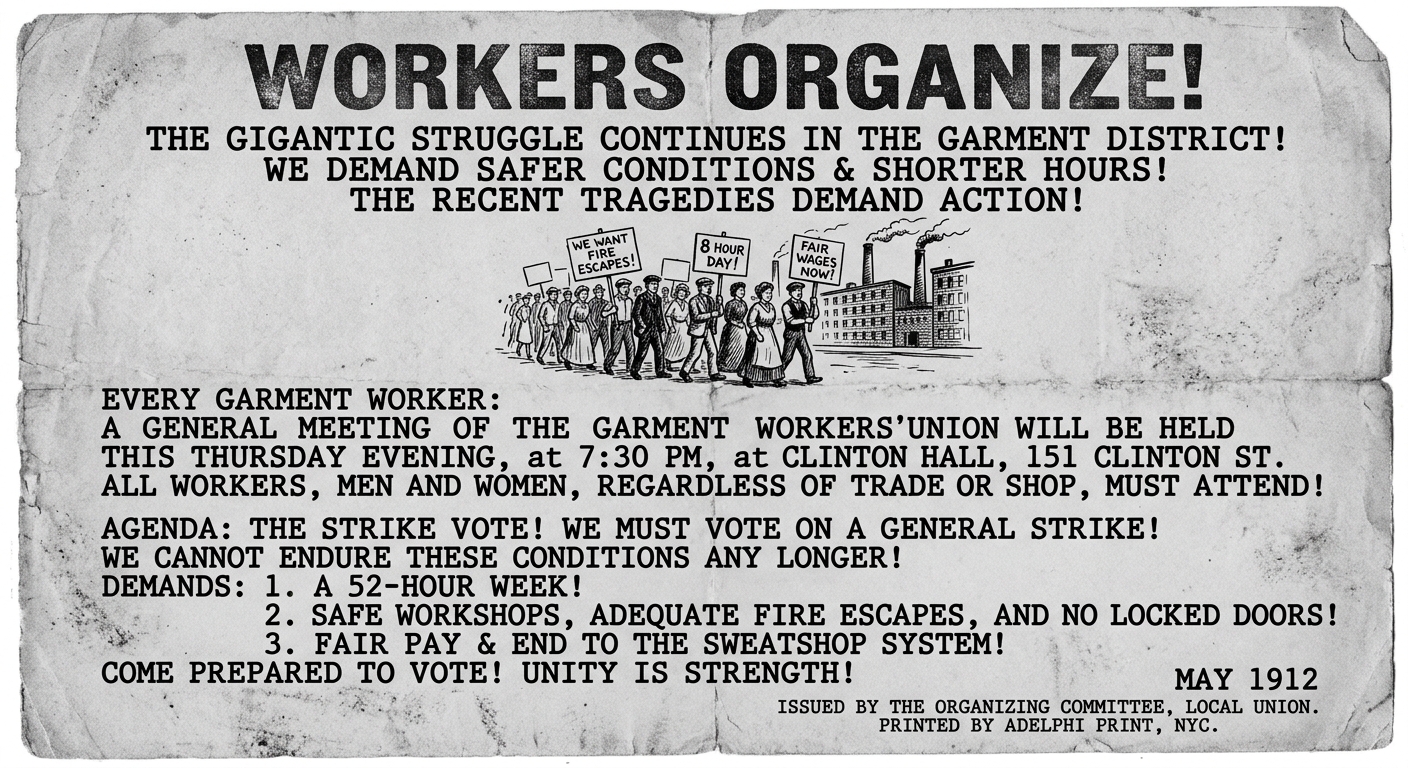
As New York City factories expanded, many workers faced long hours, low pay, and unsafe conditions. In response, laborers organized unions, held meetings, and sometimes voted to strike. This leaflet shows how workers used collective action to demand safer workplaces and fairer treatment.

Which inference best contextualizes why a leaflet like this would appear in New York City during heavy industrial growth?
Explain how industrial city conditions could lead workers to organize.
Use two specific details from the reading and/or leaflet to support your answer.
Compared with an individual worker complaining to a supervisor, what is one key advantage of the strategy suggested in the leaflet?
Using evidence from the reading and leaflet, compare two strategies workers could use to improve conditions (for example, union meetings, strikes, petitions, or public protests).
Include one similarity and one difference.
Which worker strategy is most directly supported by the union leaflet?
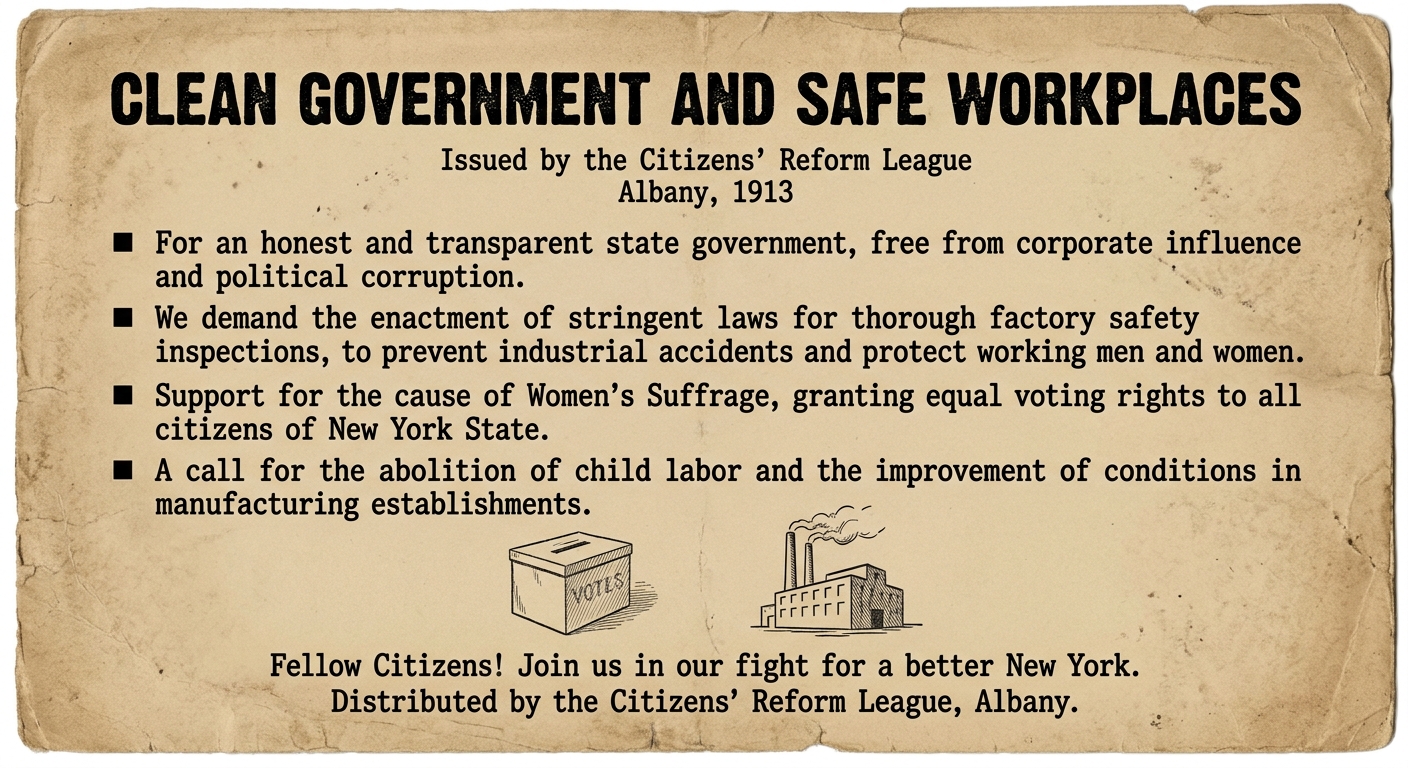
Between 1890 and 1920, Progressive reformers in New York and across the nation pushed for changes to address political corruption and unsafe working conditions. They also demanded expanded democracy, including women’s suffrage. This pamphlet shows how reformers connected government reform to social and workplace issues.

Using evidence from the reading and pamphlet, compare two political or social issues Progressive reformers tried to address.
Include one similarity and one difference in how the issues affected people in New York.
Which Progressive Era goal is most directly reflected in the pamphlet’s call for “clean government”?
Compared with earlier responses that relied mainly on private charity, what does this pamphlet suggest about how Progressive reformers wanted to solve social problems?
Explain how a reform pamphlet like this could reflect broader national Progressive Era goals while also responding to conditions in New York.
Use two specific details from the reading and/or pamphlet.
Which comparison best explains why Progressive reformers might support both workplace safety laws and women’s suffrage?