Twa kɔ nsɛm atitiriw so
Log in
Sign up for FREE
arrow_back
Laabri

8.3 - Expansion and Imperialism: - Practice C

star
star
star
star
star
Last updated about 1 month ago
20 Nsɛmmisa
Hyɛ no nsow a efi ɔkyerɛwfo no hɔ:

Use the historical document(s) and the short readings in the left panel to answer the associated questions.

Use the historical document(s) and the short readings in the left panel to answer the associated questions.

8.3.a
DOK.SS.2
8.3.b
DOK.SS.2
8.3.c
DOK.SS.2
8.3.d
DOK.SS.2
Ɛhia
1
8.3.a
DOK.SS.2
Ɛhia
2
8.3.a
DOK.SS.2
Ɛhia
1
8.3.a
DOK.SS.2
Ɛhia
2
8.3.a
DOK.SS.2
Ɛhia
1
8.3.a
DOK.SS.2
Ɛhia
1
8.3.b
DOK.SS.2
Ɛhia
2
8.3.b
DOK.SS.2
Ɛhia
1
8.3.b
DOK.SS.2
Ɛhia
2
8.3.b
DOK.SS.2
Ɛhia
1
8.3.b
DOK.SS.2
Ɛhia
1
8.3.c
DOK.SS.2
Ɛhia
1
8.3.c
DOK.SS.2
Ɛhia
2
8.3.c
DOK.SS.2
Ɛhia
1
8.3.c
DOK.SS.2
Ɛhia
2
8.3.c
DOK.SS.2
Ɛhia
2
8.3.d
DOK.SS.2
Ɛhia
1
8.3.d
DOK.SS.2
Ɛhia
1
8.3.d
DOK.SS.2
Ɛhia
1
8.3.d
DOK.SS.2
Ɛhia
2
8.3.d
DOK.SS.2

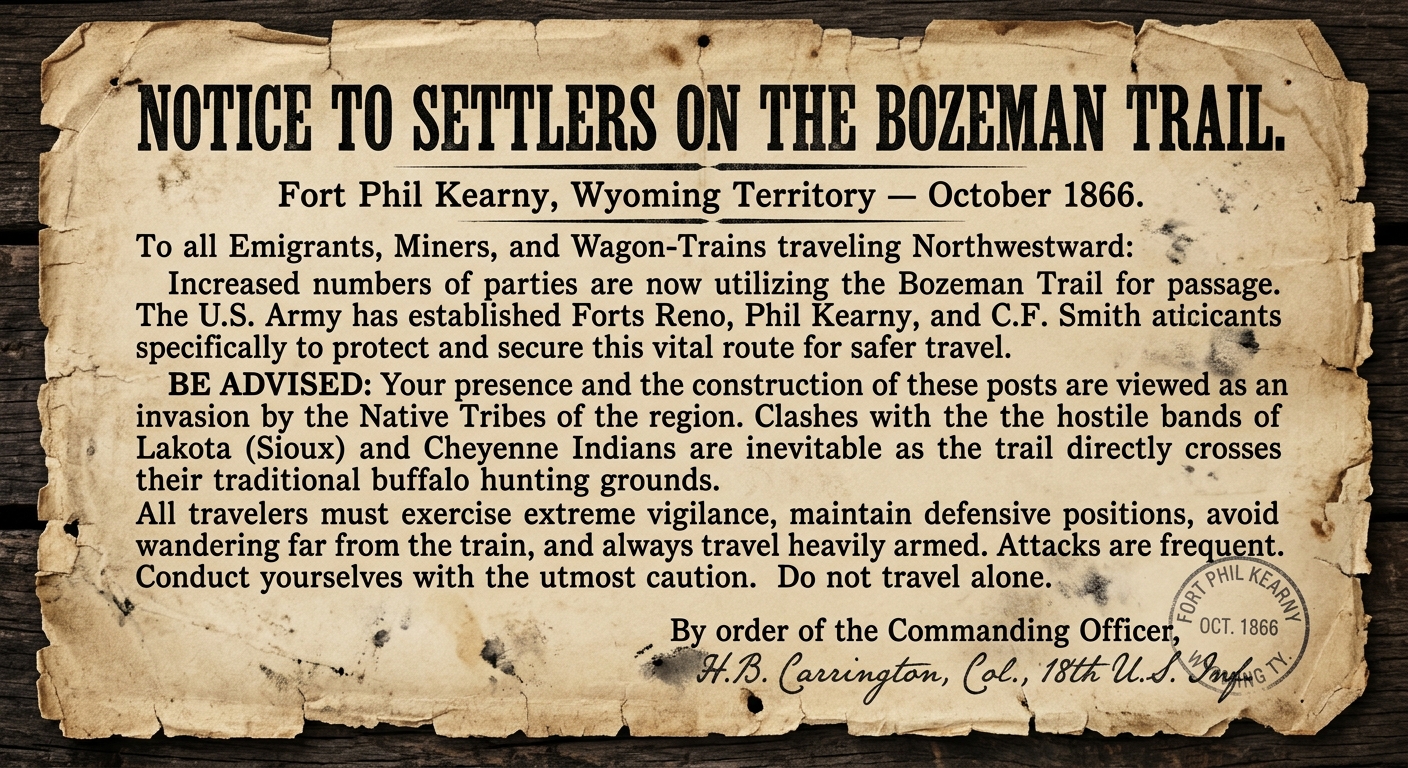
A worn 1866 broadside titled “Notice to Settlers on the Bozeman Trail,” dated at Fort Phil Kearny, warning travelers about potential clashes with Lakota and Cheyenne and describing forts built to protect wagon routes.

In October 1866, a U.S. Army post near Fort Phil Kearny issued this notice for travelers using the Bozeman Trail. The route cut through Plains Indian hunting lands as settlers and supplies moved west. Read the document and consider how different groups might view its message.
Asemmisa {{asɛmmisaAhyɛnsode}}
1.

Which statement best compares how U.S. officials and many Lakota or Cheyenne leaders might interpret the forts mentioned in the notice?

Asemmisa {{asɛmmisaAhyɛnsode}}
2.

Contextualize this document within post–Civil War westward expansion.

Explain one policy or economic change that increased movement into the West, and describe how that change contributed to conflicts with Native Americans.

Asemmisa {{asɛmmisaAhyɛnsode}}
3.

Which purpose of the notice is best supported by the document’s language?

Asemmisa {{asɛmmisaAhyɛnsode}}
4.

Compare two perspectives on westward expansion that are suggested by this notice:

(1) the perspective of U.S. officials or settlers using the trail and

(2) the perspective of Lakota or Cheyenne communities living in the region.

Use specific phrases or details from the document to support your comparison.

Asemmisa {{asɛmmisaAhyɛnsode}}
5.

Based on the document and the reading, which broader development most directly helps explain why conflict increased along routes like the Bozeman Trail?

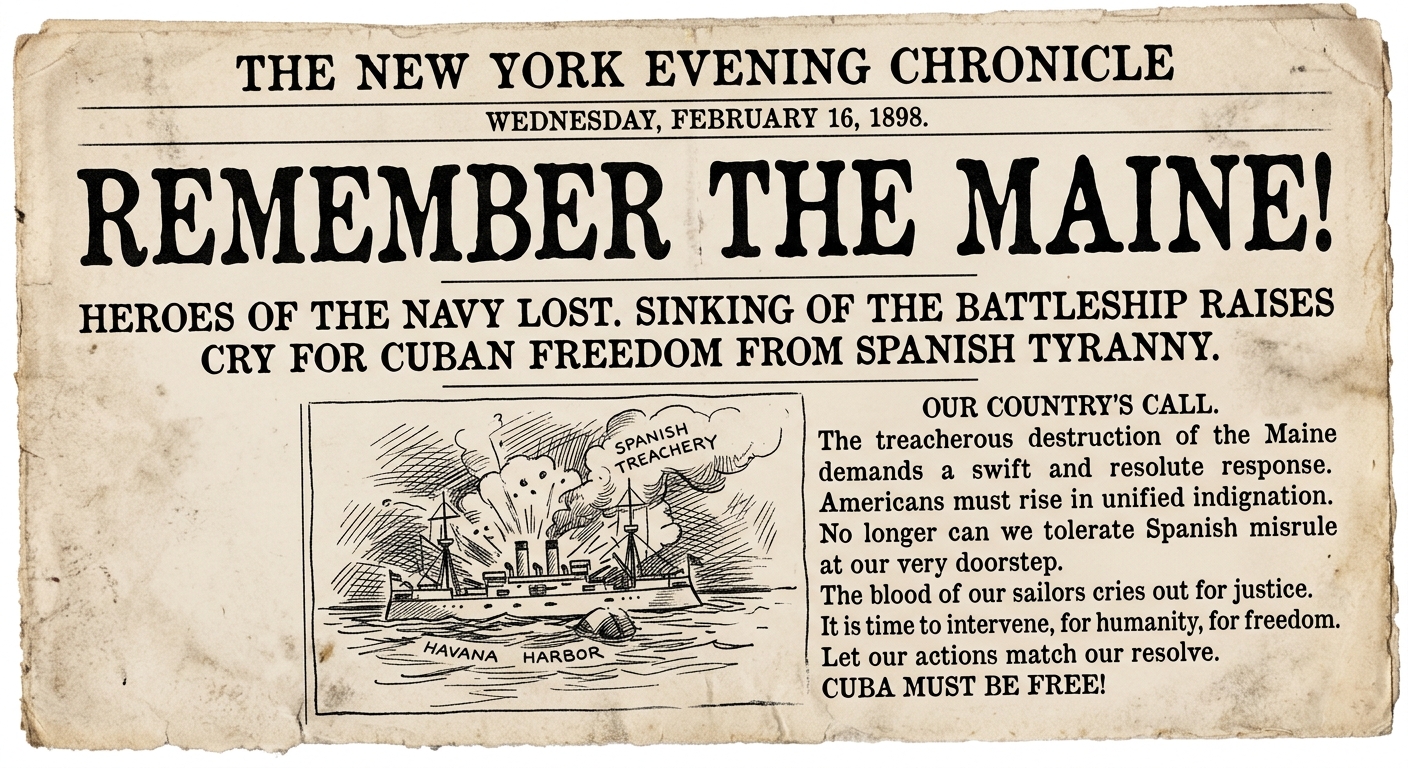
A worn 1898 newspaper excerpt with the headline “Remember the Maine!” about Cuba and Spanish rule, including a small illustration of the USS Maine in Havana Harbor.

In 1898, many U.S. newspapers urged Americans to support intervention in Cuba after the explosion of the USS Maine. This excerpt reflects how headlines and images could influence public opinion. Read the document and consider how it relates to the United States becoming more involved overseas.

Asemmisa {{asɛmmisaAhyɛnsode}}
6.

Which comparison is best supported by the document when considering two different perspectives in 1898?

Asemmisa {{asɛmmisaAhyɛnsode}}
7.

Contextualize this document within the Spanish-American War.

Explain one way the war contributed to the rise of the United States as an imperial power, and connect your explanation to evidence from the document.

Asemmisa {{asɛmmisaAhyɛnsode}}
8.

Which broader development best helps contextualize why documents like this could contribute to the United States becoming an imperial power?

Asemmisa {{asɛmmisaAhyɛnsode}}
9.

Compare two perspectives suggested by this document:

(1) U.S. supporters of intervention and

(2) Spanish officials or supporters of Spanish rule.

Use specific features (headline, imagery, or wording) from the document to support your comparison.

Asemmisa {{asɛmmisaAhyɛnsode}}
10.

Which statement best describes the likely purpose of the headline and image in this document?

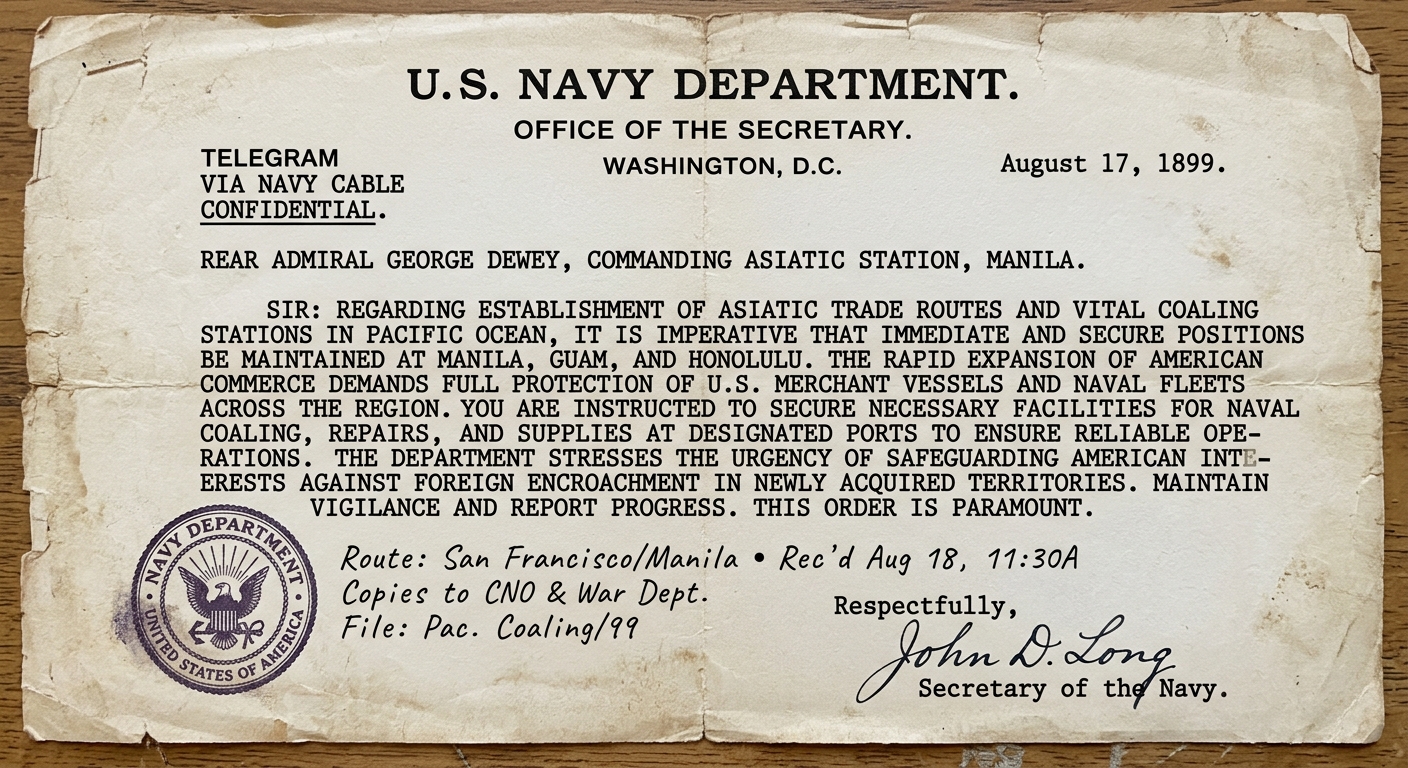
A worn 1899 U.S. Navy Department telegram referencing Pacific coaling stations and protecting American trade routes to Asia.

In 1899, U.S. officials debated how to protect American shipping and expand trade in the Pacific. This telegram reflects arguments for naval bases and coaling stations to support long-distance travel. Read the document and consider how Pacific trade shaped U.S. foreign interactions.

Asemmisa {{asɛmmisaAhyɛnsode}}
11.

Which statement best describes the likely purpose of this telegram?

Asemmisa {{asɛmmisaAhyɛnsode}}
12.

Which comparison is most consistent with the document when considering two perspectives in the late 1800s?

Asemmisa {{asɛmmisaAhyɛnsode}}
13.

Compare two perspectives suggested by this telegram:

(1) U.S. officials who supported expanding Pacific trade and

(2) people who worried about increased U.S. involvement overseas.

Use specific features (wording or details) from the document to support your comparison.

Asemmisa {{asɛmmisaAhyɛnsode}}
14.

Which broader development best helps contextualize why U.S. officials would emphasize coaling stations and naval protection in the Pacific?

Asemmisa {{asɛmmisaAhyɛnsode}}
15.

Contextualize this document within late 1800s U.S. foreign interactions in the Pacific.

Explain one reason interest in Pacific trade increased, and describe how that interest could lead to expanded U.S. involvement overseas.

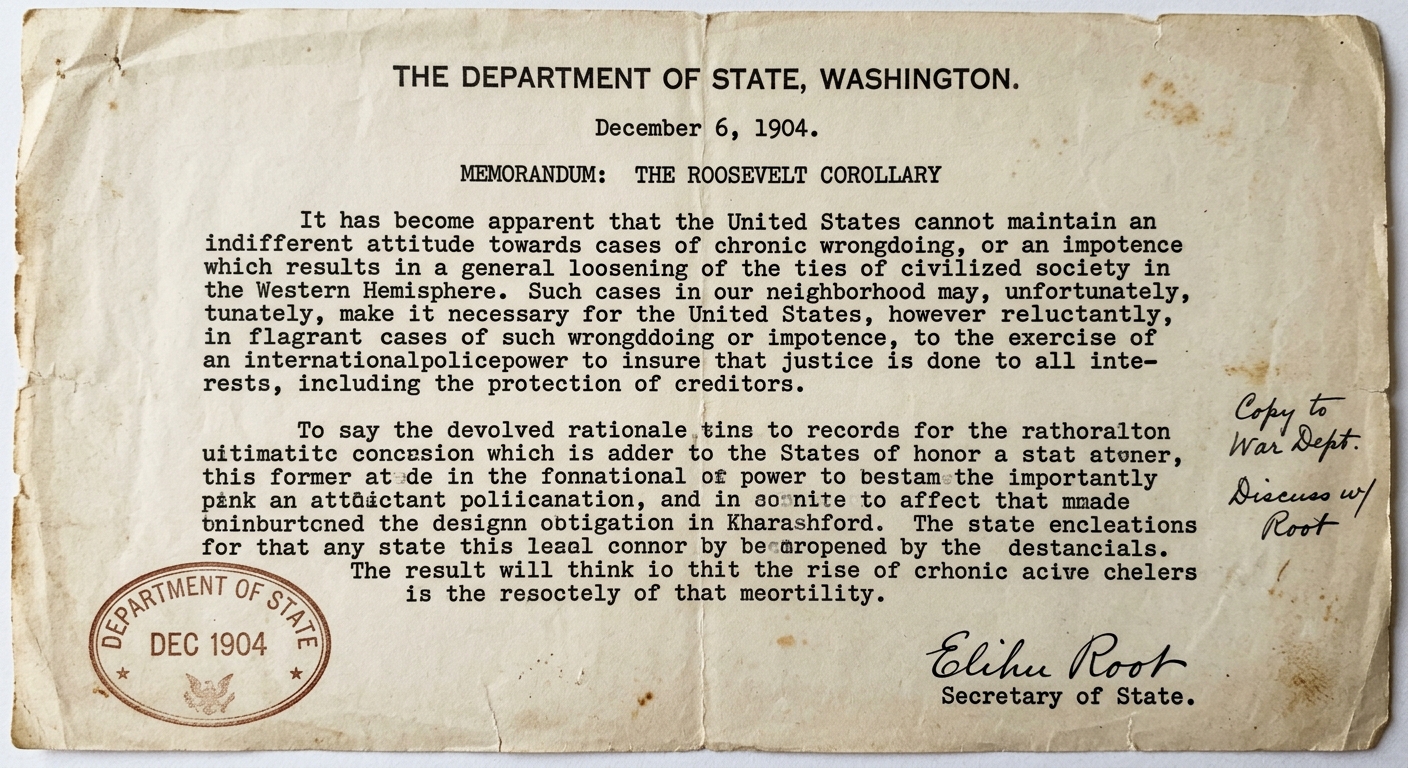
A worn 1904 memorandum titled “The Roosevelt Corollary,” stating that the U.S. may act as an “international police power” in the Western Hemisphere.

In December 1904, President Theodore Roosevelt outlined the Roosevelt Corollary to the Monroe Doctrine. It argued that chronic instability or unpaid debts in Latin America might invite European intervention, so the United States could step in first. Read the document and consider how different groups might respond.

Asemmisa {{asɛmmisaAhyɛnsode}}
16.

Compare two perspectives suggested by this document:

(1) U.S. leaders who supported the Roosevelt Corollary and

(2) people in Latin America who opposed U.S. involvement.

Use specific wording or details from the document to support your comparison.

Asemmisa {{asɛmmisaAhyɛnsode}}
17.

Which broader development best helps contextualize why the United States would connect debt and instability to intervention?

Asemmisa {{asɛmmisaAhyɛnsode}}
18.

Which statement best describes the likely purpose of this memorandum’s argument?

Asemmisa {{asɛmmisaAhyɛnsode}}
19.

Which comparison is most consistent with the document when considering two perspectives in 1904?

Asemmisa {{asɛmmisaAhyɛnsode}}
20.

Contextualize this document within U.S. foreign policy in the early 1900s.

Explain how the Roosevelt Corollary expanded the Monroe Doctrine, and describe one reason this expansion led to resentment of the United States in parts of Latin America.